
You walked through some tall grass or sat on a sunny lawn, and a day later your ankles and waistline are covered in maddening welts, so the first question is what a chigger even is. Here is the part that changes everything: a chigger is not an insect and not a worm, it is the larval stage of a harvest mite, and only that tiny six-legged larva bites. The adults are harmless and live in the soil eating other little arthropods. The biting larvae wait on the tips of grass and low plants, latch onto a host that brushes past, feed for a few hours, then drop off to molt into harmless nymphs and adults. Learn that life cycle and you already know where you picked them up and when the season is worst.
A chigger is the larval stage of a harvest mite, and only that larva bites; it waits on tall grass, feeds for a few hours through a feeding tube, then drops off, so the itch is a reaction, not a bug stuck in your skin.
- What it actually is: The six-legged larva of a harvest mite, not an insect, not a worm, not a flea.
- Where you get them: Tall grass, brushy edges, and damp shaded ground in the warm months.
- What it means: Wash with soap and water soon after exposure; for prevention and yard control see our chigger guides below.

Quick answer: what is a chigger
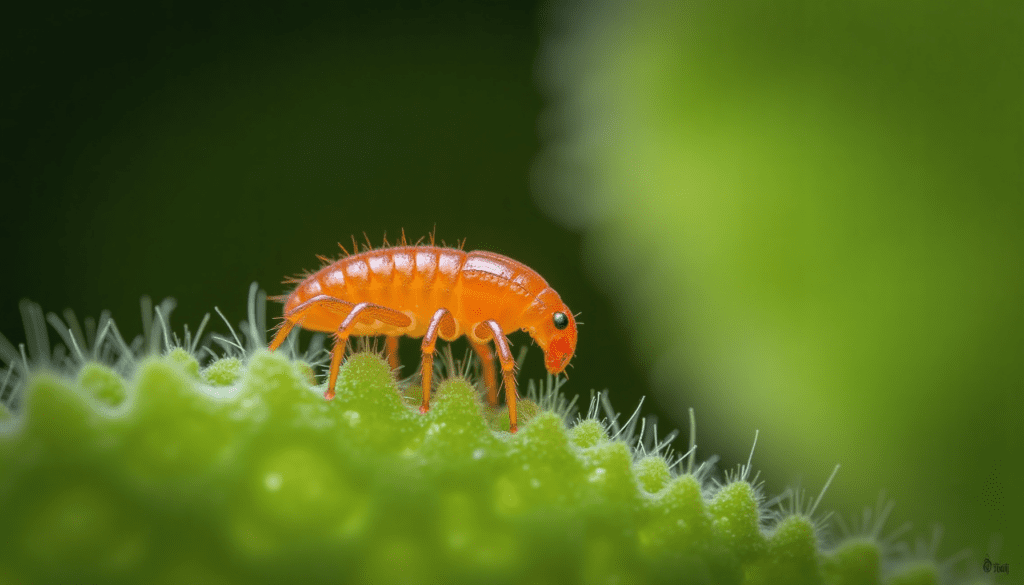
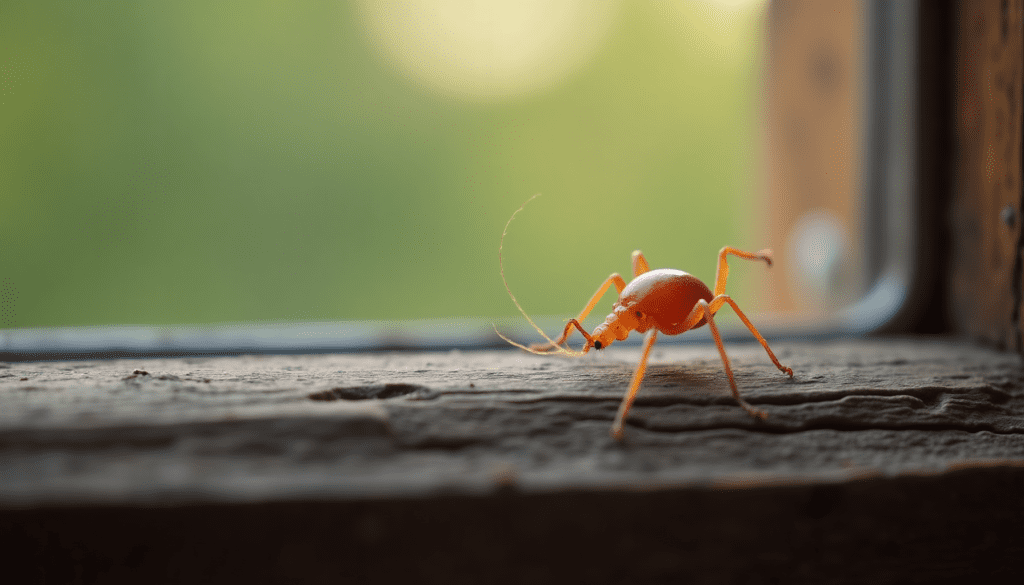
A chigger is the larval stage of a harvest mite in the family Trombiculidae, and that one fact settles most of the confusion. In North America the common culprit is Eutrombicula alfreddugesi, sometimes called the red bug. The biting larva is almost microscopic, often orange or red, and has only six legs. The nymphs and adults that it grows into have eight legs, live down in the soil, and never bite people at all.
So the thing biting you is not a hidden colony of adults; it is a single short-lived larva that has to feed once before it can grow up. According to the University of Florida profile of chiggers, only the larval mite is parasitic, which is why understanding the life cycle is the whole game. Get the stage right and the rest of the picture, where they live and when they are worst, falls into place.
The one feature that confirms it
The single tell that confirms you are dealing with a chigger and not a flea, mosquito, or no-see-um is the pattern and the timing, not a bug you can find. Chigger welts cluster where clothing is tight against the skin, the ankles, the sock line, behind the knees, and around the waistband, because the larva climbs up from the ground until a snug seam stops it. You almost never see the larva on you, because by the time you itch it has already fed and dropped off.
That feeding is the other diagnostic clue. A chigger does not chew a chunk out of you and it does not suck blood like a mosquito. It pierces the skin and injects saliva that hardens into a microscopic straw, then drinks liquefied skin tissue through it. Entomologists describe how chiggers feed through a tiny tube called a stylostome, and your body’s allergic reaction to that tube is what keeps itching for days after the mite is long gone. The itch outlasts the animal, which is the opposite of what most people assume.
Where the myth goes wrong
Almost everything people “know” about chiggers is wrong in the same direction: they believe the bug is still in there. It is not. Chiggers do not burrow into the skin, they do not lay eggs in you, and they do not keep feeding for days. The Missouri Department of Conservation is blunt that they do not burrow into the skin; the larva sits on the surface, feeds for a few hours to a day or two if undisturbed, then falls off on its own.
This is why the nail-polish trick is a dead end. Painting a welt with clear polish, alcohol, or bleach to “suffocate” the chigger does nothing, because there is no live mite under there to suffocate. The only thing that actually helps in the field is mechanical: wash with soap and water soon after you come in, which scrubs off any larvae still wandering before they settle in to feed. Anti-itch cream manages the reaction you already have. For the full bite picture, our guide to chigger bites and whether they burrow walks through what the welts look like and what to skip.
The chigger life cycle, stage by stage
The harvest mite runs through four life stages, and only one of them ever touches you. A female lays eggs in the soil in spring. Each egg hatches into the six-legged biting larva, the chigger, which climbs onto vegetation and waits for a host. After it feeds and drops off, it molts into an eight-legged nymph, then into an adult, and both of those stages are predators of soil insects and their eggs, not parasites of people or pets.
That is the payoff of knowing the biology. The bites you get are not an “infestation” you carry home; they are a one-time encounter with larvae that have already left. Because the adults overwinter in the soil and lay the next generation when it warms up, the larval wave builds through late spring and peaks in the hot, humid stretch of summer. Match that calendar against your own yard and you know exactly when to be careful.

Where chiggers live, and the look-alikes to rule out
Chiggers concentrate in predictable places: tall grass, brushy edges, and damp shaded ground. The larvae cannot fly or jump, so they wait at the tips of grass blades and low plants for something warm to brush by. Iowa State Extension notes that chiggers wait on tall grass and brushy edges, which is why a mowed lawn meeting an unmowed weedy fence line is the classic ambush zone. Knowing they climb from the ground up is also what tells you to protect your socks and cuffs first.
People most often confuse chigger welts with the bites of other small biters, so here is the quick separation:
| What it is | How to tell | Where you get it |
|---|---|---|
| Chigger (harvest mite larva) | Cluster of welts at sock line and waistband; no visible bug; itch peaks day 2 | Tall grass, brushy edges, damp shade |
| No-see-um (biting midge) | Sharp bites on exposed skin at dawn or dusk; tiny fly you can sometimes see | Near water and damp muck |
| Flea | Bites low on the legs and ankles indoors; jumping insect on pets | Carpet, pet bedding, yards with animals |
The fastest tell is location plus timing. If the welts cluster under tight clothing after time in grass and you never saw the bug, you are looking at chiggers, not no-see-ums or fleas.
Range, season, and when to expect them
Chiggers turn up across most of the warm and humid United States, heaviest in the Southeast and the lower Midwest, and they need moisture, so they thrive along streams, in overgrown fields, and in damp shaded thickets. You will run into them most from late spring through early fall, with the worst stretch during hot, sticky midsummer when the larval wave peaks. In the cooler north the season is shorter; in the South it can run for months.
Region and season are load-bearing here. A grassy trail that is harmless in October can be a chigger gauntlet in July, and the same yard is riskier along its weedy back edge than across its mowed middle. If your property has the kind of tall grass and leaf litter chiggers favor, our walkthrough on how to get rid of chiggers in your yard covers the mowing and clearing that shrinks their habitat.
How to keep them off you
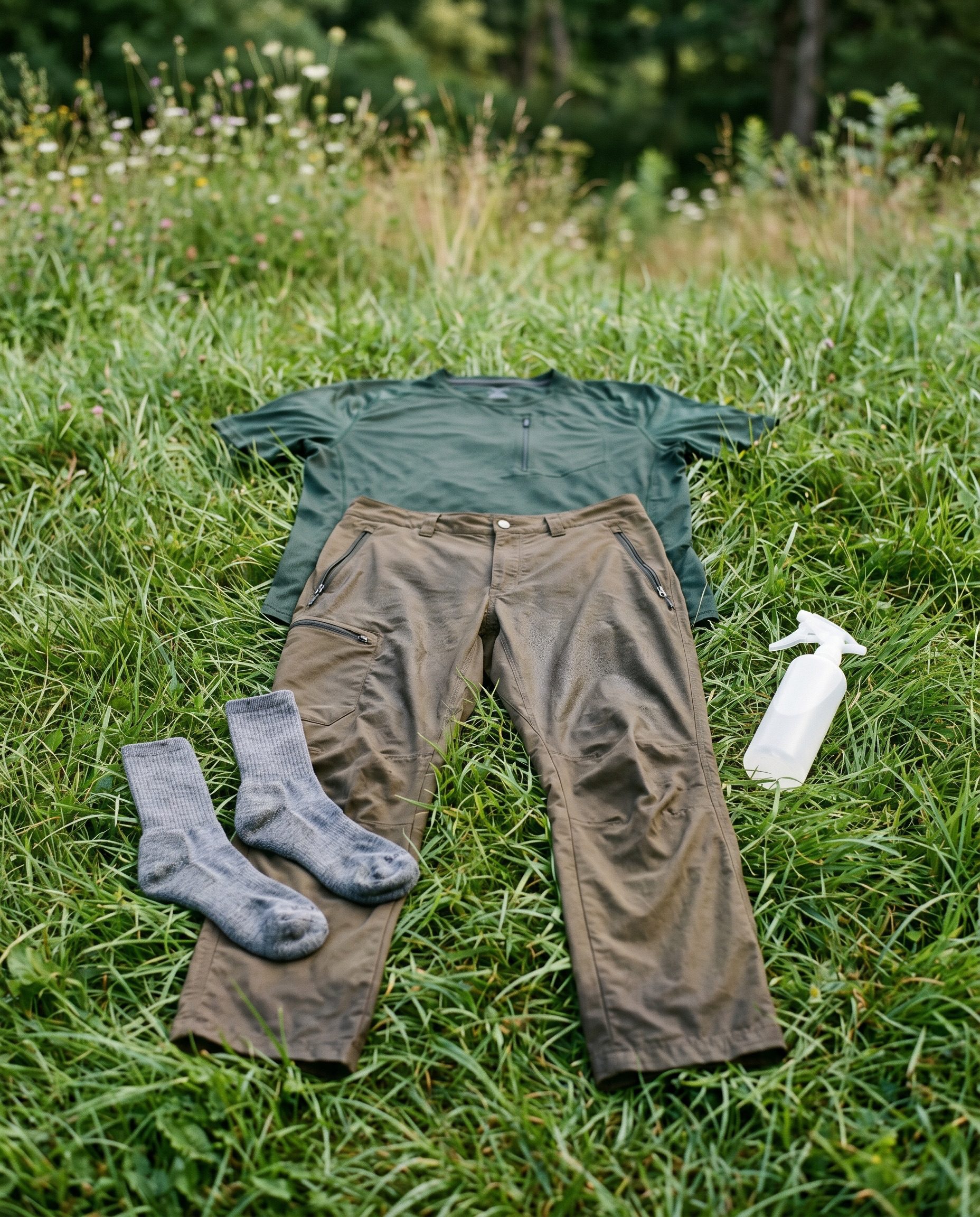
Because chiggers climb up from the ground, prevention works best in layers from the ankle up. Start with skin: the EPA covers choosing an EPA-registered repellent with picaridin, DEET, or oil of lemon eucalyptus, applied to ankles and lower legs per the label. Then treat your gear, because the CDC explains that permethrin belongs on clothing, not skin: spray socks, cuffs, and your waistband, let it dry fully before wearing, and keep it away from cats while it is still wet.
Mechanical habits finish the job. Tuck pants into socks so there is no open seam for a larva to climb into, and wash with soap and water as soon as you come inside to knock off any that have not settled. For products that suit the chigger problem specifically, our roundup of the best chigger repellents compares the skin and clothing options side by side.
Common questions
Are chiggers insects?
No. A chigger is the larval stage of a harvest mite, which is an arachnid, not an insect. The biting larva has six legs, but the harmless nymphs and adults it grows into have eight, the same as spiders and ticks. So even though “bug” is fine in casual use, a chigger is technically a mite, not an insect.
Do chiggers burrow into your skin?
No, and this is the most common myth. Chiggers sit on the surface, feed through a tube for a few hours, then drop off. The days-long itch is your allergic reaction to that feeding tube, not a live mite trapped under the skin, which is why suffocation tricks like nail polish do nothing.
How long do chiggers stay on you?
Usually only a few hours, up to a day or two if completely undisturbed. They feed once, then fall off to continue their life cycle in the soil. Washing with soap and water soon after exposure scrubs off larvae that have not finished settling in.
What time of year are chiggers worst?
Late spring through early fall, with the peak in hot, humid midsummer when the larval generation is most active. The season is longer in the South and shorter in the cooler north, and it tracks moisture, so damp, overgrown ground stays risky longest.
Do chiggers live indoors or on pets?
Not really. They are an outdoor, ground-and-vegetation animal, and a larva that drops off you in the house cannot reproduce or establish there. They can briefly bite a pet that walks through infested vegetation, but they do not infest homes the way fleas do.
Final verdict
A chigger is the larval stage of a harvest mite, and that single fact answers the rest. Only the six-legged larva bites; the eight-legged nymphs and adults live in the soil and are harmless. The larva waits on tall grass and brushy edges, climbs until a tight seam stops it, feeds through a tube for a few hours, then drops off, which is why the itch outlasts the bug and why suffocation tricks fail. They peak in hot, humid summer in damp, overgrown ground, so the cure is to know the habitat, protect from the ankles up, and wash soon after you come in.
Next steps:
– Shrink the habitat with our guide to getting rid of chiggers in your yard.
– Match your welts before you treat with our chigger bites identification guide.
– Compare skin and clothing protection in the best chigger repellents roundup.
Pingback: Types of Biting Mites: Chiggers and Four Others