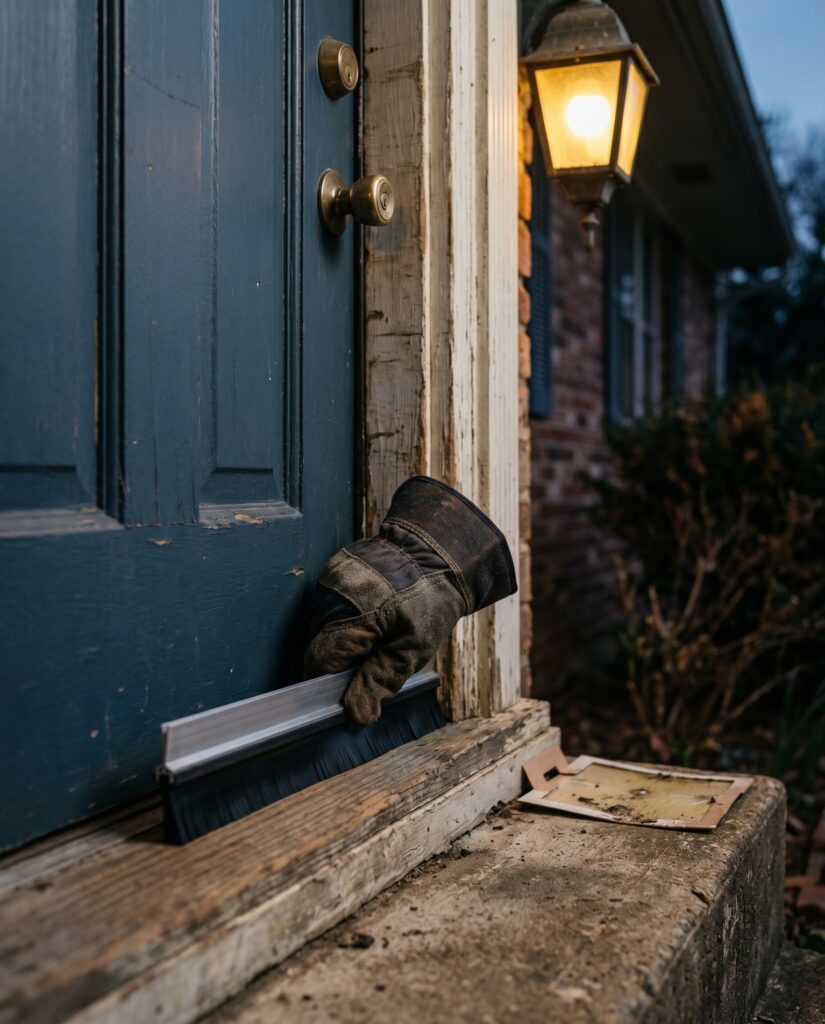
If you keep finding crickets indoors, the thing to understand is where they are coming from. Crickets in the house are almost always walking in from outside, pulled in by warmth, light, and moisture, so getting rid of them is really about closing the door and drying things out, not just squashing the ones you see. Catch the crickets already inside with glue boards along the walls, then seal the foundation cracks, fit door sweeps, and close the gaps around pipes, knock down indoor moisture, and move or change the outdoor lights that draw them to the house. A perimeter treatment outside finishes it, because spraying indoors alone never keeps up with the ones still walking in.
Crickets come in from outside, so the fix is to close the door and dry things out, not just kill the ones indoors. Catch the indoor crickets on glue boards, seal entry points, drop the moisture, switch outdoor lights to yellow bulbs, then treat the perimeter outside.
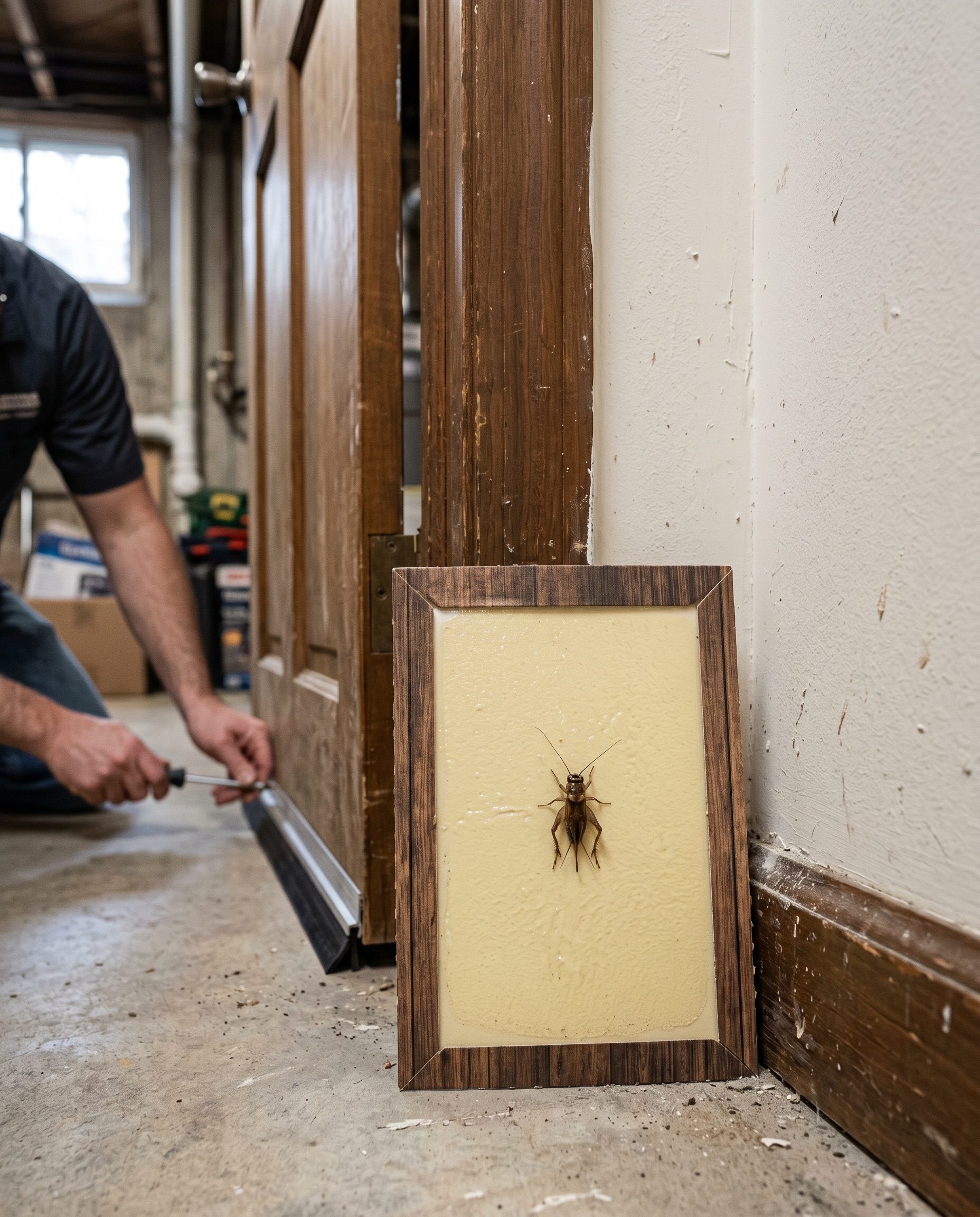
- Do first (free): Set glue boards along the baseboards, dry out the damp rooms, cut tall grass by the foundation, and turn off or move the outdoor lights at night.
- Best for the common case: Seal foundation cracks, pipe gaps, and door sweeps, run a dehumidifier in a damp basement, and add a perimeter treatment outside.
- Skip: Fogging the inside of the house; it never reaches where crickets hide and does nothing to stop new ones from walking in.
Why they keep getting in
The reason indoor spraying feels like a losing battle is that the house is not really where the crickets live. They live outside, in mulch, leaf litter, tall grass, and woodpiles, and they drift toward your foundation looking for warmth and a way in as nights cool off. University of Minnesota Extension is blunt that crickets are a nuisance rather than a health threat: they do not bite people, they are not aggressive, they do not feed on blood, and they carry no disease that threatens you. What they do is chirp at 2 a.m. and occasionally chew on paper, cardboard, or fabric.
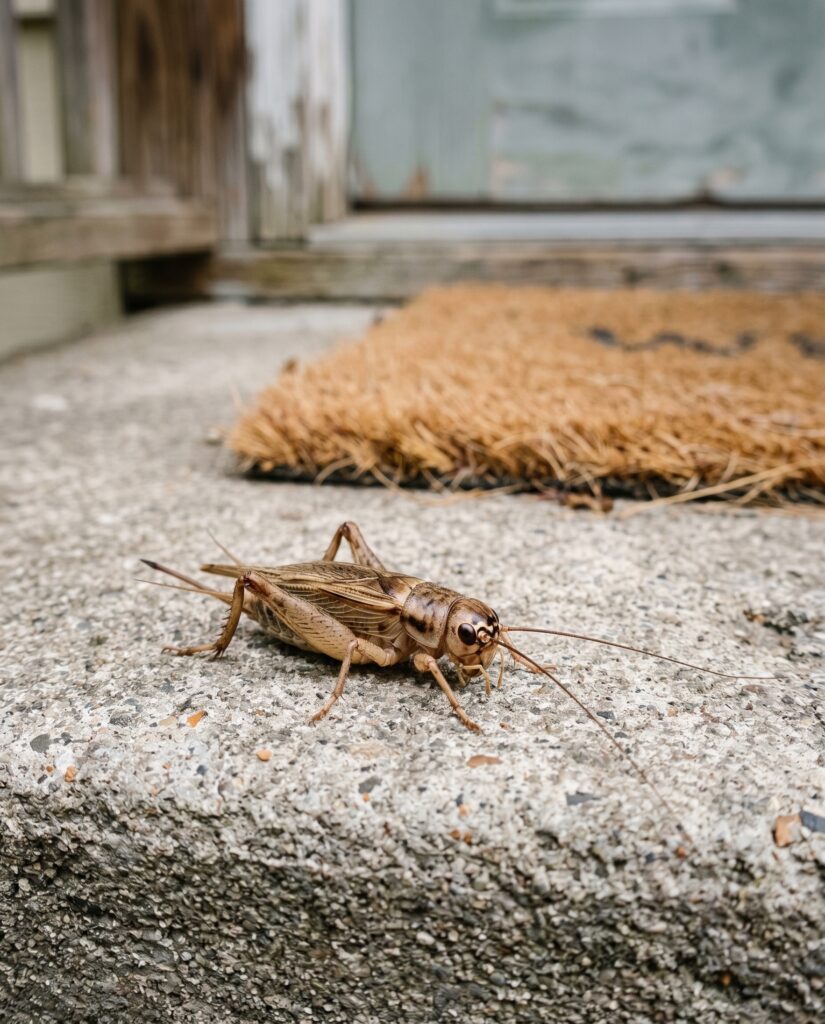
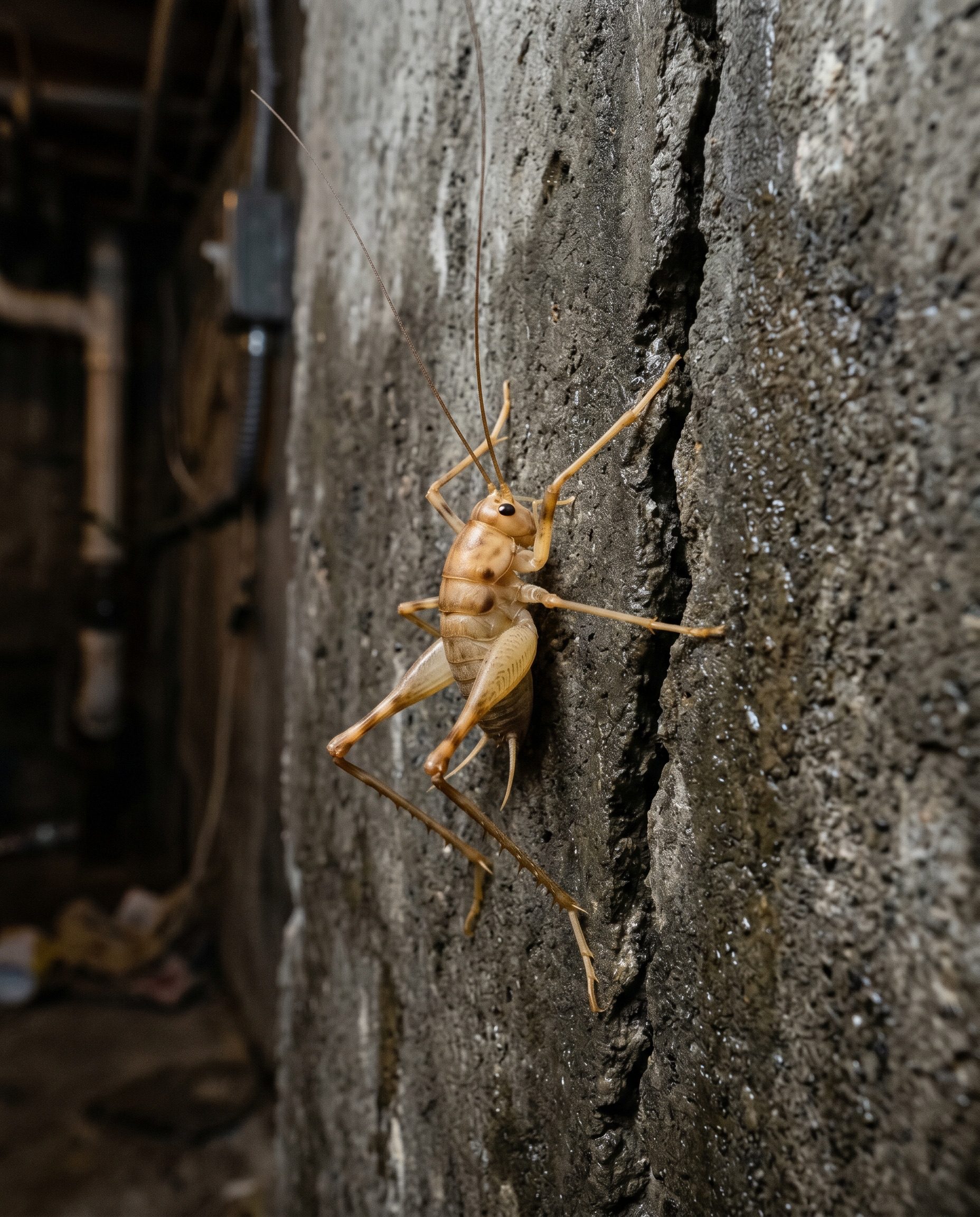
The two you will meet most are the brown house and field crickets, which are the ones that chirp, and the pale humpbacked camel cricket. Iowa State notes that field crickets wander indoors from the yard and are drawn to lights, which is the whole pattern in one sentence: they are outdoor insects following the porch bulb to your door. Because the source is the yard, the lasting fix is exclusion and habitat, not interior chemistry — you stop the supply, then mop up what already got in.
Tell which cricket you have
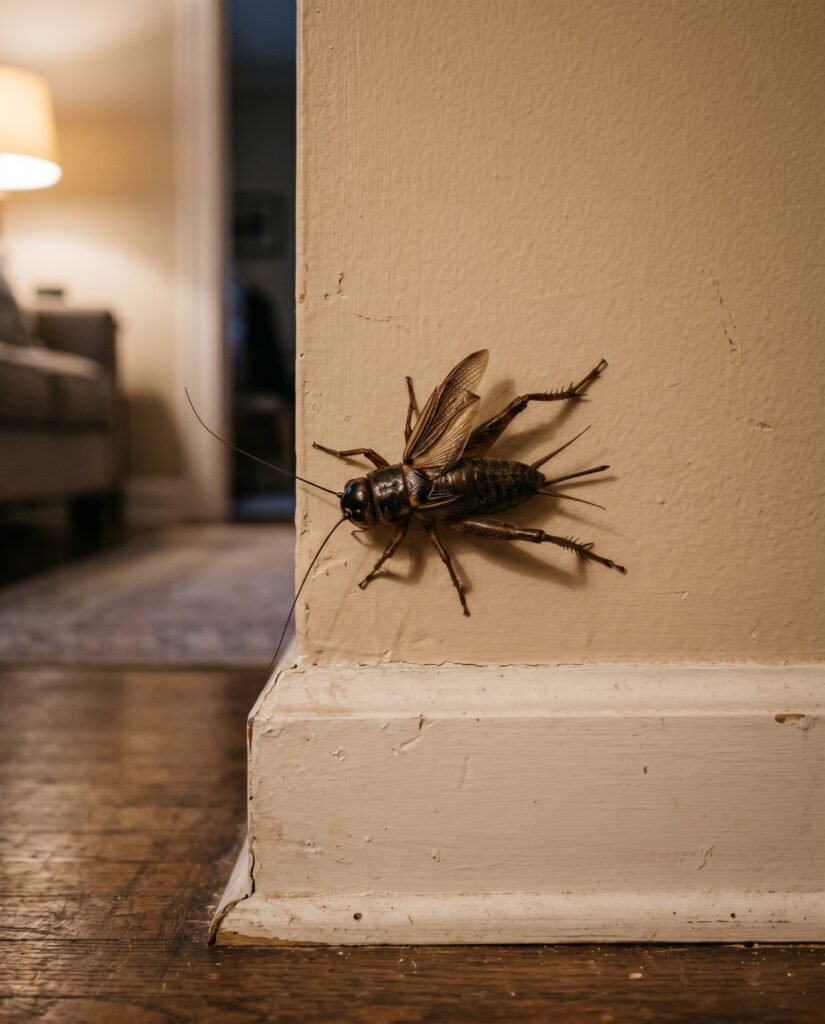
Knowing the species tells you what is actually wrong. If you hear chirping, you have house or field crickets, and only the males chirp, and they quiet down when disturbed or cold — which is why the sound stops the second you walk in and goes away as the weather turns. These are the ones following warmth and light toward the house.
If you are finding leggy, humpbacked, wingless insects in the basement or crawlspace and hearing nothing, those are camel crickets, sometimes called spider crickets. Iowa State is clear that camel crickets are wingless, never chirp, and signal a damp space. That distinction matters: a camel cricket is a moisture alarm, so the answer is a dehumidifier, not a louder trap. One last note so you do not chase the wrong pest — mole crickets are a separate burrowing lawn pest that damages turf, not something you fight indoors. If the chirping is what is keeping you up, our guide on how to stop cricket chirping and find the one driving you crazy walks you to the source.
What to do first, for free
Before you buy anything, do the work that costs nothing and removes the reason crickets came. Start outside. Cut the grass short along the foundation, pull mulch and leaf litter back away from the wall, and move woodpiles and debris off the house, because that band of damp cover is where crickets stage before they come in. Then deal with the lights: crickets follow them, so turn off porch and garage lights you do not need at night, or move the light away from the door so the bugs gather there instead of at your threshold.
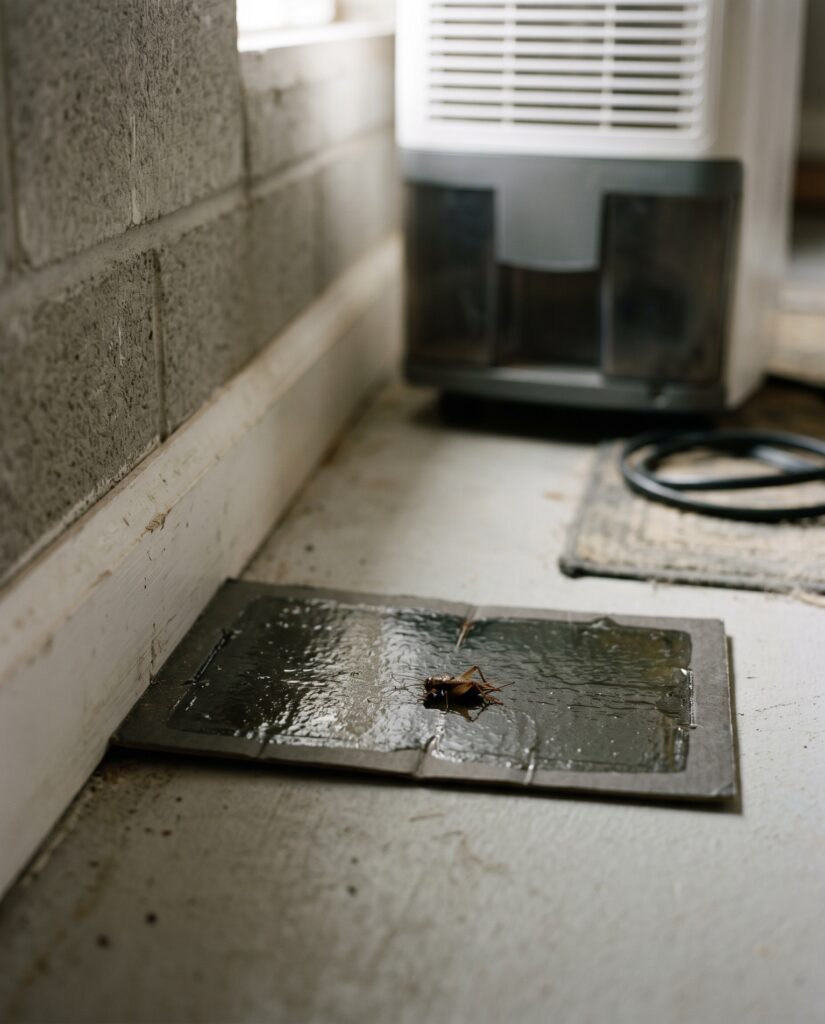
Inside, attack the moisture and trap what is already there. Run a fan or a dehumidifier in any damp basement, crawlspace, or laundry room, fix dripping pipes, and clear the clutter on the floor where crickets hide during the day. Then set flat glue boards flush against the baseboards, in corners, behind appliances, and along the wall a cricket would travel — they hug edges, so place traps tight to the wall, not out in the open. Check them every few days and replace any that fill up. If you want the boards that actually hold crickets instead of letting them pull free, our rundown of the best cricket traps sorts the ones worth setting from the ones that disappoint.
Seal them out, then treat the perimeter
Trapping buys relief, but sealing is what ends it, because every cricket indoors used a gap to get there. Walk the foundation and the lowest few feet of the house and close the openings: caulk foundation cracks, fit door sweeps on every exterior door including the garage, seal the gaps where pipes, cables, and dryer vents pass through the wall, and repair torn window and vent screens. This is slow work, but it is permanent in a way no spray is.
When you do reach for a product, the right move is a perimeter treatment outside, not fogging inside. A barrier insecticide labeled for exterior perimeter use, applied as a band around the foundation and the bottom of the wall, hits crickets as they approach the entry points you just sealed. Match the tool to the situation below — and whenever you use any registered pesticide, the EPA’s guidance to read and follow the product label, and seal pests out before you spray is the rule, because under federal law the label is the law and exclusion comes first. Keep children and pets off treated areas until they are dry, never apply on food-prep surfaces, and for an exposure question contact a doctor, your vet, or your local poison control center. For category logic on what to spray where, our guide to cricket killers and sprays sorts the perimeter products from the indoor spot treatments.
| Situation | Best approach | Watch out for |
|---|---|---|
| Chirping in living areas | Glue boards on baseboards plus seal entry points | No indoor fogging; it misses hiding spots |
| Damp basement or crawlspace | Dehumidifier plus glue boards for camel crickets | Moisture is the real driver, not the bugs |
| Crowding the porch or door | Switch to yellow bulbs and move the light | Bright white lights keep pulling them in |
| Heavy outdoor numbers | Labeled perimeter band around the foundation | Read the label; keep pets off until dry |
Keep them out for good
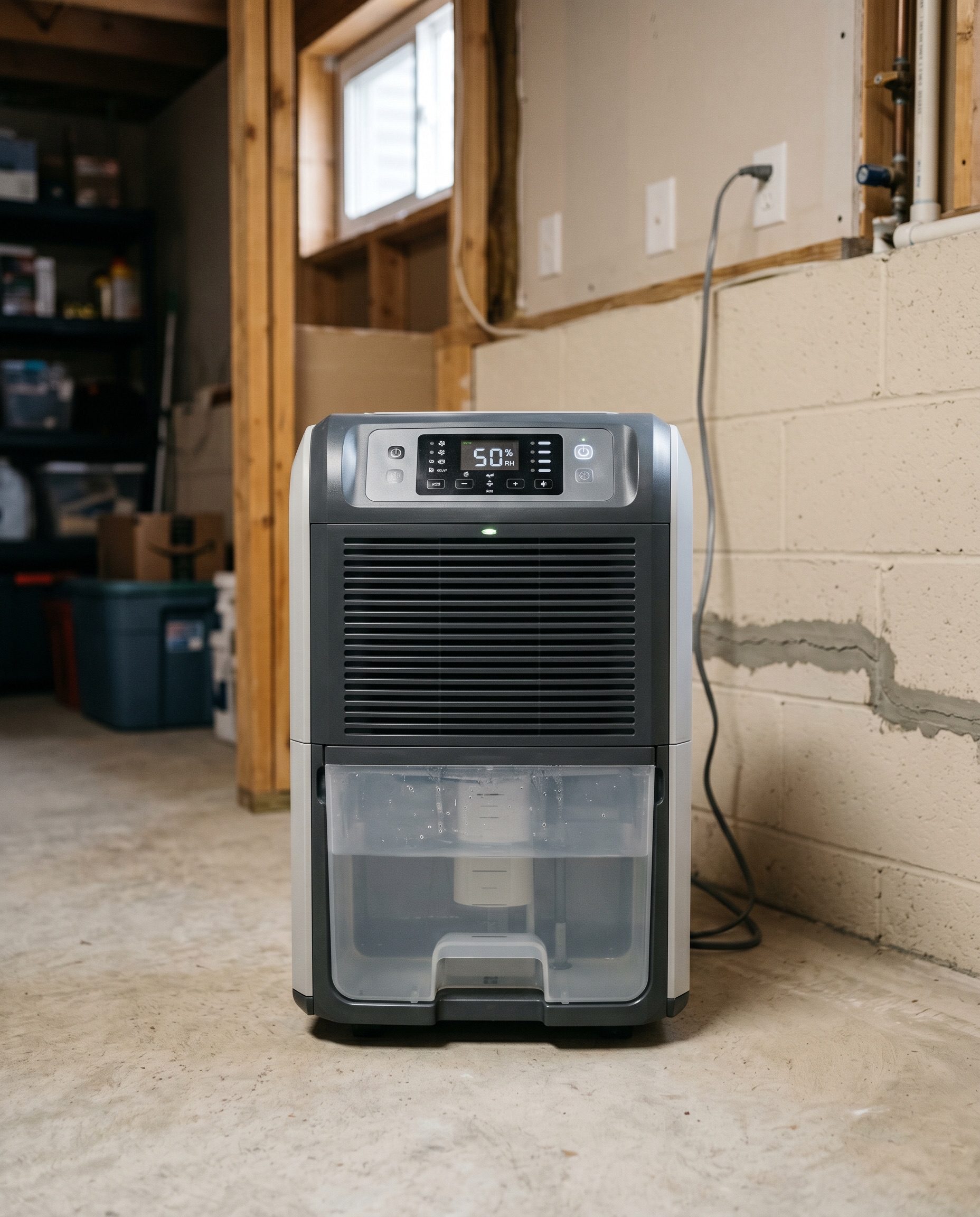
Prevention is just the first two steps turned into habits. Keep the dehumidifier running through the humid months so the basement never invites camel crickets back, and re-check your door sweeps and caulk each fall before the cool nights push crickets toward the house. Crickets are most active in late summer and early autumn, so the smart timing is to seal and treat before that surge, not during it.
Change the lighting for the long term too. Swap white exterior bulbs for yellow “bug” bulbs that attract fewer insects, and aim outdoor fixtures down and away from doors. If you understand the draw, the chirping itself starts to make sense — our explainer on why crickets chirp and what it actually means covers the behavior so you can read your own house. Keep a glue board or two down as a quiet monitor; a sudden catch tells you a new gap opened up before the chirping ever starts.
Common questions
What kills crickets instantly?
A direct shot of a labeled contact spray or a flyswatter handles the cricket in front of you, and glue boards quietly clear the ones you do not see. But “instant” only covers that one bug. Crickets keep walking in from outside, so the lasting answer is sealing the entry points and treating the perimeter, not chasing each one indoors.
Are crickets in the house dangerous?
No. Crickets do not bite people in any meaningful way, they are not aggressive, they do not feed on blood, and they spread no disease that threatens you. They are a nuisance, the chirping and the occasional chewed paper or fabric. That is also why an aggressive indoor chemical response is overkill for what is really a noise and entry problem.
Why do I keep hearing one cricket but can’t find it?
Only males chirp, and they stop the instant you move or turn on a light, which is exactly why you never catch them in the act. They also slow down as it gets cold. Set a glue board along the wall near where the sound seems loudest and let it find the cricket while you sleep.
Will a dehumidifier really help with crickets?
For camel and spider crickets in a basement or crawlspace, yes, it is the single most important fix. Those crickets are wingless and tied to damp, humid spaces, so dropping the humidity removes the reason they are there. For chirping house crickets, moisture matters less than sealing and lighting.
Do bug bombs or foggers work on crickets?
Not well. Foggers drift a thin mist across open surfaces, but crickets hide in cracks, behind appliances, and along baseboards the mist never reaches, and a fogger does nothing to stop new crickets from walking in. Skip it and put the effort into glue boards, sealing, and an outdoor perimeter band.
Final verdict
Getting rid of crickets is about cutting off the supply, not winning a fight with the ones already inside. Do the free work first: set glue boards tight along the baseboards, dry out the damp rooms, cut the grass and pull mulch off the foundation, and kill or move the outdoor lights that draw them in. Then make it stick by sealing foundation cracks, fitting door sweeps, and closing the pipe gaps, running a dehumidifier where camel crickets show up, and laying a labeled perimeter band around the outside. Skip indoor fogging; it never reaches where crickets hide and ignores the door they keep using. Trap, dry, seal, and treat the edge, and the chirping stops because the crickets stop getting in.
Next steps:
– Set the boards that actually hold crickets with our best cricket traps guide.
– Track down the one keeping you up using how to stop cricket chirping and find a cricket.
– Pick the right perimeter product in our cricket killers and sprays breakdown.