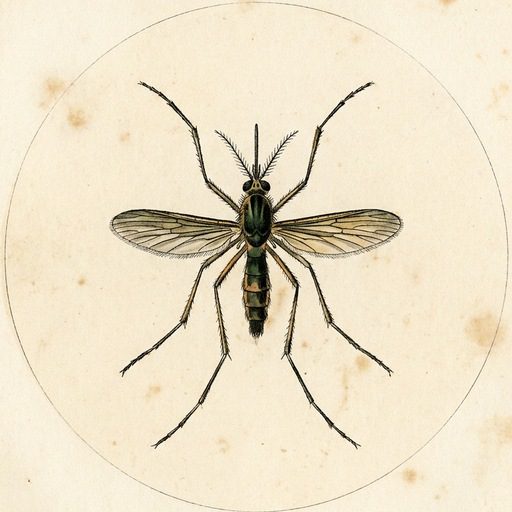
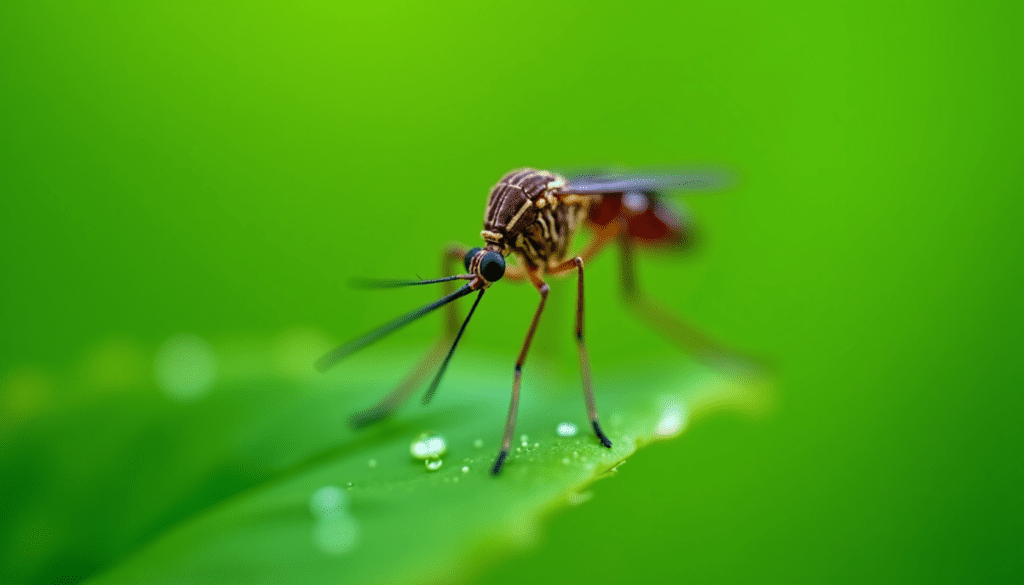
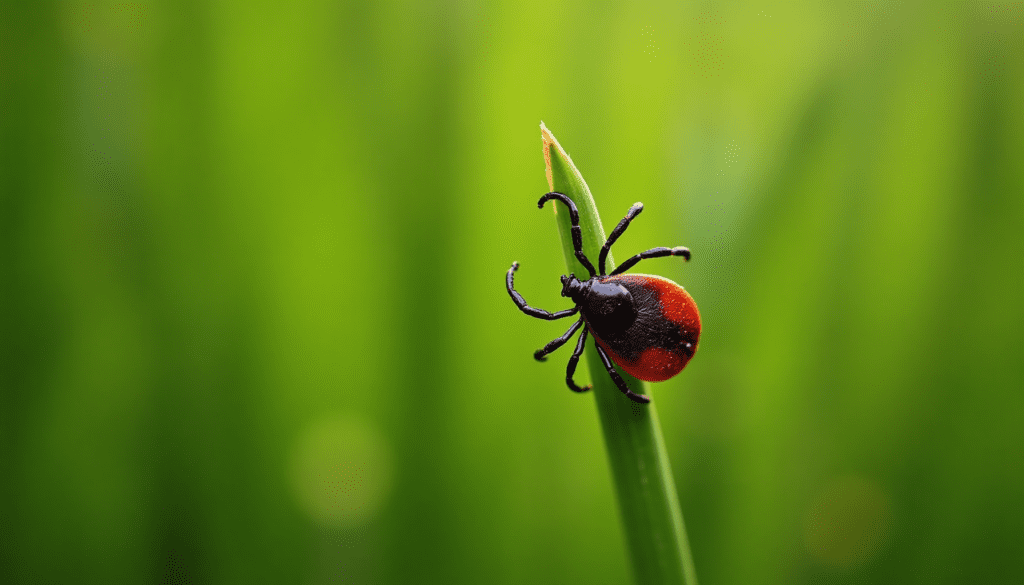
Bites in a rough line along skin exposed overnight point first to bed bugs, tight clusters around the ankles point to fleas, and scattered single welts point to mosquitoes, while groups of small itchy bumps under snug clothing suggest chiggers or other mites. The pattern is a starting clue, not a verdict: even physicians cannot reliably name the culprit from the bite alone, so confirmation comes from evidence like live insects, fecal spots, or a pet check.
- Line on exposed skin: Bed bugs lead the shortlist; confirm by inspecting the bed, not by staring at the welts.
- Cluster at the ankles: Fleas are the classic cause, especially in homes with cats or dogs.
- The red flag: Spreading redness, warmth, pus, or fever means see a clinician; any trouble breathing means get emergency care right away.
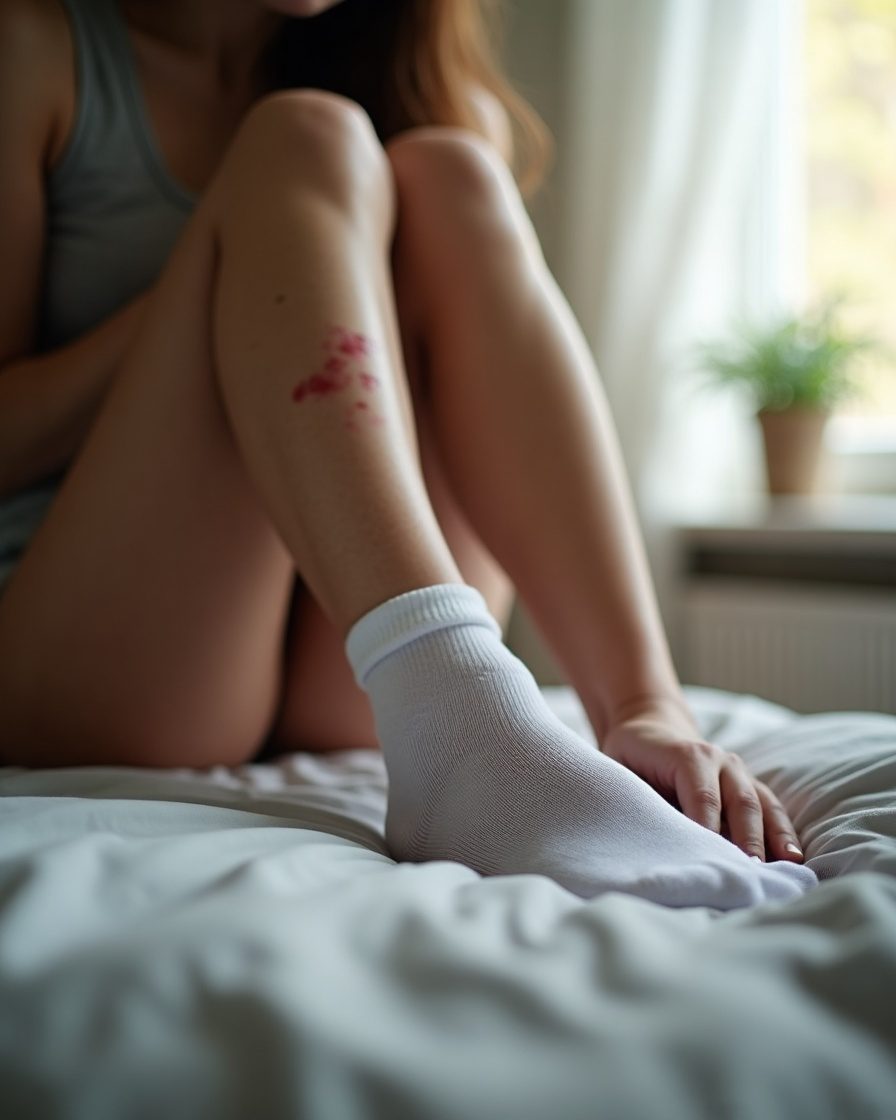
What a line, a cluster, and a scatter actually look like
Three shapes come up again and again, and each narrows the suspect list in a different direction. A line means three or four welts strung along a stretch of skin, often an arm, shoulder, or the side of the torso, spaced a finger-width apart. A cluster means a tight group packed into one small zone, classically the ankle or the band just above the sock. A scatter means single, unrelated welts on exposed skin with no geometry at all.
Each shape reflects how the animal feeds. An insect that walks along resting skin and probes several times leaves a trail, one that jumps up from the floor leaves a knot near the ground, and a flying insect that feeds once produces lonely singles. That logic is the backbone of our full insect bite identification chart, but it comes with an honesty clause we will get to shortly: the same insect can produce different patterns on different people, and some patterns are not bites at all.
The welts themselves look remarkably similar across most household biters. What separates the culprits is the arrangement, the location, and the timing, plus whatever physical evidence turns up in the room, on the pet, or in the yard.
Bites in a line: why bed bugs lead the shortlist
The linear pattern, nicknamed breakfast, lunch, and dinner, is most often attributed to bed bugs, and the mechanism is plausible. A bug disturbed mid-meal, or probing more than once to find a good vessel, can leave two or three welts in a short row along the arm, neck, or back, and several bugs feeding along the edge where your body meets the mattress produce the same effect. According to the University of Kentucky’s bed bug ENTfact, the bugs feed for about three to ten minutes while the host sleeps, painlessly, which is why nobody wakes up to catch them in the act.
The supporting details matter as much as the line itself. Bed bug welts appear on skin that was exposed overnight, the face, neck, shoulders, arms, and lower legs, rather than under snug waistbands. The itching often shows up a day or more later, which disconnects the bite from the night it happened. And a surprising share of people never react at all: research summarized by Kentucky’s entomologists found that roughly thirty percent of people show no reaction to bed bug bites, with even higher non-reactivity among older adults.
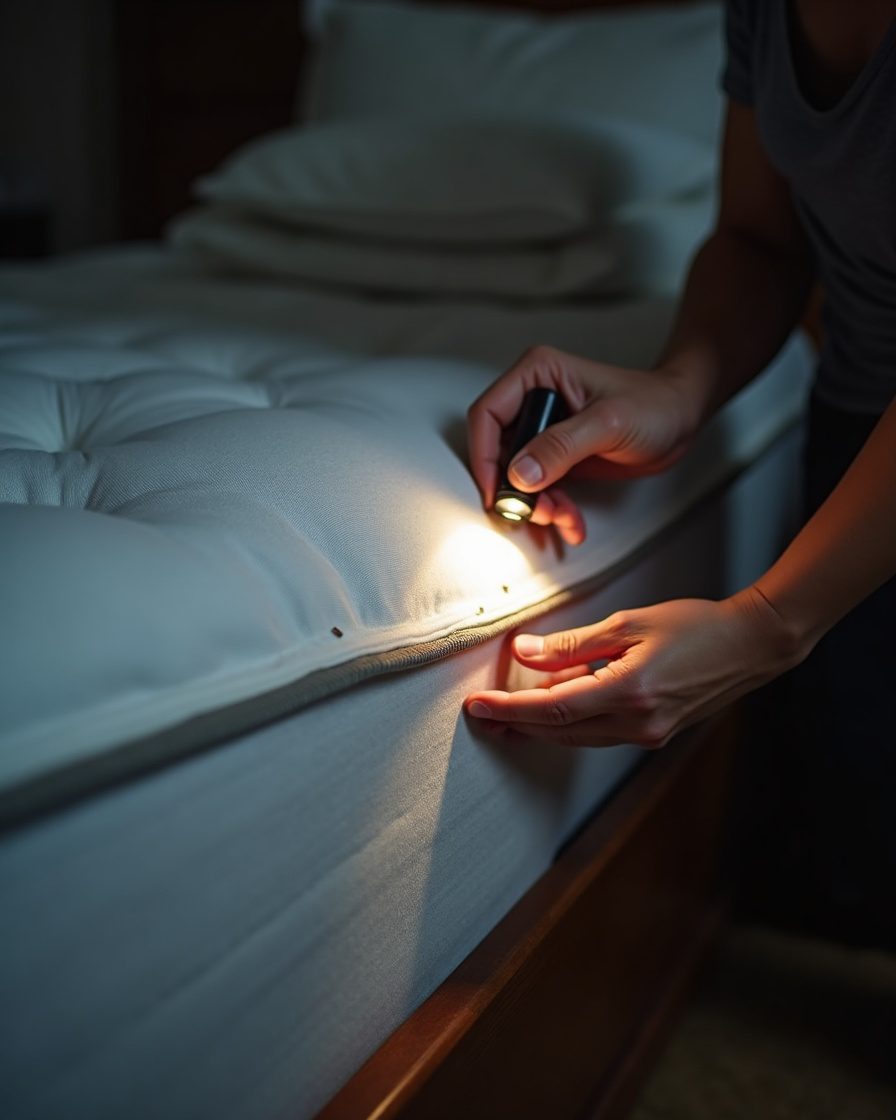
The practical rule: a line of bites is a reason to inspect, never a diagnosis. Check the mattress seams, box spring, frame joints, and the wall behind the headboard for dark fecal spots, shed tan skins, and the flat reddish-brown bugs themselves. Bites alone, in any arrangement, do not confirm an infestation. Our full guide to bed bug bites and what to do about them walks through the inspection step by step.
Clusters at the ankle: the flea signature
If the geometry of your bites is a tight cluster, drop your eyes to where they sit. Fleas live at floor level, in carpet, pet bedding, and upholstery, and they reach you by jumping. That physics puts their bites overwhelmingly on the ankles, lower legs, and feet, packed into groups, because a flea often bites two or three times where it lands. The University of Kentucky’s mystery-bite guidance lists the lower legs and ankles as the classic flea zone, in contrast to the anywhere-exposed pattern of bed bugs.
Flea bites tend to be small red bumps with intense itching, sometimes with a lighter halo. The strongest confirming evidence is not on your skin but on the pet: Kentucky’s flea control ENTfact describes digested blood expelled by fleas that appears as dark, pepper-like specks in the animal’s fur, the flea dirt a fine comb pulls up from the rump and belly. No pet does not rule fleas out, but combing the cat is the fastest single test you can run. For the skin side, our guide to flea bites on humans covers appearance and treatment in detail.
A useful contrast: bed bug bites concentrate where you sleep, flea bites concentrate at floor level and largely spare the face and shoulders. When the two are genuinely hard to tell apart, the side-by-side comparisons in our piece on bed bug bites versus flea and mosquito bites are built for exactly that call.
Scattered singles and grouped papules: mosquitoes, chiggers, and mites
Scattered, unconnected welts on skin uncovered outdoors are the least mysterious pattern. A mosquito lands, feeds once, and flies off, so its work reads as random singles on the forearms, ankles, face, and neck. The welts rise quickly, itch promptly, and fade within days, which separates them from the delayed, longer-lived reactions bed bugs can cause.
Grouped papules under snug clothing tell a different story. Chiggers, the larval stage of a mite picked up from grassy and brushy vegetation, climb until something stops them, and the University of Florida’s chigger publication notes that they prefer to attach where clothing fits tightly or where skin is thin and tender, the ankles, waistline, backs of knees, and armpits. The result is a band of small reddish welts along the sock line or waistband, with itching that starts four to eight hours after exposure and can run for a week or two. If that matches what you see after a hike, our walkthrough on how to treat chigger bites covers the calm-it-down routine.
Other mites, including those associated with birds, rodents, or stored products, can also produce grouped or scattered itchy papules without any pattern clean enough to read, which is the first hint of the larger truth in the next section.
| Pattern | Lead suspect | Distinguishing marks | Confirm with |
|---|---|---|---|
| Line or short row | Bed bugs | Exposed skin overnight; delayed itch; some people never react | Fecal spots, shed skins, or live bugs at mattress seams and frame |
| Cluster at ankles | Fleas | Floor-level geometry; intense itch; pets in the home | Flea dirt in pet fur; fleas jumping onto white socks |
| Scattered singles | Mosquitoes | Exposed skin outdoors; quick itch; fades in days | Time outside at dusk; season and standing water nearby |
| Grouped papules under snug clothing | Chiggers or other mites | Sock line, waistband, skin folds; itch starts hours later | Recent time in grassy or brushy vegetation |
What a pattern honestly cannot tell you
This is the section most bite articles skip, and it is the most important one here. The University of Kentucky’s guidance on unexplained bites is blunt: bite-like reactions are difficult to diagnose even for physicians, and without the actual pest in hand, a diagnosis from the lesion alone should be treated as little more than an educated guess. Nobody, this article included, can look at a welt and name the species with certainty.
The reasons stack up quickly. People react to the same bite on different timelines, some raising a welt within a day and others days later, so the pattern you see this morning may be a merged record of several different nights. Around a third of people do not react to bed bug bites at all, so absence of bites is not absence of bugs. Bed bugs stay hidden while they feed, so people are bitten repeatedly without ever seeing an insect, and the imagination fills the gap. A line can come from one bug, three bugs, or three separate mosquito evenings.
So treat pattern-reading as triage, not identification. It tells you where to look first: the bed for a line, the pet and carpet for an ankle cluster, the yard for scatter and sock-line bands. The look itself settles nothing until physical evidence turns up.
Lookalikes that are not insect bites at all
The same Kentucky publication devotes serious space to bite-like conditions with no bite behind them, worth knowing before you throw out a mattress. Tiny fibers from paper, insulation, or new fabric can prick and irritate exposed skin, especially in dry, static-prone air. Household chemistry, including soaps, detergents, and cosmetics, can raise itchy bumps that read as bites. So can medical conditions, among them diabetes, thyroid disorders, shingles, and sustained stress. When bites resist every pest explanation, these are the suspects a careful investigator checks next, and a clinician is the right partner for that part of the search.
Spiders deserve a specific debunking, because they absorb far more blame than they earn. MedlinePlus notes that spiders rarely bite people unless threatened and that most spider bites are harmless. A genuine spider bite is typically a single lesion, not a line and not a cluster, which makes “spider bites” a poor explanation for exactly the multi-bite patterns this article is about.
Calming the itch without making it worse
Whatever drew the pattern, home care for uncomplicated bites is the same short list, and none of it requires knowing the species. Wash the area with soap and water, cool it with a cold compress or ice in roughly ten-minute intervals, then use an over-the-counter anti-itch cream such as hydrocortisone or calamine, and an oral antihistamine if itching disrupts sleep, always at the dose on the product label and nothing beyond it. MedlinePlus’s overview of insect bites and stings backs this simple sequence of washing, cold, and over-the-counter anti-itch relief, plus watching the site for several days for signs of infection. The most valuable habit is the hardest one: keep fingernails off the welts, because scratched-open skin is what gets infected, not the bite itself.
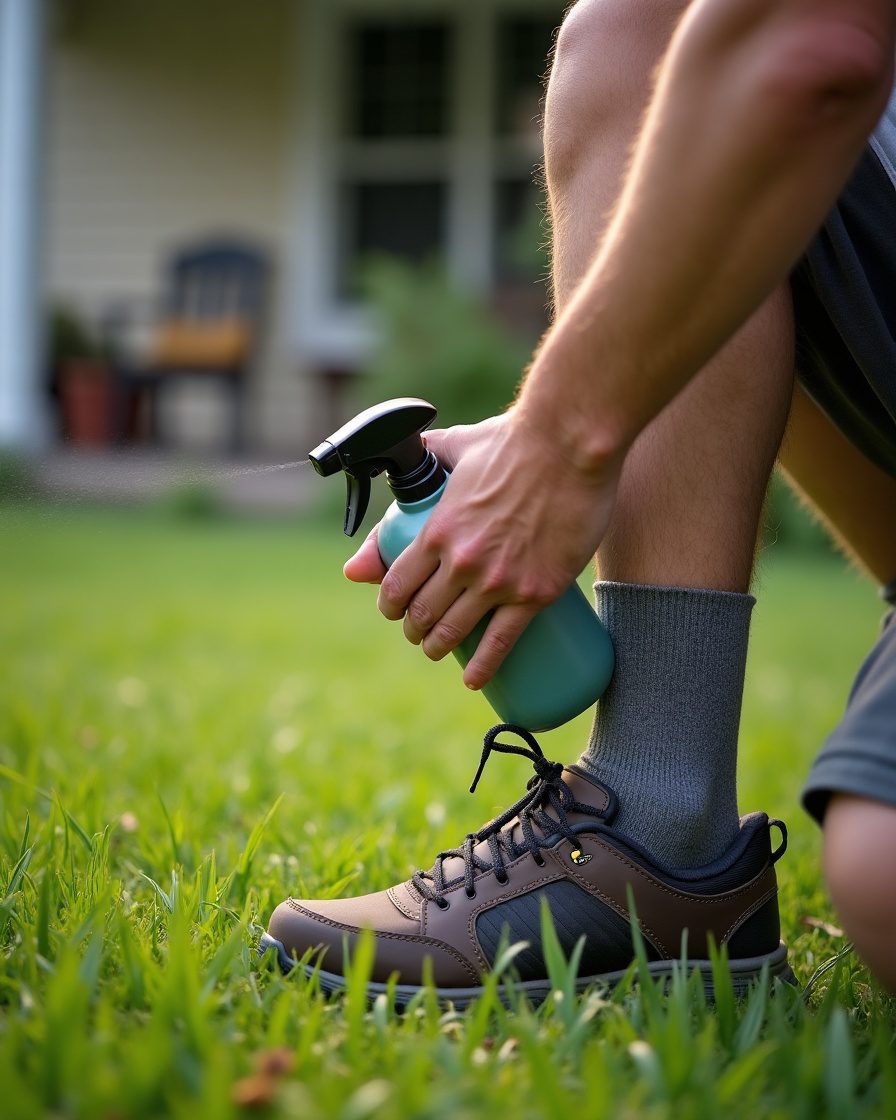
Prevention follows the suspect list. For the outdoor culprits, mosquitoes and chiggers, an EPA-registered repellent applied per the label, with attention to the ankles and sock line, closes the routes those animals use. For fleas, treat the pet on a veterinarian’s advice; for bed bugs, prevention is inspection and early detection, since no skin product addresses an insect that lives in the furniture.
See a clinician if
This article describes patterns and likelihoods; it does not diagnose. See a clinician promptly if you notice any of the following:
- Spreading redness or warmth around a bite, or red streaks moving away from it.
- Pus or crusting at a scratched-open bite, which suggests a skin infection.
- Fever or feeling unwell alongside new bites.
- Welts that keep multiplying or persist beyond two weeks with no pest evidence found.
- Any trouble breathing, throat tightness, or swelling of the face or mouth after a bite or sting. Treat this as an emergency, use prescribed epinephrine if it is available, and get emergency medical care immediately.
The signs in the first two bullets are covered in more depth in our guide to recognizing an infected insect bite, including what a clinician will typically do about one.
Common questions
Do bed bug bites always come in a line of three?
No. The row is a real clue, but bed bug bites also appear as scattered singles and loose groups on exposed skin, and about a third of people never react at all. A line raises suspicion; only physical evidence in the bed confirms it.
Why do I have bites and my partner has none?
Most likely you both were bitten and only you reacted. Reaction rates and timing vary widely, and non-reactors are common, so one clear back in the same bed proves nothing about who was bitten.
What if I never find any insect at all?
Follow the evidence trail once: bed, pet, carpet, yard. If nothing turns up and the welts continue, take the non-insect possibilities seriously and bring the question to a clinician rather than escalating pesticide use against a pest nobody has seen.
The bottom line on pattern-reading
A line of bites says check the bed, a cluster at the ankles says check the pet and the carpet, scattered singles point to your evenings outdoors, and a band under the sock line points to the grass you walked through. Those are honest priors, and also the limit of what skin can tell you, because bite-source identification from the bite alone is unreliable even in trained hands. Confirm with physical evidence, treat the itch with over-the-counter care used per the label, and let the red-flag list above decide when a clinician takes over.
This article is for information only and is not medical advice.