Head lice live on you and fleas only visit. Lice stay on the scalp, spread by head-to-head contact, and make the top and back of the head itch. Fleas live on pets and in carpet, jump up to bite the ankles and lower legs, and leave small hard welts you can see.
- Itchy scalp, especially behind the ears and at the neckline: think lice, and confirm with a fine-toothed comb on wet hair.
- Clusters of small itchy bumps at the ankles and shins: think fleas, especially if you have a dog or cat or just moved into a home that had one.
- The deciding test: lice and their eggs are found in hair; flea bites appear on skin near the floor. Where the evidence sits tells you which pest you have.

Back-to-school season has a way of turning every itch into a small panic. A child scratches behind one ear, someone mentions the classroom lice notice, and suddenly the family dog is under suspicion too. The good news: lice and fleas are easy to tell apart once you know one core difference. Lice are permanent residents of the human scalp, while fleas are visitors that jump up from the floor, bite, and leave.
The fast way to tell them apart
Start with location. Head lice live and feed only on people, holding onto hair shafts on the head and neck, so their itch concentrates on the scalp, behind the ears, and along the hairline. Fleas live on pets and in carpet and furniture, and the University of Kentucky’s guide to unexplained bites notes that flea bites on people show up as small, hardened, itchy welts clustered around the lower legs and ankles, right where a jumping insect from floor level can reach.
Movement is the second clue. Head lice crawl and nothing more, while fleas leap several inches straight up. A tiny dark insect that pinged off a sock was not a louse; a small tan insect holding still on a hair shaft was not a flea.
| Question | Head lice | Fleas |
|---|---|---|
| Where does it itch? | Scalp, behind the ears, back of the neck | Ankles, shins, lower legs |
| Where does the pest live? | On the human head, attached to hair | On pets, in carpet, bedding, and furniture |
| How does it move? | Crawls only; cannot jump or fly | Jumps several inches from the floor |
| What is the telltale evidence? | Nits glued to hair close to the scalp | An itchy pet, or specks jumping in carpet |
| Does the pet matter? | No; pets do not carry head lice | Yes; the pet is usually the source |
Head lice live on you, not in your house
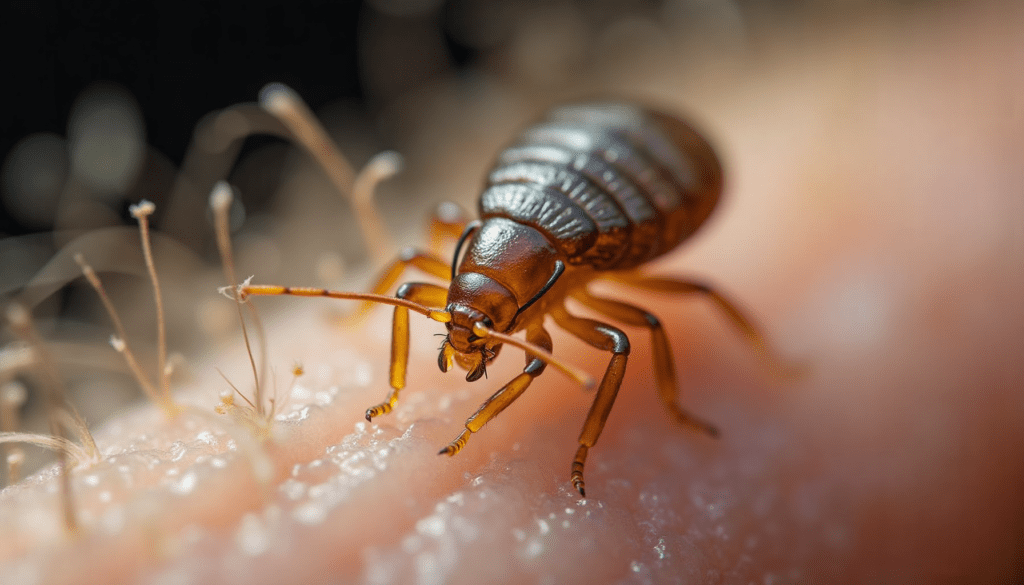
An adult head louse is about the size of a sesame seed, tan to grayish, with a flattened body built for gripping hair. The University of Kentucky’s entomology fact sheet is direct on the two points parents most often get wrong: head lice can only crawl and are unable to jump or fly, and they live and feed exclusively on human hosts. They need blood several times a day, and an adult that falls off a head dies within a day or two, which is why lice do not build up in carpet or wait in the couch the way fleas do. The infestation is on the head, full stop.
Their eggs, called nits, are the most reliable evidence: each is about the size of a grain of sand and glued to a hair shaft close to the scalp, which separates a nit from a dandruff flake that slides freely along the hair. If you are staring at a white speck and cannot decide, our guide to telling lice from dandruff walks through it.
Two myths deserve a plain answer here. First, pets are innocent: animals cannot spread head lice. Second, lice are not a hygiene verdict. MedlinePlus is explicit that cleanliness has nothing to do with catching them, and that lice are most common in children ages 3 to 11 simply because young kids play with their heads close together. Clean hair gets lice exactly as often as any other hair.
Flea bites come from the floor, not your hair
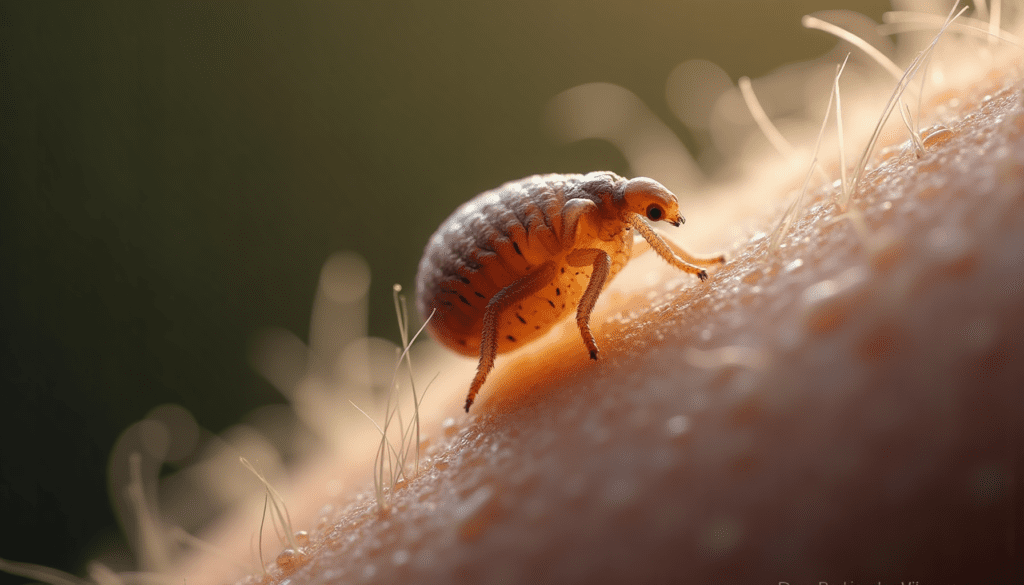
The flea story runs through your pet and your carpet. The cat flea, which infests both dogs and cats, spends its adult life on the animal; females lay 40 to 50 eggs a day in the fur, and those eggs roll off into carpeting, under cushions, and into pet bedding, where the larvae develop out of sight. The University of Kentucky’s flea control guide describes adults that can jump vertically about six inches, exactly the height of a passing human ankle.
That geometry explains the bite pattern. Fleas ambush from floor level, so people collect small, firm, intensely itchy bumps on the ankles, shins, and lower legs, often several in a cluster, and they favor whoever walks barefoot across the carpet. If that matches your bumps, our page on identifying and treating flea bites covers what they look like day by day and how to calm them.
One flea quirk confuses households: bites that continue for weeks after the pet was treated, or that start in a home the family just moved into. Flea pupae rest inside silk cocoons in the carpet for one to four weeks, shielded from insecticides, and hatch when they sense vibration and warmth, so new adults keep emerging long after you think the problem is handled.

How to check for lice in ten minutes
You do not need to guess, because lice leave findable evidence. Work under a bright light, part the hair into small sections, and look close to the scalp, especially behind the ears and at the back of the neck; the MedlinePlus encyclopedia recommends checking section by section for moving lice and for nits attached near the base of hairs. A fine-toothed metal lice comb pulled through damp, conditioned hair makes the job far easier, since anything it catches can be wiped onto a white paper towel and examined.
You are looking for two things: a live crawling insect the size of a sesame seed, or nits glued firmly within about a quarter inch of the scalp. Flakes that slide off at a touch are not nits. For the full section-by-section technique, our parents’ guide to checking for lice covers it step by step.
How to confirm fleas without guessing
Flea confirmation runs through the pet and the floor. Stand your dog or cat on a white towel and run a flea comb through the coat, especially at the rump: live fleas, or pepper-like flecks that turn reddish on the damp towel, are your answer. No pet? Walk the carpeted rooms slowly in white knee socks; fleas jump at moving ankles and show up sharply against white fabric.
The entomologists who investigate unexplained bites for a living are adamant: identify the pest before you treat anything. The University of Kentucky’s mystery bites fact sheet advises that no pesticide should be applied unless biting pests or clear evidence of them are found, because itching alone can come from dry skin, fabric fibers, or stress. Catch a specimen, even on a piece of tape, and you know what you are dealing with.
Treating head lice without wasting a week
If the comb turned up live lice, treatment has two parts, and the comb itself is the backbone of both. Over-the-counter lice treatments are built around two active ingredient classes: permethrin 1% lotions and shampoos containing pyrethrins. Whichever product you use, follow the label exactly, use only one product at a time, and do not exceed what the directions say. MedlinePlus notes that these products mostly target crawling lice rather than eggs, so manual nit removal with a fine-toothed comb, repeated every two to three days for two to three weeks, is what actually closes out an infestation. Our full head lice removal guide lays out the day-by-day schedule.
Some situations belong with a professional rather than the pharmacy shelf. Check with a clinician or pharmacist before treating a child under 2 years old, and before using any pediculicide during pregnancy or while nursing. If live lice are still crawling after a properly applied treatment, contact a clinician instead of re-dosing on your own; resistance to over-the-counter products, often called “super lice,” is a real phenomenon, and a clinician can prescribe alternatives that work through different mechanisms. Our page on super lice and treatment failures explains how to tell a failed product from a re-infestation. And if the scalp shows red, tender, weeping skin, that can mean scratched-open bites have become infected, which is a clinician visit, not a stronger shampoo.
Skip the folk remedies. Mayonnaise, tea tree oil, and coconut oil circulate every school year, but they lack solid evidence and cost you days while the lice keep laying eggs. Household cleanup, by contrast, is quick and genuinely useful in a supporting role: wash bedding, hats, and recently worn clothing hot with a hot dryer cycle, soak combs in hot water for 5 to 10 minutes, and vacuum where heads rest. Because lice die within a day or two off a head, this is a one-time pass.

Getting rid of fleas when they are the culprit
Flea control is the mirror image of lice control: the head is irrelevant and the pet plus the premises are everything. Treat the animal with a veterinarian-recommended flea product and treat the environment at the same time, or the carpet will simply re-seed the pet. Vacuum carpets, baseboards, and under cushions repeatedly; vacuuming removes eggs and larvae, and the vibration coaxes cocooned pupae out into any residual treatment. Products containing insect growth regulators interrupt the life cycle in carpet, and as with any pesticide, the label is the law. Expect stragglers for a couple of weeks while protected pupae finish emerging; that is the life cycle, not a failed treatment.
When it is neither lice nor fleas
Sometimes the evidence refuses to match either suspect. Itching concentrated at the waistband and underarms, where clothing presses tight, points toward body lice, which live in the seams and folds of clothing rather than on skin or scalp, a different problem fixed mostly with hot laundering and regular clothing changes. Bites that appear overnight on exposed arms, shoulders, or face put bed bugs on the list instead. If your pattern fits neither the scalp nor the ankles, our guide to what bit you while sleeping walks the remaining suspects in order of likelihood.
Common questions
Can fleas live in human hair like lice do?
No. Fleas may land on a person and bite, but they do not take up residence in human hair; cat fleas live on dogs and cats and develop in carpet and pet bedding. Insects living and laying eggs in hair are lice, not fleas.
Can head lice jump from my child’s head onto the couch and then onto me?
Lice cannot jump at all; they only crawl, and nearly all spread is direct head-to-head contact, with a smaller role for shared brushes and hats. A louse that falls onto furniture dies within a day or two, so the couch is a dead end, not a reservoir.
Our dog sleeps in my daughter’s bed. Could the dog have given her lice?
No. Head lice feed only on humans, and animals cannot spread them. A dog in the bed can, however, deliver fleas to the bedroom. Check the scalp for nits and the dog for fleas, and the evidence will point one way.
Do flea bites and lice bites look different on skin?
Yes. Flea bites are small, firm, very itchy welts, usually on the ankles and lower legs, each one visible. Lice rarely show individual bites; you see scratch marks, redness, and small bumps on the scalp and neckline instead.
When should I see a doctor instead of treating at home?
See a clinician for suspected lice in a child under 2, before using treatments in pregnancy, when live lice persist after a correctly applied over-the-counter treatment, or when the scalp or any scratched bite shows spreading redness, warmth, pus, or fever. A clinician can prescribe alternatives when the standard options fail.
Final verdict
Lice and fleas answer to two different maps of the body. An itch that lives on the scalp, with sand-grain eggs glued near the roots of the hair, is head lice: a human-only insect that crawls, spreads head to head, and is beaten with a labeled permethrin or pyrethrins product plus stubborn, repeated combing. Itchy welts stacked around the ankles are fleas: a jumping visitor from the pet and the carpet, beaten by treating the animal and the floor rather than any person. Find the evidence before you treat, keep the pet out of the lice conversation entirely, and take the special cases, young children, pregnancy, treatment failures, and infected skin, to a clinician. One careful look with a comb will usually settle the question tonight.
This article is for information only and is not medical advice.