Four things live in houseplant compost and only two of them matter. Fungus gnat larvae and root aphids damage roots. Springtails and soil mites are decomposers that do no harm at all and are actually a sign of healthy soil biology. Every one of the four is encouraged by the same thing, which is compost that stays wet, so watering habit is the real lever.
- Small dark flies drifting up when you water: fungus gnats. Let the top of the compost dry out between waterings.
- Tiny white things that jump: springtails. Harmless decomposers, no action needed.
- Plant wilting despite watering: check the roots, because root aphids and severe gnat larvae damage look identical from above.
InsectoGuide is reader-supported. As an Amazon Associate we earn from qualifying purchases at no extra cost to you.
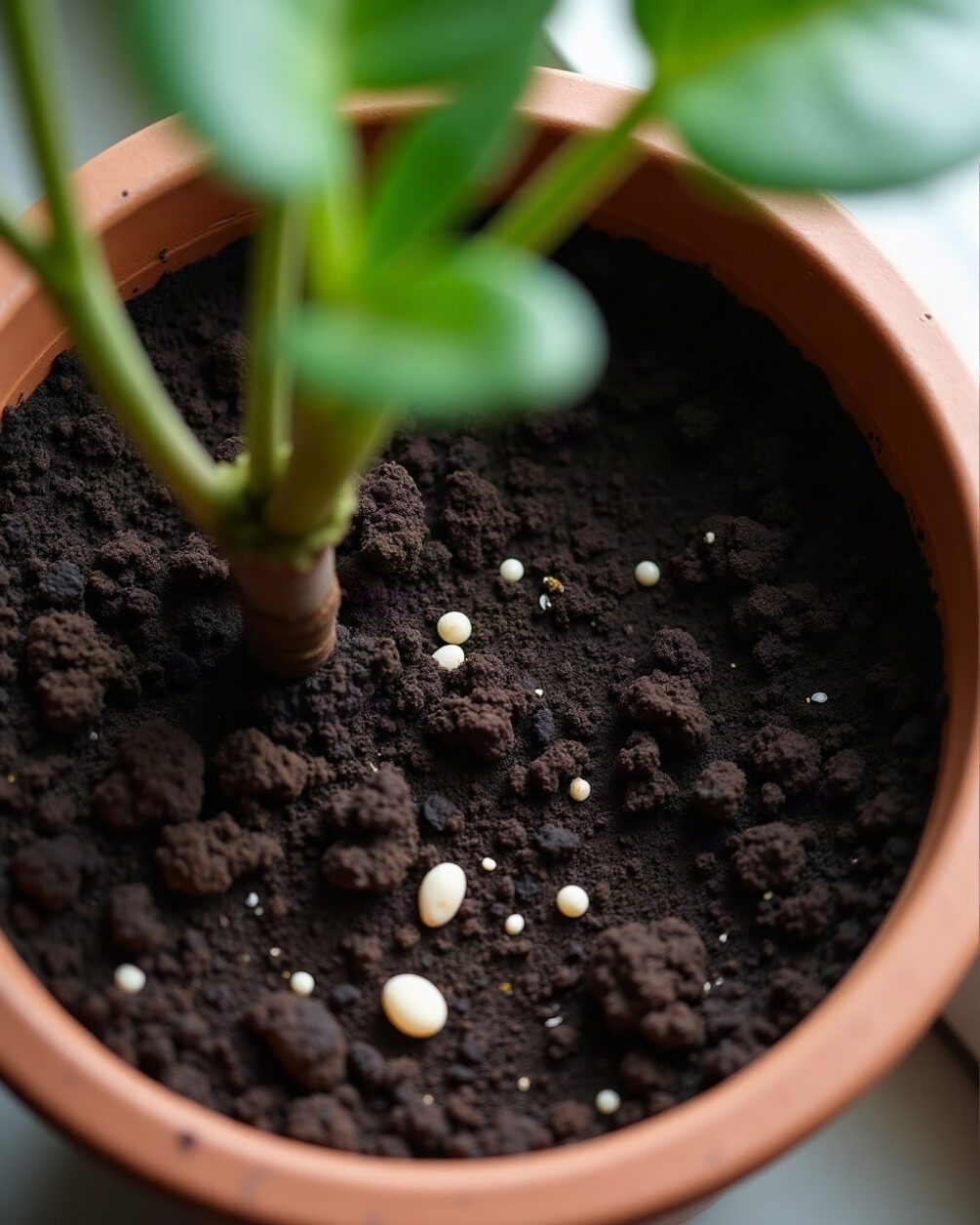
There is a reflex when something moves in a plant pot, which is to reach for a treatment. It is worth resisting for a minute, because half of what lives in compost is doing useful work, and the two that are genuinely harmful share a single cause that no insecticide addresses.
Fungus gnats, the ones you actually see
If small dark flies drift up whenever you water and settle on the compost or a nearby window, these are fungus gnats. They are two to four millimetres, dark, long-legged, and weak fliers.
The adults are harmless. They do not bite, do not damage plants, and live only about a week. The damage, where there is any, comes from the larvae, which are small translucent maggots with a dark head living in the top few centimetres of compost. They feed mainly on fungi and decaying organic matter, but in large numbers they will also feed on fine root hairs, which shows up as a seedling that fails or a plant that sulks for no visible reason.
The cause is always the same: compost that stays wet at the surface. Larvae cannot survive in dry compost, so letting the top two to three centimetres dry out between waterings collapses the population without any product at all. Bottom watering helps, because it keeps the surface dry while the roots still drink.
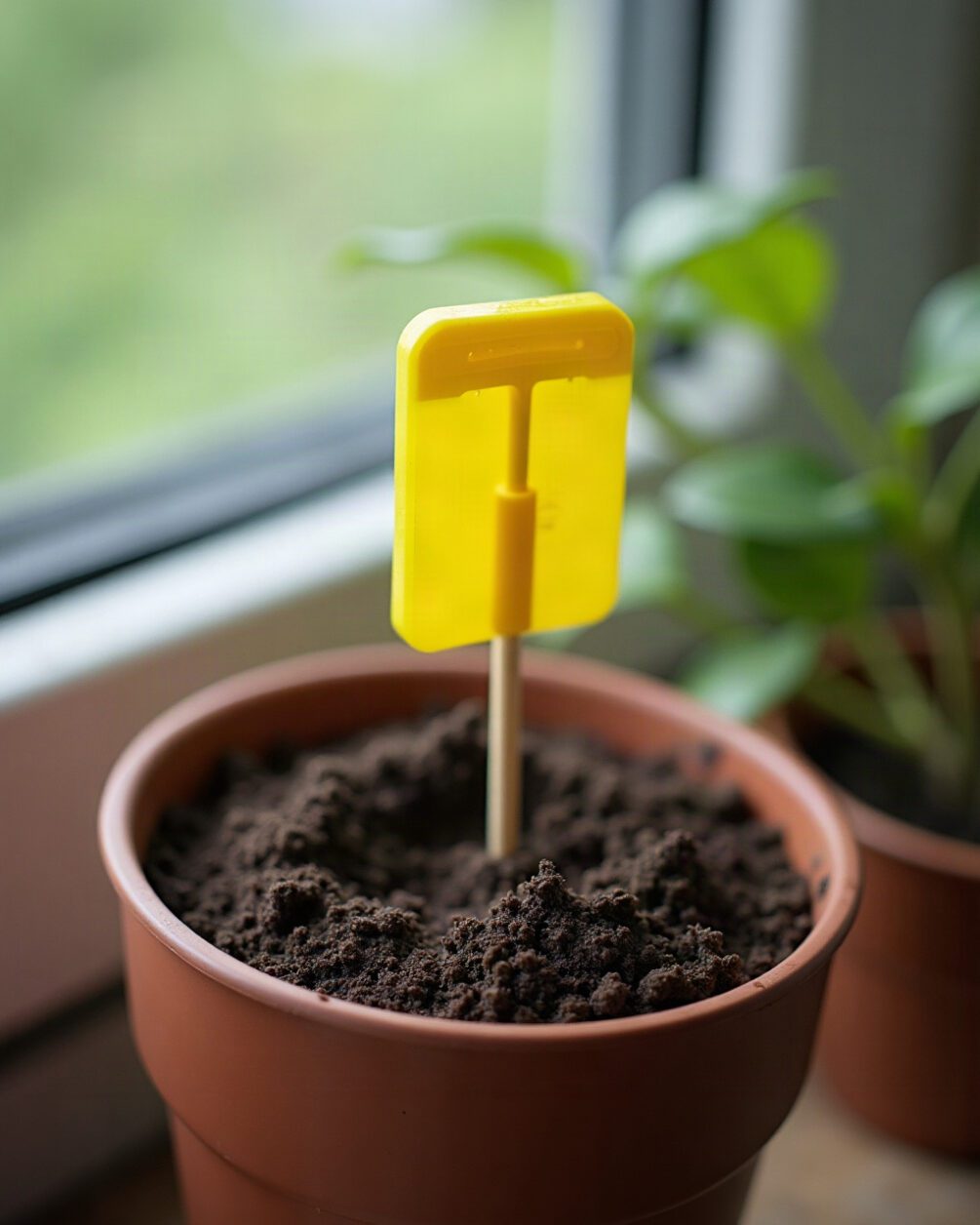
Where you want to speed it up, yellow sticky traps catch the adults and, more usefully, tell you whether the population is falling. Our fungus gnat guide for houseplants covers the full approach, the trap and treatment options covers the products worth using, and if you are not sure the flies are gnats at all, our gnat identification guide separates them from fruit flies and drain flies, which need entirely different fixes.
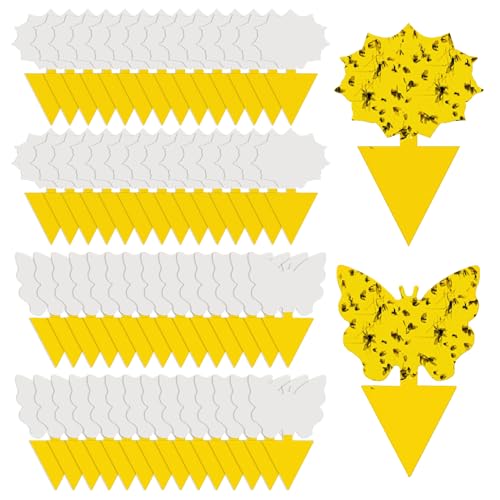
Yellow cards catch the adults, and more usefully they show whether the population is actually falling once you change how you water.
Springtails, which you should leave alone
Springtails are one to two millimetres, white to grey, and they jump when disturbed. In a plant pot they turn up in numbers on the compost surface after watering, and they alarm people who assume anything numerous is a problem.
They are decomposers. They eat fungi, algae and decaying organic matter, and they are part of the reason healthy compost behaves like soil rather than like dirt. Penn State describes springtails feeding on mould and decaying material, and UC IPM states plainly that springtails are harmless and their presence indicates excess moisture.
They do not damage roots, do not bite, and cannot infest a house. A large springtail population is worth reading as a message that the pot is staying wetter than it needs to be, which is the same message the fungus gnats are sending.
Soil mites, the ones you barely see
Soil mites are under a millimetre, usually pale or brown, and move slowly across the compost surface or on the inside of a pot rim. Like springtails they are decomposers feeding on fungi and organic debris.
They are harmless to plants and to people. The main reason to know about them is so you do not mistake them for spider mites, which are a genuine plant pest and behave completely differently. Spider mites live on the leaves, not in the soil, they cause fine stippling and pale speckling on the upper leaf surface, and in bad infestations they leave visible webbing at the leaf joints. If that is what you are seeing, our spider mite guide is the right page and the treatment is urgent, because they spread between plants quickly.
Root aphids, the one that hides
This is the genuinely damaging one and the hardest to spot, because it lives below the surface. Root aphids are small, soft-bodied, and often coated in a white waxy powder that makes an infested root ball look as though it has been dusted with flour.
The symptoms are non-specific from above: a plant that wilts despite adequate watering, stunted growth, yellowing, and a general failure to thrive. Those symptoms overlap almost exactly with overwatering and with root rot, which is why this often gets misdiagnosed for months.
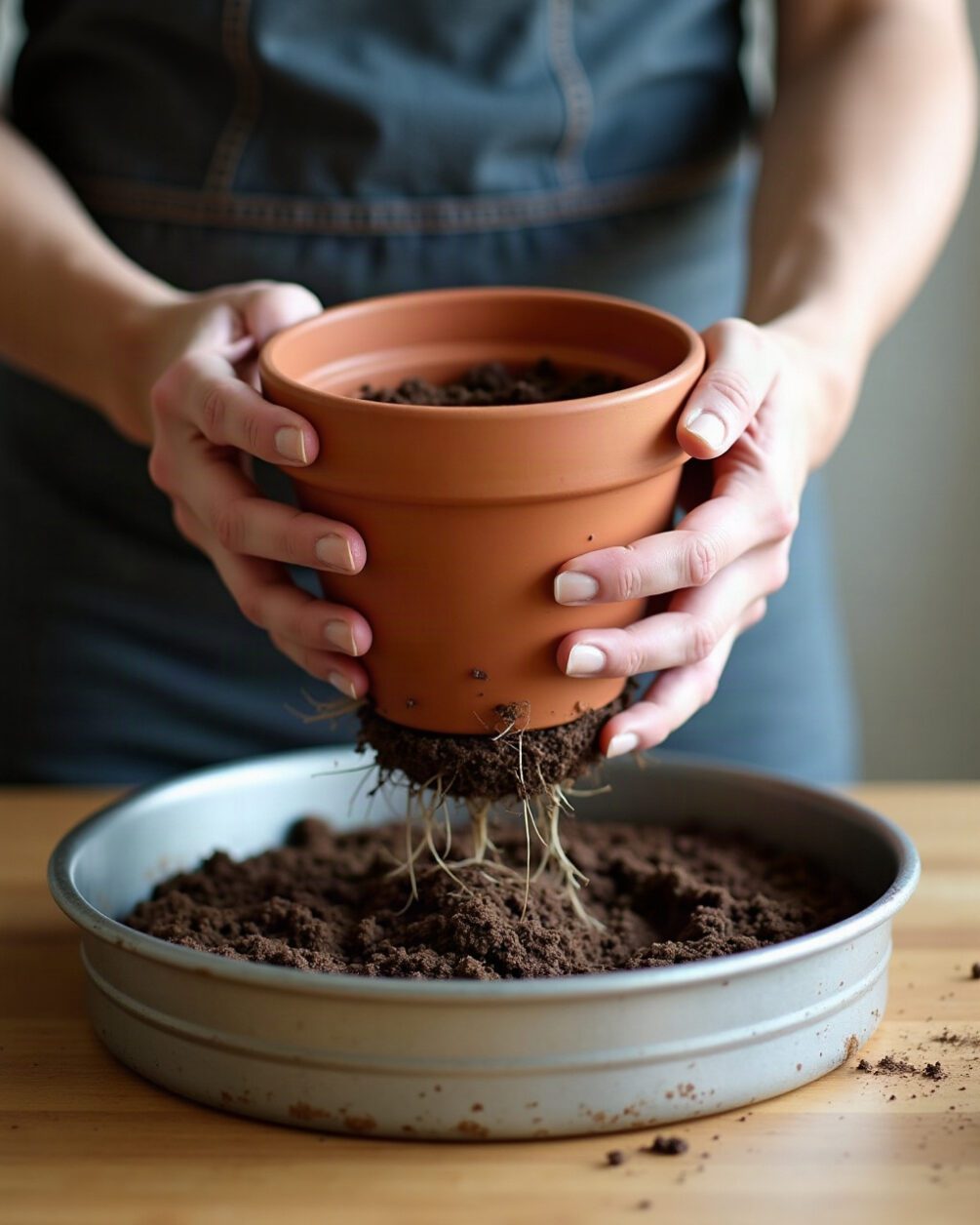
The check is direct. Slide the plant out of its pot and look at the root ball, particularly where the roots meet the pot wall and at the bottom. White waxy deposits and small pale insects on the roots confirm it. Our aphid control guide covers the family, and because the closely related pests above ground look similar, our guides to mealybugs on indoor plants and scale insects are worth checking if the white waxy material is on stems rather than roots.
Why watering is the whole story
Every organism above is favoured by compost that stays saturated. Fungus gnat larvae need moist surface material. Springtails and soil mites need the fungal growth that damp produces. Root aphids do better in stressed, waterlogged roots.
So the interventions that work are not really pest control:
Let the surface dry between waterings. Most houseplants tolerate this far better than the constant moisture they usually get.
Improve drainage. A pot without a hole, or a decorative outer pot holding standing water, keeps compost saturated regardless of watering habit.
Top-dress with a dry layer. A centimetre of horticultural grit or coarse sand on the surface makes it a hostile place for gnats to lay eggs.
Quarantine new plants. Most of these arrive with a plant from a shop or a swap. Two weeks apart from the collection catches the problem before it spreads.
Common questions
Are the flies harming my plant?
The adults are not. Larvae in large numbers can damage fine roots and seedlings. For an established plant with a modest population, the flies are an annoyance rather than a threat.
Can fungus gnats spread to other plants?
Yes, readily, because the adults fly. That is why the pot that stays wettest is usually the source for a whole windowsill.
Should I repot into fresh compost?
For root aphids, yes, with the roots washed clean. For fungus gnats, usually not: it treats the visible generation and the habit that caused it remains. Change how you water first.
Something is jumping on the surface. Is that a flea?
Almost certainly a springtail. Fleas need a warm-blooded animal and are not sustained by compost.
Final verdict
Two of the four things in your compost are harmless and one of them is a sign of healthy soil. Fungus gnats are the common nuisance and they end when the surface dries out. Root aphids are the one worth checking properly, and the check means taking the plant out of the pot rather than guessing from the leaves. In every case the lever is water, not insecticide: pots that dry out between waterings simply do not support these populations.