Finding bites or tiny black specks on your sheets can make anyone wonder if their bed is “safe” again. Bed bug covers can help a lot, but only when you choose the right type and use it correctly. In this guide, you’ll learn what covers actually do, which features matter (and which are marketing), how long to keep them on, and how to combine them with proven inspection and control steps. Think of an encasement as a locked container – it won’t solve everything by itself, but it changes the game.
Quick Answer: Do bed bug covers work?
Yes – bed bug covers work when they are true, fully sealed mattress and box spring encasements, and when they’re used as part of a larger plan.
Here’s the snippet-friendly breakdown:
- What they do well: Trap bed bugs already inside the mattress or box spring and block new ones from moving in.
- What they don’t do: Kill bed bugs fast or protect you from bites if bugs are elsewhere (bed frame, headboard, nightstand).
- What to buy: A zippered, fully enclosed encasement with tight fabric weave and a zipper that locks or seals at the end.
- How long to keep them on: During an active infestation, keep encasements sealed for at least 12 months to cover long survival times without feeding.
- Best use: Combine covers with inspection, laundering, vacuuming, monitoring, and (often) professional treatment.
If you’re shopping, start with our guide to the best bed bug mattress encasements.
How bed bug covers stop infestations (and what they can’t do)
It’s tempting to treat a cover like a “force field.” In reality, a proper encasement works more like a sealed evidence bag. Bed bugs love to hide in protected seams, tufts, and inner layers of mattresses and box springs. Once they get inside, they’re hard to reach with sprays, heat, or vacuuming.
A true encasement helps in three practical ways:
1) It traps bugs and cuts off feeding
When bed bugs are sealed inside, they can’t crawl out to bite. Over time, they die from starvation. That “over time” part matters. Bed bugs are famously resilient. Research discussed by UC IPM-style guidance on bed bug biology and survival notes they can survive for long periods without feeding, and lab conditions have documented survival approaching a year or more depending on temperature and humidity.
Takeaway: Encasements are a long-game tool, not a quick kill.
2) It removes hiding places and improves detection
A smooth, light-colored encasement makes it easier to spot:
- fecal spots (ink-like black dots)
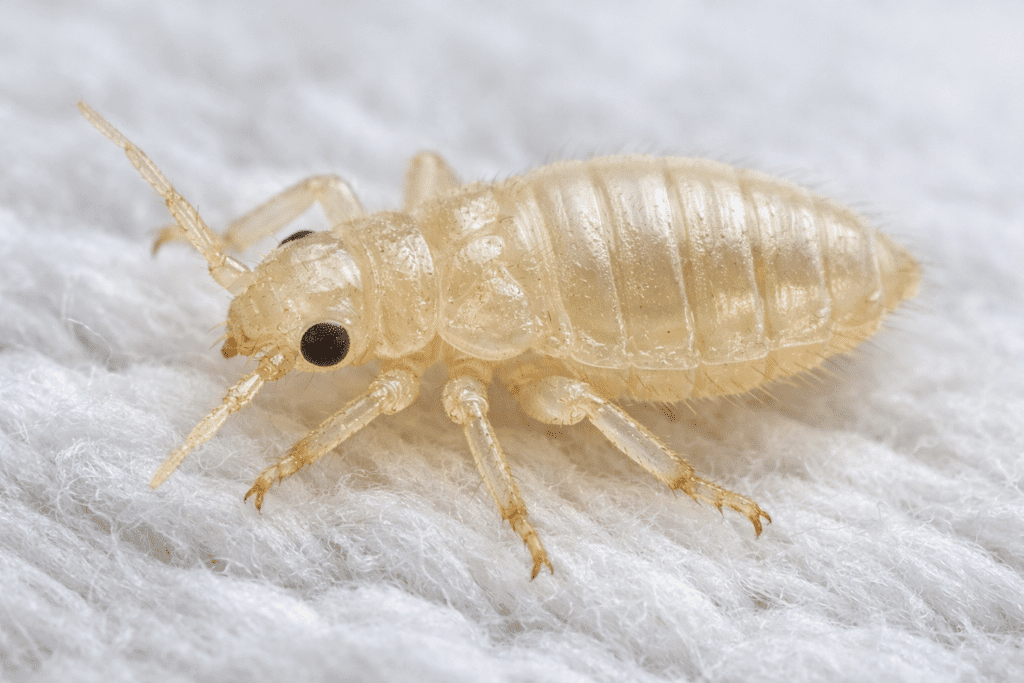
- shed skins (pale “shells”)
- live bugs along seams and zipper areas
That’s why covers are often recommended alongside routine inspections. If you’re unsure what you’re seeing, use our step-by-step how to check for bed bugs guide and compare findings with these common signs of bed bugs.
3) It protects a clean mattress from becoming infested
In apartments, dorms, and frequent-travel homes, a sealed encasement can prevent a costly mattress replacement. Bed bugs can still live elsewhere, but the mattress is no longer an easy “home base.”
What covers can’t do: If bed bugs are in the bed frame, headboard, baseboards, or clutter, they can still reach you. For bite concerns and practical prevention steps, see bed bug bites and prevention.
Visual: What a cover can and can’t protect
| Bed area | Does an encasement protect it? | Why it matters |
|---|---|---|
| Mattress interior | Yes | Traps bugs inside and blocks new ones |
| Box spring interior | Yes (only if encased too) | Box springs have many hiding voids |
| Bed frame/headboard | No | Bugs can hide in cracks and reach you |
| Sheets/blankets | No | Bugs can climb onto bedding from nearby areas |
Choosing bed bug covers that actually work (shopping checklist)
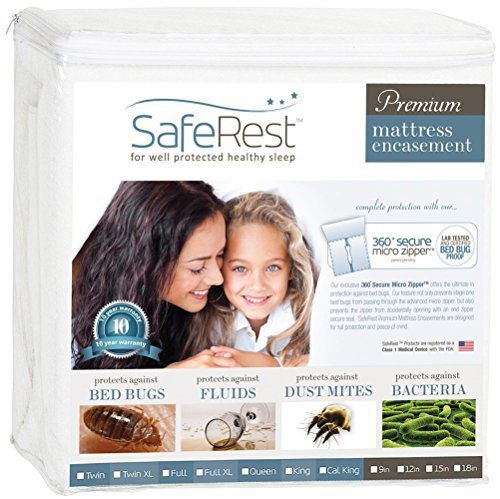
SafeRest Zippered Mattress Protector – Premium 9-12 Inch Waterproof Mattress Cover for Bed – Breathable, Noiseless Washable Mattress Encasement – King
This mattress encasement is designed to trap bed bugs and prevent new infestations, making it a perfect fit for the article’s focus on bed bug covers.
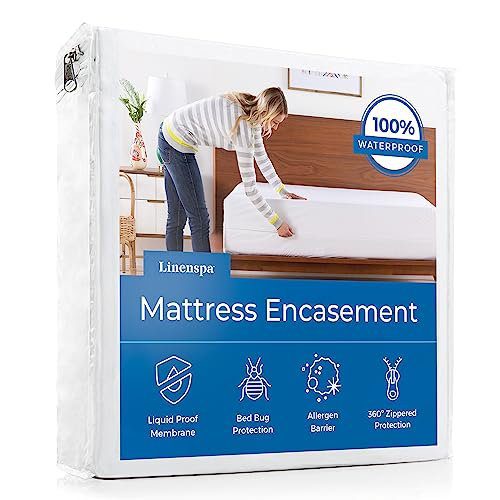
Linenspa Zippered Mattress Encasement – Queen Size Waterproof Mattress Protector – Quiet Cover & Complete protection – Dorm Room Essentials, White
This encasement provides a fully sealed environment to protect against bed bugs, aligning with the article’s recommendations for effective encasements.
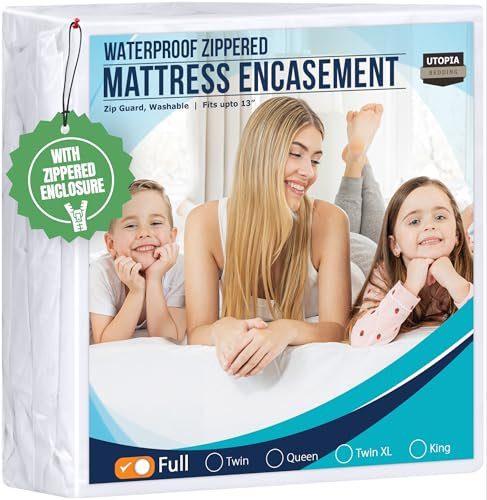
Utopia Bedding Full Size Mattress Protector Zippered, 100% Waterproof Bed Bug and Dust Mite Proof Mattress Encasement, Absorbent 6 Sided Mattress Cover
This product offers a secure zippered design that helps in trapping bed bugs, which is essential for effective prevention as discussed in the article.
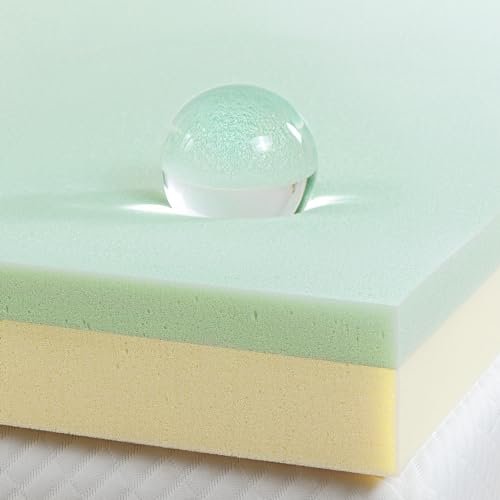
Zinus Green Tea Memory Foam Mattress Toppers, Twin (AZ-GTFT-300T)
This encasement not only protects against bed bugs but also features a breathable fabric, making it a great choice for those looking to maintain a comfortable sleeping environment.
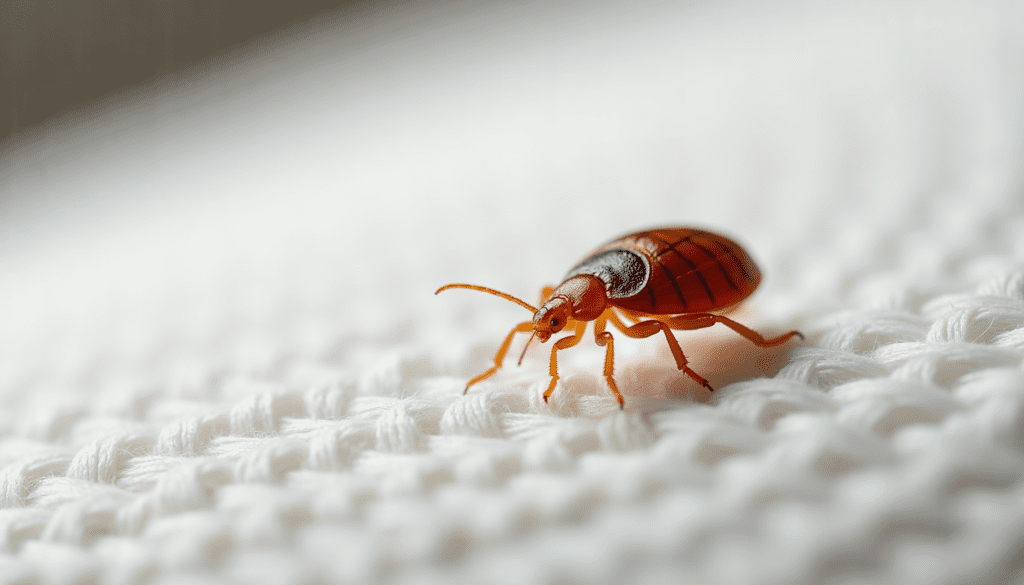
Many products are labeled “mattress protector,” but that doesn’t mean they stop bed bugs. The difference comes down to full enclosure and escape-proof construction. If there’s an opening, bed bugs will find it. Adults are about the size of an apple seed (roughly 4-7 mm), and young nymphs are much smaller, so tiny gaps matter.
Here’s what entomologists and pest management pros look for when evaluating encasements. Product testing summaries like those from Snell Scientifics’ bed bug encasement resource emphasize fabric integrity and zipper security as the make-or-break features.
The non-negotiables
Look for these features on the package or listing:
- Full encasement (6-sided coverage)
- Must fully surround the mattress, not just the top.
- Avoid fitted-sheet style protectors for bed bug control.
- Tight fabric weave + reinforced seams
- Bed bug-proof encasements use fabric that’s difficult to bite through or push through.
- Seams should be taped or reinforced, not loosely stitched.
- Escape-proof zipper design
- A strong zipper is only half the story.
- You want a zipper that closes completely and has an end stop that seals, locks, or tucks securely.
- Tear resistance
- Even a small rip can become a highway.
- If you have pets or move often, prioritize durability.
Mattress encasement vs. “protector”: a quick comparison
| Feature | True encasement | Basic protector |
|---|---|---|
| Coverage | Full 6-sided | Usually top + sides only |
| Closure | Zippered and sealed | Open bottom |
| Bed bug control | Designed to trap and block | Not reliable for containment |
| Best use | Prevention + treatment support | Spills, stains, general wear |
Should you buy chemically treated covers?
Some liners and covers are treated with insecticides. While a few treated fabrics have shown effects on feeding and reproduction in controlled testing reported by EurekAlert coverage of ActiveGuard liner research, broad public-health guidance tends to favor mechanical barriers for sleeping surfaces.
For example, the Alaska Department of Environmental Conservation bed bug encasement guidance cautions against relying on pesticide-treated encasements as a primary solution. In most home situations, an untreated, well-made encasement plus IPM steps is the safer, more predictable route.
Action step: If you’re buying today, choose an untreated, certified bed bug-proof encasement and spend your effort on correct installation and monitoring.
How to install and use bed bug covers correctly (step-by-step)
Buying the right product is only step one. Installation mistakes are one of the main reasons people think covers “don’t work.” Bed bugs exploit shortcuts: a zipper left slightly open, a torn corner, or a box spring left uncovered.
Step 1: Confirm what you’re dealing with
Before you encase anything, do a quick inspection so you don’t miss other hiding spots.
Use a flashlight and check:
- mattress seams and labels
- box spring edges and underside
- headboard joints and screw holes
- bed frame cracks
- baseboards near the bed
If you need a structured checklist, follow how to check for bed bugs and compare your findings to our photo-based signs of bed bugs.
Step 2: Reduce the “escape routes”
Before installing:
- Launder bedding on hot wash and hot dry (follow fabric limits).
- Vacuum mattress surfaces and bed frame seams slowly.
- Dispose of vacuum contents in a sealed bag immediately.
This doesn’t eliminate an infestation, but it lowers the number of bugs you’re managing.
Step 3: Encase the mattress and box spring
This is where most people underdo it. If you only cover the mattress, bed bugs can continue living in the box spring and keep the problem going.
Best practice:
- Encase both the mattress and the box spring with bed bug-proof encasements.
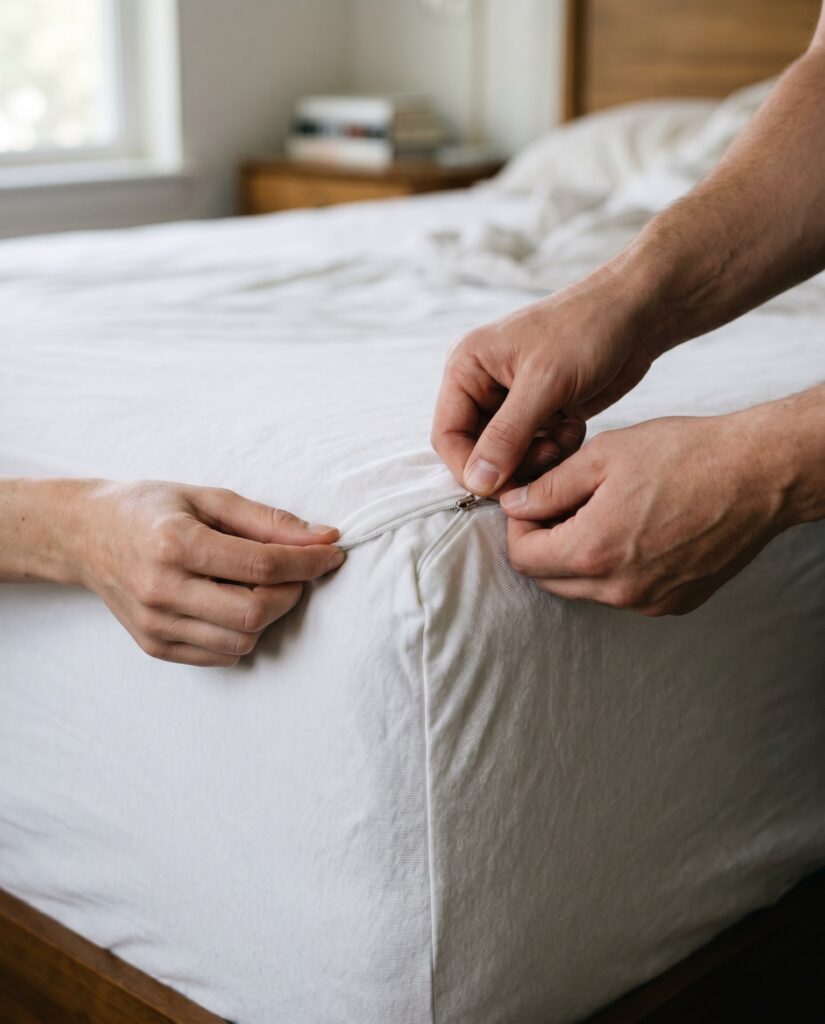
- Zip fully, then engage the zipper lock or end seal.
Step 4: Keep the encasements on long enough
Bed bugs can survive a long time without feeding, especially in cooler conditions. That’s why many IPM programs recommend keeping encasements sealed for 12 months when you’re actively treating an infestation.
Quick timeline guide
| Situation | How long to keep encased? | Why |
|---|---|---|
| Active infestation | 12 months | Covers long starvation survival window |
| Prevention (no known bugs) | Indefinitely | Protects mattress from future introductions |
| After professional treatment | At least 12 months | Helps confirm elimination and prevents re-infestation inside |
Step 5: Inspect the cover like it’s part of your monitoring system
Once installed, the encasement becomes a “white background” that makes evidence easier to see.
Every 7-14 days, check:
- zipper end and teeth
- seams for fraying
- corners for rubbing damage
- any new spots or skins

Image alt text suggestion: “Close-up of a zippered bed bug mattress encasement showing sealed zipper and reinforced seams.”
Bed bug covers in an IPM plan: what to do alongside encasements
Encasements are most effective when they’re one tool in integrated pest management (IPM). IPM means combining physical, behavioral, and (when needed) chemical methods based on inspection and evidence, not guesswork.
A research overview from Reddick National’s summary of encasement-supported bed bug control describes how encasements can reduce populations by limiting feeding and making bugs easier to find and target. The key point: they support control, they don’t replace it.
What to pair with encasements (home-friendly IPM checklist)
Use this as your practical “next steps” list:
- Declutter the bed zone
- Reduce hiding places within 3-6 feet of the bed.
- Bag items you can’t inspect immediately.
- Intercept and monitor
- Place interceptor traps under bed legs if possible.
- Re-check weekly for activity.
- Heat-dry bedding routinely
- Weekly hot drying can kill bugs and eggs on linens.
- It also helps you spot new stains or spots early.
- Targeted vacuuming
- Focus on seams, cracks, and screw holes.
- Vacuum does not reliably remove eggs glued into fabric, so don’t stop here.
- Professional treatment when needed
Call a licensed pest professional if:
- you’re in multi-unit housing (bugs can move between units)
- you see bugs in multiple rooms
- bites or sightings continue after 2-3 weeks of consistent IPM steps
- you can’t identify the pest confidently
A professional can combine methods like heat, steam, dusts, and carefully applied residual products based on where bugs are actually hiding.
A reality check about bites
Even with perfect encasements, you can still get bitten if bugs are in the room. Covers protect the mattress and box spring, not your entire sleeping environment.
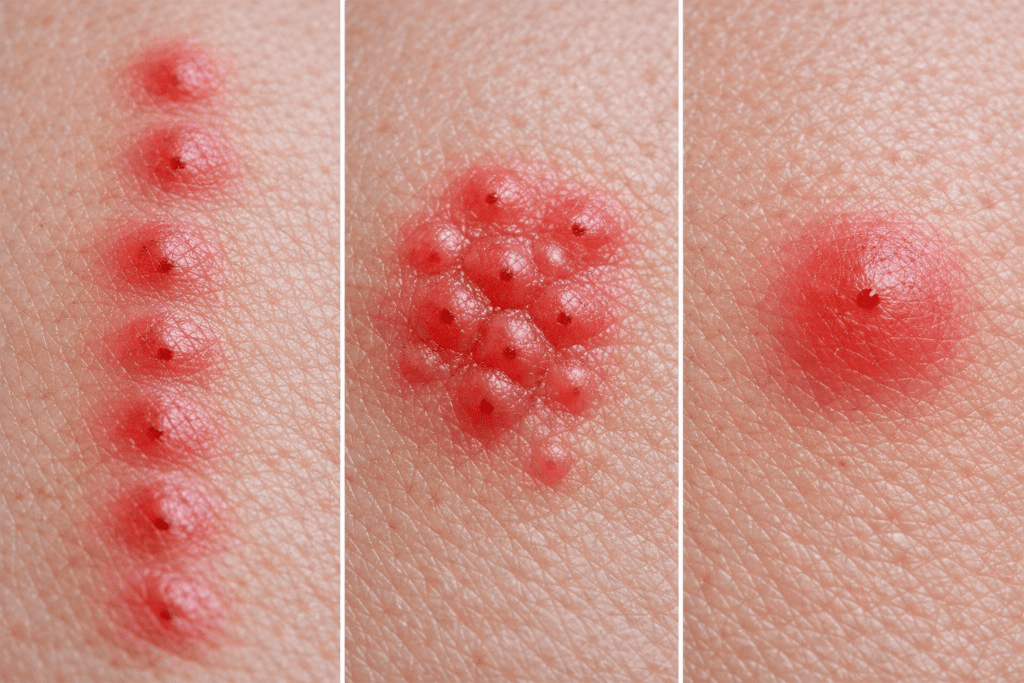
If you’re trying to connect symptoms with evidence, our guide to bed bug bites and prevention walks through common patterns, look-alikes, and prevention steps.
Visual: “IPM stack” that works with covers
| IPM tool | What it targets | How it supports encasements |
|---|---|---|
| Inspection | Finding harborage sites | Prevents false confidence |
| Laundering + hot drying | Bugs on fabrics | Reduces active numbers |
| Vacuuming | Bugs in cracks | Lowers population quickly |
| Interceptors | Bed-to-floor movement | Confirms if activity continues |
| Professional treatment | Hidden colonies | Finishes what DIY can’t reach |
Common myths about bed bug covers (and the truth)
Bed bugs are stressful partly because misinformation spreads fast. Clearing up a few myths helps you spend money and effort where it counts.
Myth 1: “Any mattress cover will stop bed bugs”
A standard protector is mainly for spills and wear. For bed bug control, you need a fully sealed encasement with an escape-proof zipper. Consumer explainers like the Eco-y mattress protector vs encasement overview highlight that open-bottom protectors don’t reliably block insects.
What to do instead: Use a certified encasement and install it on both mattress and box spring.
Myth 2: “Covers kill bed bugs quickly”
Encasements don’t kill on contact. They trap bugs and rely on starvation, which can take months. Guidance summarized in the Alaska DEC bed bug encasement resource reinforces that encasements are a barrier tool, not a stand-alone cure.
What to do instead: Pair covers with monitoring and targeted control steps.
Myth 3: “If I’m still getting bitten, the cover failed”
Not necessarily. If bugs are in the bed frame, headboard, or nearby furniture, they can still reach you. The cover may be doing its job by keeping the mattress from becoming a hidden reservoir.
What to do instead: Inspect beyond the bed. Use our signs of bed bugs guide to focus your search.
Myth 4: “Treated covers are always better”
Some treated fabrics show effects in tests, but treated sleep-surface products aren’t required for success and may add unnecessary exposure. Most households do best with a strong mechanical barrier and solid IPM habits.
Visual: Myth vs reality snapshot
| Claim | Reality | Better move |
|---|---|---|
| “All covers work” | Only sealed encasements are reliable | Buy 6-sided zip encasements |
| “Covers cure infestations” | They support IPM | Combine with monitoring + treatment |
| “Bites mean failure” | Bugs may be elsewhere | Inspect bed frame and room |
| “Treated is best” | Not needed for most homes | Choose untreated + durable |
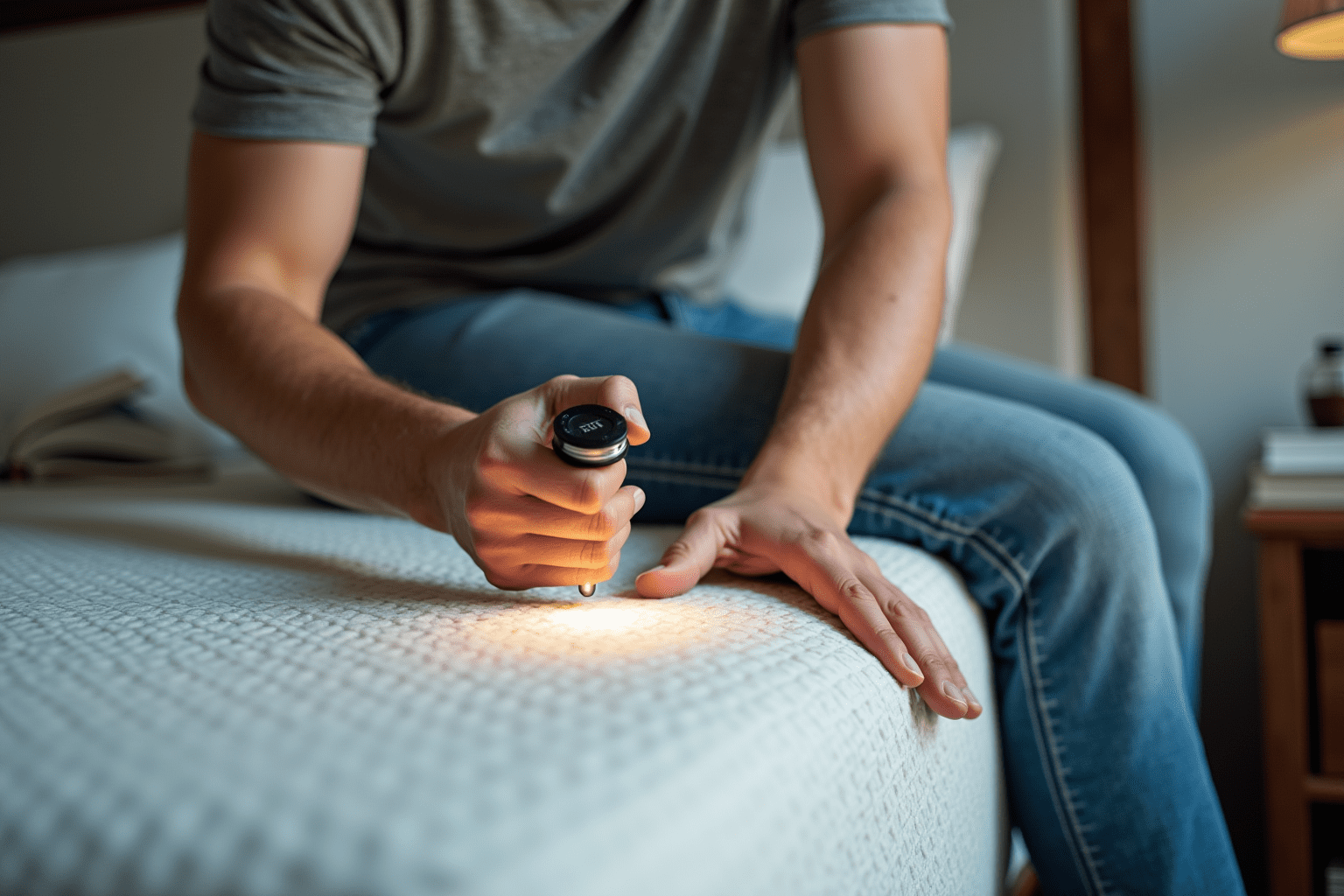
Image alt text suggestion: “Inspector checking bed bug encasement zipper and seams with a flashlight.”
Conclusion: The smart way to use bed bug covers
Bed bug covers are worth it when they’re true encasements with a sealed zipper, durable fabric, and full coverage for both the mattress and box spring. They trap bugs, reduce hiding spots, and make inspections easier, but they don’t eliminate an infestation by themselves.
Next step: confirm what you’re seeing, then choose a proven encasement and build a simple IPM routine around it. For product picks, see our best bed bug mattress encasements. If you’re still unsure whether what you found is bed bugs, start with how to check for bed bugs and match evidence using our signs of bed bugs.
As an Amazon Associate, I earn from qualifying purchases. Product recommendations are based on real reviews and independent research.