A fly trap is worth owning, but it is half the answer at best. A trap catches the adult flies already in or around your home, and it will never keep up on its own, because one female lays hundreds of eggs in nearby filth and a whole new batch hatches in about a week. The short answer: match the trap to the spot, then go find the breeding source and remove it. Use a plug-in light trap indoors, a baited disposable bag set well away from the patio outdoors, and window sticky strips for the flies bumping the glass. In our own kitchen we keep a quiet plug-in trap by the counter and a sticky strip on the window, and the real work happens at the trash can. Most roundups crown one “best fly trap” and stop there; the comparison below sorts them by where each one actually earns its place, and points you at the filth that is feeding the problem.
A fly trap only catches the adults and cannot keep up alone, because a single female lays hundreds of eggs in filth and a new generation emerges in about a week; match a plug-in light trap to indoors and a baited bag set far from the patio to outdoors, then remove the breeding source.
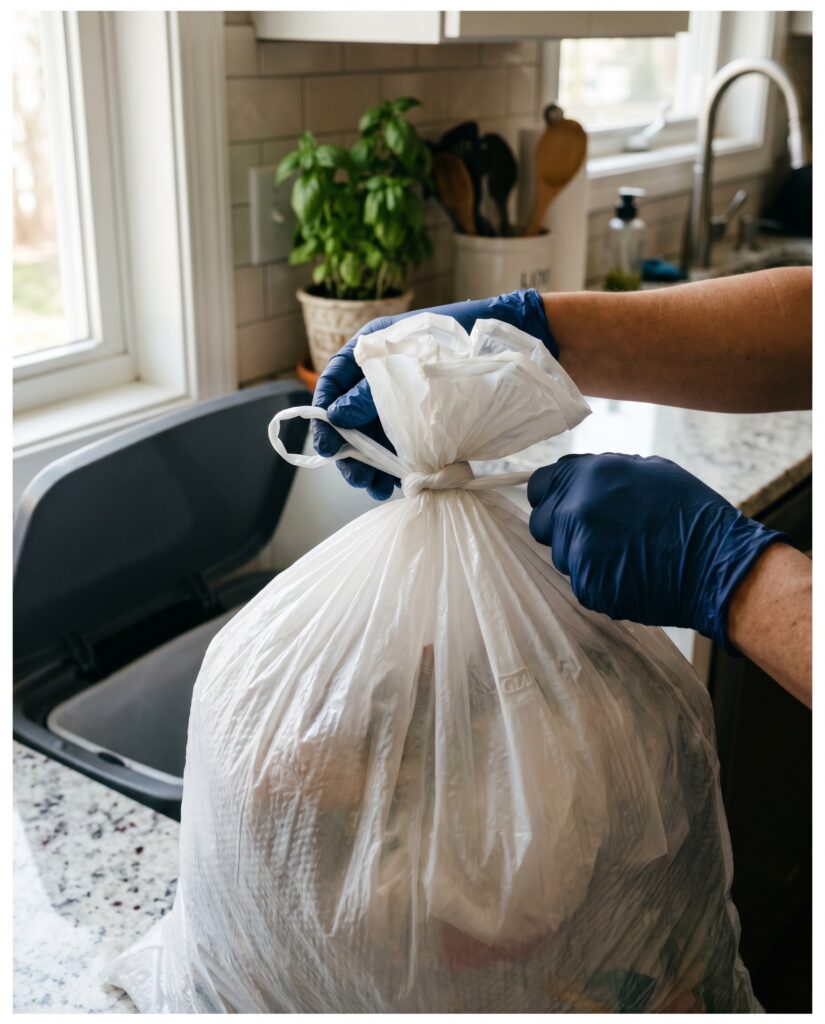
- Do first (free): Find and clean the source, rotting trash, pet waste, a dirty bin, spilled food, then bag and seal it so flies cannot breed in it.
- Match the spot: Plug-in light trap indoors, a baited disposable bag well away from doors and seating outdoors, sticky strips on the windows.
- Skip: Hanging a stinking bait bag by the door, and expecting any trap to clear a fly problem while the breeding source sits open.
Find the source first
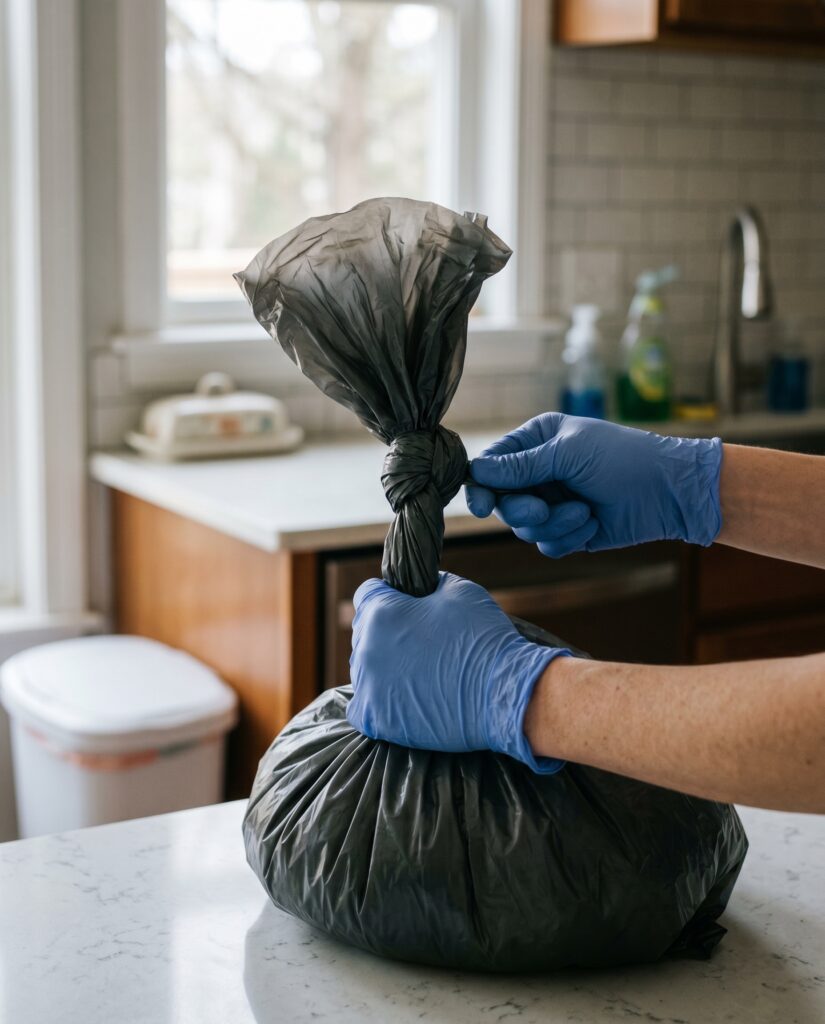
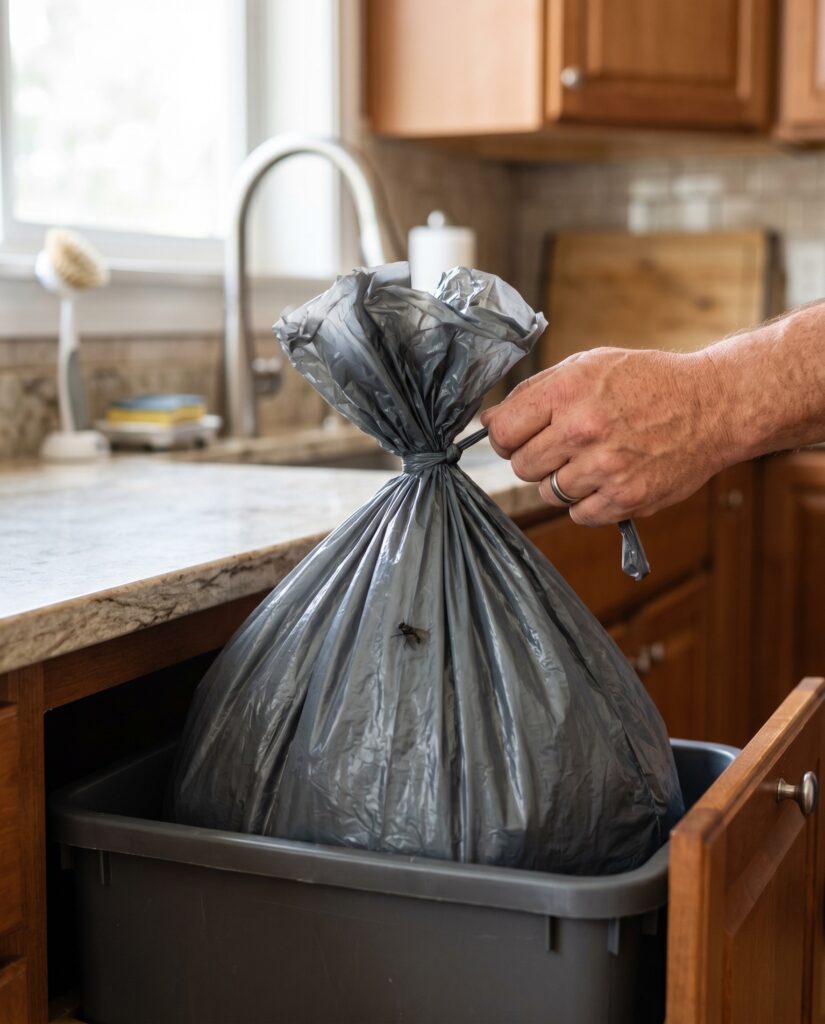
Before you buy a single trap, do the free part, because flies are a sanitation problem first and a trapping problem second. House flies and their filth-fly cousins breed in moist, decaying organic matter, and the UC IPM Pest Notes on flies put sanitation and source removal at the top of the list for exactly this reason. Walk the obvious suspects: the kitchen trash, the bin under the sink, pet waste in the yard, a forgotten bag of produce, a spill behind the fridge, a recycling tub with sticky cans. The breeding site is almost always something you can bag and seal. Tie off the trash, rinse the bin, scoop the yard, and the supply line for new flies starts to dry up.
This matters because of the math. The Penn State Extension page on house flies notes a single female can lay hundreds of eggs and the insect goes from egg to adult in about a week in warm weather, so a clean-looking room can refill with flies in days if the source is still feeding them. If you are wondering why there are suddenly so many flies in your house, that egg-to-adult speed is usually the answer, and a trap bought before you find the source just gives you something to empty. Our full guide on how to get rid of house flies walks the sanitation steps in order.
Why a trap never finishes the job
Here is the part the “best fly trap” lists skip. A trap, any trap, only works on adults that fly into it. It does nothing to the eggs and maggots developing in the filth outside its reach, and that hidden generation is where your next wave comes from. The University of Kentucky’s guide to fly control is blunt about it: sanitation and source reduction are the primary control, and everything else is a supplement. Trapping without source removal is bailing a boat with the drain still open.
So treat the trap as backup, not the plan. The EPA’s least-toxic, IPM approach to pest control frames it the same way, physical and sanitation steps first, then targeted tools where they help. Pair that with exclusion: fix torn screens and add a door sweep so the flies outside stay outside. Screens and a door sweep do more than any gadget on the shelf. A trap then mops up the stragglers that slip in, which is a job it is genuinely good at, as long as you are not asking it to outbreed a maggot factory in the trash. If flies keep pouring in from a neighbor’s source or a livestock situation you cannot control, that is the point to talk to a licensed pest professional rather than buy a bigger trap.
Pick the trap by the spot
Once the source is handled, the trap choice is short, and it comes down to where the flies are. Indoors you want something quiet and discreet that runs all day. Outdoors you want raw pulling power you can place far from people. On the glass you want a strip that catches the ones bumping the window.
| Trap type | Best location | What it catches |
|---|---|---|
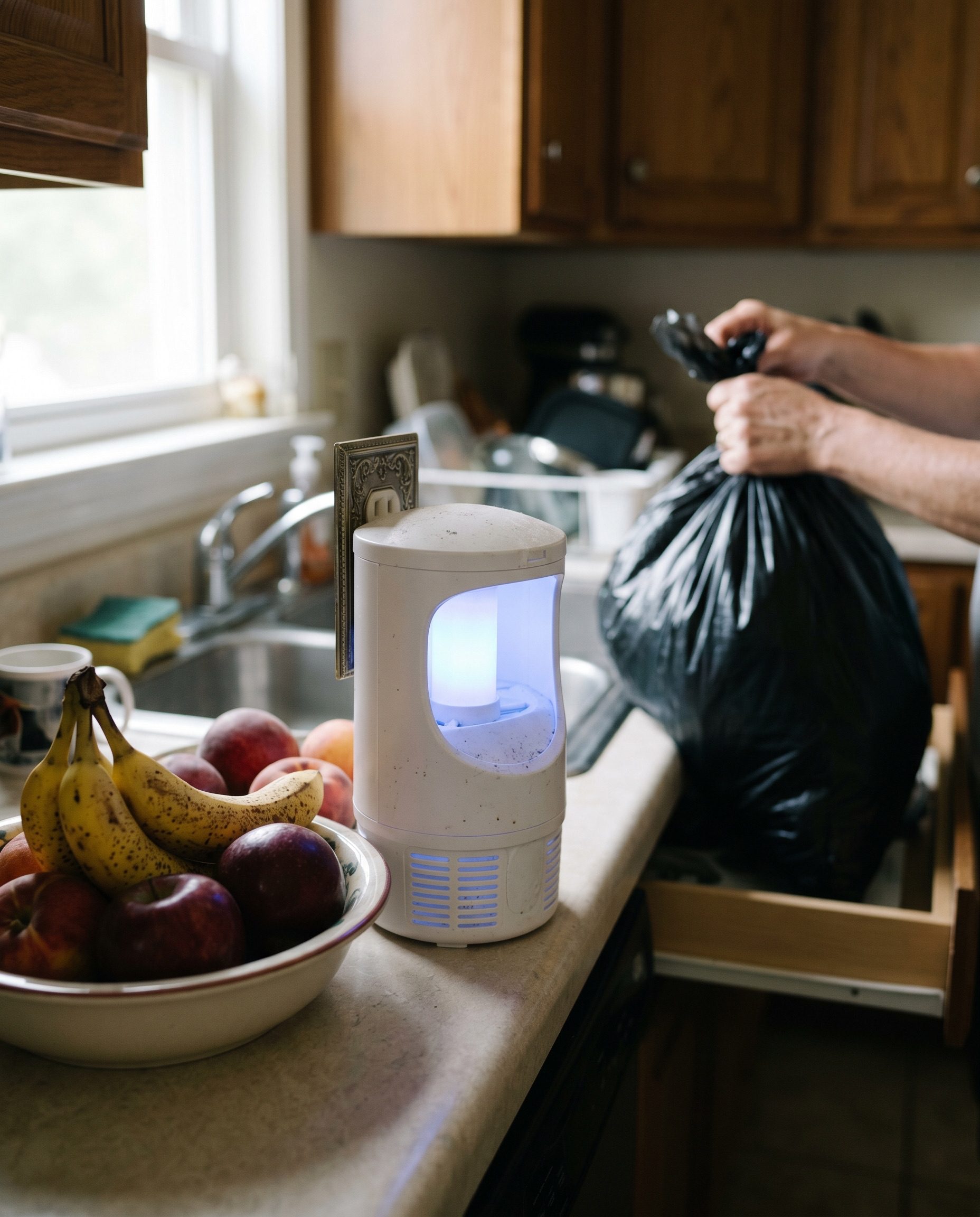
| Plug-in light trap | Indoors, near a wall outlet away from competing light | House flies and small gnats drawn to the UV glow |
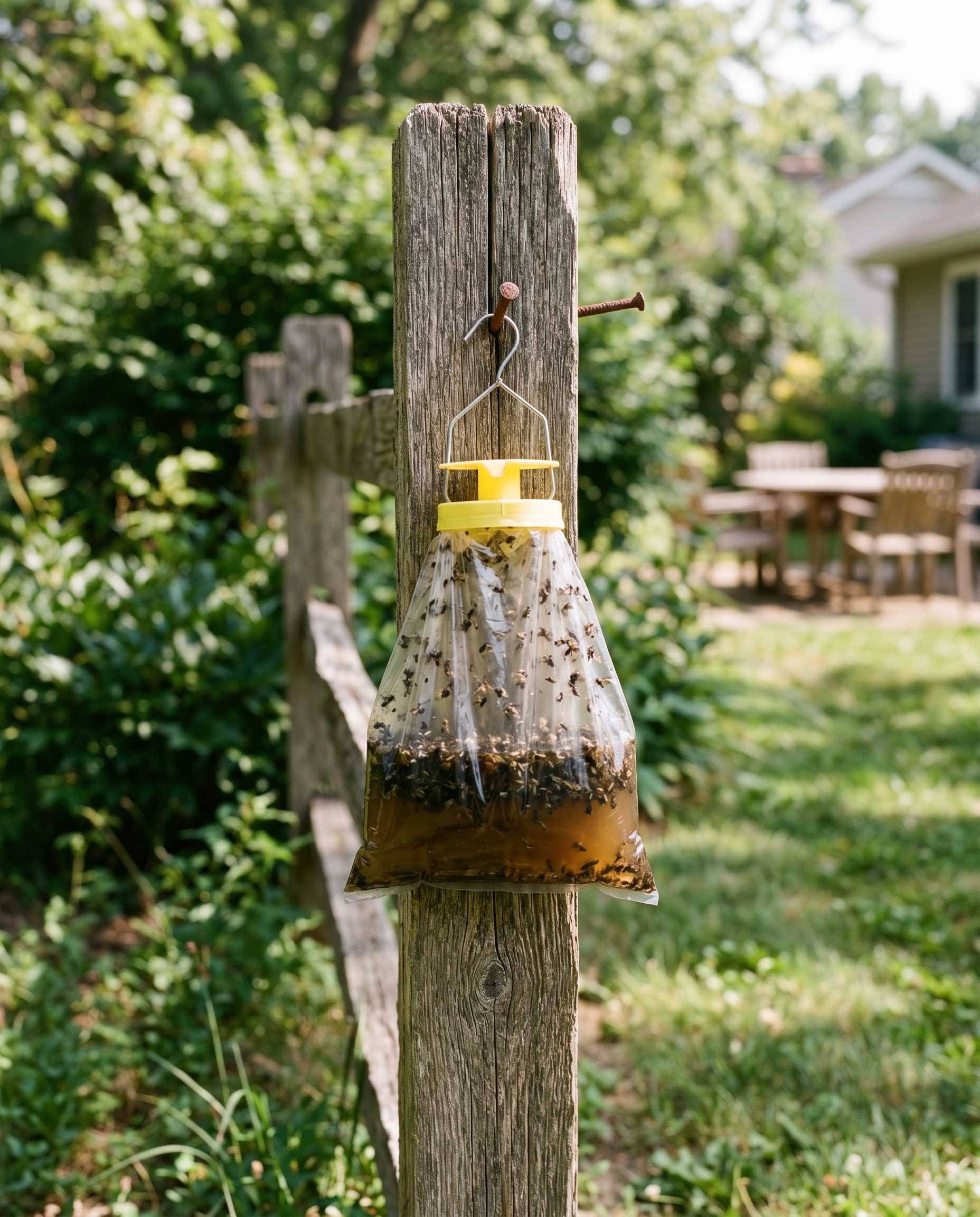
| Baited disposable bag | Outdoors only, far from doors and seating | Large numbers of outdoor filth flies |
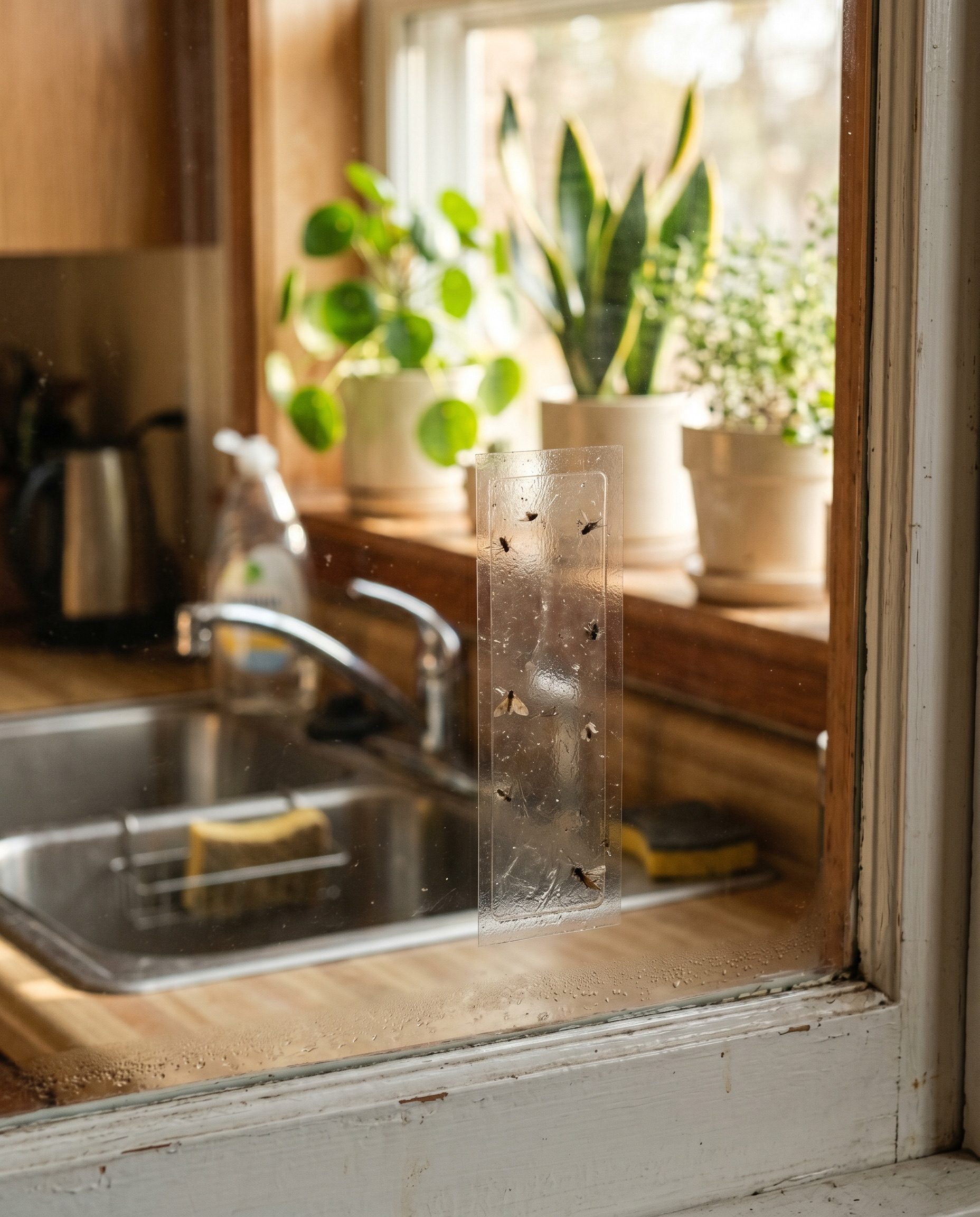
| Window sticky strip | On the glass where flies gather | Flies bumping the window trying to get out |
The one rule people get wrong is the outdoor bag. It works by smelling like rotting bait, which is the whole point, so never hang a bait bag by the door or over the patio table. Set it at the far edge of the yard, downwind, where it pulls flies away from you rather than toward your dinner. The plug-in light trap is the opposite kind of tool: low-key, odorless, and made for the kitchen or living room, where it should sit a few feet off the floor and away from a bright window that would compete with its light. The sticky strip is the cheap finisher, perfect on a kitchen or garage window where flies congregate against the glass. A light trap handles indoors. A bait bag handles the yard. A sticky strip handles the window. Match the tool to the spot, not to the biggest claim on the package.
Where to place each one
Placement is most of the result. Put the plug-in light trap on an outlet away from windows and other light sources, because a trap fighting daylight for attention will catch almost nothing; a corner of the kitchen or a hallway about three to four feet up works well, and you swap the sticky cartridge when it fills. For the outdoor bag, hang it 20 feet or more from doors, windows, and seating, in the sun to get the bait working, and toss the whole sealed bag once it is full rather than reopening it. Window strips go on the lower interior corners of the panes where flies bump the glass; peel, press, and replace when they load up.
If you also reach for an electric fly zapper or an electric swatter, the same logic holds: it kills the adult in front of you and changes nothing about the eggs in the bin. None of these traps is a pesticide, so there is no label rate to mix and no spray drying time to manage, which is part of why they are a sensible first reach indoors around kids and pets. Just keep the plug-in and any small parts out of a curious toddler’s reach, and keep the smelly outdoor bag well away from where anyone eats. The trap that is placed right and emptied on time beats the fancier trap left in the wrong spot.
The picks
Cards come after the analysis on purpose, because the spot decides which one you buy. These three cover indoors, the yard, and the window, and all are common, widely available fly traps.
InsectoGuide is reader-supported. As an Amazon Associate we earn from qualifying purchases at no extra cost to you.
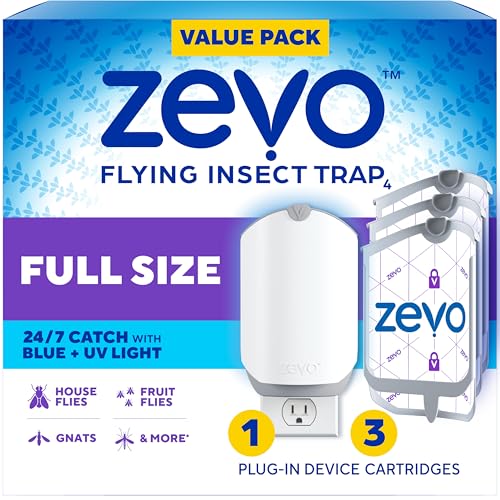
A quiet, mess-free plug-in for catching the flies already loose indoors.
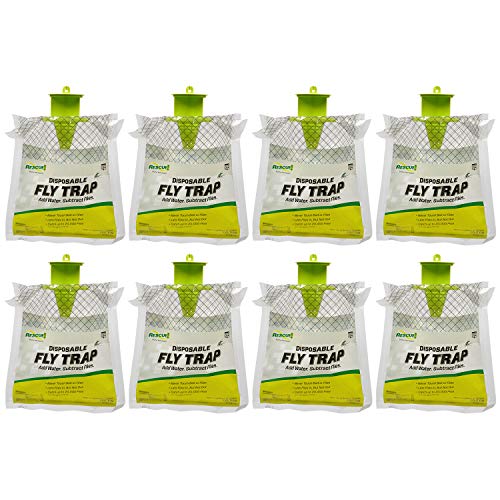
A high-capacity bait bag for pulling outdoor flies away from the house.
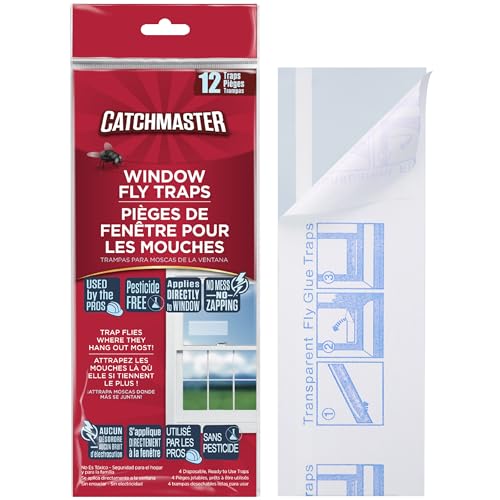
Cheap clear strips for the flies bumping the glass.
Common questions
Do fly traps actually work?
Yes, on the adults they reach, which is exactly what they are for. A plug-in light trap, a bait bag, and a window strip each pull in the flies in their zone. What no trap does is reach the eggs and maggots in the filth, so a trap is a supplement to sanitation, not a replacement for it.
Why do flies keep coming back after I empty the trap?
Because the breeding source is still feeding the population. The Penn State house fly page notes a new generation can emerge in about a week, so if the dirty bin or pet waste is still there, the trap just refills. Find and remove that source and the rebound stops.
Can I use the outdoor bait bag on my patio?
No. The bag works by smelling like rot, so hanging it near the patio or door draws flies straight to where you sit. Set it 20 feet or more away at the edge of the yard so it pulls flies off the house, not onto it.
Are fly traps safe around kids and pets?
The light traps and sticky strips here are not pesticides, which makes them a sensible indoor choice around children and pets. The EPA’s least-toxic pest control guidance favors that kind of physical control. Keep the plug-in, small parts, and the smelly outdoor bag out of reach and away from food.
Indoor trap or outdoor trap, which do I need?
Often both, in different spots. A plug-in light trap handles the flies already inside, while a bait bag at the edge of the yard cuts the outdoor pressure before it reaches the door. Add window strips where flies gather on the glass, and seal screens and doors so fewer get in at all.
Final verdict
There is no single best fly trap, because a trap only catches the adults and never keeps up while the breeding source is still feeding the problem. Start free by finding and removing the source, the trash, the pet waste, the dirty bin, then sealing it off. Once that is handled, match the trap to the spot: a quiet plug-in light trap indoors, a baited disposable bag set well away from doors and seating outdoors, and clear sticky strips on the windows where flies bump the glass. Skip hanging a stinking bait bag by the door, and skip the idea that any trap clears a fly problem alone. Pair the trap with clean sanitation and tight screens, because the trap is the mop-up tool, never the whole fix.