If your basement keeps growing webs no matter how many you knock down, the problem is not the spiders, it is the conditions. Basements draw spiders because they are dark, humid, and full of the small insects spiders eat, so the real fix is to change those conditions: run a dehumidifier, seal the rim joists and utility gaps, add light where you can, and clear the clutter off the floor. Take away the damp and the prey bugs and the spiders leave with their food. Glue boards along the walls then catch the stragglers, and most of the spiders down there were never a threat to begin with.
Spiders move into basements for the damp, the dark, and the prey insects, so you fix the basement, not the spiders: dehumidify, seal gaps, add light, declutter, and the spiders leave when their food does. Glue boards along the walls mop up the rest.
- Do first (free): Vacuum up webs, egg sacs, and spiders, then clear boxes and storage off the floor and away from the walls.
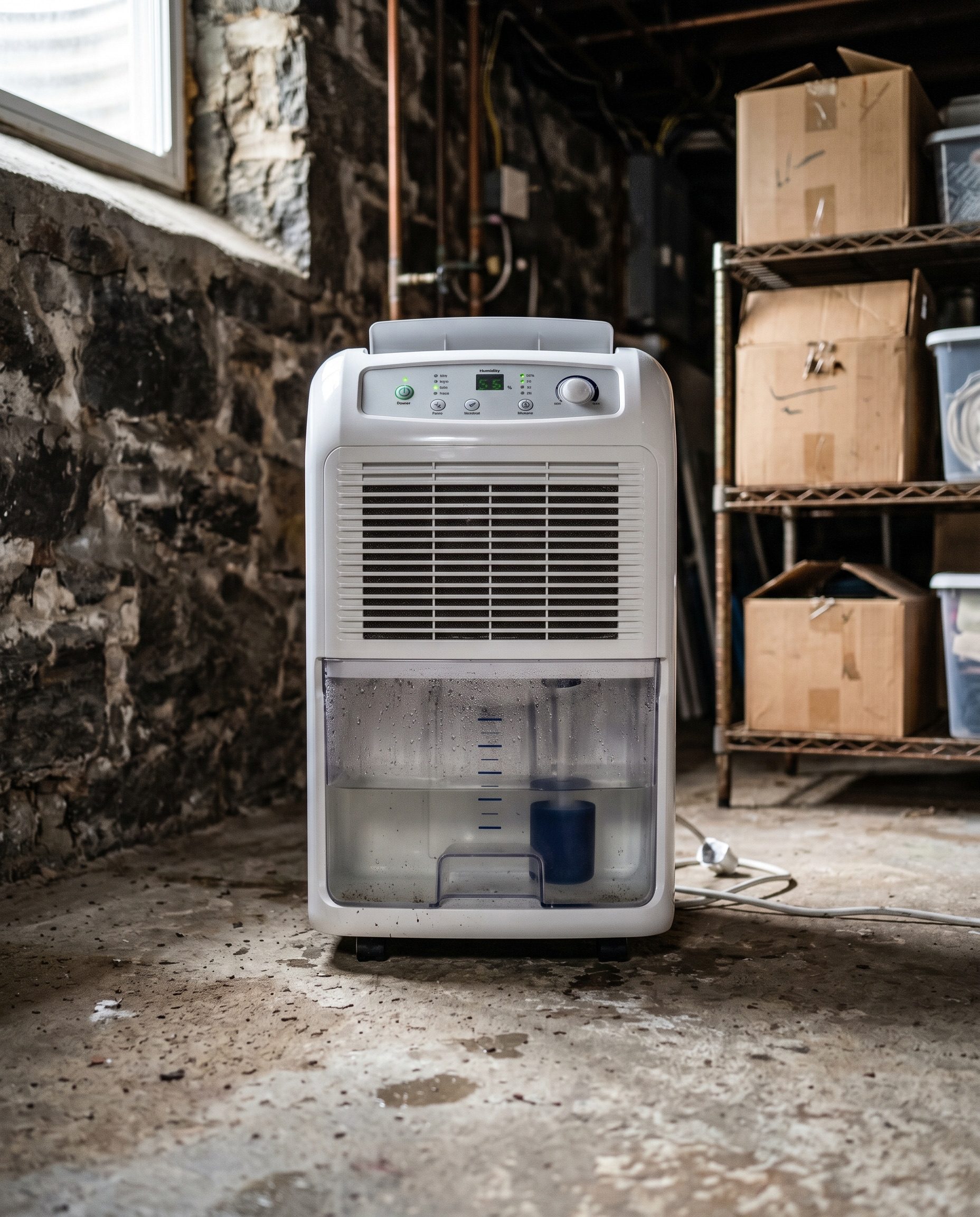
- Best for the common case: A dehumidifier holding the room under 50 percent, sealed gaps, and glue boards set flat against the walls.
- Skip: Foggers and ultrasonic plug-in repellers; they do not change the conditions that bring spiders in.
Why basements fill up with spiders
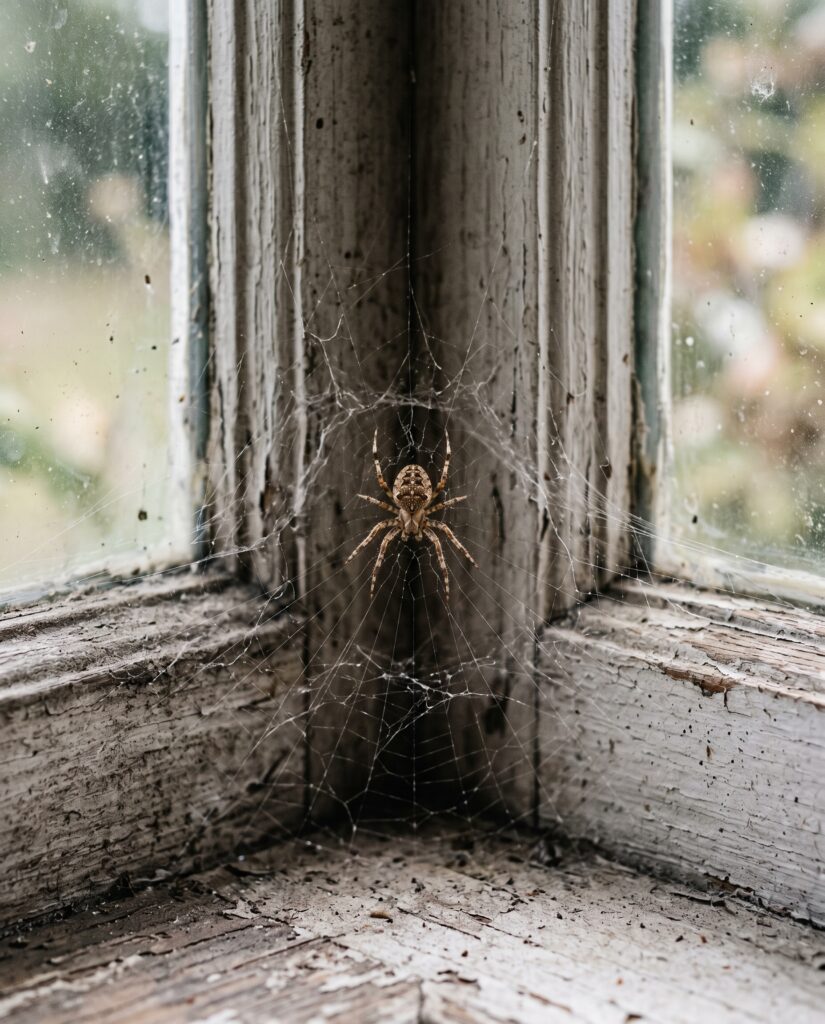
A basement is close to a perfect spider habitat, and that is the part most guides skip. It stays cool and dark, the humidity runs high against the cold foundation, and the floor-level gaps around pipes and the rim joist let small insects wander in from outside. Where there are insects, spiders follow, because a spider goes where its food is. The webs you keep clearing are not the cause; they are the receipt for an insect problem you have not solved yet.
It also helps to know that the residents are usually harmless. According to UC IPM, most house spiders are harmless and even helpful, eating the gnats, flies, and other pests that would otherwise breed down there undisturbed. The two you actually need to identify are the black widow and the brown recluse, and both like the same undisturbed clutter a neglected basement provides. We will cover how to spot those further down, but for the typical cobweb spider in a corner, the goal is eviction, not a kill count.
Vacuum first, then take away the damp
Before you buy anything, walk the basement with a vacuum and a flashlight. Suck up every web, every spider, and especially every pale, papery egg sac tucked into corners and under shelf lips, because one sac can hold dozens of spiderlings. A shop vac with a hose reaches the ceiling joints and the tops of the walls where webs cluster. This costs nothing and instantly drops the population you are working against.
Then go after the humidity, which is the single biggest lever down there. Spiders and the insects they hunt both prefer damp, so a basement held below about 50 percent relative humidity is a far less appealing place to settle. Run a dehumidifier sized for the square footage, empty it or plumb it to a drain, and fix any obvious leaks or a sweating pipe first. UC IPM is clear that exclusion and reducing their prey beat spraying for long-term control, and drying the room does both at once: it discourages the prey insects and makes the space hostile to the spiders themselves.
Seal the gaps and clear the clutter
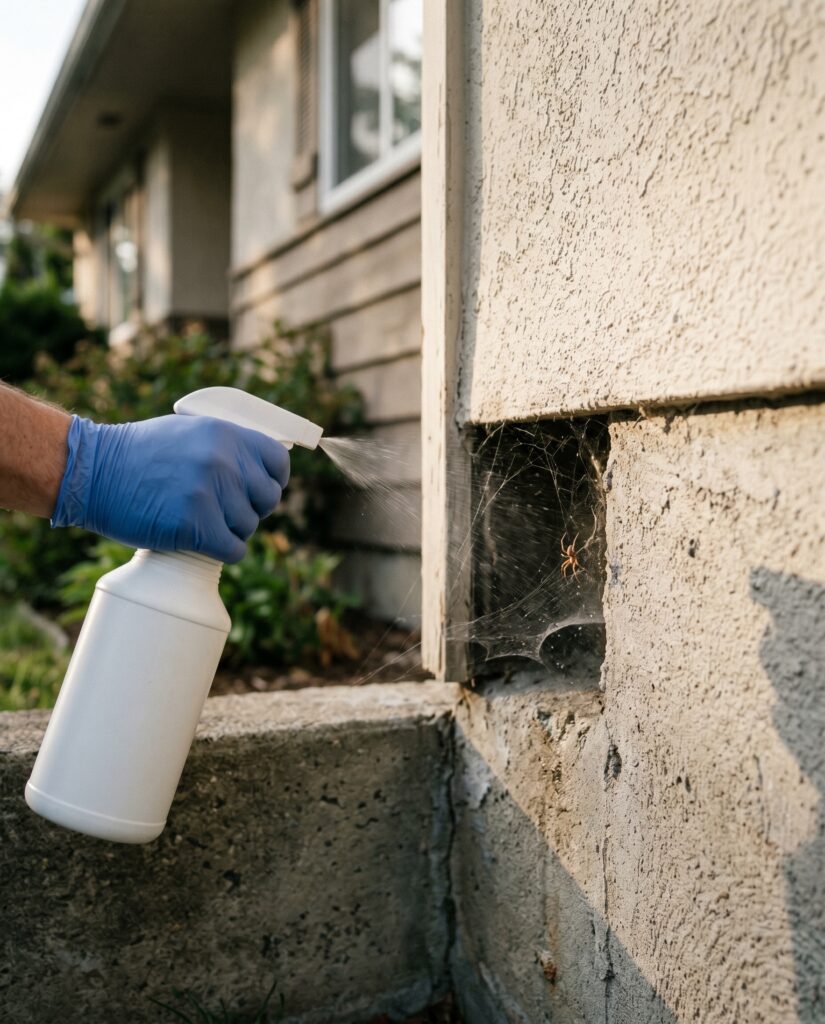
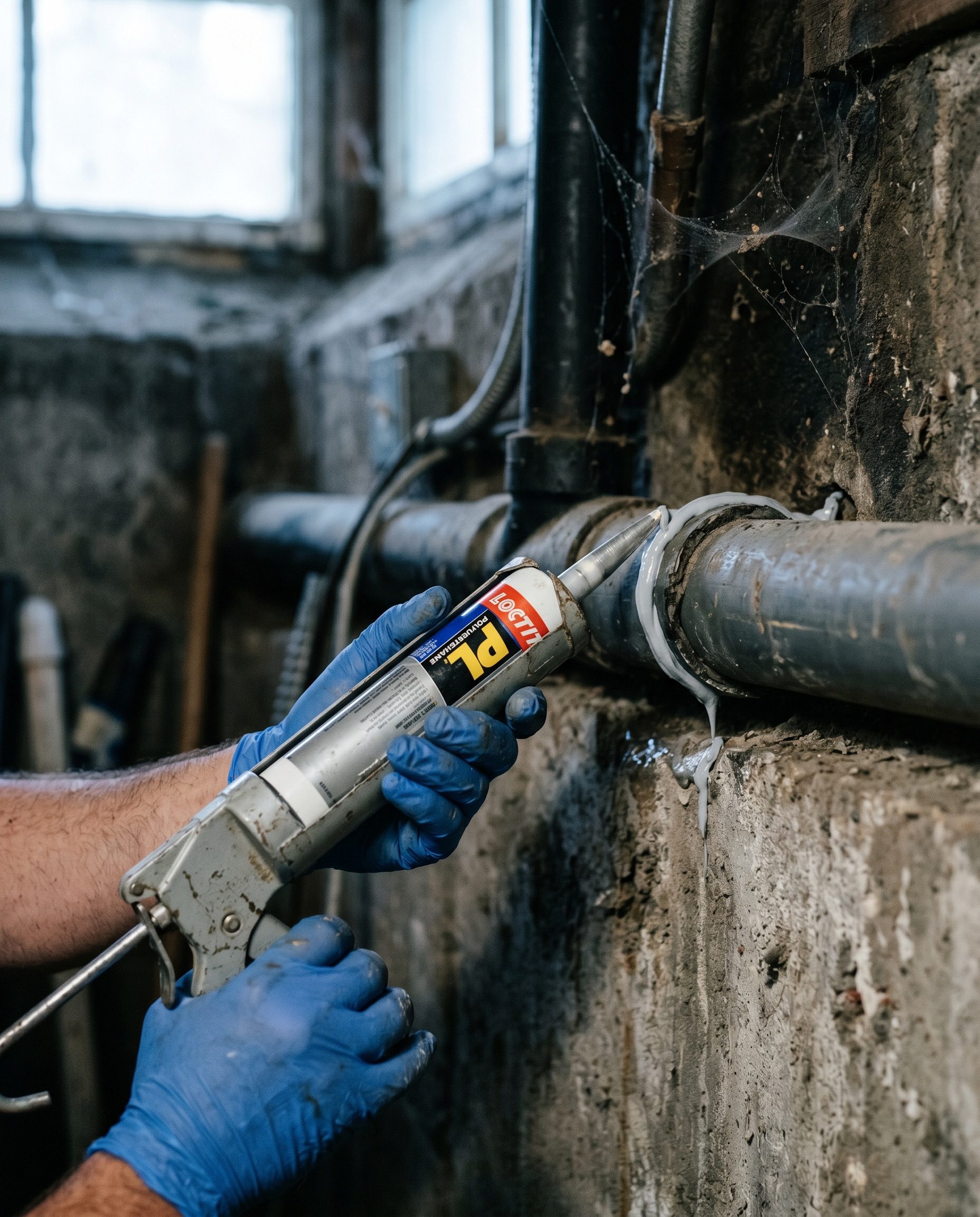
Now close the doors they came through. Spiders and their prey enter at floor level, so the high-value gaps are around the rim joist where the foundation meets the framing, the holes where pipes, wires, and the dryer vent pass through the wall, and the bottom of any exterior basement door. Seal small cracks with caulk, stuff larger voids with copper mesh before caulking, and add a door sweep where daylight shows under the door. Purdue Extension’s guidance on household spiders puts the same exclusion-and-sanitation work ahead of any chemical, because a sealed gap keeps working for years while a spray wears off in weeks.
Light matters more than people expect, too. A lot of basement insects are drawn to exterior lights at night and then drift inside, so switching outdoor fixtures near basement windows to yellow bulbs pulls fewer bugs toward the foundation. Inside, the dark, still corners are exactly where spiders want to be, so a basement that gets used, lit, and walked through is one they avoid. The same logic that drives our advice on what attracts spiders to your house applies in miniature down here.
The last free step is clutter. Stacks of cardboard boxes, old furniture, and piles against the wall are prime harborage. Get storage up onto shelving and a few inches off the wall, swap cardboard for sealed plastic bins, and you remove most of the hiding spots in one afternoon.
Where each fix belongs
The right move depends on where in the basement you are dealing with spiders, so here is the quick map for the common zones.
| Where they are | Best fix | Watch out for |
|---|---|---|
| Damp, finished room | Dehumidifier under 50 percent plus regular use | Empty the tank or plumb to a drain |
| Foundation walls and pipe gaps | Caulk and copper mesh, glue boards at the base | Seal the rim joist, not just the obvious cracks |
| Storage and clutter zones | Plastic bins on shelves, off the floor and wall | Cardboard piles are prime egg-sac harborage |
| Near exterior doors and windows | Door sweep, yellow exterior bulbs | White lights pull in the prey insects |
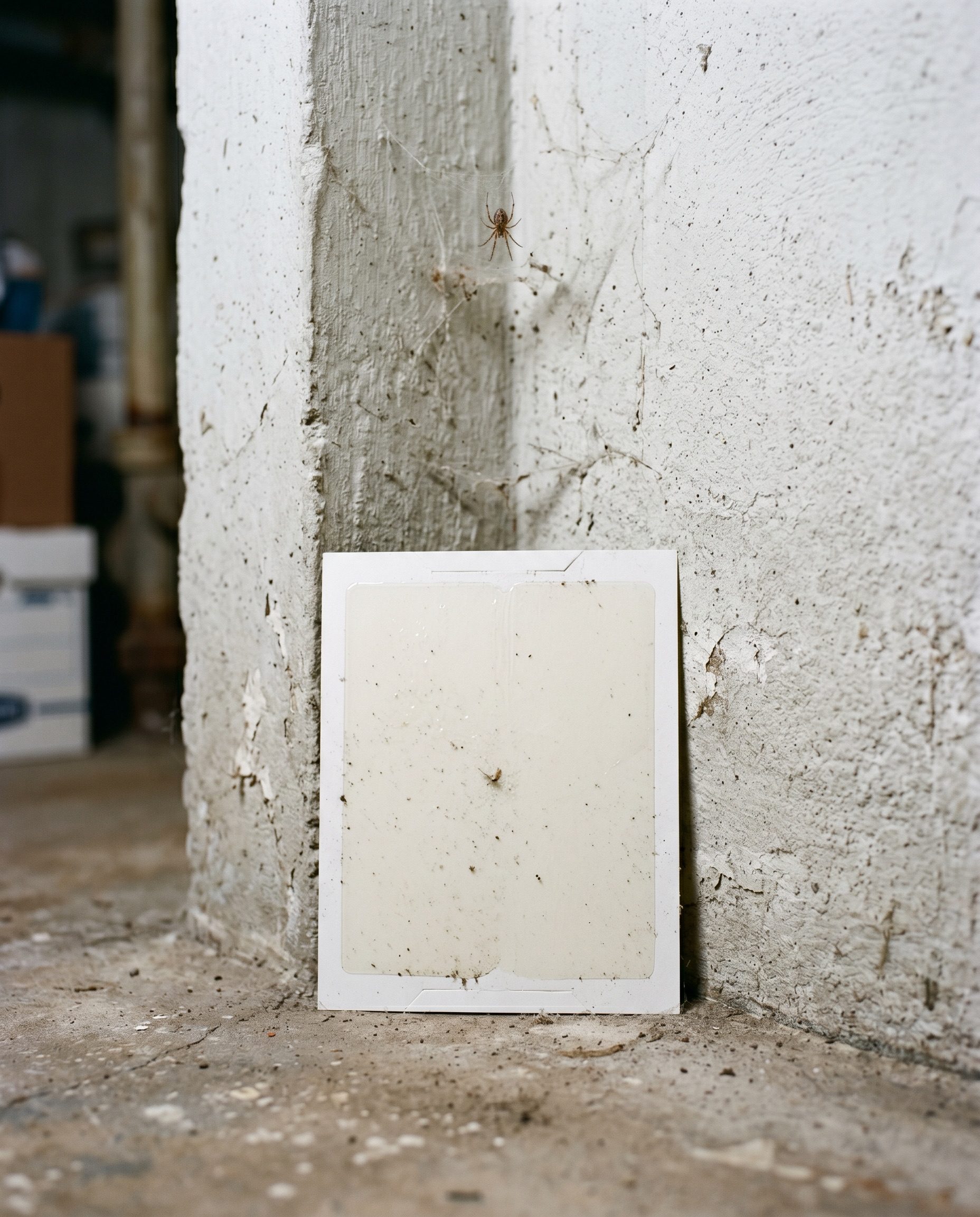
Once the conditions are handled, glue boards do the monitoring and mop-up. Set flat sticky traps tight against the walls and in corners, because crawling spiders travel along edges, not across open floor. Check them weekly: a board that keeps filling means a harborage or entry point is still active, while empty boards tell you the room has dried out and the food is gone. For sizing and placement detail, our roundup of the best spider traps and glue boards sorts the ones built for crawling pests. You rarely need a spray at all, but if you use any registered indoor product, read and follow the label, keep kids and pets off until it dries, and never treat surfaces near food storage.
Know the two you should not handle
Almost every basement spider is harmless, but two deserve respect, and a cluttered basement is their favorite address. The brown recluse hides in undisturbed boxes and clothing; the violin marking and six eyes that identify a brown recluse are the features to look for, and it is mostly found in the central and southern US. The black widow favors low, dark spaces like crawl spaces and the underside of stored items; learn how to recognize a black widow and its bite so you can tell it from a harmless cobweb spider.
If you think you were bitten by either, clean the bite and watch how you feel rather than panic. For a known recluse or widow bite, or for spreading redness, severe pain, muscle cramps, or a wound that worsens, when a spider bite needs medical care is the call. Get emergency medical help right away for trouble breathing, throat or tongue swelling, dizziness, or a fast-spreading reaction. When you have a confirmed widow or recluse population, wear gloves, do not go reaching blindly into clutter, and consider calling a licensed professional.
Common questions
What kills spiders in a basement instantly?
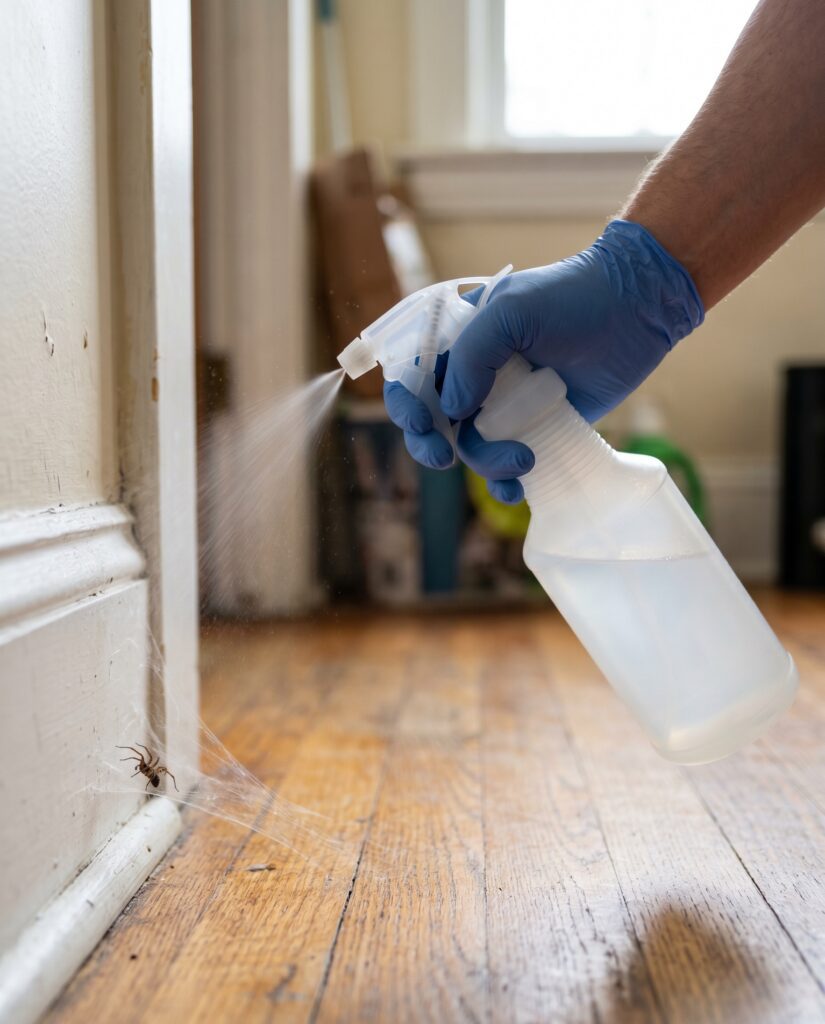
A direct shot of a labeled aerosol or even a vacuum kills the spider in front of you, but “instant” only covers the one you can see. The ones in the wall gaps and the egg sacs in the corners are untouched. That is why drying the room, sealing gaps, and clearing clutter does more than any quick kill, because it removes the reason they are there.
Do ultrasonic spider repellers work?
No. Independent testing has not shown plug-in ultrasonic devices to repel spiders or insects in a real home, and they do nothing about the damp and prey that draw spiders in. Put that money toward a dehumidifier and a tube of caulk instead.
How do I keep spiders from coming back?
Hold the basement under 50 percent humidity, keep the gaps sealed, store everything in bins off the floor, and run a few glue boards as a tripwire. Spiders return when the conditions return, so the maintenance is just keeping it dry, sealed, and uncluttered.
Are basement spiders dangerous?
Most are not; they are nuisance cobweb spiders that eat other pests. The exceptions are the black widow and brown recluse, which is why ID matters before you go grabbing things barehanded in storage. If you confirm either, treat the area carefully and consider a pro.
Why do I have so many spiders all of a sudden?
A spike usually tracks a spike in their food, often after a damp spell or a season when insects move indoors. More prey insects mean more spiders, so a sudden bloom is a sign the basement got wetter or more bug-friendly, not that you did anything wrong.
Final verdict
Getting spiders out of a basement is about conditions, not combat. Start with the free work: vacuum the webs and egg sacs, clear the clutter off the floor, and walk the room with a light. Then take away what brought them, drop the humidity under 50 percent with a dehumidifier, seal the rim joist and the pipe gaps, add light, and store everything in bins. Do that and the prey insects thin out, and the spiders leave with their food. Set glue boards flat against the walls to catch the stragglers and to tell you whether the room is winning. Skip the foggers and the ultrasonic gadgets; they never touch the damp and the bugs that are the actual draw. The handful of widows or recluses in a cluttered basement are the only ones worth treating with caution.
Next steps:
– Take the same conditions-first approach to the rest of the home with our guide to getting rid of spiders in the house.
– Set up monitoring and mop-up with the best spider traps and glue boards.
– Cut off the draw at the source by reading what attracts spiders to your house.