
n
n
n
If you keep seeing little fuzzy flies hovering around a sink or shower, you almost certainly have drain flies, and the reason nothing you have tried works is that you are treating the wrong thing. Drain flies live and breed in the gelatinous organic film that lines the inside of your drainpipe, so the whole job is finding and scrubbing out that film. Pouring bleach feels like the obvious move, but it rinses straight past the slime and does almost nothing to the breeding layer underneath. The fix is mechanical: tape a cup over each drain overnight to find the one they are coming from, scrub the pipe with a brush, then follow with an enzyme cleaner that digests what is left. Remove the slime and the breeding stops.
For the drain fly that fools everyone, see our guide to bugs that look like moths.
nn
n
Drain flies breed in the slime film inside a drain, so the fix is removing that film, not pouring bleach over it. Find the source drain with a cup-and-tape test, scrub the pipe with a brush, then pour in an enzyme cleaner to digest the rest.
n
- n
- Do first (free): Tape a clear cup over each drain overnight to find which one the flies are climbing out of.
- Best for the common case: Brush the pipe walls with a stiff drain brush, then follow with an enzyme or bio drain cleaner.
- Skip: Dumping bleach down the drain; it rinses past the film and the flies are back in days.
n
n
n
n
nn
nn
Why bleach keeps failing
nn
Drain flies are not really a flying problem, they are a plumbing problem with wings. The adults you swat are the tail end of a life cycle that runs entirely inside the drain, where the larvae feed on the thick organic film coating the pipe walls and the underside of the stopper. That film is the whole game. According to UC IPM’s Pest Notes on moth flies and drain flies, the larvae develop in this gelatinous muck of decomposing matter, and that is exactly what bleach cannot touch.
nn
Here is the mechanical reason bleach lets you down. It is a thin liquid, so it sheets down the pipe and out the trap in a couple of seconds, barely wetting the slime and never dissolving the gel matrix the larvae live inside. You kill a few adults near the opening and feel like you won, then a fresh batch hatches from the untouched film a day or two later. The film is anchored to the pipe like a biofilm, and the only things that remove it are physical scrubbing and enzymes that digest it. Boiling water has the same problem bleach does, it passes too fast to matter.
nn
Make sure it is drain flies
nn
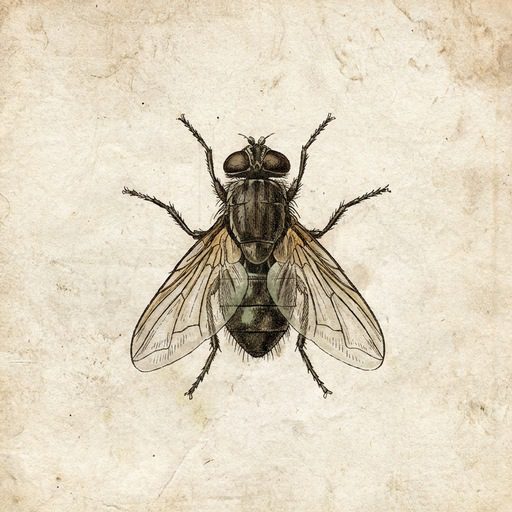
Before you tear apart a drain, confirm what you are dealing with, because the three small kitchen-and-bath flies need different fixes. Drain flies, also called moth flies, are the chunky ones: about an eighth of an inch, dark gray, and noticeably fuzzy, with rounded mothlike wings held over the body like a tiny tent. They are weak fliers that hop and flutter in short bursts rather than zip around, and you find them sitting on walls near the drain, not circling fruit.
nn
Fruit flies are smaller, tan, and often red-eyed, and they swarm ripe produce and the trash. Fungus gnats are skinny, long-legged, and mosquito-shaped, and they come out of overwatered houseplant soil, not drains. UC IPM has a clear guide to telling drain flies apart from fruit flies and fungus gnats if you are not sure. If the flies are on your plants instead, our guide to getting rid of gnats in the house covers that case, and the small-fly identification breakdown walks all three side by side.
nn
nn
Find the source drain
nn
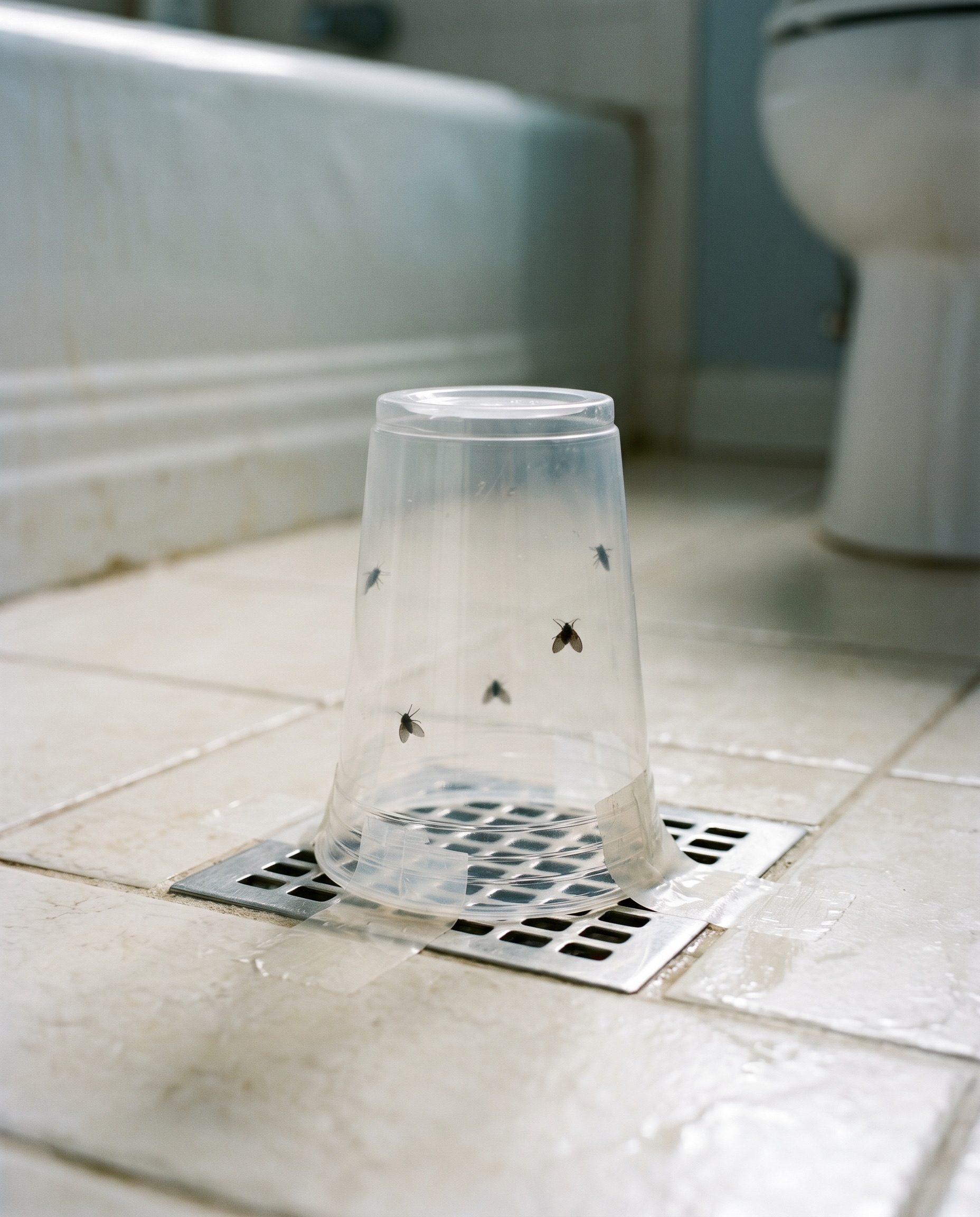
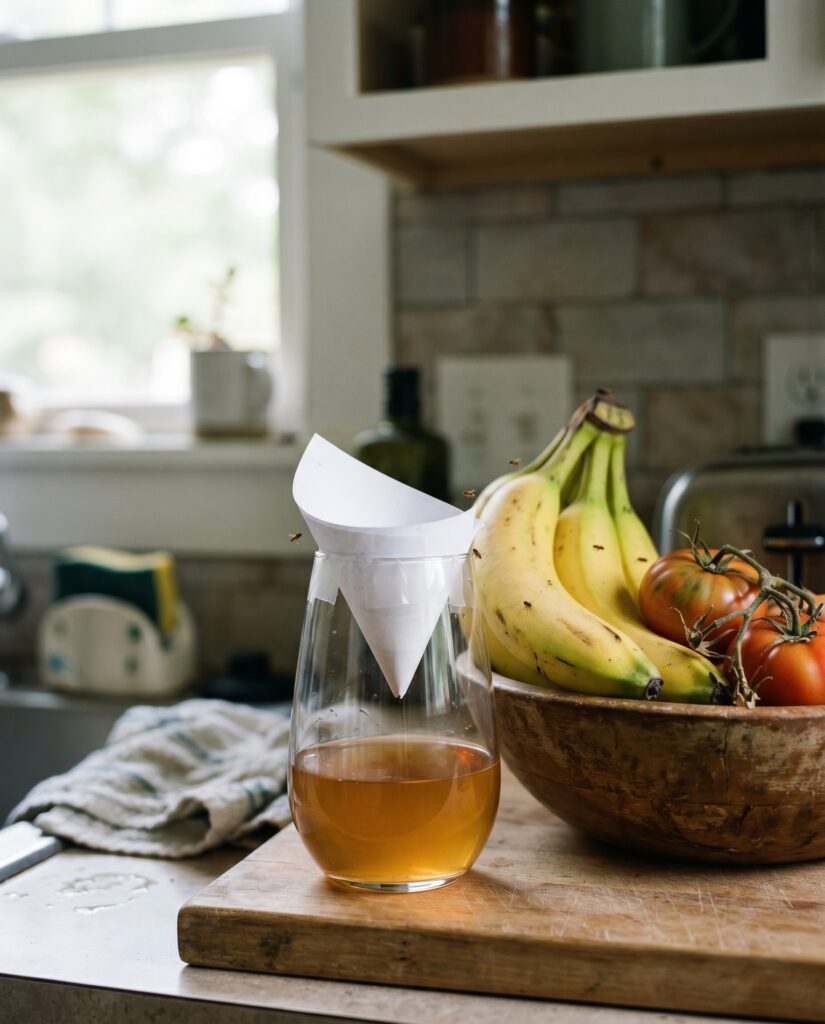
You cannot fix a drain you have not identified, and a house has more drains than people think: the bathroom sink, the tub, the shower, the kitchen sink, the dishwasher, a basement floor drain, even a rarely used guest bath. The free, reliable way to pin down the source is the cup test. Dry the area around a drain, tape a clear plastic cup upside down over the opening so the rim is sealed to the surface, and leave it overnight.
nn
Check the cups in the morning. The drain that is breeding flies will have a few of them trapped inside the cup, climbing the walls, because the new adults emerged and could not get past the seal. The cup that catches flies is your target. Do this on every suspect drain at once so you are not guessing, and pay special attention to floor drains and the overflow holes on sinks, which trap film and get ignored for years. As UC IPM notes on how small flies breed in the organic film inside drains, an unused or slow drain is a prime nursery because the film just keeps building with nothing to disturb it.
nn
Scrub the pipe, then add enzymes
nn
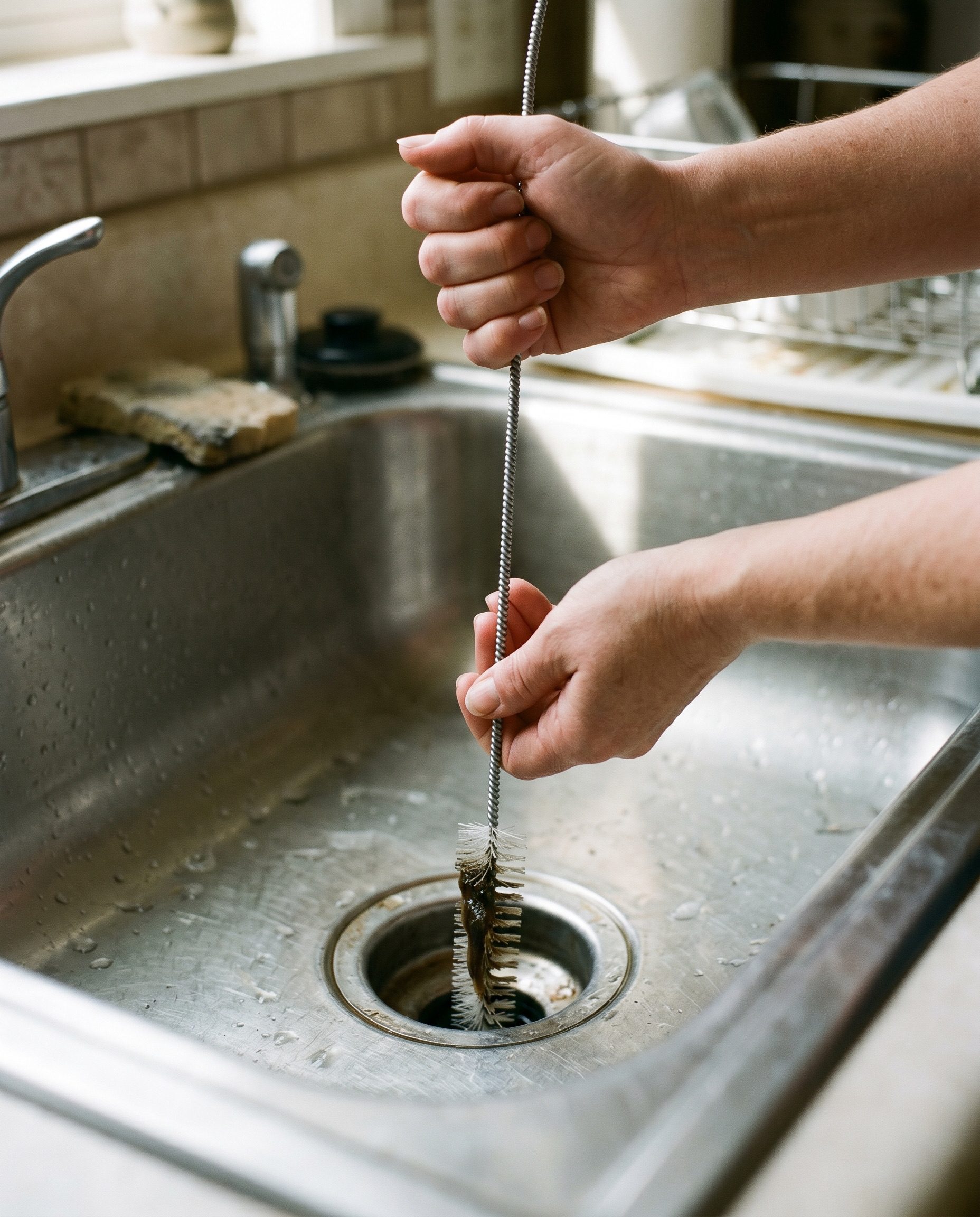
This is the part that actually clears them, and the order matters. Start mechanical. Run a stiff, long drain brush down into the pipe and scrub the walls in and out, working it down as far as it reaches and all the way around. You are physically tearing the film off the pipe, and you will usually pull up dark, foul-smelling gunk on the bristles, which is the proof you are in the right place. Pop out and scrub the sink stopper and the overflow opening too, because both are coated and both get skipped.
nn
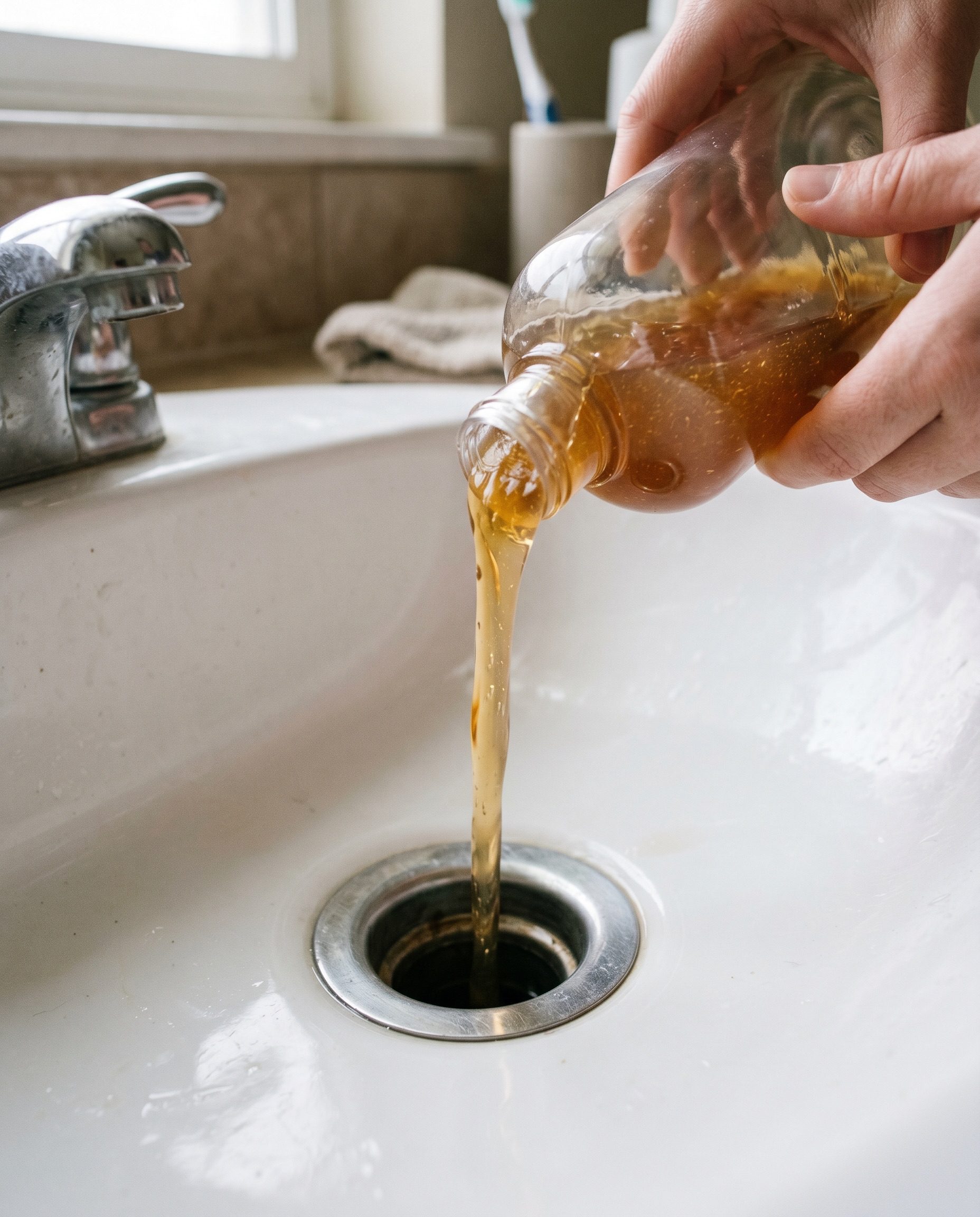
Once you have scrubbed off everything you can reach, follow up with an enzyme or bacterial drain cleaner, not bleach. These products are made of microbes and enzymes that keep digesting the organic residue down where the brush could not reach, and they work over hours rather than seconds, which is the opposite of bleach’s rinse-and-gone problem. Pour it in at night when no one will run water for several hours, so it sits and works instead of washing away. Our guide to drain fly enzyme gel cleaners covers which formulations cling to the pipe long enough to matter. If you ever reach for a registered pesticide for the room, follow the EPA’s safe pest control guidance and the product label, but for drain flies you rarely need one, the brush and enzymes do the work.
nn
nn
Match the fix to the drain
nn
Not every drain gets scrubbed the same way, so here is the quick map for the common spots.
nn
| Drain type | Best approach | Watch out for |
|---|---|---|
| Sink with stopper | Pull and scrub the stopper, brush the pipe, then enzyme | The overflow hole hides film too |
| Shower or tub | Remove the cover, brush the hair-trap and pipe, then enzyme | Hair mats hold the breeding film |
| Floor or basement drain | Scrub, enzyme, then pour water weekly to keep the trap full | A dry trap lets flies and sewer gas up |
nn
That last row is the one people miss. A floor drain that never gets used dries out, the film builds undisturbed, and you get a steady fly source from a drain you forgot existed. Pour a quart of water down any unused drain every week or two to keep the trap sealed and the film from caking up.
nn
Common questions
nnWill bleach get rid of drain flies?n
Not for long. Bleach kills a few adults on contact but rinses past the slime film where the larvae live, so a new batch hatches within days. The film is what breeds them, and only scrubbing plus an enzyme cleaner removes it. Bleach is the most common reason people think they cannot beat drain flies.
nnDoes pouring boiling water down the drain work?n
Barely. Like bleach, boiling water passes through the trap in seconds and does not dissolve the gel film the larvae are embedded in. It might knock back a thin layer near the top, but it leaves the breeding source intact. Use a brush and an enzyme cleaner instead.
nnHow long does it take to get rid of drain flies?n
Once you scrub the right drain and treat it, the adults you see should drop off within a week as no new ones emerge. The remaining adults live only about two weeks. If they keep appearing, you missed a second drain, so run the cup test again on every drain in the area.
nnCan drain flies make you sick?n
They are a nuisance rather than a disease threat, and they do not bite. Because they breed in drain muck they can carry bacteria on their bodies, so it is worth clearing them from kitchen areas, but there is no medical emergency here. Focus on removing the breeding film and they go away.
nnWhy do I have drain flies in a clean house?n
A spotless house can still have a filmy pipe, because the slime builds inside the drain where you never see it. Drain flies are about plumbing, not housekeeping, and even a lightly used guest bathroom or floor drain can grow enough film to breed them. The cleanliness you can see does not reach the pipe walls.
nn
Final verdict
nn
Getting rid of drain flies comes down to one idea: kill the breeding film, not the flies. Confirm they are drain flies and not fruit flies or fungus gnats, then run the free cup-and-tape test overnight to find exactly which drain they are climbing out of. Scrub that pipe with a stiff drain brush to physically rip the slime off the walls, including the stopper and overflow, then follow with an enzyme or bacterial cleaner that keeps digesting what you could not reach. Skip the bleach and the boiling water, because both rinse straight past the film and leave the nursery intact. Keep unused drains flushed so the film never rebuilds, and the flies stay gone.
nn
Next steps:
nn
– Pin down which small fly you actually have with the identification breakdown.
n
– Pick a clinging enzyme treatment in our drain fly gel cleaners guide.
n
– If the flies are really coming off your plants, switch to the getting rid of gnats guide.
nn

Pingback: Tiny Bugs in the Bathroom: What They Are and Why
Pingback: Bugs Under the Kitchen Sink: What Lives There and Why
Pingback: Bugs That Look Like Moths: Drain Flies and Four Others