A carpet beetle trap is a sticky glue monitor, not a pheromone magnet like the traps made for moths, so it will not pull beetles in from across the house or end an infestation by itself. What it does well is catch the wandering larvae and adults so you can pinpoint which closet, baseboard, or vent the problem is coming from, then go clean that source. Treat the trap as a detection tool that tells you where to vacuum, not as the cure. For our own hall closet we keep a couple of glue monitors in the corners just to watch whether numbers are climbing or fading. Most roundups sell these as a fix; the honest version below explains why the vacuum, not the trap, does the actual work.
Carpet beetle traps are sticky glue monitors with no strong lure, so they locate the source rather than cure it; use the catches to find the closet, baseboard, or vent feeding the problem, then vacuum out the larval food source.
- Do first (free): Deep-vacuum carpet edges, under furniture, and floor vents to remove the lint, pet hair, and dead insects the larvae eat.
- What a trap is for: A sticky monitor placed in corners to show where the beetles are wandering and whether numbers rise or fall.
- Skip the wrong tool: Do not expect a glue board to draw beetles in or end the infestation; it points you to the source, the cleaning ends it.
What to do first
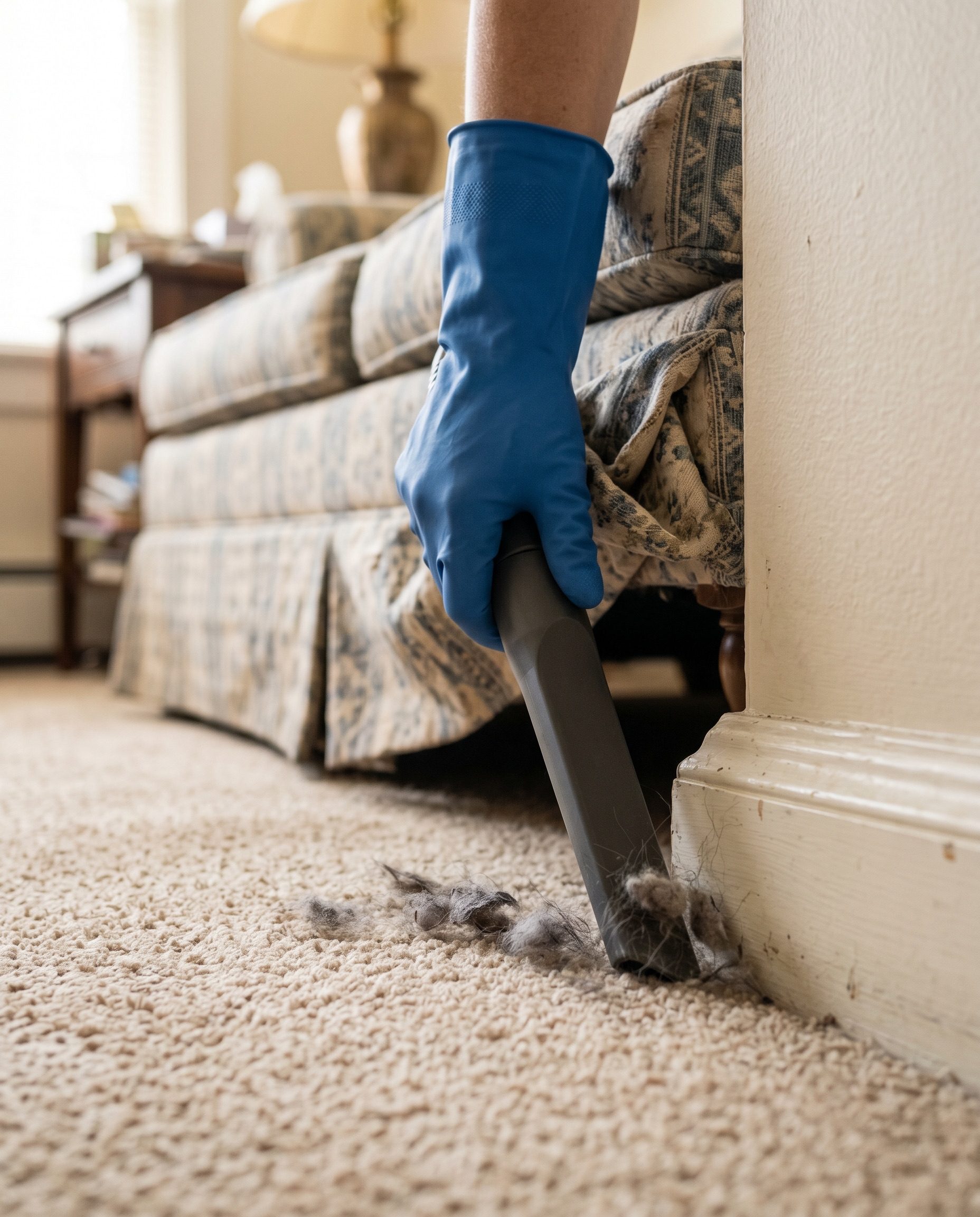
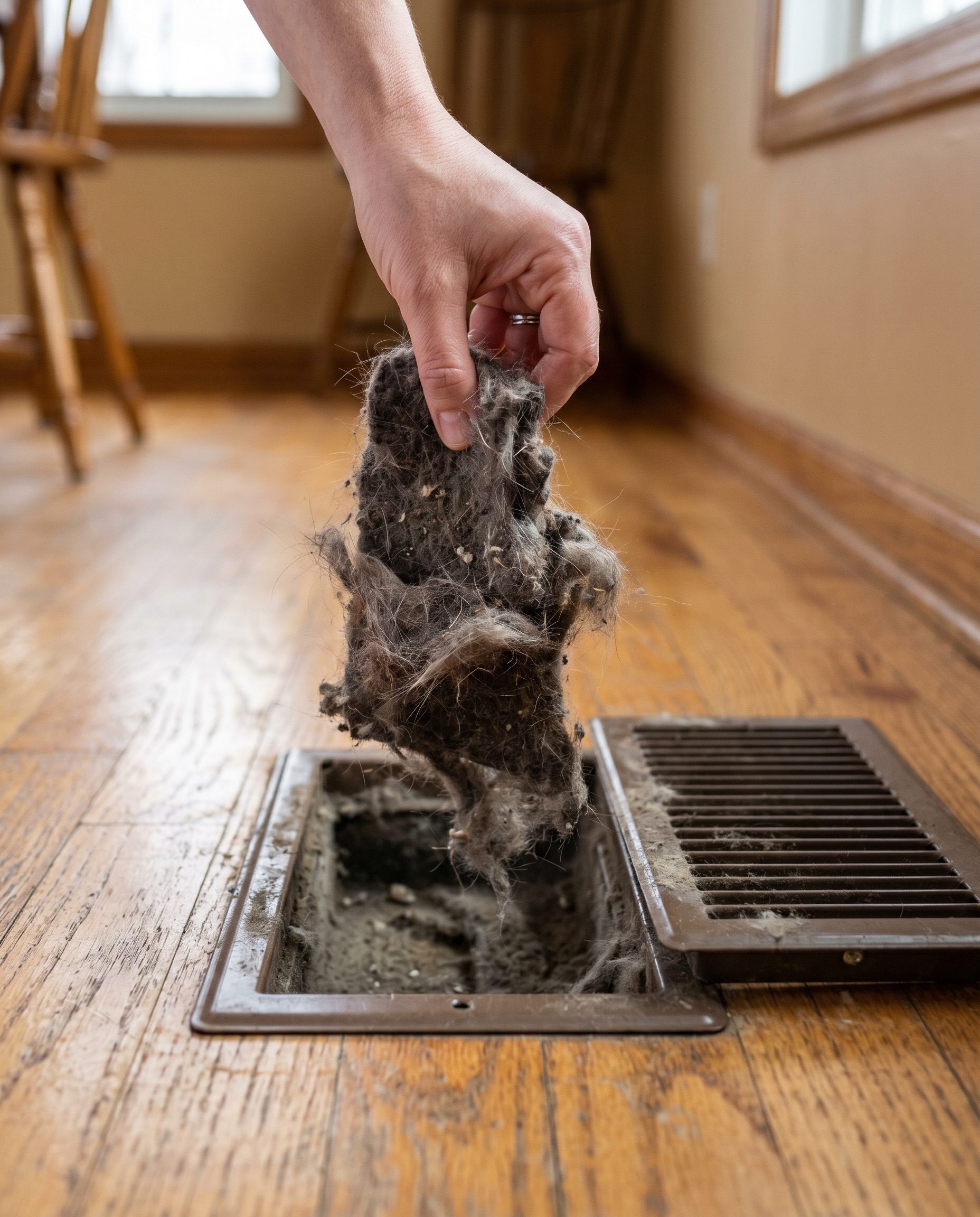
Before you buy a single trap, do the free part, because the trap only tells you where to clean and the cleaning is what actually works. The damage is done by the larvae, not the adults, so the job is finding and removing what those bristly larvae eat: wool, lint, pet hair, dead insects, and stored dry goods. The UC IPM Pest Notes on carpet beetles is clear that thorough, repeated vacuuming of carpet edges, baseboards, closet floors, and under heavy furniture removes both the larvae and the lint they feed on. Run the crevice tool slowly along the edges where carpet meets the wall, then empty the canister or bag outside right away.
Adults are a different animal, and people waste effort treating them. The adult beetles feed on outdoor flower pollen, not your carpet, and a few near a sunny window usually just flew in. The Colorado State guide on carpet (dermestid) beetles walks through telling the bristly larvae apart from the rounded adults, which matters because finding live larvae near a food source is the real signal you have an active problem. Our full walkthrough on how to get rid of carpet beetles lays out the cleaning order, and the carpet beetle identification guide shows what the larvae and adults look like up close.
Why these traps do not lure beetles in
Here is the part most “best trap” lists skip. Moth traps work because they carry a strong sex-pheromone lure that pulls male moths in from a distance, and buyers assume a carpet beetle trap does the same thing. It does not. These are plain sticky glue boards with no real attractant, so they only catch beetles that happen to wander across them on their own path. They will never empty a room or pull larvae out of a closet across the house.
That is exactly why a trap is a monitor and not a cure. Its whole value is location, because a board in the back corner of a closet that fills up tells you the source is in that closet, while a clean board next to a full one tells you to look elsewhere. The University of Kentucky entomology page on carpet beetles ties control back to the same root cause every time: locate the larval food source, then remove it with cleaning. A trap shortens that hunt; it does not replace the vacuum. If you see structural or widespread damage to valuable wool rugs, upholstery, or stored garments that cleaning is not catching up to, that is the point to bring in a licensed pest professional rather than buying more boards.
Where to place the monitors
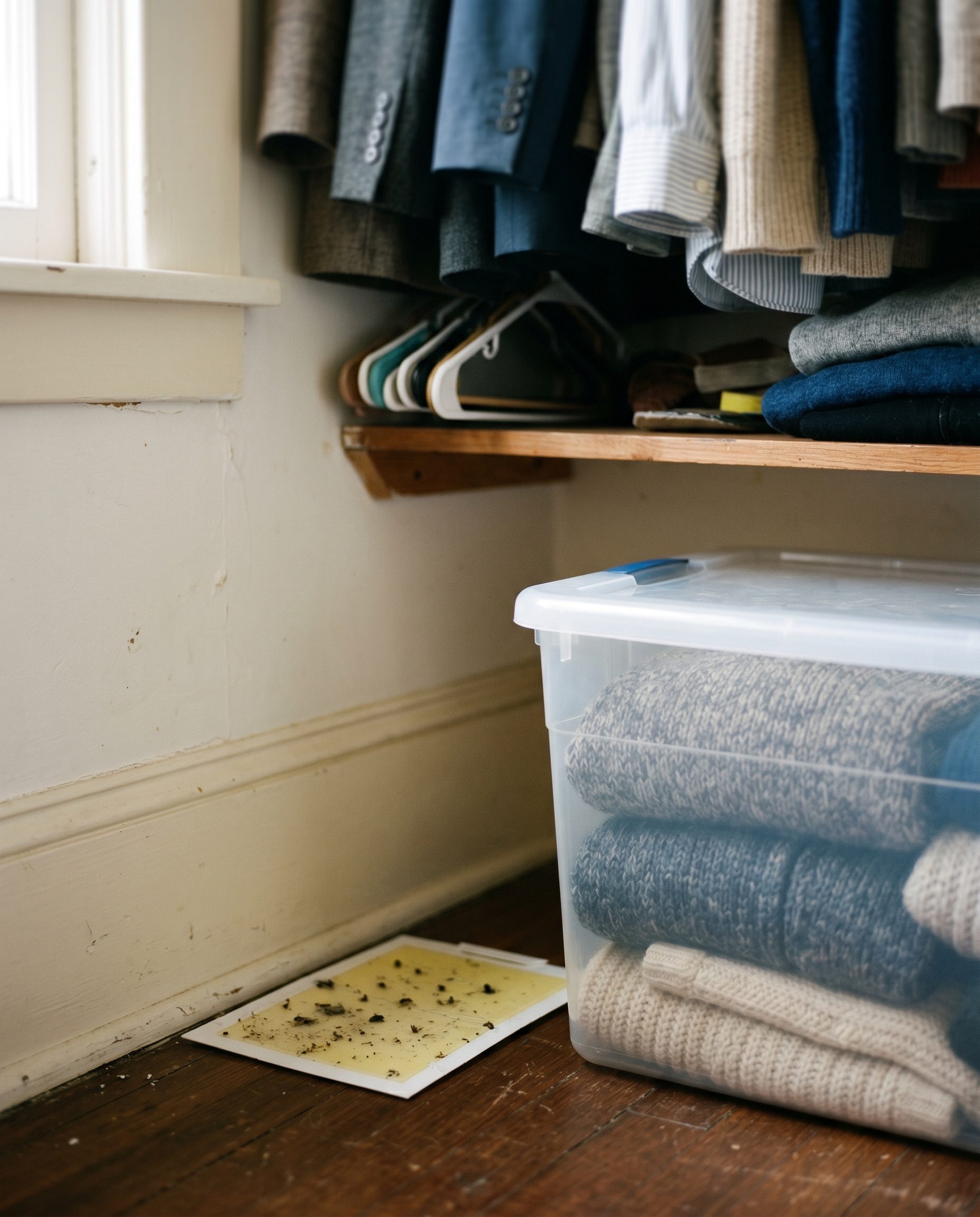
A monitor only earns its keep where the larvae actually travel, so placement is the whole game. Put the boards flat on the floor in closet corners, along baseboards, near floor vents, and under low furniture you rarely move, which are the dark, undisturbed spots the larvae like. Check each one weekly, note which fills fastest, and let the busiest board point you to the closet or vent that needs the deep clean.
| Spot | Why it works | Watch-out |
|---|---|---|
| Closet floor corners | Wool clothes and lint collect where larvae feed | Move shoes and bins aside so the board sits flush |
| Baseboard and carpet edges | Larvae crawl the wall-floor line between rooms | Keep clear of foot traffic so it is not kicked loose |
| Near floor vents and under furniture | Lint, pet hair, and dead insects gather and stay undisturbed | A catch here means clean the vent, not just swap the board |
Once a board shows you the hot spot, the EPA’s sanitation-first safe pest control guidance is the right order of operations: clean and remove the source before reaching for any chemical. Vacuum that closet or vent hard, launder or hot-dry the wool and washable items stored there, and seal the cleaned-out woolens in tight bins so nothing reinfests them. Keep the monitors running afterward to confirm the catches drop off, which is the real proof the cleaning worked. If you do decide to add a residual product to the edges later, treat it as a follow-up to vacuuming and read the label first, because under federal law the label is the law. The best carpet beetle killers and sprays roundup covers that follow-up step.
The picks
Cards come after the analysis on purpose, because the cleaning does the work and the trap only tells you where. These three are honest sticky monitors, useful for finding the source and tracking whether your effort is paying off, not for ending an infestation on their own.
InsectoGuide is reader-supported. As an Amazon Associate we earn from qualifying purchases at no extra cost to you.
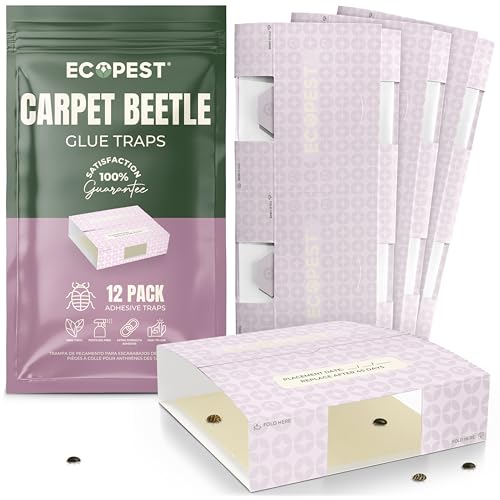
A non-toxic sticky monitor for closets and storage areas to pinpoint the source.
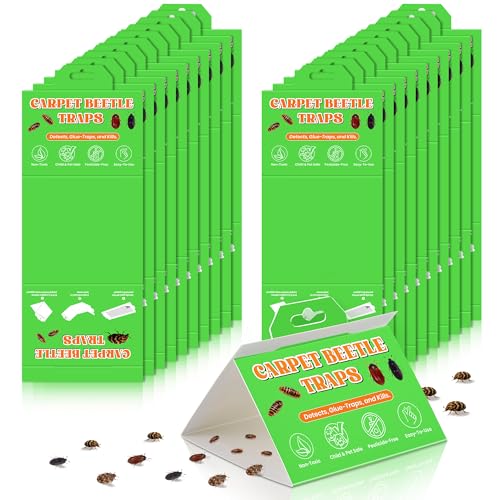
A big pack for monitoring a whole home and tracking activity over time.
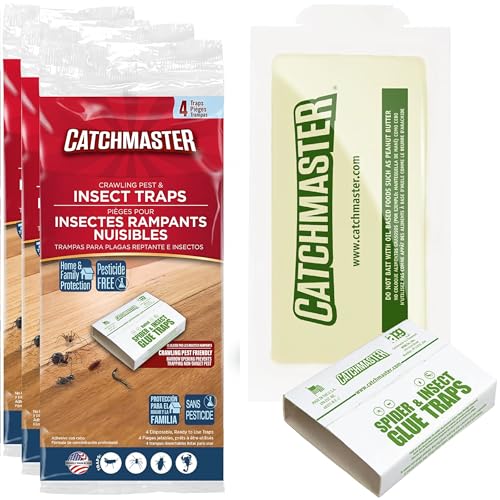
A durable, pesticide-free glue board for long-running monitoring along walls.
Common questions
Do carpet beetle traps actually attract beetles?
Not really. They are sticky glue monitors with no strong lure, so they only catch beetles that crawl across them on their own. They are useful for spotting where larvae travel and whether numbers are rising, but they will not pull beetles in from another room or empty an infestation.
Will a trap get rid of carpet beetles by itself?
No. The damage comes from the larvae feeding on wool, lint, pet hair, and dead insects, so the cure is finding and removing that food source. The UC IPM guidance puts deep vacuuming first; the trap just tells you which spot to clean.
Where should I put the monitors?
Flat on the floor in closet corners, along baseboards, near floor vents, and under furniture you rarely move, which are the dark, undisturbed places larvae feed. Check them weekly and let the busiest board point you to the room that needs the deep clean.
Do carpet beetles bite?
No. Carpet beetles do not bite. Itchy bumps some people get are an allergic contact reaction to the larval hairs, not bites, so the answer is removing the larvae and their hairs by cleaning, not treating “bites.” If a skin reaction is severe or persistent, see a clinician.
Are these traps safe around pets and kids?
The glue boards in these picks are non-toxic and pesticide-free, so they are generally fine in homes with pets and children, though curious paws and fingers can stick to the adhesive. Place them out of reach in corners and under furniture, and if you later add any pesticide to the edges, follow the label and keep kids and pets off until dry.
Final verdict
The best carpet beetle trap is an honest sticky monitor, and any list that calls one a cure is skipping the only thing that matters: the larvae, not the adults, do the damage, and cleaning out their food source is what ends it. Start free by deep-vacuuming carpet edges, closet floors, and floor vents to pull out the wool, lint, pet hair, and dead insects the larvae eat, then launder and seal away your woolens. Use the monitors to find the hot spot and to confirm catches drop off, placing them in corners and along baseboards and checking them weekly. Skip the idea that a glue board will draw beetles in or finish the job; it points you to the source, and the vacuum does the work.