A fine-tooth flea comb is the cheapest and safest tool in the whole flea fight, so it is where every plan should start. It confirms fleas by pulling live ones and the pepper-like “flea dirt” out of the coat, it removes fleas with zero pesticide, and it is safe on kittens and puppies too young for any chemical product. The short answer: comb your pet over white paper today to confirm what you are dealing with, then use the comb daily to knock the population down while you treat the home and the animal. It will not clear an infestation on its own, but every flea fight should begin and end with one. In our own house we keep a fine-tooth metal comb and a bowl of soapy water by the door, nothing fancier. Most roundups treat the comb as an afterthought; it is the first tool you should reach for, and the picks below sort them by the pet you are combing.
A fine-tooth flea comb is the cheapest, safest tool you have: it confirms fleas and flea dirt, removes them with no pesticide, and is safe on kittens and puppies too young for chemicals, though it cannot clear an infestation alone.
- Do first (free): Comb your pet over white paper to confirm fleas before you spend on anything else.
- Best for the common case: A fine-tooth stainless comb used daily, plus a bowl of soapy water to drown what you catch.
- Skip: Wide-tooth grooming combs and any comb as your only weapon; pair it with treating the pet and the home.

What to do first
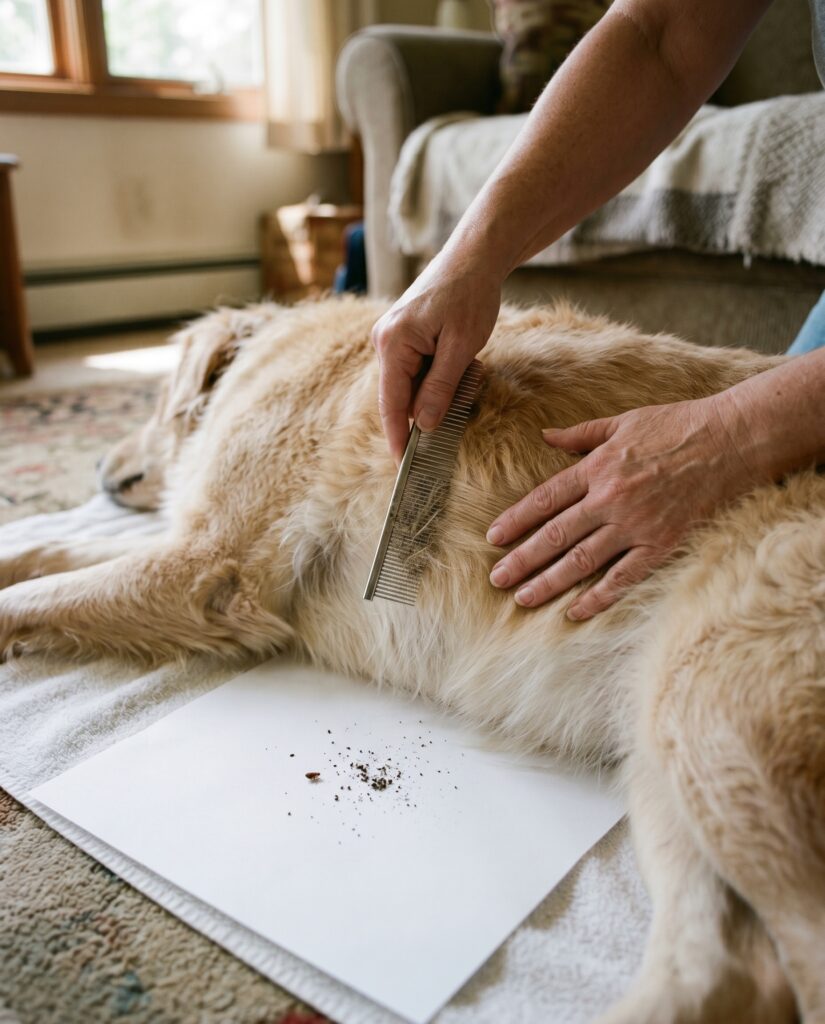
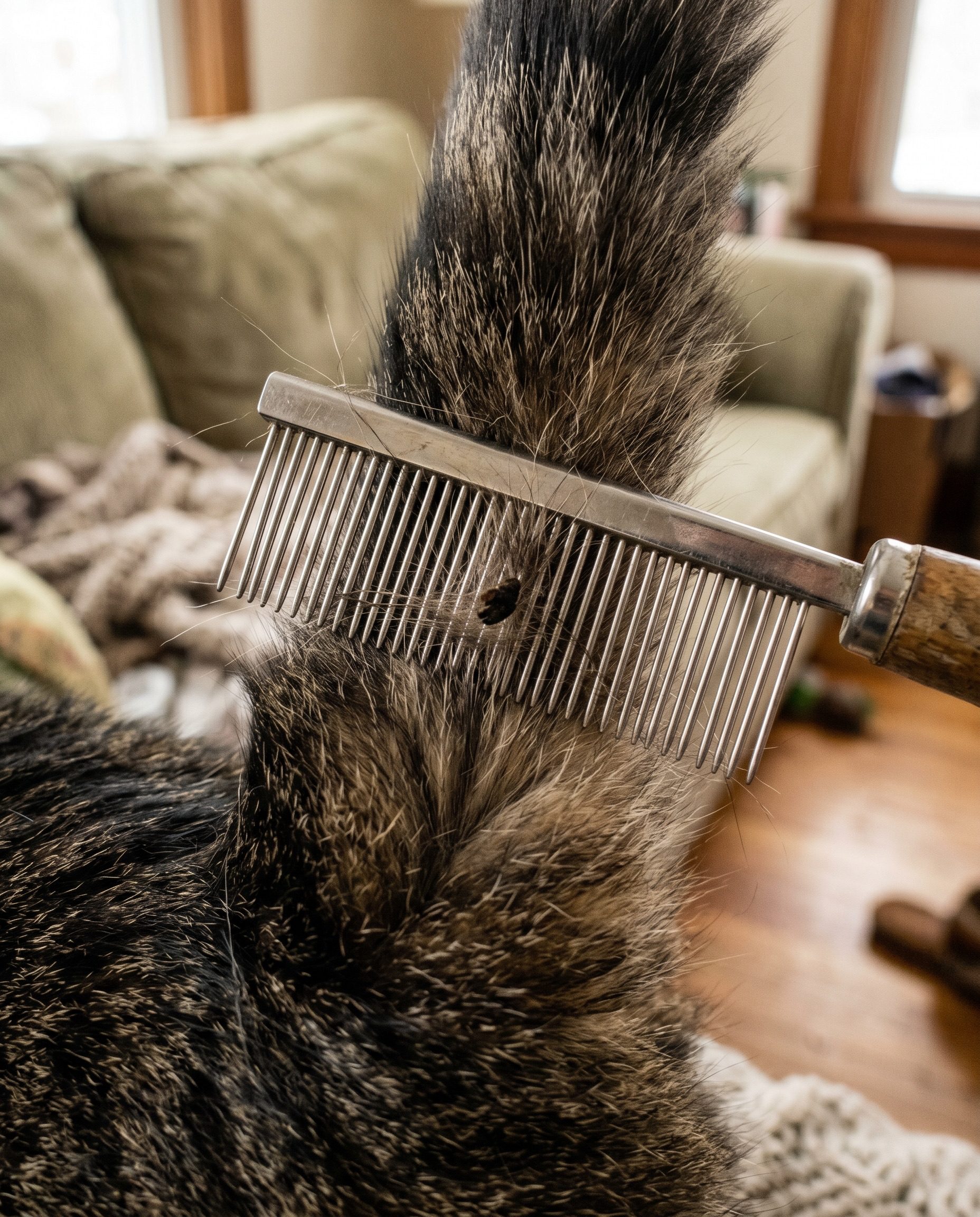
Before you buy a single drop or collar, do the free part: confirm you actually have fleas and grab a baseline. Stand your pet over a sheet of white paper or paper towel and draw a fine-tooth comb slowly through the fur, working from the neck down to the base of the tail where fleas gather. Live fleas drop onto the paper, and so does the dark, pepper-like grit called flea dirt. Flick that grit onto a damp paper towel; if it smears rust-red, it is digested blood, and you have your answer. Comb your pet over white paper to confirm fleas before spending on anything else.
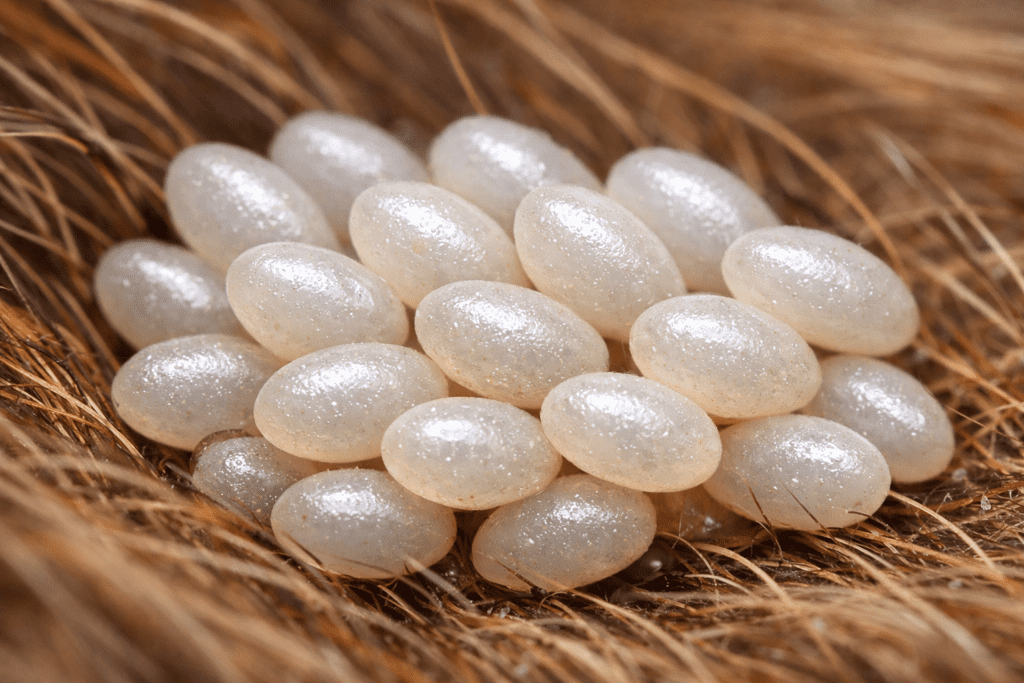
The reason this works is simple math. According to the UC IPM Pest Notes on fleas, only a small share of the flea population is the adults you see on the animal; roughly 95 percent of the life cycle lives off the host as eggs, larvae, and pupae in carpet and bedding. The comb is how you spot that small visible fraction early, before it explodes. Run it once a day for the first week so you can watch the count rise or fall and judge whether your treatment is working. Our guide to the flea life cycle and why fleas are so hard to eliminate lays out where the other 95 percent is hiding.
Why the comb beats chemicals on a kitten
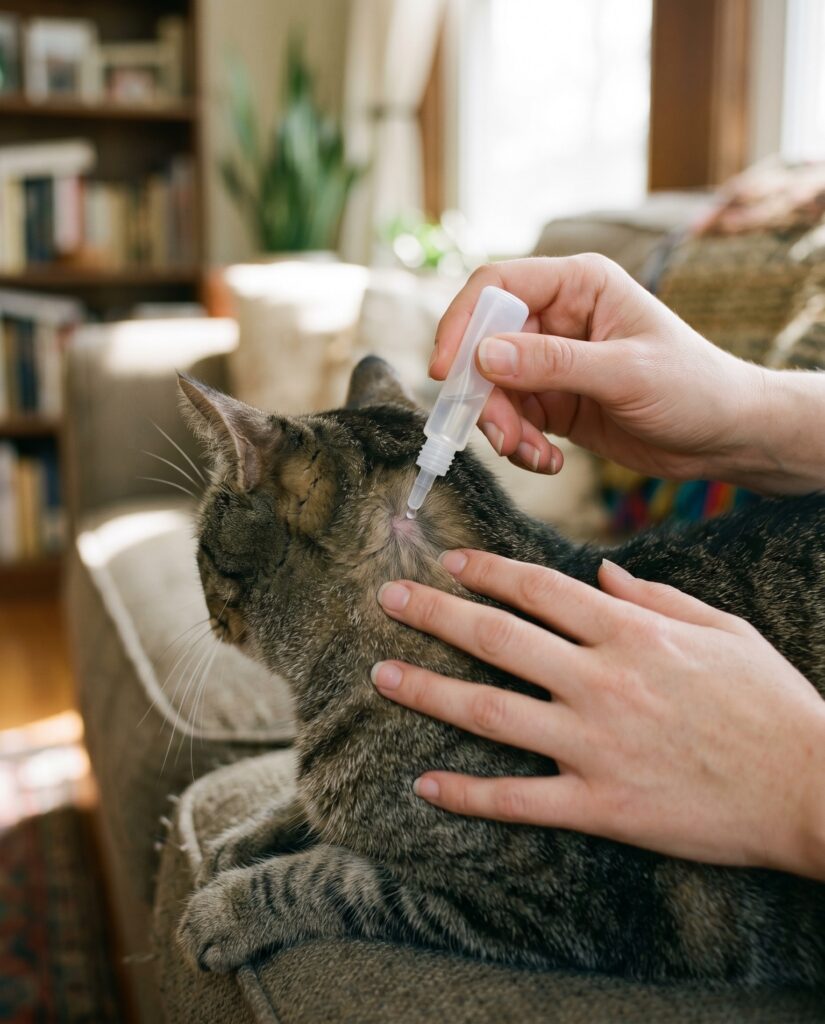
Here is the part most product lists skip. For a newborn kitten or a young puppy, the comb is not the cheap backup option; it is often the only safe option. Most spot-on drops, oral tablets, and flea collars carry a minimum age and weight on the label, and the EPA’s guidance on pet pesticide products is blunt that you must read and follow that label, because under federal law the label is the law. A flea comb has no minimum age, no chemistry, and nothing to absorb through the skin.
That makes it the workhorse for the animals chemicals cannot touch. Texas A&M veterinary medicine points to combing and gentle bathing as the go-to for very young pets that are not yet old enough for conventional flea products. The AVMA’s flea and tick guidance makes the same point about matching the product to the animal and checking with your vet on what is safe for a young or small pet. The honest call-out: skip the plug-in ultrasonic flea repellers and flea “shampoos” you leave on a two-week-old kitten. For a litter too young for chemicals, a comb and a bowl of soapy water is the safe protocol, not a quick fix in a bottle. If the animal is anemic, lethargic, or has pale gums from heavy flea loss of blood, that is a vet visit, not a combing project.
Fine-tooth vs grooming comb
Once you know combing is the move, the only choice that matters is tooth spacing. A regular grooming comb has teeth too far apart to trap a flea; the bug just slips between them. A real flea comb has teeth packed tight enough to physically rake fleas, dirt, and dander out of the coat. Pick by your pet and its coat, not by the biggest comb on the shelf.
| Comb type | Best for | Watch-out |
|---|---|---|
| Fine-tooth single row | Most cats and short-to-medium coats | Slow on thick or matted fur; de-mat first |
| Double-row teeth | Dogs and denser coats, more fleas per pass | Can tug on tangles; comb gently |
| Wide-tooth grooming comb | Detangling only, not flea control | Teeth too far apart to catch fleas; skip it for this job |
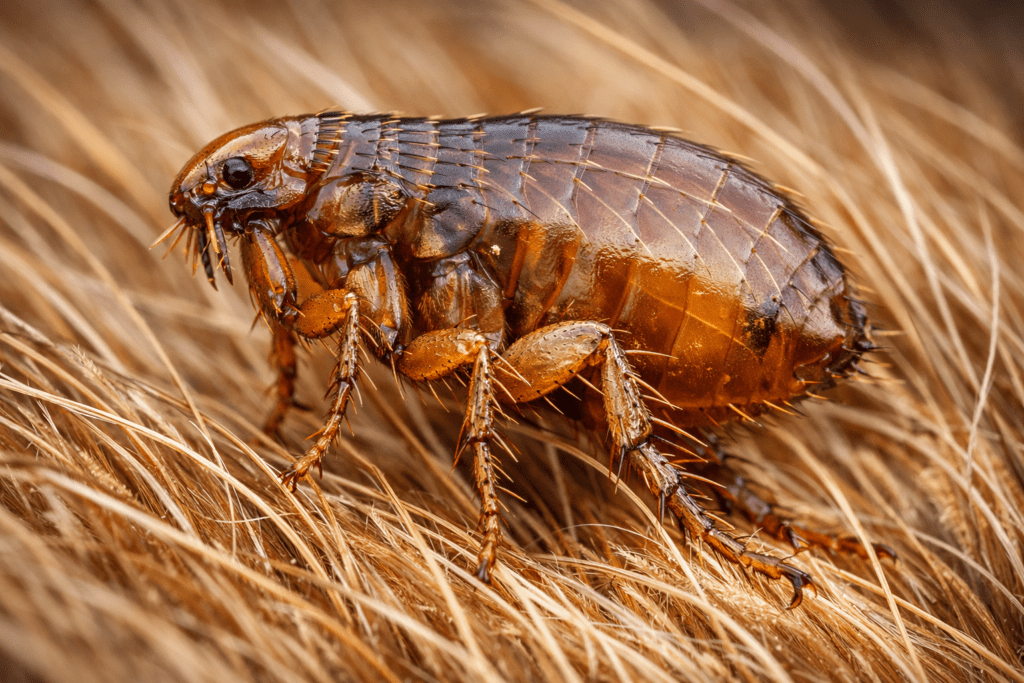
Why not just use the comb you already own? Because spacing is the whole point. The CDC’s overview of flea biology describes how small and flat-bodied adult fleas are, which is exactly why a wide-tooth comb lets them escape. A fine single-row comb is plenty for most cats and short-haired dogs; a double-row comb catches more per stroke on a thick dog coat. Metal teeth beat plastic because they hold their spacing and survive the soapy-water dunk. Pair the comb with a bath, and our roundup of the best flea shampoos for dogs covers the wash side of the same day’s work.
How to comb and what to do with the catch
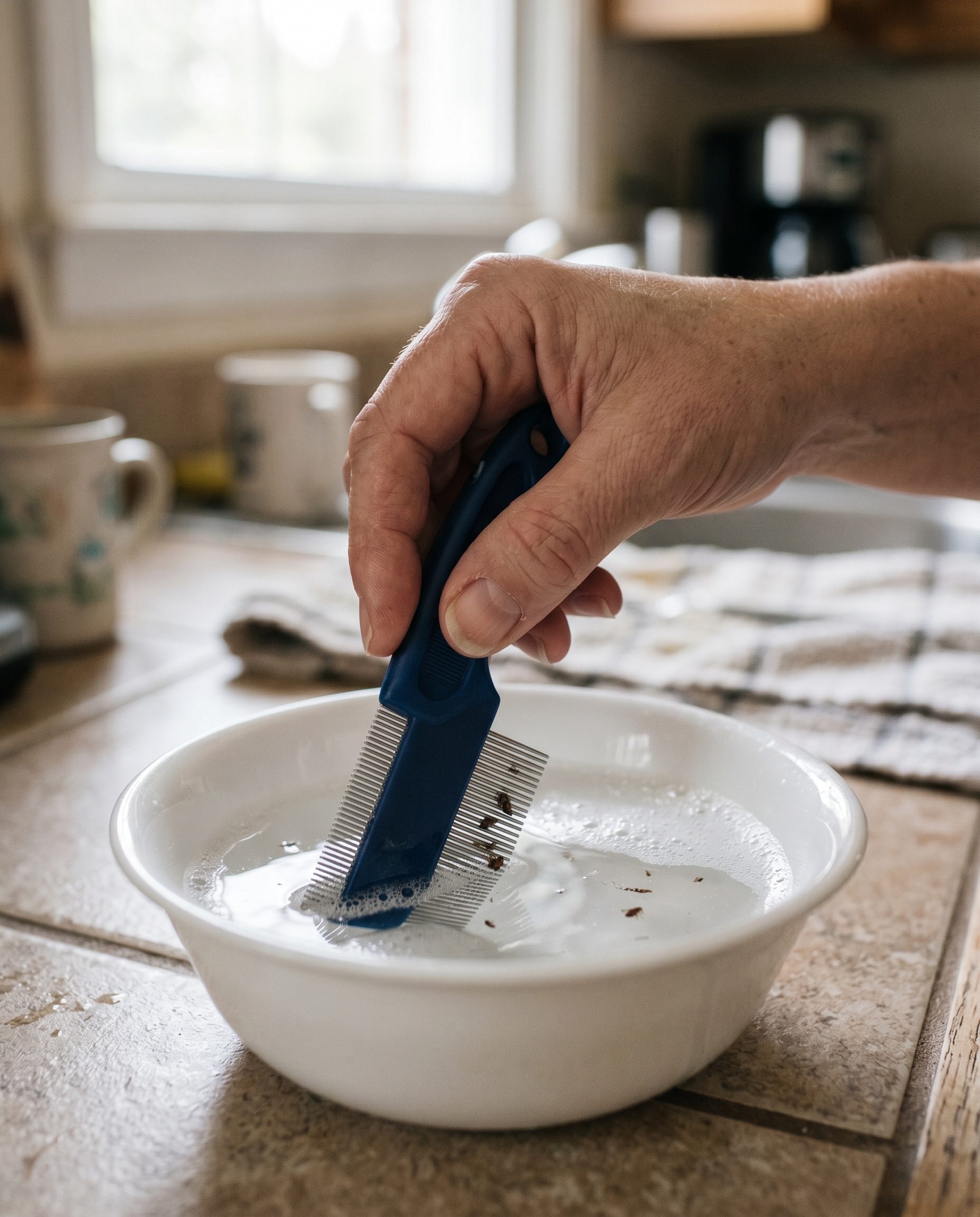
Comb in short strokes, scalp to skin, in the direction the fur lies. Work the spots fleas favor: the base of the tail, the belly, the groin, behind the ears, and under the chin. Keep a bowl of hot soapy water right next to you and dunk the comb after every stroke, because a flea flicked onto the floor just hops back on. The soap breaks the water surface so the fleas sink and drown instead of jumping out; plain water alone lets them escape.
Do this daily during an active infestation and a few times a week afterward as a monitor. Combing is gentle work, but be patient on a matted coat: tease tangles apart first so you are not yanking skin. When you are done, drop any combed-out hair and the soapy water down a flushable drain or sealed bag, and wipe the comb dry so it does not rust. None of this touches the eggs and larvae in the carpet, which is why the comb is step one, not the finish line. To close out the other 95 percent living in the home, you will want a real treatment plan, and our guide to the best flea treatments for dogs, from drops to collars to oral covers what to put on the animal once it is old enough.
The picks
Cards come after the analysis on purpose, because the pet you are combing decides which one to buy. These three cover a sturdy double-row option, a tight fine-tooth comb, and a cat-sized comb, and all are common, widely available grooming tools.
InsectoGuide is reader-supported. As an Amazon Associate we earn from qualifying purchases at no extra cost to you.
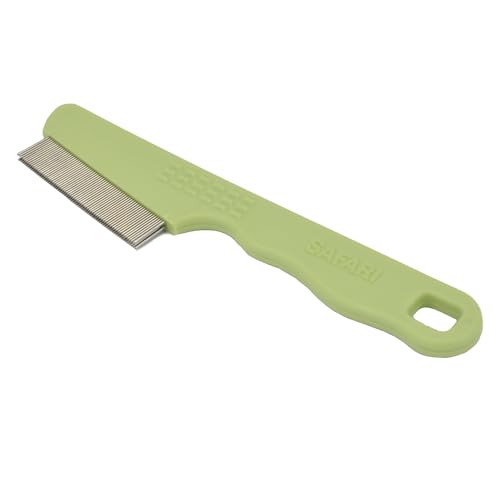
A sturdy double-row comb for dogs and denser coats.
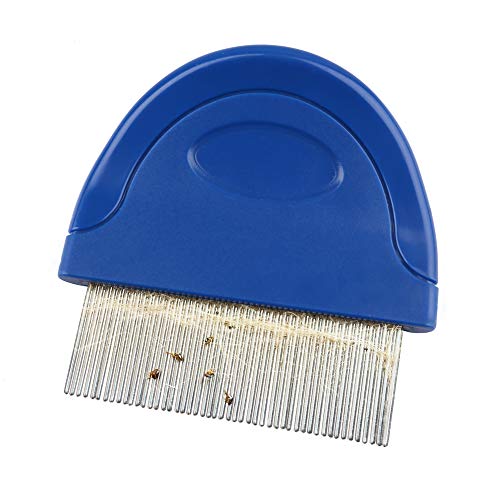
A tight stainless comb for confirming fleas on either pet.
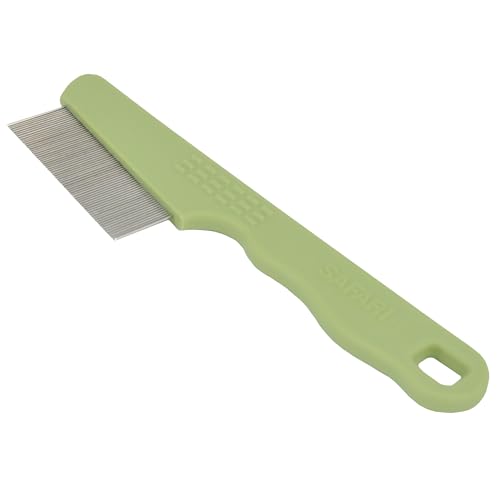
A cat-sized comb for early detection and pesticide-free removal.
Common questions
Does a flea comb actually get rid of fleas?
It removes the adult fleas it touches and is the best tool for confirming them, but it cannot reach the eggs and larvae in your carpet. Since the UC IPM notes most of the flea population lives off the host, the comb knocks the count down and monitors progress while you treat the pet and the home.
Is a flea comb safe for kittens and puppies?
Yes, and that is its biggest edge. A comb has no chemistry and no age limit, so it is the standard choice for animals too young for spot-ons or tablets. The AVMA advises matching the product to the animal, so check with your vet before using any chemical on a very young or small pet.
What is the black stuff the comb pulls out?
That pepper-like grit is flea dirt, which is digested blood the fleas leave behind. Wipe it onto a damp paper towel; if it smears rust-red, you have fleas even if you have not spotted a live one yet. It is one of the surest early signs.
How often should I comb my pet?
Daily during an active infestation, then a few times a week as a monitor once things calm down. Combing over white paper each day lets you see whether the count is dropping, which tells you if your overall plan is working.
Do I need a metal comb or will plastic do?
Metal is worth it. Steel teeth hold their tight spacing, survive repeated dunks in soapy water, and do not flex apart and let fleas slip through the way plastic can. Tooth spacing is the whole job, so a comb that keeps its spacing wins.
Final verdict
A flea comb is the cheapest, safest, and most underrated tool in the flea fight, and any list that buries it is missing the point. Start free by combing your pet over white paper to confirm fleas and flea dirt, then comb daily to drown what you catch in soapy water while you treat the pet and the home. Reach for a double-row comb on a thick dog coat, a tight fine-tooth comb to confirm fleas on either pet, and a cat-sized comb for felines. Skip wide-tooth grooming combs and any plan that leans on the comb alone; it cannot reach the eggs and larvae in the carpet, so pair it with a real treatment once the animal is old enough. For the very young, the comb is not the backup plan, it is the plan.