If you are picking a flea treatment for your cat, the first rule is bigger than any brand: cats are not small dogs, and grabbing a dog product can be a fatal mistake. Many dog flea treatments contain permethrin, which is highly toxic to cats and can kill them, so use only a cat-labeled product matched to your cat’s weight. The short answer: run a monthly cat-labeled topical for steady control, reach for a fast nitenpyram oral when fleas are already crawling, and treat the home, because the cat is only half the job. In our own house we keep one monthly topical on the shelf and a single-dose oral in reserve for the bad weeks. When you are unsure which active ingredient or weight band fits your cat, let your vet make the call rather than guessing on a shelf.
Use only cat-labeled products matched to your cat’s weight, because permethrin in many dog treatments is highly toxic to cats; pair a monthly topical for steady control with a fast oral knockdown, and treat the home too.
- Never do this: Put a dog flea product on a cat; permethrin can poison and kill cats, so check that the label says cat.
- Best for the common case: A monthly cat-labeled topical for ongoing control, with a fast nitenpyram oral when an infestation is already active.
- Do not skip: Treating the home, since most of an infestation lives off the cat in carpet and bedding, not on the animal.
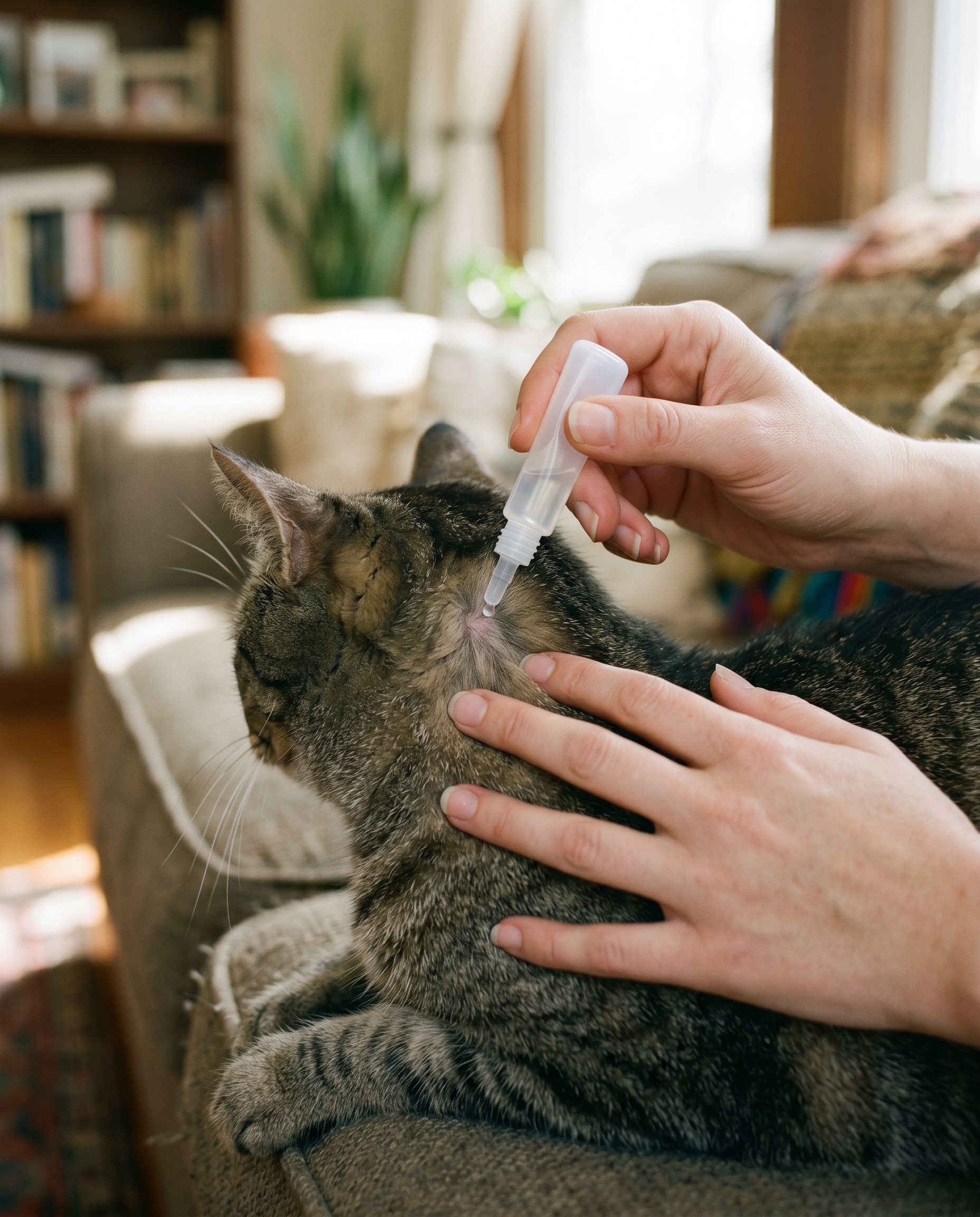
Start with the label, not the brand
Before you compare anything, do the one free check that protects your cat: read the front of the package and confirm it says it is for cats. This matters more here than for almost any other pet purchase, because a product made for dogs can be deadly on a cat. The AVMA’s flea and tick guidance for pet owners is direct that you should never use a dog product on a cat and should talk to your veterinarian about what is right for your animal. A cat label and a matching weight band are not fine print, they are the safety margin.
The reason is a single ingredient. Permethrin sits in many over-the-counter dog spot-ons at concentrations dogs tolerate fine, but cats cannot metabolize it the way dogs do, and exposure can cause tremors, seizures, and death. The EPA’s pet pesticide-safety guidance tells owners to read the label and follow the species-specific directions for exactly this reason. If you have both cats and a dog, keep treated dogs away from the cat until the spot-on has fully dried, and store the products apart so you never reach for the wrong tube in a hurry. Our complete guide to getting rid of fleas walks the full household routine if you are starting from a heavy infestation.
Why the cat is only half the job
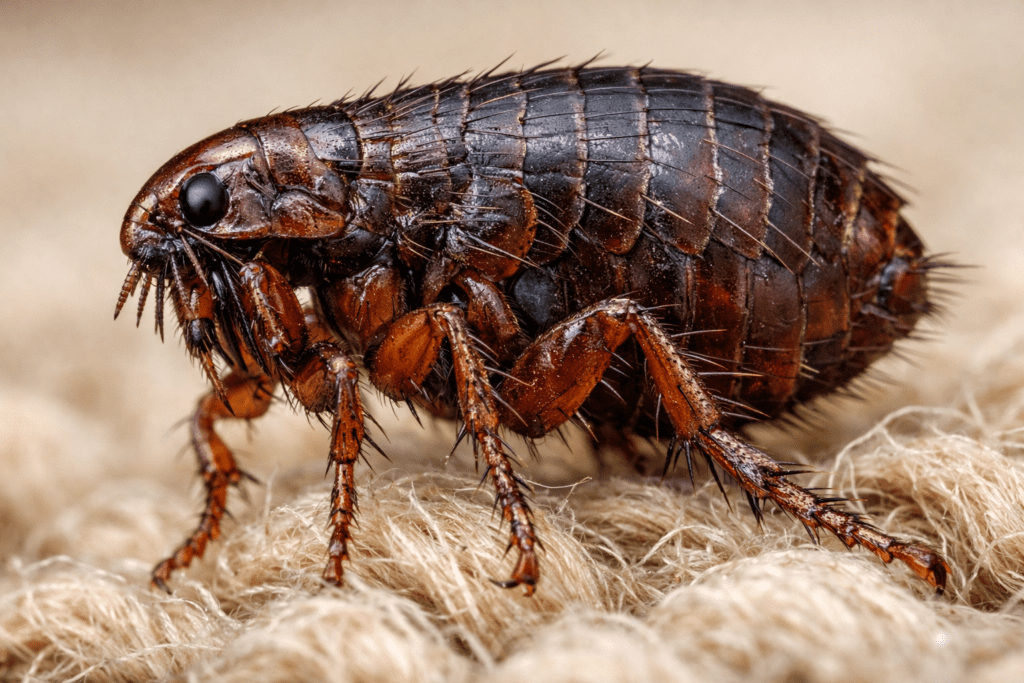
Here is the part most “best treatment” lists glide past. Treating the cat alone almost never ends an infestation, because the cat is not where most of the fleas are. The adult fleas you see biting are a small fraction of the population; the eggs, larvae, and pupae are off the animal, tucked in carpet fibers, under furniture, and in bedding. The UC IPM Pest Notes on fleas put it at roughly 95 percent of an infestation living off the host as eggs, larvae, and pupae. Kill every flea on the cat and the carpet keeps restocking them.
That is why a treatment plan is two-sided. You knock down the fleas on the animal with a cat-labeled product, and you attack the environment with vacuuming and laundering so the next generation never reaches the cat. The Texas A&M veterinary flea guidance makes the same point: lasting control treats the pet and the environment together, not one or the other. The pupal stage is also stubborn and can sit dormant for weeks, which is why fleas seem to “come back” a fortnight after you thought you won. Our breakdown of the flea life cycle and why it is so hard to eliminate explains the timing that trips people up.
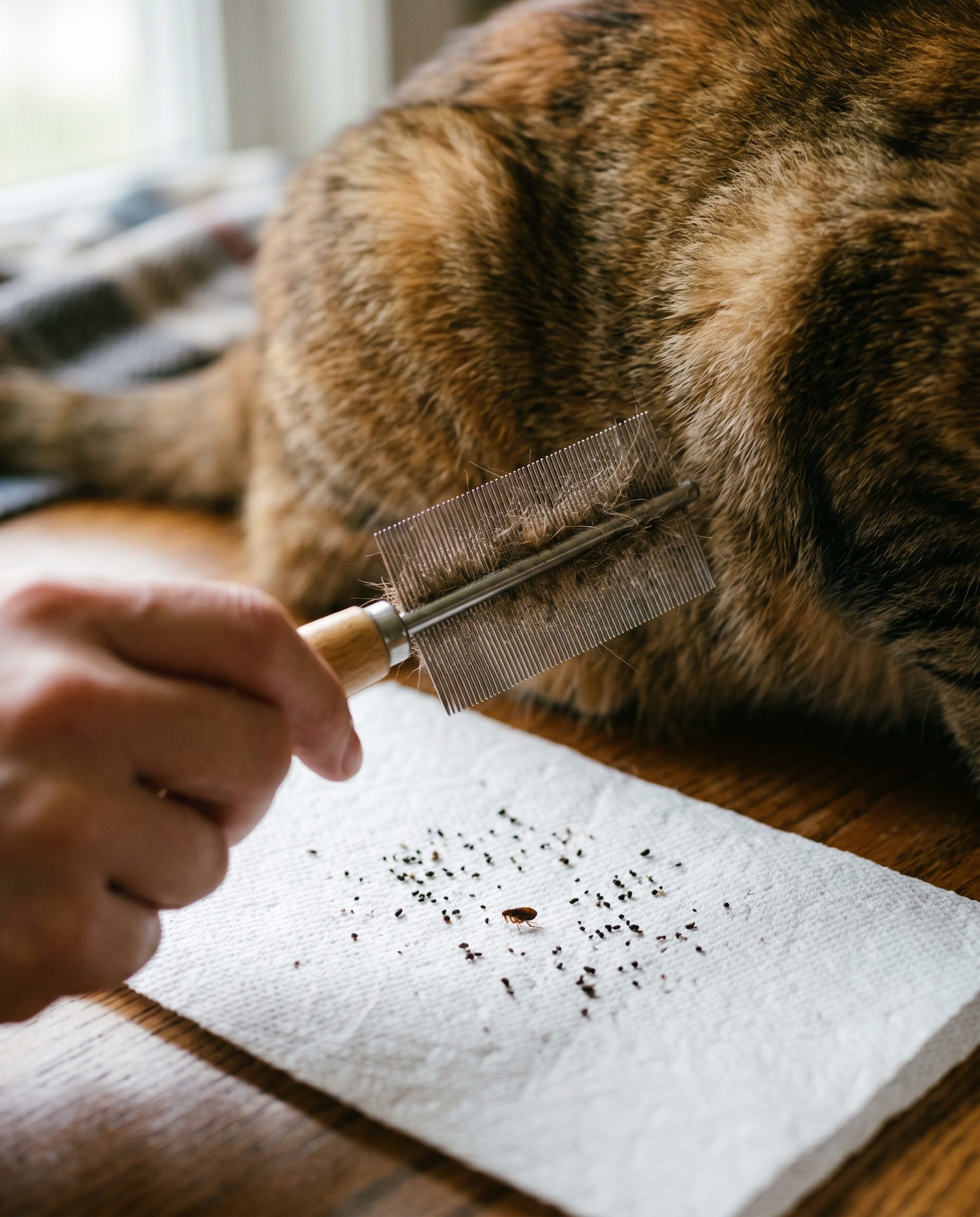
Topical vs oral: which fits your cat
Once you have a cat-labeled product in hand, the next choice is form. The decision is not which is “stronger,” it is which job you are doing right now: steady month-to-month prevention, or a fast knockdown of fleas already on the cat. Match the tool to the situation rather than buying the loudest claim.
| Treatment type | Best for | Watch-out |
|---|---|---|
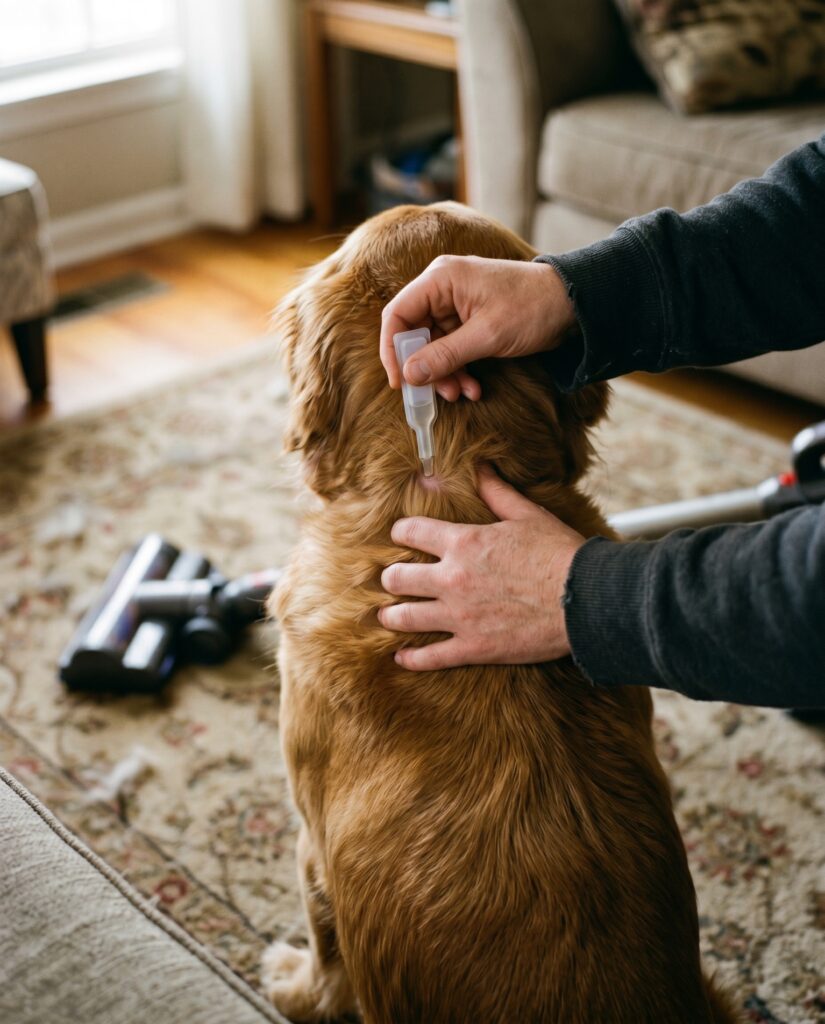
| Monthly cat-labeled topical | Ongoing control and prevention month to month | Apply at the skin so the cat can’t lick it; match the weight band; keep cats apart until dry |
| Fast oral (nitenpyram) | Knocking down an active infestation quickly | One dose is short-acting; pair it with ongoing control, it is not a standalone fix |
| Vacuuming + hot laundering | Every situation, the off-host half of the job | Labor, not one-time; empty the vacuum after each pass |
So which do you reach for? A monthly topical is the backbone for a cat that mostly needs steady, hands-off protection, and you place it at the skin between the shoulder blades where the cat cannot lick it off. A nitenpyram oral is the right tool when fleas are visibly active and you want them dropping within the hour, but a fast oral is a knockdown, not a long-term plan, so it works best layered over ongoing control. Many cats do best on a topical for prevention with an oral kept in reserve for flare-ups. When a cat is very young, pregnant, elderly, or on medication, do not improvise; ask your vet which active ingredient and form are appropriate, and never invent a dose.
How to treat the home without chemicals first
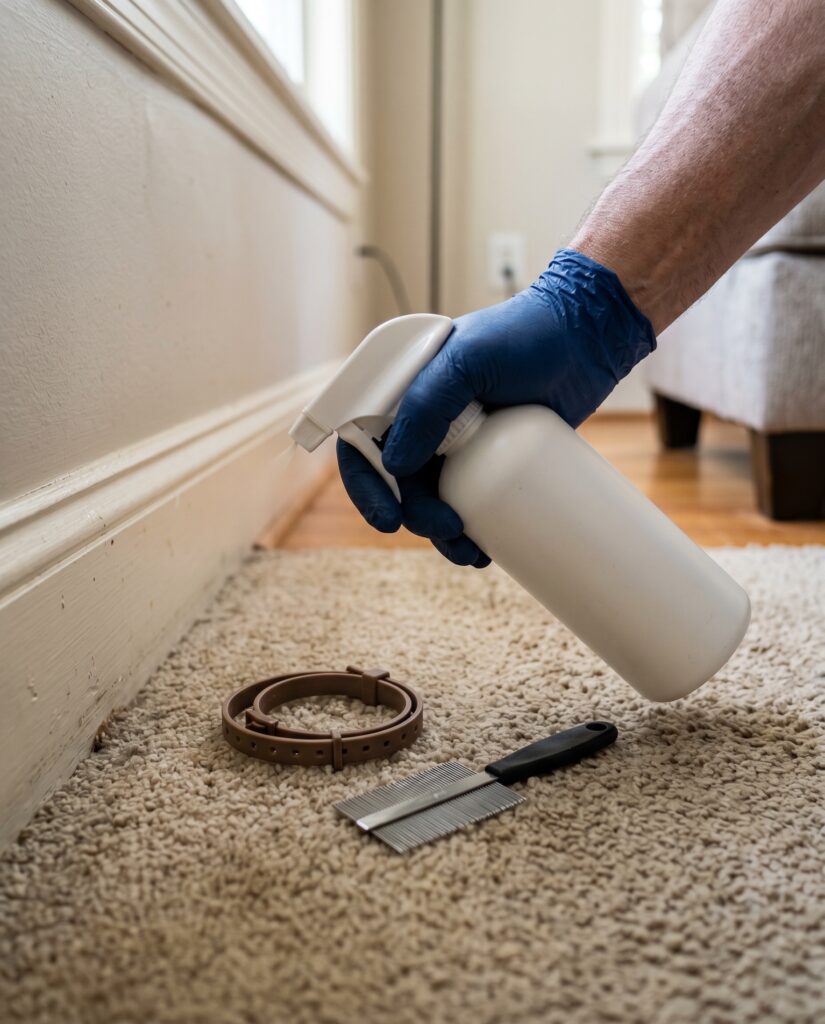
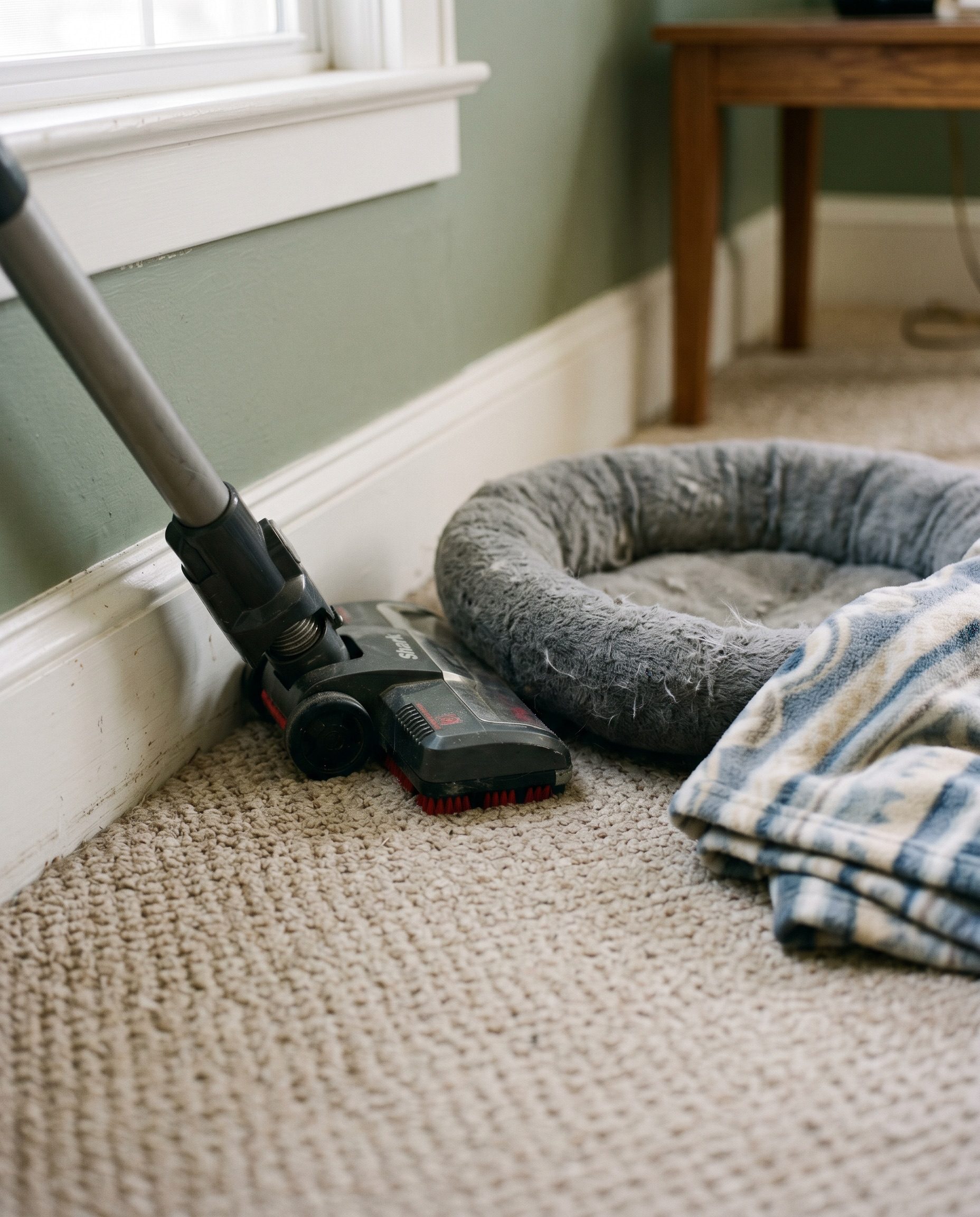
Spray the environment last, not first. The cheapest, safest environmental control is mechanical, and it does real work: vacuum thoroughly along carpet edges, under furniture, and anywhere the cat sleeps, then empty the canister outside after each pass. The UC IPM fleas guidance lists vacuuming and washing pet bedding in hot water as front-line steps because they physically remove eggs and larvae and even trigger pupae to hatch where you can then catch them. Vacuuming and a hot wash clear more of the off-host population than any single spray. Wash the cat’s bedding and any throws it favors on the hottest setting the fabric allows, weekly while you are fighting an active problem.
If you do move to a home spray or fogger after the mechanical work, treat it as the registered pesticide it is. Read and follow the product label, because under federal law the label is the law, and keep cats and children off treated surfaces until everything is fully dry. Do not apply a product indoors that is labeled for outdoor use only, and never use a yard or dog product on or around the cat. For any product question or a possible exposure, the EPA’s pet pesticide-safety pages are the place to check, and if your cat shows tremors, drooling, or other signs of poisoning, contact your veterinarian or your local poison control center right away. Our roundup of the best indoor and outdoor flea sprays for the home covers the environmental side once the vacuuming is done.
The picks
Cards come after the analysis on purpose, because the form and the cat decide which one you buy. All three below are cat-labeled products; match the weight band on the package to your cat, and check with your vet if you are unsure.
InsectoGuide is reader-supported. As an Amazon Associate we earn from qualifying purchases at no extra cost to you.
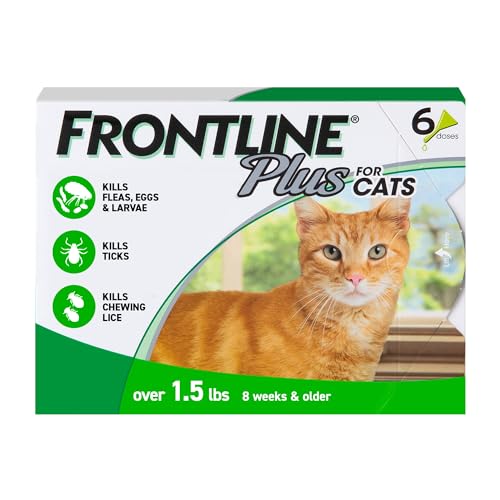
A monthly cat-labeled topical for steady, hands-off flea and tick control.
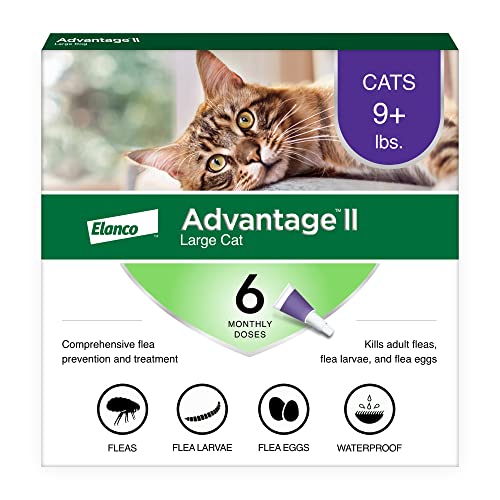
A vet-recommended monthly topical for large cats, no prescription or pills.
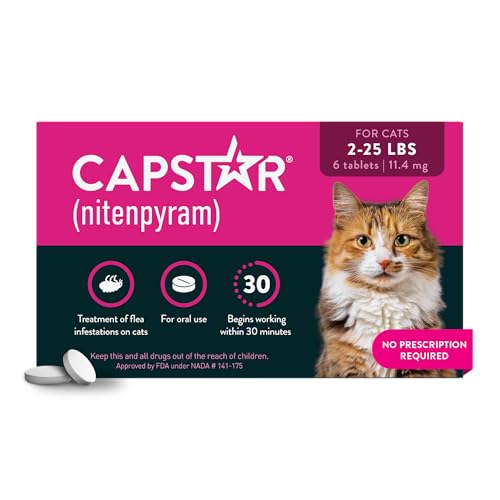
A single oral dose for a fast knockdown when fleas are already active.
Common questions
Can I use a dog flea treatment on my cat?
No, and this is the one rule never to bend. Many dog products contain permethrin, which the AVMA warns is toxic to cats and can cause tremors, seizures, or death. Use only a product whose label says it is for cats, match the weight band, and ask your veterinarian if you are unsure.
Topical or oral, which is better for cats?
They do different jobs. A monthly cat-labeled topical is for steady ongoing control, while a fast nitenpyram oral is for knocking down fleas that are already on the cat. Many owners use a topical for prevention and keep an oral in reserve for flare-ups; your vet can confirm the right pairing.
Why do the fleas keep coming back after I treat my cat?
Because most of the infestation is not on the cat. Per the UC IPM fleas guidance, about 95 percent live off the host as eggs, larvae, and pupae, and dormant pupae can hatch weeks later. Vacuum and wash bedding alongside treating the cat.
Are cat fleas a health risk to people?
They can be. The CDC notes fleas can bite people and carry flea-borne illness, and bites may itch or get infected from scratching. For itch relief and when-to-see-a-doctor guidance, MedlinePlus covers home care for insect bites; see a doctor if a bite looks infected or a reaction is severe.
How fast does flea treatment work on a cat?
It depends on the form. A nitenpyram oral can start killing adult fleas within about half an hour, while a monthly topical works steadily over its cycle. Neither clears the home, so pair the treatment with vacuuming and hot laundering to break the cycle.
Final verdict
There is no single best flea treatment for cats, but there is one non-negotiable rule: use a cat-labeled product matched to your cat’s weight, never a dog product, because permethrin in many dog treatments can kill a cat. Run a monthly cat-labeled topical for steady control, and keep a fast nitenpyram oral on hand for an active infestation. Then remember the cat is only half the job: vacuum the carpets and hot-wash the bedding, because most of the fleas live off the animal and will keep restocking it otherwise. When the right active ingredient, weight band, or your cat’s health is in any doubt, let your veterinarian choose. Match the tool to the moment, treat the home alongside the cat, and check the label every single time.