Finding the best fly repellent for horses usually means choosing a spray that matches your fly pressure, your horse’s skin sensitivity, and your barn’s management habits. In real barns, even the strongest spray struggles if manure and wet bedding keep producing new flies every day. This guide walks you through what actually works – from fast-acting pyrethroid sprays to short-duration botanical options – plus the stable and pasture steps that cut fly numbers at the source.
Bottom line: For horses and livestock, a spray alone is rarely enough. Use the right repellent for the animal, apply it before peak fly activity, and reduce breeding sites around stalls, manure, and wet feed areas.
- Use equine/livestock-labeled products only.
- Reapply after sweat, rain, bathing, or heavy turnout.
- Pair repellents with manure pickup, fans, screens, and dry bedding.
Quick answer
The “best” fly repellent for horses is typically a pyrethrin or pyrethroid-based spray for heavy fly pressure, paired with a fly mask or sheet and basic manure control.
Use this fast chooser:
- Need maximum bite relief (stable flies, horse flies): choose a pyrethroid spray (often permethrin or cypermethrin) and reapply as needed, especially after sweat or rain.
- Sensitive skin or light fly days: choose a botanical spray (citronella, lemongrass, cedar oils) and plan to reapply more often.
- Face and ears: use a wipe-on or spray onto a cloth first, then apply carefully.
- If flies are swarming in the barn: no spray will keep up without sanitation, airflow, and traps.
Snippet-friendly checklist:
- Apply to clean, dry coat
- Avoid eyes, nostrils, mouth, open wounds
- Reapply after bathing or heavy sweating
- Combine with masks, sheets, fans, and manure removal
How fly repellents work
A good spray feels like a “force field,” but what’s happening is simpler: you are either repelling flies, knocking them down on contact, or doing a bit of both. Different fly groups also behave differently, which is why one product can seem amazing one day and disappointing the next.
Here are the main culprits around horses and barns:
- House flies (Musca domestica): non-biting, but irritating and linked with filth and eye issues.
- Stable flies (Stomoxys calcitrans): biting flies that often hit legs and bellies; expect stomping and tail swishing.
- Horse flies and deer flies (Tabanidae): painful biters outdoors, especially near water and woods.
- Horn flies (Haematobia irritans): more common on cattle, but can bother pastured horses too.
- Midges (Culicoides spp.): tiny biters tied to sweet itch in sensitive horses.
Research and extension guidance consistently show that fly pressure is not just “annoying.” It affects grazing time, stress behavior, skin damage, and overall condition. It can also help spread certain pathogens mechanically. Veterinary groups such as the American Association of Equine Practitioners emphasize prevention and management, not just spraying.
The two big ingredient families
Most horse sprays fall into one of these categories:
1) Pyrethrins and pyrethroids (synthetic versions)
Common actives include permethrin and cypermethrin. These tend to provide the strongest knockdown and more reliable protection in heavy fly conditions, although real-world duration still depends on sweat, rain, grooming, and fly density.
2) Botanicals and essential oils
Citronella and similar plant oils can reduce landings, but they usually fade faster. A classic example is citronella, which has shown meaningful short-term repellency in controlled tests, but typically needs more frequent reapplication than pyrethroids. A helpful overview of practical barn fly control (including product types) is summarized by equine nutrition educators at Mad Barn’s fly control guide.
Visual: “What’s the spray doing?”
- Repellent effect: makes the horse harder to “find” or “land on”
- Contact kill: fly touches treated hair and is knocked down
- Residual: how long the active stays effective on hair and skin
- Reality check: sweat + dust + sunlight + rain reduce residual quickly
Actionable takeaway: If your horse is sweating, rolling, or getting rinsed daily, plan on shorter protection windows even with premium sprays.
Choosing fly repellent for horses
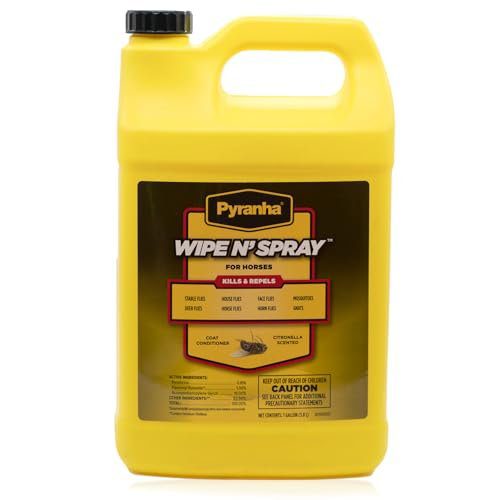
This product is a pyrethrin-based fly spray that provides effective knockdown and protection against various types of flies, making it suitable for heavy fly pressure in barns.
- Very effective at killing and repelling a wide range of flies, mosquitoes, gnats, ticks, and other biting insects, even in heavy bug environments
- Oil-based formula with lanolin provides long-lasting protection and leaves a noticeable shine and conditioned coat
- Ready-to-use spray that many owners find works with a relatively small amount per horse, making the gallon size economical for barns
- Strong oil base and citronella scent that some users and horses dislike, and which can leave residue on tack or clothing
- Contains synthetic insecticides (pyrethrins, permethrin, piperonyl butoxide), leading some owners to worry about sensitivity or potential skin/respiratory reactions in horses or humans
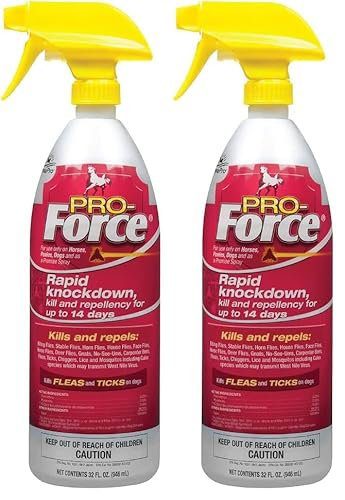
This is a botanical-based fly repellent that is suitable for sensitive skin and provides effective fly control without harsh chemicals.
- Effectively kills and repels a wide range of flies, mosquitoes, ticks, and other listed pests, often for close to the advertised 14 days between applications
- Versatile use on horses, ponies, dogs, and as a premise/barn spray, reducing the need for multiple different products
- Ready‑to‑use, water‑based spray that applies easily without mixing and is available in multiple sizes including 32 oz and gallon refills
- Some users report the protection period is shorter than 14 days in heavy‑bug or very wet conditions, requiring more frequent reapplication
- Contains synthetic insecticides (permethrin, pyrethrins, N‑octyl bicycloheptene dicarboximide), which some buyers avoid due to concerns about chemical exposure or sensitivity in certain animals
If you have ever bought a “strong” spray and still watched your horse stomp all afternoon, you are not alone. “Best” depends on where the flies are coming from and what your day looks like: turnout in a breezy pasture is one thing, standing in a humid barn aisle near manure is another.
Below are the most common repellent formats, what they’re best at, and what to watch for.
1) Ready-to-use sprays (most common)
These are the workhorses of fly season. Many top performers rely on pyrethrins or pyrethroids, often combined with a synergist like piperonyl butoxide (PBO).
What they’re best for:
- High fly pressure in barns and dry lots
- Trail rides and events where you need noticeable bite reduction
- Mixed pests (flies, mosquitoes, gnats)
Watch outs:
- Some horses get skin irritation, especially with frequent daily use
- “All-day” claims often shrink in real conditions (sweat and grooming matter)
Practical use tip:
- Spray the body lightly and evenly.
- For faces, spray onto a cloth first, then wipe.
2) Wipes, roll-ons, and wipe-on concentrates
These shine where overspray is a problem.
What they’re best for:
- Faces and ears
- Horses that fear the spray sound
- Quick touch-ups before riding
Watch outs:
- You can miss coverage if you rush
- You still need to reapply during peak fly hours
3) Botanical sprays (natural options)
These usually blend oils like citronella, lemongrass, peppermint, cedar, eucalyptus, lavender, or tea tree. They can be useful, especially for owners trying to reduce synthetic insecticides.
What they’re best for:
- Light to moderate fly pressure
- Sensitive horses that react to some conventional sprays
- Layering with physical barriers (mask + sheet)
Watch outs:
- Shorter duration is common. Expect reapplication every few hours on hard days.
- Essential oils can still irritate skin. “Natural” does not guarantee gentle.
4) Homemade sprays (budget-friendly, variable results)
Many recipes use vinegar, water, and a small amount of soap, sometimes with essential oils. These can help as a supplement, but they are rarely a standalone solution when stable flies are biting hard.
If you try DIY, keep it safe:
- Patch-test a small spot first
- Avoid eyes and mucous membranes
- Do not apply undiluted essential oils to skin
- Store away from heat and sunlight
Visual: quick “best for” cards
-
Pyrethroid spray
Best for: heavy fly pressure, biting flies
Watch out: skin sensitivity, reapply after sweat/rain
Next step: pair with mask/sheet -
Botanical spray
Best for: sensitive horses, lighter pressure
Watch out: shorter protection window
Next step: plan frequent reapplication -
Wipe-on
Best for: face, ears, spray-shy horses
Watch out: coverage gaps
Next step: use daily checks around eyes
Actionable takeaway: If you are reapplying constantly and still losing the battle, the issue is often fly production on the property, not the brand of spray.
Apply it correctly
Most “spray failures” are really application problems. Flies exploit untreated spots, and biting species often target legs and bellies that owners miss in a quick spray-down.
A good routine takes two minutes longer and works noticeably better.
Step-by-step application (safe and effective)
- Start with a clean, dry coat. Dirt and heavy sweat reduce contact and residual effect.
- Spray from the neck back, then work down the barrel and hindquarters.
- Do legs and belly deliberately. Stable flies love lower legs and underside.
- Use a cloth for the face. Spray onto a rag, then wipe cheeks, jawline, and forehead.
- Avoid eyes, nostrils, mouth, and open wounds.
- Reapply strategically. After bathing, heavy rain, or intense sweating, most products need a refresh.
Many labels also recommend an initial “daily for a few days” approach, then spacing treatments out as pressure drops. Always follow the specific product label for your animal and situation.
Safety checks that matter
- Watch for redness, hives, rubbing, or hair loss where you apply spray.
- If irritation appears, wash the area and switch products.
- Keep sprays away from cats and waterways, since some pyrethroids are hazardous to aquatic life and cats can be sensitive.
Visual: common missed zones
- Inside thighs and belly midline
- Front legs below the knee
- Under the jaw and throatlatch
- Around the sheath or udder (apply carefully, wipe-on preferred)
Actionable takeaway: Treat legs and belly like “high-risk zones,” not optional add-ons. That is where stable flies often win.
Barn and pasture control
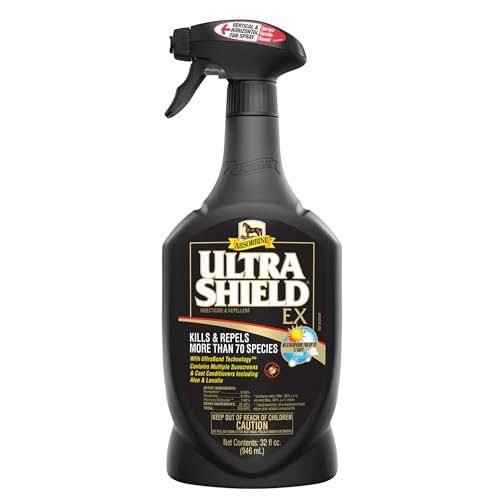
This fly spray offers a powerful formula that repels and kills flies, making it suitable for use in high fly pressure environments.
- Very effective at repelling and killing flies, mosquitoes, ticks and other biting insects, often reported as working better and lasting longer than competing fly sprays
- Long-lasting, weatherproof/sweat‑resistant protection (many users report solid multi‑day performance between applications, even in tough conditions)
- Versatile and convenient to use on horses and dogs as well as around stalls, barns, patios and other premises, with added coat conditioners like aloe and lanolin
- Performance can be inconsistent between batches or seasons, with some long‑time users saying recent bottles do not work as well or as long as they used to
- Strong chemical formula and citronella scent that some owners or animals dislike, and that can be irritating if not applied carefully (especially near the face)
If you only treat the horse, you are fighting the symptom, not the source. House flies and stable flies breed in wet, organic material, especially manure mixed with damp bedding or spilled feed. Under warm conditions, a barn can produce huge numbers of flies quickly, which is why sprays feel like they “stop working” overnight.
Entomologists and extension programs recommend an Integrated Pest Management approach: sanitation, airflow, trapping, biological control, and targeted insecticides when needed. The University of Kentucky Entomology program is a reliable place to learn how fly life cycles connect to control timing.
The highest-impact sanitation moves
Aim for these habits during fly season:
- Manure removal: at least 2 to 3 times per week, and daily in busy stalls.
- Keep bedding dry: wet spots are fly nurseries.
- Fix leaks and drainage: around troughs, wash racks, and downspouts.
- Clean up spilled feed: especially in corners and under hay nets.
- Compost smart: locate piles away from barns and manage moisture.
Traps that actually help (when placed right)
Traps work best when you treat them like a perimeter defense, not barn decor.
- Use sticky tools and ribbons in areas away from dust and curious horses.
- Place baited traps away from stalls so you do not attract flies into the barn.
- For a deeper guide to trap types and placement, see InsectoGuide’s Best Fly Traps for Indoor and Outdoor Use and the focused roundup of Best Fly Paper and Sticky Traps.
If your “fly problem” is actually small flies coming from plumbing or drains in a tack room or wash stall, repellent will not help much. In that case, use targeted sanitation and gels like those covered in Top Drain Fly Treatments and Gel Cleaners.
Biological control (a quiet helper)
Parasitic wasps (such as Muscidifurax and Spalangia species) target fly pupae around manure and bedding. They are not a magic switch, but they can reduce the next generation when paired with sanitation. Guidance on fly biology and control options is also available through USDA research summaries such as the USDA Agricultural Research Service.
Visual: 10-minute daily fly control loop
- Pick manure and wet bedding
- Dump and scrub water spill areas
- Run fans during peak fly hours
- Refresh traps as needed
- Apply repellent only after the environment is addressed
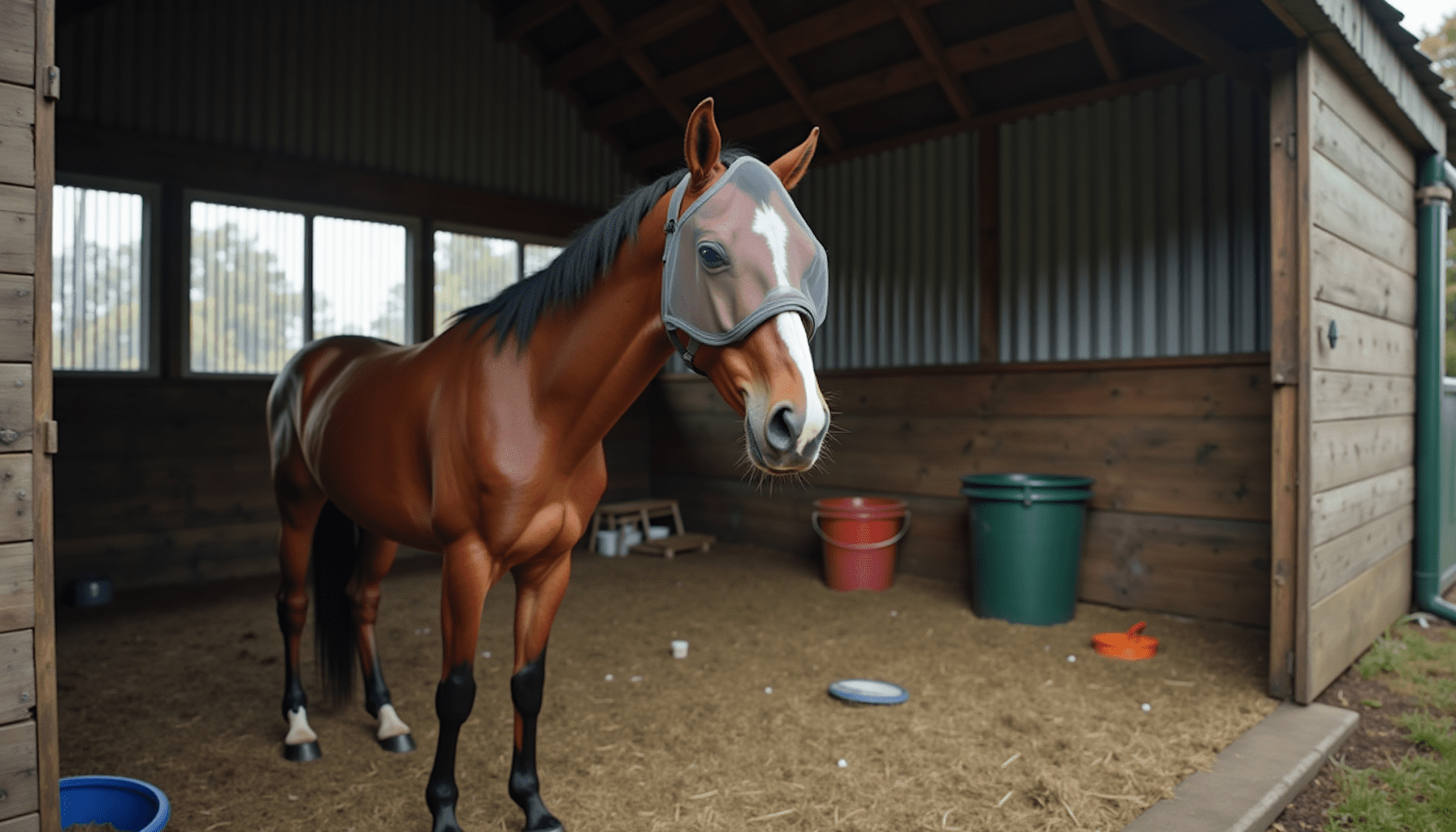
Actionable takeaway: If you cut breeding sites, every ounce of repellent you apply works harder and lasts longer.
Livestock fly control
Horse owners often share property with cattle, goats, sheep, or poultry. That matters because fly populations do not respect fence lines. A strong repellent on a horse will not compensate for a nearby breeding site or an untreated herd producing flies.
For cattle, flies are not just irritating. Economic analyses have long shown major losses from horn flies alone, with estimates exceeding a billion dollars annually in the U.S. beef industry. Threshold-based control is common in extension recommendations, often using a guideline of around 200 horn flies per animal before production losses become significant. Summaries of livestock fly impacts and control tools are widely discussed in land-grant extension resources and USDA materials.
Common livestock tools (and when they make sense)
Pour-ons and sprays (cattle, sheep, goats)
- Good for quick knockdown and short-term control.
- Useful for outbreaks or high-value animals.
Insecticidal ear tags (cattle)
- Designed for season-long horn fly control.
- Best used early in fly season and removed as directed.
- Rotating chemical classes year to year helps slow resistance.
Feed-through insect growth regulators (IGRs)
- Products with actives such as diflubenzuron or methoprene prevent larvae from developing in manure.
- They work best when most animals in the group receive them consistently.
Premise sprays and residuals (barns, milking areas)
- Can reduce resting flies on walls and ceilings.
- Must be applied with strict label compliance, especially around milk and feed.
Resistance is real
When the same active ingredient is used repeatedly across a season, flies can adapt. Agricultural entomology literature has documented resistance issues in horn flies and other pests, which is why extension programs emphasize rotation and integrated methods instead of simply “going stronger.”
Visual: simple livestock fly plan
- Start of season: tags or pour-ons (species-appropriate), begin sanitation
- Mid-season: monitor fly counts, rotate tools if needed
- All season: manure management + traps + targeted treatments
- End of season: remove tags on schedule, clean and reset for next year
Actionable takeaway: If you keep both horses and cattle, coordinate control. Treating only one species often leaves a constant fly reservoir.
Conclusion
The best results with fly repellent come from matching the product to the job: pyrethroid-based sprays for heavy pressure, botanical sprays for lighter days or sensitive horses, and wipe-ons for faces and touch-ups. Just as important, sprays work far better when you reduce breeding sites through manure removal, dry bedding, airflow, and smart trap placement.
Next step: tighten your barn routine for one week, then evaluate your spray performance again. For trap placement ideas around turnout areas and outdoor living spaces, see Best Outdoor Fly Traps for Patios and BBQs and the broader guide to Best Fly Traps for Indoor and Outdoor Use.
As an Amazon Associate, I earn from qualifying purchases. Product recommendations are based on real reviews and independent research.