Seeing tiny, fuzzy “moth-like” bugs parked on your bathroom wall usually means one thing: drain flies are breeding in slime inside a drain or another wet, hidden spot. To get rid of them, you need to find the active drain, scrub out the biofilm, use a cleaner that breaks down organic buildup, and repeat for a few weeks. This guide walks you through fast identification, the most reliable removal steps, and how to keep them from coming back without relying on sprays.
What to do first: Confirm the drain with an overnight tape test, scrub out the biofilm, then use a clinging drain treatment at night so it coats the pipe walls.
- Do not rely on bleach as the main fix.
- Treat every active drain, not just the one with adults nearby.
- Expect 2-3 weeks for the life cycle to collapse.
Quick answer
Drain flies are controlled by removing the wet organic sludge (biofilm) where their larvae develop. Here’s the fastest, most reliable plan.
- Confirm the source: Tape or cover suspected drains overnight; trapped adults = breeding site.
- Physically scrub: Clean the drain walls, stopper, and overflow area with a brush.
- Use a biofilm-busting cleaner: Enzyme or foaming drain cleaners help dissolve residue after scrubbing.
- Repeat 2-3 times per week for 3+ weeks: Adults can keep emerging until the biofilm is gone.
- Fix moisture issues: Slow drains, leaks, and standing water keep the problem alive.
If you only kill the flying adults, drain flies usually return because the larvae remain in the drain lining.
Identification
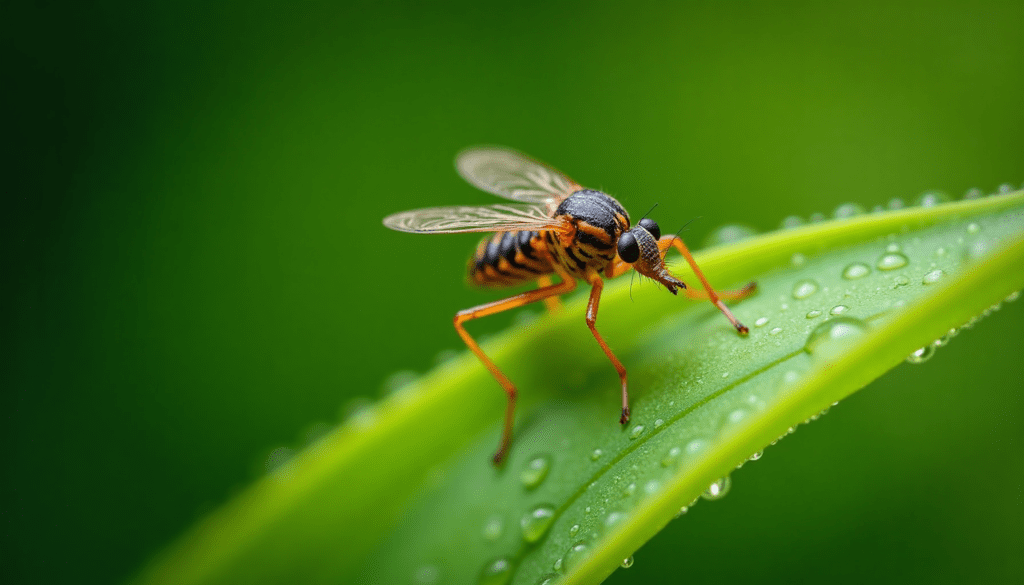
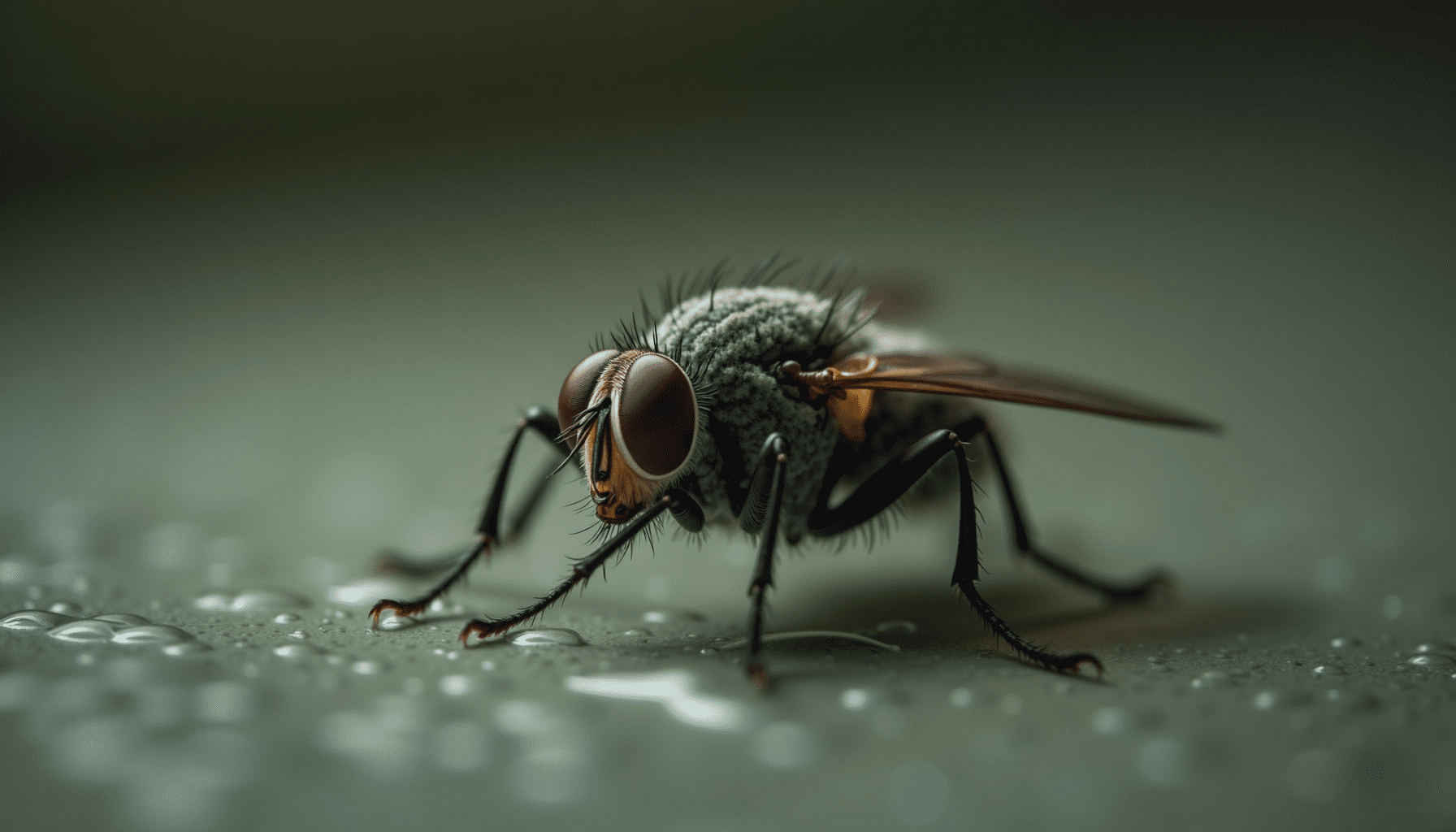
Drain flies are easy to confuse with fruit flies or fungus gnats, and that mix-up wastes time. Drain flies (family Psychodidae) look like tiny, fuzzy moths and often sit still near sinks, tubs, showers, or floor drains.
A common species around homes is the filter fly (Clogmia albipunctata), sometimes called a sewer fly or bathroom fly. Adults are weak fliers and prefer to rest on nearby walls rather than buzz around your face. Guidance from the University of Arkansas Extension notes that seeing adults near plumbing is a strong clue, but the real target is the breeding film inside the drain system.
Fast ID checklist (drain flies vs. lookalikes)
- Drain flies
- Look: fuzzy, moth-like wings; often gray or tan
- Behavior: weak fliers; “hop” short distances; rest on walls near drains
- Where: bathrooms, kitchens, laundry rooms, basements with floor drains
- Fruit flies
- Look: smooth-bodied, tan; often with red eyes
- Behavior: hover around fruit, recycling, trash, fermenting liquids
- Where: kitchens, compost, bottles, mop buckets
- Fungus gnats
- Look: tiny, mosquito-like; long legs and antennae
- Behavior: flutter around houseplants
- Where: damp potting soil, seed trays
Mini size guide (helpful for photos)
- Typical adult drain fly: about 2-5 mm long (roughly 1/12 to 1/5 inch)
Actionable takeaway: If the insects cluster near a specific sink, shower, or floor drain and look fuzzy, treat it like a drain fly problem first. If they hover over bananas or houseplants, shift your search.
Find the source
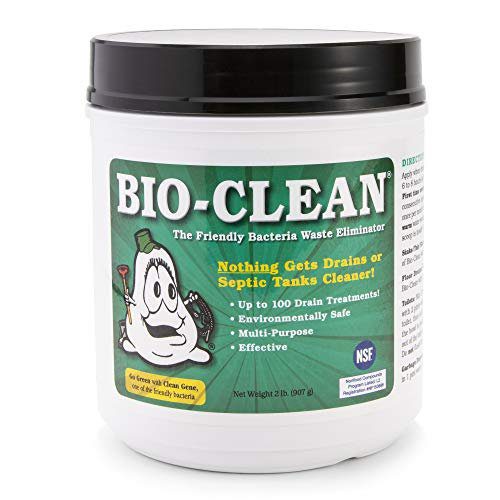
This enzyme-based cleaner helps dissolve organic buildup in drains, effectively targeting the biofilm where drain flies breed.
- Natural, non-caustic formula that reviewers say is safer than harsh chemical drain cleaners
- Effective at reducing drain odor and improving slow-drain or septic maintenance over time
- Easy-to-use powder/granules that can be mixed with warm water and applied to sinks, disposals, toilets, and septic systems
- Not an instant fix for fully clogged drains; reviewers note it works better as maintenance than emergency unclogging
- Requires repeated or ongoing use and some patience before results are noticeable
Most drain fly battles fail for one reason: the wrong drain gets treated. Even clean homes can have enough organic residue inside plumbing to support larvae. The goal here is to identify the exact breeding site (and it may be more than one).
Entomologists and extension specialists recommend a simple overnight “trap test” to confirm which drain is active. The University of Arkansas Extension suggests covering a suspected drain so emerging adults get trapped, proving that drain is producing flies.
Do the overnight drain test (10 minutes)
Pick one drain at a time (bathroom sink, shower, tub, floor drain, laundry drain).
Option A: Tape test
- Dry the area around the drain.
- Place clear packing tape over the drain opening (sticky side down).
- Leave overnight.
- In the morning, check the underside for trapped flies.
Option B: Bag or cup cover
- Cover the drain with a plastic bag and tape the edges airtight.
- Or invert a clear cup/jar over the drain.
- Check for adults trapped inside by morning.
Where to look (common hidden sources)
Use this checklist and don’t stop at the obvious sink:
- Shower and tub drains (including the overflow opening)
- Bathroom sink drains and pop-up stoppers
- Floor drains (basement, laundry room, garage)
- Toilet base area (wax ring leaks can keep moisture present)
- Under-sink plumbing with slow leaks
- AC condensate lines or drip pans (in some homes)
- Any spot with standing water nearby
Quick visual break: “Most likely” ranking
- High likelihood: shower/tub, floor drains, slow bathroom sinks
- Medium: laundry drains, unused guest bathroom drains
- Sometimes: sump pits, leaks under slab, wet mop buckets
Actionable takeaway: Test every drain within 15-20 feet of where you’re seeing adults. Multiple breeding sites are common, and one missed floor drain can keep the whole infestation going.
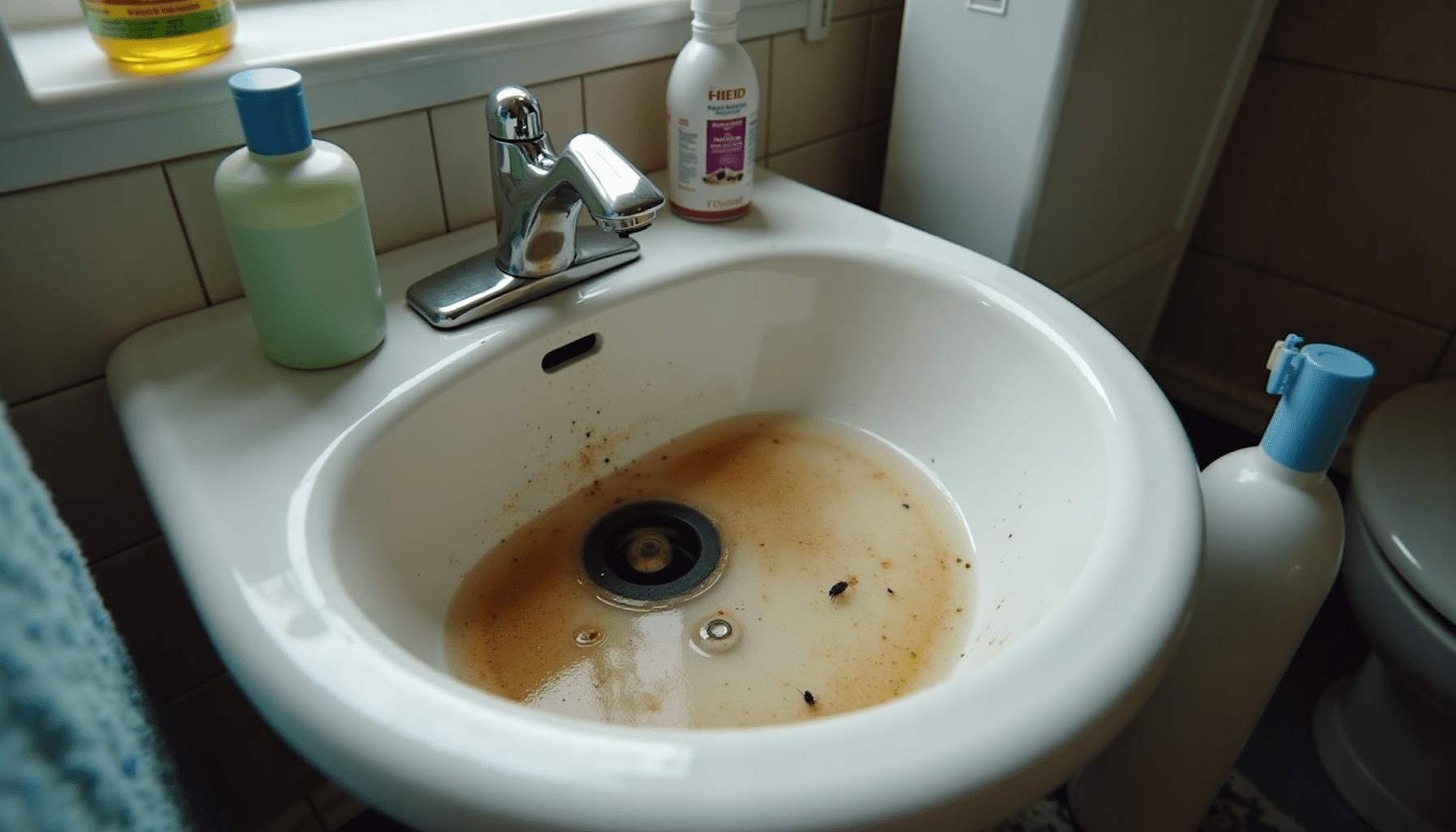
How to get rid of drain flies step-by-step
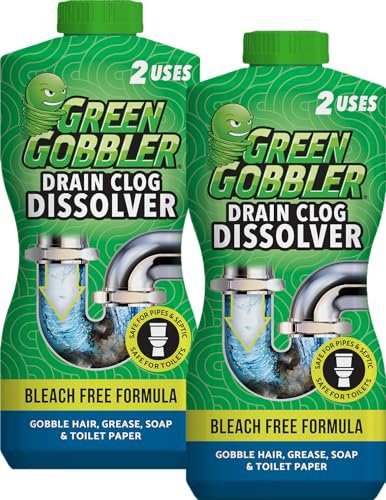
This foaming drain cleaner is designed to break down organic matter, making it useful for eliminating the breeding grounds of drain flies.
- Effectively clears tough clogs caused by hair, grease, and soap scum in sinks, tubs, and toilets
- Perceived as safer and less harsh than traditional lye- or bleach-based drain cleaners while being pipe- and septic-safe
- Easy to use with pre-measured applications and works even through standing water
- Some users report it does not work on severe or fully blocked drains and requires multiple applications
- Occasional complaints about confusing or inconsistent usage instructions between bottle, listing, and other guidance
Once you’ve found the active drain, the fix is straightforward – but it’s not a one-and-done job. Drain flies develop in a gelatinous film of bacteria, hair, soap scum, and organic debris. Adults you see today may be the last wave emerging from larvae that are already feeding deeper in the drain lining.
According to the University of Arkansas Extension, control often requires repeated cleaning over at least 3 weeks or longer. That timeline surprises people, but it matches what’s happening biologically: eggs, larvae, and pupae can continue developing until the food source is removed.
Step 1: Remove and clean drain parts
- Pull out the stopper or strainer.
- Clean gunk off the underside and the rim area.
- Don’t skip the immediate area around the drain opening.
Tools that make this easier
- Long drain brush or bottle brush
- Old toothbrush for the stopper hardware
- Flashlight or phone light
Step 2: Scrub the drain walls (the real fix)
This is the part that matters most. Scrub the upper interior of the drain and as far down as your brush reaches.
What you’re trying to remove
- Slime layer (biofilm)
- Hair and soap scum
- “Gelatinous” buildup that larvae feed on
Simple scrubbing routine
- Brush 30-60 seconds around the inner wall.
- Focus on the top few inches where buildup is thickest.
- If accessible, scrub the overflow channel in tubs and sinks.
Step 3: Use a cleaner that targets organic buildup
After scrubbing, apply a drain product designed to break down residue.
Good options include:
- Enzyme/bio-enzymatic drain cleaners (maintenance-friendly)
- Foaming drain cleaners (help coat pipe walls)
- Other drain maintenance products labeled for organic buildup
For product comparisons and use-case tips, see Top Drain Fly Treatments and Gel Cleaners.
Important safety note: Extension guidance warns against using insecticides in drains. The University of Arkansas Extension states that insecticide products are not registered for use in drains or sewer systems, and adult sprays do not solve the breeding source.
Step 4: Flush and maintain
- After the recommended dwell time on the label, flush with water.
- Run water daily in rarely used sinks to prevent dry traps and stagnant film.
Step 5: Reduce the adult nuisance while you treat the drain
Adults are annoying, and reducing them helps you track progress.
Use:
- Sticky traps near the suspected drain
- Tape near resting spots
- A vacuum for quick removal
For targeted options, InsectoGuide’s roundups can help:
- Best Fly Paper and Sticky Traps
- Best Fly Traps for Indoor and Outdoor Use
- Best Electric Fly Swatters
Actionable takeaway: Scrubbing removes the nursery. Cleaners help finish the job. Traps only reduce the visible adults while you break the life cycle.
Home remedies
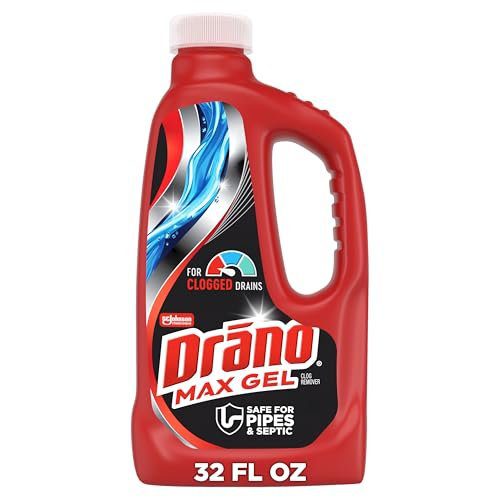
This powerful gel cleaner can help clear out clogs and biofilm in drains, which is essential for controlling drain fly populations.
- Very effective at clearing tough clogs (including standing water) in sinks, tubs, and showers
- Works quickly compared with many other liquid drain cleaners
- Thick gel formula that cuts through standing water and is safe for most household pipes when used as directed
- Strong chemical smell and fumes that some users find unpleasant or irritating
- Can require multiple applications or doesn’t work on very severe or fully blocked drains in some cases
Home remedies are popular because they’re easy, but most fail when they’re used as a substitute for scrubbing. Think of the drain like a greasy pan: pouring something in helps a little, but it doesn’t replace physically wiping the film off the surface.
That said, a few DIY approaches can support your main plan.
What can help (as add-ons)
Boiling water
- Can loosen some residue and flush loose debris.
- Best used after brushing, not instead of brushing.
- Avoid on plumbing where heat could be a concern (when in doubt, use very hot tap water instead).
Baking soda + vinegar
- The fizz can help lift light grime near the opening.
- Useful as a follow-up rinse, not a biofilm remover on its own.
Vinegar trap (for adults)
- Helps catch some adults for monitoring.
- It won’t touch larvae in the drain lining.
Diatomaceous earth
- Only works when dry, so it’s not a great fit for wet drain interiors.
- It may help in dry cracks where adults rest, but it’s secondary.
What to avoid
- Pouring insecticides down drains: ineffective for the breeding source and discouraged by extension guidance.
- Relying on one “miracle pour-in” treatment: if you don’t remove the film, the next generation continues.
A practical “DIY + evidence-based” routine
If you want a mostly non-chemical approach:
- Brush the drain walls thoroughly.
- Flush with hot water.
- Repeat brushing every few days.
- Use sticky traps to monitor adult numbers.
Actionable takeaway: Home remedies can reduce adults and loosen light residue, but mechanical cleaning is what ends the infestation.
How long it takes
Drain flies rarely disappear overnight, even when you do everything right. Adults you see today may be emerging from pupae that were already present before you started cleaning.
The University of Arkansas Extension notes that control often requires at least 3 weeks or longer of repeated cleaning and maintenance. That time window is the difference between “they’re gone” and “they’re back again next week.”
What a normal timeline looks like
Days 1-3
- You may still see adults, especially in the morning.
- Sticky traps often catch a noticeable number.
Week 1
- Adult numbers should start dropping if you scrubbed thoroughly.
- If nothing changes, suspect a missed drain or a hidden moisture source.
Weeks 2-3
- Occasional adults may appear, but the trend should keep falling.
- Continue maintenance cleanings. Stopping early is a common setback.
Progress tracker (simple and effective)
Use this quick checklist:
- I confirmed the source with tape/bag test
- I scrubbed the drain walls and cleaned the stopper
- I treated the overflow opening (tub/sink)
- I repeated cleaning 2-3 times this week
- Adult trap counts are decreasing week to week
If they’re not improving
These are the most common reasons:
- Another drain nearby is breeding flies too
- A floor drain is being ignored
- There’s a plumbing leak or standing water under/behind a fixture
- Biofilm remains in a section you didn’t scrub (overflow channels are frequent culprits)
Actionable takeaway: Expect improvement in 7-10 days, but plan to keep cleaning for 3+ weeks to fully break the cycle.
Prevent them coming back
Once the last adults disappear, prevention is mostly plumbing hygiene and moisture control. Drain flies don’t need a “dirty house.” They need a stable, wet film of organic material and calm, undisturbed water.
Weekly drain maintenance (5 minutes)
- Run water in rarely used sinks and tubs.
- Clean hair and debris from strainers.
- Wipe around drain rims where scum collects.
Maintenance tip: Enzyme-based drain maintenance products can be useful after the infestation is gone, especially in slow drains that build film quickly.
Fix moisture and flow problems
Drain flies often point to conditions that deserve attention:
- Slow drains: more residue sticks to pipe walls.
- Leaky P-traps or tailpieces: constant dampness feeds microbial film.
- Standing water: basements, floor drains, sump areas.
- Poor ventilation: bathrooms that stay humid encourage slime and mold.
If you suspect a leak inside a wall, under a shower pan, or below a slab, it’s time to shift from “pest problem” to “moisture problem.”
When to call a plumber or pest professional
Consider outside help if:
- You’ve cleaned and treated for 3+ weeks with no improvement
- Flies are coming from a floor drain tied to a larger line issue
- There’s sewage odor, recurring backups, or signs of a hidden leak
- You can’t locate the breeding source with the overnight test
A plumber can inspect for broken seals, venting issues, or line buildup that keeps re-seeding the problem.
Actionable takeaway: The best prevention is keeping drains flowing, dry where they should be dry, and free of that thin organic film.
Conclusion
To get rid of drain flies for good, focus on the source: confirm the breeding drain, scrub away the biofilm, use a cleaner that breaks down organic buildup, and repeat for several weeks while fixing moisture issues. Traps and swatters help with the nuisance, but the drain cleaning is what ends the life cycle.
Next step: choose one suspect drain tonight and do the tape test, then start the scrub-and-treat routine tomorrow. For tool and product options, see Top Drain Fly Treatments and Gel Cleaners and Best Fly Paper and Sticky Traps.
As an Amazon Associate, I earn from qualifying purchases. Product recommendations are based on real reviews and independent research.