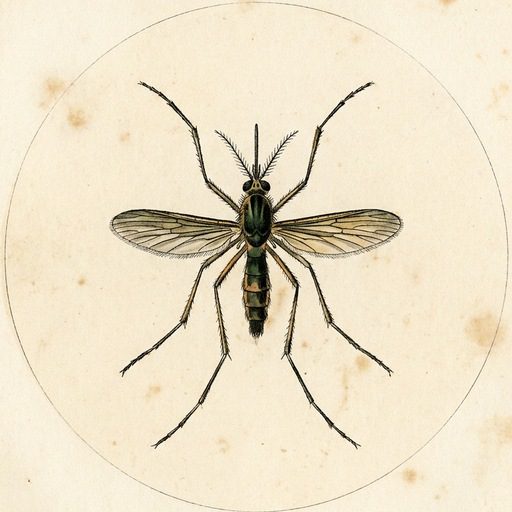
Waking up with new welts usually traces back to bed bugs, fleas, mosquitoes, or mites, and the pattern plus a careful bed inspection separates them far more reliably than staring at any single bite. A row of welts on skin that touched the bed leans bed bug, ankle clusters lean flea, and scattered lone bumps on exposed skin lean mosquito.
- First move: Inspect the mattress seams, box spring, and headboard for dark spotting, shed skins, or live bugs before you treat anything.
- Keep in mind: Nobody can reliably name the bug from the welt alone, and sometimes there is no bug at all.
- Red flags: Spreading redness, warmth, pus, or fever means see a clinician; any trouble breathing means emergency care right away.
Why the bite alone will not tell you
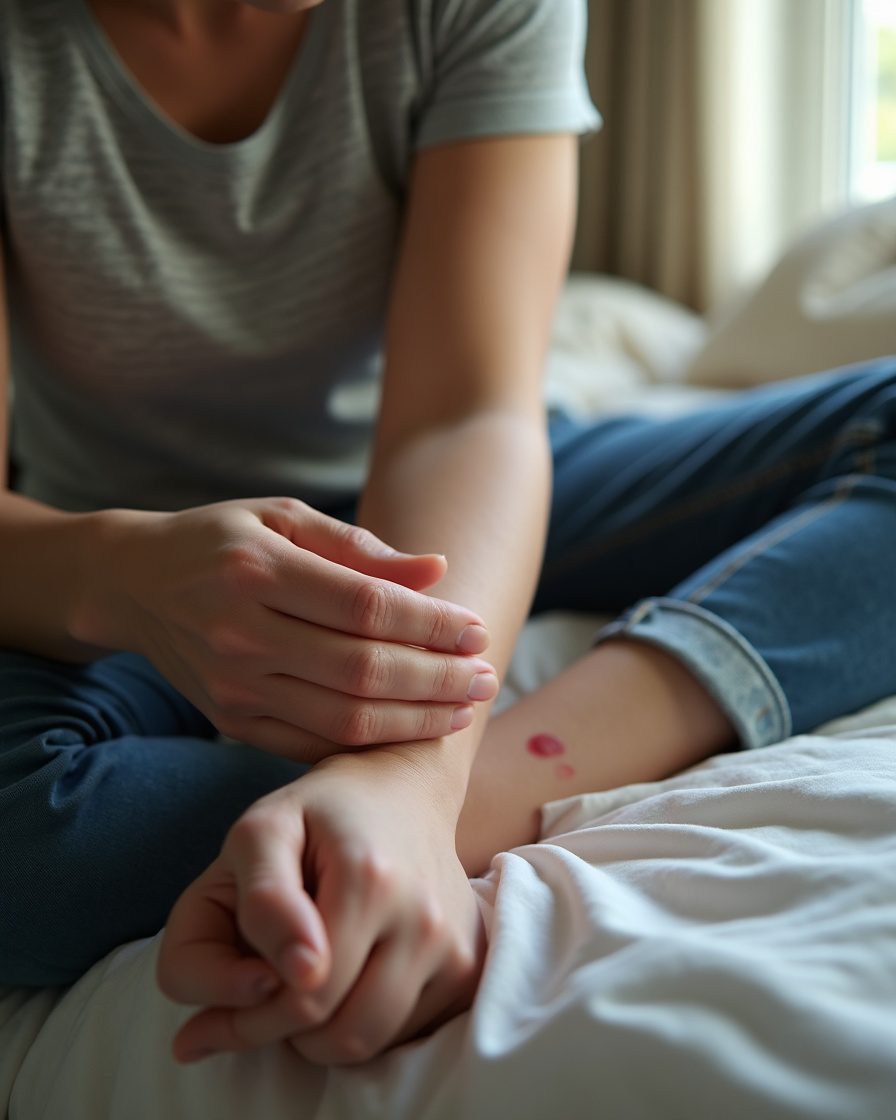
Here is the honest starting point, and it is the one most bite guides skip: a welt is your immune system’s reaction to saliva proteins, not a signature left by the insect. Two people bitten by the same bed bug can wake with completely different marks. University of Kentucky entomologists, who wrote the reference document on unexplained bites, are blunt that it is extremely difficult to diagnose the source of a bite from the lesion alone, and that caution applies to clinicians as much as to the rest of us.
Timing muddies the water further. Bed bug reactions can be delayed by days or even weeks, so the welts you found this morning may not have happened last night at all, and roughly three in ten people show no reaction to bed bug bites whatsoever. None of this makes identification hopeless. It means you identify the culprit from the pattern, the placement, and the physical evidence in the room, not from the bump itself. Our insect bite identification chart is built around exactly that idea.
The overnight lineup: four realistic culprits
Most “what bit me in bed” mysteries resolve to a short list. Let the pattern do the sorting.
Bed bugs: rows on skin that touched the bed
Bed bugs feed at night on whatever skin is available, typically the face, neck, shoulders, arms, and legs, and the bite itself is painless while it happens, so you sleep straight through a feeding that lasts several minutes. The classic presentation is a loose row or zigzag of two to five itchy welts where the bug fed, was disturbed, and fed again a short distance away. The University of Kentucky’s bed bug guidance notes that the bugs concentrate around sleeping areas, hiding in mattress seams, box springs, bed frames, and headboards and venturing out only to feed. If your welts sit on skin that was against the mattress, this is the first suspect to rule in or out, and our guide to bed bug bites and what to do about them covers the full playbook.
Fleas: ankle clusters that continue by day
Flea bites concentrate where the insect can reach from the floor, which means ankles and lower legs take most of the hits, often in small itchy clusters or short lines. Two details separate fleas from bed bugs. First, fleas bite around the clock, so new welts appear during the day too. Second, there is almost always an animal in the story: a pet, a previous tenant’s pet, or wildlife under the house. Kentucky’s flea control guidance explains why bites can start suddenly in a home that sat empty, since pre-emerged adults wait inside insecticide-resistant cocoons and emerge when vibration and warmth signal a host has arrived. If ankles are ground zero, read our piece on flea bites on humans before you blame the bed.
Mosquitoes: scattered singles on exposed skin
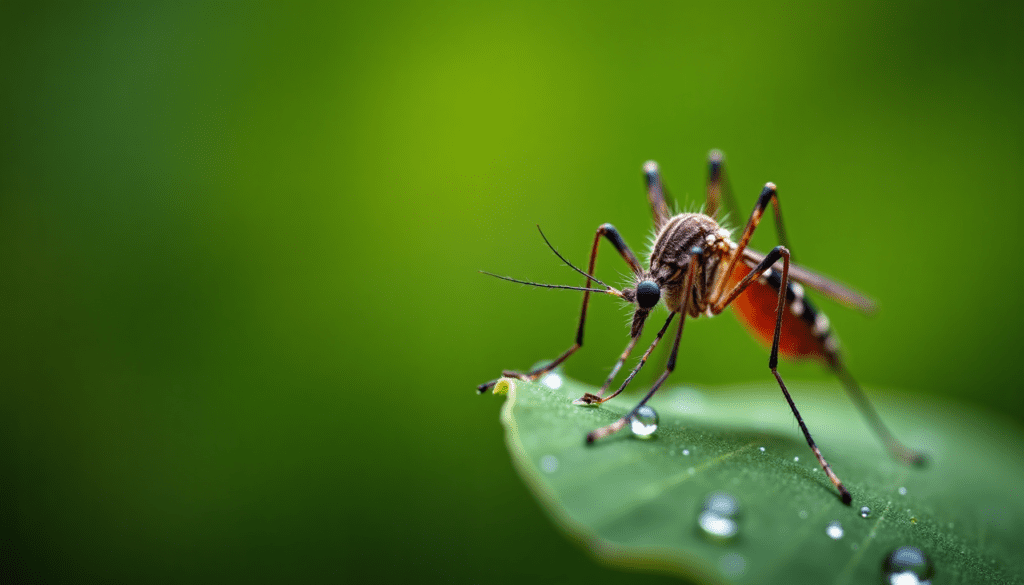
A mosquito that slipped in through a torn screen or an open door will happily feed on you at night, leaving the familiar puffy, pale welt that itches immediately, scattered wherever skin was exposed above the covers. Mosquito bites tend to be random singles rather than rows or clusters, and they favor the face, hands, and arms of a sleeper. The supporting evidence is usually easy to find: a mosquito resting on the wall or ceiling in the morning, gaps in window screens, or standing water near the bedroom window. Fixing the screen and clearing the water usually ends the mystery, and for nights outdoors or with the window open, an EPA-registered repellent used exactly as the label directs is the evidence-backed option for exposed skin.
Mites: the occasional wildcard
Mites are the least common of the four, but they are real. Bird and rodent mites can migrate into bedrooms after a nest in the eaves or attic is abandoned, leaving tiny itchy papules with no obvious pattern, and chigger mites picked up outdoors during the day produce welts at waistbands and sock lines that flare hours later, which is easy to misread as an overnight attack. One myth needs retiring here: common house dust mites do not bite. They feed on shed skin flakes and can drive allergies, but they never puncture skin. A genuine mite problem almost always comes with a findable source: a vacated nest, a new pet, or a weekend in tall grass.
The table below compresses the shortlist into the two questions that matter most: where the welts sit, and what pattern they make.
| Culprit | Typical pattern | Usual location | Confirming evidence |
|---|---|---|---|
| Bed bugs | Rows or zigzags of 2 to 5 welts | Skin in contact with the bed: arms, shoulders, neck, face, legs | Dark spotting on seams, shed skins, live bugs, blood smears on sheets |
| Fleas | Small clusters, new bites day and night | Ankles and lower legs | Pets scratching, fleas jumping onto white socks, flea dirt in pet bedding |
| Mosquitoes | Scattered lone welts, immediate itch | Skin exposed above the covers | Mosquito on wall or ceiling, damaged screens, standing water nearby |
| Mites | Irregular tiny papules, no clear line | Variable; chiggers favor waistband and sock line | Abandoned bird or rodent nest, outdoor exposure in tall grass |
What it is probably not
Ruling things out is half the job, and two suspects get blamed far beyond the evidence. The first is spiders. Spiders have no interest in feeding on people, bites are genuinely rare events, and a spider trapped against skin bites once in self-defense, not five times in a tidy row, so welts appearing night after night are close to proof that a spider is not your problem. Our guide to spider bite identification covers the uncommon real ones.
The second overlooked category is no insect at all. The Kentucky mystery-bites document devotes much of its length to bite-like irritation with non-living causes: tiny fibers from paper, cardboard, or worn carpet, insulation fragments circulating through heating systems, and irritation from detergents, cosmetics, or new clothing treatments. Dry winter skin, and medical factors from thyroid conditions to medication reactions to stress, can all produce itching and small bumps that feel exactly like bites. This is why the inspection below matters: if repeated careful searches turn up no insect evidence at all, the honest next step is a conversation with a clinician or dermatologist, not another round of pesticide.
How to inspect your bed like an investigator
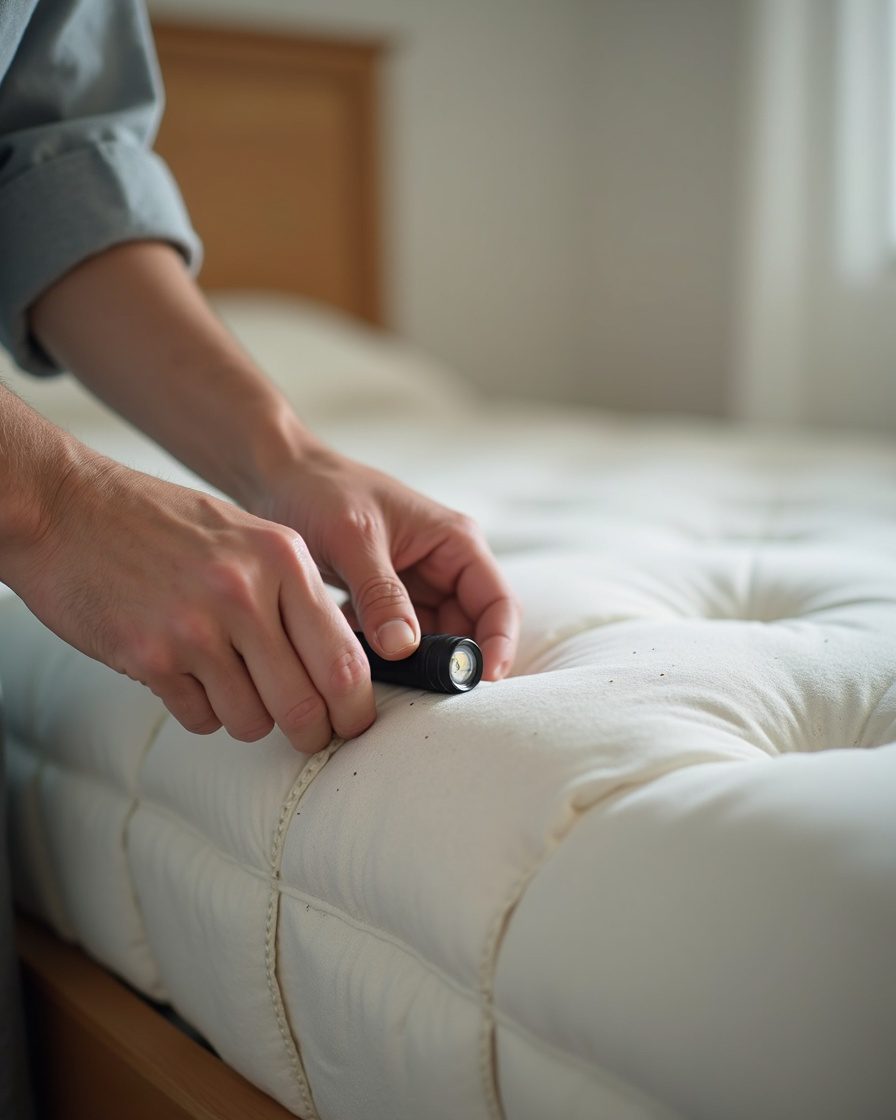
Ten focused minutes with a flashlight beats weeks of guessing. Work through the stripped bed methodically in good light.
- Mattress seams and piping: Run the seam lines slowly under the flashlight, top and bottom, looking for dark ink-like spotting (dried bed bug excrement), tan shed skins, tiny pale eggs, and the flat, reddish brown, apple-seed-sized bugs themselves.
- Box spring and frame: Lift the mattress and check the box spring surface, frame corners, and screw holes. Bed bugs favor wood and fabric over metal.
- Headboard and behind it: A wall-mounted headboard is a classic harborage. Check its back surface and the wall behind it.
- Sheets themselves: Small rusty smears are crushed, fed bugs and count as strong evidence even when you find nothing else.
- The flea test: Walk slowly through carpeted rooms in tall white socks; fleas jump on and show plainly against the white. Check pet bedding for flea dirt, the pepper-like specks that smear reddish on a damp paper towel.
- The mosquito sweep: Scan walls and ceilings, especially corners, and check every window screen for gaps. One resting mosquito answers the whole question.
An empty inspection is information too. Repeat it every few days for two weeks, because a light bed bug infestation is easy to miss on the first pass, and interception traps under the bed legs are the cheapest way to confirm or clear a suspicion.
Why finding the culprit beats treating blind
It is tempting to skip the detective work and just spray the bedroom, and it is nearly always the wrong move. The treatments do not transfer between culprits: bed bugs call for heat treatment of bedding, encasements, and usually professional help; fleas are solved at the pet and the carpet, and treating the bed does nothing; mosquitoes are solved at the screen and the standing water outside. Spraying insecticide at an unidentified target wastes money, adds chemical exposure to the room you sleep in, and muddies the evidence for the next inspection. The extension guidance on mystery bites makes the same point: confirm a pest before you treat for one. If you are weighing the top suspects against each other, our side-by-side on bed bug bites vs flea bites vs mosquito bites walks the distinguishing marks in more detail.

Calming the bites while you investigate
Whatever the source turns out to be, the skin care is nearly identical, and it is deliberately boring. MedlinePlus’s home-care guidance for insect bites comes down to washing the area with soap and water, applying a cold compress, and using over-the-counter itch relief: hydrocortisone cream or calamine on the welts, and an oral antihistamine if itching disrupts sleep, always following the product label rather than any dose you read online.
The real hazard here is rarely the bite. It is the scratching. Broken skin is what gets infected, so keep nails short, keep hands off the welts, and let the antihistamine do the willpower work overnight. Most bite reactions fade within days to two weeks on their own. To be clear about what this article is: it describes patterns and likelihoods, but no one, including a doctor examining you in person, can certify the species from a welt. What a clinician can do is treat the reaction, rule out non-bite causes, and spot infection early.
See a clinician if
- Redness or warmth is spreading outward from a bite, or you see red streaks tracking away from it.
- A bite produces pus, growing pain, or swelling that worsens after the first couple of days. Our guide to infected insect bite signs shows what early infection looks like.
- You develop fever, chills, or swollen lymph nodes alongside the bites.
- Welts keep appearing for weeks despite repeated clean inspections, which points toward a medical rather than insect cause.
- Any sign of a severe allergic reaction appears: trouble breathing, wheezing, swelling of the face, lips, or throat, dizziness, or widespread hives. Treat this as an emergency, use prescribed epinephrine if you have it, and get emergency medical help immediately.
Common questions
Can bites really show up in the morning if nothing bit me overnight?
Yes. Bed bug reactions can surface days after the actual bite, and chigger welts from an afternoon outdoors often peak the next morning. The discovery tells you when your immune system reacted, not necessarily when you were bitten.
My partner has no bites. Does that rule out bed bugs?
No. Around a third of people do not react to bed bug bites at all, and non-reaction grows more common with age, so one reactive sleeper and one unmarked sleeper in the same bed is an ordinary bed bug presentation.
Could it be scabies?
Scabies is a skin-dwelling mite spread by prolonged skin contact, producing relentless itching with fine burrow lines, often between fingers and at wrists. It does not come from your mattress, and it needs a clinician’s diagnosis and prescription treatment, so raise it with a doctor rather than self-treating.
I found nothing in the bed. Should I spray anyway?
No. Spraying without a confirmed target adds pesticide to your sleeping space with no evidence it will help. Keep inspecting on a schedule, set interception traps, and if evidence never appears, talk to a clinician about non-insect causes.
The bottom line
Wake-up bites are a pattern problem, not a welt problem. Rows on bed-contact skin point to bed bugs, ankle clusters point to fleas, scattered singles on exposed skin point to mosquitoes, and patternless papules with a nest or outdoor story point to mites, while spiders and dust mites almost never belong on the suspect list. Let the bed inspection, not the bite, deliver the verdict, and resist treating until something is confirmed. Meanwhile keep the skin care simple: soap and water, cold compresses, label-directed over-the-counter itch relief, and no scratching. If the welts come with spreading redness, pus, or fever, or if weeks of looking turn up no insect at all, bring a clinician into the investigation.
This article is for information only and is not medical advice.