Lyme disease prevention is really two jobs done together: keep ticks from biting in the first place, and get any tick that does bite off your skin fast and the right way. Permethrin-treated clothing and an EPA-registered skin repellent before you head out, a full-body tick check the same day, and prompt, proper removal after cover almost all of the risk, because a tick generally has to stay attached well over a day before it can pass on Lyme. That attachment window is the whole game, because it means a careful daily check often catches a tick before it can infect you. This guide covers how to block bites, how to remove a tick correctly, and the early signs that tell you to see a doctor while Lyme is most treatable.
Lyme prevention is bite prevention plus fast removal: repellent and treated clothing before you go out, a daily tick check, and prompt removal after, because a tick usually needs well over a day attached to transmit Lyme.
- Prevent: Permethrin-treated clothing, an EPA-registered skin repellent, tucked clothing, and a same-day full-body tick check.
- Remove right: Grasp the tick at the skin with fine-tipped tweezers and pull straight up; the sooner it is off, the lower the risk.
- See a doctor: An expanding rash, fever, aches, or fatigue in the days to weeks after a bite means get evaluated early.
Why prevention beats treatment
Lyme is the most common tick-borne illness in the United States, and the good news is that it is also one of the most preventable. You are not relying on luck or on spotting a single tiny tick by chance. You are stacking a few simple habits that each lower the odds, and together they get the risk down a lot. The math is on your side if you act early.
The reason the strategy works comes down to timing. According to the CDC, a tick generally has to stay attached well over a day to pass on Lyme. The blacklegged tick (Ixodes scapularis) that spreads Lyme in most of the country does not infect you the instant it bites. That delay is what turns a daily tick check from a nice-to-have into the single most useful habit you have. Find the tick and remove it that evening, and you have very likely closed the window before it ever opened.
So prevention here is not one trick. It is a short routine: dress to keep ticks off, treat skin and clothing, check yourself the same day, and pull anything you find straight off. The rest of this guide is just those steps in order.
Stop the bite before it happens
The first layer is what you wear and what you put on it. Light-colored clothing makes a crawling tick easier to spot, long sleeves and long pants give it less skin to reach, and tucking your pants into your socks turns the easy climb up your leg into a dead end. None of this is glamorous, but the boring stuff is what works.
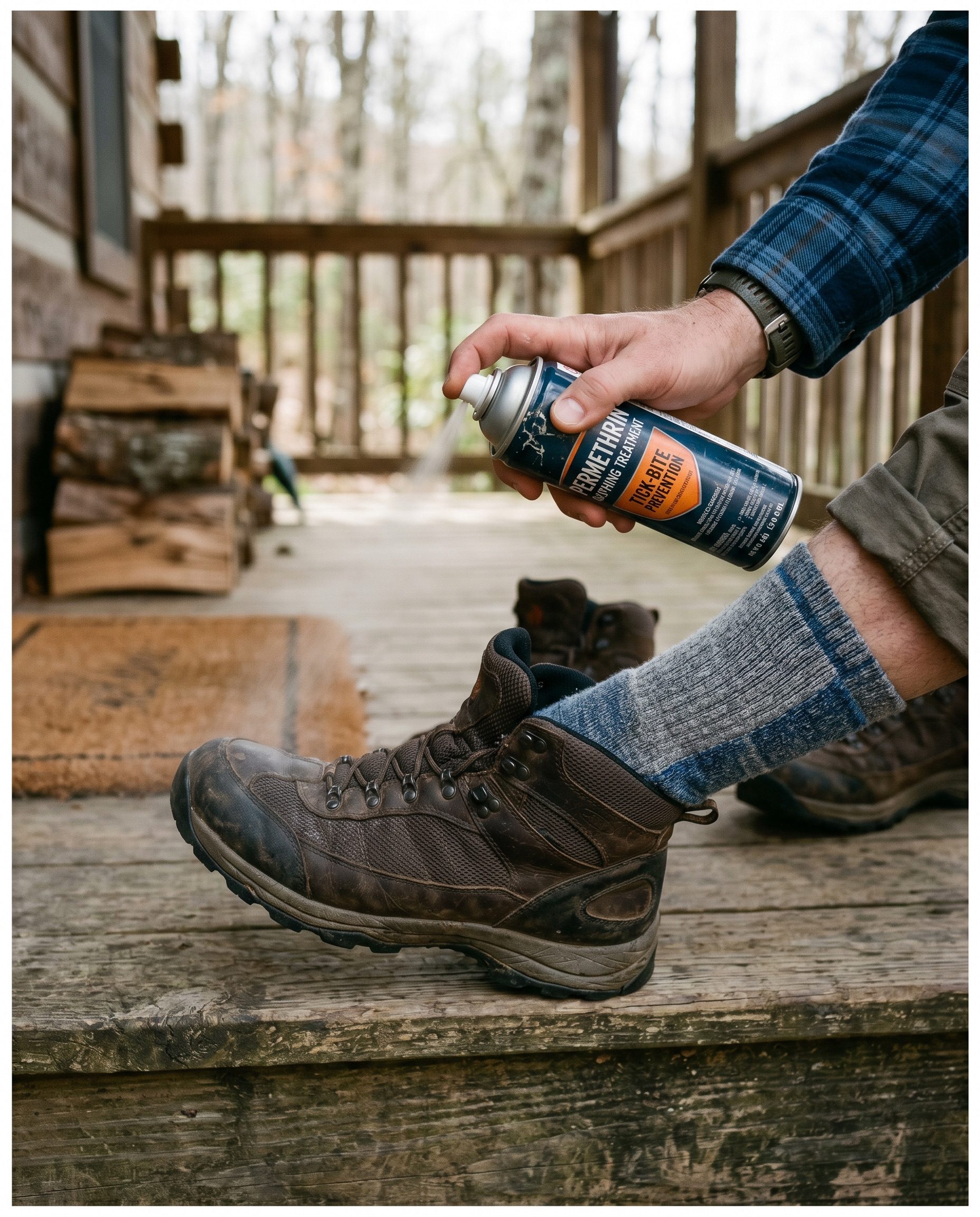
The standout tool is permethrin on your clothing, not your skin. Permethrin is an insecticide you apply to fabric, boots, and gear, and it keeps repelling and killing ticks through several washes. The EPA notes that permethrin-treated clothing adds a layer of protection against ticks when used as directed on the label. One important safety point: permethrin is highly toxic to cats while it is still wet, so treat clothing outside, let it dry fully before bringing it near a cat, and ask your veterinarian before using any permethrin product on or around pets. For a closer look at treated gear, our guide to the best tick repellent clothing for hiking and outdoor work breaks down the options.
For exposed skin, use an EPA-registered repellent and follow the label. The CDC’s tick-prevention guidance covers permethrin-treated clothing, EPA-registered repellents, and tick checks as the three pillars that work together. Products with DEET, picaridin, or IR3535 are all registered for skin use; pick one you will actually reapply on schedule. We compare the active ingredients in our roundup of the best tick repellents with DEET, picaridin, and permethrin.
Find and remove ticks fast
A repellent reduces bites; a tick check catches the ones that get through. Do a full-body check the same day you have been outside in grass, leaf litter, brush, or woods, and help kids and pets get checked too. Ticks like the warm, hidden spots: behind the knees, in the groin, around the waistband, in the armpits, along the hairline, and behind the ears. A shower within a couple of hours and a tumble of your clothes on high heat in the dryer both help knock off ticks you have not found yet.
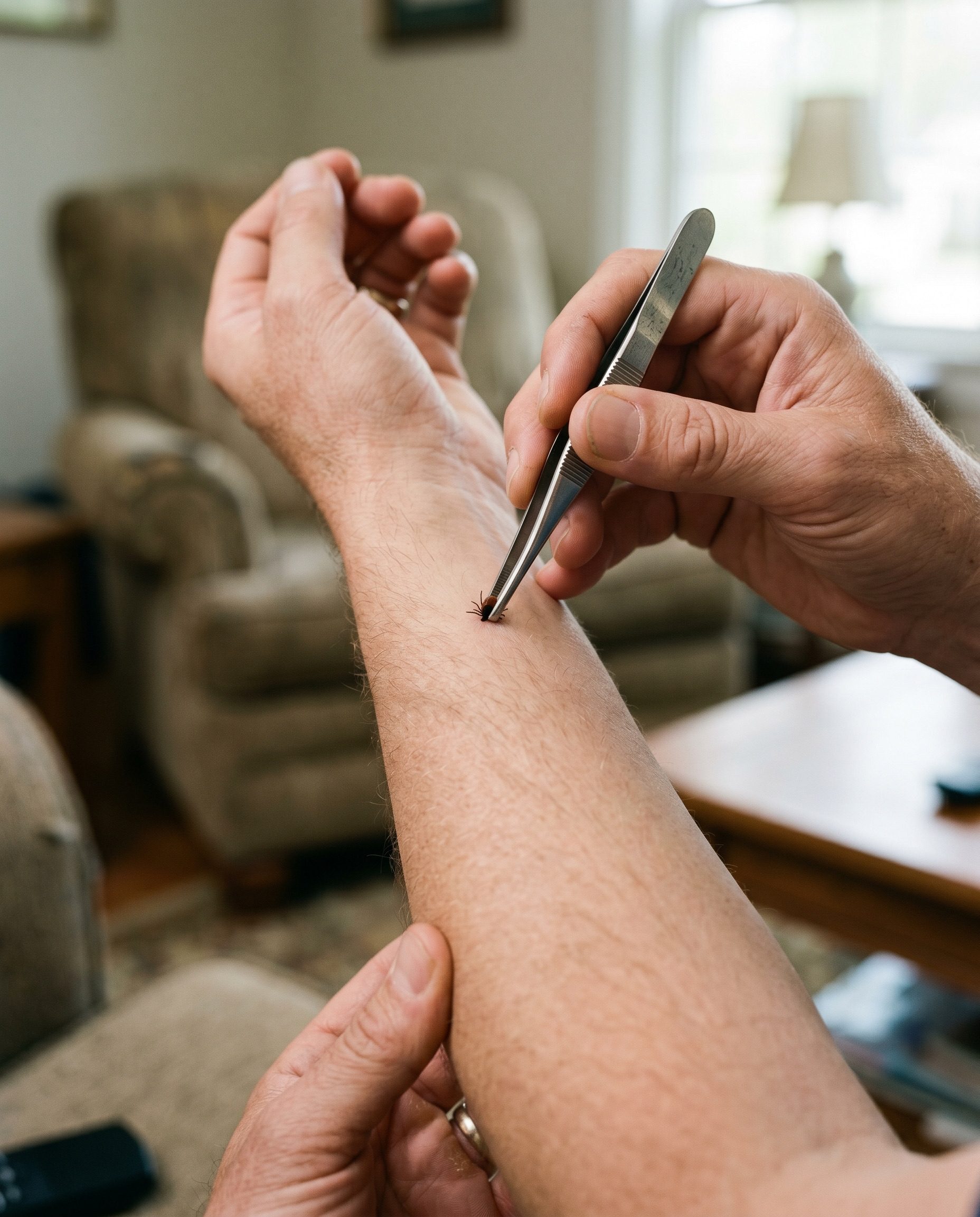
If you find one attached, remove it right away and remove it correctly. Grasp the tick as close to the skin as you can with fine-tipped tweezers and pull straight up with steady, even pressure. Do not twist, and do not reach for folk methods like a lit match, nail polish, or petroleum jelly, which just leave the tick attached longer. Research from URI TickEncounter is clear that prompt, proper removal lowers the risk of infection. Our step-by-step guide to removing a tick safely walks through it with the details that matter.
After the tick is off, clean the bite with soap and water or rubbing alcohol, and wash your hands. It helps to note the date, because the calendar is part of your medical record now. Most bites lead to nothing at all, but if symptoms show up in the next few weeks, knowing when you were bitten gives a clinician a much clearer picture.
Know the early signs of Lyme
This is where prevention and treatment meet. Even a careful person can miss a tick, so the second half of protecting yourself is recognizing early Lyme so you get care while it is easiest to treat. The headline reassurance is that caught early, Lyme is very treatable with a standard course of antibiotics prescribed by a doctor.
The early signs usually appear days to weeks after a bite. The one many people know is a gradually expanding rash, sometimes with central clearing that gives the so-called bullseye look, though plenty of rashes do not look like a textbook target. Along with or instead of a rash, early Lyme can bring fever, chills, headache, fatigue, and muscle and joint aches that can feel like the flu. The CDC explains the early signs of Lyme and why early treatment works so well, and MedlinePlus covers how Lyme is diagnosed and treated and when to see a doctor.
A few things are worth saying plainly. A rash or these symptoms after a known tick bite, or after time in tick country, is a reason to see a healthcare provider; they can confirm what is going on and decide on treatment. I cannot tell you a rash means you have Lyme, and you should not diagnose it from a photo online either. What you can do is watch for the signs and get evaluated early, because that is when the outcome is best.

When a tick bite is an emergency
Lyme itself develops slowly, so the early signs are a see-a-doctor situation, not a same-night emergency. There is one exception that needs immediate attention: a severe allergic reaction. Get emergency medical help right away for signs of anaphylaxis after any bite or sting: trouble breathing, swelling of the throat, tongue, or lips, tightness in the chest or throat, dizziness or fainting, a fast heartbeat, or hives spreading quickly over the body. If the affected person has a known severe allergy and an epinephrine auto-injector such as an EpiPen has been prescribed, use it as directed and still get emergency care, because symptoms can return.
Short of that, treat new or worsening symptoms in the weeks after a bite as a reason to contact a healthcare provider, not to wait it out. Severe headache, a stiff neck, facial drooping, joint swelling, or heart palpitations after a tick bite are signals to be seen promptly. These can point to Lyme that has moved past the early stage, and a clinician should evaluate them.
Common questions
How long does a tick have to be attached to give you Lyme?
Usually well over a day. The CDC notes a tick generally needs to be attached for a sustained period, often more than 36 hours, before it can transmit Lyme, which is exactly why a same-day tick check and prompt removal work so well. The sooner you find and remove it, the lower the risk.
Does every tick bite lead to Lyme disease?
No. Most tick bites do not transmit any disease, and not every tick carries the bacteria that cause Lyme. Risk depends on the tick species, where you are, and how long it stayed attached. Removing the tick quickly and watching for symptoms is the right response to most bites.
Should I get tested or treated right after a tick bite?
Usually not on the spot. Testing too early often misses the infection, and routine antibiotics after every bite are not standard. Note the date, watch for an expanding rash or flu-like symptoms over the next few weeks, and contact a healthcare provider if any appear so they can decide on testing or treatment.
Does a bullseye rash always mean Lyme?
Not always, and Lyme does not always come with a classic bullseye. The rash can be solid, oval, or have central clearing, and some people get no rash at all. Any expanding rash or flu-like illness after a possible tick exposure is worth getting checked by a doctor.
Is permethrin safe to use around my dog?
Permethrin is used in some dog products but is highly toxic to cats, especially while wet. Never assume a product is safe for both, do not guess at any dose, and ask your veterinarian before applying permethrin on or near pets. Treat your own clothing outdoors and let it dry fully before pets are around it.
Final verdict
Lyme disease prevention is not a single product or a single moment of vigilance; it is bite prevention plus fast removal, done as a short routine. Treat your clothing with permethrin and use an EPA-registered repellent on skin before you go out, dress to keep ticks off, and then do a full-body check the same day and remove anything you find by pulling straight up with fine-tipped tweezers. Because a tick generally has to stay attached well over a day to transmit Lyme, that daily check is the step that does the most work. And if a rash or flu-like symptoms show up in the weeks after a bite, see a doctor early, when Lyme is most curable. For the symptom side in more depth, see our guide to tick bite symptoms and when to see a doctor.
This guide is information, not medical advice. Use it to lower your risk and to know when home care is fine and when it is not, and defer to your clinician for anything that worries you.
This article is for information only and is not medical advice.