Finding out how much honey a hive can really make is exciting – and a little confusing. One backyard beekeeper might harvest a few jars, while another pulls off multiple full supers. That swing is normal. Honey production depends on nectar in your area, weather, colony strength, pests, and how you manage space and swarming. This guide gives realistic pound ranges, explains what’s happening inside the hive, and shows how to increase harvests without shorting the bees on the stores they need to survive.
Quick answer: how much honey does a beehive produce in a year?
Most beehives produce about 30 to 80 lb (13 to 36 kg) of harvestable surplus honey per year in many temperate regions, assuming a healthy, established colony and decent forage.
Here’s a practical range for honey production (surplus you can take, not the total the bees make):
- 0 to 20 lb (0 to 9 kg): first-year hive, weak colony, poor nectar flow, or bad weather
- 30 to 60 lb (13 to 27 kg): common hobbyist harvest in an average season
- 60 to 120 lb (27 to 54 kg): strong colony with good management and forage
- 150 lb+ (68 kg+): exceptional sites, strong genetics, and often commercial or migratory practices
Quick reality check:
- Bees usually need 60 to 70 lb (27 to 32 kg) left in the hive for winter in colder climates, per guidance summarized by the Oklahoma State University Extension.
What “normal” honey yield per hive looks like (and why it varies so much)
If you ask ten beekeepers how much honey a hive produces, you’ll get ten honest answers. That’s because honey yield is less like a factory output and more like a farm crop. The “field” is every blooming plant within a few miles, and the “harvest” depends on timing, rain, heat, and whether your colony peaks at the right moment.
A realistic hobbyist expectation in many regions is 30 to 60 lb per hive per season. That range is commonly cited in beekeeping business breakdowns like those from the Blythewood Bee Company and in consumer-facing summaries such as Local Hive Honey’s beekeeping statistics. With experience, good forage, and a well-timed buildup, 60 to 100 lb becomes more achievable, and some beekeepers report occasional years over 200 lb in strong nectar flows, as described in a real-world yield discussion on Backyard Beekeeping (Countryside Network).
The key is to separate two ideas:
- Total honey made by the colony (what bees produce and consume all year)
- Surplus honey (what’s left after the bees meet their needs)
Most “how much honey per hive” numbers refer to surplus.
A quick “what to expect” chart (surplus honey)
| Situation | Typical surplus | What it usually means |
|---|---|---|
| First-year package or spring nuc | 0 to 20 lb | Comb building and population growth come first |
| Average established backyard hive | 30 to 60 lb | A decent flow with normal weather |
| Strong hive, good location, good management | 60 to 120 lb | Colony peaks during the main flow, low swarming |
| Exceptional conditions or commercial practices | 150 lb+ | Multiple nectar flows, often moved to chase blooms |
Actionable takeaway: If you’re new, measure success by healthy bees and drawn comb, not just jars of honey. For a step-by-step setup that supports good yields later, see How to Start Beekeeping: Your Complete Beginner's Guide.
Honey production depends on these 5 factors more than any “average”
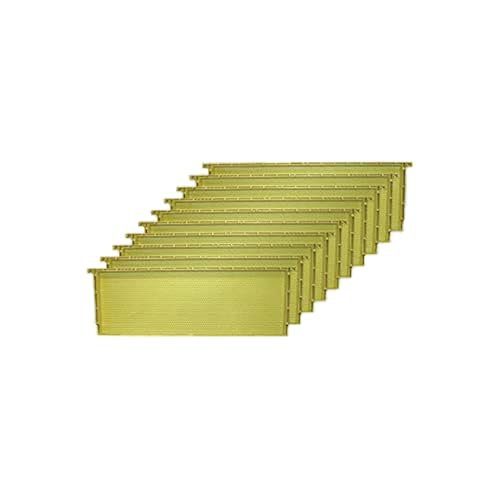
Mann Lake Premium Beekeeping Frames, All-In-One Frame & Foundation, Beeswax Coating, Universal Fit, BPA & BPS Free, 6 1/4 Inches, Natural, 10-Pack
This product is essential for beekeepers looking to manage their hives effectively and increase honey production by providing a solid structure for bees to build their comb.
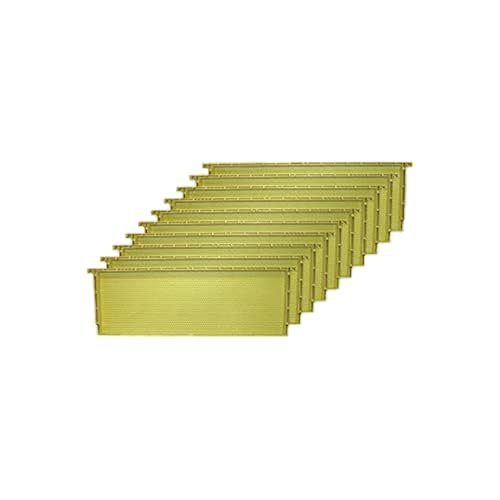
Mann Lake Premium Beekeeping Frames, All-In-One Frame & Foundation, Beeswax Coating, Universal Fit, BPA & BPS Free, 6 1/4 Inches, Natural, 10-Pack
This product is essential for beekeepers looking to manage their hives effectively and increase honey production by providing a solid structure for bees to build their comb.
Two hives can sit a mile apart and produce very different crops. Think of a colony like a workforce that must be large, healthy, and well-timed with the local bloom. Miss the timing, and you miss the paycheck.
Here are the biggest drivers that decide whether you harvest a little, a lot, or nothing.
1) Forage: nectar quantity, diversity, and timing
Bees can only turn nectar into honey if flowers are producing nectar when the colony has enough foragers to collect it. Big spring blooms of maple and fruit trees help colonies build up. Summer flows from clover, basswood, alfalfa, or wildflowers often fuel surplus honey.
Use this quick checklist to judge your forage:
- Are there blooms from early spring through late summer?
- Do you have flowering trees (often major nectar sources)?
- Is the area dominated by lawn and pavement (low nectar)?
- Are there periods of dearth (hot midsummer gaps)?
Actionable takeaway: Walk a 5 to 10 minute loop near your apiary once a week and note what’s blooming. That simple habit predicts honey flow better than guesswork.
2) Weather: the silent deal-breaker
A warm, stable stretch during bloom can create a honey rush. Cold snaps, long rainy weeks, or drought can shut nectar down. Even when flowers look good, nectar secretion can drop when conditions are off.
Practical signs weather is limiting yield:
- Bees fly late and return early
- Foragers come back light, not “loaded”
- Colonies consume stores even in midseason
3) Colony strength and queen performance
A strong hive in peak season often holds 50,000 to 100,000 bees, a range commonly referenced in beekeeping education such as Local Hive Honey’s overview. More foragers usually means more incoming nectar.
Quick field cues of a high-producing colony:
- Solid brood pattern (few gaps)
- Heavy flight on warm mornings
- Bees drawing comb rapidly when nectar is on
4) Pests and disease pressure (especially Varroa)
Varroa mites weaken bees, shorten worker lifespan, and can collapse colonies. A hive fighting mites rarely makes a big surplus. Even if it survives, it often limps through the main flow with fewer foragers.
Actionable takeaway: Track mites with a consistent method (like alcohol wash) and treat based on thresholds recommended by your local beekeeping association or extension office.
5) Beekeeper management: space, timing, and swarm prevention
If the hive runs out of room during a flow, bees slow down or swarm. Swarming is a natural reproduction strategy, but it can cut honey yield sharply because a large part of the workforce leaves.
A simple “space management” mini-checklist:
- Add a super before the top box feels crowded.
- Keep brood boxes from becoming honey-bound in spring.
- Inspect during swarm season (often late spring) for queen cells.
Actionable takeaway: Keep your equipment ready before the flow. If you’re still shopping for basics, compare options in Best Beekeeping Starter Kits for Beginners.
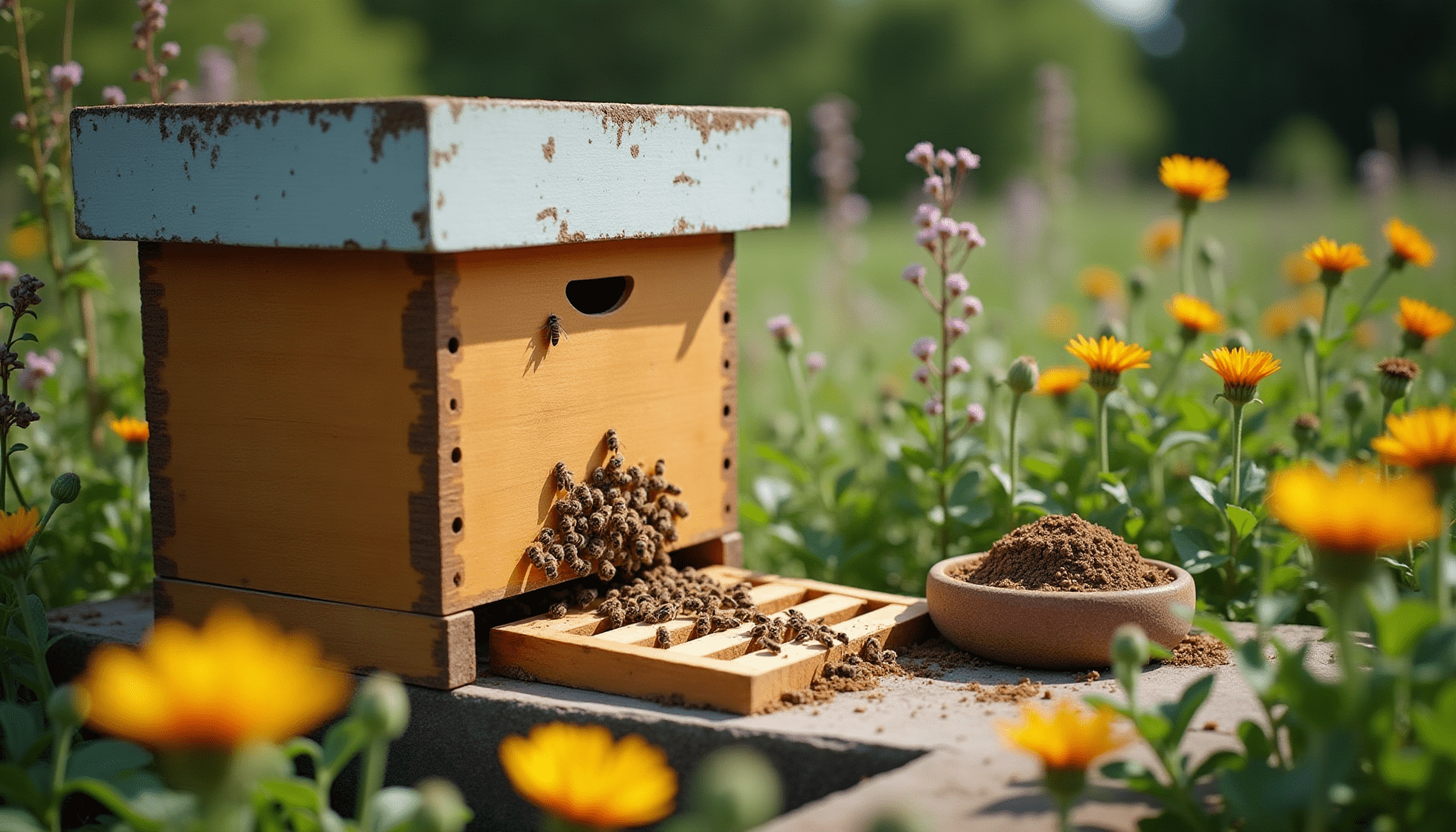
First-year vs. established hives: why new colonies often produce little or no surplus
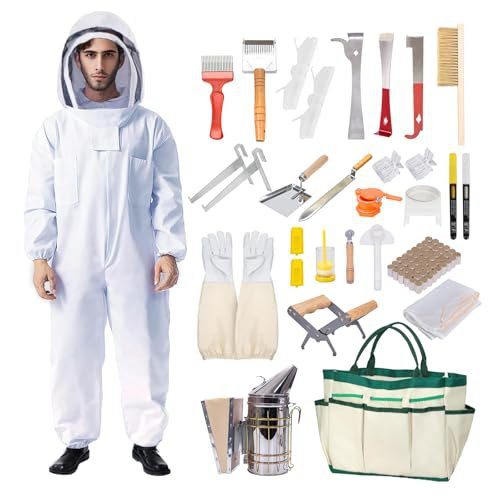
Honey Lake 31Pcs Beekeeping Supplies Starter Kit with Bee Suit – Includes Bee Smoker, Beehive Frame Holder, Frame Grip, Hive Tool, Bee Marking Pen & More Tools for Beginner Beekeepers (XL)
This comprehensive tool kit is perfect for beekeepers to maintain their hives and ensure optimal conditions for honey production.
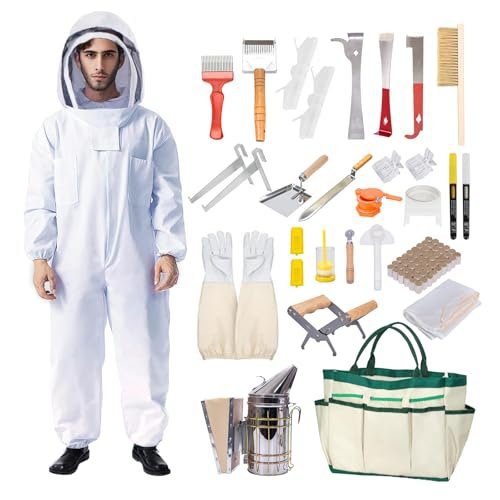
Honey Lake 31Pcs Beekeeping Supplies Starter Kit with Bee Suit – Includes Bee Smoker, Beehive Frame Holder, Frame Grip, Hive Tool, Bee Marking Pen & More Tools for Beginner Beekeepers (XL)
This comprehensive tool kit is perfect for beekeepers to maintain their hives and ensure optimal conditions for honey production.
Many beginners feel disappointed when their first hive doesn’t “pay off” in honey. But biologically, that first season is more like building a house than stocking a pantry. A package or small nucleus colony must draw wax comb, raise brood, and store enough food to survive winter, all while learning the local forage calendar.
Wax is expensive for bees. To make comb, workers convert carbohydrates into wax scales, and that energy could have gone toward surplus honey. So a new colony often spends its first big nectar flow building infrastructure.
What to expect in year 1 (temperate climates)
In many areas, a spring-started hive’s most likely outcomes look like this:
- No harvest at all if the colony is small, the flow is short, or weather turns
- A small harvest (10 to 20 lb) if the colony builds fast and the flow is long
- A decent harvest only when multiple things line up: early installation, drawn comb, strong queen, and strong forage
Beekeepers discussing real-world outcomes often describe this as a “piece of string” question, because results swing widely year to year and place to place. You can see that variability in long-running yield discussions like the HoneyFlow beekeeping forum thread.
How to tell if harvesting in year 1 is safe
Use a conservative, bee-first checklist:
- The brood nest is established and expanding
- The hive has capped honey stores beyond the brood area
- You can lift the back of the hive and it feels “heavy” for its size
- Your region’s main flow is still on (so they can refill)
Actionable takeaway: In year 1, it’s usually smarter to harvest nothing and aim for a strong overwintered colony. Year 2 is when many hives start producing consistent surplus.
How much honey should you leave for the bees?
A good honey harvest is one that doesn’t create a starvation problem later. Bees eat honey every day for flight fuel, wax building, brood rearing, and temperature control. In winter, honey is the heating budget.
A widely used cold-climate guideline is to leave about 60 to 70 lb of honey per hive for winter, as summarized in the Oklahoma State University Extension beekeeping fact sheet. Warmer areas may require less, but “less” still needs to be enough to cover long rainy spells, cold snaps, and early spring buildup.
A practical “leave-behind” guide by climate
| Climate pattern | Common approach | What to watch for |
|---|---|---|
| Long, cold winters | Leave 60 to 70 lb | Extended confinement and late spring |
| Mild winters, early blooms | Leave less than cold climates | Sudden cold snaps and spring brood ramp-up |
| Areas with summer dearth | Keep extra stores even in warm zones | Colonies can starve in midsummer |
What this means for your harvest math
Let’s say a colony produces 140 lb total in a good year. If it needs 60 to 70 lb for winter and consumes more during the season, your safe harvest might still land around 30 to 80 lb. This is why “my hive made 200 lb” and “I harvested 60 lb” can both be true.
Actionable takeaway: If you’re unsure, harvest less and feed only if needed. Taking too much can turn next year’s honey crop into zero.
How to increase honey yield responsibly (without pushing bees past their limits)
Most improvements in honey yield come from getting three things right: timing, space, and health. You don’t need fancy tricks. You need a colony that peaks during the main nectar flow and has room to store it.
1) Start the season earlier than you think
If your bees are still building population when the main flow hits, you miss the window. In many regions, that window is only a few weeks.
Do this instead:
- Install packages or nucs early enough to build up
- Make sure the colony has food during cold, slow springs
- Avoid splitting strong colonies right before the main flow if honey is your goal
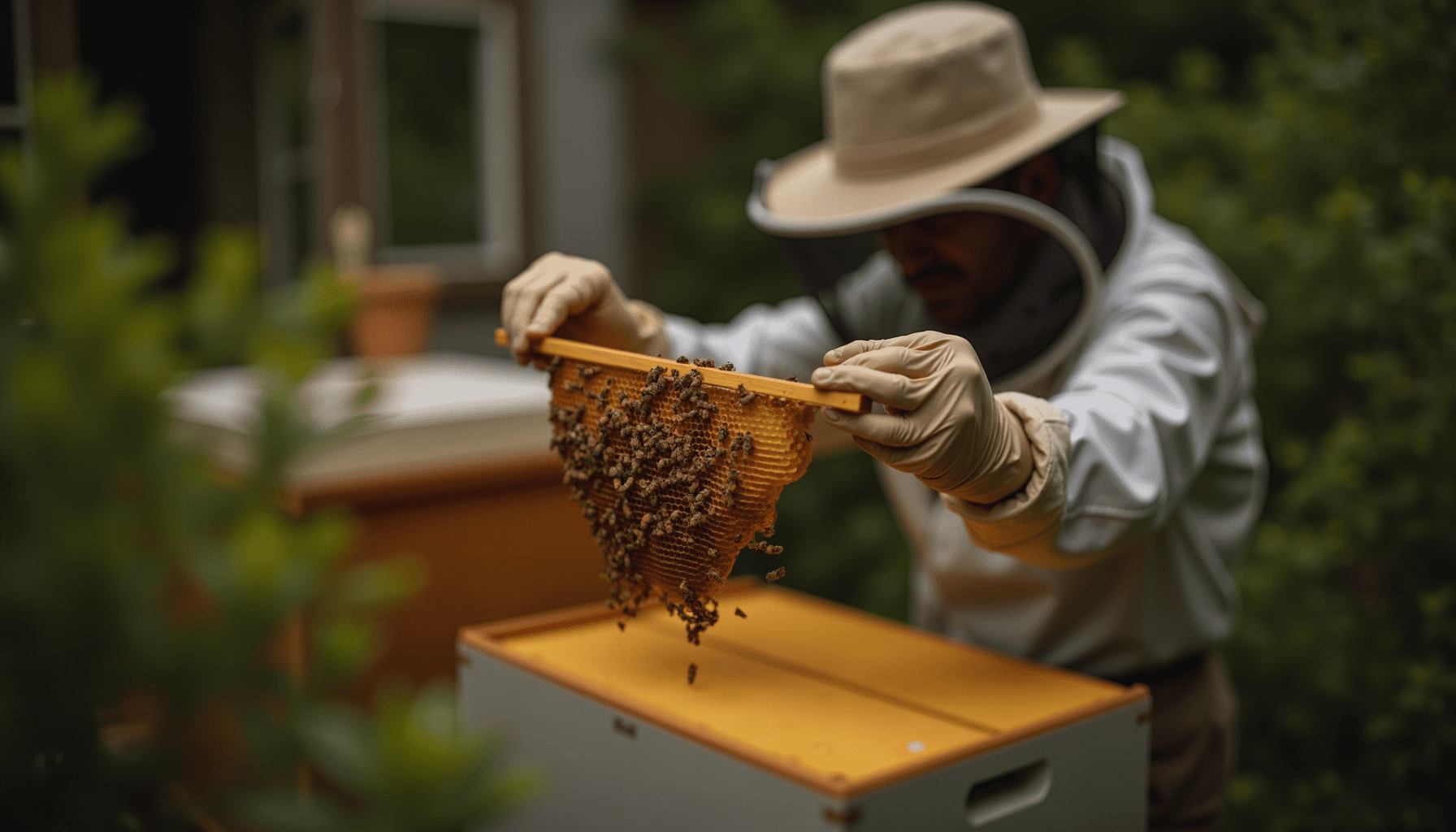
2) Add supers before the bees demand them
A common beginner mistake is waiting until a box is “full.” By then, congestion can trigger swarm prep.
A simple supering rule of thumb:
- Add a super when the current super is about 60 percent drawn/used, or when the top box is getting crowded with nectar during a flow.
If you plan to harvest, having the right equipment matters. A smooth extraction process also reduces mess and wasted comb. See Best Honey Extractors for Home Beekeepers for practical options and sizing.
3) Keep swarming from stealing your workforce
Swarming removes foragers right when you need them most. You can’t stop swarming entirely, but you can reduce the odds:
- Provide space early
- Reverse brood boxes in spring (where appropriate and safe)
- Monitor for queen cells during peak swarm season
- Requeen if the colony repeatedly swarms early
4) Win the Varroa battle
High mite loads quietly cut honey crops by shrinking the workforce. Use an integrated approach:
- Monitor mites on a schedule
- Treat when thresholds are exceeded
- Rotate treatments to reduce resistance risk
- Keep records so you know what worked
5) Improve forage instead of adding more hives
Adding hives can reduce per-hive yield if local nectar is limited. If you want more honey, sometimes the best move is improving the landscape:
- Plant clover, borage, bee balm, and native wildflower mixes
- Encourage flowering trees and shrubs
- Reduce pesticide exposure
Actionable takeaway: One strong hive in good forage often outproduces two struggling hives competing in a nectar-poor area.
Common myths about honey yield (and what’s actually true)
Beekeeping attracts simple “rules,” but bees live in the real world. Here are the myths that cause the most frustration.
Myth 1: “Every hive produces about the same amount”
Reality: Honey yield can swing from zero to over 100 lb for the same beekeeper depending on weather and bloom timing. Treat any single number as a rough planning estimate, not a promise.
Quick check: If your neighbor beekeeper harvested big and you didn’t, compare hive strength and swarm events, not just location.
Myth 2: “First-year hives always give a big harvest”
Reality: Many first-year colonies are still building comb and stores. Some exceptions happen in nectar-rich areas, but it’s not the baseline expectation.
Quick check: If you started late spring and had to feed often, a harvest that year is less likely.
Myth 3: “All the honey bees make is yours to take”
Reality: Bees must keep a large reserve. Responsible harvesting focuses on surplus only. Remove too much, and you risk winter loss and a dead-out instead of next year’s honey crop.
Myth 4: “Feeding sugar syrup is the same as honey”
Reality: Feeding can prevent starvation, but it isn’t the same as nectar-based honey. Also, feeding during a flow can contaminate harvestable stores if you’re not careful.
Quick check: If you’re adding syrup while supers are on, pause and reassess your harvest plan.
Myth 5: “Honey bees matter mainly because of honey”
Reality: Pollination is a major part of their value. If you’re comparing bee species, it also helps to know that honey bees and bumble bees play different roles in ecosystems and gardens. See Honey Bee vs Bumble Bee: Discover the Key Differences for an easy comparison.
Actionable takeaway: A “good year” is not only pounds of honey. It’s a healthy colony that survives winter and pollinates your landscape.
Conclusion: plan for ranges, manage for healthy colonies
A realistic expectation for honey production in many backyard setups is 30 to 80 lb of surplus honey per hive per year, with big swings based on forage, weather, colony strength, and management. First-year hives often produce little to no harvest, and that’s normal. The bees also need significant stores left behind, commonly 60 to 70 lb in colder climates, so responsible harvesting matters.
Next step: If you’re building toward better yields next season, start with strong fundamentals in How to Start Beekeeping: Your Complete Beginner's Guide and make sure your harvest setup is ready with Best Honey Extractors for Home Beekeepers.
As an Amazon Associate, I earn from qualifying purchases. Product recommendations are based on real reviews and independent research.