It is 3am, the house is silent, and something is scratching inside the wall a foot from your head. You cannot see what is making the sound, so your imagination fills the gap with something enormous. The noise itself, though, is a diagnostic tool: what it sounds like, and above all when you hear it, usually tells you whether you have mice, rats, a squirrel, or something stranger. Identification matters, because the most tempting move, sealing the hole and going back to bed, is the one that most often makes things worse.
Light, fast scratching at night is most likely mice, since house mice are active mostly after dark. Heavier gnawing points to rats, daytime scampering to squirrels, and scratching with a faint buzz can be a late-season wasp nest in the wall void.
- Confirm first: A dusting of flour along the baseboard shows footprints by morning, and droppings size separates mice from rats.
- Do not seal yet: Closing the hole with an animal inside traps it in the wall to gnaw a new exit or die in the void.
- Route wildlife out: Squirrels, bats, and raccoons are a job for a licensed wildlife control operator, not traps or poison.
Read the clock before you read the wall
The single most useful clue is the hour. The UC IPM Pest Note on house mice describes them as active mostly at night, nibbling through as many as 200 small feeding visits before dawn. That constant coming and going produces the light, intermittent scratching that wakes you at 3am and stops when you knock on the wall. Rats keep similar hours but are far heavier, so their movement reads as thumps and dragging rather than papery skittering.
Daytime noise flips the picture. Squirrels are active in daylight, especially after sunrise and before dusk, so scampering overhead at 8am points toward wildlife in the attic. One oddball case is worth knowing: scratching with a papery rustle or an intermittent buzz on a warm afternoon may be a late-season wasp colony in the wall void rather than anything furry.
| What you hear | When you hear it | Most likely culprit | Right response |
|---|---|---|---|
| Light, fast scratching and skittering | Night, quiet hours | House mice | Trap indoors, then seal |
| Heavy gnawing, thumps, dragging | Night | Rats | Trap aggressively, inspect entry points, consider a pro |
| Scampering, rolling, chewing overhead | Daytime, dawn and dusk | Squirrels or other wildlife | Licensed wildlife control operator |
| Rustling or scratching with buzzing | Warm daytime hours | Wasp or hornet nest in the void | Professional treatment, do not seal the hole |
Light scratching at night: mice, most of the time
If the sound is soft, quick, and strictly nocturnal, the odds heavily favor house mice, and the wall void is prime real estate: mice nest in finely shredded paper and fabric, and a cavity offers warmth, darkness, and protection at once. They are also better athletes than they look. UC IPM notes they can run up any rough vertical surface and jump a foot off the floor, so a mouse entering at the basement sill plate can be scratching in a second-floor bedroom wall by the weekend.
The entry math is humbling: a mouse can squeeze under a gap a quarter inch tall, roughly the diameter of a pencil. The University of Kentucky’s pest-proofing guidance uses that pencil test as its benchmark for mouse exclusion, which is why these calls spike in fall as mice follow warmth and food odors through gaps you have never noticed. The scratching is a mix of travel, gnawing, and nest building, and the gnawing is the part to take seriously, since mice chew electrical wiring inside walls and rodent wire damage is a suspected cause of many fires of unknown origin. If mice are the verdict, our walkthrough on how to get rid of mice covers the trapping campaign step by step.
Heavy gnawing and thumping: think rats
Rats produce a different soundtrack. Where a mouse skitters, a rat gnaws in long sessions, deeper, slower, and more deliberate, sometimes with a thump as the animal drops from a joist or drags something across the void. Rats also need more room: the University of Kentucky puts the rat threshold at a half-inch gap, double the mouse standard, so rat entries are usually findable on a careful inspection of the foundation line, utility penetrations, and the garage door seal.
The response is the same family as for mice, trapping and exclusion, but scaled up. Rats are warier of new objects, colonies are larger, and the gnawing is more destructive. A light rat problem can be beaten with snap traps secured along walls, but nightly noise across multiple rooms or burrows outside the foundation means bringing in a licensed pest control professional rather than fighting a colony one trap at a time.
Daytime noise means wildlife, and wildlife means a licensed operator
Scratching or rolling sounds in daylight, especially from the attic or the wall sections just below the roofline, point to squirrels, and a squirrel in the structure is not a trapping-and-bait problem. Wildlife is handled differently for good reasons: there may be dependent young in the nest, many species are legally protected in ways mice are not, and an animal dying inside a wall void creates an odor and fly problem you will not forget. The same applies to bats, raccoons, and birds in vents.
The correct route is a licensed wildlife control operator, who will locate the entry, install a one-way door so the animal leaves and cannot return, check for young, then seal the opening. Prevention is the part you own: the University of Kentucky recommends a chimney cap to exclude birds, squirrels, and raccoons, plus quarter-inch hardware cloth over attic and crawl space vents. Our seasonal guide to pest-proofing the home against fall invaders covers where these upper-story entries hide.
Scratching plus buzzing: the late-season wasp surprise
Late summer adds one candidate that catches people off guard. Yellowjacket and other social wasp colonies peak in late summer and early fall, and a colony that nested in a wall void in spring is now thousands strong. From inside, that registers as dry rustling from a fixed spot, sometimes with a faint buzz on warm afternoons, and often with a visible stream of wasps entering a gap outside near the same spot.
The one rule that matters here: do not plug the exterior entrance. A sealed colony looks for another way out, and wasps can chew through drywall and emerge inside the house in numbers. A concealed wall-void nest is a job for a pest control professional, who treats the void before any sealing happens. If anyone in the household has had a serious sting reaction, keep clear entirely; that is a matter for a clinician, and any reaction with trouble breathing is an emergency needing immediate medical care.
How to confirm what is actually in there
You do not have to guess from sound alone. The classic confirmation is a tracking patch: dust plain flour or talc along a one-foot stretch of baseboard where the noise is loudest and check it in the morning. Mouse prints are tiny with a light tail drag line; rat prints are noticeably larger. No prints after several nights, plus daytime noise, strengthens the wildlife theory.
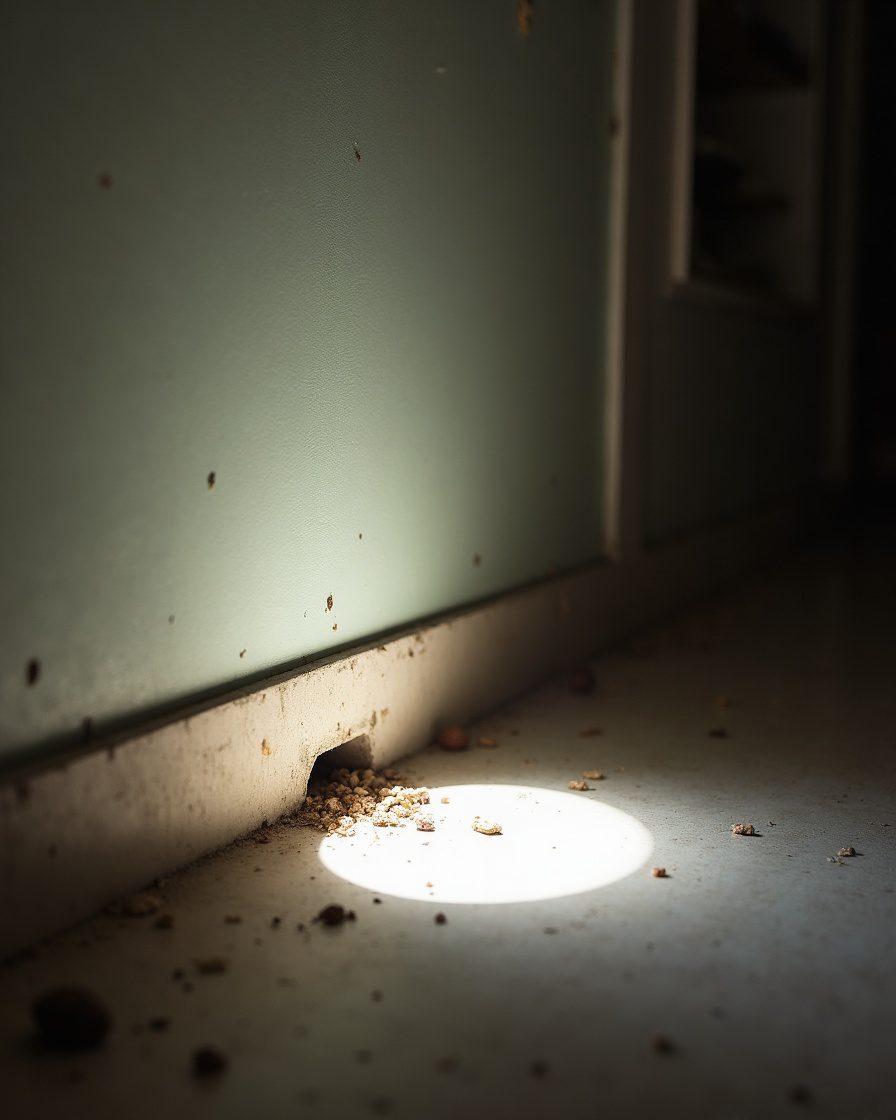
Droppings are the second check. Mouse droppings are rice-grain sized, dark, and pointed at the ends; rat droppings are two to four times larger and blunter. UC IPM lists droppings, fresh gnaw marks, and tracks as the standard evidence set, and freshness matters: soft, dark droppings mean current activity, gray and crumbly ones can be history. When you clean up, follow public health guidance rather than instinct. Never dry sweep or vacuum droppings, because that lifts dust you do not want to inhale. Ventilate, wear gloves, soak the droppings with disinfectant, wipe with paper towels, and bag everything for the trash.
The listening test rounds it out. Tap the wall firmly: mice go silent and resume within minutes, rats stay quiet longer, and a wasp colony may answer with a brief rise in buzzing. Log the hour of each episode for a few days and the pattern usually settles it.
Why sealing the wall first backfires
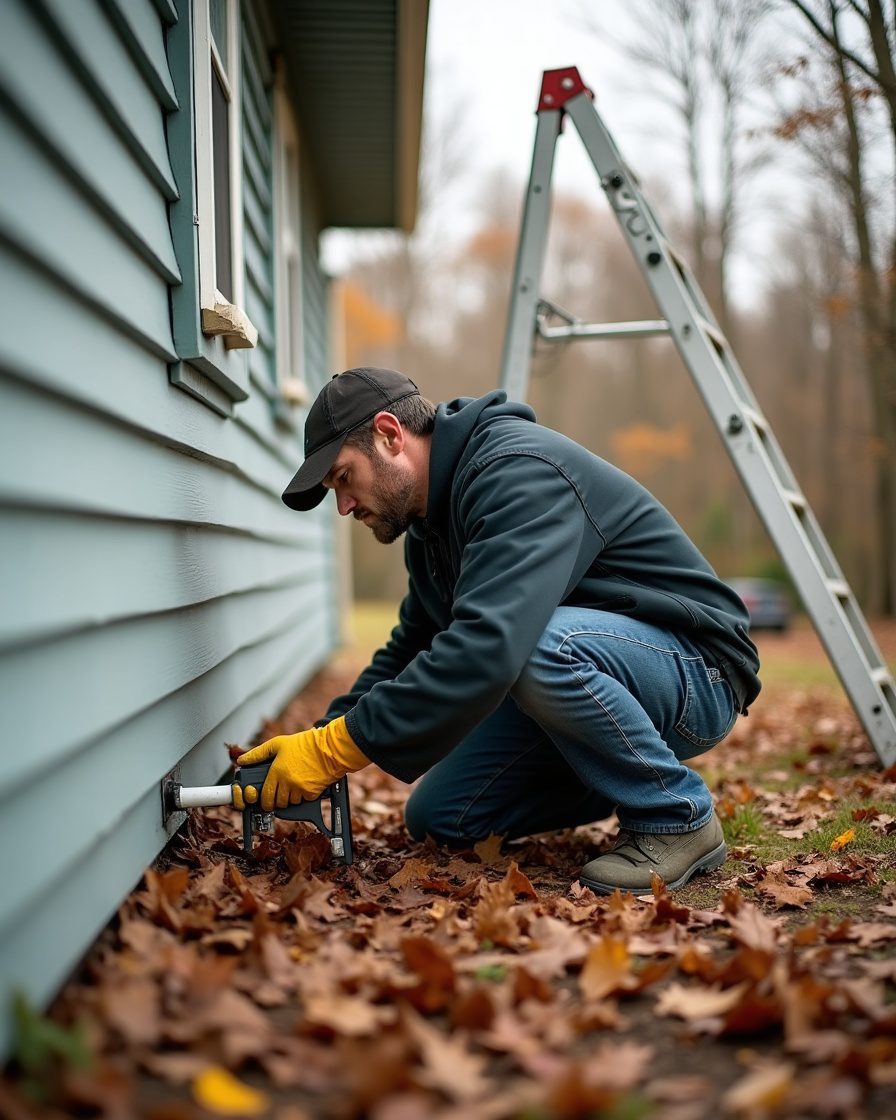
Once you find the entry, the urge to caulk it shut immediately is almost irresistible, and it is the most common self-inflicted wound here. Seal the hole while the animal is inside and you have locked the problem in the wall. A trapped rodent will gnaw a new exit, sometimes into the living space, since its teeth get through wood, drywall, and foam with ease. One that fails to escape dies in the void, and a dead animal inside a wall means weeks of odor and a fly problem in a spot you may have to cut drywall to reach.
The order that works is eviction first, exclusion second. For mice and rats, run traps until you get several consecutive quiet nights with no new droppings and clean tracking patches, then seal. For wildlife, it is the operator’s one-way door process. The University of Kentucky’s pest-proofing framework is built on sealing pests out before they end up inside; the same logic runs in reverse. Late-summer exclusion also beats exclusion attempted in November after the fall wave has moved in, and our step-by-step fall pest-proofing sequence is built around exactly that window.
The fix, in the right order
For mice, the honest playbook is snap traps plus sealing, not poison. Set traps close to walls where the evidence is; UC IPM recommends spacing them about ten feet apart in active areas and using enough to make the trapping period short and decisive. Peanut butter beats cheese, the trigger end goes against the baseboard, and the first two nights usually do most of the work.
Rodenticides deserve real caution inside a home full of hidden voids. A poisoned mouse often dies inside the wall, recreating the dead-animal problem you were trying to avoid, and poisoned rodents can in turn poison the owls, foxes, and pets that eat them. That secondary poisoning risk is a core reason the EPA restricts consumer rodenticide products and requires household baits to sit in tamper-resistant stations that children and pets cannot open. If you use bait at all, use it outdoors in a proper station and follow the label exactly. The broader principle comes from the EPA’s safe pest control guidance: remove the food, water, and shelter that attract pests first, and ask whether you need a pesticide at all.
Then seal like you mean it. Mouse-proofing means closing every gap larger than a quarter inch, and UC IPM is specific that patch material should be metal or concrete rather than anything gnawable, so steel wool or copper mesh backed with sealant beats foam alone. Door sweeps, hardware cloth on vents, and caulk at utility penetrations close the standard routes. Our guide to mouse-proofing a house works through the inspection in order, and the overview of winter pest control for invading bugs covers what else is heading for your walls as temperatures drop.
Common questions
Can scratching in the walls really just be mice? It sounds bigger.
Yes. A wall void acts like a drum, amplifying tiny claws on drywall into something alarming. Size the culprit by droppings and tracks, not by how loud it seems at 3am.
Will the noise stop on its own if I ignore it?
Sometimes it pauses, but rarely for good. Mice that have found warmth and food do not leave voluntarily, populations grow quickly, and the gnawing continues on whatever is in the void, including wiring. Trapping early beats an established infestation.
Should I put poison in the wall or attic?
No. A poisoned rodent tends to die in an unreachable spot, and the odor problem that follows is worse than the scratching. Poison also carries secondary risks to pets and wildlife. Use snap traps indoors, keep any bait outdoors in tamper-resistant stations per the label, and seal after the animals are gone.
What if the scratching is in the wall but I hear buzzing too?
Treat it as a possible wasp nest and do not seal anything. Watch the exterior wall near the sound on a warm afternoon for insects entering a gap, and have a concealed colony treated by a professional before the entrance is closed.
When is this a job for a professional?
Any wildlife goes to a licensed wildlife control operator, and a wall-void wasp nest goes to a pest control professional. For rodents, call in help when trapping does not quiet the walls within a couple of weeks, when droppings suggest rats, or when you cannot find the entry points.
Final verdict
Scratching in the walls at night is unnerving, but it is also information. Light nighttime skittering says mice, heavy gnawing says rats, daytime scampering says squirrels, and buzzing says wasps, and a flour patch plus a droppings check confirms it within a couple of nights. The one move to resist is sealing the hole first, because exclusion with an animal still inside trades a noise problem for a dead-animal-in-the-wall problem. Evict with traps or a licensed wildlife operator, clean droppings wet rather than with a broom, then close every quarter-inch gap with materials teeth cannot beat. Do it in this late-summer window, and the 3am scratching stays a story instead of a season.