Insect eggs are almost impossible to name from appearance alone, because most are small, pale and oval. Where you found them is the identification. Fabric, dry food, timber, damp corners, soil and skin each narrow the list to two or three, and the answer changes what you do far more than the species does.
- In a mattress seam with dark spotting: bed bug eggs, and the spotting matters more than the eggs.
- A capsule rather than a cluster, in a kitchen: a cockroach ootheca, which means breeding rather than a visitor.
- Glued to individual hairs: nits, and distance from the scalp says whether they are live or old.
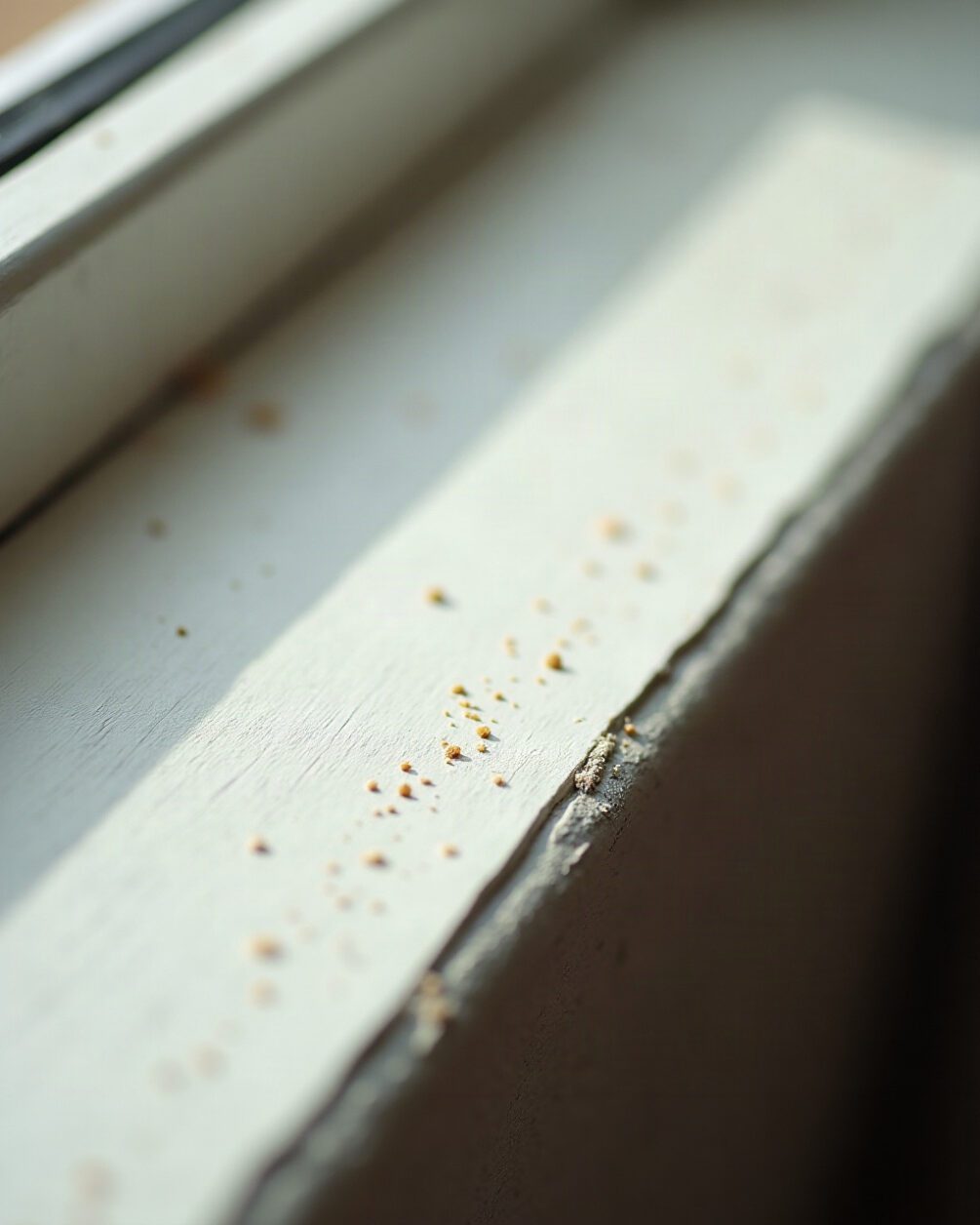
Almost every insect egg is under a millimetre, pale, and oval. Photographed against a fingertip they look alike, which is why searching by appearance fails so reliably. The useful information is circumstantial, and it is information you already have.
Where you found them
| Where | Likely | What it means |
|---|---|---|
| Mattress seams, frame joints, headboard | Bed bug eggs | Breeding on site; look for spotting |
| A brown capsule in a kitchen crevice | Cockroach ootheca | An established population, not a wanderer |
| Wool, felt, stored clothing | Carpet beetle or clothes moth | A fibre source to find and remove |
| Inside flour, rice or cereal | Pantry beetle or meal moth | One contaminated packet |
| Glued to individual hairs | Head lice nits | Distance from the scalp decides if live |
| Damp corners, plaster, paper | Booklice | A humidity reading |
| Compost or soil in a pot | Fungus gnats | Watering habit, not an infestation |
| Small round holes in timber | Wood-boring beetle | A building question, not a housekeeping one |
Bed bug eggs, and why the spotting matters more
Bed bug eggs are about a millimetre, pearly white, and cemented into tight crevices in ones and twos rather than laid in visible clusters. They are genuinely hard to see, and hunting for them is the wrong search.
Kentucky describes bed bugs hiding in seams, folds and crevices near where people sleep. What confirms a population is the dark spotting that bleeds slightly into fabric along mattress piping and frame joints, and the shed tan skins from five moults. Both persist and both are far easier to find than an egg.
Our inspection guide covers the search in order, and the life cycle guide covers how the stages follow each other, which is what makes an egg finding meaningful rather than alarming on its own.

Cockroach eggs are a capsule, not a cluster
This is the most distinctive egg on the list and the most useful to recognise. Cockroaches do not lay loose eggs. They produce an ootheca: a hard brown capsule roughly the size and shape of a grain of rice, with a visible seam along one edge.
Finding one is a stronger signal than finding an adult, because a capsule means reproduction on the premises rather than something that wandered in from a drain. Kentucky notes that German cockroaches shelter in cracks and crevices near warmth and food, and the capsules turn up in the same places: behind a fridge, under a sink, in the corners of a drawer.
Our guide to cockroach eggs covers the species differences, including which ones carry the capsule until it hatches, and the guide to the space behind a fridge covers where to look first.
Fabric pests: two different egg problems
If the eggs are in wool, felt, stored clothing or a carpet edge, there are two candidates and the damage tells them apart better than the eggs do.
Kentucky notes that carpet beetle larvae feed on wool, fur, feathers and other animal products. The eggs are laid near that food and are rarely seen; what you find instead are the bristly shed skins, which usually outnumber the larvae.
Clothes moth eggs are equally hidden, and the giveaway is silk: the larva builds webbing as it feeds, in folds, along collar seams and in the dark corners of a shelf. Our clothes moth larvae guide and carpet beetle larvae guide cover the stage that does the damage, and the wardrobe guide covers reading the holes.
Food, and why the packet is the answer
Eggs in dry goods arrived with the food. Kentucky’s guidance is that stored product infestations usually trace back to a single contaminated item, often something old at the back of a shelf.
That makes the search the treatment: every packet out, checked over a white surface, the source binned, survivors moved to glass. Our pantry pest guide covers the method and the cupboard guide covers what else lives in there.

Nits, which are the one people can test
Head lice eggs are the only ones on this page with a reliable field test. A nit is cemented to a hair shaft and will not slide; dandruff, hair casts and product residue move freely.
Distance matters too. Eggs are laid close to the scalp where the temperature suits incubation, so nits more than about a centimetre out are usually hatched or dead and are a record rather than a diagnosis. Our guide to what lice look like covers the stages, lice versus dandruff covers the test, and the look-alike guide covers why most positive checks are not lice at all.
What is often not an egg
Spider egg sacs are silk parcels rather than visible eggs, and our sac identification guide covers reading them.
Shed skins are hollow husks holding the shape of the insect, with no legs in position. They are evidence of growth rather than of laying.
Frass, droppings and dirt account for a fair share of these searches. Our guide to reading specks separates them, and the test is whether they come back after cleaning.
Common questions
Should I keep a sample?
Yes, if you plan to ask anyone. Clear tape on white paper with the date and the location written beside it is worth more than any description.
They are white and I cannot see any detail.
Normal at this size. Photograph against white paper in macro mode, and let the location do the identifying.
Can I treat eggs directly?
Rarely usefully. Most treatments target the mobile stages, which is why timing and repetition matter and why a single application so often appears to fail.
Final verdict
Stop trying to name the egg and name the place. Mattress seams with spotting means bed bugs. A hard brown capsule in a kitchen means a cockroach population rather than a visitor. Eggs in wool means a fibre source to find. Eggs in flour means one packet to bin. Cemented to a hair means a nit, and how far from the scalp says whether it still matters. The location is the identification, and it is also the instruction.