Flea larvae are two to five millimetres, off-white, legless and blind, and they avoid light by burrowing deep into carpet pile and upholstery. They do not bite and are not on the animal. What they eat is the droppings of adult fleas, which is why an infestation sustains itself in the floor rather than on the pet, and why vacuuming does more than most people expect.
- You will rarely see one: they move away from light and sit at the base of the pile.
- They eat flea dirt, the adults’ droppings, which is what makes the carpet the reservoir.
- Vacuuming is genuinely effective against this stage and against the pupae it becomes.
Most people picture a flea problem as the adults on the animal. The adults are a small minority of it. Understanding the larval stage explains almost everything people find confusing about fleas, including why a treatment that worked appears to fail a fortnight later.
What they look like
Two to five millimetres depending on stage, off-white to pale cream, and legless, moving by wriggling rather than crawling. The body is segmented and sparsely bristled, with a slightly darker head end.
Under magnification you can often see dark material through the body wall, which is the flea dirt they have eaten.
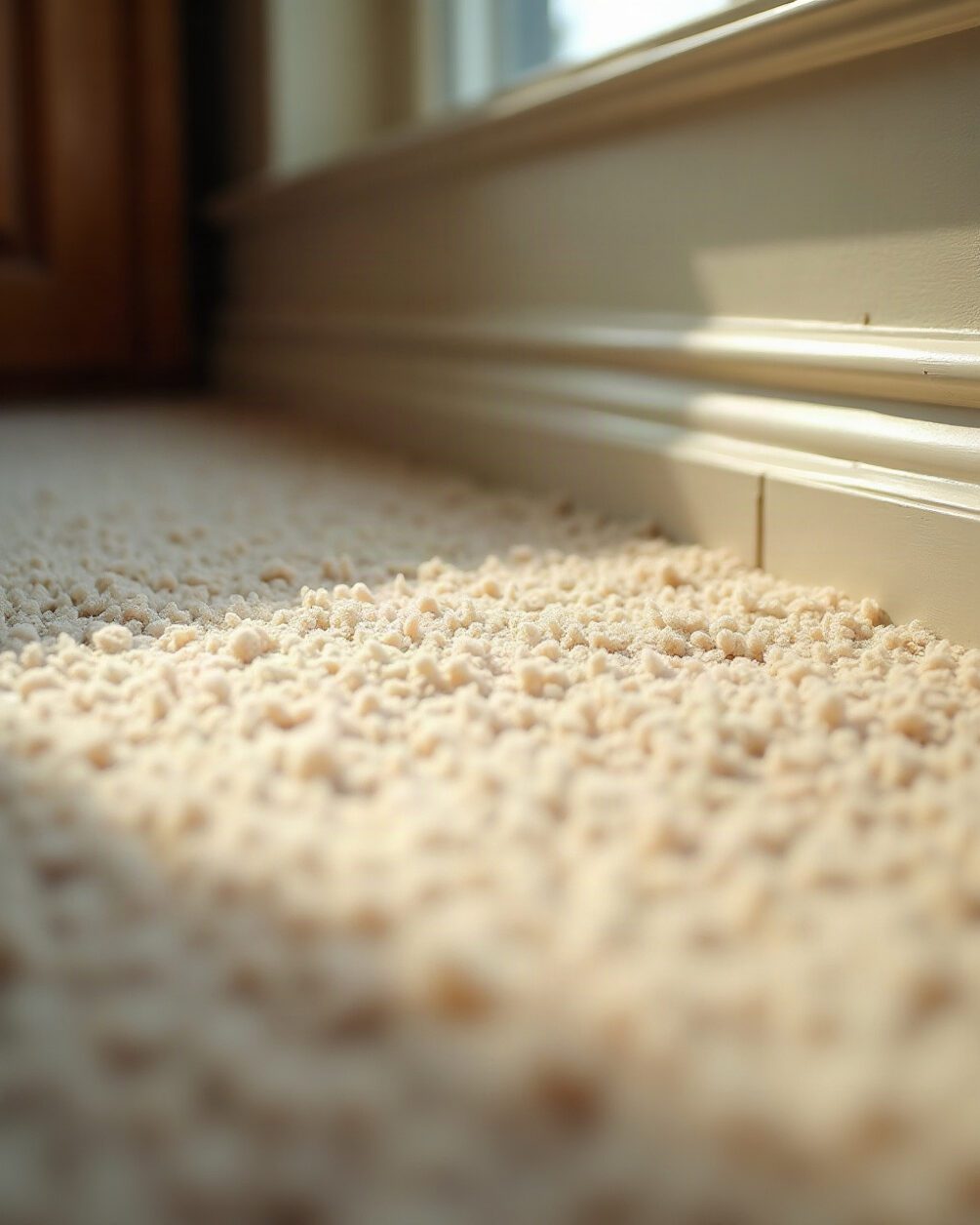
They are negatively phototactic, which is a formal way of saying they actively move away from light. That is why they are not on the carpet surface and why parting the pile with a torch shows so little. They sit at the base of the fibres, in the gaps between floorboards, under furniture and along skirting junctions.
What they eat, and why it matters
Flea larvae do not feed on blood and cannot bite. They eat organic debris and, critically, the droppings of adult fleas, which are largely digested blood.
That single fact restructures the whole problem. The adults feed on the animal and defecate; the droppings fall where the animal rests; the larvae live in that debris. The carpet is not somewhere fleas happen to be. It is where the population actually lives.
Kentucky’s guidance is that pets acquire fleas from kennels, groomers, strays and wildlife, and UC IPM is explicit that management depends on treating the pet with the environment as a secondary target. Both hold, and the larval stage is why the environment cannot be skipped entirely.
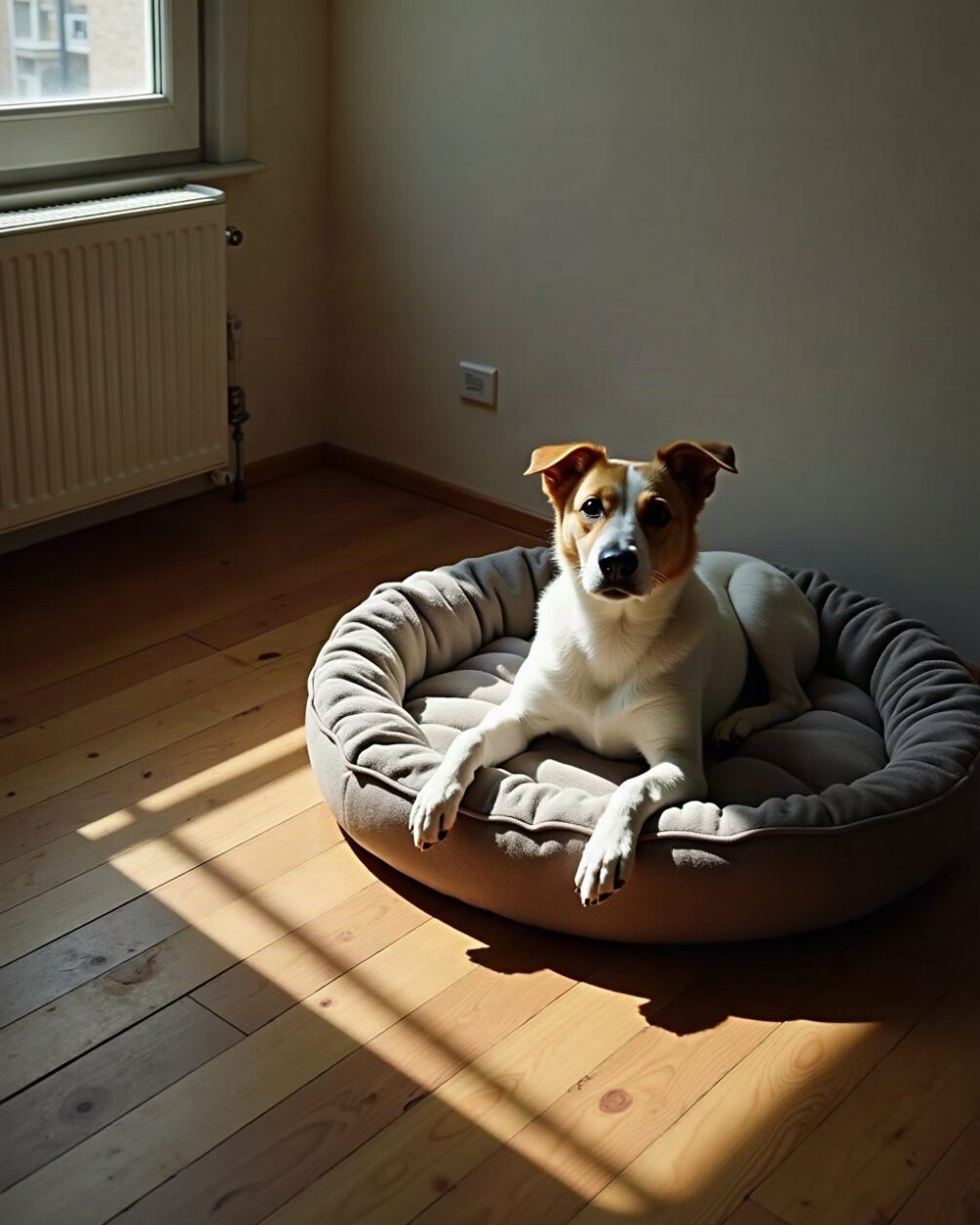
Where they are, precisely
Not evenly across the floor. Concentrated where the animal spends time, because that is where the droppings fell.
A pet bed, and the floor immediately around it.
A favourite chair or sofa, including under the cushions and inside the base.
Along skirting boards in rooms the animal uses, where debris collects.
Between floorboards and at the edges of fitted carpet.
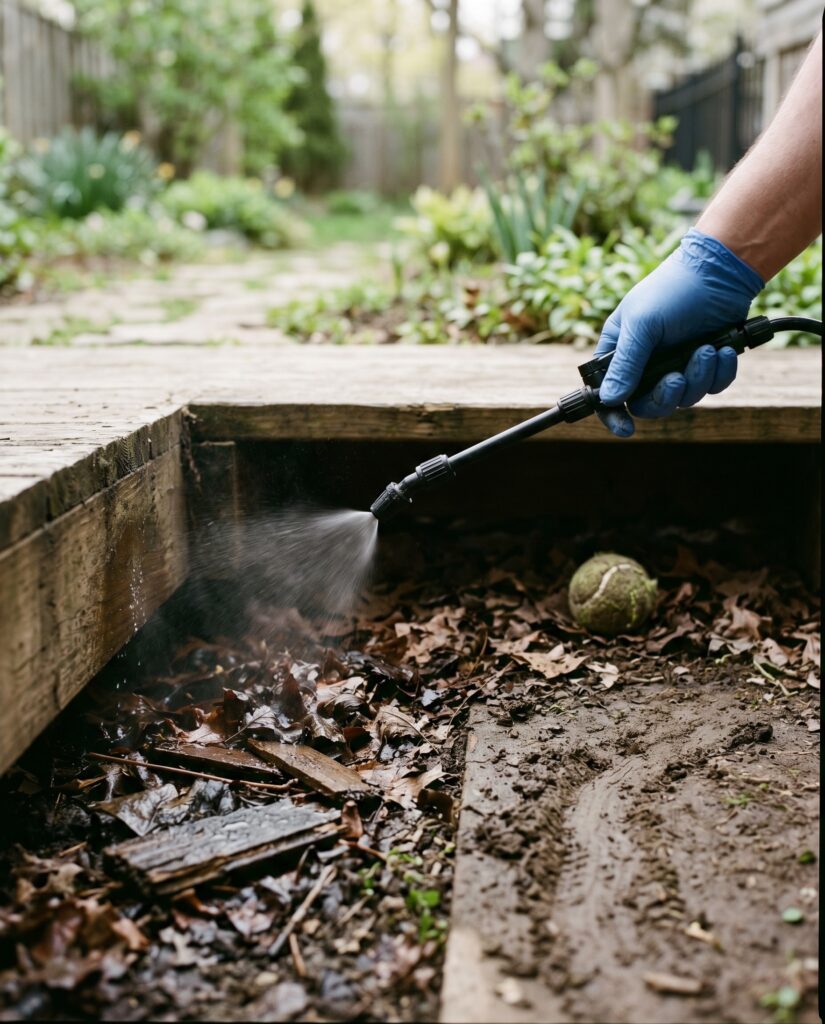
Shaded outdoor spots where an animal lies: under a deck, a porch, a shrub.
Our carpet guide covers the three things that live in a carpet and how to tell them apart, and the upholstery guide covers the sofa, which is the one people forget.
The pupa, and the fortnight problem
After feeding, the larva spins a sticky silk cocoon that picks up dust and fibre and becomes almost invisible. Inside it the pupa waits.
It waits for a signal: warmth, carbon dioxide, vibration. In the absence of a host it can wait for months. That is the mechanism behind two things people report constantly.
A treatment kills every adult and every larva, and two to three weeks later there are fleas again. Not a failure: pupae hatched.
And a family moves into a property that has been empty, and is bitten within days. The pupae had been waiting, and footsteps supplied the vibration.
Our life cycle guide covers the timings, and the egg guide covers the stage that falls off the animal in the first place.
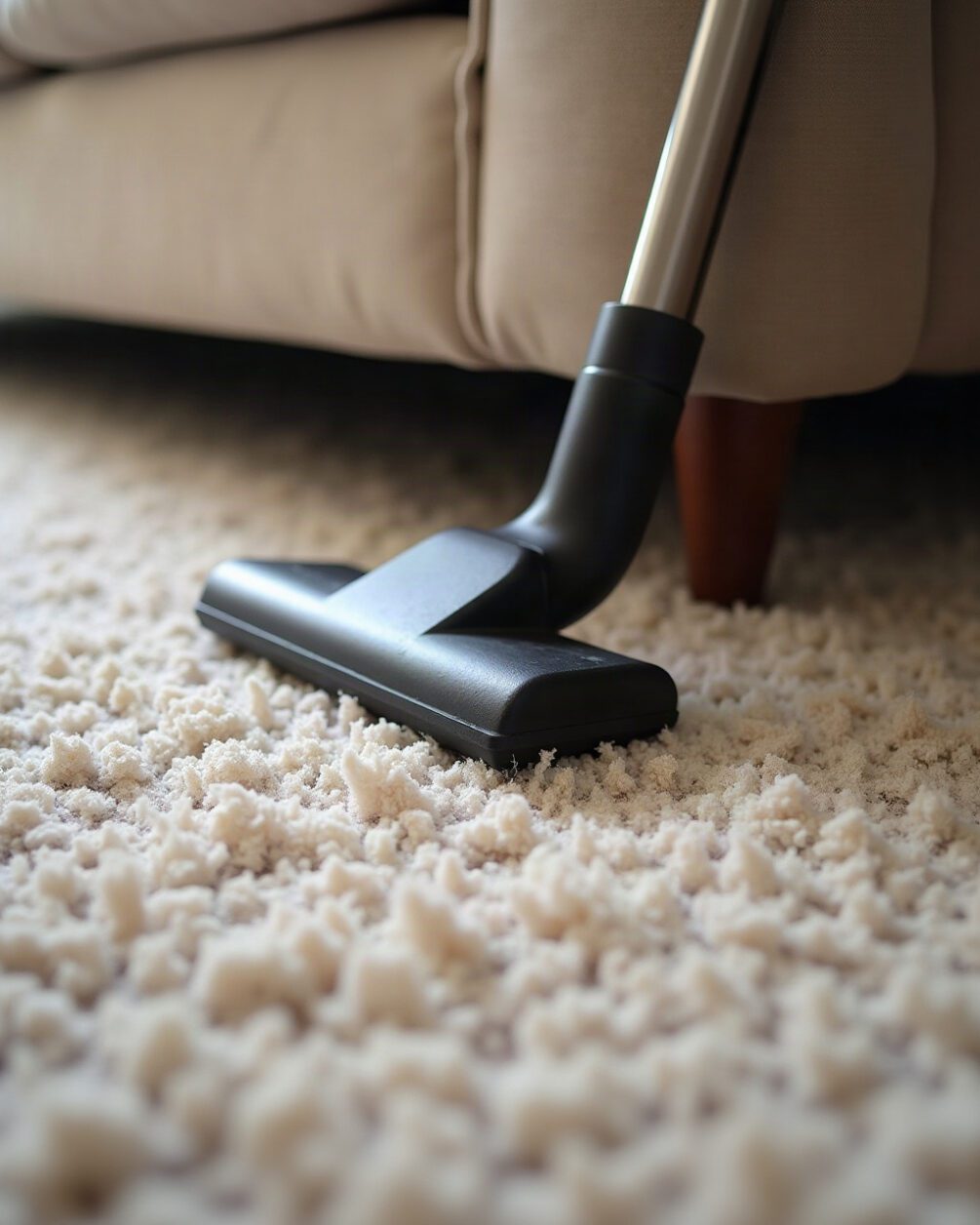
Why vacuuming is not just tidying
Against this stage it is one of the more effective things available, for three separate reasons.
It removes the larvae and the flea dirt they eat, which is the food supply rather than the insect.
Vibration triggers pupae to emerge, bringing them out of the protected cocoon into the open where treatment and further vacuuming can reach them.
It reaches where treatments do not. Deep pile, skirting junctions and under furniture are where the population sits and where a surface spray does least.
Do the edges rather than the middle, move the furniture, use the crevice tool along skirting, and empty the vacuum outside each time. Then repeat, because the pupal stage keeps supplying new adults for weeks.
Our complete flea guide covers the sequence, which is animal first, then the resting places, then persistence.
Common questions
Can flea larvae bite?
No. They have no mouthparts for it and no interest. Bites come from the adults, and our flea bites guide covers the ankle-height pattern.
Are they on my dog?
No. Eggs fall off the animal within hours, so every stage except the adult is in the environment.
I cannot find any.
Expected. They avoid light and sit at the base of the pile. Confirm the infestation with flea dirt on a damp paper towel after combing the animal, or with a bowl of soapy water under a lamp overnight, which our guide to flea look-alikes covers.
Final verdict
The larva is the stage that makes fleas hard: legless, blind, hidden at the base of the carpet, and eating the adults’ droppings rather than blood. That is why the reservoir is the floor rather than the animal, why the resting places matter more than the middle of a room, and why vacuuming earns its place. Treat the animal, work the edges where it sleeps, and expect a second wave two to three weeks in from pupae that were never going to be reached the first time.