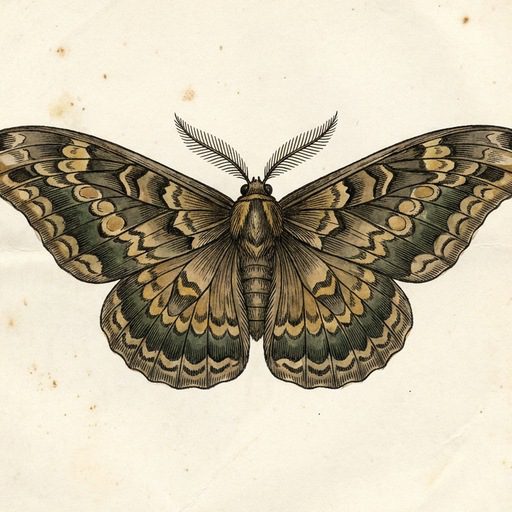
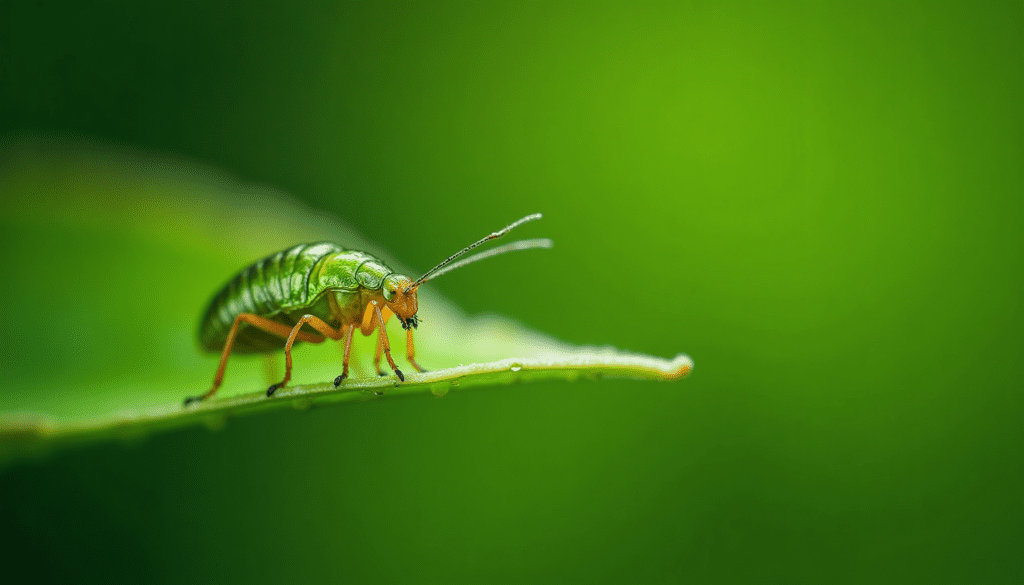
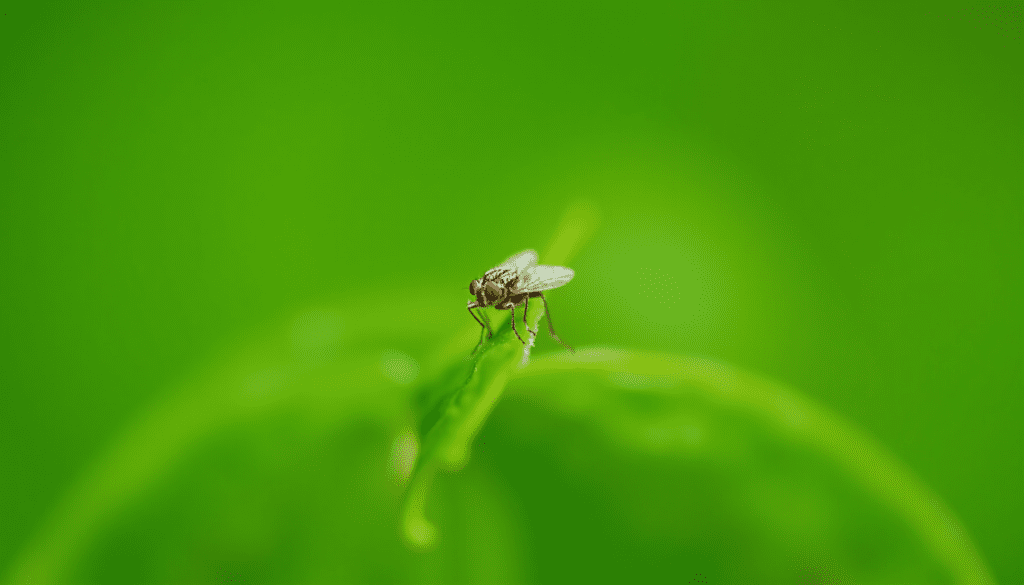
The shape names the culprit. Neat semicircles cut from the leaf margin are leafcutter bees, which are harmless. Ragged holes with green pellets below are caterpillars or sawfly larvae. Many small round shot holes are flea beetles. Veins left as lace is skeletonising, usually beetle larvae feeding in groups. Irregular holes with a silvery slime trail are slugs or snails. Pale winding tracks inside the leaf are leaf miners, and no hole is involved at all.
- Look at the edge of the damage. Clean cuts, ragged tears and rasped patches are different mouthparts.
- Frass below points straight up at whatever made it.
- Most of this needs no action. Established plants tolerate heavy leaf loss.
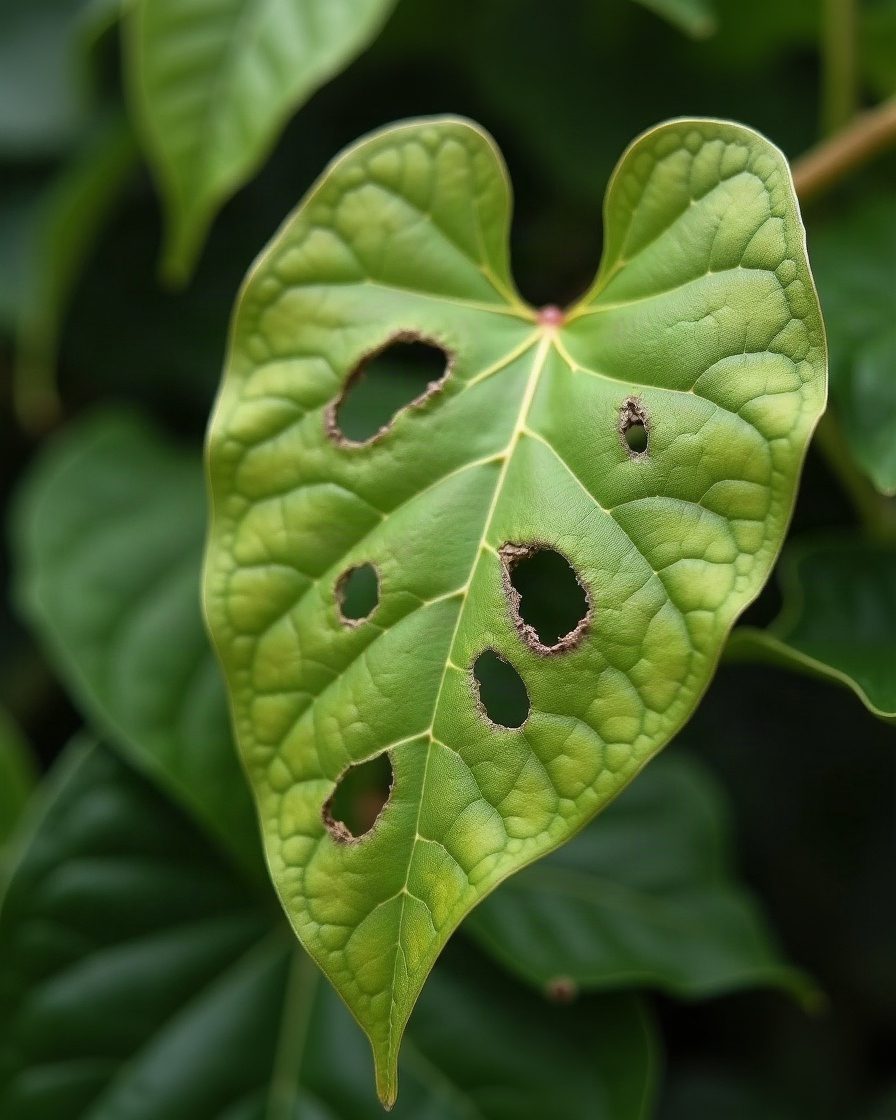
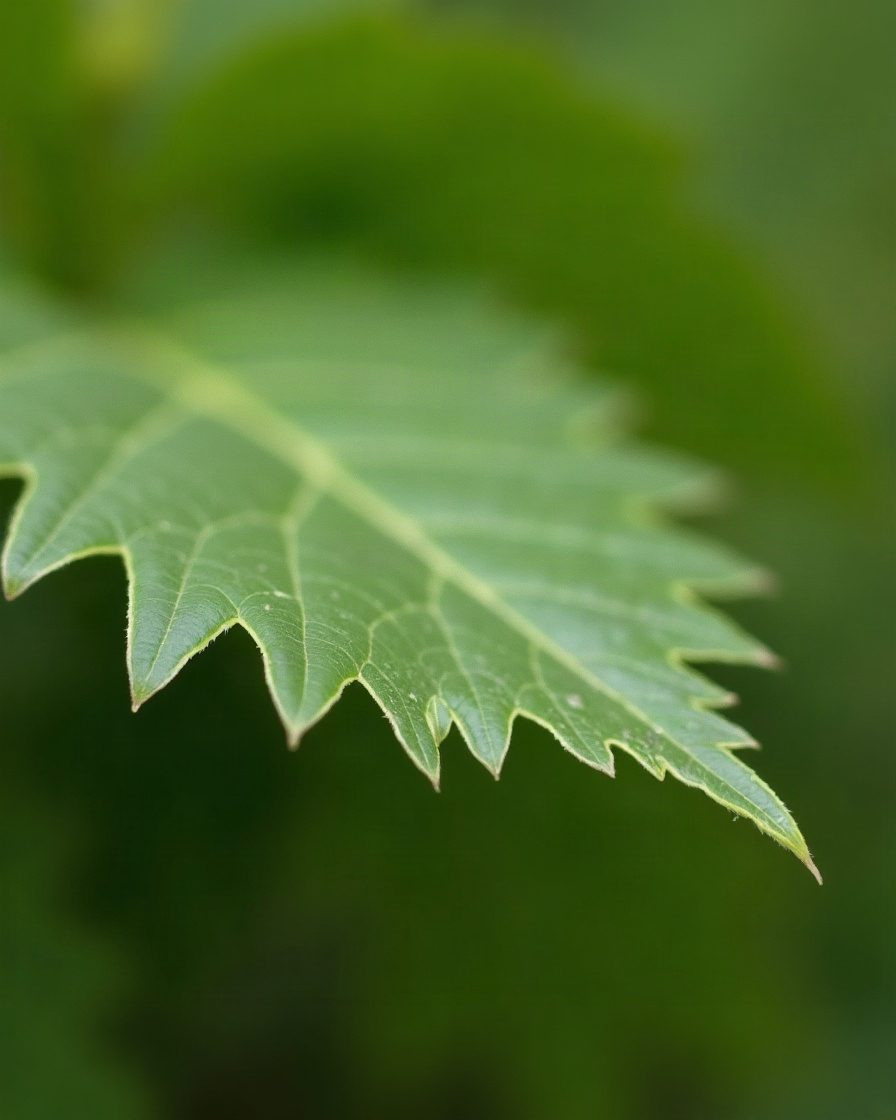
Leaf damage is usually discovered after the animal has left, and searching the plant in daylight is the least efficient way to identify it. The damage itself is more informative, because different mouthparts leave different edges.
Working from the shape
Neat semicircular or oval pieces cut from the leaf margin. Leafcutter bees. The cuts are startlingly clean, as though made with a punch, and they are taken from the edge inward. The bee uses the pieces to line a nest cell. This causes no meaningful harm to the plant and the bee is a valuable pollinator, so the correct response is to leave it entirely alone. Roses, wisteria and redbud are frequent targets.
Ragged, irregular holes in the leaf blade, with green or dark pellets below. Caterpillars or sawfly larvae. The pellets are the confirmation and the locator, since frass falls straight down. Caterpillar frass in the garden covers reading it, and types of caterpillars covers the animals. To tell the two groups apart, count the fleshy prolegs along the abdomen: five pairs or fewer means a caterpillar, six or more means a sawfly.
Many small round holes, as though the leaf had been peppered with shot. Flea beetles. Small, dark, and they jump when disturbed, which is where the name comes from. Damage concentrates on seedlings and on brassicas, and it matters on young plants and rarely on established ones.
The leaf reduced to a lace of veins. Skeletonising. Young beetle larvae and some sawfly larvae feed in groups on one leaf surface, leaving the vein network and the opposite epidermis. Patches of it on adjacent leaves indicate a group feeding rather than a wandering individual.
Irregular holes with a silvery dried trail nearby, worse after rain. Slugs and snails. They rasp rather than bite, so edges are smoother and the damage often starts within the leaf rather than at the margin. Feeding is nocturnal, so a torch at night confirms it.
A pale winding tunnel within the leaf, with no hole at all. Leaf miners. The larva feeds between the upper and lower surfaces. Squeezing the end of the track will often find it.
Stippled pale dots rather than holes, sometimes with fine webbing on the underside. Not chewing at all: sap feeders such as spider mites and thrips. The response is different, and UC IPM’s guide to aphids covers the neighbouring sap-feeding group and the sticky honeydew that goes with it. See also types of aphids.
Look at night
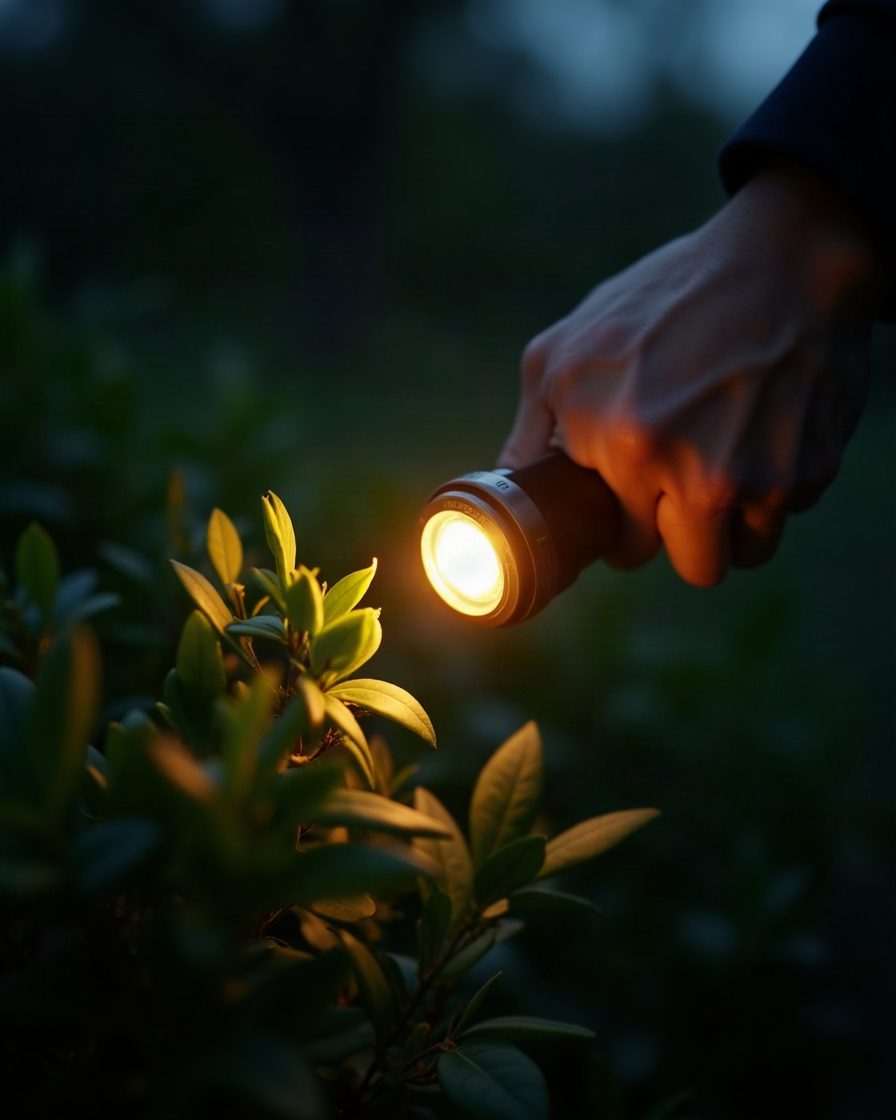
This is the single most useful piece of practical advice on the subject. A large share of leaf feeders, including most slugs, many caterpillars and several beetles, feed after dark and hide by day in leaf litter, under pots, in stem junctions or in the soil.
Take a torch out at around ten in the evening and look at the plants that are being damaged. The animals will be on them. This is faster and more conclusive than any amount of daytime searching, and it takes five minutes.
Where to look in daylight
If night is not practical: leaf undersides first, then stem junctions and leaf axils, then the growing tip, then the top few centimetres of soil and under the pot rim. Rolled or tied leaves should be opened, since several species feed inside them.
For houseplants the same applies, and what lives in houseplant soil covers the pot side of it.
What is not an insect
Several things produce holes and are not eaten at all.
Fungal leaf spot kills tissue that then falls out, leaving a hole with a discoloured ring or a distinct border around it. Insect damage has no such margin.
Hail and physical damage produce tears and holes concentrated on upper surfaces and on exposed plants, with no pattern relating to leaf structure.
Chemical scorch from spray drift or fertiliser produces browning and holes in the affected zone only.
If the hole has a coloured or dead border, suspect disease rather than an animal.
Deciding whether to act
Most leaf damage in a garden is cosmetic and needs nothing. A plant can lose a substantial fraction of its leaf area and recover completely. Three questions decide it.
Is the plant young or established? Seedlings and newly planted stock can be killed by damage an established plant would shrug off. Flea beetle damage on brassica seedlings is worth acting on; the same damage on a mature plant is not.
Is the damaged part the crop? Holes in the leaves of a fruit tree matter far less than holes in salad leaves.
Is it spreading fast? A group of skeletonising larvae can defoliate a small shrub in days, where a single caterpillar will not.
Where action is warranted, hand removal at night is the most effective and the least damaging option, and the frass has already narrowed where to look. Broad-spectrum insecticide is the poor choice: it removes the parasitic wasps, ground beetles and predatory bugs that keep these populations down, and the pests recover faster than their predators. That is precisely the calculation the EPA sets out in its guidance on whether a pesticide is needed at all.
Common questions
Something is eating my hosta to shreds. Slugs, almost certainly, and a torch at night will prove it in one visit.
The holes appeared overnight. Consistent with nocturnal feeding, and with slugs in particular.
Only the new growth is affected. Suggests a sap feeder or a flea beetle rather than a caterpillar, both of which favour tender tissue.
Is it worth identifying precisely? Only if you intend to intervene. If the plant is established and the damage is cosmetic, the identification is interest rather than necessity.
The bottom line
Read the edge of the hole, look for frass below it, and go out with a torch at night. Those three steps identify almost all leaf damage. Then be slow to act, because on an established plant most of this resolves itself, and the semicircles cut from your rose leaves are the work of a bee you want to keep.