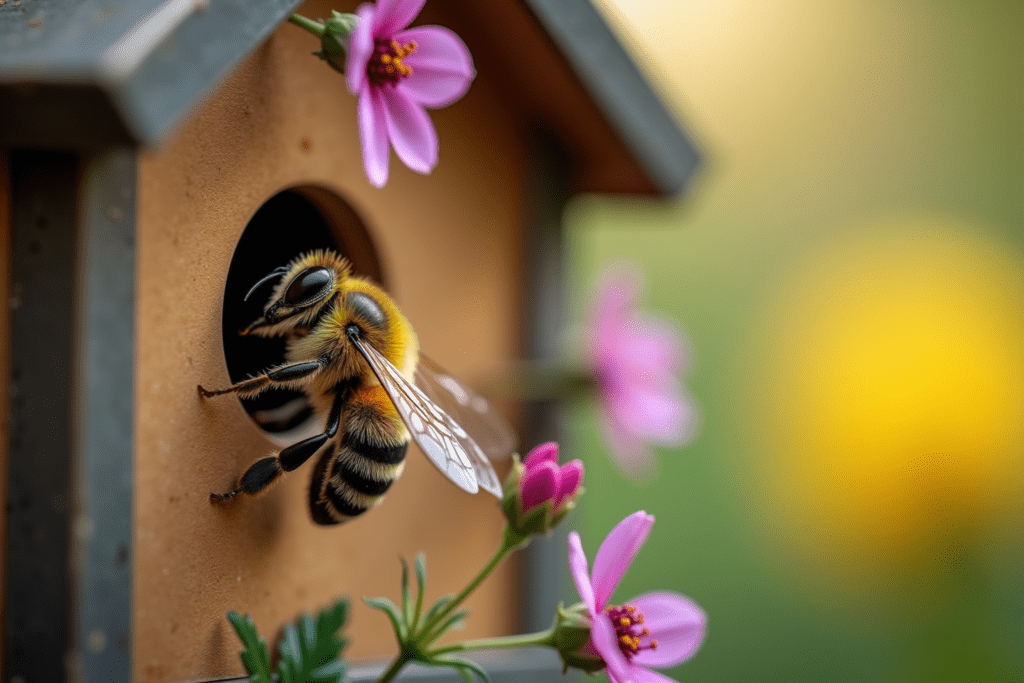
Finding a buzzing cluster in a tree or bees slipping in and out of a tiny crack can be unsettling, especially in areas where Africanized honey bees are established. These bees are often called “killer bees,” but the real story is simpler and more useful: they are honey bees that can defend their nest faster, in greater numbers, and for longer distances than many managed European honey bee colonies. This guide explains what they are, where they live, how to reduce risk around your home, and exactly what to do if a defensive colony is disturbed.
Quick answer: what makes Africanized honey bees different?
Africanized honey bees are hybrid honey bees that look like typical honey bees but tend to defend their nest more intensely when disturbed. Their venom is not “stronger” per sting – the danger comes from more stings.
Here’s the fast, practical summary:
- What they are: Hybrids of African honey bee ancestry (Apis mellifera scutellata) and European honey bee strains (Apis mellifera).
- How they look: Not reliably identifiable by sight. Many colonies look identical to European honey bees.
- Where they’re found: Common in parts of the southern U.S. (notably the Southwest and Gulf regions) and widespread through much of Central and South America.
- Main risk: Defensive behavior near the nest – quicker response, more bees involved, longer pursuit.
- Key safety rule: Treat any feral honey bee nest in an Africanized region as potentially Africanized and keep your distance.
What are Africanized honey bees (and why the “killer bee” label misleads)
If you’ve heard Africanized honey bees described like a different species, you’re not alone. In reality, they’re still the western honey bee (Apis mellifera), just with a different genetic mix that can shift behavior.
According to the Center for Invasive Species Research at UC Riverside, African honey bees were imported to Brazil in the 1950s to support beekeeping in tropical conditions. Some colonies escaped, interbred with European honey bees already present, and spread over decades through the Americas. That spread is why you can have a continuum today – some colonies act more “European-like,” others more “Africanized-like,” and many fall in between.
Myth check: “Their venom is more toxic”
This is the biggest misconception. Multiple extension and agency resources emphasize the same point: the venom per sting is not more potent. The medical problem is that a defensive colony can deliver many stings quickly. Guidance from the Utah State University Extension and the California Department of Food and Agriculture consistently frames risk around sting numbers and exposure time.
Why you can’t “just look” and know
Many readers want a visual checklist – bigger, darker, different stripes. Unfortunately, that’s not reliable. The Ohio State University Extension BYGL notes that identification often requires morphometric measurements (like wing and leg proportions) and, when needed, genetic testing. For homeowners, the practical takeaway is straightforward:
If it’s a feral honey bee colony in an area with Africanized genetics, treat it with caution and avoid DIY removal.
Visual: Africanized vs European honey bees (what actually differs)
| Feature | Africanized-type tendency | European-type tendency | What you can use in real life |
|---|---|---|---|
| Appearance | Similar | Similar | Not useful for ID without lab methods |
| Nest defense trigger | Lower threshold (noise, vibration) | Often higher threshold | Useful: avoid disturbing cavities |
| Number of defenders | More bees respond | Fewer bees respond | Useful: leave the area fast |
| Pursuit distance | Can be long | Usually shorter | Useful: run to shelter, keep going |
If you’re also trying to confirm whether you’re seeing bees or wasps, start with Bee vs Wasp vs Hornet: Key Differences – many “bee problems” turn out to be yellowjackets.
Where Africanized honey bees live and where they nest around homes

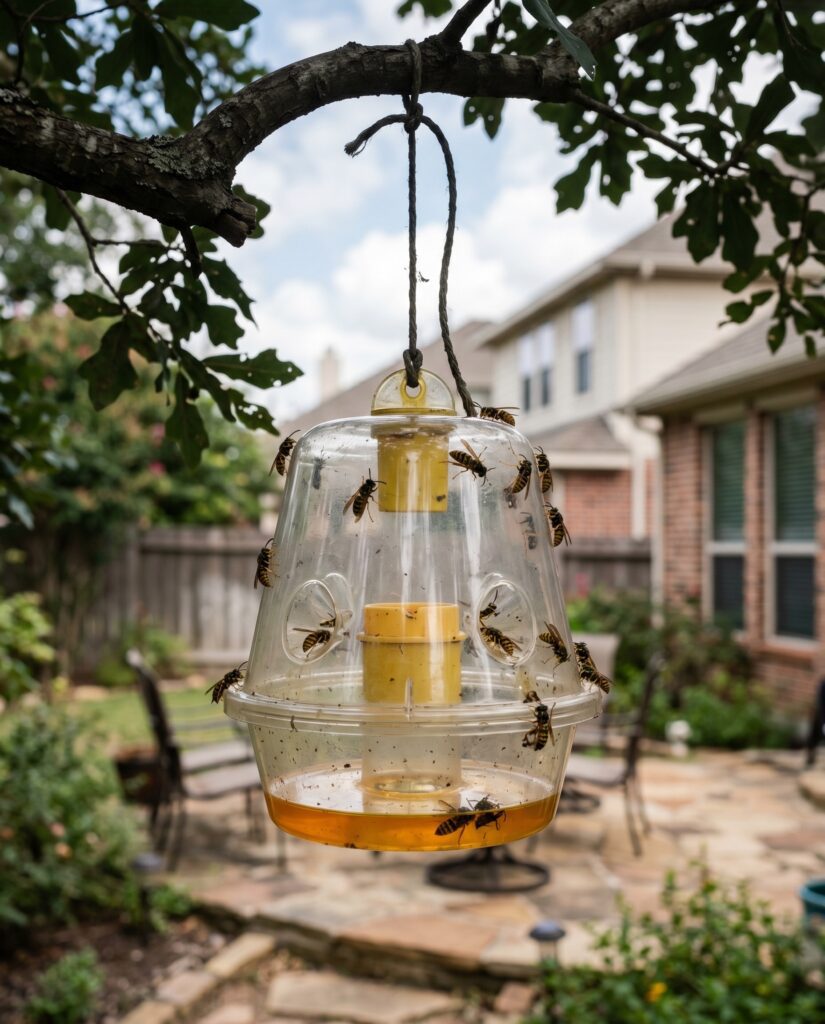
RESCUE! Non-Toxic Wasp, Hornet, Yellowjacket Trap (WHY Trap) Attractant Refill – 2 Week Refill – 3 Pack
This product helps in trapping aggressive bees and wasps, making it relevant for those looking to manage bee populations safely around their homes.
The reason Africanized honey bees show up in headlines is not because they’re everywhere. It’s because they can thrive in warm climates and sometimes choose nesting sites that put them close to people.
In the United States, Africanized honey bees were first detected in Texas in 1990, and established populations now occur primarily across the southern tier of states. The USDA Agricultural Research Service provides an overview of their biology and spread, and national summaries are also available through Invasive Species Information from the National Agricultural Library.
The nesting pattern that surprises homeowners
European honey bees often prefer larger cavities. Africanized populations are more likely to use smaller, more varied spaces, including exposed or “odd” spots. The California Department of Food and Agriculture lists common problem sites that show up again and again in removals:
- Water meter boxes and utility boxes
- Holes in walls, eaves, soffits, and rooflines
- Sheds, barns, and outbuildings
- Old tires, junk piles, buckets, and empty containers
- Under decks and in crawl spaces
- Tree cavities and stacked lumber
Visual: quick “nest site risk” checklist for your property
Walk your yard like a bee would – looking for sheltered voids.
High-risk spots to inspect (spring through fall):
- Utility and irrigation boxes (listen for buzzing before opening)
- Gaps around pipes, vents, and soffits
- Under deck edges and stair stringers
- Stored items that create cavities (tires, tubs, overturned pots)
What “active nesting” often looks like:
- Bees flying in and out of the same hole repeatedly
- A steady “traffic lane” of bees at midday
- A low, constant hum near a wall void
If you keep honey bees or are considering it, this is where local context matters. In regions with Africanized genetics, beekeepers often re-queen to maintain gentler colonies and reduce defensive traits. For beginners comparing gear and safety basics, see Best Beekeeping Starter Kits for Beginners.
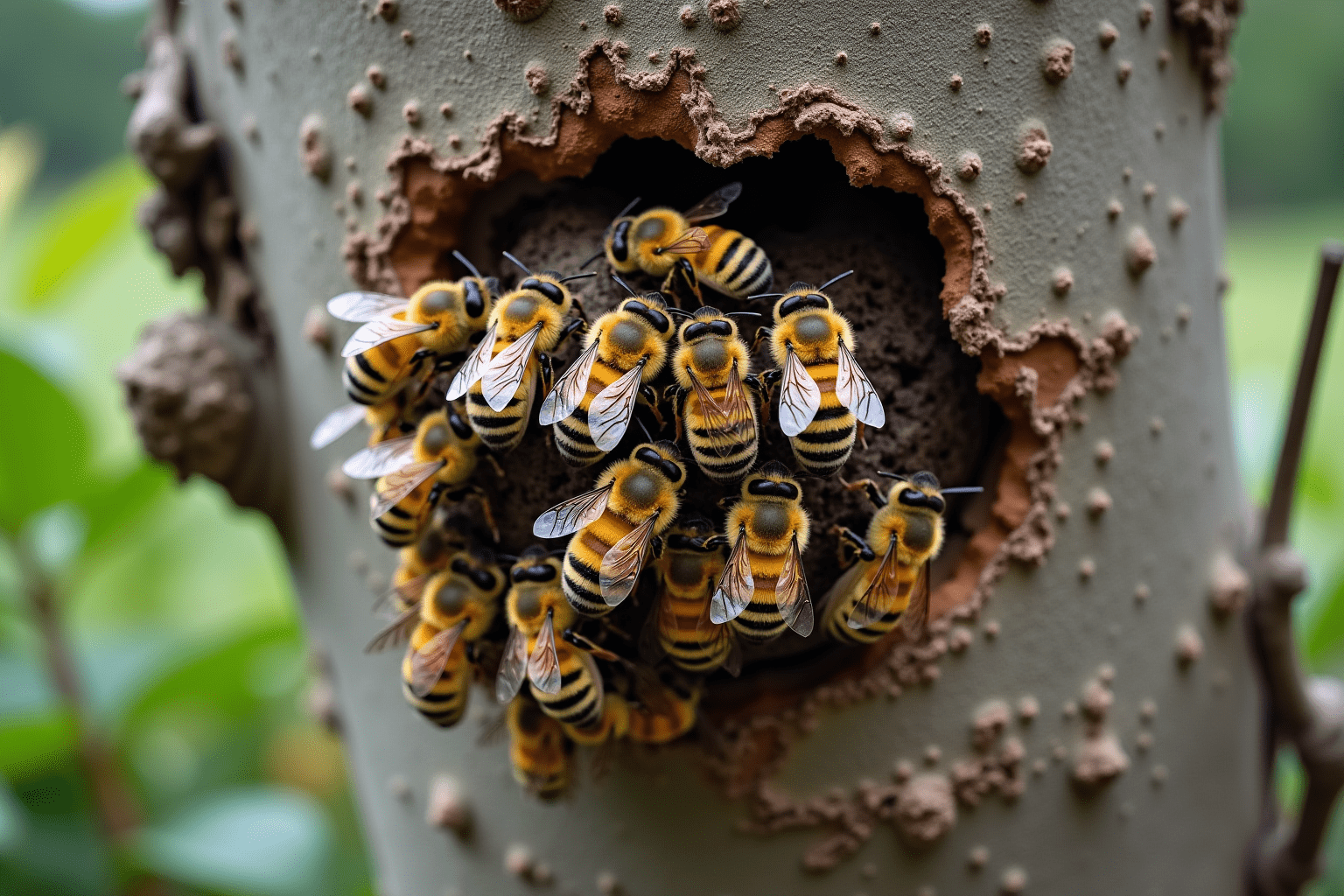
How to prevent Africanized honey bees from nesting near your home (bee-proofing that works)
Terro, Ant Killer Bait Stations T300B – Liquid Bait to Eliminate Ants – Bait System – Stations for Effective Indoor Ant Control, 12 Count
While focused on ants, this product is useful for general pest control in areas where bees might be nesting, helping to create a safer outdoor environment.
Most stinging incidents happen when someone unknowingly gets too close to an established nest. Prevention is about removing nesting opportunities and spotting early signs before a colony settles in.
Think of a honey bee swarm like a house-hunting group. The swarm is temporary, but once scouts choose a cavity and the colony moves in, the site becomes worth defending. The goal is to make your home a bad “listing.”
Step-by-step bee-proofing plan (weekend friendly)
- Seal small openings (bigger than 1/8 inch)
The California Department of Food and Agriculture recommends closing cracks and holes that allow access to wall voids and rooflines. Focus on:
- Eaves and soffit seams
- Gaps around plumbing and cable entry points
- Loose siding edges
- Chimney and attic openings (use appropriate screening)
- Screen vents and utility openings
Use 1/8-inch hardware cloth where appropriate:
- Attic and crawlspace vents
- Rain spout openings
- Utility boxes that can be safely screened without interfering with service access
- Remove “accidental cavities” in the yard
This is the fastest win. Clear or cover:
- Old tires
- Empty buckets and bins
- Stacked materials with gaps (lumber, pallets)
- Unused equipment and trailers
- Do a short weekly check in warm months
From spring through fall, do a 2-minute scan:
- Watch for repeated bee traffic into one spot
- Listen before opening meter boxes
- Check under deck edges and shed eaves
Visual: bee-proofing supply list
- Exterior-grade caulk and backer rod
- Expanding foam (used carefully and only where appropriate)
- 1/8-inch hardware cloth and tin snips
- Work gloves and eye protection
- Flashlight for eaves and crawlspace edges
A note on pollinator-friendly prevention
Bee-proofing is not anti-bee. It’s about keeping colonies out of high-conflict spaces. If you want to support pollinators without inviting nesting in walls, focus on flowers, water sources with landing stones, and habitat for native solitary bees. For context on why bee conservation still matters, read Why Are Bees Endangered? Discover How You Can Make a Difference.
What to do if you see a swarm, find a nest, or get attacked

OGORI 50′ x 50′ Bird Netting Heavy Duty Nylon 3/4″ Mesh Garden Netting Protect Fruit Trees, Plants and Vegetables
This netting can help protect outdoor areas from bees and other pests, making it a practical solution for safety around gardens.
This is the section most people need, and it’s where clear steps beat internet folklore.
First, separate two situations:
- Swarm: a temporary cluster of bees, often hanging on a branch or structure while scouts search for a home.
- Nest (established colony): bees entering and exiting a cavity, often with comb inside a wall, box, or hollow.
The USDA Agricultural Research Service and extension guidance emphasize that swarms are often less defensive than established nests – but both should be given space.
If you see a swarm
- Keep people and pets back.
- Do not spray it with a hose or insecticide.
- If it’s near doors, playgrounds, or sidewalks, contact a local beekeeper association, extension office, or a licensed professional for removal.
If you find an established nest in a wall, box, or structure
- Do not block the entrance. Trapped bees may emerge elsewhere inside the structure.
- Keep children and pets away from the area.
- Call a licensed pest management professional or trained bee removal specialist, especially in regions where Africanized honey bees occur.
If bees start stinging or “boiling out” toward you
Guidance from the Utah State University Extension and the California Department of Food and Agriculture is consistent:
-
Run away immediately
Move fast in a straight line. Do not stop to swat. -
Protect your face and eyes
Use a shirt, jacket, or your hands while moving. -
Get into an enclosed shelter
A vehicle or building is best. Close doors and windows. -
Keep going until the bees stop following
Some defensive events involve pursuit over long distances. If you stop too soon, you can get re-targeted. -
Do not jump into water
Bees can hover and wait. Also avoid hiding in brush or under porches where they can surround you.
Visual: “attack response” one-minute drill
- Run to shelter (car or building)
- Cover face, keep moving
- Once inside, stay put until bees disperse
- Call for help if someone can’t escape or is being stung repeatedly
First aid after stings (and when to seek emergency help)
Once you are safe, remove stingers quickly. Speed matters more than technique. Then wash with soap and water and use a cold pack for swelling.
For a full, step-by-step sting guide, use How to Treat a Bee Sting Effectively.
Call emergency services right away if:
- There’s trouble breathing, swallowing, or facial/throat swelling
- The person feels faint, confused, or has widespread hives
- A known allergic person was stung (even after epinephrine)
- There are many stings, especially in children or smaller adults

Myths vs. facts about Africanized honey bees (and how to stay calm and smart)
Good decisions come from accurate mental models. Here are the most common myths that increase panic or lead to unsafe choices.
Myth 1: “They attack for no reason.”
Fact: They are defensive, not predatory. Most incidents involve people or animals getting too close to a nest, or triggering it with vibration (mowers, weed trimmers, loud equipment). The Ohio State University Extension BYGL notes that behavior varies by colony and conditions, which is another reason to avoid assumptions.
Actionable takeaway: If you’re using power tools near sheds, brush piles, or fence lines, do a quick visual check first.
Myth 2: “You can identify them by color or size.”
Fact: Visual ID is unreliable. Many colonies look identical to typical honey bees. The Utah State University Extension explains that distinguishing them requires specialized measurement or testing.
Actionable takeaway: Treat unknown feral honey bee nests as potentially defensive. Don’t try to “confirm” by getting closer.
Myth 3: “Swarms are the dangerous ones.”
Fact: Many serious stinging events occur at established nests. Swarms are often focused on relocating, though they can sting if harassed. The USDA Agricultural Research Service discusses swarming as part of their spread.
Actionable takeaway: Give swarms space and arrange removal if they’re in a high-traffic spot.
Myth 4: “All bees in the South are Africanized.”
Fact: Many areas have a mix of European, Africanized, and hybrid colonies. Managed hives may be gentler, though mating with feral drones can shift traits over time.
Actionable takeaway: Don’t label every defensive colony. Focus on safety and professional assessment.
Myth 5: “They serve no purpose.”
Fact: They are still honey bees and pollinators. The real-world goal is reducing conflict: bee-proofing structures, educating communities, and managing colonies responsibly.
Actionable takeaway: Support pollinators in low-risk ways (flowers, habitat) while keeping nesting out of walls and utility spaces. If you’re learning bee ID, compare common species in Honey Bee vs Bumble Bee: Discover the Key Differences.
Visual: safe-distance rules that prevent most problems
- Swarms: stay at least 50 feet away, more if people/pets are present
- Active nest traffic into a hole: treat as a hazard zone, keep well back
- Never: poke, spray, or block entrances, especially in utility boxes or walls
Conclusion: respect the nest, reduce risk, and know your next step
Africanized honey bees are not “super-bees,” and they are not out looking for trouble. They are honey bees with a stronger defensive response around their nest, and that single fact explains nearly every practical safety recommendation.
Start by bee-proofing likely nesting sites, especially vents, eaves, and yard clutter. If you find active bee traffic into a cavity, avoid DIY removal and contact a qualified professional. And if a defensive event happens, run to shelter immediately and treat stings promptly.
Next steps: review Bee vs Wasp vs Hornet: Key Differences to confirm what you’re seeing, and keep How to Treat a Bee Sting Effectively bookmarked for fast first aid guidance.
As an Amazon Associate, I earn from qualifying purchases. Product recommendations are based on real reviews and independent research.