Finding the right bee houses can feel confusing because the market is full of decorative “bee hotels” that look great but may be hard to clean and unhealthy for bees. The best options are simple: correct tunnel sizes, a dry roof, a closed back, and nest materials you can remove each year. This guide explains what actually works for mason bees and leafcutter bees, what to avoid, and how to set up and maintain a house so it helps pollinators instead of turning into a parasite trap.
Quick Answer: What are the best bee houses?
The best bee houses are designed for solitary, cavity-nesting bees (especially mason bees and leafcutter bees) and can be cleaned or rebuilt yearly.
Use this checklist to choose well:
- Tunnel length: about 6 in (15 cm)
- Tunnel diameter: 1/4–3/8 in (6–10 mm) with many at 5/16 in (8 mm) for common mason bees
- Back of tunnel: closed (solid stop)
- Nest materials: removable (paper liners, replaceable tubes, or openable wood trays)
- Weather protection: roof overhang, dry interior, angled top
- Mounting: stable, 4–7 ft high, east/southeast facing
- Maintenance: plan to replace liners/tubes or open trays annually and manage pests
If a house has glued-in bamboo, shallow holes, or no way to open it, it is usually a “look-only” product, not a bee-friendly tool.
Why bee houses work (and when they don’t)
A bee house is not a miniature hive. It is a nesting structure for solitary bees that naturally use hollow stems, beetle holes, and cracks in wood. Think of it like offering apartments to a specific kind of renter – helpful when the apartments match what they need, harmful when the building is damp, crowded, and never cleaned.
The bees you are actually helping
Most bee houses mainly support:
- Mason bees (Osmia spp.) – active in early spring, famous for fruit tree pollination
- Leafcutter bees (Megachile spp.) – active later spring into summer, line nests with leaf pieces
- A few other small cavity nesters, depending on your region
These bees are different from honey bees. Honey bees live in large colonies and need big cavities. Bee houses target solitary species, where each female provisions her own nest.
Why it matters for gardens and orchards
Pollination is not just a “nice to have.” A large share of leading food crops benefit from animal pollination, largely by bees and other insects. Research also shows wild insects can improve fruit set more consistently across many field sites than honey bees alone, which is one reason gardeners and growers look for ways to support native pollinators.
Mason bees are especially efficient in orchards. The book-length extension guide How to Manage the Blue Orchard Bee as an Orchard Pollinator from the Sustainable Agriculture Network explains why Osmia bees can be strong performers in apples and cherries when nesting conditions and timing line up.
The hidden downside: “bee hotels” can become pest hotels
Here is the part many product listings skip. If nesting tunnels cannot be opened and cleaned, parasites and pathogens can build up fast. Reviews and guidance from researchers and educators have repeatedly warned that neglected, non-cleanable designs may turn into population sinks.
Practical takeaway: choose a house you can manage. If you want “hang it and forget it,” skip the house and put your effort into flowers and pesticide reduction.
Visual: Bee house reality check (fast table)
| Goal | What helps | What backfires |
|---|---|---|
| More pollinators | Correct tunnel size, dry roof, cleanable nests | Damp houses, shallow holes, crowded mega-hotels |
| Healthier bees | Annual tube replacement or tray opening | Glued bamboo, drilled blocks you cannot open |
| Better garden results | Flowers from spring to fall nearby | Nesting with no food plants around |
Bee houses: the design features that matter most
If you only remember one thing, make it this: bee house design is mostly about dimensions + dryness + cleanability. Everything else is secondary.
1. Tunnel length and diameter (not random)
Many mass-market products use short tubes because they are cheaper and fit small frames. That can skew sex ratios and raise losses.
Entomologists and experienced suppliers commonly recommend:
- Length: about 6 inches (15 cm)
- Diameter: a mix in the 1/4–3/8 inch (6–10 mm) range
- Many mason bees do well around 5/16 inch (8 mm)
A helpful rule: offer fewer sizes, but offer the right sizes. A chaotic mix of tiny and oversized holes often invites wasps or produces poor outcomes.
2. Closed backs and smooth interiors
In nature, a bee uses a tunnel with a solid end. Your tunnels should also have a closed back so the female can start building partitions from the rear forward.
Avoid splintery holes or rough-cut bamboo. Rough interiors can damage wings and make it harder for bees to seal chambers.
3. Removable nesting materials (the non-negotiable feature)
This is where “best” and “decorative” split apart.
Look for one of these:
- Paper liners inside reusable tubes – liners get replaced yearly
- Replaceable paper tubes or natural reeds that can be discarded after the season
- Openable wood trays (routered grooves that separate into layers) so you can harvest cocoons and clean the nest
Avoid:
- Glued-in bamboo bundles
- Solid drilled blocks with no way to open
- Anything marketed as a “bug hotel” stuffed with pinecones and straw as the main feature
A detailed critique of common retail designs is summarized by entomologist Colin Purrington in his guide from Colin Purrington’s insect ecology site.
4. Weatherproofing and mounting
Bees can handle cold. They cannot handle wet. Moisture drives mold and can raise chalkbrood risk.
Use this placement checklist:
- Face east or southeast for morning warmth
- Mount 4–7 ft high
- Fix it firmly to a wall, fence, or post (no swinging)
- Add a roof overhang and keep tunnels dry
- In very hot climates, give afternoon shade to prevent overheating
Visual: Quick “spec sheet” you can screenshot
- Tunnel length: 6 in (15 cm)
- Tunnel diameter: 6–10 mm (1/4–3/8 in), many at 8 mm (5/16 in)
- Back: closed
- Materials: removable liners, replaceable tubes, or openable trays
- Orientation: E/SE
- Height: 4–7 ft
- Stability: rigid mount
- Dryness: roof + rain protection
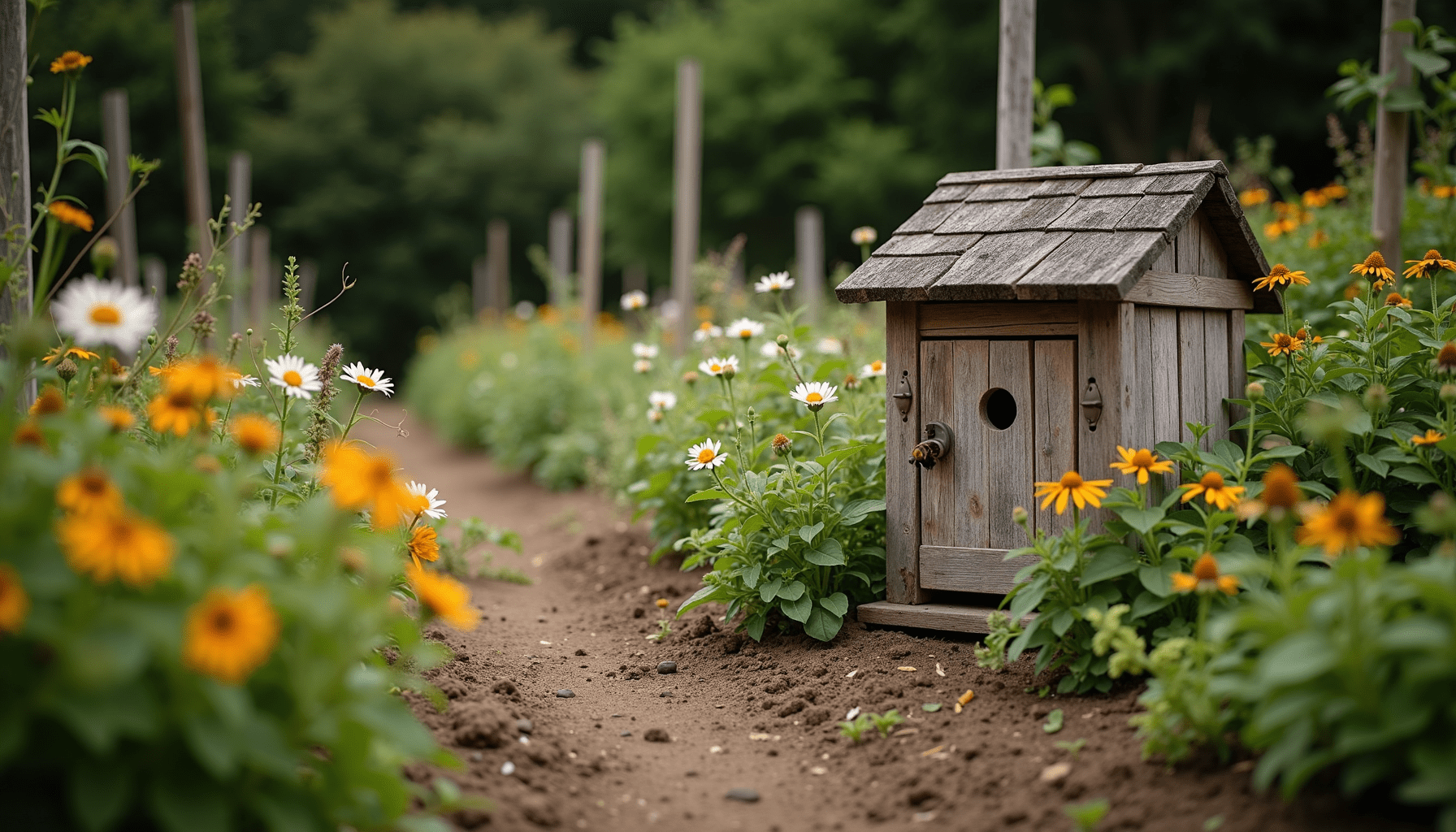
How to choose a mason bee kit without getting burned
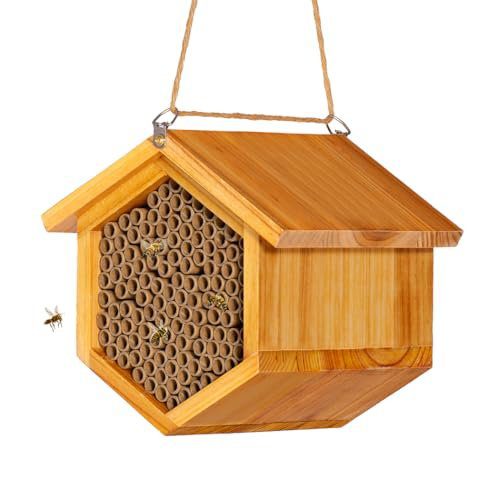
Mason Bee House Wax Coated Bee Hotel, Pollinator House Waterproof, Natural Handmade Wooden Mason Bee Hotel for Pollinating Bees Garden Supplies
This product is a well-constructed bee house that meets the necessary specifications for mason bees, including weather protection and easy maintenance.
Mason bee kits range from excellent education-focused systems to “toy” kits that are fine for curiosity but not great for long-term use. The decision comes down to your goal.
Step 1: Decide your goal (garden support vs. hands-on management)
Ask yourself:
- Do you want to observe bees up close with minimal handling?
- Do you want to grow a healthy local population over multiple years?
- Are you comfortable with annual maintenance (opening, cleaning, replacing)?
If you want multi-year success, choose a kit built around cleanability and clear instructions.
Step 2: Evaluate the kit using a simple scorecard
Visual: Mason bee kit scorecard (use before you buy)
| Feature | What to look for | Why it matters |
|---|---|---|
| Nest length | 6 in (15 cm) | Better brood layout and survival |
| Cleanability | liners, replaceable tubes, or openable trays | Reduces parasites and mold |
| Closed back | yes | Mimics natural cavities |
| Weather protection | roof overhang, dry nesting area | Prevents moisture problems |
| Education | setup + pest management guidance | Most failures are management failures |
| Bee sourcing (if included) | region-appropriate, screened cocoons | Limits disease spread and mismatched timing |
Step 3: Be careful with live bee purchases
Buying cocoons can be useful, especially if your area lacks nearby nesting sites. It can also create problems if bees are shipped long distances or are not region-appropriate.
The Sustainable Agriculture Network’s blue orchard bee manual emphasizes management and timing, which is exactly where many kits succeed or fail.
Practical guidance:
- Prefer suppliers that provide handling instructions, emergence timing, and pest management steps.
- Avoid “mystery species” listings.
- Follow local rules and best practices about moving bees across regions.
A note for beekeepers (honey bees are different)
If your interest is honey bees, a mason bee kit will not replace beekeeping equipment. For that path, see InsectoGuide’s resources on honey bee gear, including Best Beekeeping Starter Kits for Beginners, Best Bee Suits and Protective Gear for Beekeepers, Best Bee Smokers for Effective Beekeeping Practices, and Best Honey Extractors for Home Beekeepers. Those tools are designed for colony-living bees, not solitary cavity nesters.
Setup and yearly maintenance (the part that keeps bees alive)
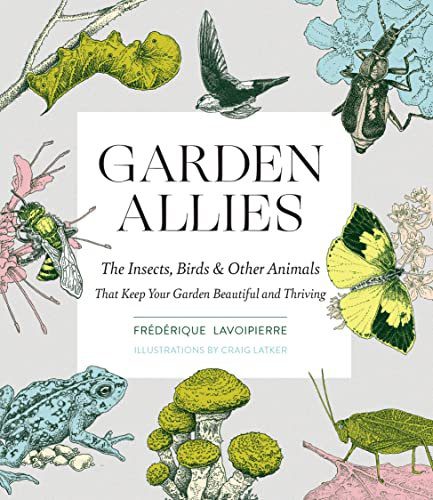
Garden Allies: The Insects, Birds, and Other Animals That Keep Your Garden Beautiful and Thriving
This book provides valuable insights into creating a garden that attracts and supports pollinators, including mason bees, making it a great companion for bee house owners.
A bee house works best when you treat it like a seasonal nesting site, not a permanent structure you never touch. The good news: once you learn the rhythm, the routine is predictable.
When to put it up
Install your house before early spring bloom. Mason bees often emerge when daytime highs hold around the mid-50s to 60°F range (13–16°C), which lines up with fruit trees and early shrubs.
If you hang the house after bloom starts, you miss the peak nesting window.
Where to place it
Choose a spot with:
- Morning sun (east or southeast)
- Nearby flowers (ideally within a few hundred feet)
- A mud source within about 30–50 ft if possible
- Protection from rain and strong wind
Provide mud (mason bees need it)
Mason bees use damp, clay-rich mud to build partitions between brood cells. No mud nearby often means fewer completed nests.
Easy mud station:
- Pick a shallow container or small garden patch.
- Add clay soil if your soil is sandy.
- Keep it consistently damp during nesting season.
Protect against predators and pests
Birds can learn that bee houses are snack boxes.
- Add a 2-inch (5 cm) wire mesh guard arched in front of the tunnels if birds peck.
- Avoid placing houses right next to bright night lighting, which can increase insect activity and predator attention.
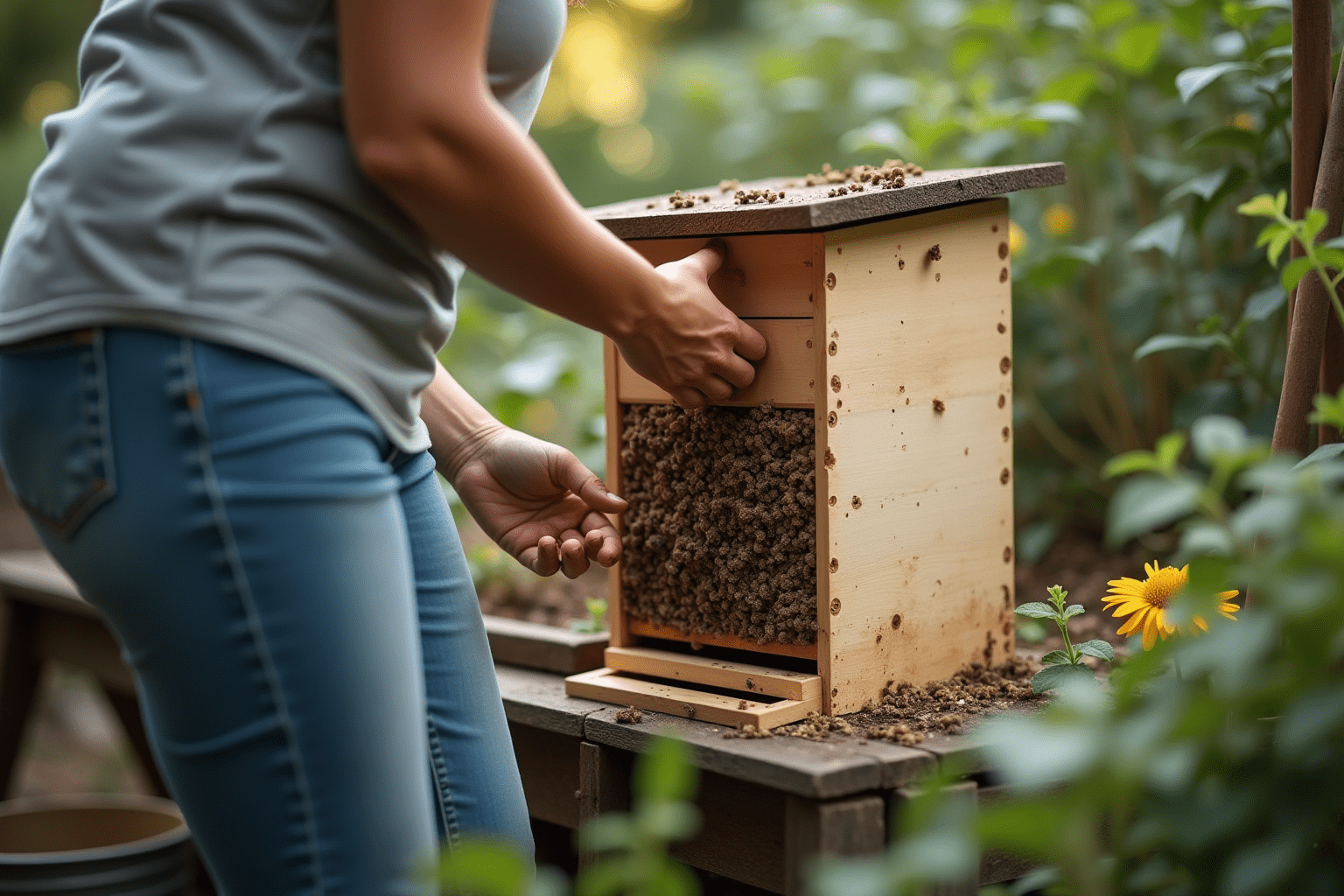
Annual cleaning: the difference between success and failure
Non-cleanable houses accumulate mites, parasitic wasps, and fungal problems over time. Guidance from the Xerces Society’s pollinator conservation resources repeatedly emphasizes pairing nest support with proper management and habitat.
Visual: Yearly schedule (simple checklist)
- Spring: set up house, place cocoons in an emergence area if using them, watch for bird pecking
- Early summer: nesting slows, leave tubes undisturbed and dry
- Fall: open trays or remove liners/tubes, harvest cocoons, discard or sanitize nesting materials
- Winter: store cocoons cool and dry until spring release (follow supplier guidance)
If you are not ready for cocoon harvest and cleaning, choose replaceable paper tubes and discard them each year. It is less efficient, but far better than reusing dirty, sealed tunnels.
How to attract bees beyond the house (food, safety, and nesting variety)
A bee house is only one nesting option for a minority of bee species. Around 70% of bee species nest in the ground, not in cavities. So the best yard for bees looks less like a single “hotel” and more like a neighborhood with restaurants and housing for different lifestyles.
Plant for a long bloom season
Aim for overlapping bloom from early spring through fall:
- Early spring: fruit trees, flowering shrubs, early perennials
- Summer: herbs, native wildflowers, flowering annuals
- Fall: late-season natives like goldenrods and asters in many regions
Native plants usually support local bees best, but any pesticide-free, nectar- and pollen-rich planting helps.
Visual: Bloom planning mini-map (fill in for your yard)
| Season | What you want | Your plants |
|---|---|---|
| Early spring | 3–5 bloom sources | ____ |
| Late spring | 3–5 bloom sources | ____ |
| Summer | 5+ bloom sources | ____ |
| Fall | 3–5 bloom sources | ____ |
Reduce pesticide risk
If you need to treat pests:
- Avoid spraying open blooms.
- Apply at dusk when bees are not flying.
- Use the least-toxic option that will work for your target pest.
For broader pesticide and pollinator safety guidance, the U.S. Environmental Protection Agency’s pollinator protection resources are a solid baseline.
Support natural nesting too
To help more than cavity nesters:
- Leave a few bare or lightly vegetated soil patches for ground nesters.
- Keep some standing dead stems through winter, then cut back in late spring.
- Leave small amounts of dead wood or brush where safe and appropriate.
This spreads nesting sites out, which reduces crowding and can lower parasite pressure compared to one oversized structure.
Conclusion: choose a cleanable house and commit to the yearly rhythm
The best bee houses are not the fanciest. They are the ones built around correct tunnel dimensions, a dry roof, and nesting materials you can remove and replace. Pair that with flowers, a mud source, and low pesticide use, and you give mason bees and other solitary bees a real shot at thriving in your yard.
Next step: pick one small, well-made house, place it correctly, and put a recurring reminder on your calendar for fall cleaning. If you also keep honey bees, compare your goals and gear with InsectoGuide’s Best Beekeeping Starter Kits for Beginners and Best Bee Suits and Protective Gear for Beekeepers so you are supporting both managed and wild pollinators the right way.
As an Amazon Associate, I earn from qualifying purchases. Product recommendations are based on real reviews and independent research.