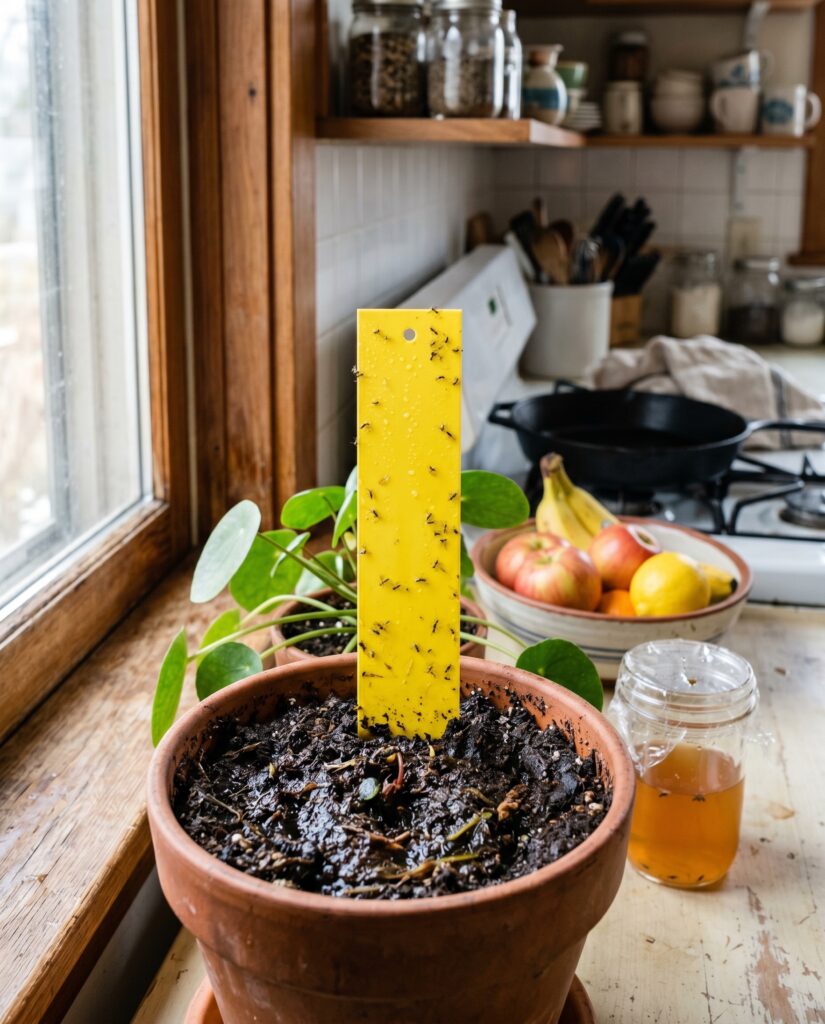
Finding wriggling larvae in a compost bin or trash can is unsettling, but the black soldier fly is usually a good sign, not a bad one. In most warm-season backyards, black soldier fly larvae (BSFL) are nature’s fast clean-up crew – they can turn food scraps into a smaller amount of residue while producing protein-rich larvae you can harvest. This guide shows how to identify black soldier flies at every life stage, how black soldier fly composting works, and how to run a low-odor bin safely.
Tiny black bugs in the house is the fuller treatment of the five dark ones and where each turns up.
Bottom line: Black soldier fly composting works when larvae get the right food scraps, moisture, drainage, and warmth. The goal is not to kill the flies, but to manage the larvae as fast composters.
- Keep the bin moist, not wet or anaerobic.
- Feed fruit, vegetable scraps, and grains in controlled amounts.
- Avoid meat, oily food, salty food, and pesticide-contaminated material.
Quick answer
If you’re seeing a black soldier fly in or near compost, here’s the practical takeaway: keep the bin moist-but-not-wet, feed in small amounts, and let the larvae do the work. In a well-run system, BSFL can reduce food waste mass quickly (often within 10-14 days in warm conditions) and the adults are not “houseflies with a different paint job.”
Black soldier fly ID at a glance
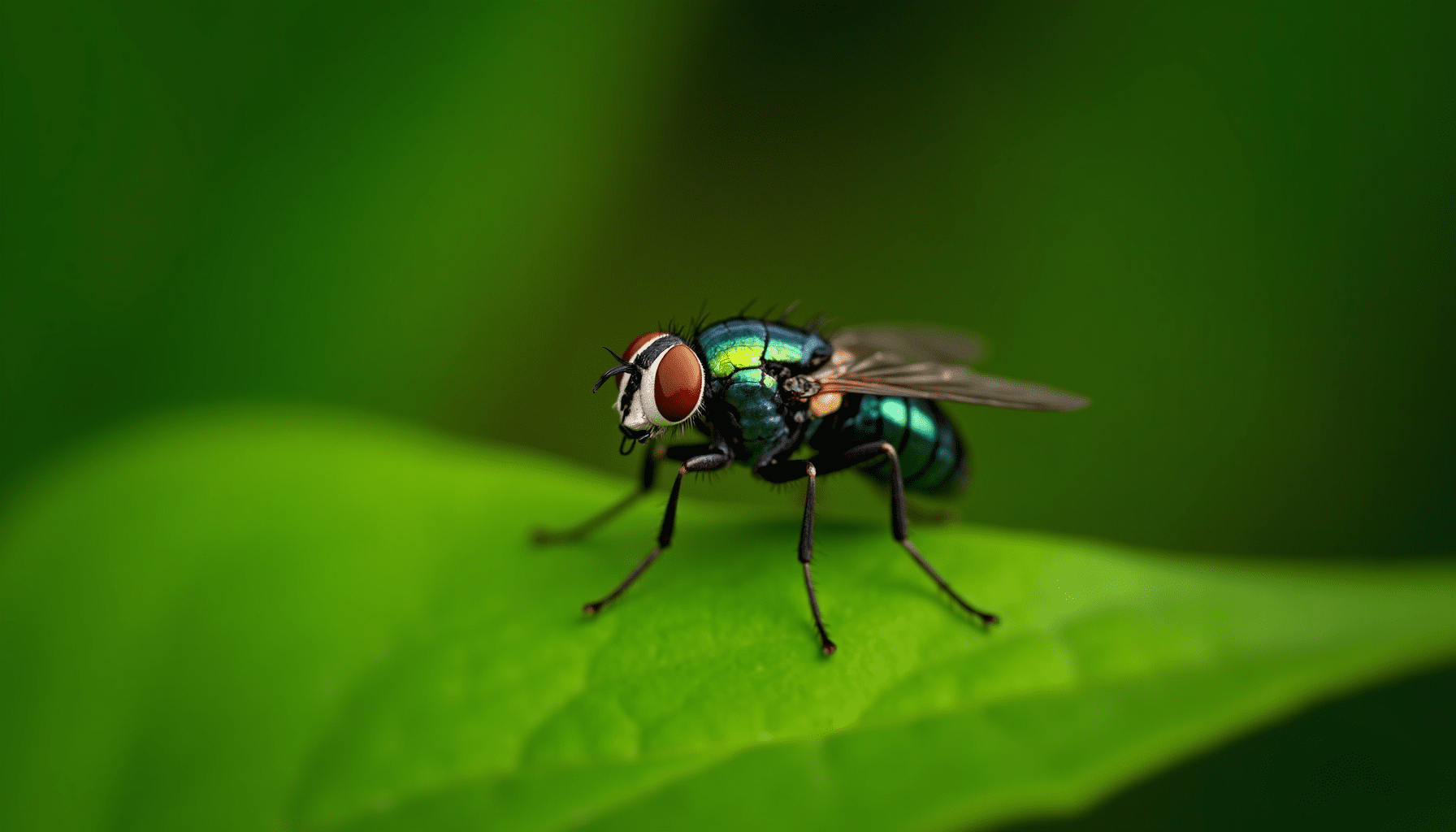
- Adult: wasp-like black fly, ~15-20 mm long, smoky wings, often with translucent “windows” on the abdomen
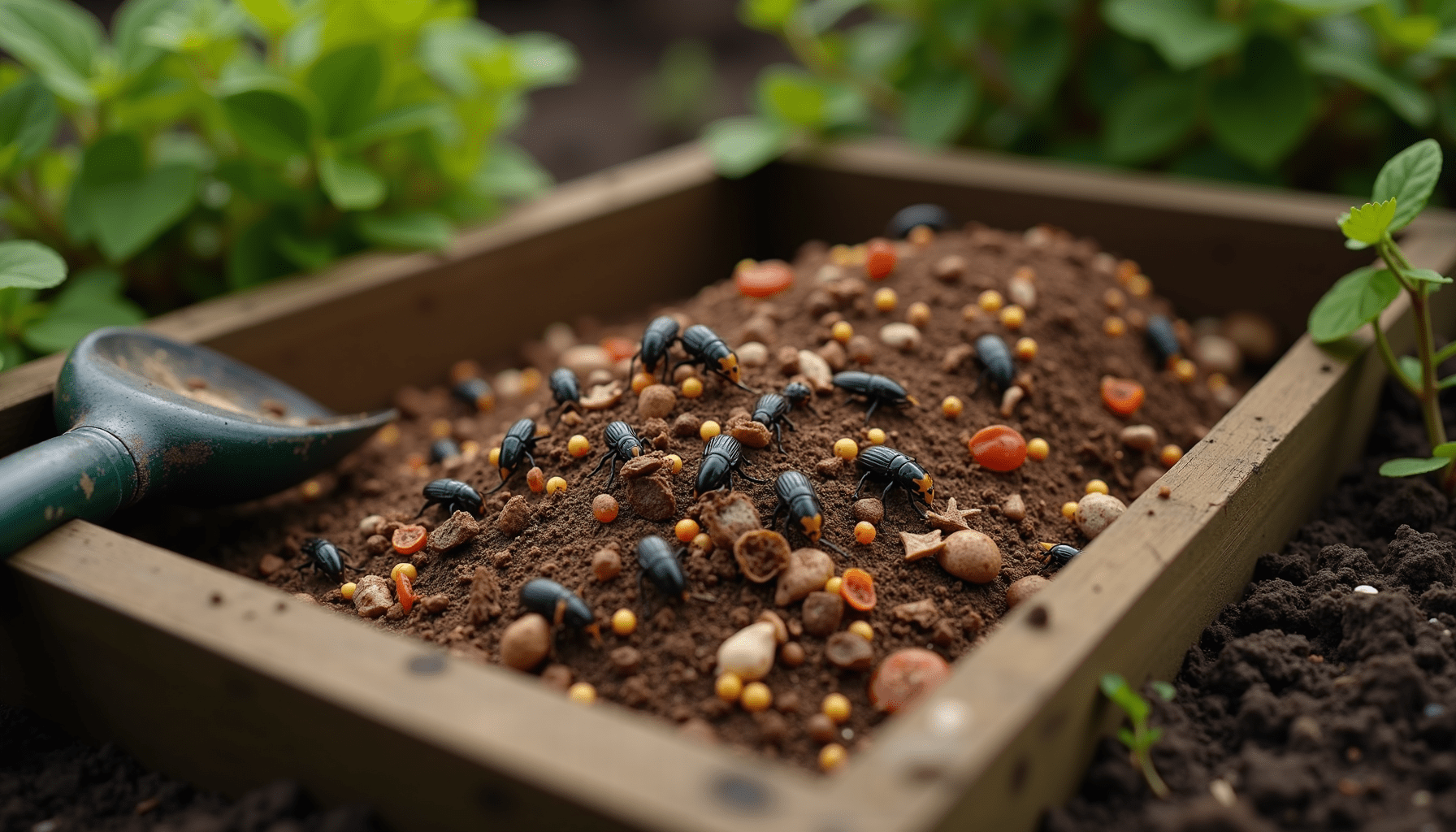
- Larvae: tan to dark brown, segmented, tough-skinned, 10-25 mm long, gathers in dense clusters
- Behavior clue: mature larvae “self-harvest” by crawling up ramps to leave the food
Composting basics
- Best temps: 25-35 C (77-95 F)
- Target moisture: 60-80% (damp, crumbly)
- Rule of thumb: 10,000 larvae can process about 4 lb (1.8 kg) of food waste per day in small systems, per guidance from the Purdue Extension black soldier fly composting guide
Identification
Misidentifying flies leads to the wrong response – either panic when you don’t need it, or ignoring a real hygiene pest. The black soldier fly (Hermetia illucens) is in the family Stratiomyidae, and it behaves very differently from houseflies.
Adult black soldier fly vs housefly
Adults are the stage people notice first, but they’re the least “pest-like” part of the lifecycle. Research summarized by the Purdue Extension black soldier fly composting guide notes that adults live about 5-8 days and do not feed (their mouthparts are not functional for eating). That’s one reason they’re not typically associated with spreading germs the way houseflies are.
Visual checklist (adult)
- Size: usually larger than a housefly
- Shape: slender, wasp-like profile
- Color: black to bluish-black body
- Wings: smoky/dark, held flat over the back
- Movement: calmer than houseflies; often seen resting on sunny walls or near compost
Quick comparison card
- Black soldier fly adult
- Where: near compost, manure, food waste, warm sunny spots
- What it does: mates, lays eggs near decaying material
- Risk: low nuisance, not a typical indoor pest
- Housefly
- Where: kitchens, garbage, animal areas, indoors
- What it does: feeds on many surfaces, lands on food
- Risk: higher nuisance and contamination potential
Larvae and prepupae identification
Most “what are these maggots?” photos online are actually BSFL. They look different from housefly maggots once you know what to look for.
Larvae ID cues
- Color: cream to tan when young; darker brown as they mature
- Texture: tougher, more leathery skin than housefly maggots
- Body: flattened/segmented look, not smooth and shiny
- Behavior: forms a dense “maggot mass” that mixes the waste
Prepupae ID cue (the self-harvest stage)
- Color: dark brown to nearly black
- Behavior: leaves the food and climbs up dry surfaces to pupate
- Why it matters: this is the stage most people harvest for animal feed
Egg clusters
Eggs are tiny and easy to miss. Females lay eggs in dry crevices close to food, not directly in wet scraps.
Where to look
- Corrugated cardboard edges
- Small gaps between stacked wood slats
- Grooved plastic placed near (not in) the feed
Actionable tip: If you want to attract local BSF, hang a small “egg-laying block” above your bin’s feeding area. Keep it dry so eggs don’t mold.
If you’re dealing with nuisance flies indoors: black soldier flies are rarely the problem. For kitchens and living areas, use targeted tools like these Best Fly Traps for Indoor and Outdoor Use and focus on sanitation and exclusion.
Black soldier fly composting
Black soldier fly composting is better described as insect bioconversion. Instead of waiting months for microbes to slowly break scraps down, larvae rapidly consume moist organic waste and convert part of it into larval biomass, leaving a smaller amount of residue called frass (a mix of larval manure, shed skins, and partially processed substrate).
That speed is the main reason people love it. In a review for decision-makers, the Climate and Clean Air Coalition BSF systems guide reports waste reductions commonly in the 50-80% range over roughly 10-14 days, and notes some systems can reduce organic waste volume even further under favorable conditions.
Traditional composting vs BSF composting
If you’ve tried classic composting, you already know the “greens vs browns” balancing act. BSFL systems flip the priorities.
Composting style comparison (simple cards)
- Traditional compost pile
- Best for: leaves, yard waste, mixed kitchen scraps
- Needs: browns, turning/aeration, months of time
- Output: finished compost (if managed well)
- BSF bin
- Best for: wet food scraps, plate waste, some manures (where legal)
- Needs: warmth, moisture control, a way to harvest larvae
- Output: larvae + frass (often finished further in a compost pile)
What you get from a BSF system
1) Larvae (protein and fat)
Dried black soldier fly larvae typically contain about 35-45% crude protein and 25-35% fat, depending on diet and processing, according to the FAO review on insects as feed and summaries cited in the CCAC report.
2) Frass (soil amendment)
Frass nutrient values vary widely by what you feed, but studies often report N-P-K ranges that can land roughly around 2-6% N and 1-3% P and K equivalents. A research overview in Klammsteiner et al. on insect frass and fertilizers highlights that frass can support plant growth, but application rate matters to avoid salt stress.
Caterpillar frass goes further into reading the pellets to find the feeder.
Practical takeaway: Think of frass as “active organic material,” not always finished compost. Many gardeners get the best results by letting it mature in a small compost pile or mixing lightly into soil.
Are black soldier flies “safer” than other flies?
Adult BSF are not known to bite or sting, and because they do not feed like houseflies, they’re not considered typical mechanical vectors of human disease. Controlled studies show larvae can reduce some pathogen indicators in certain waste streams, but results depend on conditions. For example, research discussed in the Climate and Clean Air Coalition BSF systems guide and related literature stresses that BSFL treatment is not a complete sanitation step for high-risk materials.
Actionable safety rule: For backyard systems, stick to typical kitchen scraps and avoid human waste or pet feces. Wash hands after handling larvae, bins, or frass.
Build a bin
A good home system is simple: a container, airflow, drainage, and a self-harvest ramp. The goal is to keep the feeding zone comfortable for larvae while giving mature prepupae an easy exit path.
Basic parts (home scale)
Here’s a mobile-friendly “build list” based on common extension-style designs, including the Purdue Extension black soldier fly composting guide:
1) Container
- 18-gallon tote (easy starter) or a cut drum (higher capacity)
- Lid for rain and pest protection
2) Ventilation with pest exclusion
- Screened vents prevent rodents and reduce houseflies
- Avoid wide-open holes that invite raccoons
3) Drainage
- Small drain holes or a bottom valve
- A catch container if you need it, but aim to minimize leachate
4) Self-harvest ramp
- Smooth ramp at about 35-45 degrees
- Exit hole leading to a collection bucket
5) Egg-laying site (optional but helpful)
- Corrugated cardboard stack or wood slats near the feed
- Keep it dry and slightly elevated
Step-by-step setup (beginner friendly)
- Place the bin in shade with morning sun if possible. Warmth drives feeding.
- Add a base layer (2-4 inches) of coconut coir, finished compost, or damp cardboard. This buffers moisture.
- Add a small amount of food (a couple cups to start).
- Introduce larvae (purchased) or wait for local adults to lay eggs.
- Install the ramp and collection bucket before the population explodes.
- Feed lightly for the first week, then increase as the larvae density rises.
Common placement mistake: putting the bin in full sun in hot climates. Overheating can cause die-offs and odor spikes. Shade plus airflow is safer.
If you also want fewer nuisance flies
A well-run BSF bin often reduces housefly breeding because BSFL outcompete other maggots in rich waste. But if you’re battling adult flies around patios and trash day, pair compost management with dedicated traps. These Best Outdoor Fly Traps for Patios and BBQs can reduce the “cloud of flies” effect without spraying.
Feed and care
Most BSF failures come down to three variables: moisture, temperature, and feeding rate. Get those right, and the system usually runs with only a mild, earthy smell.
What to feed (and what to skip)
BSFL thrive on moist, nutrient-rich scraps. Some materials work, but increase odor risk.
Good feeds for most home bins
- Fruit and vegetable scraps
- Cooked rice, pasta, bread (small amounts)
- Coffee grounds and tea leaves
- Crushed eggshells (helps texture, not required)
Use caution (odor magnets)
- Meat, fish, dairy – possible, but keep quantities small and bury under a dry cap
- Very oily foods – can go rancid and slow feeding
- Salty or spicy leftovers – stress the larvae and shift microbes
Avoid
- Plastics, foil, produce stickers
- Woody stems, corn cobs, large bones
- Pet feces or human waste in hobby systems
Visual: “cap layer” trick
- After each feeding, add a thin cover of:
- shredded cardboard, coir, or dry leaves
This reduces smell and discourages fruit flies.
- shredded cardboard, coir, or dry leaves
Moisture: the odor switch
Aim for a texture like wrung-out sponge. Too wet creates anaerobic pockets, which smell like rotten garbage.
Moisture troubleshooting
- If it’s too wet:
- add shredded cardboard
- improve drainage
- feed smaller amounts for a few days
- If it’s too dry:
- add wetter scraps (melon rinds work well)
- lightly mist water, then mix
Temperature and seasonality
BSFL are warm-weather workers. Growth slows below about 20 C (68 F) and they can become inactive below roughly 15 C (59 F), based on findings summarized in extension and research literature on BSF development.
What this means in real life
- In many temperate regions, BSF bins are seasonal unless you provide warmth.
- In summer, they can process scraps quickly. In spring and fall, expect slower turnover.
Feed rate (don’t overdo it)
A reliable benchmark from the Purdue Extension black soldier fly composting guide is about 4 lb (1.8 kg) per day for 10,000 larvae in a small system, assuming good conditions.
Signs you’re feeding too much
- uneaten food piling up
- sour, sewage-like odor
- fruit flies and houseflies increasing
Signs you’re feeding too little
- larvae migrate early
- fewer larvae visible
- bin looks “empty” and dry
Drain flies and sink issues (a common side problem)
Sometimes people start composting and suddenly notice tiny flies near sinks. That’s usually drain flies, not soldier flies. If that’s happening, treat the source with a cleaner designed for biofilm. This roundup of Top Drain Fly Treatments and Gel Cleaners walks through what works and where to apply it.
Harvest and use
The most satisfying part of black soldier fly composting is that the system can harvest itself. Mature prepupae naturally leave the feeding area to find a dry place to pupate. Your job is to give them a ramp and a bucket.
Harvest methods
1) Self-harvest (best for most people)
- Install a ramp to an exit hole.
- Place a collection container outside the bin.
- Harvest dark prepupae daily or every few days.
2) Manual separation (when you need frass now)
- Scoop material onto a coarse sieve.
- Let larvae crawl down or rinse gently and collect them.
- Return smaller larvae to the bin.
Visual: harvest readiness checklist
- larvae are darker (brown-black)
- they stop feeding and start wandering
- they climb walls and ramps at night or early morning
Using larvae safely
Larvae are widely used as feed for poultry, fish, and reptiles, but rules vary by location and by animal type.
Backyard best practices
- Feed fresh larvae promptly, or preserve them.
- To preserve:
- blanch briefly, then dry (oven or solar)
- store dried larvae in an airtight container
Regulatory note: If you plan to sell larvae or frass, check local and national rules on allowed substrates and feed uses. Regulations are evolving in many regions.
What to do with frass
Frass is valuable, but it can be “hot” depending on the feedstock.
Simple ways to use it
- Mix lightly into garden soil (start small)
- Top-dress around ornamentals, then water in
- Finish it in a traditional compost pile for 2-4 weeks to stabilize
If your bin smells when you remove frass
- Spread it thin to dry in a protected spot
- Or compost it with dry leaves to mellow odors
Myth check (fast)
Myth: Black soldier flies are just disease-spreading houseflies.
Fact: Adults don’t feed like houseflies and are not typically considered household hygiene pests. They’re mostly interested in mating and laying eggs near decaying organics.
Myth: A BSF bin should smell like garbage.
Fact: Strong rot odors usually mean it’s too wet, overfed, or poorly drained.
Myth: More food is always better.
Fact: Overfeeding is the fastest way to create anaerobic sludge and attract nuisance flies.
Conclusion
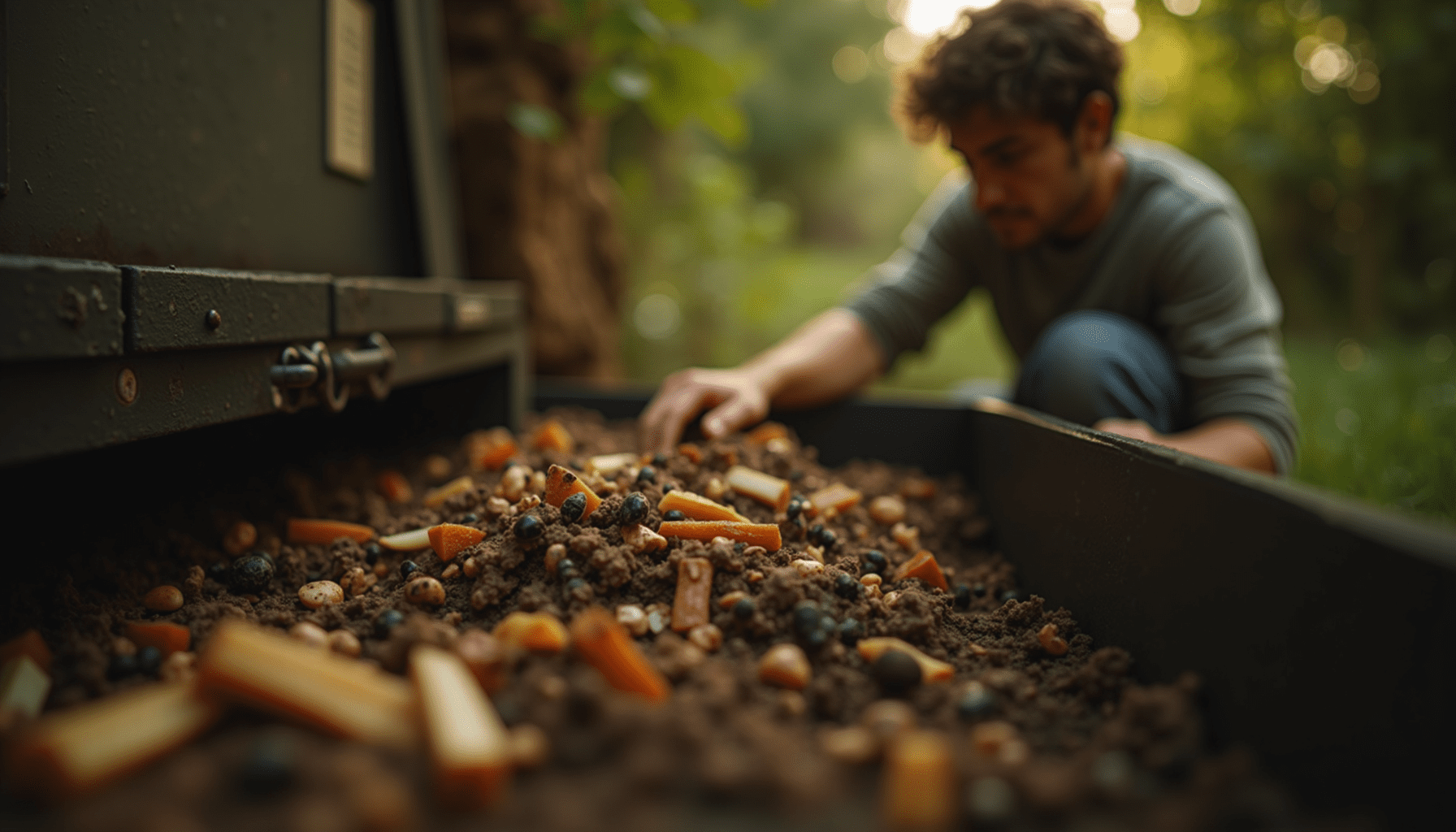
Black soldier fly composting works because it matches the insect’s natural job: rapidly recycling moist organic waste. Identify the life stages correctly, keep moisture and feeding rates under control, and use a self-harvest ramp so prepupae collect themselves. You’ll end up with less smelly waste, a manageable frass byproduct, and a steady stream of larvae during warm months.
If your main goal is reducing adult flies around the home, pair compost management with targeted tools like the Best Fly Traps for Indoor and Outdoor Use and, for quick spot control, the Best Electric Fly Swatters.