\
\
\
If ants keep marching across the kitchen counter, do not start with a can of spray. The fix that actually works is two steps: figure out which ant you have, then set a slow-acting bait that the workers carry home to the queen. Spray only kills the ants you can see and leaves the colony in the wall to rebuild, which is why the trail is back in a day. At my own house the whole kit is a syringe of sweet bait and one of grease bait, set where the trail runs. This guide covers how to tell the ant apart, which bait to pick, and the gadgets to skip.
\
\
\
Identify the ant first, because that decides the bait: sweet-feeders take a sugar bait, grease and protein feeders take a protein bait. Then use slow-acting bait, not spray, so workers carry it back and the queen dies too.
\
- \
- Do first (free): Wipe up sugar and grease, fix the drip, store food sealed, and find where the trail enters.
- Best for the common case: A slow-acting bait matched to what the ants are eating, set right on the trail and left alone.
- Skip: Spraying the trail; it kills foragers, leaves the queen alive, and breaks up the bait’s path to the nest.
\
\
\
\
\
\
\
\
For the neighbouring question, see Why Do Ants Come Inside? Causes and Prevention.
Quick answer
\
\
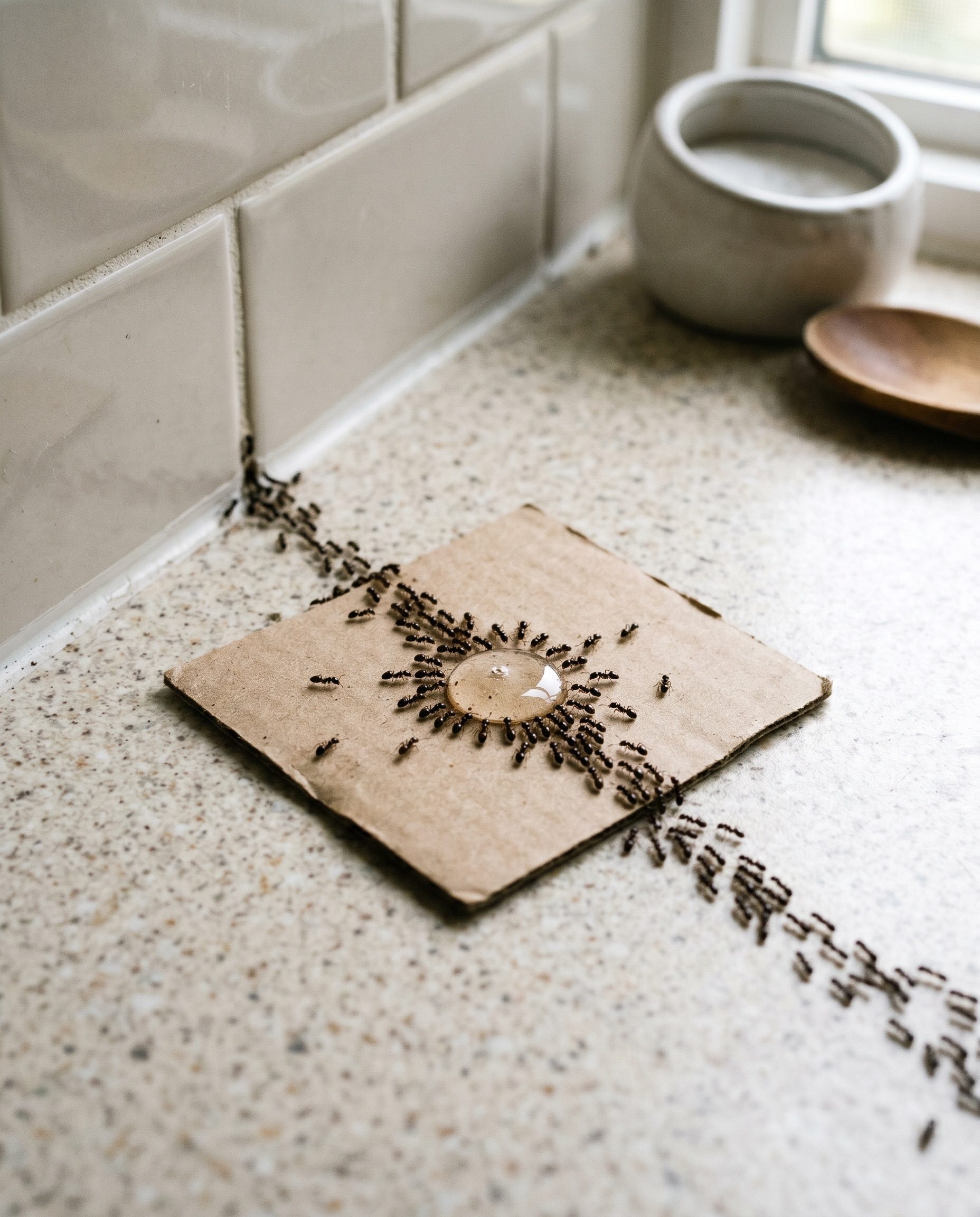
For the common kitchen trail, the order matters more than the product. Clean up the food and water that drew them in first, because a trail with nothing to eat thins out on its own. Next, watch the ants for a minute to see whether they want sweets or grease, then set the matching slow-acting bait right where they walk. A spray feels satisfying, but on a colony it backfires: it kills the workers in the open and leaves the queen safe underground to lay more. A reasonable timeline is more ants at the bait for a few days, which is normal, then a steady drop over one to two weeks. Resist wiping the trail with cleaner while the bait is working.
\
\
Know which ant you have
\
\
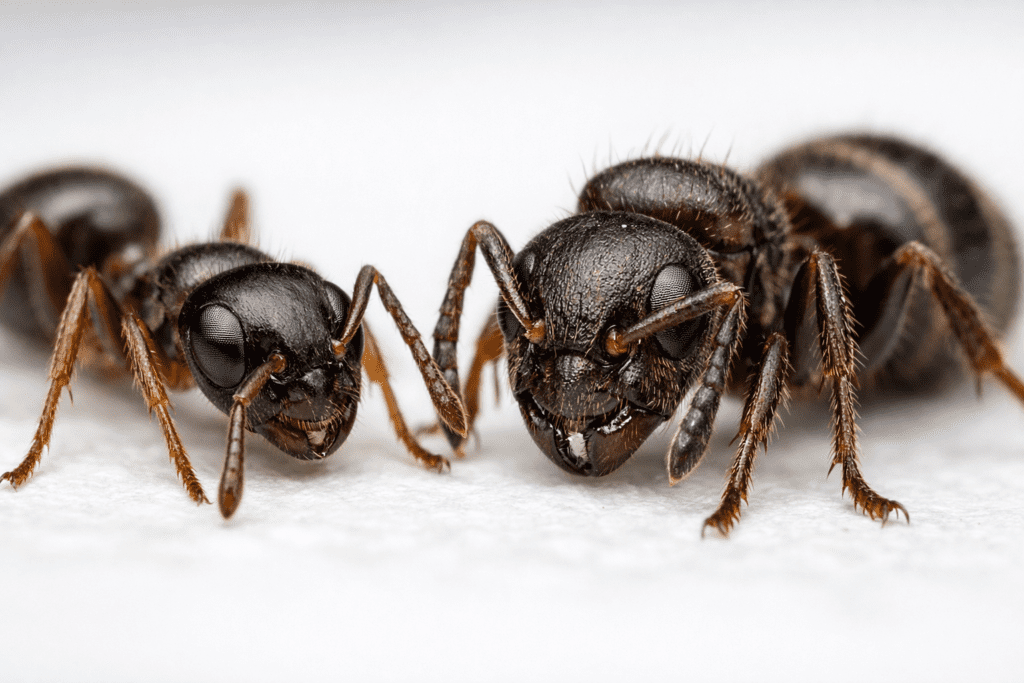
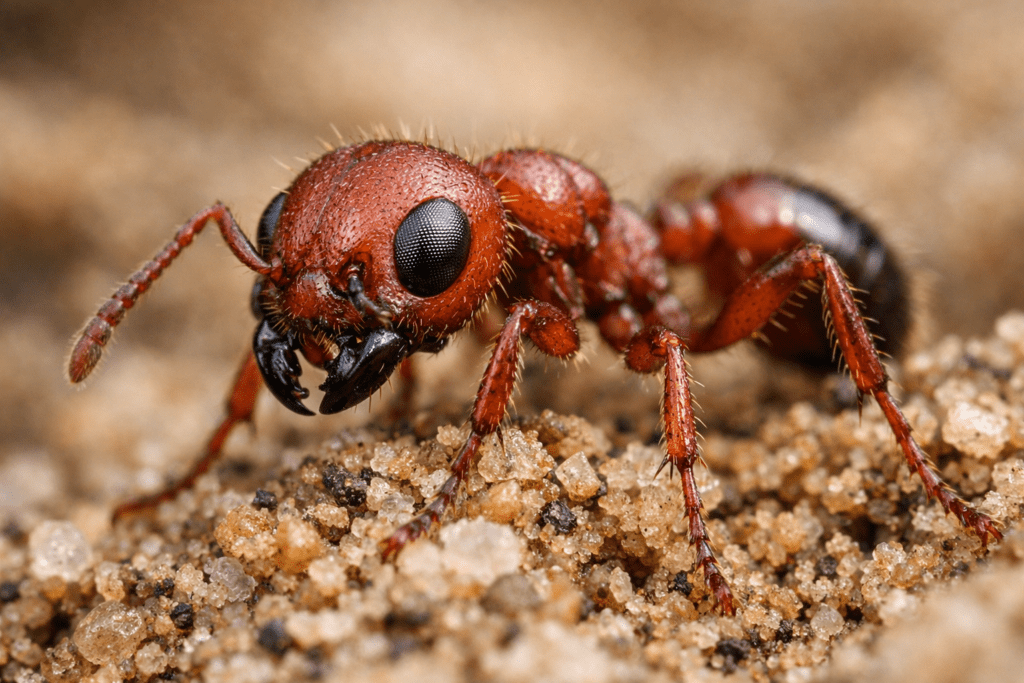
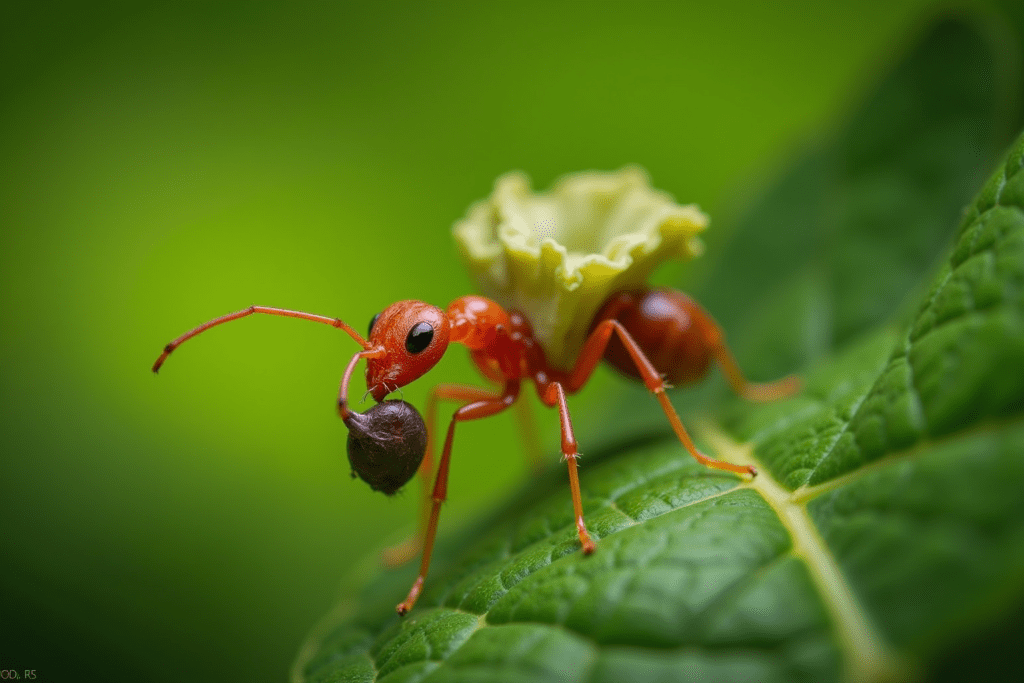
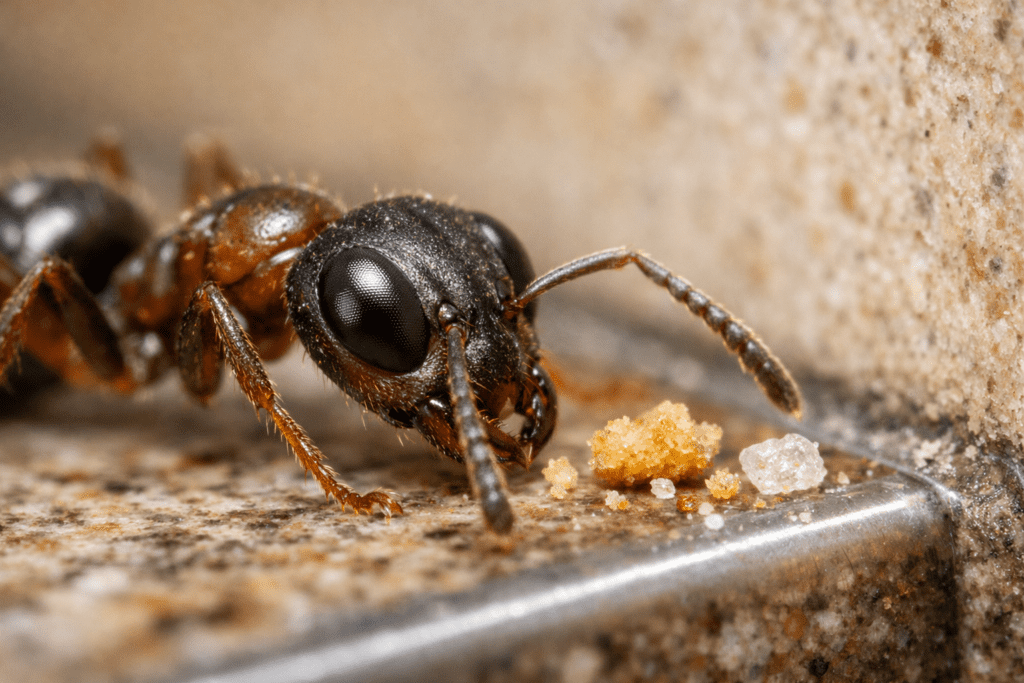
The single most useful thing you can do is name the ant, because the right bait depends on what it eats. NPIC puts it directly: “identify the ant species before choosing a treatment strategy,” and “control techniques may be different for fire ants or carpenter ants.” Most kitchen invaders fall into three buckets. Sweet-feeders are the tiny dark ants people call sugar ants or odorous house ants, trailing to syrup, fruit, and pet food. Grease and protein feeders are smaller still, going for meat, oils, and grease near the stove. Carpenter ants are the big ones, often a half inch, and they signal a moisture or wood problem rather than a food one.
\
\
You do not need a microscope to sort them. The first two you separate by behavior: put a dab of jelly and a dab of peanut butter near the trail and watch which one the ants pile onto. The most common household ant, the Argentine ant (*Linepithema humile*), is a sweet-feeder year-round, while pavement ants and little black ants will take either one. Matching the bait to the diet is the whole game, and it is the step that the spray-everything advice skips. If you have confirmed the small kitchen kind, our guide to sugar ants in the kitchen covers them in detail.
\
\
\
\
Clean up what feeds them
\
\
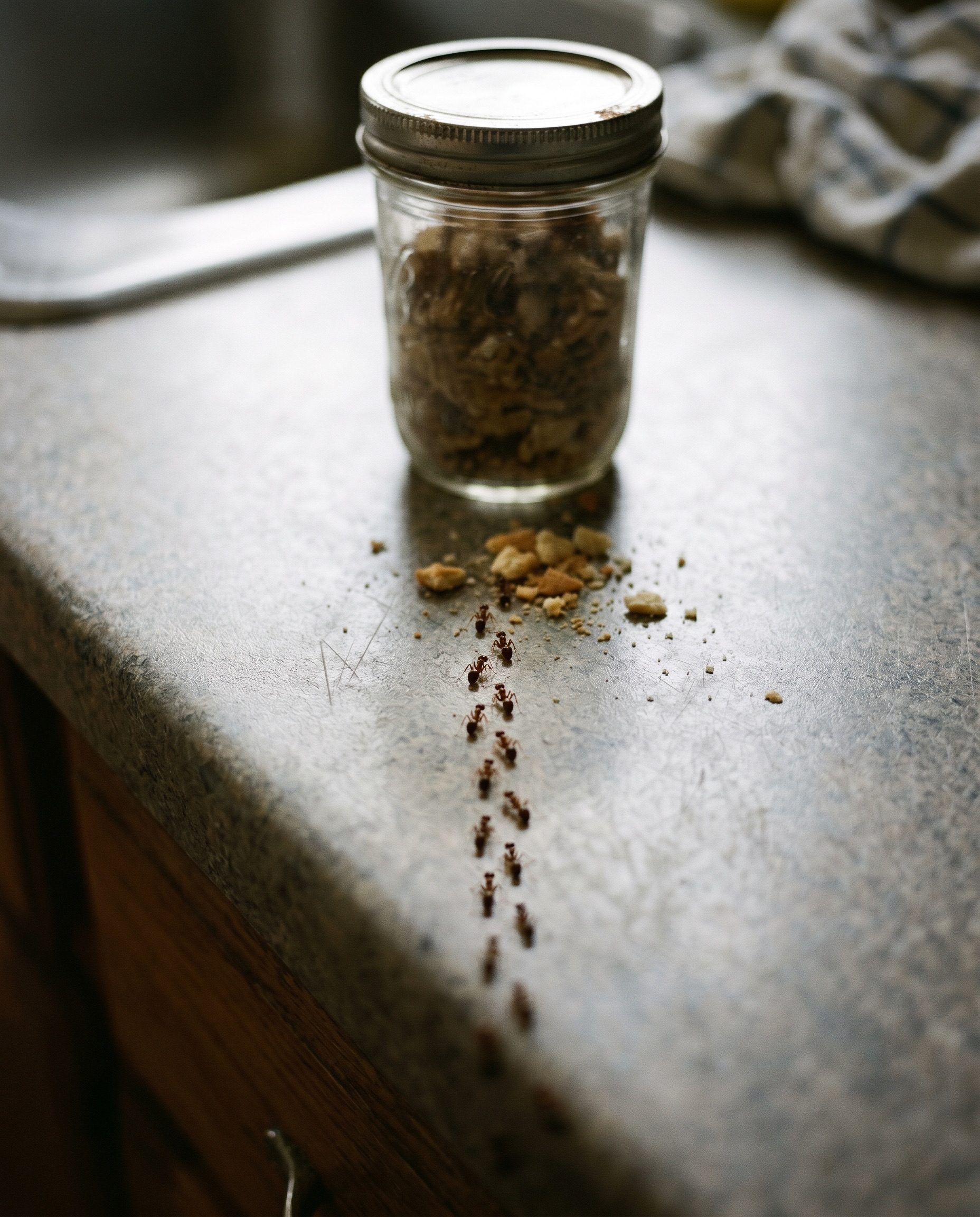
This layer costs nothing and does more than any product, so it comes first. Ants come inside for food and water, and a trail is a chemical road to a reward, so remove the reward and the road goes quiet. Wipe up sugar spills, crumbs, and grease around the stove, rinse sticky bottles and recycling, store pantry goods and pet food in sealed containers, and do not leave bowls of pet food out overnight. A clean counter is your biggest lever, and it makes the bait work better because the bait becomes the most attractive food in the room.
\
\
Water counts too, and people forget it, especially in summer. Fix the drip under the sink, dry the dish rack, and wipe down wet spots, because in hot, dry weather ants come indoors hunting moisture as much as food. The EPA’s safe pest control guidance frames this as the whole point of integrated pest management: prevent the problem by removing food, water, and shelter before reaching for a pesticide. Foraging usually peaks in the warm months from spring through summer, so this is the season to stay on top of the cleanup. Do this for a few days before you judge whether you still have a real problem.
\
\
Seal the entry point
\
\
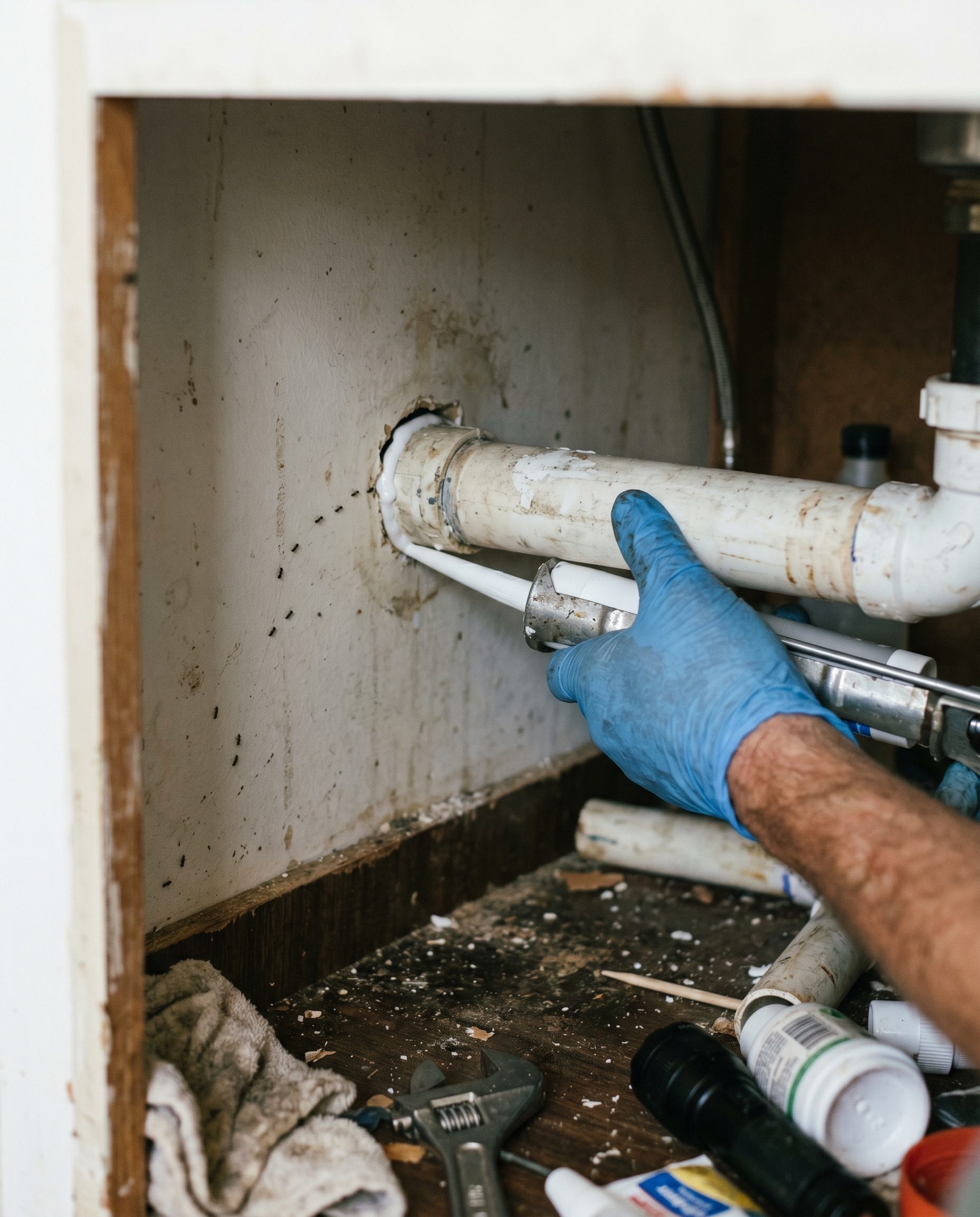
Once the food is cut off, deny them the door. Follow the trail to where it disappears into the wall, under a window, around a pipe, or along a baseboard, and seal that gap. UC IPM’s advice is to “caulk cracks and crevices around foundations and other sites that provide entry from outside.” Run a bead of caulk along the gap, fit weatherstripping and a door sweep, and patch the opening where a pipe passes through the wall under the sink. Sealing the entry is what keeps the next wave out, because even a perfect baiting job is undone if a fresh trail can move right back in.
\
\
One timing note: do not seal the wall while ants are actively trailing through it to your bait. Let the bait finish first, or you trap the colony with the food still inside. Seal the gap after the trail has gone quiet, then leave a sticky monitor or just an eye on the spot so you catch the next one early. Exclusion is the boring step that turns a one-time clear-out into a lasting one.
\
\
\
\
Bait, do not spray
\
\
Now the product, and this is where most advice goes sideways. For a colony the right tool is a slow-acting bait, not a spray, and the reason is mechanical, not a matter of taste. A worker eats the bait, walks home, and feeds the queen and the rest of the colony mouth to mouth before the slow active ingredient kills it. A spray cannot do that. UC IPM is blunt: “spraying around the foundation won’t provide permanent control, because it kills only foraging ants without killing the colony and the queens,” and the foragers you see are only a small fraction of the nest. The Maine Extension factsheet on ant baits says it even more plainly: “Do not use insecticide sprays if you want to bait for ant control,” because the spray kills foragers before they can carry the bait home and counteracts the whole approach.
\
\
Set the matching bait right on the trail and on the entry point, in a station where it stays put. Use a sweet bait for sweet-feeders and a protein or grease bait for the grease crowd; the same Maine factsheet recommends slow-acting baits and notes that sweet-loving ants are the easiest to control. Expect to see *more* ants at the bait for the first few days, which means it is working, not failing. Do not spray the trail, do not wipe it with cleaner, and do not move the station; just refill it as it empties. Keep bait stations out of reach of children and pets and off food-prep surfaces, and as the EPA’s Citizen’s Guide to pest control and pesticide safety reminds you, read and follow the product label, because under federal law the label is the law. For category logic and specific picks, see our ant killers and baits buyers guide.
\
\
A quick situation map for the common rooms:
\
\
| Situation | Best approach | Watch out for |
|---|---|---|
| Kitchen sweet trail | Slow-acting sugar bait on the trail | No spray or strong cleaner on the path |
| Grease near the stove | Protein or grease bait, set in a station | Keep off food-prep surfaces |
| Pets or kids in the room | Enclosed bait station, placed out of reach | Never an open bait pile on the floor |
| Big ants, sawdust, damp wood | Find the nest; often a job for a pro | Signals a moisture or structural issue |
\
\
When carpenter ants need a pro
\
\
Big black ants and a little pile of what looks like sawdust are a different problem, and a spray of the trail will not touch it. Carpenter ants do not eat wood the way termites do; they excavate damp or decayed wood to make their nest, and over time that can weaken a structure. The trail you see is usually leading back to a hidden nest in a wall void, a window frame, or wet wood somewhere with a moisture leak. The fix is the nest, not the trail, and finding a nest inside a wall is often a job for a licensed pest-control professional, especially if it is structural.
\
\
Bring in a pro if you see steady carpenter-ant activity indoors, fine sawdust below woodwork, or a recurring trail that survives correct baiting, and fix the underlying moisture leak while you are at it. Fire ants are another refer-out: their sting can cause a serious allergic reaction, so do not treat a mound by hand if anyone in the home reacts badly to stings, and get emergency medical help right away for trouble breathing, throat or tongue swelling, dizziness, or fast-spreading hives. For the big-ant problem specifically, start with our carpenter ant guide.
\
\
Common questions
\
\
What kills ants instantly?
\
A spray or a wipe of soapy water kills the ants you hit, and that is the trap. Killing the visible trail does nothing to the queen and the brood in the nest, so the line is back within a day or two. For an actual clear-out you want a slow-acting bait the workers carry home, plus the cleanup that starves the trail. Instant feels good; the slow method is what ends it.
\
\
Do natural repellents like vinegar or cinnamon work?
\
They can erase a scent trail for a few hours, which makes ants scatter and look like they left, but they do not reach the colony, so the ants reroute and return. Vinegar is a fine way to wipe down a counter and break a trail while your bait does the real work. If you want to lean on plant-based deterrents, our natural ant repellents and sprays guide covers what helps and what is just theater.
\
\
Why are there suddenly more ants after I put out bait?
\
That is the bait working, not failing. A good bait recruits more foragers to the food before the colony starts to crash, so a busier trail for the first few days is the sign you matched the right bait. Leave it alone, do not spray, and the numbers should fall over the following week or two.
\
\
How long does it take to get rid of ants?
\
For a typical kitchen trail, expect a noticeable drop within one to two weeks once the bait reaches the colony. Control with bait may take more than a week, and that patience is the price of killing the queen instead of just the workers. Heavy or multi-nest situations, and carpenter ants, take longer.
\
\
Will the ants come back?
\
They will if the food, water, and open door are still there. The durable win is the cleanup and the sealed entry point, kept up through the warm months when foraging peaks. Leave a monitor near the old trail so the next scout does not become a colony.
\
\
Final verdict
\
\
Getting rid of ants is two moves, not a shelf of products. First name the ant, because a sweet-feeder and a grease-feeder need different baits, and a carpenter ant needs the nest found instead. Then set a slow-acting bait on the trail and leave it alone, so the workers carry it back and the queen dies with them. Skip the spray; it kills the foragers you see, leaves the colony intact, and breaks the path the bait needs. Expect a busier trail for a few days, then a steady fade over one to two weeks, and seal the entry point once it is quiet.
\
\
Next steps:
\
\
– Confirm the small kitchen kind and the targeted plan in our sugar ants guide.
\
– Match the bait to what they are eating with the best ant killers and baits buyers guide.
\
– If they are the big ones, work through the carpenter ant guide.
\
\