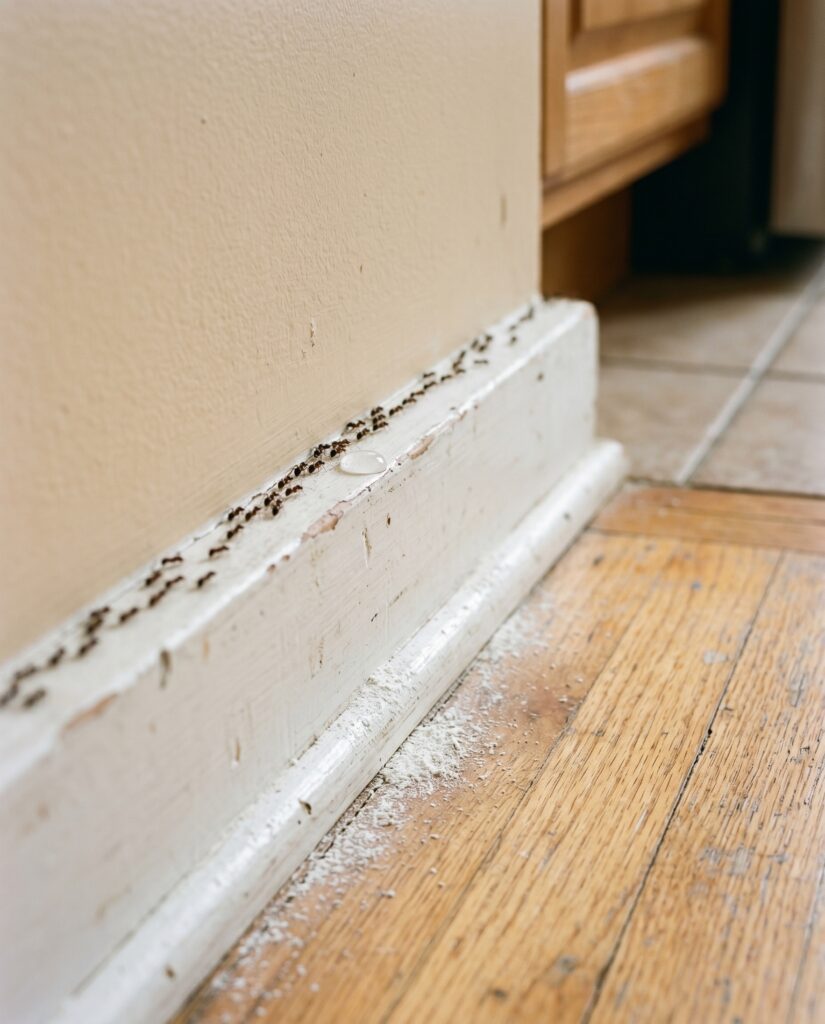
If you’ve got sugar ants marching across the kitchen counter, the fix isn’t a spray, and it isn’t wiping the trail. The short answer: clean the crumbs, leave the trail line alone, and set a slow bait right beside it so foragers carry it home to the queens. Spraying or scrubbing the live trail only scatters them and, with the most common kitchen “sugar ant,” can split one nest into several. At home we’d reach for a plain gel or liquid bait in both a sweet and a grease version, because the colony’s craving shifts through the season.
Don’t wipe the active trail before you bait: that line is the road foragers use to haul bait back to the colony. Clean competing crumbs, bait beside the trail, and skip the spray that splits the nest.
- Free first: wipe up food spills and fix the drip, but leave the live trail.
- If they persist: place a slow sweet bait beside the trail, add a grease bait if they ignore it.
- Skip: spraying or fogging the trail, which scatters foragers and can bud the colony into more nests.
Quick answer
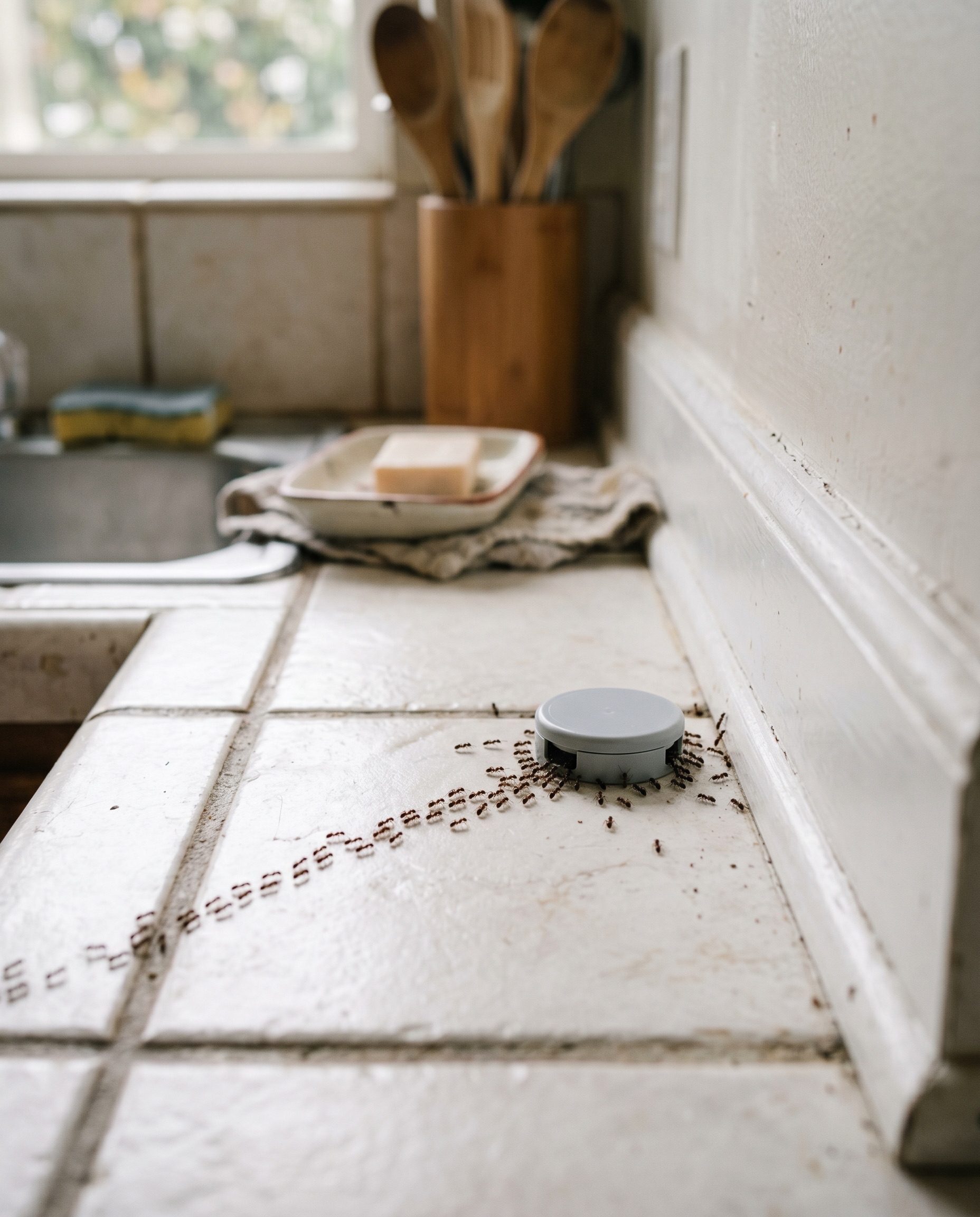
Most “sugar ant” trails clear in one to two weeks if you bait instead of spray. Leave the trail you can see, because that pheromone line is how workers find the bait and carry it back to the queens. Wipe down the food spill that drew them, then set a slow-acting bait an inch or two off to the side of the trail, not on top of it. The bait does the work, not the wipe. Check it daily, refresh it before it dries out, and resist the urge to squash the line. If they swarm the sweet bait then quit it, switch to a grease or protein bait and they often come right back.
What a sugar ant really is
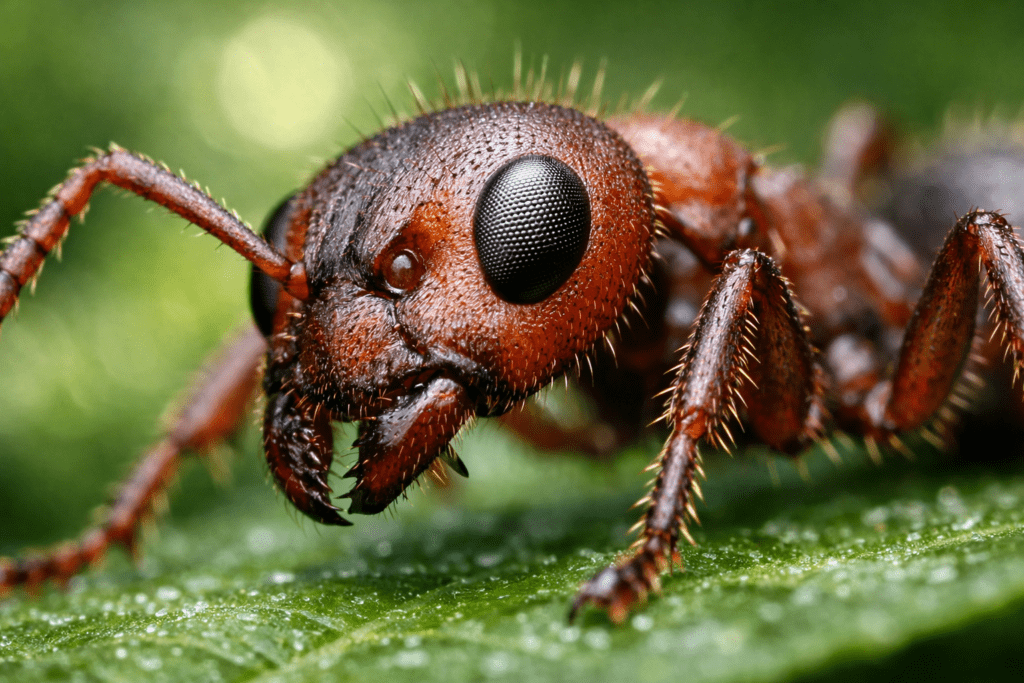
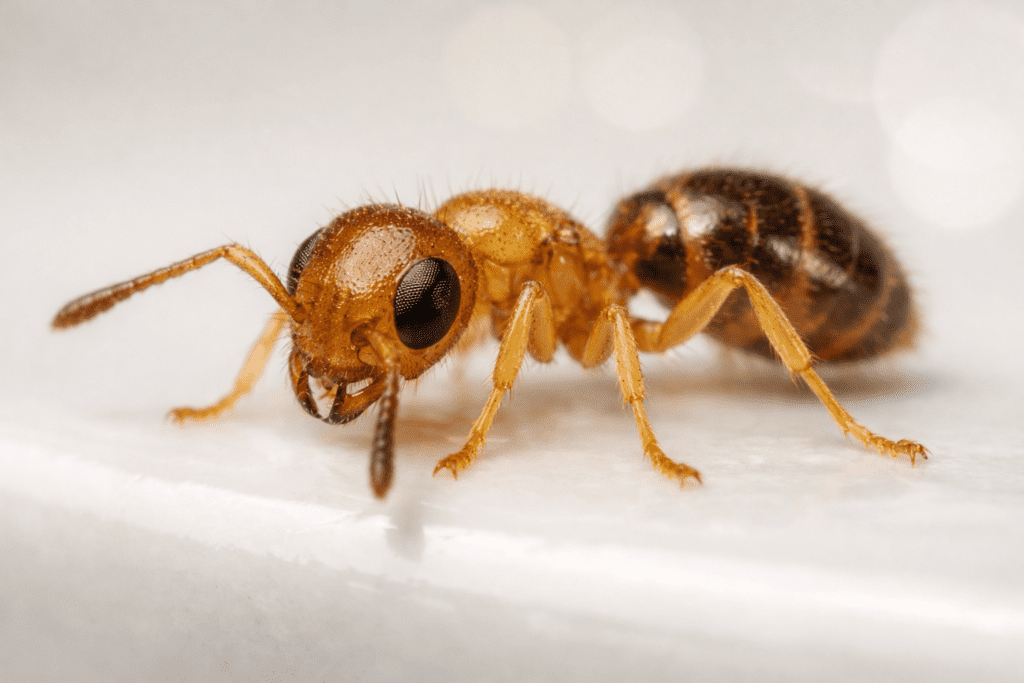
“Sugar ant” isn’t one species, it’s a habit. In most US kitchens the culprit is the odorous house ant (*Tapinoma sessile*), a tiny dark brown ant about an eighth of an inch long that smells like rotten coconut or blue cheese when you crush one. Texas A&M’s CityBugs guide to household ants notes that licorice-like smell is the giveaway, and that this ant is strongly drawn to sweets. Argentine ants and pharaoh ants get the same nickname when they hit the sugar bowl.
The species matters more than the nickname. Odorous house ants run colonies with many queens, not one, and Texas A&M’s urban entomology profile describes how those colonies multiply when fertile females and a crowd of workers leave the parent nest to start new ones. That single fact is why spraying backfires: stress a multi-queen colony and it splits. They tend to nest indoors near moisture, in wall voids and under sinks, which is why a kitchen with a slow leak keeps drawing them back.
What to do first
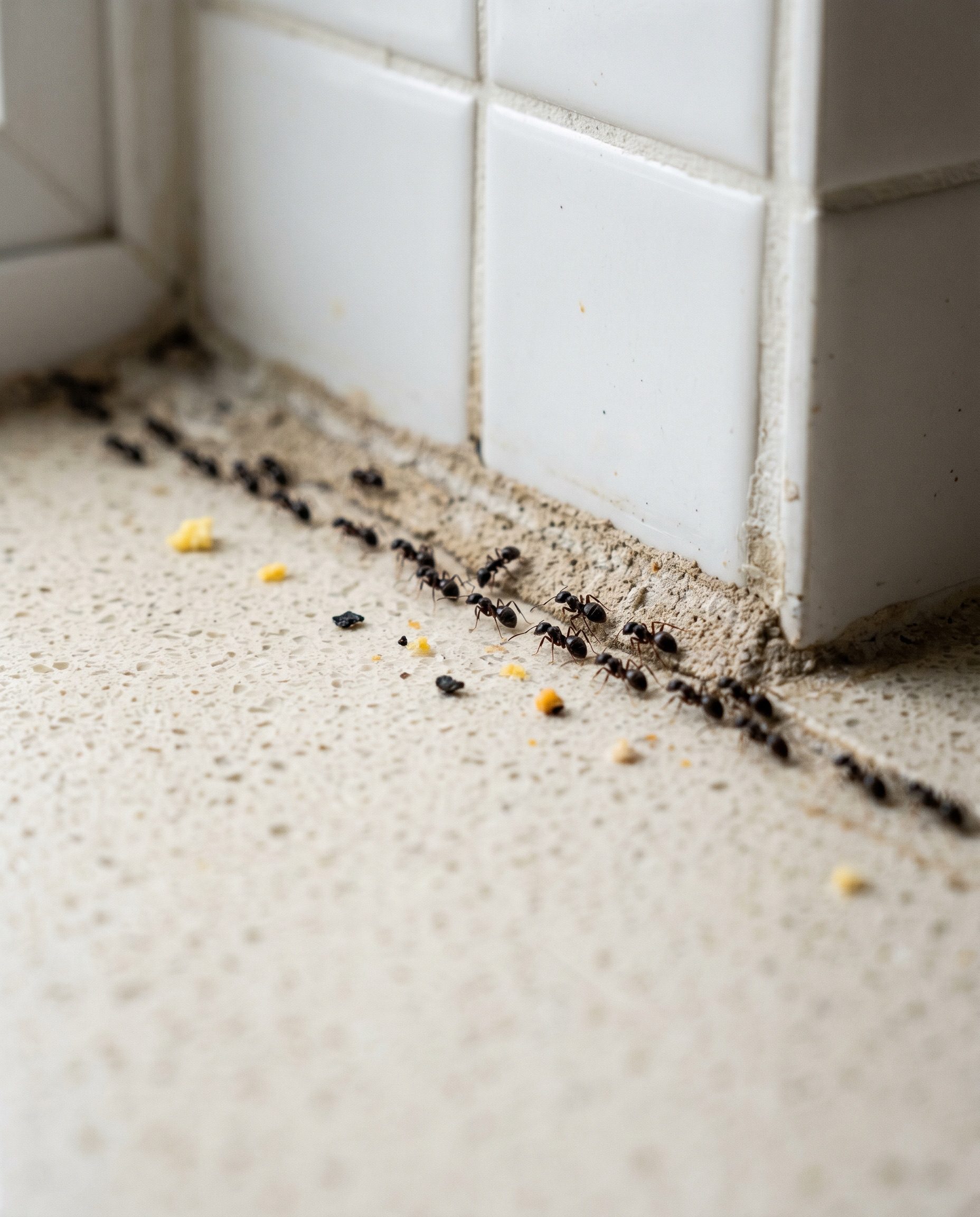
Before any product, take away the reasons they came. The EPA’s do’s and don’ts of pest control puts removing food, water, and shelter ahead of any chemical, and it’s the cheapest move you’ve got. Wipe up the sugar spill, the syrup ring, the juice splash. Store sweets and pet food in sealed containers. Empty the trash and rinse the recycling. Fix the dripping faucet or the sweating pipe under the sink, because moisture pulls them in as reliably as food does.
Now the part most guides get backwards. Once the obvious crumbs are gone, leave the trail you can still see. That faint highway of ants is a pheromone path, and you want it pointing at your bait. UC IPM’s guidance on ant control is to remove competing food residues so the bait is the most attractive thing around, not to erase the trail itself. Clean the counter where the spill was, then set the bait where the ants are already walking and let the line lead them to it.
Then seal them out once the trail goes quiet. Caulk the gaps around baseboards, behind the sink, and where pipes enter the wall. The EPA’s same page calls for closing off entry points with caulk around cabinets and baseboards. Do the sealing after baiting, not before, or you’ll trap a colony inside the wall with nowhere to forage.
Why baiting beats spraying
This is the whole game, and it’s where a $5 bait outperforms a $15 can of spray. A spray kills the ants you can see. The foragers on your counter are a tiny fraction of the colony, and the queens never leave the nest, so a clean counter today means a fresh trail tomorrow. A bait works the other way: the workers eat it, walk it home, and feed it mouth to mouth to the larvae and the queens. UC IPM explains that workers carry bait back to the nest where it spreads through the whole colony, which is why baits have to be slow-acting enough for the foragers to make the round trip before they die.
Spraying does worse than nothing on a multi-queen kitchen ant. UMN Extension is blunt about it: do not spray an insecticide when using a bait, because the spray interferes with the ants’ ability to carry the bait back to the nest. And with odorous house ants, a repellent spray stresses the colony into budding, turning one nest into three. Pick a lane: bait, or spray, never both. For a kitchen, bait wins.
One safety note since this is a kitchen with food, and likely kids or pets. Use enclosed bait stations, not open gel smears, on counters and in pantries, and keep them off food-prep surfaces and away from pet bowls. Read and follow the product label, because under federal law the label is the law on where and how you can use it. If a child or pet gets into a bait, get them away from it and call your doctor or vet; the NPIC pesticide-safety resource covers what to do after an exposure.
Here’s how the two stack up.
| Approach | What it does | Watch out for |
|---|---|---|
| Slow bait by the trail | Foragers carry it to the queens; reaches the whole colony | Takes days to weeks; keep the area undisturbed |
| Contact spray on the trail | Kills visible foragers on the spot | Misses the nest; can split a multi-queen colony into more nests |
| Wiping the live trail | Erases the path you want leading to the bait | Foragers re-route and may ignore the bait |
Sweet today, grease tomorrow
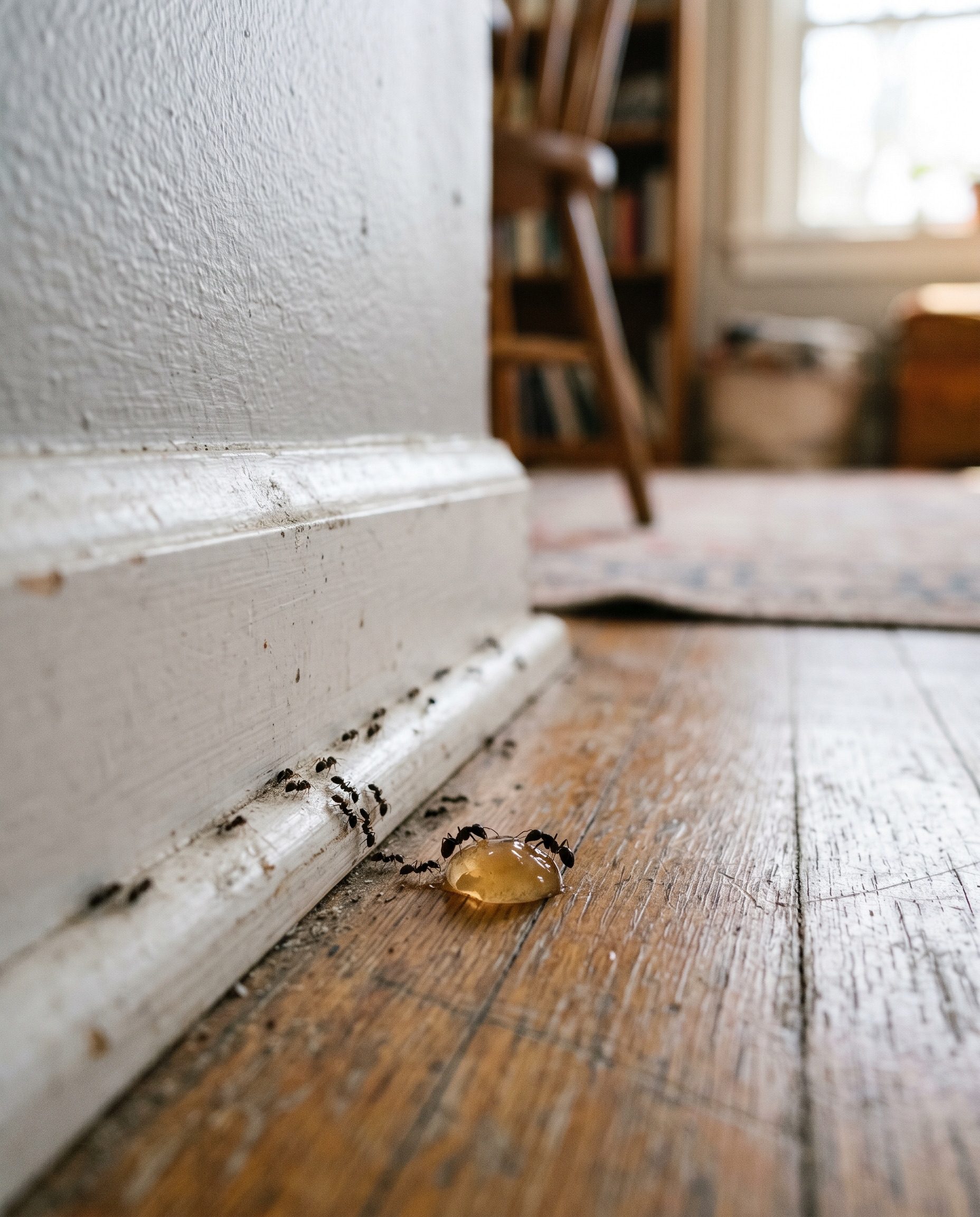
The reason a bait sometimes “stops working” is that the colony’s appetite changed, not that the bait failed. Ant food cravings shift with the season and the colony’s needs. UC IPM notes that for some species sweet baits attract year-round while protein baits pull harder in spring when colonies are raising young, and other kitchen ants prefer greasy or protein baits most of the time. UMN Extension lists the same split: sweets like honey and syrup, plus meats and grease.
So treat it as a rotation, not a single shot. Start with a sweet liquid or gel bait, since that’s what brings most sugar ants to the counter. If they mob it for two days and then walk past it, swap in a grease or protein bait, peanut butter style formulas work well, and they often pile back on. Put out both at once if you want to skip the guessing. Leave them in place at least a week or two; a bait that looks ignored on day three is often the wrong flavor for that month, not a dud.
Stop them coming back
Prevention is the durable win, and it’s mostly the maintenance version of step one. Keep counters wiped, keep sweets and pet food sealed, and stay on top of the leak under the sink, since indoor moisture is what keeps odorous house ants nesting in the walls. Run a quick caulk check every spring before foraging picks up, sealing the gaps around windows, doors, and pipe penetrations the EPA flags as entry points.
Outside, trim back the shrubs and mulch touching the foundation so ants don’t bridge straight to the wall. A dry, sealed, crumb-free kitchen is a kitchen they leave. If you keep finding fresh trails after correct baiting and sealing, that’s a signal the nest is somewhere you can’t reach, which is the moment to bring in help.
When to call a pro
Most sugar ant jobs are a homeowner fix. Call a licensed pest control professional when the trails keep coming back after a couple of weeks of correct baiting and sealing, when you find ants pouring out of a wall void you can’t open, or when the colony has clearly budded into several nests around the house. Recurring infestations that survive correct DIY are a nest-location problem, and a pro can find and treat what you can’t.
One quick ID check first: if the ants are large, single-color black or red-and-black, and you spot sawdust-like shavings near wood, those are carpenter ants, not sugar ants, and a wood-destroying pest is a pro’s call. When in doubt about the species, our ant identification guide walks through the tells.
Common questions
What kills sugar ants instantly?
Nothing that solves the problem. A spray drops the foragers you can see in seconds, but it leaves the queens and the nest untouched, so the trail returns. A slow bait is the honest answer, since it reaches the colony over days. Fast and shallow loses to slow and complete here.
Does white vinegar get rid of sugar ants?
Vinegar wipes a scent trail and deters a little, but it doesn’t kill the colony. If you’re baiting, don’t drown the active trail in vinegar, because you need that line leading to the bait. Save vinegar for cleaning up the food spill, not for erasing the path to your bait.
Why are there suddenly so many sugar ants in my kitchen?
A scout found food or water and laid a pheromone trail, and the colony followed. Spring and summer foraging, a new spill, or a leak under the sink are the usual triggers. Removing the food and water cuts the draw, per EPA guidance, but bait is what ends the colony.
How long does it take to get rid of them?
Usually one to two weeks with baiting, sometimes longer for a big multi-queen colony. UMN Extension notes baits can take several weeks to clear a colony. The trail thinning out is your sign it’s working, so resist swapping to a spray midway.
Are sugar ants dangerous?
Not really. Odorous house ants don’t sting and aren’t a health threat, though they can walk across food, so toss anything they’ve gotten into. The bigger concern is whether they’re actually carpenter ants, which damage wood; check the size and look for sawdust shavings.
Final verdict
Sugar ants are a baiting problem dressed up as a spraying problem. Do the free step first: wipe the spill, fix the drip, seal the food, but leave the live trail alone so it points your foragers at the bait. Set a slow sweet bait beside that trail, add a grease bait if they lose interest, and give it a week or two while you keep your hands off. Skip the spray and the fogger; on a multi-queen kitchen ant they scatter the colony and make it worse.
Next steps:
– Set one sweet and one grease bait beside the active trail, then leave it undisturbed.
– Caulk entry points after the trail goes quiet, using the gaps the EPA flags.
– Not sure it’s a sugar ant? Compare it against our how to get rid of ants in the house guide, the best ant baits buyer’s guide, and the natural ant repellents and sprays rundown.