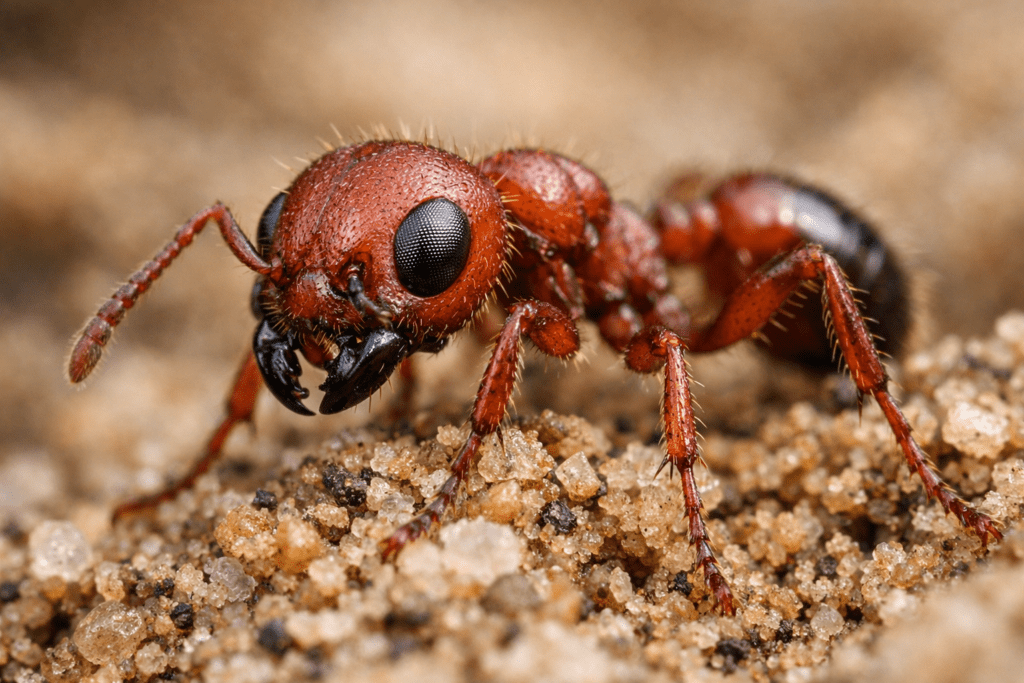
n
n
If you keep seeing big black ants in the house, do not reach for a can of spray. Carpenter ants do not eat wood, they tunnel into it to nest, and the ones marching across your counter are foragers, not the colony. Killing them changes nothing. The fix that works is to follow the trail back to the moisture-damaged wood where they actually live, treat that nest, then fix the water problem that drew them in. At my own house the first move is always a flashlight at dusk, not the sprayer. This guide covers how to find the nest, what to do first, and the products that waste your money.
nn
n
Carpenter ants excavate wood, they do not eat it, so spraying the foragers you see does nothing. Chase the trail back to the damp, damaged wood where they nest, treat that, and fix the moisture that created it.
n
- n
- Do first (free): Find the leak or damp wood, dry it out and replace the rotten board, and watch where the ants trail at dusk.
- Best for the common case: Slow bait the foragers carry back to the colony, or treat the nest directly once you locate it.
- Skip: Spraying the ants on the counter and ringing the house with repellent spray; it kills strays and never reaches the nest.
n
n
n
n
nn
nn
Quick answer
nn
For the common case, finding the nest matters more than any product. Carpenter ants build a parent nest outdoors, usually in a damp tree or stump, and often a satellite nest inside your wall, both in wood that water has already softened. The ants on your counter are just scouts, so killing them leaves the colony untouched. Watch where they travel at dusk, follow the busiest trail to the wood they disappear into, and treat that. Then fix the moisture, because the nest formed where the wood was already wet. A realistic timeline is a clear drop within a week or two of hitting the actual nest, not weeks of spraying strays.
nn
Why they show up
nn
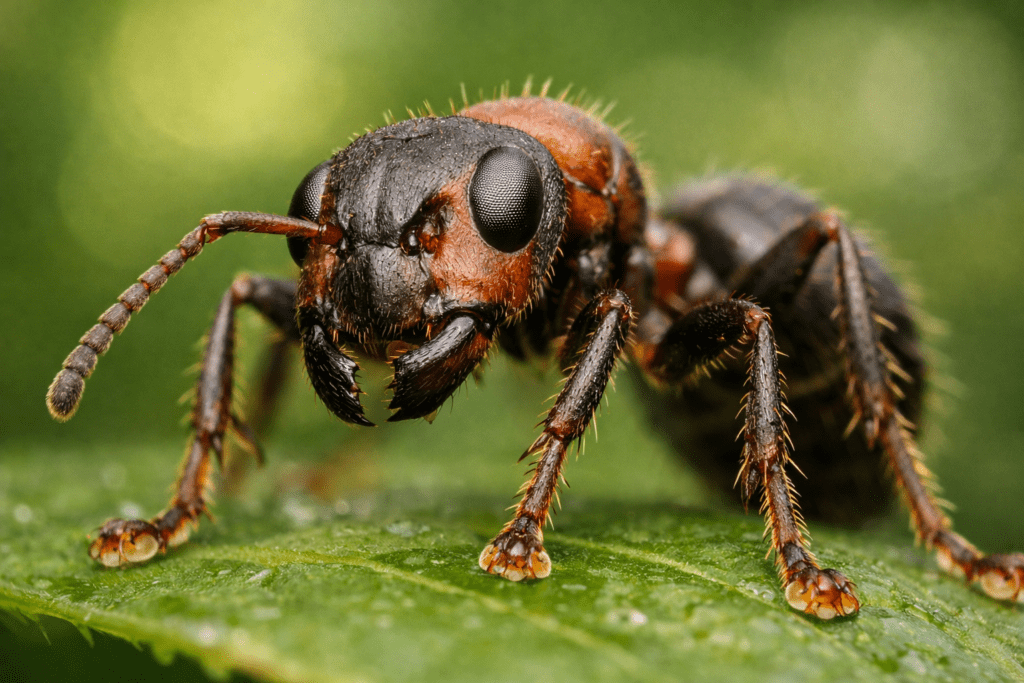
Carpenter ants are the large ants, often black or red-black and a quarter to half an inch long, in the genus *Camponotus*. They show up because something in or near your home gave them damp wood to tunnel. Unlike termites, carpenter ants do not eat the wood they nest in; NC State Extension is clear that they “do not eat and consume wood,” they hollow it out for galleries. Their presence is a moisture flag, because the same source notes they “prefer wood with a moisture content of 15 percent or higher, so a carpenter ant problem is often associated with a moisture problem.”
nn
That is the detail most guides skip. The colony’s parent nest is almost always outdoors in a rotting stump, log, or tree, and the nest inside your home is a satellite of it. The University of Minnesota Extension puts it plainly: parent nests are “found in moist or decayed wood (caused by exposure to water leaks, condensation, or poor air circulation).” Look where wood stays wet: under a leaking window, around a tub or dishwasher, in a damp crawlspace, behind a failing gutter, or in a deck ledger. If you are not sure these are carpenter ants at all, our guide to ants in the house walks the common indoor species, and because winged carpenter ants get mistaken for termites every spring, the differences between flying ants and termites are worth a two-minute read. Removing the cause is half the fix.
nn
nn
Find the nest first
nn
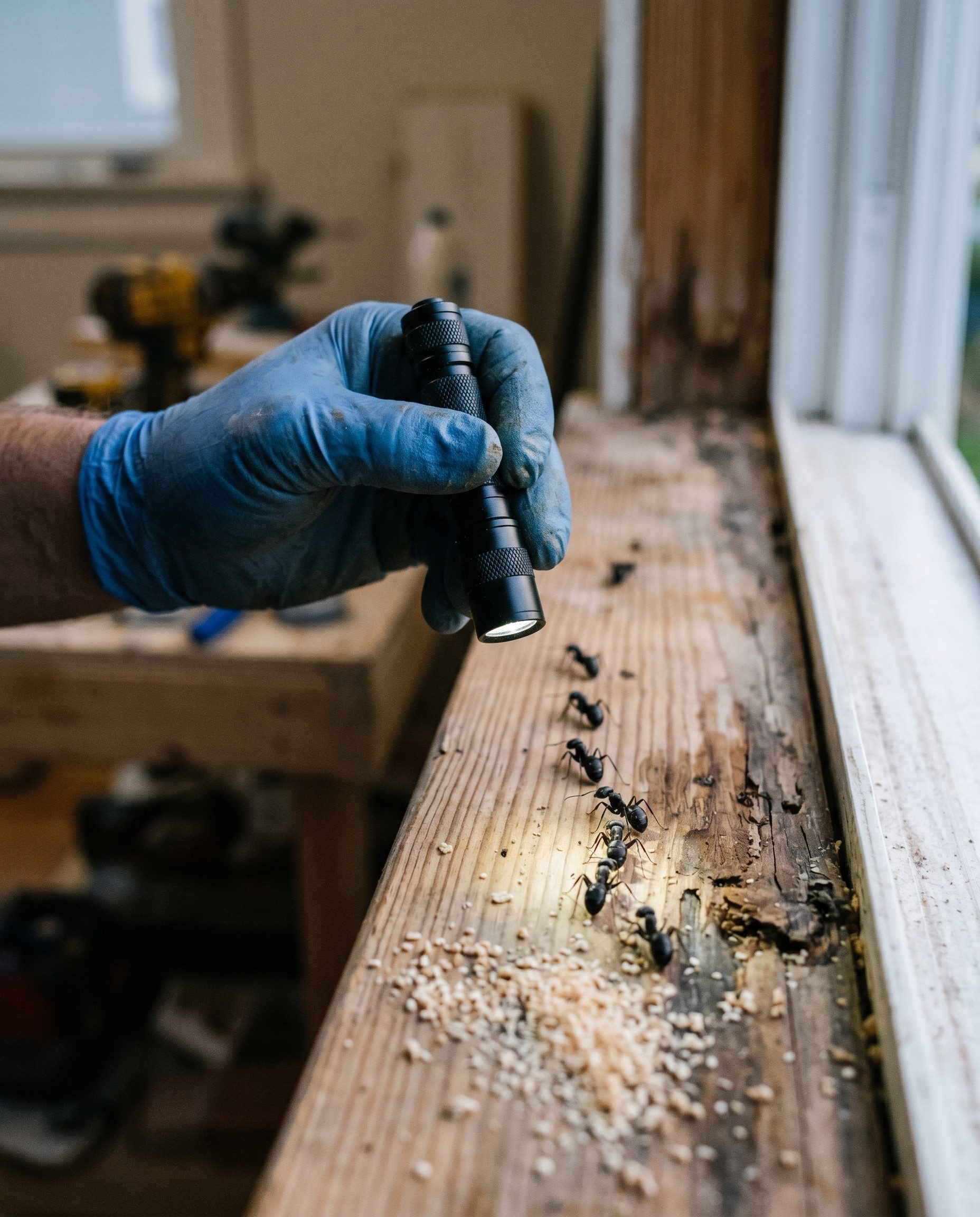
This is the step that does the real work, and it costs nothing but patience. Carpenter ants forage at night, so go out at dusk with a flashlight and watch the trails. The UC IPM page on carpenter ants suggests you “first attract them to a nontoxic food source like sugar milk,” then “follow the workers back to their nest.” A dab of honey or a small piece of tuna on an index card near a trail will concentrate the traffic and show you the direction of travel. Follow the busiest line, not the stray.
nn
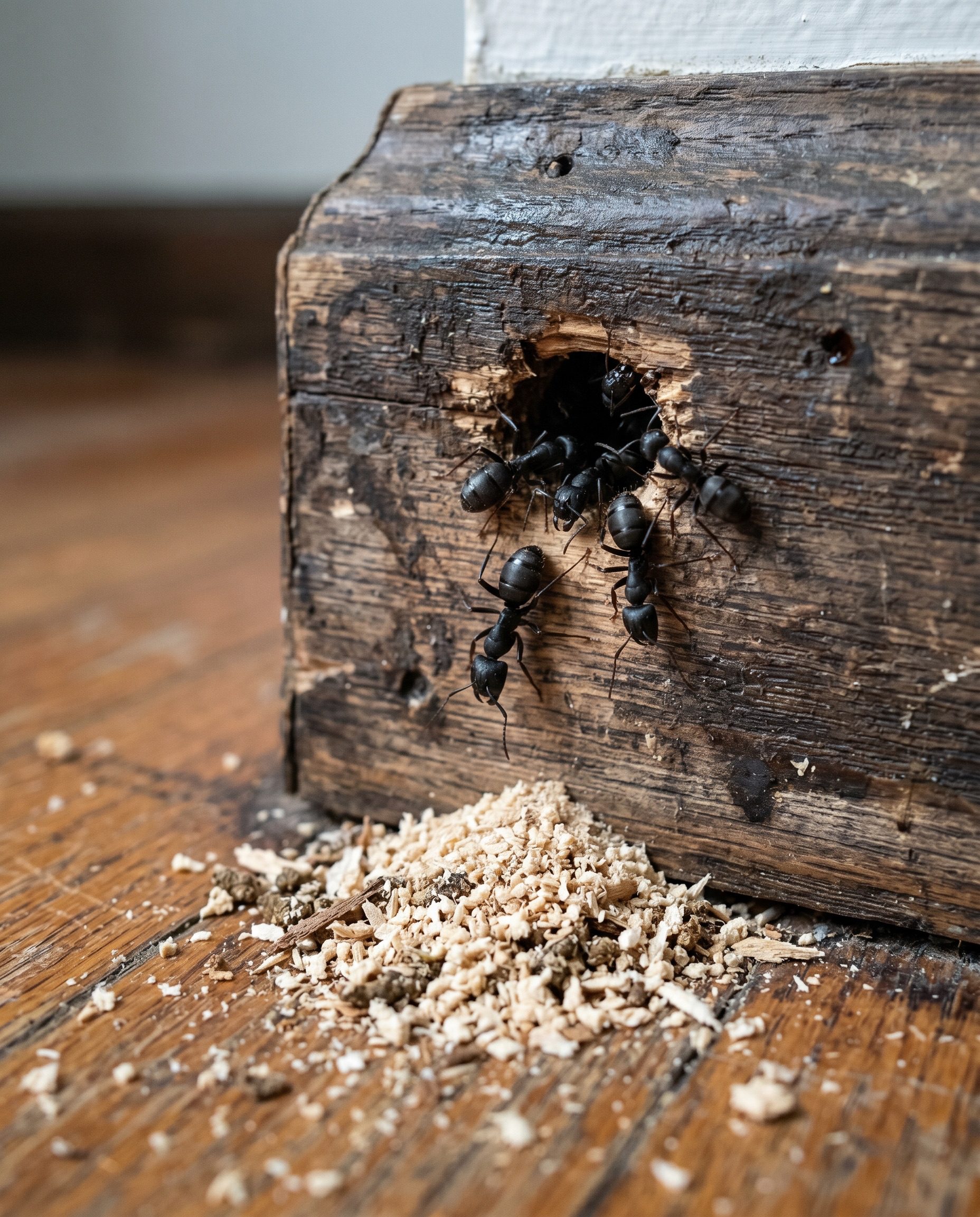
Two signs tell you a nest is close. The first is coarse sawdust, called frass, that the ants push out of the gallery openings; UMN notes that “finding coarse sawdust” points to a nest, and it often carries bits of dead ants and insect parts, which separates it from a pile of clean drill shavings. The second is a faint dry rustling inside a wall or hollow door on a quiet night, which is the colony at work. The nest may not be where you expect, since NC State notes foragers can range “as many as 300 feet away from where you find foraging ants,” so trail-watching beats guessing. Tap along damp baseboards and trim with a screwdriver handle and listen for the hollow, papery sound of a gallery. Once you have the trail, the frass, or the sound pinned to a spot, you finally know where to aim.
nn
What to do first
nn
Before any product, take away what the ants came for. Fix the leak, dry the damp wood, improve the airflow in the crawlspace, and replace any board that has gone soft, because a dry house is a poor nesting site. UMN’s core prevention advice is to “replace moisture-damaged wood” and to keep firewood and lumber off the ground and away from the foundation. Dry wood does not host a carpenter ant nest.
nn
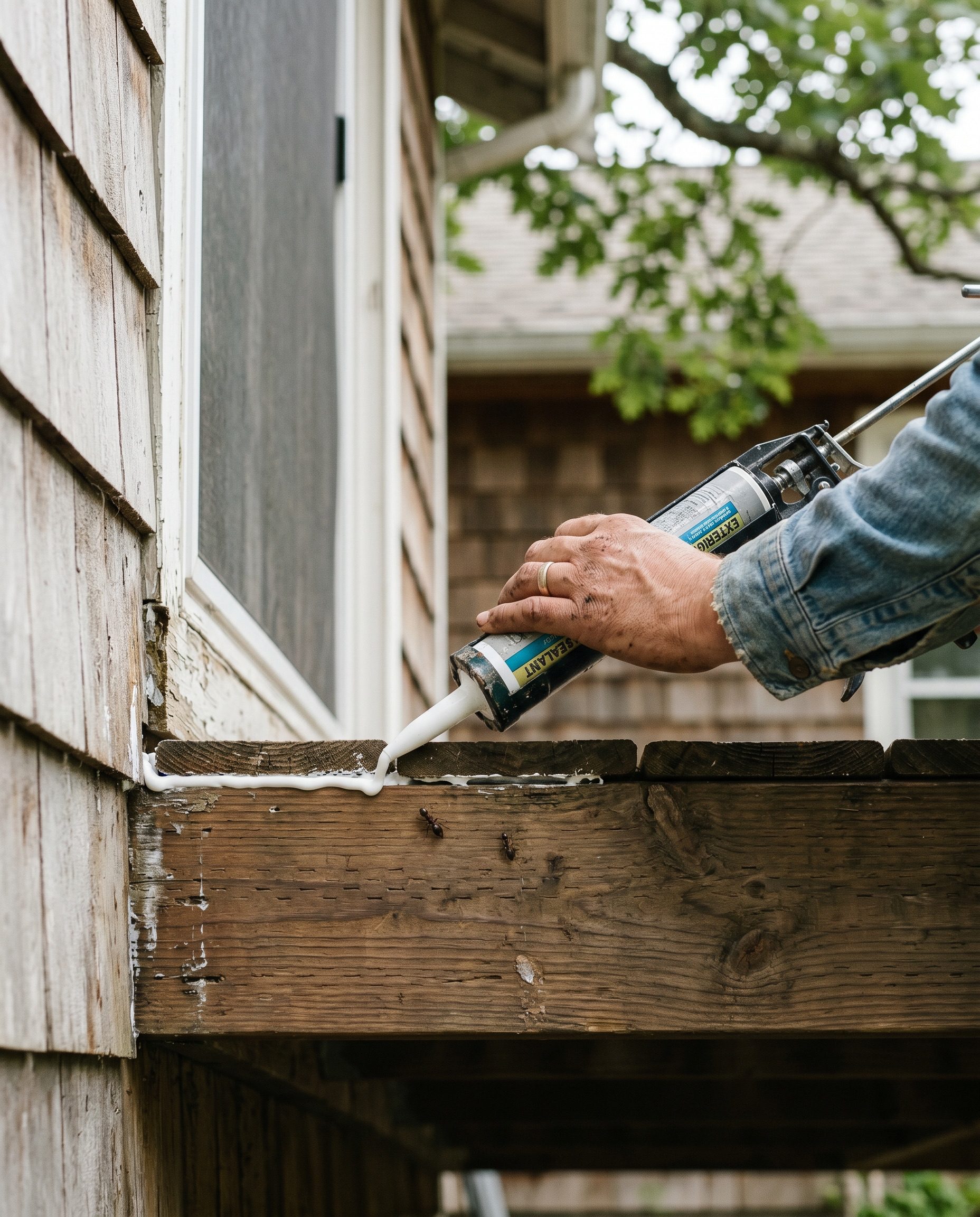
Then cut off the bridges and entry points. Trim tree branches and shrubs so they do not touch the roof or siding, since limbs are a common highway from the outdoor parent nest. Seal the gaps where pipes, wires, and cables pass through exterior walls, fit door sweeps, and caulk obvious cracks. Move the woodpile and mulch back from the wall. None of this is glamorous, but it is the layer the NPIC ant control and pesticide-safety page and every Extension office put before chemicals, and NPIC’s standing rule applies the moment you do reach for a product: “if you decide to use pesticides, try a lower toxicity product first.” Do the free work first and many indoor problems shrink before you spend a dollar.
nn
nn
Bait the colony, do not spray strays
nn
Now the product, and here the cheap-but-patient option usually beats the satisfying one. Because the ants you see are foragers, the goal is to get them to carry something lethal home, which is what a slow-acting bait does. NC State is direct that for ants, “baits are the best approach” and “are more effective in the long term and are less hazardous (compared to sprays) when used properly.” A forager eats or carries the bait, returns to the satellite nest, and shares it colony-wide. A repellent spray does the opposite, killing the scout on contact so it never makes the trip, and often splitting the colony into new satellites.
nn
Set bait stations or a thin gel line right on the active trail, between where the ants enter and where they vanish into the wall. Carpenter ants swing between sweet and protein cravings through the season, so if a sugar bait gets ignored, switch to a protein or fat-based one. Keep all bait out of the open, off food-prep surfaces and pet bowls, and out of reach of children. If you have located the actual nest in a wall void, direct treatment with an insecticidal dust is what Extension programs recommend, but that means drilling into the void, and both UMN and UC IPM note this is usually a job “best done by an experienced pest management professional.” Whatever you use, the label is the law: the EPA’s own training spells out that using a product in a way the label does not allow violates federal law, so follow the directions and do not invent stronger doses or new treatment sites. Match the tool to where they nest, not to the biggest jug on the shelf, and see our ant baits and killers buyer’s guide for category logic.
nn
Stop them coming back
nn
Carpenter ants come back when the conditions that drew them are still there, so prevention is mostly moisture control on repeat. Keep gutters clear and draining away from the foundation, fix small leaks before the wood softens, and run a dehumidifier or improve ventilation in a damp basement or crawlspace. Check window and door frames, the area under sinks and tubs, and any spot where a past leak left a stain, because that softened wood is the next nest site. Dry, sealed, trimmed homes rarely host a colony.
nn
Timing helps too. Carpenter ants are most active and most visible from spring through summer, and a burst of winged swarmers indoors in spring usually means an established nest inside the structure, not strays wandering in. If you see swarmers inside, that is your cue to hunt the nest now rather than wait. Keep an eye on the same damp-prone spots each spring, and the problem stays small.
nn
When to call a pro
nn
Most surface infestations clear once you fix the moisture and bait the trail, but a few situations call for a licensed pest-control professional. Bring one in if the nest is inside a wall void or other hidden space you cannot safely reach, if the ants keep returning after you have corrected the moisture and baited correctly, or if a spring flush of swarmers tells you there is an established interior colony. A pro can locate a concealed nest, treat the void to the label, and tell you whether the damaged wood is a structural concern. Carpenter ants are not termites and rarely cause the same speed of structural loss, but a long-running nest in a load-bearing area is worth a professional eye. This is a practical call, not a failure on your part.
nn
Common questions
nn
What kills carpenter ants instantly?
n
A direct spray kills the few ants you hit, but that is not control, because the colony is in the wood and the foragers are a small fraction of it. For an actual clear-out you want a slow bait the workers carry back to the nest, or a direct treatment of the nest once you find it. Instant kills feel good and change nothing about the colony.
nn
Does spraying the trail get rid of them?
n
Usually not, and it can backfire. A repellent perimeter spray kills passing foragers and can cause the colony to split into new satellite nests elsewhere in the structure. The UC IPM guidance is to bait and to find and treat the nest rather than rely on spraying the ants you see.
nn
How do I find a carpenter ant nest?
n
Watch the trails at night with a flashlight, since they forage after dark, and follow the busiest line back toward the wood the ants enter. Look for coarse sawdust frass below small openings, and listen for a faint dry rustling in walls or hollow doors. The nest is in damp or previously water-damaged wood, indoors or in a nearby tree or stump.
nn
Are carpenter ants as bad as termites?
n
They are different problems. Termites eat wood and digest it; carpenter ants only hollow it out to nest, so damage usually builds more slowly. Both are serious in the wrong spot, and because winged carpenter ants and termite swarmers look alike, it is worth confirming which you have using our flying ants versus termites guide.
The detail on the waist, wings and antennae checks sits in bugs that look like ants.
nn
Will carpenter ants go away on their own?
n
Not while the damp wood is there. The nest stays as long as the moisture and the nesting site remain, and a satellite indoors can persist for years. Fix the water, replace the rotten wood, bait the colony, and they leave because the home stops being habitable for them.
nn
Final verdict
nn
Getting rid of carpenter ants is a hunt, not a spray job. They excavate wood instead of eating it, and the ants you see are foragers, so the work is finding the nest in the damp, damaged wood, treating it, and fixing the moisture that created it. Do the free steps first: trace the trail at dusk, dry out and replace the soft wood, then trim the branches and seal the entry points. Bait the colony rather than spraying strays, and hand a hidden wall-void nest to a licensed pro. Fix the water and the colony loses its home.
nn
Next steps:
nn
– Confirm you are dealing with carpenter ants and not another indoor species in our guide to ants in the house.
n
– Rule out a termite swarm with flying ants versus termites before you treat.
n
– Match a slow bait to the trail with the best ant killers and baits buyer’s guide.
nn