If you’ve got fire ant mounds popping up across the lawn, treating them one at a time is a losing game, because you only see a fraction of the colonies and poking a mound just makes the queen pack up and move a few feet over. The fix that actually clears a yard is the Two-Step Method: broadcast a slow-acting bait over the whole lawn so foragers carry it back to colonies you can’t even see, then come back and drench the few stubborn mounds that survive. The catch is timing. Bait only works when you put it out while the ants are actively foraging, which means warm soil and the right hour of the day.
Broadcast a slow-acting bait over the whole yard while soil is 70 to 90F and ants are foraging, then drench only the mounds that survive; chasing mounds one by one misses the colonies you can’t see.
- Step 1: Spread fire ant bait across the entire lawn when it is dry, warm, and foragers are out.
- Step 2: A week or two later, treat the few remaining problem mounds directly, without disturbing them first.
- Skip: Kicking, raking, or drenching every mound on day one; a poked colony just relocates the queen.
Why mound-by-mound fails
The instinct is to march out and hit every mound you can find, and that instinct is exactly what keeps fire ants in your yard. You only see a fraction of the colonies, because young and underground nests have no obvious dome yet, so treating the visible mounds leaves the hidden ones to spread. Texas A&M’s fire ant program built its whole homeowner approach around this, and their Two-Step Method for fire ant control treats the entire yard with bait first precisely so the colonies you can’t see get hit too.
There is a second trap. When you disturb a mound by kicking, raking, or flooding it before the insecticide reaches deep, the workers grab the queen and bolt. Mississippi State Extension is blunt about it: “don’t disturb mounds before treating. If you do, the workers may take the queen or queens to safety,” which is why a poked mound seems to vanish and then reappear nearby. A surviving queen rebuilds the whole colony, so a satisfying stomp is the slowest possible fix. The bait-first sequence sidesteps both problems by working the yard as one system instead of a list of mounds.
Know it is a fire ant
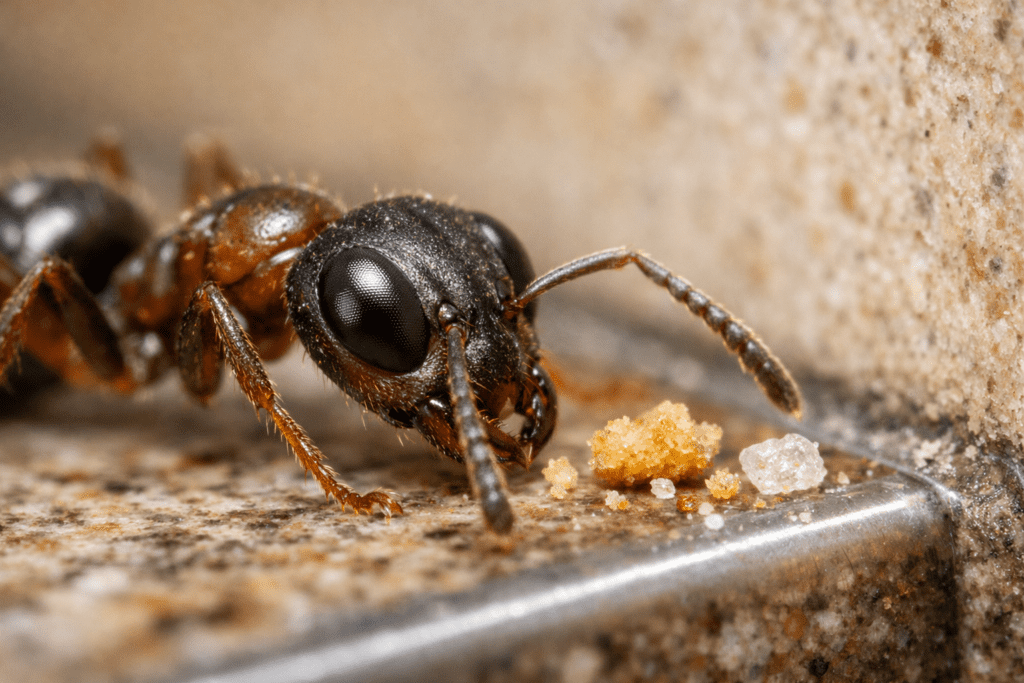
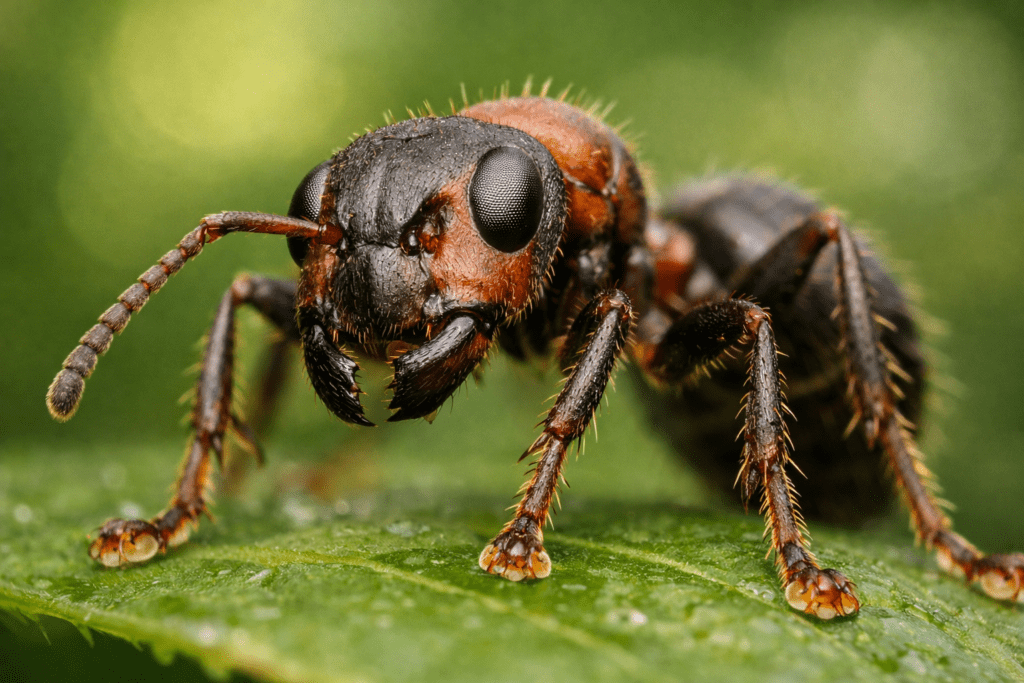
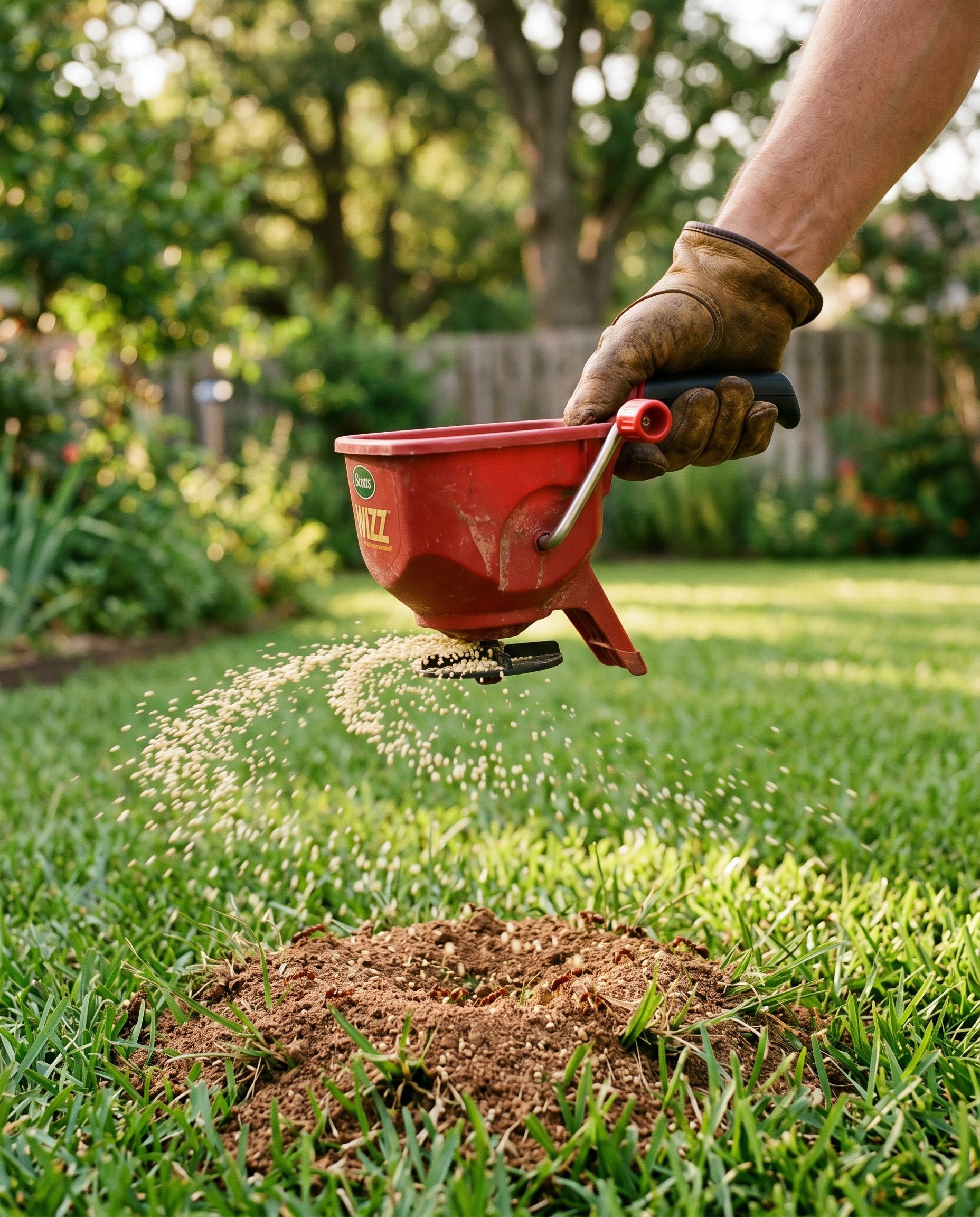
Before you treat, make sure you actually have imported fire ants and not a native ant you can leave alone. The red imported fire ant (*Solenopsis invicta*) builds a dome of loose, fluffy soil with no obvious hole in the center, since they enter and leave through underground tunnels. Disturb that dome even lightly and the response is immediate: workers boil up and sting anything touching it, which is the fastest field tell there is.
The ants themselves are small and variable, running about a sixteenth to a fifth of an inch, and reddish-brown to dark. They are a Southeast and Sunbelt problem above all, with established populations across the southern states and pockets out west, so range and season matter to how you plan a treatment. If you are mainly worried about whether the sting is dangerous, our guide on which ants bite and which species are dangerous covers that side in detail, and the sting safety note below applies the moment anyone in the home reacts badly to stings.
Step one: bait the whole yard
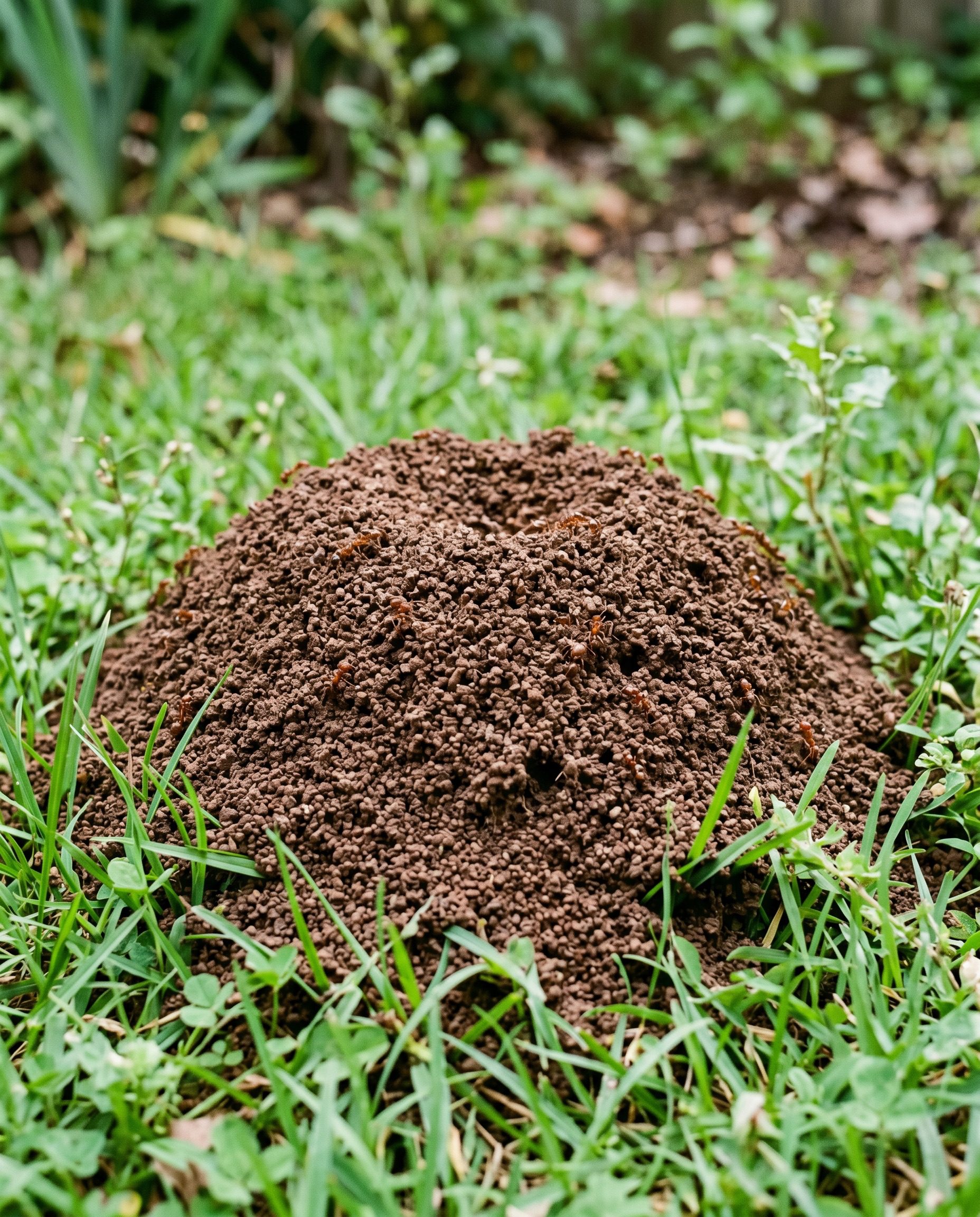
This is the step that does the heavy lifting, and the mechanics are why it beats spraying. A fire ant bait is an insecticide carried on corn grit coated in oil; foragers haul it back and feed it through the colony to the queen. A spray can never reach the queen that way. It is the same problem UC IPM flags for ants in general, that spraying kills only foraging ants without killing the colony and the queens. Used right across a yard, Texas A&M and Mississippi State both report broadcast baiting gives roughly 80 to 90 percent control of mounds.
Spread it with a small handheld spreader at the low rate the label gives for the whole lawn, not piled on mounds. Then leave it completely alone. Bait is slow on purpose, so it takes weeks to work, and that wait is what separates a real clear-out from a temporary scatter. For the product categories and how baits compare to mound drenches, see our fire ant killers and mound treatments guide.
Timing is the whole trick
Bait sitting on the lawn is useless if the ants are not out picking it up, so timing decides whether step one works at all. The window both UC IPM and Mississippi State point to is soil temperatures of about 70 to 90F with the ants actively foraging. Too cold or too hot and they stay underground, and the bait just weathers away.
You do not have to guess whether they are foraging. Drop a greasy potato chip or a bit of hot dog near a mound and check back; if foragers find it within about 30 minutes, they are active and it is a good day to bait. A few more rules from the Texas A&M program: apply when the grass is dry with no rain expected for 24 to 48 hours, since rain ruins fresh bait, and in hot weather put it out in the late afternoon or evening when the ground has cooled and ants come up to feed. For most yards, broadcasting once or twice a year keeps colonies knocked down, and tying it to spring plus a late-summer follow-up is an easy cadence to remember.
Step two: hit the holdouts
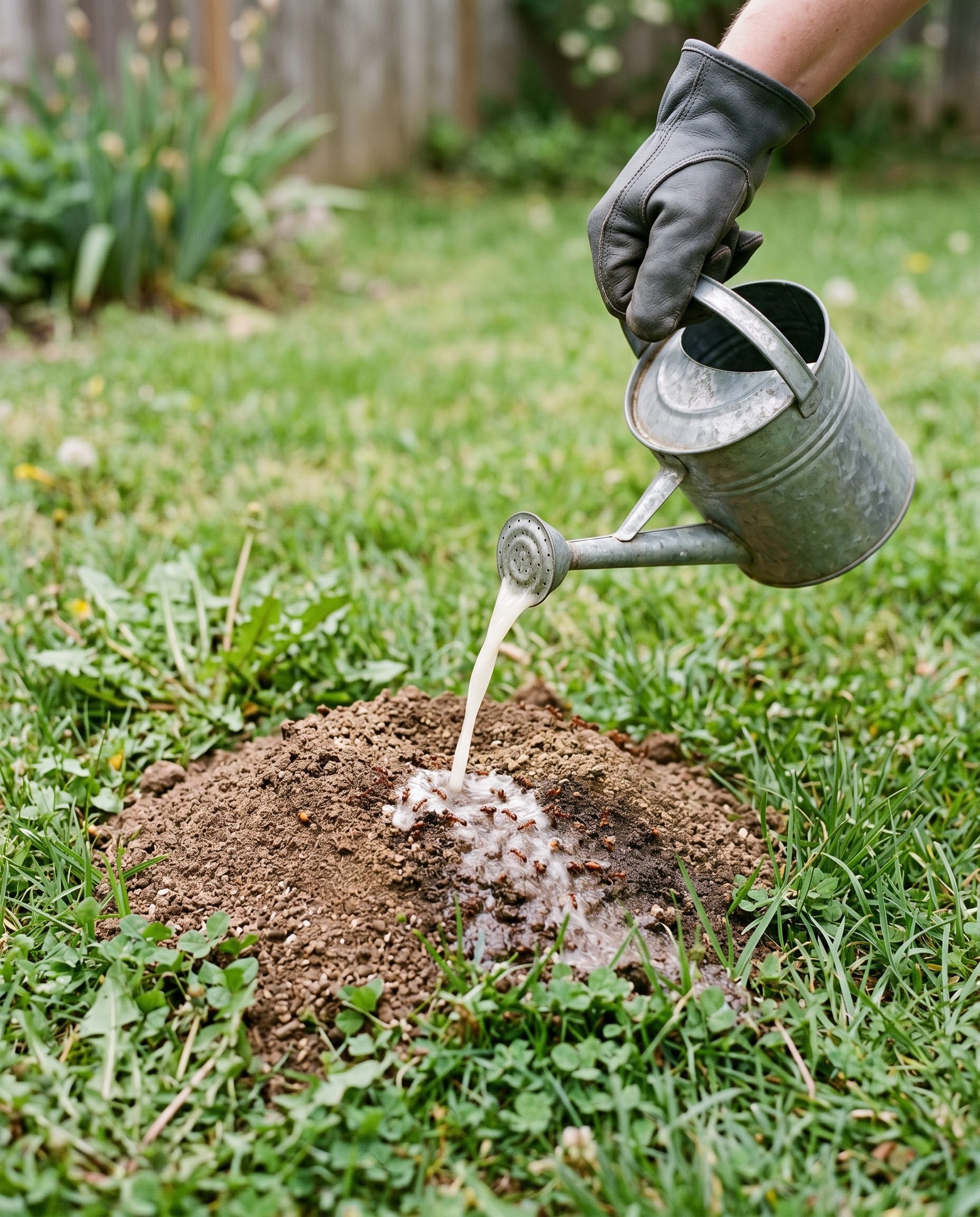
Bait clears most of the yard, but a few mounds, usually the biggest or the ones right by a door or play area, will hang on or show up between treatments. That is what step two is for. Once the bait has had its week or two, treat only those problem mounds directly, and treat them without disturbing the mound first for the same queen-escape reason as before.
A liquid drench is the common home option: you soak the mound with enough product, mixed and applied per the label, to reach the colony deep down, which Mississippi State puts at 1 to 2 gallons depending on mound size. Pour it slowly so it sinks instead of running off. Read and follow the product label every time, because under federal law the label is the law, and the EPA’s safe pest control guidance is built around using the least product that does the job. Here is the situation map for which tool fits where:
| Situation | Best approach | Watch out for |
|---|---|---|
| Whole-yard infestation | Broadcast bait first, then spot-treat | Time it to 70-90F and active foragers |
| One mound by a door or play area | Individual mound drench, do not disturb | Keep kids and pets off until dry |
| Mound near a pond or storm drain | Targeted bait, avoid liquid runoff | Pyrethroid runoff is toxic to fish |
| Native ants, no stinging dome | Leave them; they compete with fire ants | Do not broadcast over the whole lot |
Stinging hazard and safety
Fire ants are not just a lawn nuisance; their sting can be a real medical risk, so this part is not optional. A sting burns, then forms a white pustule a day or two later, and for someone allergic the reaction can be severe. As CDC NIOSH warns about insect stings, a severe allergic reaction is anaphylactic shock and needs immediate emergency care. Get emergency medical help right away for trouble breathing, throat or tongue swelling, dizziness or fainting, or hives spreading fast, and use an epinephrine auto-injector if one has been prescribed. If anyone in the home has a known severe sting allergy, do not let them treat mounds by hand.
The product side needs care too. Keep children and pets off any treated area until it has dried, store bait and concentrates out of reach, and do not let a liquid drench wash into a pond, aquarium, or storm drain. UC IPM specifically flags that pyrethroid products have turned up in urban creeks at levels toxic to aquatic wildlife, so keep them away from water and avoid drift onto flowering plants where bees forage. If someone swallows a product or a pet gets into it, contact a doctor or your vet or your local poison control center right away.
Common questions
What kills fire ants instantly in the yard?
Nothing safe kills a whole colony instantly, and that is the honest answer. A contact mound drench knocks down the ants it soaks fairly quickly, but it only reaches that one mound, and the colonies you can’t see are untouched. The slow broadcast bait is what clears the yard, so the real plan is bait widely, then drench the few holdouts.
Does pouring boiling water on a mound work?
It helps on a single mound and uses no chemicals, but it is only partly effective and often needs repeating, and carrying boiling water across a yard is an easy way to scald yourself. It also will not touch the colonies you can’t see. Treat it as a spot option for one mound, not a yard plan, and never substitute it for baiting if you want lasting control.
How long until the fire ants are gone?
Plan on weeks, not days. Broadcast bait is slow by design because it has to move through the colony to the queen, so a yard usually drops off over several weeks after a well-timed application. Step-two mound drenches act faster on the mounds you treat, but the durable result comes from the bait plus a follow-up application later in the season.
Will fire ants come back?
Often yes, especially in the Southeast, because new queens fly in and start fresh colonies. That is why Extension programs recommend broadcasting bait once or twice a year rather than treating only when mounds appear. A spring application plus a late-summer follow-up keeps new colonies from getting established.
Can I just spray the mounds?
A surface spray kills the foragers you hit and leaves the queen and brood safe underground, so the mound rebuilds. For the same reason mound-only treatments are not recommended as a stand-alone yard strategy, bait is the tool that reaches the colony. Save targeted treatment for the holdouts after baiting, not as your whole approach.
Final verdict
Getting fire ants out of a yard is two moves done in order, not a war on individual mounds. First broadcast a slow-acting bait over the whole lawn, timed to warm soil around 70 to 90F while the ants are foraging, so it reaches the colonies you can see and the many you can’t. Then, a week or two later, drench only the stubborn mounds that survive, without disturbing them first so the queen can’t escape. Skip the day-one stomping and chasing; a poked mound just relocates, and that is why one-at-a-time treatment never finishes the job. Broadcast once or twice a year and the yard stays quiet.
Next steps:
– Compare baits and mound drenches in our fire ant killers and mound treatments guide.
– If the trails are heading indoors, work through how to get rid of ants in the house.
– For plant-based deterrents around the yard, see our natural ant repellents and sprays guide.