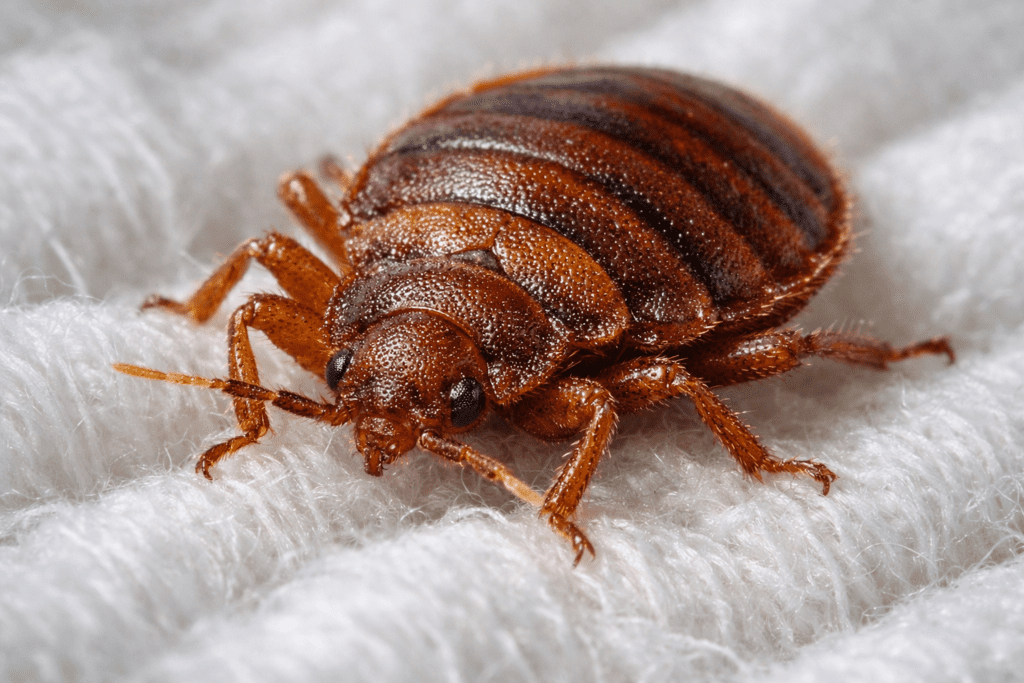
If you found bed bugs in your couch, do not drag it to the curb. Tossing it usually just re-infests the next one, because by the time you spot them on the sofa they have already spread to the bed, the baseboards, and the wall behind the headboard. The fix that keeps the couch is three steps: steam the seams and cushion zippers, treat the frame voids with a desiccant dust, then stand the legs in interceptor cups so nothing climbs back up. Spray is the last and smallest part. In our own home the kit that does the work is a steamer, a puffer of dust, and four cheap cups under the legs. This guide covers where they hide in upholstery, how to clear it, and what to skip.
Do not throw the couch out, because the bugs have already spread and a new couch just gets re-infested. Steam the seams and zippers, dust the frame voids, and isolate the legs in interceptors so nothing re-climbs. Spray is the last and smallest part.
- Do first (free): Find every harborage with a flashlight, vacuum the seams, then steam the seams and cushion zippers slowly.
- Best for the common case: A desiccant dust worked into the frame voids plus interceptor cups under all the legs.
- Skip: Tossing the couch and fogging the room; both leave the spread untouched and the bugs come back.
Quick answer
The order matters more than the products. First confirm where they are with a flashlight and an old card to drag along the seams, because you treat what you can see, not the whole sofa blindly. Vacuum the seams and crevices to knock the numbers down, then run a steamer slowly along every seam, piping line, and cushion zipper, since the heat is what kills eggs the spray misses. Next, work a desiccant dust into the frame voids and screw holes where the steam cannot reach, and set the four legs in interceptor cups so survivors cannot re-climb. A liquid product is optional and goes last. Plan on two to three weekly rounds, not one, because eggs hatch on a lag.
Where they hide in a couch
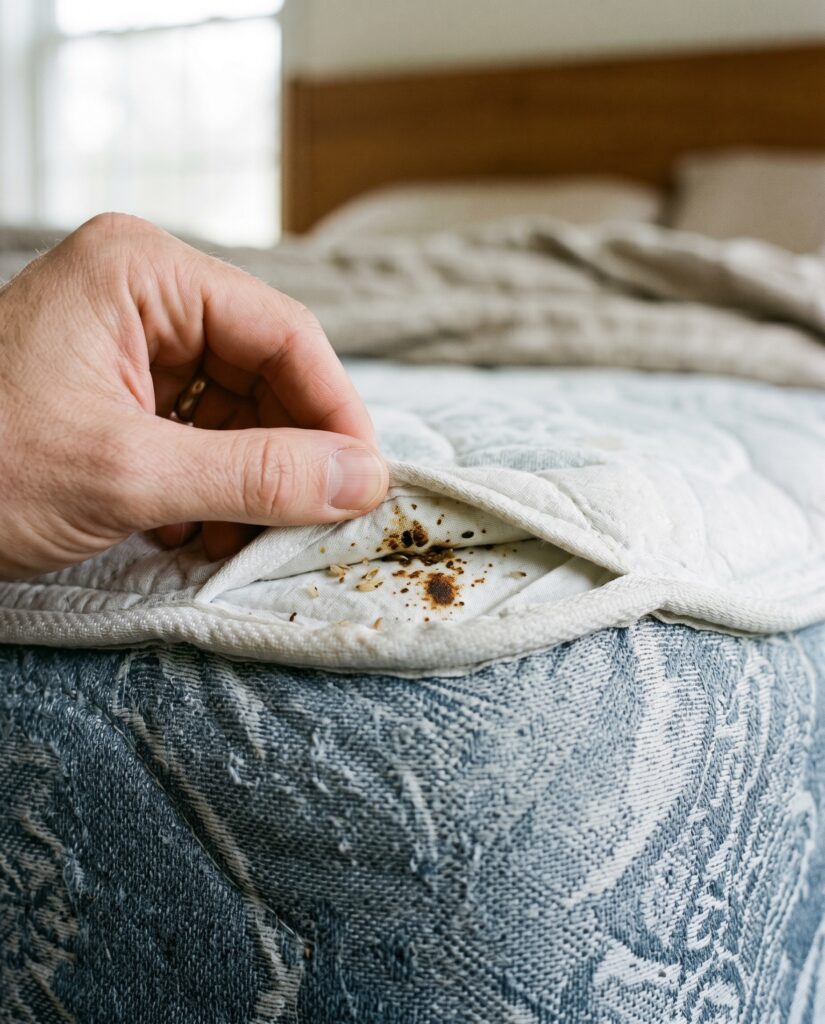
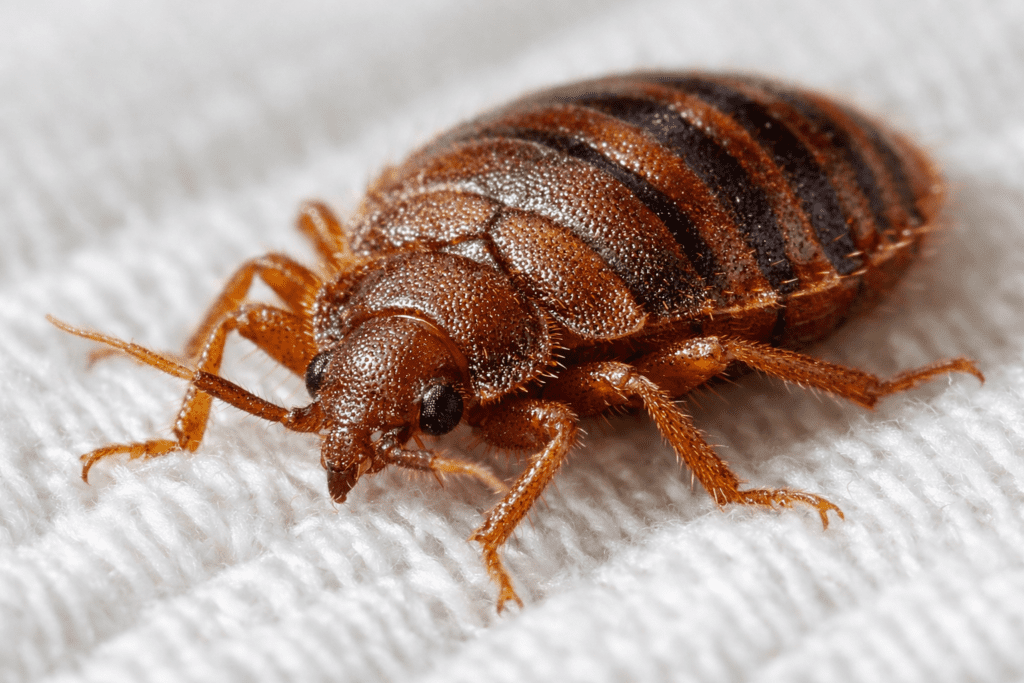
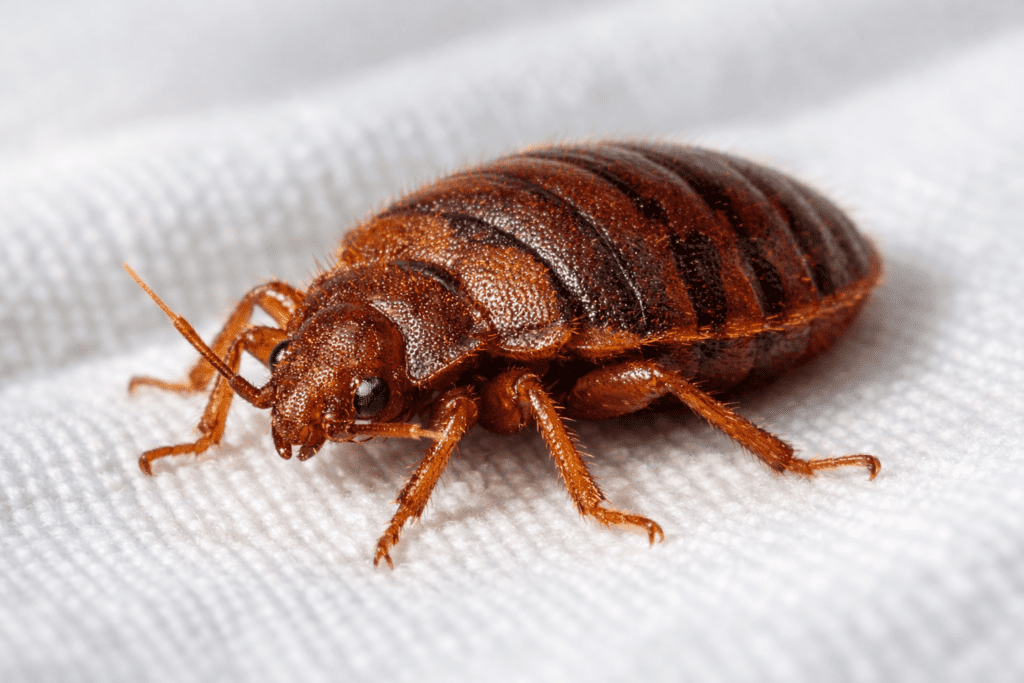
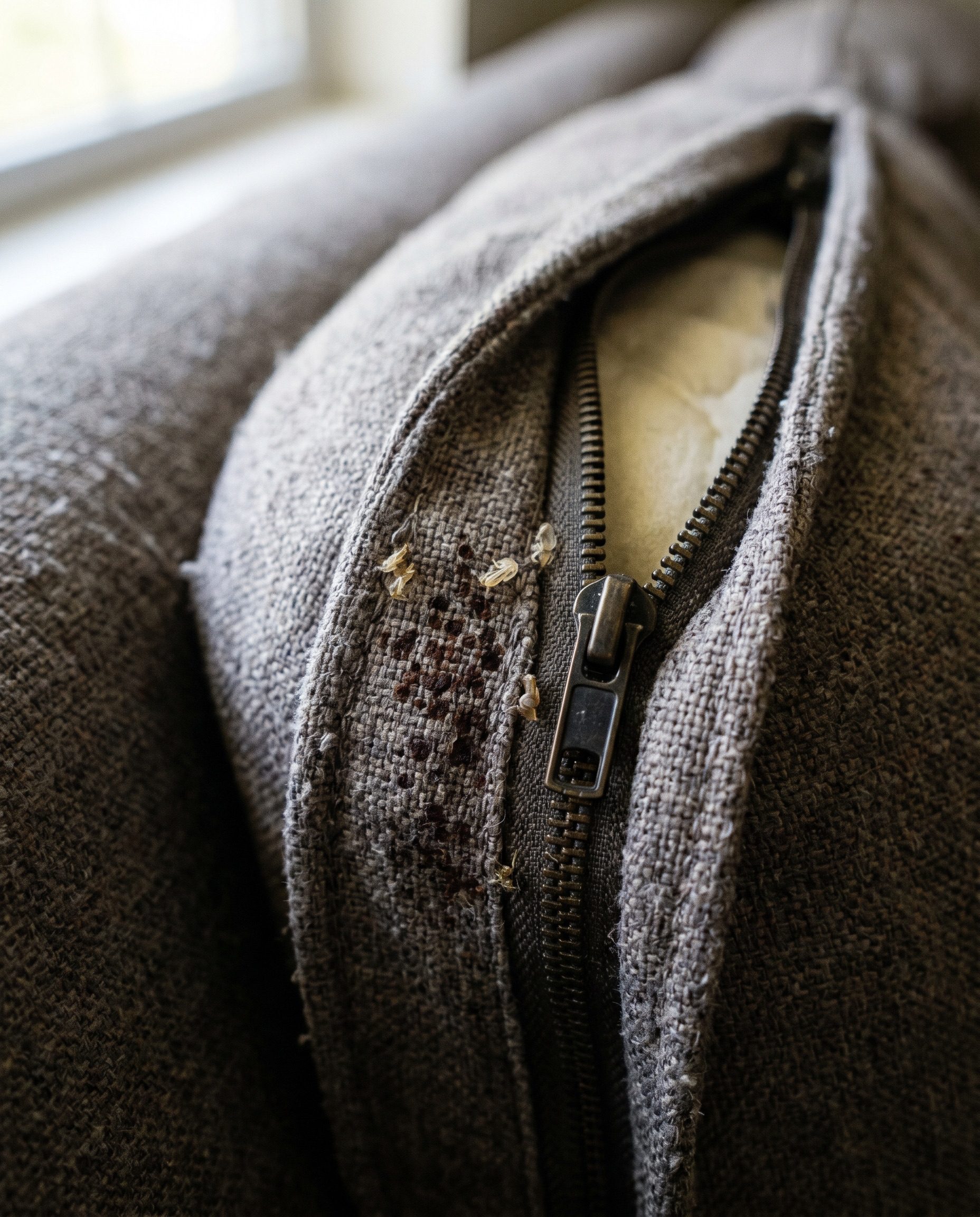
Bed bugs do not live out in the open on the cushion top; they wedge into tight, dark folds and come out to feed at night. Run a flashlight along the deep seams, the piping, under the cushion zippers, the staple line on the underside, and the joints of a wooden frame. The EPA’s checklist on how to find bed bugs tells you what to look for: live bugs the size of an apple seed, rust-colored fecal spots, pale shed skins, and tiny eggs glued into the seams. A reclining or sofa-bed mechanism gives them even more metal-and-fabric crevices to hide in.
That hiding behavior is exactly why curbing the couch backfires. By the time a sofa is this involved, the same signs are usually already on the bed frame, the nightstand, and the wall trim, so a fresh couch walks straight into an active infestation. Michigan State Extension makes the point plainly: discarding furniture is rarely the answer and risks spreading bugs to neighbors, as their bed bug resource page explains. If you are not sure the couch is even the source, our full bed bug control guide walks the whole-home inspection.
Vacuum and steam the seams
This layer costs almost nothing and does the heavy lifting, so it comes first. Start by vacuuming every seam, fold, zipper line, and the underside, using a crevice tool to pull bugs and eggs out of the piping. Bag the vacuum contents in a sealed bag and take them straight outside, because a vacuum gathers live bugs, it does not kill them.
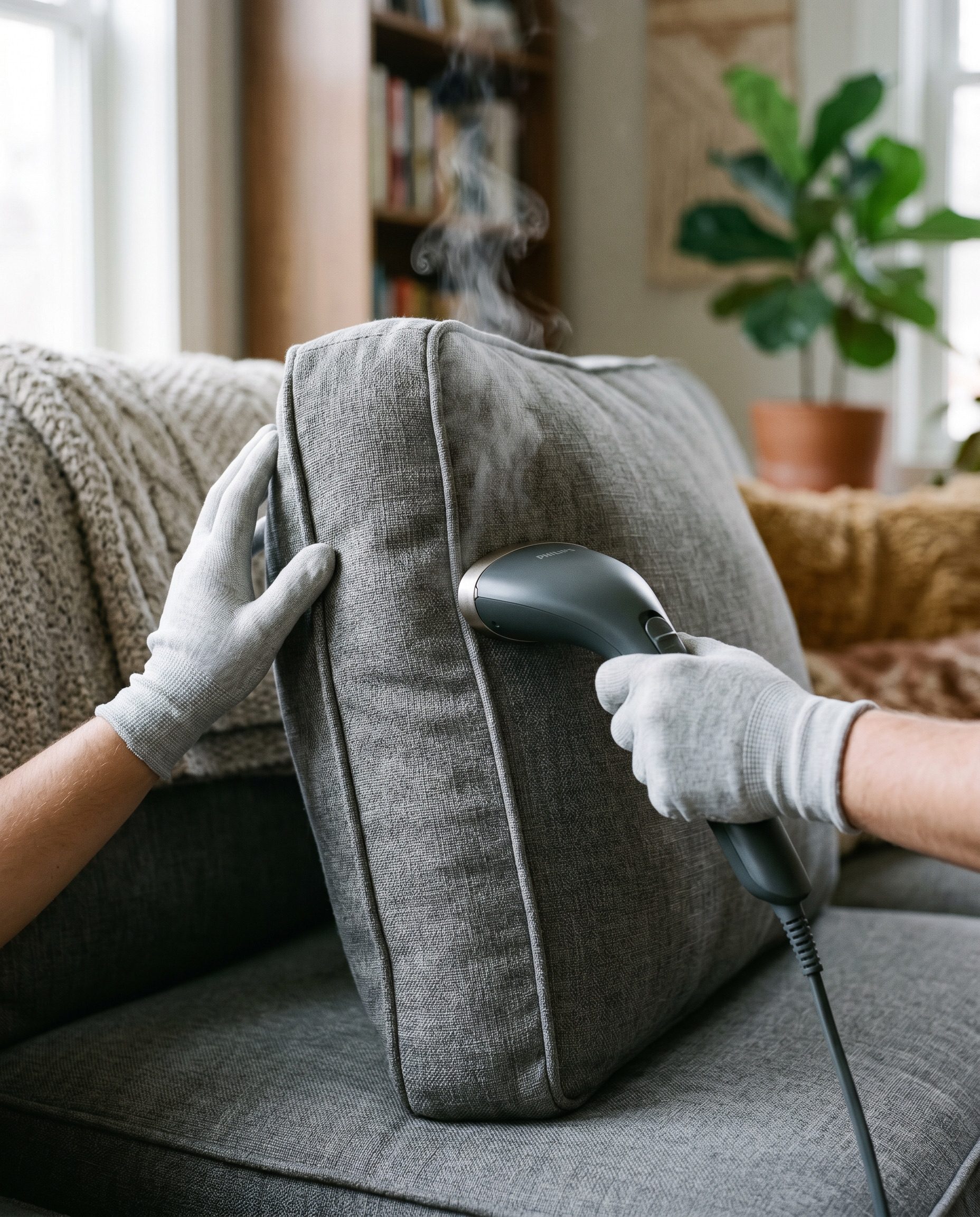
Then steam, which is the step most people skip and the one that actually reaches eggs. Heat is the reliable killer here. University of Kentucky entomology notes that bed bugs and their eggs die at sustained high temperatures, and their bed bug factsheet describes steam and heat as core non-chemical tools. Move the steamer head slowly, an inch or two per second, right along each seam, the piping, the cushion zippers, and the frame joints, so the surface stays hot long enough to matter. Go slow enough that you see the fabric darken with moisture but not so wet it soaks the foam. For technique and what to look for in a unit, see our home bed bug steamer guide. Steaming first is also the IPM-first order the EPA’s do-it-yourself bed bug control sequence recommends: non-chemical methods before any pesticide.
Treat voids and isolate the legs
Steam handles surfaces and seams, but it will not reach inside a hollow frame rail, a screw hole, or the gap where two pieces of wood meet. That is where a desiccant dust comes in. A thin film of dust in those voids scratches the bug’s waxy coat and dries it out, and because it does not break down, it keeps working for weeks. Apply a light film, not a pile, with a puffer into the frame voids and joints; a heap of visible dust just gets avoided and makes a mess. This matters because sprays alone keep failing on this pest, and the EPA is explicit that pesticide resistance is widespread so leaning on a liquid product alone is the slow way to lose.
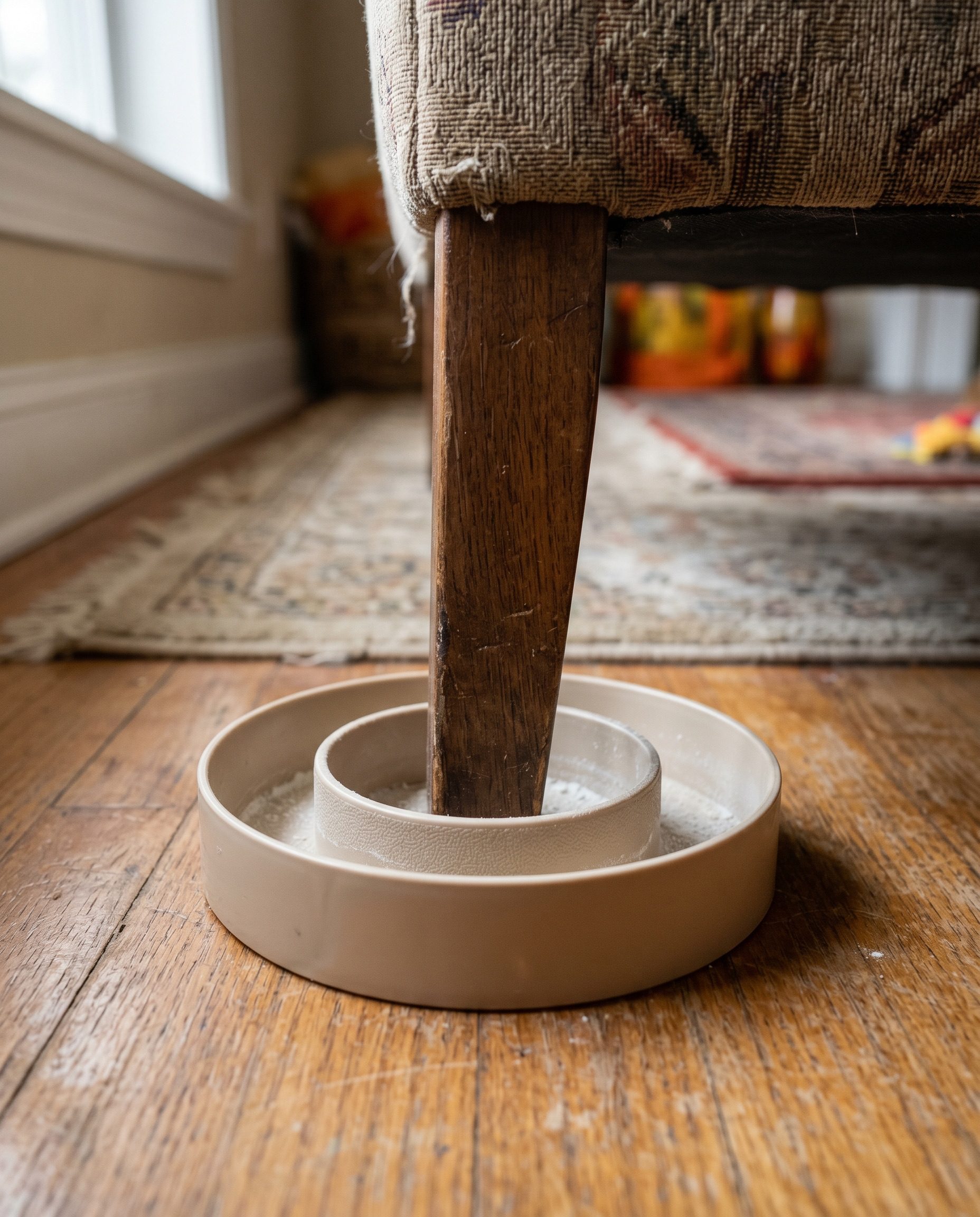
Now close the loop so survivors cannot regroup. Pull the couch a few inches off the wall, and stand each leg in an interceptor cup so any bug trying to climb up or down gets stranded in the moat. University of Minnesota Extension describes interceptors as both a monitor and a control tool in its bed bug guidance, and they double as your scorecard for whether the treatment is working. A liquid spray is the optional last touch on a labeled crack-and-crevice product only. Whatever you use, read and follow the product label, because under federal law the label is the law, keep kids and pets off treated areas until everything is dry, and never spray a desiccant or pesticide onto the cushion surfaces people sit on. For cups that fit furniture legs, see our interceptor traps guide.
Here is the couch zone-by-zone:
| Couch zone | Best approach | Watch out for |
|---|---|---|
| Seams, piping, zippers | Vacuum then steam slowly | Move too fast and eggs survive |
| Frame voids and screw holes | Light film of desiccant dust | Never a visible pile of dust |
| Legs and floor line | Interceptor cup under each leg | Couch must not touch the wall |
| Cushion surfaces you sit on | Heat and vacuum only | No spray or dust where people sit |
Stop them coming back
The durable win is keeping the count at zero after the bugs are down. Check the interceptor cups every few days; an empty cup for two to three weeks is the sign you are clear, while a fresh catch means another round. Keep treating on a weekly cycle for at least three weeks, because eggs hatch on a delay and one pass never gets them all. Encase the mattress and box spring, cut the clutter that gives them places to hide, and inspect any used furniture before it comes through the door. Those are the habits the EPA’s top ten tips to prevent bed bugs put first, and they are the difference between a one-time clear-out and a repeat next season. Bed bugs are hitchhikers, so the real prevention is catching them early on the next thing they ride in on.
When to call a pro
DIY works on a contained couch-and-bedroom problem caught early. Call a licensed pest-control professional when the cups keep catching bugs after three or four correct rounds, when the signs are in more than one room or have spread to a shared wall in an apartment, or when you want a verified clear with a heat treatment. A pro can bring whole-room heat or professional-grade products that homeowners cannot buy. There is no shame in it; bed bugs are genuinely hard, and an early pro call often costs less than months of half-measures. Bed bugs are not known to spread disease, so this is a comfort and persistence problem, not an emergency.
Common questions
Should I throw away a couch with bed bugs?
Usually no. By the time they are in the couch they are almost always in the bed and walls too, so a new couch just gets re-infested, and a curbed sofa can spread bugs to whoever picks it up. Steaming the seams, dusting the frame voids, and isolating the legs clears most couches without the cost and the spread.
Does steam actually kill bed bugs in a couch?
Yes, when you go slow. Heat kills bugs and the eggs that sprays miss, but only if the surface stays hot long enough, so move the steamer an inch or two per second right along the seams and zippers. A fast pass over the cushion top does almost nothing; the seams are where they live.
Will a bug bomb or fogger fix it?
No, and it can make things worse. Foggers do not reach into the seams and voids where bed bugs hide, they scatter bugs to new rooms, and resistance means many survive the cloud anyway. Targeted steam, dust, and interceptors beat a fogger every time on this pest.
How long until the couch is clear?
Plan on a few weeks. Expect to treat weekly for at least three weeks because eggs keep hatching, and use the interceptor cups as your scorecard. When the cups stay empty for two to three weeks straight, you can call it.
Can I still sit on the couch while I treat it?
Once steamed surfaces have dried and any dust is confined to the frame voids out of contact, light use is reasonable, though many people cover the cushions with a tight encasement during treatment. Never dust or spray the seating surfaces themselves.
Final verdict
Bed bugs in a couch are a steam-and-isolate job, not a throw-it-out job. Tossing the sofa usually just re-infests the next one, because the spread is already wider than the couch. So vacuum and bag the seams, steam every seam and zipper slowly enough to cook the eggs, work a light film of desiccant dust into the frame voids, and stand all four legs in interceptor cups so nothing re-climbs. Keep a spray for last, if at all. Run the cycle weekly for about three weeks and let the cups tell you when you are done.
Next steps:
– Confirm whether the couch is the only source with our full bed bug control guide.
– Pick a unit that reaches seams with the home bed bug steamer guide.
– Set up monitoring under the legs with the interceptor traps guide.