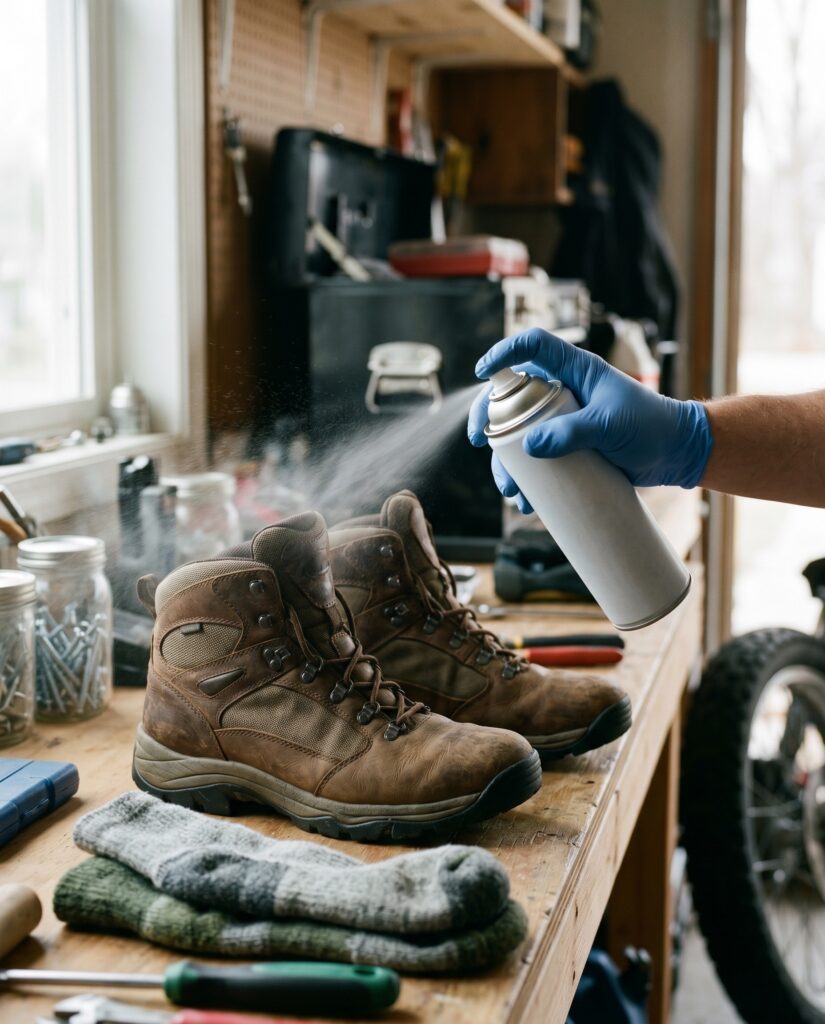
Finding a tick on your skin is unsettling, but tick removal aftercare is usually simple: clean the bite, save or discard the tick safely, then watch for symptoms for the next few weeks. The goal is to prevent a minor skin irritation from turning into an infection – and to spot early warning signs of tick-borne illness while treatment is most effective. Below is a clear post-bite protocol, what’s normal vs not, and when it’s worth calling a clinician (including when a preventive antibiotic might make sense).
Quick Answer: Tick Removal Aftercare Checklist (Do This Today)
Use this tick removal aftercare checklist right after you pull the tick off.
Immediately (first 5 minutes)
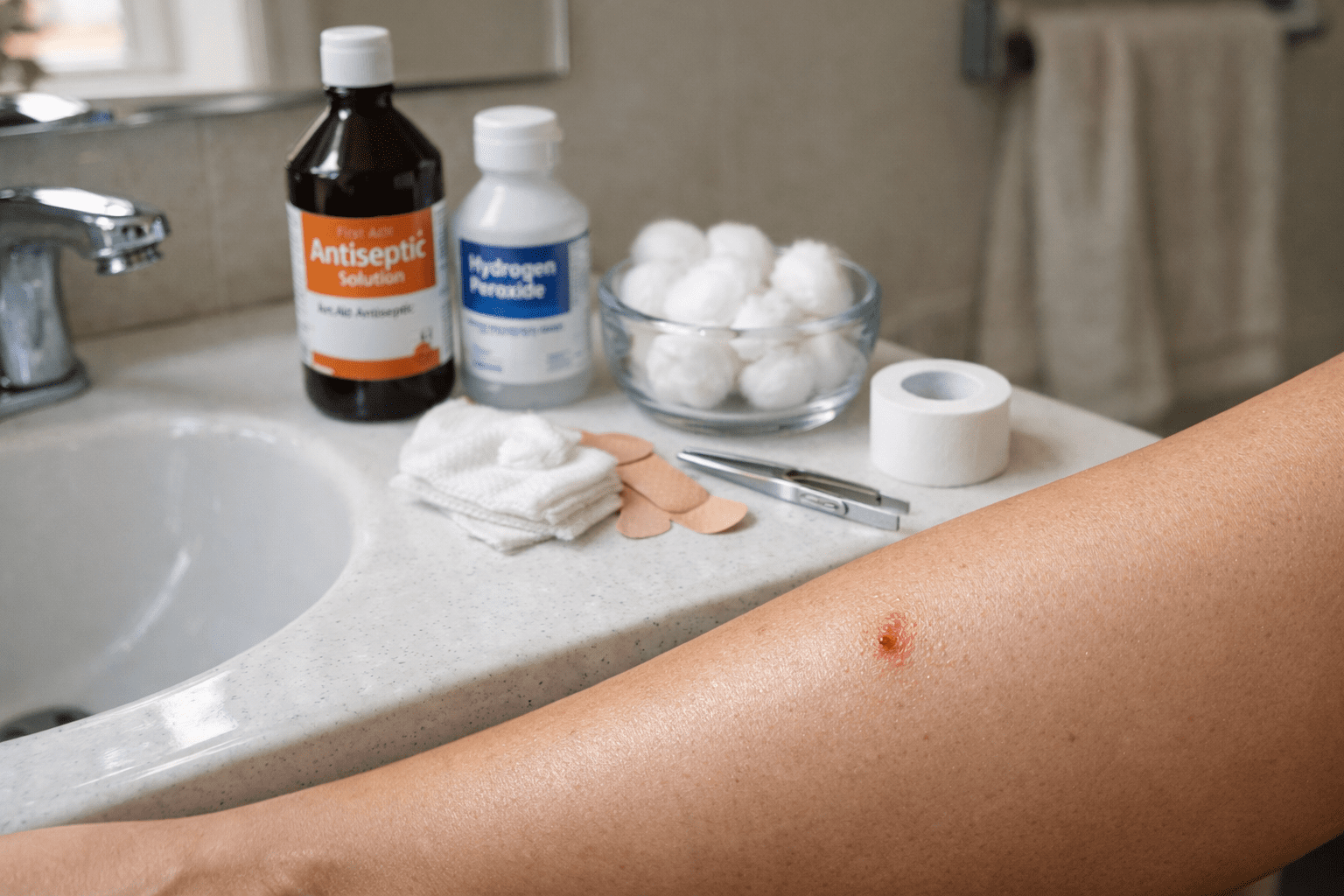
- Wash the bite and your hands with soap and water.
- Disinfect the area with rubbing alcohol, iodine, or another skin antiseptic.
- Dispose of the tick: place it in rubbing alcohol, seal it in a bag, or flush it. Avoid crushing it with bare fingers.
- Optional: apply a thin layer of antibiotic ointment if you tolerate it.
Over the next 24 hours
- Use a cold pack 15-20 minutes at a time for itch or swelling.
- Do a full-body tick check and shower if you have not yet.
- Put worn clothes in a dryer on high heat to kill hitchhiking ticks.
For the next 2-4 weeks (sometimes up to 30 days)
- Watch for an expanding rash, fever, fatigue, headache, body aches, or swollen lymph nodes.
- If symptoms appear, contact a clinician and consider snapping a photo of any rash for documentation.
If you still need the removal steps, see our guide: How to Remove a Tick Safely: Complete Step-by-Step Guide.
Tick Removal Aftercare Step 1: Clean, Calm the Skin, and Handle the Tick Safely
Most people focus on the “pull” and forget the next 10 minutes. But those minutes matter because a tick bite is a tiny puncture wound. Your aftercare job is to reduce local irritation, lower the chance of a skin infection, and preserve useful information in case symptoms show up later.
According to guidance for clinicians from the Centers for Disease Control and Prevention, the basics are straightforward: remove the tick properly, then clean the area well. The American Red Cross tick bite advice echoes the same approach for first aid.
What to do right after the tick comes out
Here’s a simple, reliable sequence:
- Wash your hands and the bite site with soap and water.
- Disinfect the bite with rubbing alcohol or another antiseptic.
- Reduce itch and swelling
- Cold pack 15-20 minutes
- Consider an oral antihistamine if itching is annoying (follow label directions)
- Protect the skin
- A small amount of antibiotic ointment can help if you are not sensitive to it
- Keep it uncovered unless clothing rubs it, then use a small bandage
What if the mouthparts broke off?
This is common. The part that sometimes remains is typically the barbed mouthpiece, not the “body.”
Entomology and medical guidance, including the Johns Hopkins Lyme Disease Research Center’s tick bite instructions, notes that retained mouthparts don’t keep transmitting Lyme disease. They can irritate the skin like a splinter, but they are not the same as an attached, feeding tick.
Practical approach
- If you can lift it out easily with clean tweezers, do so.
- If you can’t, leave it alone and let the skin heal. Digging often causes more inflammation.
Safe tick disposal options (pick one)
Think of the tick like a tiny container that you do not want to squeeze.
| Method | How | Why it’s recommended |
|---|---|---|
| Alcohol | Drop tick into rubbing alcohol | Kills tick quickly and cleanly |
| Sealed bag/container | Put tick in a zip bag or small jar | Useful if you want to show a clinician |
| Flush | Flush down toilet | Simple and effective |
| Tape wrap | Wrap tightly in tape, then trash | Prevents escape |
What not to do (common mistakes)
The CDC and major medical centers advise against “folk remedies” that irritate the tick:
- Don’t use petroleum jelly, nail polish, essential oils, or heat to make it “back out.”
- Don’t twist aggressively or jerk during removal.
If you want the full removal technique, revisit: How to Remove a Tick Safely: Complete Step-by-Step Guide.
Tick Removal Aftercare Step 2: Assess Risk (Species, Time Attached, Engorgement)
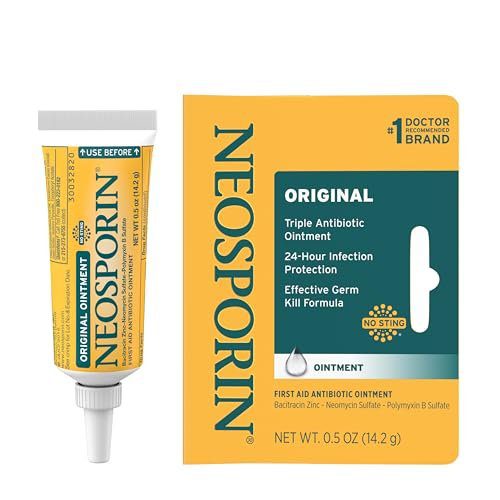
Neosporin Original First Aid Triple Antibiotic Ointment with Bacitracin Zinc for Infection Protection, Wound Care Treatment & Helps Minimize the Appearance of Scars for Minor Wounds, .5 oz
This antibiotic ointment is relevant for applying a thin layer to the tick bite site to help prevent infection after tick removal.
Here’s the part many people skip: not every tick bite carries the same disease risk. A careful, calm risk check helps you decide whether to simply monitor or to call a clinician about preventive options.
The biggest drivers of risk are:
- Where you were bitten (Lyme-endemic regions vs low-incidence areas)
- Tick species (blacklegged ticks spread Lyme in much of the U.S.)
- How long it fed (time attached)
- How engorged it looks (a clue to feeding duration)
The CDC clinician guidance on caring for patients after a tick bite emphasizes that Lyme transmission risk rises with attachment time. Many public health sources note that substantial Lyme risk typically requires a longer attachment period, often cited around 36-48 hours for efficient transmission.
Quick “risk snapshot” table you can use at home
This is not a diagnosis tool, but it’s a solid decision aid.
| Clue | Lower concern | Higher concern |
|---|---|---|
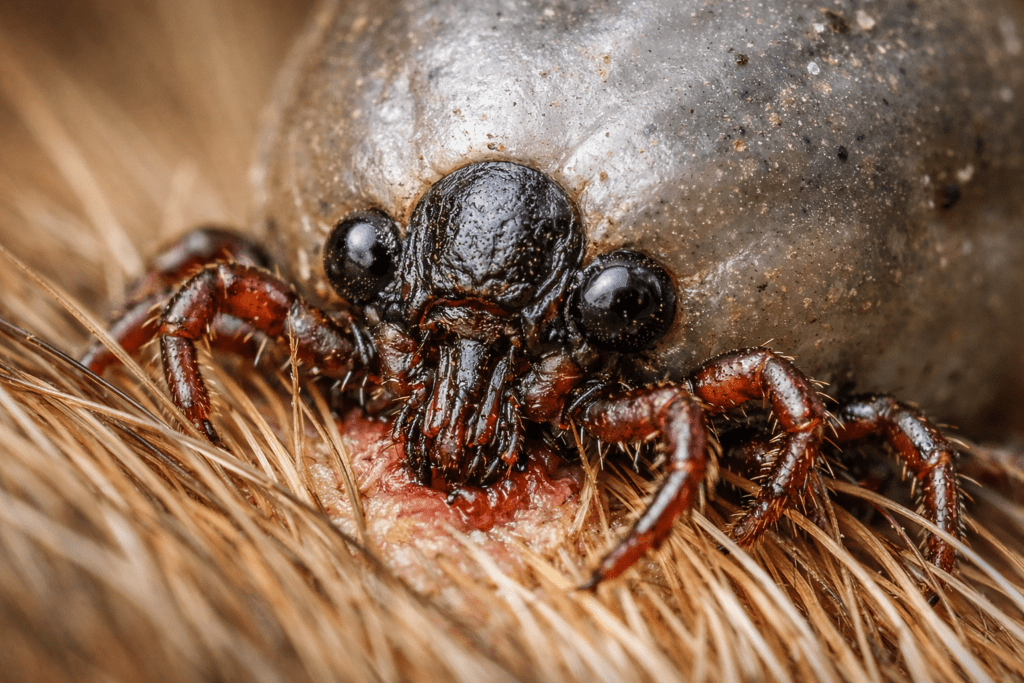
| Tick appearance | Flat, not swollen | Engorged, grayish, “plump” |
| Time attached | Likely under 24 hours | Possibly over 36 hours |
| Species | Uncertain, larger “dog tick” look | Small blacklegged tick (Ixodes) in endemic region |
| Geography | Low Lyme incidence area | Northeast, Upper Midwest, parts of Mid-Atlantic |
Should you save the tick for identification?
Sometimes yes, especially if you live in a high-Lyme region or symptoms develop later.
How to save it
- Place it in a sealed bag or small container.
- Note the date and likely exposure location (park, trail, backyard).
- If possible, take a clear photo next to a coin for size reference.
A note on tick testing
Many people want to mail the tick to a lab. The CDC cautions that tick testing does not reliably predict infection in the person, and results can be misleading for decision-making. In other words, a “positive tick” does not prove transmission, and a “negative tick” does not rule out other exposures.
Why timing matters more than panic
Ticks transmit pathogens through feeding, not by simply crawling. If you removed a tick quickly, that’s a meaningful win. It’s one reason daily tick checks are so effective for hikers, hunters, gardeners, and kids who play in brushy edges.
For a deeper look at illnesses carried by different tick species, read: Tick-Borne Diseases: Lyme, Anaplasmosis & Rocky Mountain Fever.
Tick Removal Aftercare Step 3: Monitor for 30 Days (What’s Normal vs a Red Flag)
Amazon Basic Care Nighttime Cold & Flu Relief Syrup, Cherry, 8 fl oz (2-Pack)
Cold packs can be used to reduce itch and swelling at the tick bite site, making this product relevant for post-bite care.
Aftercare is mostly a waiting game, but it should be a structured one. Many tick-borne diseases start like a generic viral illness, so it helps to know what to watch for and when to act.
The Johns Hopkins Lyme Disease Research Center recommends monitoring for symptoms after a tick bite, and public health guidance commonly suggests watching for several weeks. Early Lyme disease often shows an expanding rash called erythema migrans, and many estimates place rash occurrence in a majority of early cases.
A simple monitoring protocol (copy/paste to your notes app)
Day 0 (removal day)
- Record: date, location of bite on body, likely exposure site.
- Optional: photo of the bite site.
Days 1-7
- Expect mild redness or itch right at the puncture.
- Check daily for spreading redness.
Weeks 2-4 (and up to 30 days)
- Watch for: fever, chills, fatigue, headache, joint aches, swollen lymph nodes.
- Watch for: expanding rash, especially one that grows larger over days.
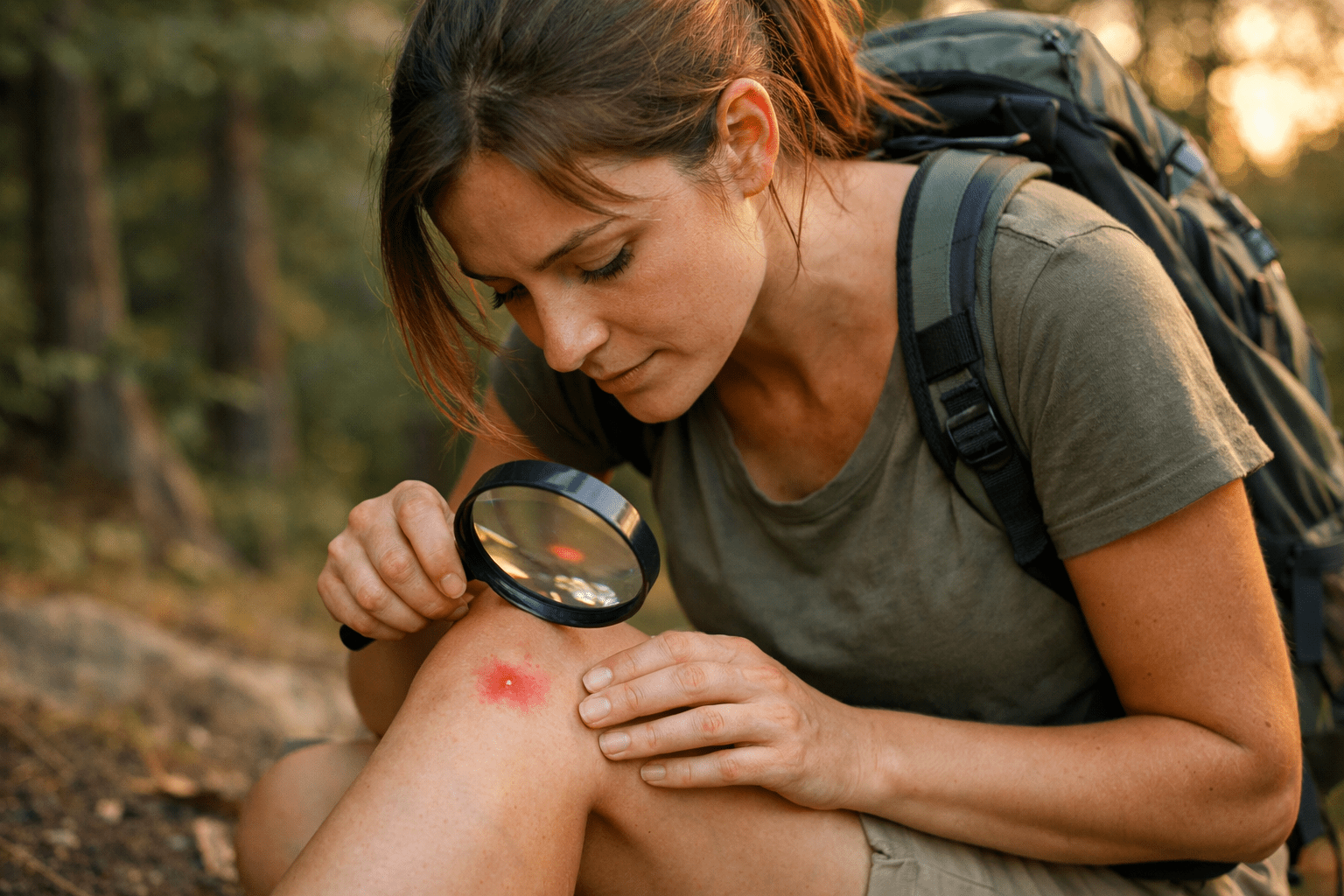
What the bite should look like if it’s just local irritation
A normal, uncomplicated bite often has:
- A small red bump (like a mosquito bite)
- Mild itch
- Redness that stays small and fades
Red flags that should trigger a medical call
Use this quick chart:
| Symptom | Why it matters | What to do |
|---|---|---|
| Expanding rash (often over 2 inches or 5 cm) | Classic early Lyme sign can expand over days | Photograph it and call a clinician |
| Fever + fatigue after a bite | Common early sign across multiple tick-borne infections | Seek evaluation, especially in endemic areas |
| Severe headache, neck stiffness, facial droop | Neurologic warning signs | Urgent medical evaluation |
| Increasing pain, warmth, pus at bite | Skin infection | Medical evaluation for wound infection |
For a symptom-by-symptom guide, see: Tick Bite Symptoms: When to See a Doctor.
Myth check: “The rash is always a bull’s-eye”
It’s not. Some erythema migrans rashes are uniformly red, some have central clearing, and some people never notice a rash at all. That’s why pairing skin checks with general symptom monitoring is so important.
Tick Removal Aftercare Step 4: Do You Need Preventive Antibiotics (Doxycycline)?
This is one of the most searched questions after a tick bite, and it deserves a clear answer: preventive antibiotics are not routine for every tick bite, but they are recommended in specific higher-risk situations.
The CDC’s guidance for clinicians outlines criteria where a single dose of doxycycline may be considered to reduce Lyme disease risk. Many state public health agencies provide similar decision checklists, such as the California Department of Public Health tick bite handout.
The “4-question” prophylaxis screen (bring this to your appointment)
A clinician may consider a single preventive dose when all (or nearly all) of these are true:
- Was it a blacklegged tick (Ixodes)?
- Did it likely feed for 36+ hours? (often suggested by engorgement or known time attached)
- Are you in a high-Lyme area? (many parts of the Northeast, Upper Midwest, and some Mid-Atlantic regions)
- Can prophylaxis be started within 72 hours of removal?
If those boxes are not checked, most guidance recommends watchful waiting instead of antibiotics.
Why not take antibiotics “just in case”?
Because the tradeoff is real:
- Side effects (GI upset, sun sensitivity)
- Not all tick-borne diseases are prevented by the same approach
- Overuse contributes to antibiotic resistance
What about children, pregnancy, and contraindications?
These decisions are individualized. Doxycycline is not appropriate for everyone, and clinicians weigh age, pregnancy status, allergy history, and local disease patterns.
If you do get symptoms, prophylaxis is no longer the goal
Preventive dosing is different from treatment. If you develop a suspicious rash or systemic symptoms, your clinician will evaluate you for active infection and treat accordingly.
If you want a broader overview of what ticks can transmit (not just Lyme), read: Tick-Borne Diseases: Lyme, Anaplasmosis & Rocky Mountain Fever.
Tick Removal Aftercare Step 5: Prevent the Next Bite (Because There’s Usually More Than One)
One tick often means others are nearby. Ticks behave like patient ambush predators, waiting on vegetation and grabbing onto passing hosts. The best aftercare includes preventing a repeat bite in the next few days, especially if you were in leaf litter, tall grass, brushy edges, or deer trails.
The Johns Hopkins Lyme Disease Research Center prevention tips emphasize practical steps like protective clothing, repellents, and post-outdoor checks.
A practical prevention routine (high success, low effort)
Use this checklist after yard work or a hike:
-
Clothing strategy
- Light-colored clothing makes ticks easier to spot.
- Tuck pants into socks in heavy tick habitat.
-
Repellent strategy
- Use an EPA-registered repellent on exposed skin (follow label directions).
- Treat clothing and gear with permethrin where appropriate.
-
Post-outdoor reset
- Shower soon after coming inside.
- Dry clothes on high heat to kill ticks.
- Check: scalp, behind ears, armpits, waistband, behind knees, and between toes.
Quick comparison: DEET vs picaridin vs permethrin
| Product | Where it goes | Best for |
|---|---|---|
| DEET | Skin | General outdoor protection |
| Picaridin | Skin | Similar protection, often less odor |
| Permethrin | Clothing/gear (not skin) | Long-lasting protection on fabrics |
For product-specific guidance, see: Best Tick Repellents for Humans: DEET, Picaridin & Permethrin.
Don’t forget pets (they’re tick taxis)
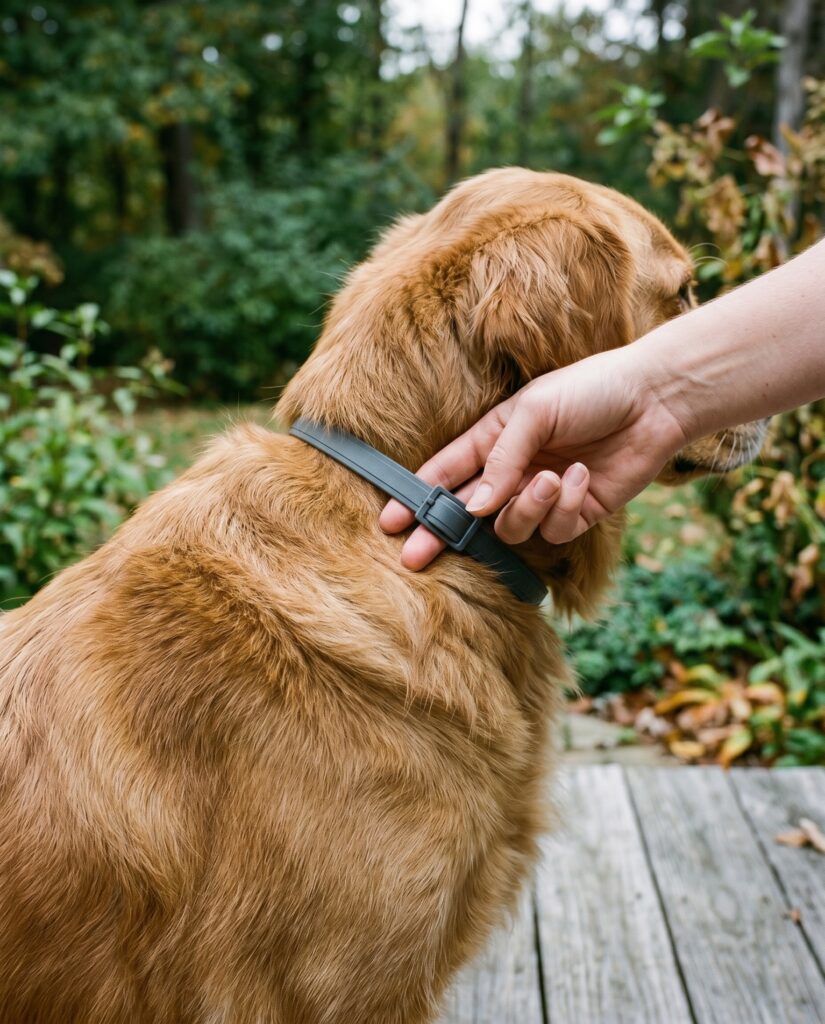
Dogs and outdoor cats can carry ticks indoors. Ask your veterinarian about tick prevention, and check pets after walks, especially around ears, neck, and between toes.
Key Takeaways: Tick Removal Aftercare in Plain Terms
- Clean the bite and your hands right away, then disinfect the area.
- Dispose of the tick safely (alcohol, sealed bag, or flush). Avoid crushing it.
- Mild redness and itch can be normal. An expanding rash, fever, or flu-like symptoms are not.
- Monitor for 2-4 weeks, and in some cases up to 30 days.
- Preventive doxycycline is reserved for higher-risk bites (Ixodes tick, likely 36+ hours attached, high-Lyme area, within 72 hours).
- Reduce repeat bites with repellents, clothing choices, showers, and daily tick checks.
Conclusion
Good tick removal aftercare is less about doing something complicated and more about doing a few simple steps consistently: clean the skin, document what happened, and monitor for the small set of symptoms that actually matter. If anything seems to be expanding, worsening, or accompanied by fever or fatigue, get medical advice promptly.
Next steps: review Tick Bite Symptoms: When to See a Doctor and keep our How to Remove a Tick Safely: Complete Step-by-Step Guide bookmarked before your next hike or backyard project.
As an Amazon Associate, I earn from qualifying purchases. Product recommendations are based on real reviews and independent research.