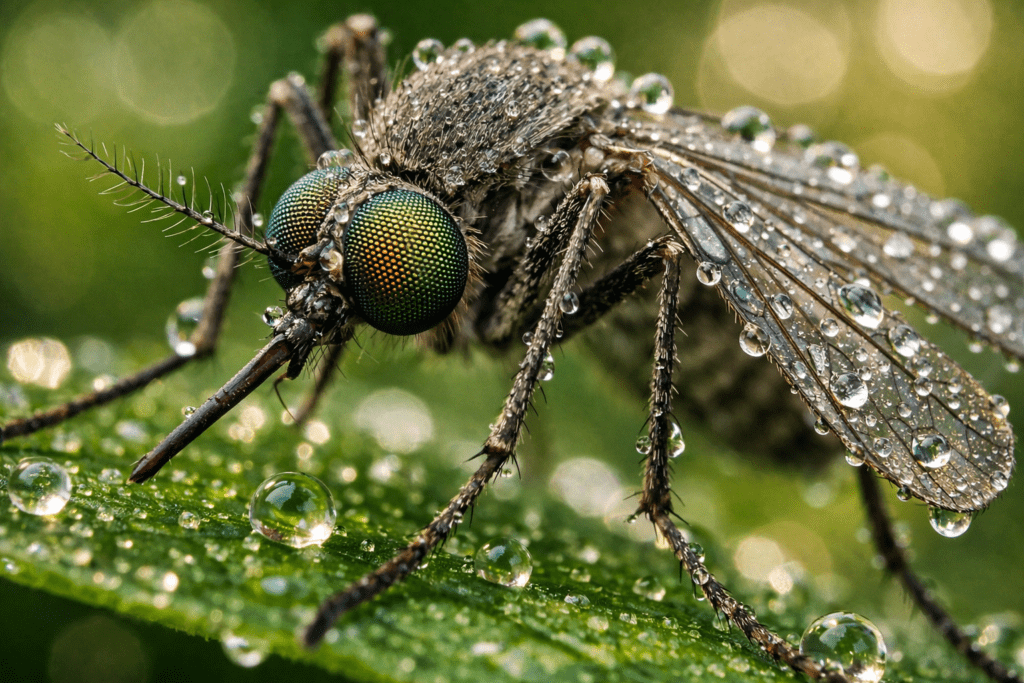
Here’s something that surprises most people: blood isn’t a mosquito’s primary food. Both male and female mosquitoes feed mainly on plant nectar and sugary fluids for energy. Only females drink blood, and only because they need specific proteins for egg production. The mosquito diet is more varied than you’d expect.
Quick Answer
- Both sexes eat nectar from flowers, plant sap, and honeydew (sugary excretions from aphids) as their primary energy source
- Only females drink blood – they need proteins and iron for egg development
- Males never bite. They feed exclusively on plant sugars their entire lives.
- Larvae eat algae, bacteria, and organic detritus while living in water
The Full Mosquito Diet by Life Stage
| Life Stage | Food Source | Why |
|---|---|---|
| Larvae (aquatic) | Algae, bacteria, organic matter in water | Growth and development |
| Pupae | Nothing – don’t feed | Metamorphosis stage |
| Adult males | Flower nectar, plant sap, honeydew | Flight energy, survival |
| Adult females | Nectar (energy) + blood (reproduction) | Nectar for energy, blood for eggs |
Why Females Need Blood
Blood provides two things that plant nectar doesn’t: protein (specifically isoleucine, an amino acid) and iron. Both are required for vitellogenesis – the process of developing viable eggs inside the female mosquito’s abdomen.
Without a blood meal, most mosquito species can’t produce eggs at all. A few species can lay a small first batch of eggs without blood (autogenous reproduction), but subsequent egg batches always require blood protein.
After a blood meal, the female rests for 2-3 days while her body converts blood proteins into 100-300 eggs. She then deposits the eggs in or near water and immediately begins seeking another blood meal.
Mosquitoes as Pollinators
Because both male and female mosquitoes feed on nectar, they do transfer pollen between plants. In certain ecosystems – particularly Arctic tundra and northern bogs – mosquitoes are significant pollinators. Some orchid species and wetland plants rely partly on mosquito pollination.
Key Takeaways
- Plant nectar, not blood, is the primary food source for all mosquitoes. Males never drink blood.
- Females need blood specifically for egg production – the proteins and iron in blood are converted into eggs over 2-3 days.
- Mosquito larvae are aquatic filter feeders that consume algae, bacteria, and organic detritus.
- Both sexes pollinate plants while feeding on nectar, making mosquitoes unexpected contributors to plant reproduction.