Finding a bee inside house can feel urgent, especially if kids, pets, or allergies are part of the picture. In most cases, it is just a single forager that drifted in through an open door, window, or vent and wants to get back outside. The safest plan is simple: stay calm, give it a clear exit, and avoid swatting. This guide explains how to remove a bee without getting stung, how to tell when it might be a nest in a wall or attic, and what to do next if bees keep showing up.
Two neighbouring questions come up here: Sweat Bees: Why They Land on You and How to Effectively Repel Them and Ground Bees: How to Identify and Effectively Manage Them.
Quick answer: what to do for a bee inside house (right now)
If you have a bee inside house, do this first:
-
If it is just one bee:
- Turn off indoor lights in that room.
- Open one window or exterior door nearby.
- Keep people and pets back and wait 5-10 minutes. Bees usually fly toward daylight.
-
If it will not leave: use the cup-and-card method: place a clear glass/jar over the bee, slide stiff paper underneath, carry it outside, and release it.
-
If multiple bees appear daily: treat it as a possible nest in a wall, attic, or chimney. Do not seal the entry yet. Start locating the entry point and contact a live bee removal specialist.
Quick ID check (helps you choose the right response):
| What you see | Likely insect | Key traits | Best next step |
|---|---|---|---|
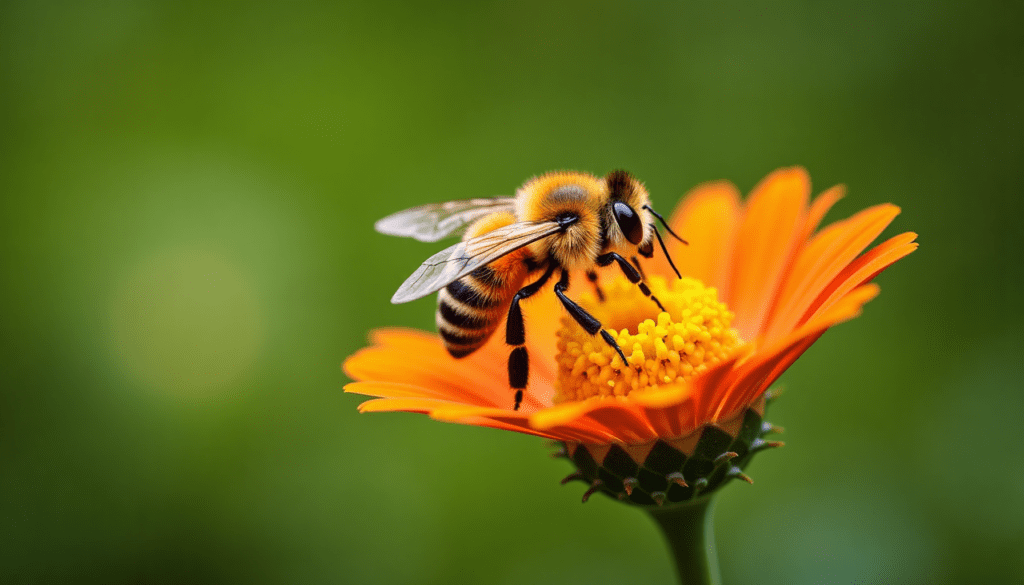
| Fuzzy brown-gold body, mild stripes | Honey bee (Apis mellifera) | Hairy, not shiny | Guide it out or cup-and-card |
| Rounder, very fuzzy, often larger | Bumble bee (Bombus spp.) | “Teddy bear” look | Same as above, give space |
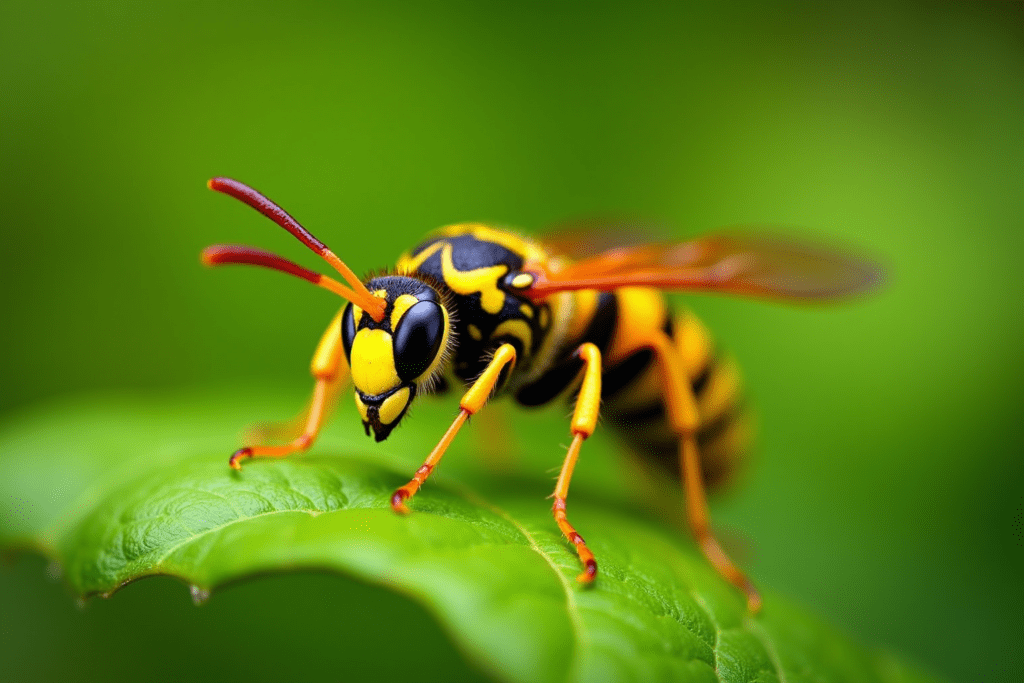
| Shiny, narrow waist, bright yellow-black | Yellowjacket/wasp | Smooth, more defensive | Use wasp-specific guidance |
For a fast visual comparison, see Bee vs Wasp vs Hornet: Key Differences.
Stay calm and remove one bee safely (without sprays)
A lone bee indoors is usually a navigation mistake, not an attack. Foraging bees follow scent and light cues, and a bright window can act like a “false sky.” The biggest sting risk comes from panic reactions: swatting, trapping the bee in clothing, or slamming it against glass.
Here is a safe, low-stress approach that works in most homes.
Step-by-step: the “lights off, one exit” method
Think of it like guiding someone out of a dark theater using one lit doorway. Give the bee one clear target.
-
Move people and pets out of the room.
Close the interior door if possible. -
Turn off lights and fans.
Ceiling fans can injure bees and keep them circling. -
Open one window or exterior door.
Choose the closest one. If you open several exits, the bee may loop between them. -
Wait and watch for 5-10 minutes.
Most bees will head toward daylight and leave.
Actionable takeaway: If you do only one thing, turn off the lights and open one window. It solves many single-bee situations.
Step-by-step: cup-and-card (best for a bee on a window)
If the bee lands, this method avoids direct contact.
- What you need: clear cup/jar + stiff paper (postcard, thin cardboard, junk mail)
- How to do it:
- Place the cup over the bee slowly.
- Slide the paper under the rim until it seals.
- Carry outside, away from doors.
- Tip the cup and let it fly off.
If you are worried about stings, wear closed-toe shoes and long sleeves. For people doing frequent removals (or dealing with a suspected nest), protective gear matters. See Best Bee Suits and Protective Gear for Beekeepers for practical options.
What not to do for a single indoor bee
Avoid these common mistakes:
- Do not use aerosol insecticide indoors for one bee. It is unnecessary and can increase defensive behavior.
- Do not swat. A threatened bee is more likely to sting.
- Do not “fog” the room with vinegar, bleach, or essential oils. Fumes can irritate lungs and still will not solve a real nest problem.
If you want a science-based perspective on safe structural bee handling, guidance from the North Carolina Cooperative Extension strongly discourages quick-kill approaches that leave hive material behind.
Indoor bee safety: preventing stings and handling allergies
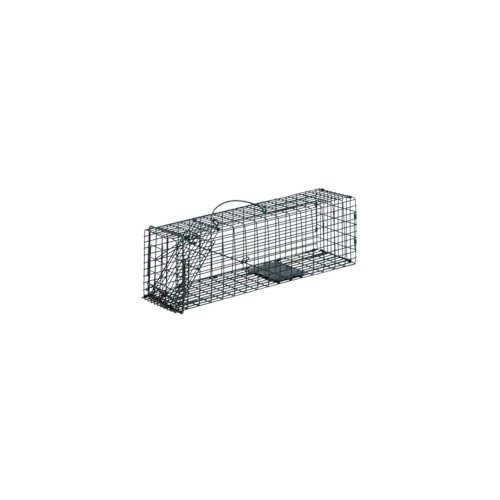
Duke Single Door Cage Trap (16″L X 5″W X 5″H)
This bee catcher trap can be useful for those who have recurring issues with bees entering their home, providing a safe way to capture and release them.
Most stings happen when a bee gets pinned against skin, stepped on, or trapped in hair or clothing. So indoor safety is less about “fighting” the bee and more about controlling the environment and your movements.
A simple safety checklist (especially with kids and pets)
Use this quick checklist while the bee is still in the room:
- Keep distance. Have children sit on a couch or step into another room.
- Put on shoes. Bare feet are a top sting risk.
- Avoid waving arms. Slow movements reduce defensive responses.
- Cover drinks and sweet foods. Bees investigate sugar smells.
- Do not trap it with a towel. Fabric can pin the bee and trigger a sting.
Visual: “Risk level” guide for indoor encounters
| Situation | Sting risk | What to do |
|---|---|---|
| One bee flying near ceiling | Low | Lights off + open window |
| Bee crawling on floor | Medium | Cup-and-card, wear shoes |
| Bee stuck in hair/clothing | Higher | Stay still, gently remove clothing item |
| Multiple bees in one room | High | Leave room, close door, investigate entry |
If someone gets stung indoors
Honey bees usually leave a barbed stinger. Wasps typically do not. The response is similar either way, but removing a honey bee stinger quickly helps.
-
Remove the stinger fast (if present).
Scrape with a credit card edge or fingernail. Speed matters more than technique. -
Wash and cool.
Soap and water, then a cold pack for swelling. -
Watch for allergy symptoms.
Trouble breathing, facial or throat swelling, widespread hives, dizziness, or vomiting can signal anaphylaxis.
According to the CDC report on hornet, wasp, and bee sting deaths, stings cause an average of about 62 deaths per year in the U.S. (2000-2017). Those outcomes are rare, but they are a reminder to take allergies seriously. Research in the journal Allergy estimates about 0.3-7.5% of people may be at risk for systemic reactions to stings.
For step-by-step treatment details, use How to Treat a Bee Sting Effectively.
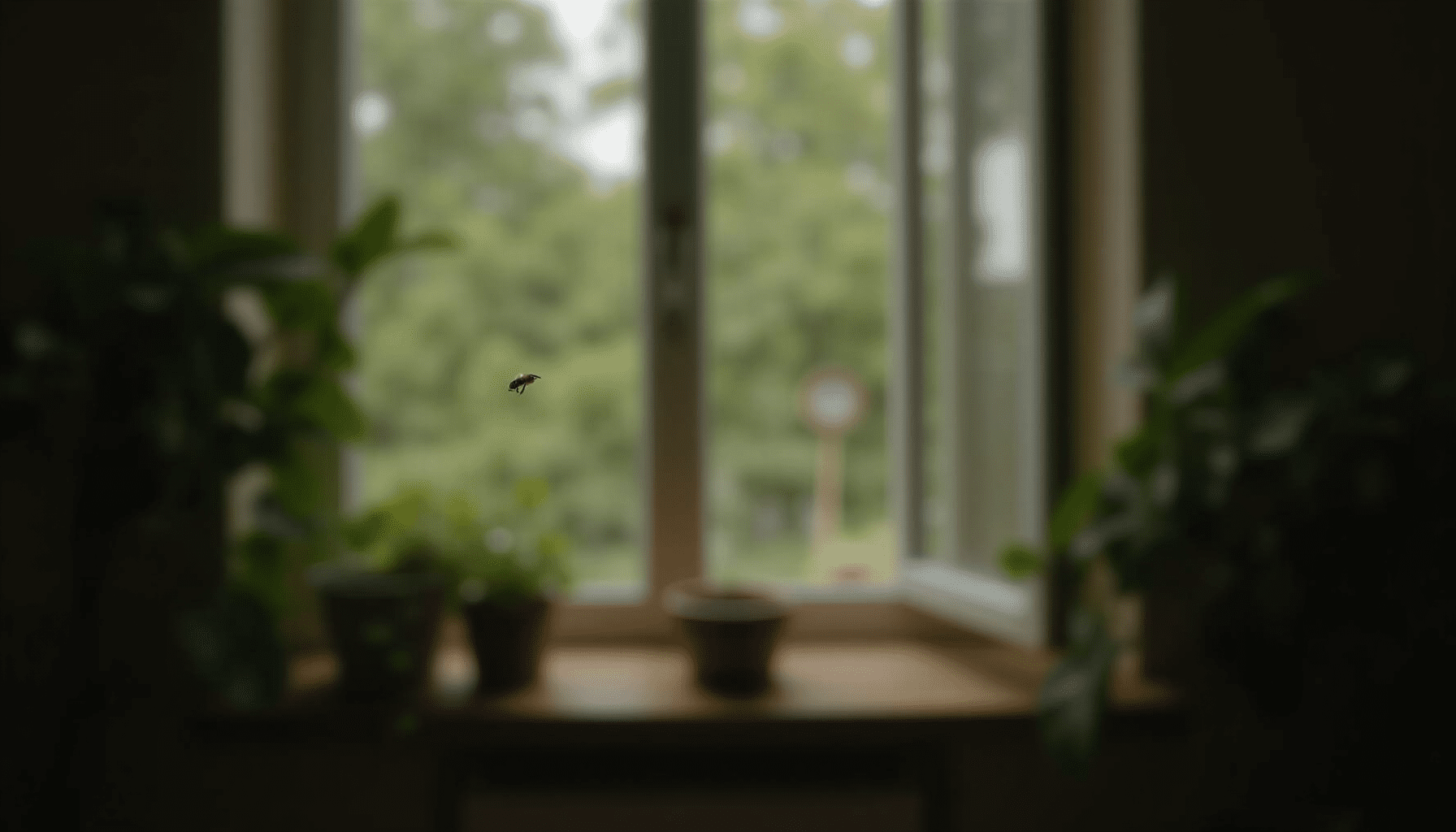
When bees keep appearing indoors: signs of a nest and where they enter

RESCUE! Non-Toxic Wasp, Hornet, Yellowjacket Trap (WHY Trap) Attractant Refill – 2 Week Refill – 3 Pack
This non-toxic trap is ideal for catching yellowjackets and wasps, which can be mistaken for bees, helping to prevent future intrusions.
One bee is usually an accident. Bees showing up repeatedly is different. It can mean a honey bee colony has moved into a wall void, attic, chimney, or eave space and some workers are finding their way into living areas.
A good rule of thumb:
- Occasional single bee: likely a forager that wandered in.
- Several bees per day in the same area: investigate for a nest.
Early signs you may have a colony in the structure
Look for patterns. Colonies create repeatable “signals”:
- Bees appear in the same room (often near a fireplace, attic access, or a vent).
- You notice faint buzzing in a wall on warm afternoons.
- Outside, you see steady bee traffic to one spot, like a tiny airport runway.
Visual: “Is this a nest?” decision chart
- Are you seeing more than 3-5 bees indoors over 24-48 hours?
- No: treat as a stray bee issue.
- Yes: continue.
- Do the bees appear in the same room or near the same wall/ceiling area?
- No: check open doors, windows, pet doors, and lighted windows.
- Yes: continue.
- Do you see repeated entry/exit outdoors at one point?
- Yes: likely colony access point.
- No: still possible, but you may need a professional inspection.
Common entry points to check (walk-around list)
Bee removal specialists commonly find entry at:
- Attic vents and gable vents
- Bathroom, dryer, and stove vents
- Chimney gaps and the chimney crown
- Eave and soffit gaps along the roofline
- Cracks in siding and trim
- Cable, pipe, and electrical penetrations
Actionable takeaway: Go outside during the warmest part of the day and watch each suspected area for 2-3 minutes. Foraging traffic is easiest to spot when it is warm and bright.
A critical warning: do not seal the hole yet
Sealing an active entrance can backfire:
- Bees may reroute into your living space searching for another exit.
- If a colony dies inside a wall, leftover comb and honey can create odors and attract pests.
The North Carolina Cooperative Extension explains that honey bee colonies in structures can build large comb and honey reserves, and problems often worsen if comb is left behind after a kill attempt.
How to handle a confirmed hive in a wall, attic, or chimney (and when to call a pro)
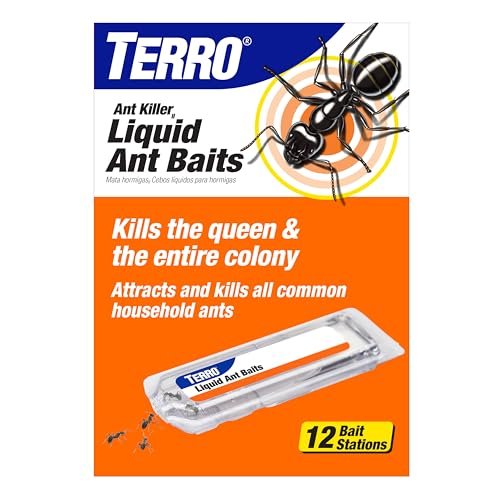
Terro, Ant Killer Bait Stations T300B – Liquid Bait to Eliminate Ants – Bait System – Stations for Effective Indoor Ant Control, 12 Count
While primarily for ants, this product can help maintain a pest-free environment, reducing the chances of attracting bees and other insects indoors.
If you confirm a colony in the structure, your goal is not just “no more bees today.” It is complete resolution: removing bees and addressing the wax, honey, and entry points so the problem does not return.
This is where many DIY attempts fail.
The three main professional approaches (with pros and cons)
Visual: colony removal options at a glance
| Method | What it is | Best for | Tradeoffs |
|---|---|---|---|
| Cut-out | Open wall/soffit, remove bees + comb + honey | Accessible colonies | Requires repairs afterward |
| Trap-out | One-way funnel forces bees out to a hive box | Hard-to-access voids | Takes weeks, comb remains |
| Insecticide (last resort) | Chemical kill in void | When live removal is not possible | Still must remove comb/honey |
Cut-out (most complete fix):
A technician opens the structure near the colony, removes bees and comb, and then repairs and seals. When a colony has been present for weeks or months, this is often the cleanest long-term solution.
Trap-out (specialized option):
A one-way funnel lets bees exit but not re-enter. A hive box placed nearby captures displaced workers over time. It is slower and usually requires beekeeping skill and access to brood frames.
Chemical control (last resort):
Sometimes used when live removal is not available. Even then, the structure usually needs to be opened to remove contaminated comb and honey.
Actionable takeaway: When calling for help, ask one question first: “Will you remove the comb and honey, or only kill the bees?” If they will not remove comb, keep looking.
Why “kill and seal” is a bad plan
Homeowners often try to spray, wait, then caulk the hole. The problem is what remains behind:
- Wax and honey can melt and leak into walls or ceilings.
- Residual hive material can attract ants, roaches, rodents, and carpet beetles.
- If insecticides are used, hive contents become contaminated and must be discarded.
For pollinator context, it is also worth remembering that bees support food systems. A landmark paper in Proceedings of the Royal Society B reported that about 35% of global crop production depends to some degree on animal pollination.
If you care about protecting pollinators while still protecting your home, see Why Are Bees Endangered? Discover How You Can Make a Difference.
If the insect is not a bee (but a yellowjacket or wasp)
Many “bees in the wall” reports turn out to be yellowjackets, especially in late summer and early fall. Their control methods differ, and sealing timing can be different as well.
If you suspect wasps, use How to Safely Get Rid of a Wasp Nest for species-specific steps.

Preventing future indoor bee visits (without harming pollinators)
Once the immediate issue is handled, prevention is mostly home maintenance. The goal is to block accidental entry and remove “inviting” cavities before scouts find them in spring and early summer.
A practical prevention checklist
Visual: quick home-sealing checklist
- Screen vents (attic, gable, bathroom, dryer) with appropriate mesh
- Install a chimney cap and check flashing
- Seal gaps around pipes, cables, and siding cracks with quality exterior sealant
- Repair soffit and fascia gaps along rooflines
- Replace damaged window screens and add door sweeps
- Reduce night lighting near doors during peak insect season, or use yellow “bug” bulbs
Actionable takeaway: Focus on the top 5 entry points first: attic vents, bathroom/dryer vents, chimney gaps, soffit gaps, and cable/pipe penetrations.
Timing tips (seasonal context)
- Spring: scout bees look for cavities. Great time to seal gaps before a colony establishes.
- Summer: foragers are active and more likely to wander indoors through open doors.
- Late summer to fall: wasps and yellowjackets become more noticeable around homes and food.
Image alt text suggestions (for your editor)
- “Honey bee on indoor window ready for cup-and-card release”
- “Common house entry points for bees: attic vent, soffit gap, chimney”
- “Decision chart: single bee indoors vs repeated bees indicating a nest”
Conclusion: the safest plan for a bee indoors
For a bee inside house, the best response is calm, simple, and usually non-lethal: turn off lights, open one exit, and use the cup-and-card method if needed. If bees keep appearing, shift from removal to investigation. Repeated indoor bees often point to an entry point and possibly a colony in a wall, attic, or chimney, and sealing too early can make the problem worse.
Next step: If you want to confirm whether you are seeing a bee or a wasp, use Bee vs Wasp vs Hornet: Key Differences. If a sting happens, follow How to Treat a Bee Sting Effectively for clear first aid steps.
As an Amazon Associate, I earn from qualifying purchases. Product recommendations are based on real reviews and independent research.