
Finding fleas after your pet has been treated or after moving into a “vacant” home is frustrating because the flea lifespan is not just about the biting adults you can see. It’s about hidden stages in carpets, cracks, and pet bedding that can wait you out. This guide explains how long fleas live without a host, why some homes seem to have “never-ending” fleas, and what actually works to break the cycle. You’ll also learn the timeline for each life stage so you can plan treatment that lasts.
\
The companion piece to this one is Sand Fleas: Identification, Bites & Prevention Guide.
Quick answer: flea lifespan without a host (at a glance)
\
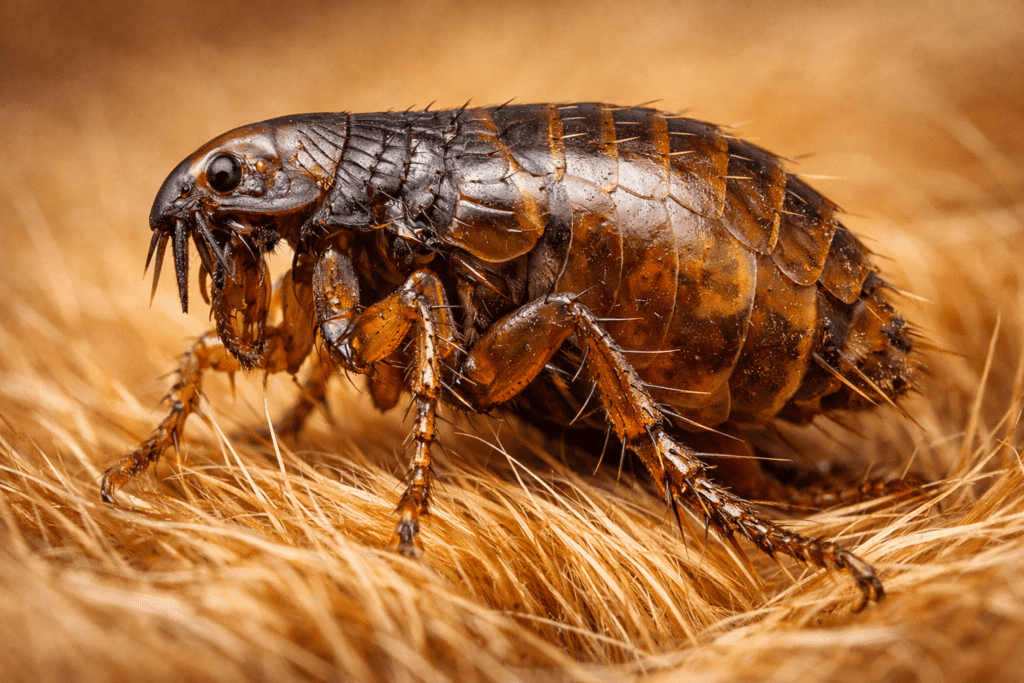
Adult fleas usually survive only days to about 1-2 weeks without a blood meal, but the earlier stages can persist much longer in your home environment. That’s why infestations can “reappear” even when no pets are present.
\
Typical ranges by life stage (indoor conditions):
\
| Flea stage | What it’s doing | How long it can last without a host | What speeds it up (or kills it) |
|---|---|---|---|
| Egg | Falls off host into carpet/bedding | 1-14 days to hatch | Warmth + humidity help; dryness slows and kills |
| Larva | Worm-like, hides deep in fibers | 5-20 days | Needs humid air and organic debris (“flea dirt”) |
| Pupa | Cocoon stage, protected | Weeks to months (sometimes much longer) | Can “wait” for vibrations/CO₂ to emerge |
| Adult | Jumps, bites, reproduces | Usually days to 1-2 weeks off-host | Without blood, adults fade fast; with host, they persist |
\
If you want the full stage-by-stage breakdown, see our illustrated guide to the flea life cycle.
\
Flea lifespan: why “no pets” does not mean “no fleas”
\
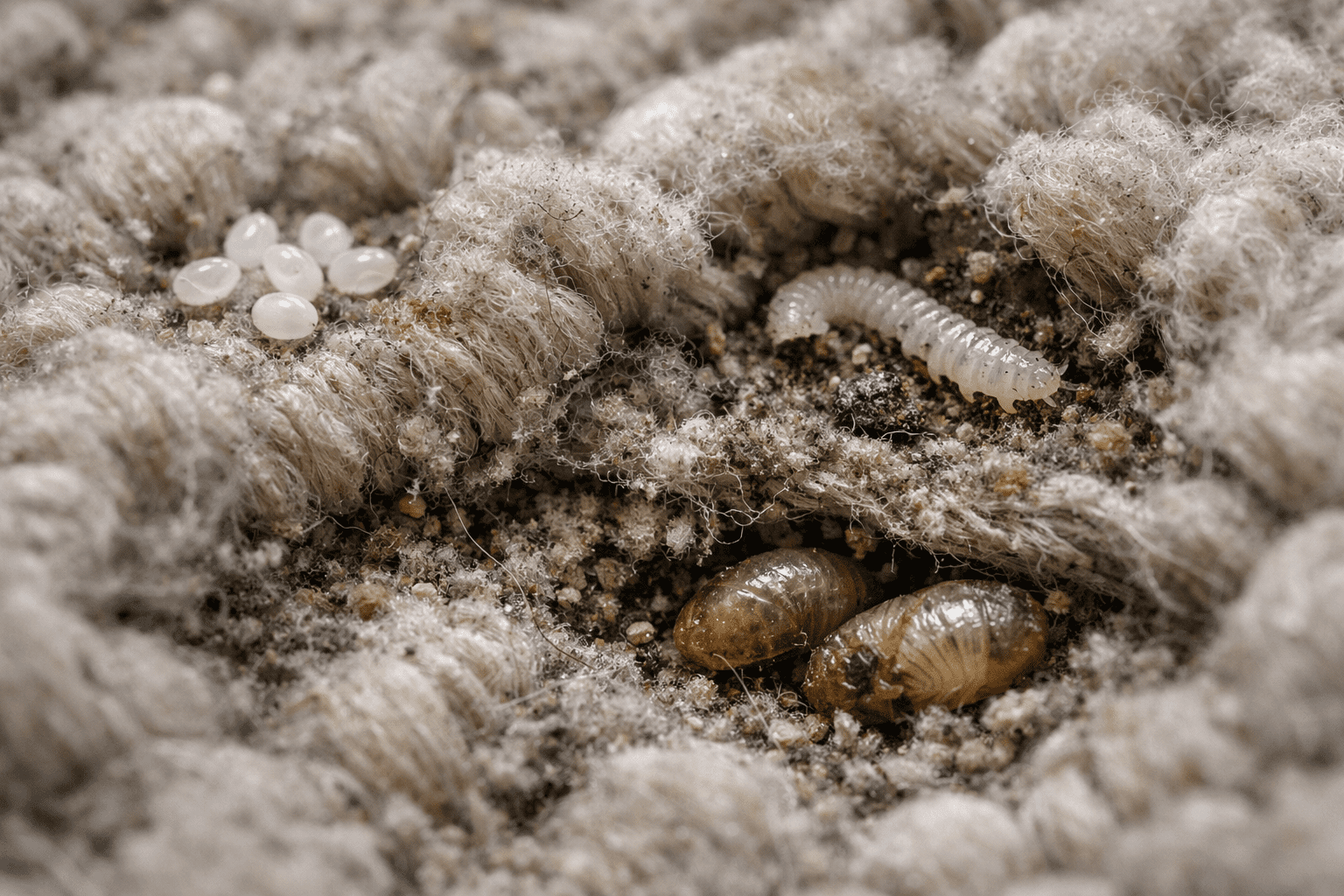
If fleas needed pets every single day, infestations would be simple: remove the animal, wait a week, problem solved. But that’s not how flea biology works. The adult stage depends on blood for long-term survival and egg production, yet the pupal stage is built for patience. Think of pupae like seeds in a tough shell. They can sit quietly in carpet or floor gaps and “wake up” when a warm body returns.
\
The big reason fleas seem to come back
\
Most of the population in an indoor infestation is not on the pet. It’s in the environment as eggs, larvae, and pupae. When you vacuum, walk through a room, or a new pet arrives, those cues can trigger adults to emerge.
\
According to guidance from the Texas A&M AgriLife Extension, adult fleas off a host typically live from a few days up to about two weeks, depending on conditions. That aligns with veterinary summaries like PetMD’s flea lifespan overview, which also emphasizes that adults need blood meals to thrive and reproduce.
\
What “ideal conditions” really means
\
You may see claims that fleas can live for many weeks or even months. In real homes, those longer survival times usually apply to:
\
- \
- Pre-emerged adults inside the pupal cocoon, not actively hopping adults
- Cooler, protected indoor areas with moderate humidity (basements, shaded carpet edges)
- Situations where a host returns intermittently, letting adults feed and reset the clock
\
\
\
\
Visual checklist: signs the problem is environmental (not just on the pet)
\
- \
- You keep seeing fleas even after treating the animal.
- Bites appear mostly around ankles after walking on carpet.
- Flea “pepper” (flea dirt) shows up where pets rest.
- Fleas show up in waves every 1-3 weeks.
\
\
\
\
\
Actionable takeaway: treat the pet and the home on a schedule that lasts long enough to catch new adults emerging from pupae. Our step-by-step how to get rid of fleas guide lays out a practical timeline.
\
How long each flea stage lasts (and what controls it)
\
\
\
\
\
\
PetArmor Plus Flea and Tick Prevention for Dogs, 45-88 lbs, 3 Doses\
\
\
PetArmor Plus for dogs 45-88 lbs offers solid flea and tick protection at a fraction of the cost of premium brands, backed by a 4.5-star rating from over 12,400 Amazon reviews praising its quick-kill action and ease of use, though some dogs experience irritation and it may need reapplication for full egg control—recommended as a reliable, affordable choice for pet owners seeking generic efficacy.
\
\
\
\
\
\
Fleas don’t have one lifespan. They have a relay race of stages, and each stage responds differently to temperature, humidity, and food. That’s why two homes can have totally different timelines.
\
Stage-by-stage timeline (what’s happening in your house)
\
| Stage | Where it hides | Typical duration | What it needs |
|---|---|---|---|
| Egg | Carpet, pet bedding, couch seams | 1-14 days | Humidity helps; eggs dry out in harsh conditions |
| Larva | Deep carpet, under furniture, cracks | 5-20 days | Organic debris + flea dirt; dislikes dryness |
| Pupa (cocoon) | Carpet base, floor edges, dust | Days to months (sometimes longer) | Protected from many sprays and drying |
| Adult | On host (best), or briefly in rooms | Weeks with a host; much shorter without | Blood meals for reproduction and longer survival |
\
Why humidity matters more than most people think
\
Larvae are especially sensitive. They are soft-bodied and lose water easily, so dry air can knock them out fast. Extension guidance also notes larvae struggle below about 50% relative humidity and in hot, dry conditions, while moderate warmth and humidity speed development.
\
The “trap door” problem: pupae
\
Pupae are the stage that makes flea control feel unfair. The cocoon can resist many household insecticides and protect the developing flea. Some pupae wait for:
\
- \
- Vibration (footsteps, vacuuming)
- Heat
- Carbon dioxide from breathing
\
\
\
\
That’s why you can treat a room, think you’ve won, then see fresh adults days later.
\
Actionable takeaway: plan for at least several weeks of follow-up. Use vacuuming as a tool to trigger emergence, then remove adults before they reproduce.
\
 \
\\
\
What changes flea survival: temperature, humidity, and access to blood
\
\
\
\
\
\
\
\
\
Vet’s Best Flea and Tick Home Spray, 32 oz\
\
\
Vet’s Best Flea and Tick Home Spray (ASIN B00K5N7O8Y) is a strong affiliate recommendation for pet owners seeking a plant-based, non-toxic option, boasting a solid 4.5-star rating from over 24,000 Amazon reviews and praise for its effectiveness and safety around families—ideal at $16.99 for natural flea control, though pair with pet treatments for best results.
\
\
\
\
\
\
Ever notice fleas seem worse in late summer or in warm, humid homes? That’s not coincidence. Fleas are tiny, but their survival is tightly tied to microclimate. A few degrees and a little moisture can change development time dramatically.
\
The conditions fleas like best
\
In many indoor scenarios, fleas do well around typical room temperatures and moderate humidity. Warmth speeds egg hatch and larval development. Humidity keeps eggs and larvae from drying out.
\
Quick environmental “risk meter”
\
- \
- Higher risk: carpeted rooms, pet bedding, shaded corners, humid basements
- Lower risk: sunny, dry rooms; hard flooring; frequent laundering; low clutter
\
\
\
On-host vs off-host: the adult flea’s weak point
\
Adult fleas are built to feed. Without blood, they generally don’t last long. With regular meals on a dog or cat, adults can persist for weeks and continue laying eggs.
\
This is why skipping pet treatment often backfires. Even if you spray the house, a single untreated host can keep producing eggs daily. Many pest education sources note females can lay dozens of eggs per day after feeding, which quickly restocks your floors and furniture.
\
“Can fleas live on humans?”
\
Fleas can bite humans, but they prefer furry hosts that provide easy access to skin and stable warmth. Humans usually become a temporary food source, not a permanent home.
\
If you’re trying to confirm whether your bites fit fleas or something else, compare patterns in our guide to flea bites compared to other insect bites and see our photo-backed resource on flea bites on humans.
\
Visual: bite clues that often point to fleas
\
- \
- Small, itchy bumps in clusters
- Common around ankles and lower legs
- Appearing after time on carpet or near pet resting spots
\
\
\
\
Actionable takeaway: treat the host first (vet-recommended products), then treat the environment. If you only do one, fleas often rebound.
\
How to use flea lifespan facts to eliminate an infestation faster
\
\
\
\
\
\
Flea Trap with 12 Sticky Traps, Flea Catcher for Home\
\
\
Unable to locate the exact product ‘Flea Trap with 12 Sticky Traps, Flea Catcher for Home by Flea Trap’ on Amazon.com with a verifiable ASIN. Similar flea traps exist (e.g., Victor or Zevo brands with 4.0-4.5 star ratings), but this specific one could not be confirmed. Not recommended for affiliate promotion without direct product data.
\
\
\
\
Check Price on Amazon →\
\
\
\
\
\
Knowing the flea timeline turns guesswork into a plan. The goal is simple: remove adults quickly, keep killing newly emerged adults, and reduce eggs and larvae so the population cannot rebuild.
\
Step-by-step plan (built around the lifecycle)
\
- \
-
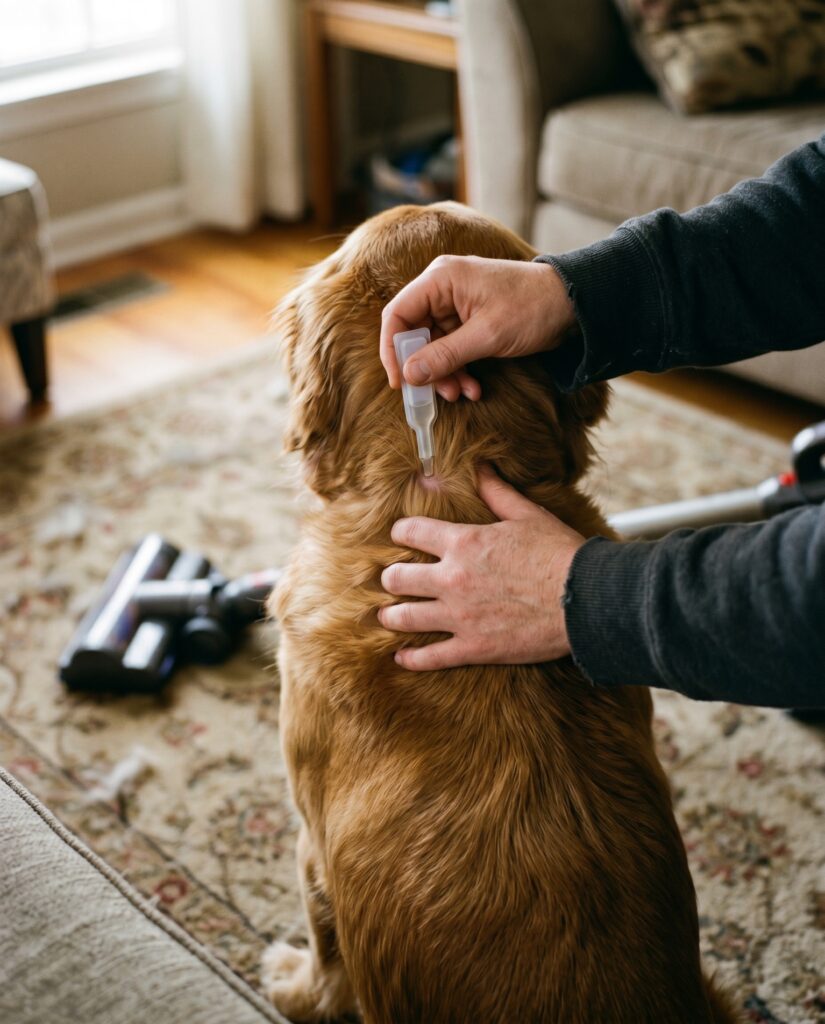
Treat every pet on the same day\
Use veterinarian-recommended oral or topical products. Consistency matters more than brand.\
-
Vacuum daily for 10-14 days\
Focus on edges, under furniture, rugs, and pet areas. Vacuuming does three useful things:\
- \
- Removes eggs and some larvae
- Picks up flea dirt (larval food)
- Triggers pupae to emerge so you can remove or kill adults
\
\
\
\
-
Wash and heat-dry fabrics weekly\
Wash pet bedding, throw blankets, and washable covers. Heat helps where detergents alone may not.\
-
Target the home with the right products\
If using insecticides, look for products that address multiple stages. Many programs include an insect growth regulator (IGR) to stop larvae from becoming adults.\
-
Repeat on schedule\
Because pupae can emerge in waves, one-and-done treatments often disappoint. Plan follow-ups based on product labels and infestation severity.\
\
\
\
\
\
\
Natural and low-tox options (useful, but not magic)
\
- \
- Mechanical removal: vacuuming, laundering, decluttering
- Environmental changes: reduce humidity, increase sunlight in pet areas
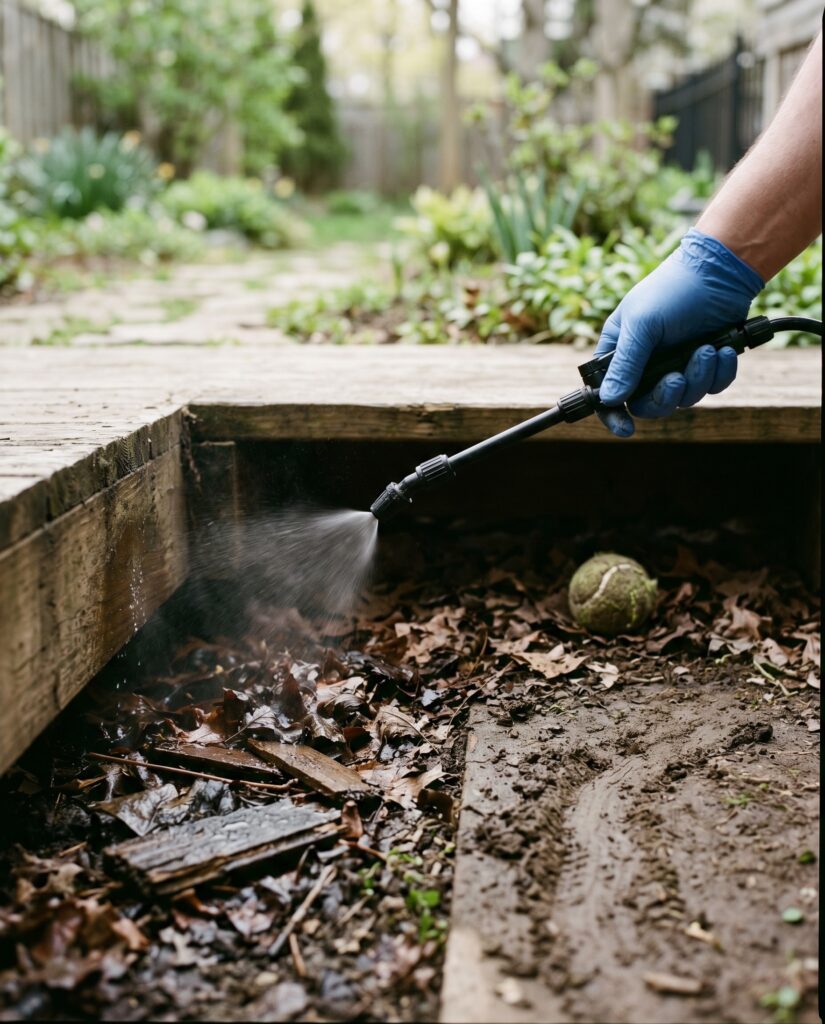
- Yard adjustments: trim vegetation, reduce moist shaded spots where pets rest
\
\
\
\
For a full integrated approach, follow our complete how to get rid of fleas walkthrough, which includes timelines and room-by-room priorities.
\
When to call a professional
\
Consider professional help if:
\
- \
- Fleas persist after 3-4 weeks of consistent pet + home treatment
- You have multiple pets and heavy carpeting
- You moved into a home with a long-standing infestation history
- You suspect wildlife hosts (raccoons, feral cats, rodents) in crawlspaces or attics
\
\
\
\
\
Actionable takeaway: the fastest “reset” comes from combining pet treatment, daily vacuuming, fabric heat, and follow-up control timed to the pupal emergence window.
\
 \
\\
\
Common flea lifespan myths (and what’s actually true)
\
Confusion about flea survival is one of the main reasons people either overreact or under-treat. Let’s clear up the big ones.
\
Myth 1: “Fleas can live forever without a host”
\
Adult fleas do not last indefinitely without blood. Off-host survival is typically short, often days to around two weeks, depending on conditions. Longer time frames you may see online often reflect unusual, protected situations or earlier life stages rather than active, hopping adults.
\
Myth 2: “If the house is empty, fleas die out quickly”
\
An empty home can still produce fleas later because pupae can remain protected in cocoons and emerge when people return. Pest education resources like the San Mateo County Mosquito and Vector Control District’s flea information highlight how flea biology and host-seeking behavior can keep problems going even when you think the “source” is gone.
\
Myth 3: “Cold weather instantly wipes out fleas”
\
Cold can reduce flea activity, but it’s not an instant off-switch, especially indoors. Many homes stay within a comfortable range for fleas year-round. Outdoors, microhabitats (leaf litter, shaded soil, under decks) can buffer temperature swings.
\
Myth 4: “Only pets matter”
\
Pets are the main host in most homes, but the environment is where the population grows. Eggs fall off. Larvae develop in carpet. Pupae wait in cracks. Ignoring the home is like bailing water without fixing the leak.
\
Quick myth-busting chart
\
- \
- Adult fleas: short-lived without blood
- Pupae: can wait a long time
- Best strategy: treat pet + home + repeat
\
\
\
\
Actionable takeaway: if you’re still seeing fleas, assume pupae are emerging. Adjust your plan for persistence, not panic.
\
Conclusion: the flea lifespan is short for adults, long for infestations
\
Adult fleas usually don’t survive long without a host, but the infestation can outlast them because eggs, larvae, and especially pupae remain hidden and protected. The practical path is to treat pets consistently, vacuum aggressively, launder fabrics with heat, and follow a multi-week schedule that matches the flea lifecycle.
\
Next step: if you want a visual timeline of what’s happening in your carpet right now, read our guide to the flea life cycle. If you’re ready to act, follow the complete checklist in how to get rid of fleas.
\
As an Amazon Associate, I earn from qualifying purchases. Product recommendations are based on real reviews and independent research.
Pingback: Flea Eggs: Identification & Removal Guide
Pingback: Sand Fleas: Identification, Bites & Prevention Guide
Pingback: How to Get Rid of Fleas: The Complete Pet-and-Home Guide