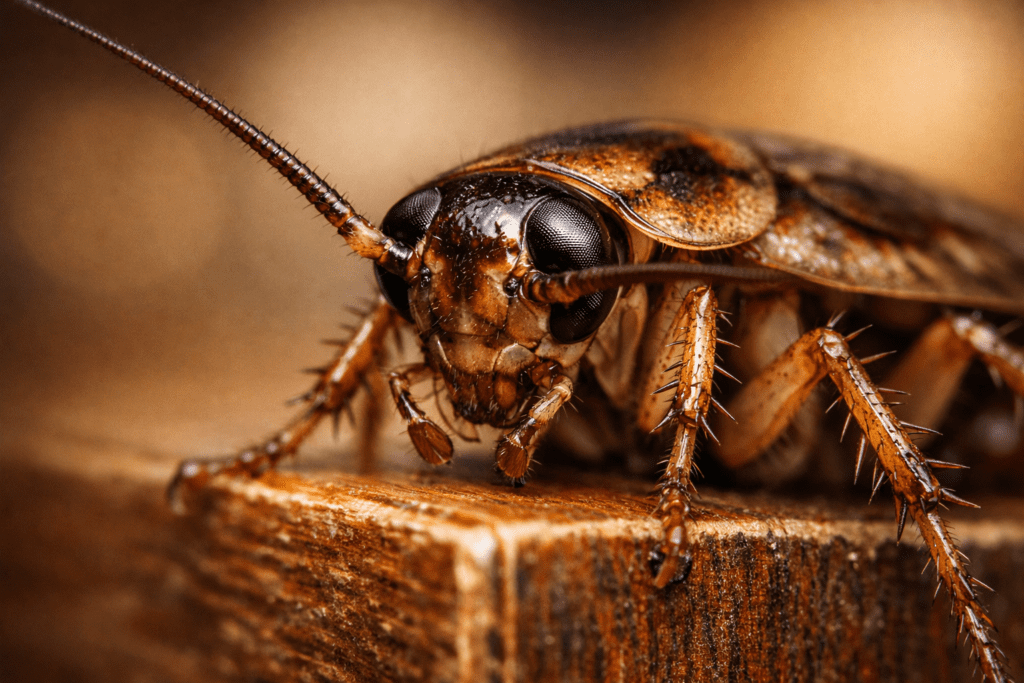
n
n
n
If you bought a jar of boric acid for roaches and they are still around, the powder is almost never the problem. Boric acid works, but only as a thin film you can barely see, tucked into the hidden spots roaches actually travel. Pile it on visibly and they walk around it. So the best product is whichever lets you lay that thin film and stay put, dry, for months. What we would keep under our own sink is a fine powder with a built-in lure, a cheap big-bag backup, and pre-made tablets for anyone who would rather not dust at all.
nn
Boric acid is not repellent, but a thick visible pile repels roaches anyway, so the win is a film so thin you can barely see it in voids and under appliances, never on counters.
- Do first (free): clean up food and water, then dust hidden voids, not open surfaces
- Best form for most homes: fine powder with a lure, applied with a bellows duster
- Skip: heaping it where you can see it, or dusting countertops and food-prep areas
nn
nn
How boric acid kills roaches
nn
Boric acid is a slow stomach poison, not a knockdown spray. A roach walks through a treated film, and because the dust carries a positive electrostatic charge, it clings to the legs and body. The insect then grooms itself, swallows the powder, and the boric acid damages its gut over a few days. The NPIC boric acid fact sheet explains it kills insects when they eat it, which is why it never works instantly the way a contact spray appears to.
nn
That slow timing is a feature. Because it is eaten rather than felt, roaches do not learn to avoid it the way they flee a wet spray. A scared roach scatters and spreads an infestation; a roach that grooms a dusted leg carries the dose back into the harborage where the rest of the colony sits.
nn
The catch is dryness. Boric acid clumps and stops sticking once it gets damp, so a film in a wet sink cabinet quits early. According to UC IPM, boric acid is not repellent and provides control for a very long time if it stays dry and undisturbed. Keep it out of damp, mopped, and high-traffic zones and one application can last for months.
nn
Thin film versus a visible pile
nn
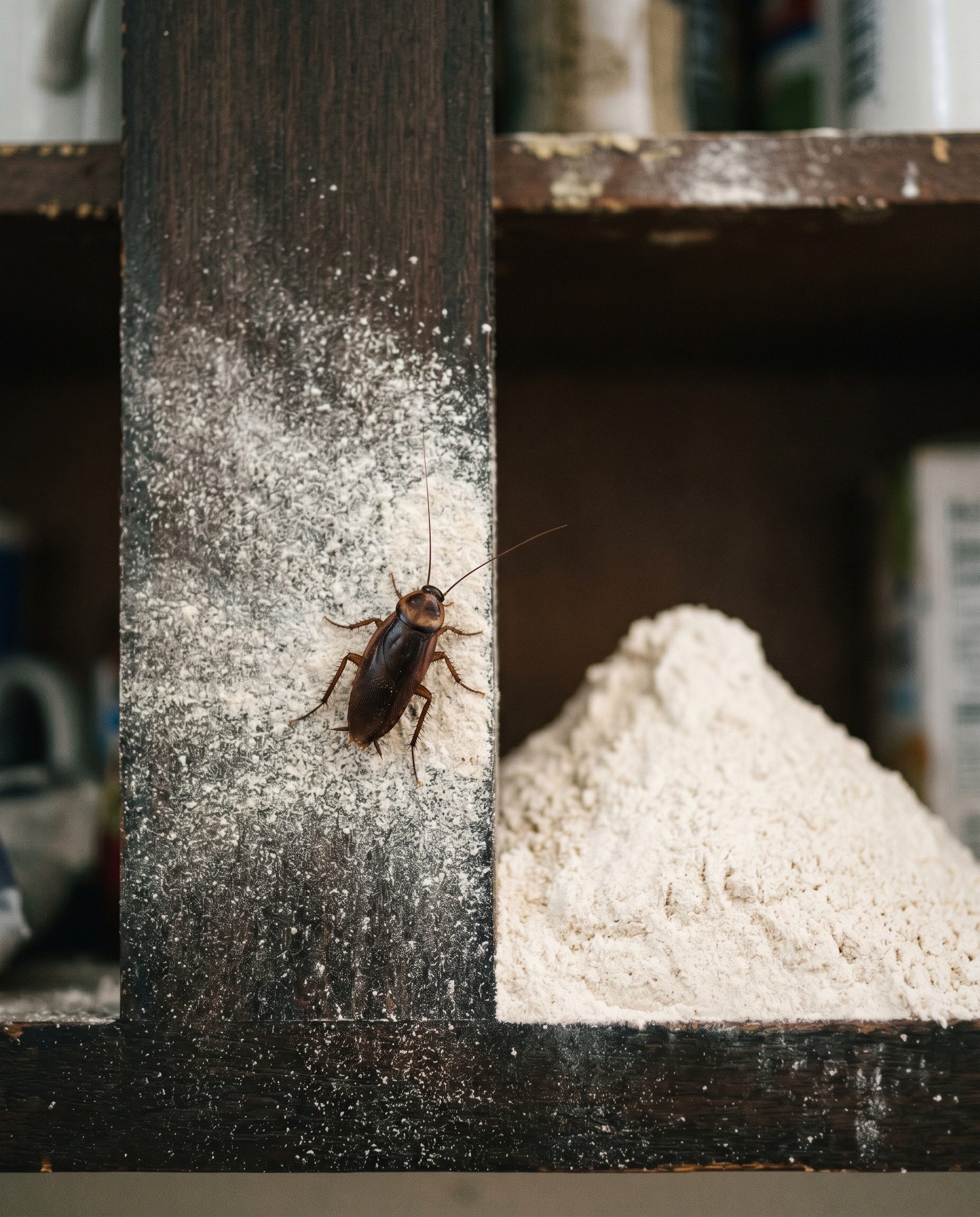
Here is the part most jars get wrong. Boric acid itself does not repel roaches, but a heap of white powder does. Roaches steer around a thick deposit the way you would step around a snowdrift, so the more you pour, the less they touch. The correct deposit is barely visible, almost a haze, laid where they already crawl.
nn
nn
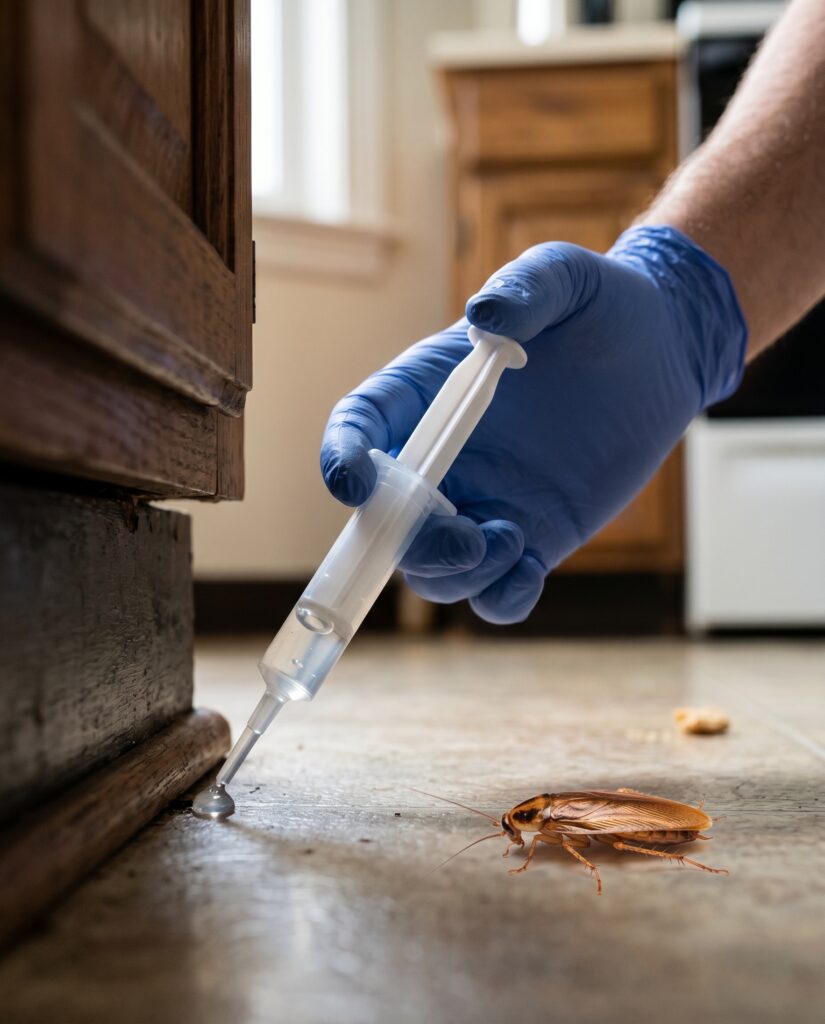
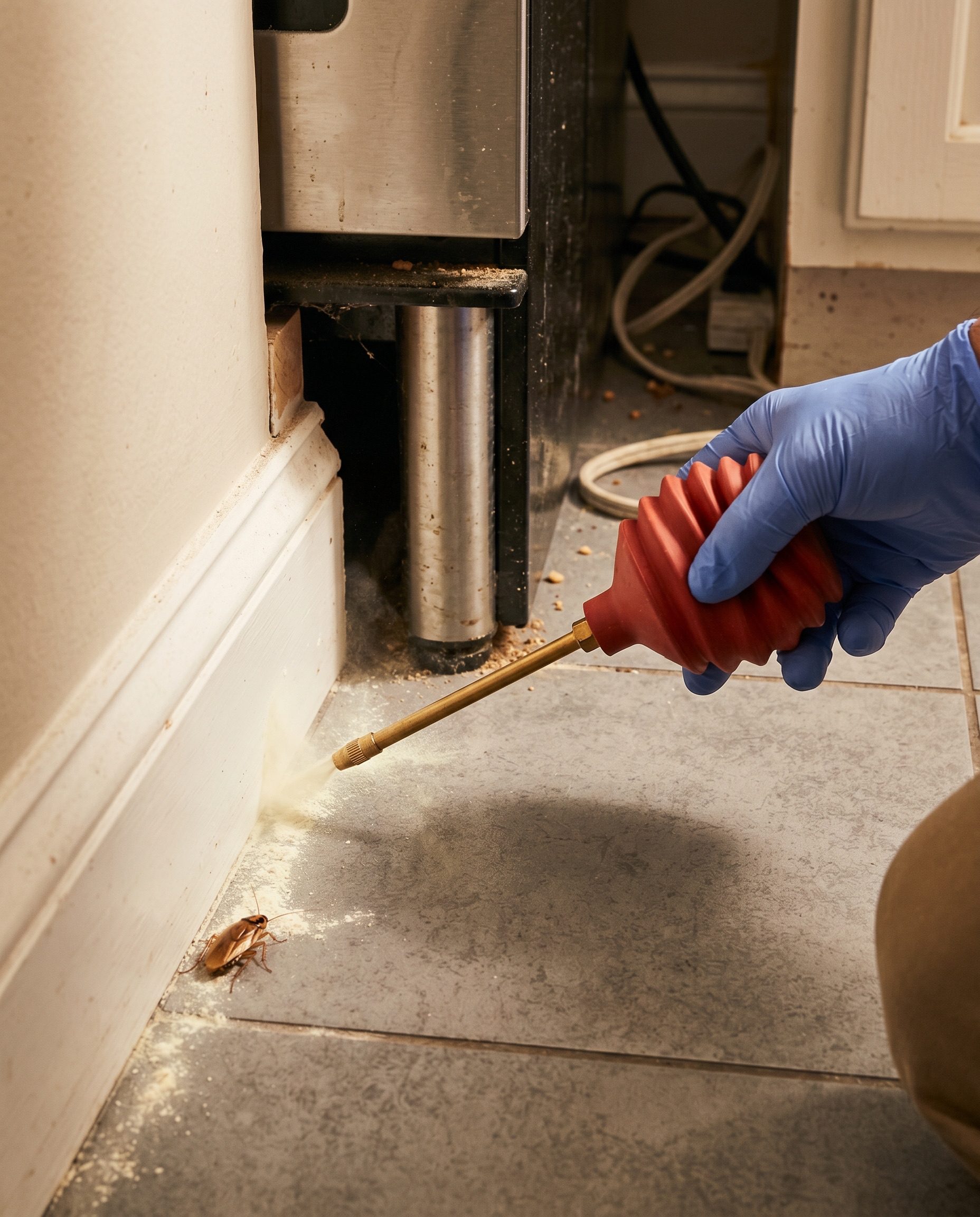
Use a bellows or bulb hand duster, not a spoon. A duster puffs a thin even layer into a crevice; a spoon dumps a pile. If you can clearly see a white line of powder, you used too much and should brush most of it back out. The goal is a surface that looks faintly dusty, not painted.
nn
Application technique is the whole game here, which is why two people get opposite results from the same jar. Lay it down right and it quietly works for weeks. Heap it and roaches sidestep it entirely while you assume the product failed. For the full removal sequence, our guide to getting rid of cockroaches walks the order: sanitation first, then bait, then dust in voids.
nn
Where to dust, where never to
nn
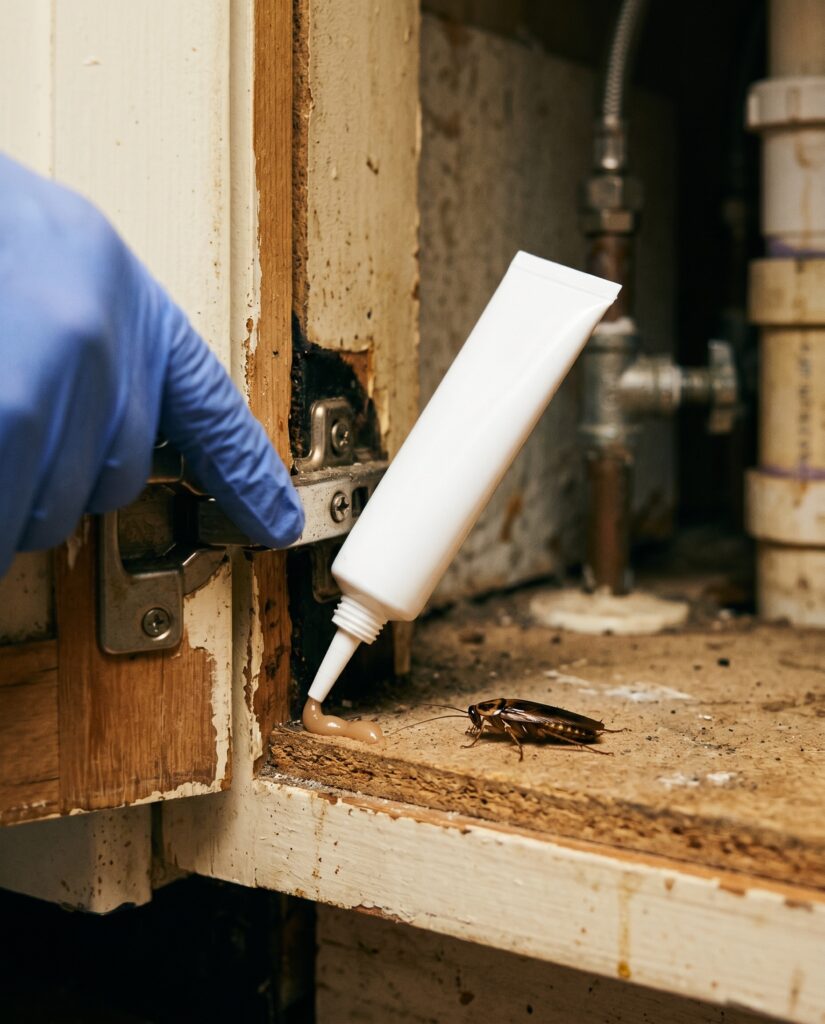
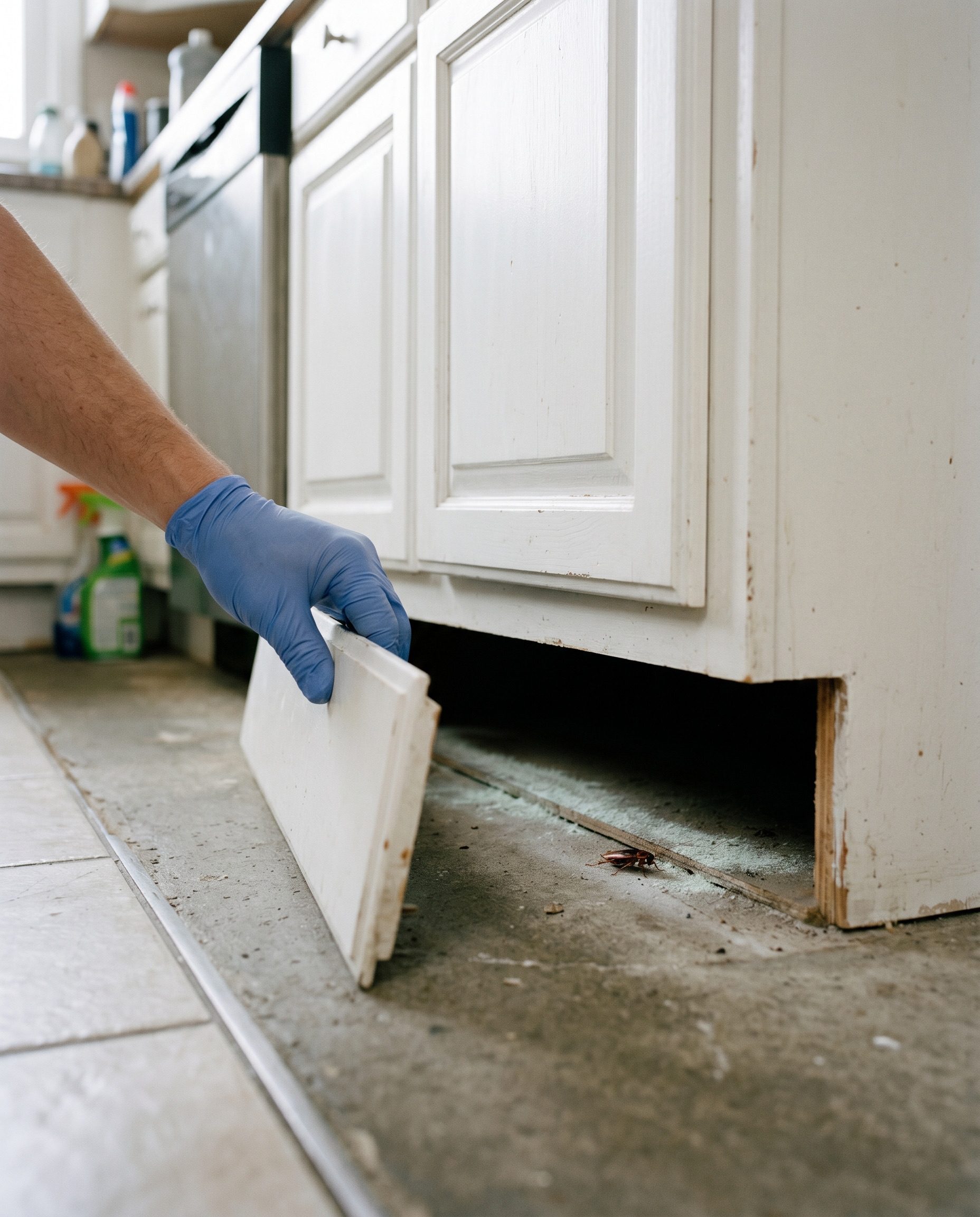
Boric acid belongs in hidden, dry, undisturbed spaces. The high-value spots are the wall-floor junction behind the refrigerator, stove, and dishwasher, the void under sink and base cabinets, and the gaps where plumbing pipes pass through walls. Rutgers Extension recommends placing dust under and behind appliances, in wall cracks and crevices, and behind cabinets where children and pets cannot reach it.
If that is where this is heading, our guide to what lives behind a fridge covers the warmest, dampest gap in a kitchen.
nn
Behind an electrical outlet plate is a classic roach runway, but cut power at the breaker first and never puff dust into a live receptacle or any electronics. The powder conducts and can damage components. Skip the outlet entirely if you are unsure.
nn
Now the never list. Do not dust countertops, open shelves, the stovetop, the inside of cabinets where dishes sit, or anywhere food gets prepared. Boric acid is not a food-safe surface dust. The EPA’s do’s and don’ts of pest control come down to reading the label, using least-toxic methods first, and keeping pesticides away from children and food. Treat the label as binding, because under federal law it is.
nn
Dust alone will not win
nn
Boric acid is one tool, not a strategy. Penn State spells out that an IPM approach starts with sanitation, sealing cracks, and baits before dust matters. Roaches need food, water, and shelter; take those away and the dust you place has far more effect because hungry roaches travel farther and groom more.
nn
What to do first costs nothing. Wipe up grease, store food sealed, fix the drip under the sink, take trash out nightly, and pull pet bowls overnight. Do that for a week, then dust the voids. For a heavy German roach problem in a kitchen, a gel bait clears the population faster than dust, so pair the two: read our gel bait comparison and German cockroach removal guide for that combination. Dust handles the long-term voids; bait handles the active swarm.
nn
nn
Powder, tablets, or bait
nn
Three boric acid formats, three jobs. Loose powder is the most flexible and the cheapest per ounce, but it demands the thin-film technique. Pre-formed tablets sidestep that skill entirely; you tuck them into a void and walk away. A lure-blended powder pulls roaches across the film faster than plain powder.
nn
| Form | Best for | Main trade-off |
|---|---|---|
| Loose powder + duster | Voids, behind appliances, long-term coverage | Repels if applied as a visible pile |
| Powder with lure | Pulling roaches onto the film faster | Still needs thin application |
| Tablets | Hands-off placement in tight voids | Slower, fewer placement points |
nn
For most homes a lure-blended powder is the right default because it forgives a slightly imperfect dusting job: roaches come looking for it. If the idea of dusting feels fiddly, tablets are the honest answer; you lose some coverage but gain a no-skill placement. See the full roach killer lineup for how boric acid fits next to gel baits and stations.
nn
The picks
nn
InsectoGuide is reader-supported. As an Amazon Associate we earn from qualifying purchases at no extra cost to you.
nn
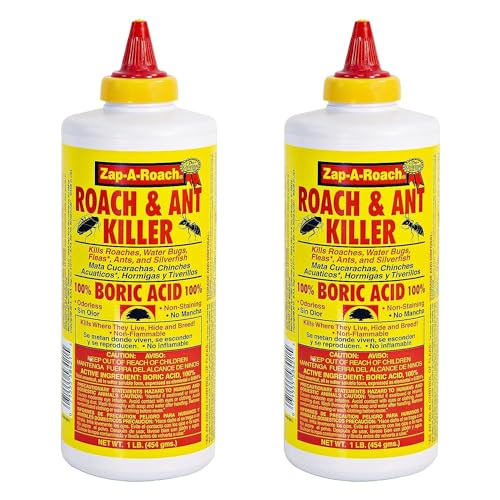
Plain 100% boric acid in bulk for treating many voids cheaply.
nn
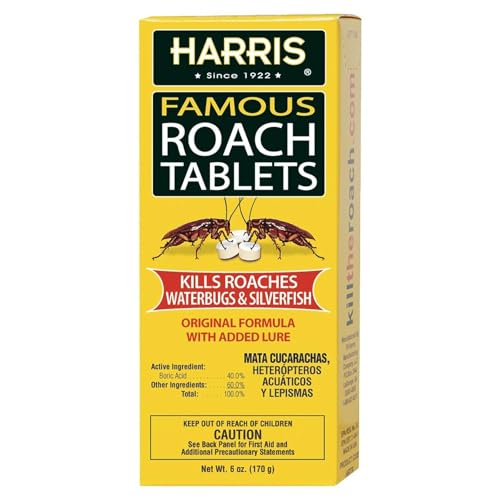
Pre-made boric acid tablets you tuck into voids, no dusting skill needed.
nn
Common questions
nn
Is boric acid safe around kids and pets?
n
It is low in toxicity but not harmless, so placement is what keeps it safe. Dust only in voids and behind appliances where children and pets cannot reach, never on open floors or food surfaces. If a child or pet swallows any, contact a doctor or your vet, or call your local poison control center, and follow the first-aid steps on the product label.
nn
How long does boric acid take to work?
n
Days, not minutes. Roaches have to walk the film, groom, and ingest it, so expect a gradual decline over one to three weeks rather than instant kills. If nothing changes after a few weeks, your film is probably too thick, damp, or in the wrong spot.
nn
Boric acid or diatomaceous earth?
n
Both are dusts and both must stay dry and thin. Boric acid is ingested during grooming and tends to act faster on roaches; diatomaceous earth abrades the shell and is slower. For roaches specifically, boric acid is the more common Extension recommendation.
nn
Do I still need gel bait if I use boric acid?
n
For an active German roach kitchen problem, yes. Gel bait clears a live population faster, and dust handles the long-term voids. Using both, in different places, beats relying on either alone.
nn
Will roaches become resistant to boric acid?
n
Resistance is far less of a concern than with synthetic insecticides, because boric acid is a physical and metabolic poison rather than a single nerve-targeting chemical. The bigger failure is almost always application, not resistance.
nn
Final verdict
nn
The best boric acid for roaches is the one you apply as a thin, almost invisible film in dry hidden voids, then leave alone. Clean up food and water first, dust the wall-floor gaps behind appliances and under cabinets, and never touch countertops or food areas. For most homes a lure-blended powder like the Harris is the right default; choose tablets if dusting is not your thing, or a bulk bag if you have a lot of voids to cover. Pair it with gel bait for an active swarm, follow the label, and give it a couple of weeks. Slow does not mean it is failing.
nn