Finding the right bee suits is mostly about two things: preventing stings from reaching your skin and staying comfortable enough to work calmly at the hive. New beekeepers often assume thicker is always safer, but real-world protection comes from a loose fit, reliable zippers and cuffs, and a veil that seals without gaps. This buyer’s guide breaks down suit types, fabrics, sizing, and must-have protective gear so you can choose equipment that matches your climate, colony temperament, and how long you spend in the apiary.
Quick answer: what makes a good bee suit?
The best bee suits reduce sting risk by combining secure coverage with breathable comfort – and by eliminating common entry points like cuffs, zippers, and veil gaps.
Use this checklist when you shop:
- Type: Full suit for maximum coverage; jacket for quick inspections; ventilated suit for hot climates
- Fit: Slightly loose (creates an air gap so stings are less likely to reach skin)
- Closures: Heavy-duty zippers, zipper flaps, elastic wrists/ankles, and a tight veil-to-suit seal
- Veil: Stiff mesh that holds shape off your face, with a secure attachment system
- Fabric: Cotton for durability, poly blends for lighter wear, ventilated mesh for airflow
- Maintenance: Inspect before each use for seam wear, holes, and zipper damage
If you’re starting from scratch, pairing a suit with the basics from a curated kit can simplify decisions. See our guide to Best Beekeeping Starter Kits for Beginners.
What bee suits actually do (and what they don’t)
A common surprise in beekeeping is that protective clothing is not magic armor. It’s better to think of it like a “sting risk reducer.” Honey bees (Apis mellifera) can still sting through thin fabric, through gaps at closures, or where material is pressed tightly against skin.
Practical buying guidance from the Gold Bee Store beekeeping suit guide repeatedly comes back to three real-world truths: loose fit matters, closures matter, and you must avoid gaps. Similar recommendations show up in the Blythewood Bee Company suit overview and the Hanna’s Bees buyer’s guide.
Why loose beats tight
When fabric presses against your forearm, thigh, or shoulder, a bee’s stinger has less distance to travel to reach skin. A slightly loose suit creates a small air space that makes penetration less likely.
Actionable takeaway: If you can feel the suit pulling when you squat or reach overhead, size up.
The “sting entry points” most people miss
Even a thick suit fails if a single opening lets bees crawl inside.
High-risk areas to check every time:
- Veil-to-suit connection
- Zipper ends at the neck and waist
- Wrists and ankles
- Tears at seams and pocket corners
Visual: what protection really depends on
| Protection factor | What to look for | Why it matters |
|---|---|---|
| Fit | Slightly loose, room for layers | Reduces stings through compressed fabric |
| Closures | Strong zippers, flaps, elastic cuffs | Prevents bees entering the suit |
| Veil | Stiff mesh, secure seal | Protects face and eyes from stings |
| Fabric | Durable weave or ventilated layers | Balances sting resistance and heat control |
| Maintenance | Regular inspection and repair | Small damage becomes a failure point |
Beekeeping behavior still matters. Slow movements, minimal vibration, and avoiding crushing bees reduce defensive responses. Protective clothing works best when it supports calm handling, not when it tempts rushed work.
Best bee suits by type: full suits, jackets, and ventilated options
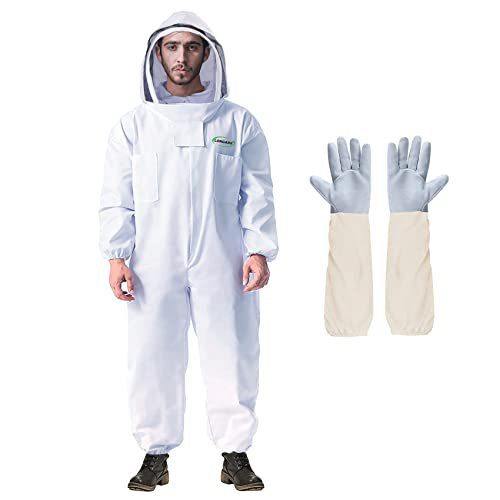
LONGADS Professional Bee Suit for Men and Women, Full Body Beekeeping Suit with Gloves & Protective Round Veil, Size XL (Fits 65-69 Inches / 5’5″-5’9″) for Apiary & Backyard
This full-body beekeeping suit offers maximum coverage and features a ventilated design, making it ideal for new beekeepers looking for protection against stings while maintaining comfort.
Choosing between a full suit, a jacket, or a ventilated design is mostly about your climate, your comfort needs, and how defensive your colonies tend to be. A calm backyard hive in mild weather is very different from working multiple hives on a hot day or opening a colony during a nectar dearth.
Retailer and equipment guides like the Foxhound Bee Company buying guide and the Blythewood Bee Company recommendations emphasize that comfort is not just a “nice to have.” Overheating increases fatigue and impatience, which often leads to faster movements and more defensive bee behavior.
Full suit: best for maximum coverage
A full suit covers torso, legs, and arms in one piece, typically with an integrated or removable veil.
Best for:
- Beginners building confidence
- More defensive colonies
- Longer inspections (15-45 minutes)
- Brush clearing or swarm work where bees are flying heavily
Watch-outs:
- Heat buildup in warm climates
- More zipper length means more places to check
Jacket: best for quick checks and mobility
A beekeeping jacket covers your upper body and pairs with separate pants.
Best for:
- Short inspections (5-15 minutes)
- Hotter weather (less total fabric)
- Beekeepers who want easier on-off
Watch-outs:
- Waistline gaps if the jacket rides up
- Bees can find openings if the hem is not secure
Ventilated suit: best for hot climates and long sessions
Ventilated designs typically use layered mesh that holds fabric away from skin while allowing airflow.
Best for:
- Southern or desert summers
- Apiaries in full sun
- Anyone prone to heat stress
Watch-outs:
- Mesh can snag if you brush against rough wood or fencing
- Lower-quality mesh can lose structure over time
Visual: quick type comparison chart
| Suit type | Coverage | Heat comfort | Best use case |
|---|---|---|---|
| Full suit | Highest | Medium to low | Beginners, defensive hives |
| Jacket | Medium | Medium to high | Quick inspections, mobility |
| Ventilated | High | Highest | Hot climates, long work sessions |
If warm-weather biting insects are also part of your outdoor routine, compare protective approaches with our guides to Best Mosquito Repellent Bracelets and Best Mosquito Nets for Beds, Travel & Camping. They solve a different problem, but the same comfort principle applies: gear only works if you’ll actually use it.
How to choose the right size and fit (so stings don’t sneak through)
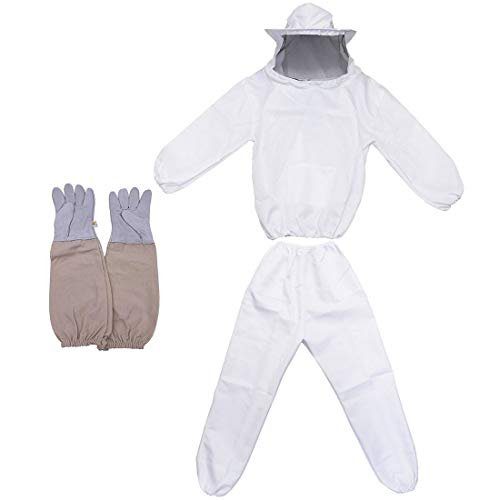
Bee Keeper Outfit, Bee Keeping Gear, Beekeeping Suit Protective with Veil Hood (Jacket, Pants, Gloves) White
This lightweight beekeeping jacket is perfect for quick inspections and provides essential protection with a secure veil, aligning with the article’s emphasis on comfort and sting prevention.
Sizing is where many first-time buyers accidentally downgrade protection. A suit that’s too tight can turn “protective fabric” into a surface bees can sting through. A suit that’s too baggy can catch on equipment, twist at the veil, or leave awkward folds that make movement clumsy.
Guidance from the Gold Bee Store suit buying guide highlights the practical goal: loose enough to create an air gap, but controlled enough to work safely around boxes, frames, and smokers.
Step-by-step: sizing the way beekeepers actually work
Try this at home right after you put the suit on (with the clothing layers you expect to wear).
- Reach test: Raise both arms like you’re lifting a hive lid.
- If cuffs pull up and expose wrists, the arms are too short.
- Squat test: Squat like you’re setting down a super.
- If fabric pulls tight across thighs or knees, size up.
- Twist test: Twist at the waist like you’re pulling a frame.
- If the veil shifts or collar gaps open, the fit is unstable.
- Bend test: Bend at the waist to pick up a tool.
- If the suit binds at the back or shoulders, it’s too small.
What “room for layers” really means
In spring and fall, many beekeepers wear a light long-sleeve shirt and pants under the suit. That extra layer improves comfort and can reduce sting pressure points.
Rule of thumb: You should be able to pinch 0.5-1 inch (about 12-25 mm) of loose fabric at the forearm and thigh without feeling the suit stretch.
Visual: quick fit troubleshooting table
| If you notice… | Likely cause | Fix |
|---|---|---|
| Stings on elbows/forearms | Fabric compressed at joints | Size up or choose stiffer/ventilated design |
| Veil touches nose or lips | Veil lacks structure or suit too small | Upgrade veil style or adjust sizing |
| Bees inside suit | Cuffs/zipper/veil gaps | Improve closures, add boot covers, check seal |
| Suit feels unsafe to move in | Too baggy or wrong cut | Try different brand cut or jacket + pants |
Fit is also personal. Tall, broad-shouldered, and long-armed beekeepers often do better with brands that offer tall sizing or generous shoulder patterns. If you’re between sizes, the safer choice is usually the larger one, then secure cuffs and ankles properly.
Must-have features: veils, zippers, cuffs, and seams that stop stings
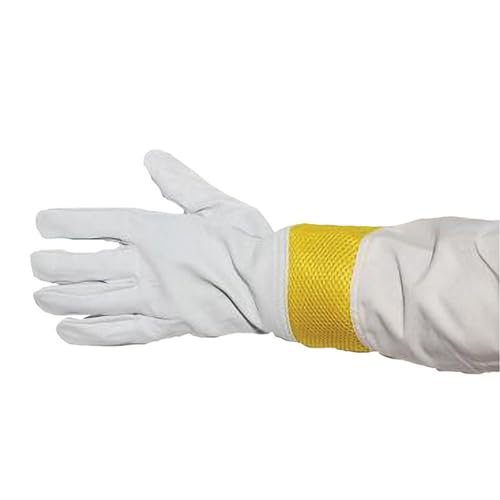
Mann Lake Vented Goatskin Beekeeping Gloves Large
These beekeeping gloves with gauntlet provide additional protection for the wrists and arms, addressing the article’s focus on common sting entry points.
Most sting incidents in protective clothing don’t happen because the fabric “failed.” They happen because a bee found a path inside, or because the veil shifted and created an opening. That’s why experienced beekeepers obsess over the boring details: zipper quality, elastic tension, and how the veil attaches.
The Beekeeping Made Simple guide to picking a suit and retailer guidance like the Gold Bee Store recommendations consistently emphasize the veil as a top priority. Face stings are not just painful. They can swell quickly and end a hive session fast.
Veil styles: fencing vs round (and why structure matters)
- Fencing veil: A boxy shape that keeps mesh away from your face.
- Great visibility and space, less likely to touch skin.
- Round veil: A more cylindrical hood style.
- Can be comfortable, but quality varies by how well it holds shape.
Buying tip: Look for veil mesh that feels stiff and resilient, not flimsy. The veil should zip or fasten in a way that doesn’t leave a “corner gap” near the collar.
Zippers and flaps: your real “front door”
A strong zipper with a protective flap (often Velcro-secured) reduces the chance of bees working their way through the zipper teeth or an end gap.
Checklist before you buy:
- Large zipper pulls you can grab with gloves
- Smooth zipper track (no snagging)
- Overlapping storm flap at the main zipper
- Clean stitching around zipper ends
Cuffs, ankles, and seams
Elastic wrists and ankles help seal the suit, but elastic also wears out.
Look for:
- Elastic plus a secondary closure (Velcro or thumb loops)
- Reinforced seams at knees, elbows, and pocket corners
- Tight stitching with no loose threads
Visual: pre-hive “seal check” in 30 seconds
- Zip fully to the top, then press the flap down.
- Run fingers around the veil connection to feel for openings.
- Tug wrists and ankles to confirm elastic snaps back.
- Check pockets are closed and not gaping.
- Do a quick shoulder roll and squat to ensure nothing pulls open.
For broader safety guidance on stings and reactions, review medically oriented advice from the U.S. National Library of Medicine on insect sting responses and when to seek urgent care.
Protective gear to wear with bee suits (and common mistakes to avoid)
A suit is only one layer of your beekeeping safety system. Gloves, footwear, and underlayers often decide whether you finish your inspection comfortably or spend the afternoon dealing with stings in predictable places like wrists and ankles.
The core gear list (and how to choose it)
Veil (non-negotiable):
- Your eyes and face are high-risk areas.
- Choose a veil that stays off your skin and seals reliably.
Gloves:
- Leather gloves offer sting resistance but reduce dexterity.
- Nitrile or thin gloves improve feel but may increase sting risk.
- Many beekeepers keep both: thin for gentle work, thicker for heavy manipulations.
Boots or boot covers:
- High-top boots reduce ankle gaps.
- Boot covers can add a second seal over pant legs.
Underlayers:
- Lightweight long sleeves and pants reduce skin contact points.
- Avoid overly thin, tight athletic wear that presses suit fabric against skin.
Adjunct equipment that supports safety:
- Smoker and hive tool help you work smoothly and reduce defensive behavior.
- A calm, steady workflow often prevents more stings than “extra thick fabric.”
If you’re assembling your first setup, it can help to start with a curated list, then upgrade pieces as you learn your preferences. The Best Beekeeping Starter Kits for Beginners guide can help you avoid buying duplicates or missing essentials.
Common mistakes that lead to stings
Misconceptions cause predictable problems. Here’s what experienced keepers learn quickly:
- “Bee suits make you sting-proof.”
They don’t. Bees can sting through thin spots or where fabric is compressed. Gaps are the bigger issue. - “Any thick clothing works.”
Thick hoodies and jeans lack sealed cuffs, reliable veils, and secure closures. - “Baggy is always better.”
Too baggy can snag on boxes and shift the veil, creating openings. - “Overheating is only uncomfortable.”
Heat stress reduces patience and coordination. Ventilation can improve safety by helping you stay calm and deliberate. - “No holes means it’s fine.”
Seams, zippers, and elastic can fail without obvious holes.
Visual: sting-prevention checklist before you open a hive
- Choose the right suit type for the weather and task
- Tie back hair and remove dangling jewelry (snag risk)
- Seal wrists, ankles, and veil connection
- Keep water nearby in hot weather
- Move slowly and avoid crushing bees
Conclusion
The best bee suits are the ones you’ll wear correctly every time because they fit well, seal tightly, and stay comfortable in your climate. Prioritize a slightly loose fit, a high-quality veil, and dependable closures at wrists, ankles, and zippers. Then back it up with simple habits: inspect your gear before each use, repair small damage early, and work calmly around the hive.
Next step: If you’re still building your setup, start with Best Beekeeping Starter Kits for Beginners. And if warm-weather pests are part of your outdoor season, our guides to Best Mosquito Repellent Bracelets and Best Mosquito Nets for Beds, Travel & Camping can help you stay comfortable beyond the apiary.
As an Amazon Associate, I earn from qualifying purchases. Product recommendations are based on real reviews and independent research.