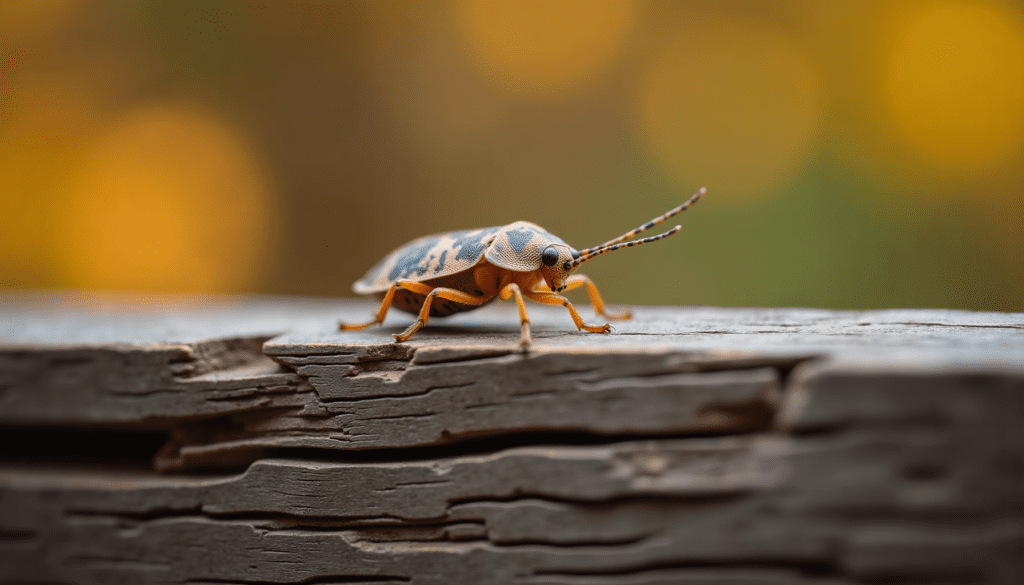
Your garage is the airlock between outdoors and your house, and most garage pests, mice under the door gap, spiders in cluttered corners, crickets and sowbugs at the slab edge, get in through gaps you can find with a flashlight in five minutes.
- The test: Stand inside with the lights off and the big door closed. Any daylight under or beside the door is a working pest entrance, and a gap the width of a pencil is enough for a mouse.
- The cheap fix: Replace the door’s bottom seal, seal gaps around pipes and frames, and move stored items from cardboard boxes into lidded plastic bins on shelves.
- Keep perspective: Most garage spiders are harmless and eat the other pests, so identify before you panic, and route squirrels, bats, or raccoons to licensed wildlife control.
Walk into your garage tonight and turn off the lights. If you can see daylight, or streetlight, glowing under the big door, you have found the busiest pest entrance on your entire property. The garage sits between outdoors and your living space, with a door the size of a wall that opens dozens of times a week, a concrete slab edge that stays cool and damp, and shelves of undisturbed boxes that make better pest housing than anything in the yard. That is why I treat the garage as an airlock. Get the airlock right and you protect the whole house. Ignore it, and every mouse, cricket, and wandering spider that reaches your foundation this fall gets a free staging area ten feet from your kitchen door.
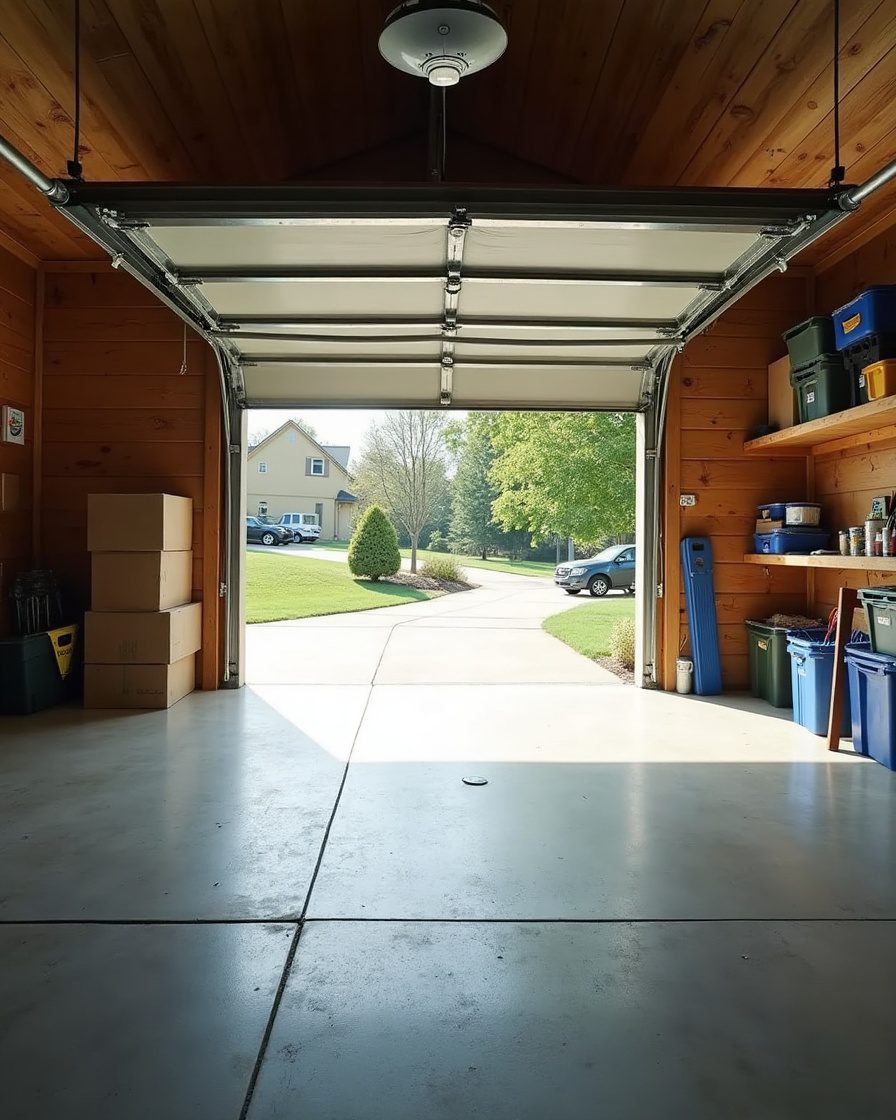
Why the garage is your home’s pest airlock
Every pest that ends up in your kitchen or basement in January made a shorter trip first, and for a large share of them that trip ran through the garage. The University of Kentucky’s pest-proofing guide notes that many pests move toward structures with the onset of cooler autumn temperatures, and it puts hard numbers on what a gap admits: openings of 1/16 inch or less will permit entry of insects and spiders, while a 1/4 inch gap, the diameter of a pencil, is large enough for a mouse. Measure the daylight under a tired garage door seal and you will usually find it beats both numbers comfortably.
The garage also concentrates the three things pests want once they are inside: shelter that nobody disturbs for months, moisture along the slab edge and around any drain or water heater, and, in many homes, actual food in the form of birdseed, pet food, and grass seed stored in their original paper bags. The airlock framing matters because it sets your priorities. You do not need to treat the whole property. You need to make one room tight, and late summer is the right deadline, because the sealing has to be done before the fall movement starts, not after you find droppings. Our step-by-step guide to pest-proofing the home against fall invaders covers the whole-house version of this job.
The daylight test: reading your garage door gap
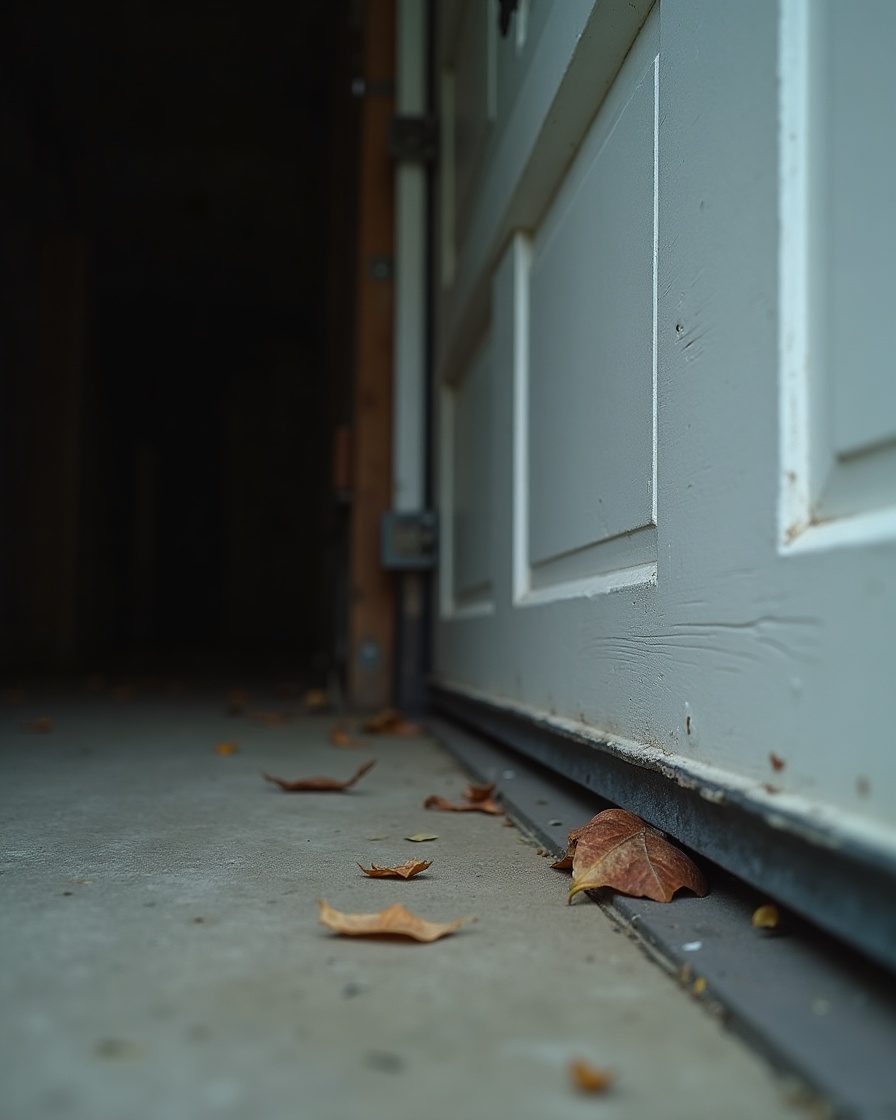
Here is the five-minute inspection that tells you most of what you need to know. Close the big door, kill the lights, and crouch down to look along the bottom seal from inside. Daylight means a gap, and the shape of the light tells you the story. A thin, even glow across the full width means the rubber bottom seal has hardened and shrunk with age. Bright triangles at the corners mean the slab has settled or the seal was never fitted to it. A single bright notch usually marks a spot where the concrete has chipped, and that notch is the mouse door.
Mice do not need much. The UC IPM Pest Note on house mice states they can squeeze under gaps as short as 1/4 inch tall, which is less than the wear on many original builder-grade door seals. The fix is cheap and unglamorous: a new rubber bottom seal or garage door threshold strip, plus weatherstripping on the side jambs and the man door. Replace rubber, do not shim it, because a compressed old seal springs back to the same gap within weeks. While you are down there, check the man door for the same daylight, since it gets more traffic and more wear. Our full walkthrough on mouse-proofing a house ranks every entry point, and the garage doors sit at the top of that list.
Mice: droppings, gnawing, and the boxes they love
Mice announce themselves before you ever see one. Look for droppings the size of rice grains along walls and shelf edges, fresh gnaw marks on bags and box corners, and shredded paper or fabric pulled into a hidden corner. A musky smell in a closed garage is another common tell. The UC IPM guidance notes that mice hide behind boxes, in garages, and around woodpiles, and typically stay within about 30 feet of the nest. That 30-foot rule is worth remembering, because a nest in the garage puts your kitchen inside the mouse’s normal foraging range.
Control in a garage is a solved problem: snap traps set perpendicular to the wall along the routes where you found droppings, with the food and nesting material removed. Trapping lets you confirm your progress and avoids a mouse dying somewhere unreachable. If you use rodenticide bait, follow the EPA’s rules and keep it inside tamper-resistant bait stations placed out of reach of children, pets, and wildlife, and remember that poisoned rodents can in turn poison the owls, foxes, and pets that eat them, which is a real cost of the convenience. For the trap-by-trap details, see our guide on how to get rid of mice.
Two safety notes belong here. First, cleanup: never dry-sweep or vacuum an area with rodent droppings, because that puts dust in the air. Ventilate the garage, wet the droppings and nest material thoroughly with a disinfectant solution, wipe them up with paper towels while wearing gloves, and bag everything for the trash. Second, scope: if the animal in your garage is a squirrel, a bat, or a raccoon rather than a mouse, stop and call a licensed wildlife control operator. Wildlife carries different risks, different laws apply, and it is not a snap-trap job.
Spiders in the clutter corners
The spiders are the pests people fear most and need to fear least. UC IPM is blunt that spiders are mostly beneficial because they feed on pest insects, and the University of Kentucky’s spider guide adds that most species do not attempt to bite and many cannot even pierce human skin. In a garage, the spiders you see are usually cellar spiders draping loose webs in the dark upper corners, cobweb spiders in the window angles, and the occasional wolf spider hunting across the floor at night. Wolf spiders look alarming because they are fast, hairy, and web-free, but Missouri’s Department of Conservation notes that the bites of North American wolf spiders are harmless, and that spider is in your garage precisely because your garage has crickets to eat.
One myth is worth killing directly: spiders are not fleeing the cold in autumn. Most of the spiders living in your garage belong to species adapted to structures year-round, and much of the extra spider traffic you notice in early fall is wandering males looking for mates, not refugees from the weather. That is why spraying the room accomplishes so little. The University of Kentucky’s control guidance says routine, thorough cleaning is the best way to eliminate spiders, since a vacuum removes spiders, webs, and egg sacs in one pass, and it recommends glue boards placed flush along walls and in corners to reveal hotspots and catch the wanderers. Clear the clutter piles they hide under, vacuum the corners quarterly, and lay a few glue boards along the walls, and the spider population falls with no chemicals at all. If someone in the house does take a bite they are worried about, our guide to spider bite identification and when to worry covers the warning signs, and any bite with spreading pain, an open wound, or whole-body symptoms is a reason to see a clinician promptly.
Crickets, sowbugs, and the slab edge crowd
The floor-level residents of a fall garage are the moisture crowd. Field crickets and camel crickets come in under the door gap and announce themselves either by chirping, for field crickets, or by their unsettling humpbacked jump, for camel crickets, which are silent. Camel crickets in particular love the cool, damp band where the slab meets the wall, and a garage with cardboard on the floor feeds them, since they will chew on paper, fabric, and glue. They are harmless to people, but a big population is a sign of a moisture problem and a food source for the spiders you just read about. Our guide to camel cricket identification and control covers the glue-board and dehumidifier play that clears them out.
Sowbugs and pillbugs, the little armored crustaceans that curl or scatter when you lift a box, tell you the same story in a different accent. They can only survive where it stays damp, so a crowd of them along the slab edge means water is getting in or staying in. Fix the moisture and they leave: pull stored items off the floor and onto shelves, sweep out the leaf litter that blows under the door, check that downspouts and grading carry water away from the garage wall, and let the slab edge dry. The same dampness that feeds sowbugs also invites silverfish into stored papers and fabric. If you are seeing shiny, wriggling insects in old boxes, our explainer on silverfish identification will confirm the ID.
Wasps in the eaves and lady beetles on the sunny wall
Look up before you close the inspection. Paper wasps favor the sheltered angles of garage eaves, the gap behind trim, and the top rail of a door that stands open all day, and by late summer their colonies are at peak size and peak defensiveness. A small, newly started nest in spring is a simple job; a softball-sized nest in August near a door you use daily is a reasonable thing to hand to a pest control professional rather than fight from a ladder. Anyone with a known sting allergy should not be the one doing this job, and a sting that causes trouble breathing or widespread swelling is an emergency that needs immediate medical care.
The other autumn wall-crawler is the multicolored Asian lady beetle. The University of Kentucky’s fact sheet describes how these beetles pile onto buildings on sunny fall days following cooler weather, favoring the sunnier southwest sides, then work into cracks around frames, soffits, and wall voids to overwinter. They do not breed indoors or damage anything, but crushing them is a mistake, since they stain surfaces with a yellowish defensive secretion. Vacuum them up instead, and treat their arrival as a diagnostic: every beetle that got in used a gap that sealing would have closed. If you are not sure whether the orange beetles on your garage wall are these or native ladybugs, our guide to identifying ladybug types and look-alikes sorts them out.

The cardboard-to-plastic-bin rule
If you only change one storage habit this fall, change this one: get rid of cardboard on the garage floor. Cardboard is pest infrastructure. Mice shred it for nesting, crickets and silverfish eat it, sowbugs shelter under it as it wicks moisture off the slab, and spiders hunt the whole assembly. Stacked boxes then go undisturbed for months, which is exactly the quiet, protected condition every one of these animals is selecting for. UC IPM’s advice to clean up clutter in garages, sheds, and storage areas is aimed at precisely this habitat.
The upgrade is one shopping trip: move stored items into plastic bins with latching lids, and put the bins on shelves so the floor stays visible and sweepable. Sealed bins remove the food, the nesting material, and the hiding places in one move, and a floor you can see is a floor where droppings and gnaw marks get noticed in week one instead of month six. Transfer pet food, birdseed, and grass seed from their paper bags into lidded metal or heavy plastic containers the same day. This is the cheapest whole-house pest upgrade available, because every animal the garage stops housing is an animal that never gets a shot at the door into the house.
Garage pest quick-reference
| Pest | The tell | First move |
|---|---|---|
| House mice | Rice-grain droppings, gnawed bags, musky smell | Snap traps on the wall routes, then seal the door gap |
| Spiders | Webs in corners, fast hunters on the floor at night | Vacuum webs and egg sacs, declutter, glue boards |
| Camel crickets | Humpbacked jumpers near the damp slab edge | Glue boards plus drying out the space |
| Sowbugs and pillbugs | Armored crawlers under floor-stored boxes | Fix moisture, lift storage onto shelves |
| Paper wasps | Open-comb nest in eaves or door frame angles | Small spring nests DIY with care, big late-season nests to a pro |
| Asian lady beetles | Clusters on the sunny southwest wall in fall | Vacuum indoors, seal the cracks they used |
Common questions
What is the most common pest in a garage?
Spiders are the most commonly seen, because their webs make them visible, but house mice are the most consequential. A mouse nesting in the garage forages within roughly 30 feet, which usually includes the door into your house. Treat mouse sign as the priority even if the spiders are what caught your eye.
How big a gap can a mouse fit under a garage door?
About 1/4 inch, the diameter of a pencil, per both University of Kentucky and UC IPM guidance. Insects and spiders need only 1/16 inch. If you can see daylight under the closed door from inside, the gap is almost certainly big enough, and a new rubber bottom seal or threshold strip closes it.
Should I spray my garage for spiders?
Usually no. Extension guidance is consistent that vacuuming webs and egg sacs, clearing clutter, sealing gaps, and using glue boards outperform sprays, because sprays do not reach the cracks where spiders sit and do nothing about the next arrivals. Save chemical control for cases a professional confirms, and always follow the label.
Are the big hairy spiders in my garage dangerous?
Almost certainly not. Fast, hairy, web-free hunters are usually wolf spiders, and North American wolf spider bites are harmless. Most garage spiders either cannot pierce skin or have no interest in trying. If you have a suspected bite with spreading redness, growing pain, or fever, have a clinician look at it rather than guessing at the spider.
Do mothballs or ultrasonic repellers keep pests out of a garage?
No. Independent testing and extension guidance have not supported ultrasonic repellers, and mothballs are a pesticide being misused when scattered around a garage. The boring answers, sealing the door gap, moving storage into lidded bins, and drying the space out, are the ones that actually change the pest count.
Final verdict
Your garage is either an airlock or an on-ramp, and the difference is about one weekend of work. Do the daylight test on the big door and replace the bottom seal if any light shows, since a pencil-width gap admits a mouse and a fraction of that admits insects and spiders. Seal the pipe and frame gaps with caulk, foam, or copper mesh, and do it now, before the cool nights start the fall push toward structures. Swap floor cardboard for lidded plastic bins on shelves, get seed and pet food into sealed containers, and let the slab edge dry out. Then read what remains honestly: trap mice rather than defaulting to poison, vacuum spiders instead of spraying them, hand big wasp nests and any wildlife to licensed professionals, and remember that most of the spiders you leave alone are working the night shift against everything else on this list. Make the one room tight, and the rest of the house mostly takes care of itself.