Mice enter homes in fall because cooling nights and the end of the outdoor food season push them toward heated buildings, and a mouse can squeeze through a gap only about a quarter inch tall. Sealing those gaps is the fix; traps handle whatever is already inside.
- Do first (free): Walk the exterior and check garage door corners, utility pipe and cable penetrations, foundation vents, and the gaps under exterior doors.
- The rule that matters: Seal anything a pencil fits into, using steel wool, metal mesh, or mortar rather than foam alone.
- Indoors: Snap traps along walls beat poison, which risks a dead mouse in a wall void and secondary poisoning of pets and wildlife.
Every year it happens on schedule. The first stretch of genuinely cold nights arrives, the fields and gardens finish up for the season, and within a week or two you hear the first scratch in the wall or find droppings behind the toaster. Mice move indoors in fall for the same two reasons you close your windows: the temperature drops and the outdoor food supply dries up. The good news is that a fall invasion is one of the most preventable pest problems there is, because mice enter through a short, predictable list of openings you can find and close in a weekend.
Why mice move indoors when nights turn cold
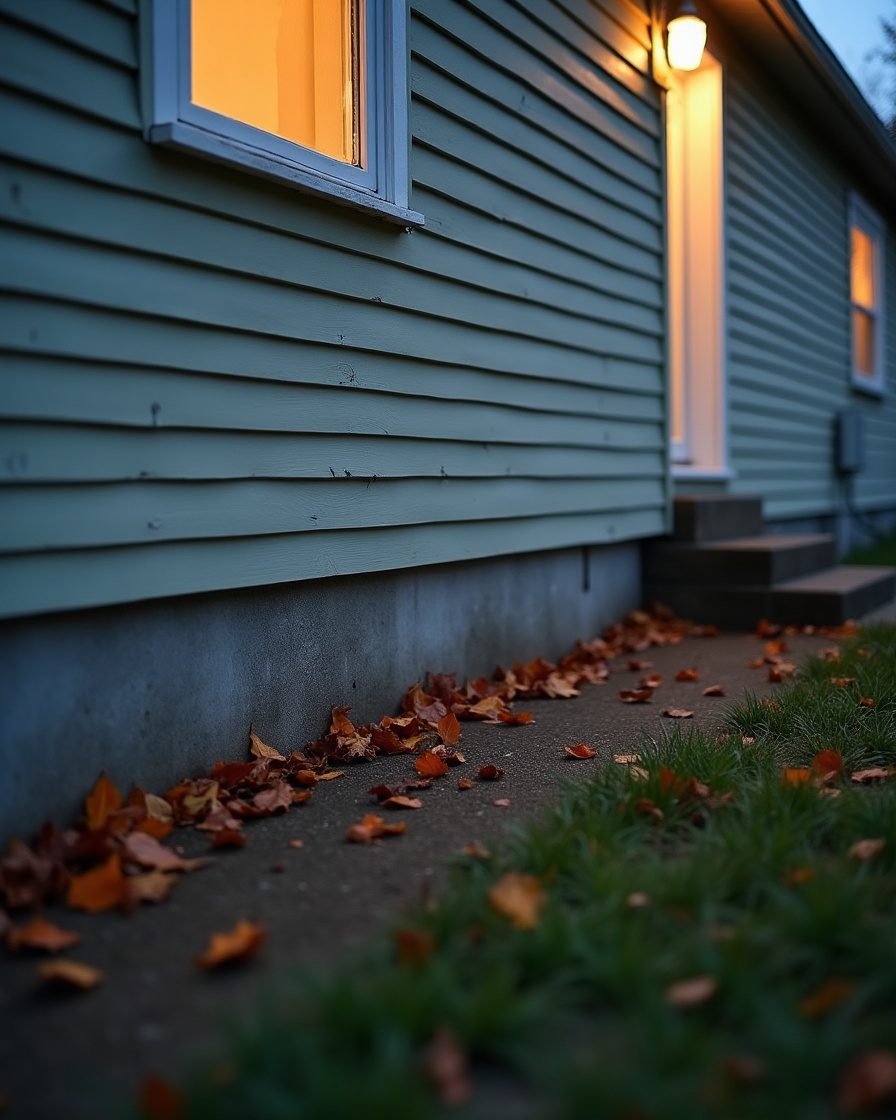
Through the summer, a house mouse has little reason to share your kitchen. Seeds, grain, insects, and garden scraps are everywhere, and outdoor cover is thick. That changes fast in early fall. The University of California’s integrated pest management program notes that mice frequently enter homes in autumn when nighttime temperatures turn colder, and the end of the growing season removes the food that kept them content outside. A heated structure with stored cereal, pet food, and crumbs is simply a better habitat than a frostbitten field edge, so the migration indoors is seasonal and predictable, not a sign that your house is dirty.
The reason a few mice in October becomes a real problem by January is reproduction. A female house mouse can produce five to ten litters a year of five or six pups each, and those pups are breeding themselves five to six weeks after birth. A mouse also eats up to a fifth of its body weight daily, nibbling across dozens of small feeding visits a night, which is why droppings show up scattered along the whole length of a counter or pantry shelf rather than in one spot. Two mice in the fall is the cheap moment to act. The same seasonal push drives other invaders too, from lady beetles to stink bugs, and our overview of pest-proofing your home against fall invaders covers the whole cast.
The stakes are more than nuisance. Mice gnaw constantly, and gnawed electrical wiring is a genuine fire hazard. They also contaminate far more food than they eat, and rodent urine is a recognized allergen. That is why extension entomologists treat exclusion as routine home maintenance, not as a reaction to an infestation already underway.
The dime rule: how small a gap a mouse actually needs
Most homeowners lose the exclusion battle before they start, because they are looking for mouse-sized holes. Mice do not need mouse-sized holes. An adult house mouse can squeeze under a gap a quarter inch tall and through an opening three-eighths of an inch wide, which is smaller than a dime. The University of Kentucky’s pest-proofing guide puts the same rule in carpenter’s terms: a quarter-inch gap, about the diameter of a pencil, is enough for a mouse to enter.
So the inspection standard is simple and strict. Walk the outside of your house with a pencil, and anywhere the pencil fits, a mouse fits. Check from inside a dark garage in daylight, because light leaking through a gap at floor level is the fastest way to find the openings your eyes skip past. Once you accept the dime standard, the list of candidate openings gets longer, but it also gets very concrete.
The entry hotspots worth checking first
Decades of extension guidance converge on the same short list of entry points, and it is worth checking them in order of how often they fail.
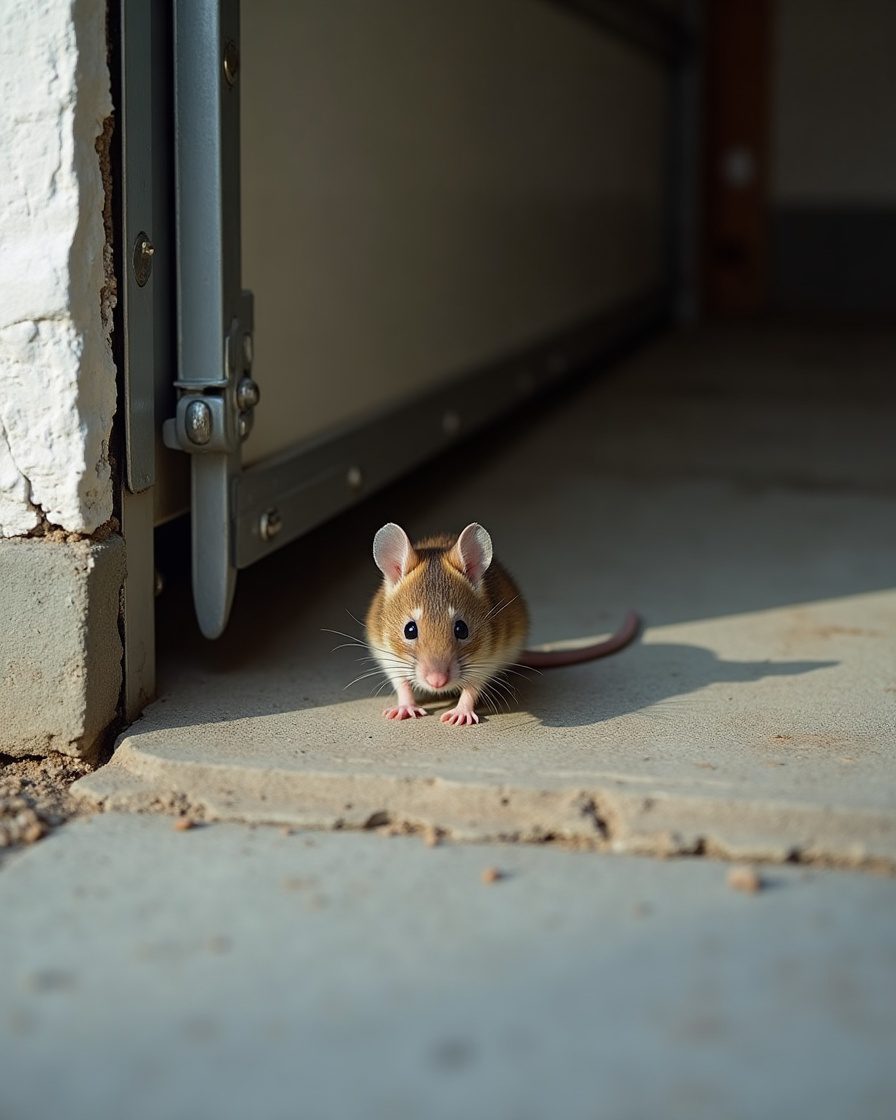
Garage door corners come first. The bottom seal of a garage door takes a beating, and the corners wear out before the middle. A garage is also the perfect staging area for mice: warmer than outside, quiet, and often stocked with bird seed or pet food in paper bags. The Kentucky guide recommends a rubber bottom seal, since vinyl stiffens and gaps in cold weather. From an established garage, the kitchen is a short trip.
Utility penetrations are second. Every place a pipe, cable, dryer vent, faucet, or wire passes through the foundation or siding was cut oversized during construction, and the sealant that once filled the ring shrinks and cracks over the years. The University of Kentucky lists these openings around pipes, wires, and vents as common entry points for rodents, and on many houses a single forgotten cable penetration behind a shrub is the whole story of the infestation.
Foundation and crawl space vents are third, along with the gap under exterior doors. Vents need quarter-inch wire mesh, intact and firmly fastened, because a torn corner of screening is an open door. Exterior doors need sweeps or thresholds tight enough that daylight does not show underneath. Chimneys deserve a cap while you are at it. If you want a full route to walk with a checklist, our guide to fall pest-proofing step by step covers the sequence in one pass.
One boundary matters here. If the noises in your attic are heavy, or you find droppings much larger than a grain of rice, you may be dealing with squirrels, raccoons, or bats rather than mice. Those are wildlife, not pests you should trap or seal in yourself, and bats in particular are protected in many places. Hand that job to a licensed wildlife control operator who can evict the animal humanely and legally before the opening is closed.
Sealing that actually holds against a rodent
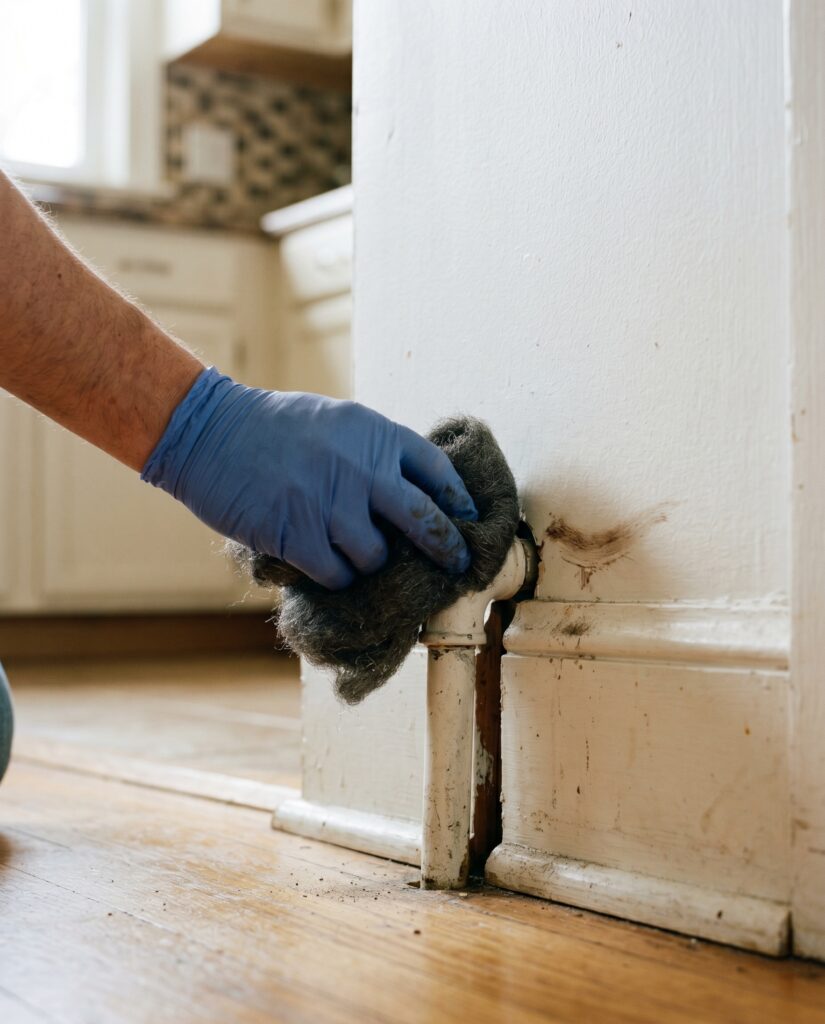
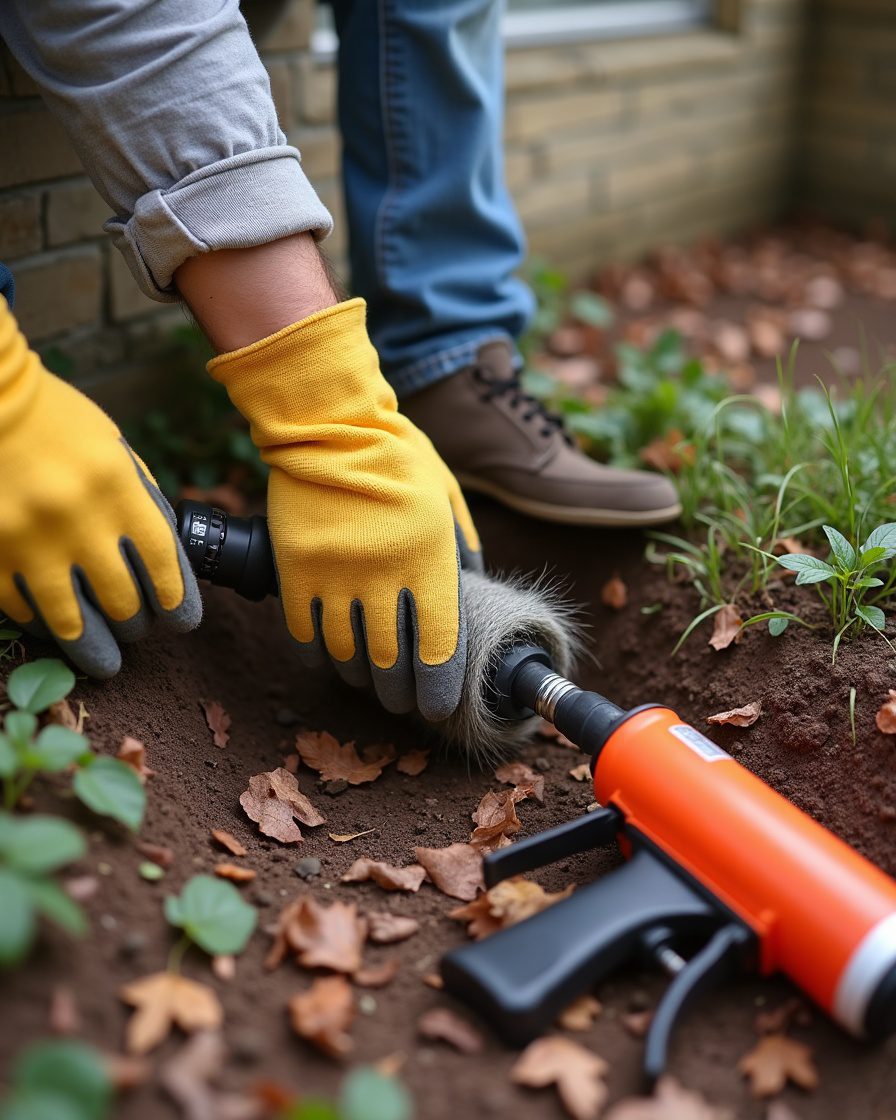
Mice are rodents, which means the sealing material has to survive teeth that can work through most soft fillers. The UC IPM house mouse guidance is blunt about this: seal gaps with metal or concrete, not materials a mouse can gnaw through, which rules out bare expanding foam and plastic as stand-alone fixes. The practical combination that works on most houses is coarse steel wool or copper mesh packed tightly into the opening, then capped with caulk or mortar so the metal stays put and weather stays out. Copper mesh has the edge on longevity because it does not rust and stain.
Match the material to the opening. Small pipe penetrations take mesh plus caulk. Larger holes want quarter-inch hardware cloth screwed down over the opening, or sheet metal where gnawing pressure is high. Masonry gaps get mortar. Foam still has a place as a backer behind a metal barrier, never as the barrier itself. Do the work in early fall, before the first hard cold snap triggers the move indoors, because sealing after mice are inside can trap them in the walls. The full room-by-room version of this job is in our guide to mouse-proofing your house.
Why traps beat poison indoors
Once mice are already inside, the honest ranking of tools is not close: snap traps first, rodenticide bait a distant second, and glue boards somewhere behind both for rodents. The UC IPM program calls snap traps a great first step for mice indoors, and the reasons are practical rather than sentimental.
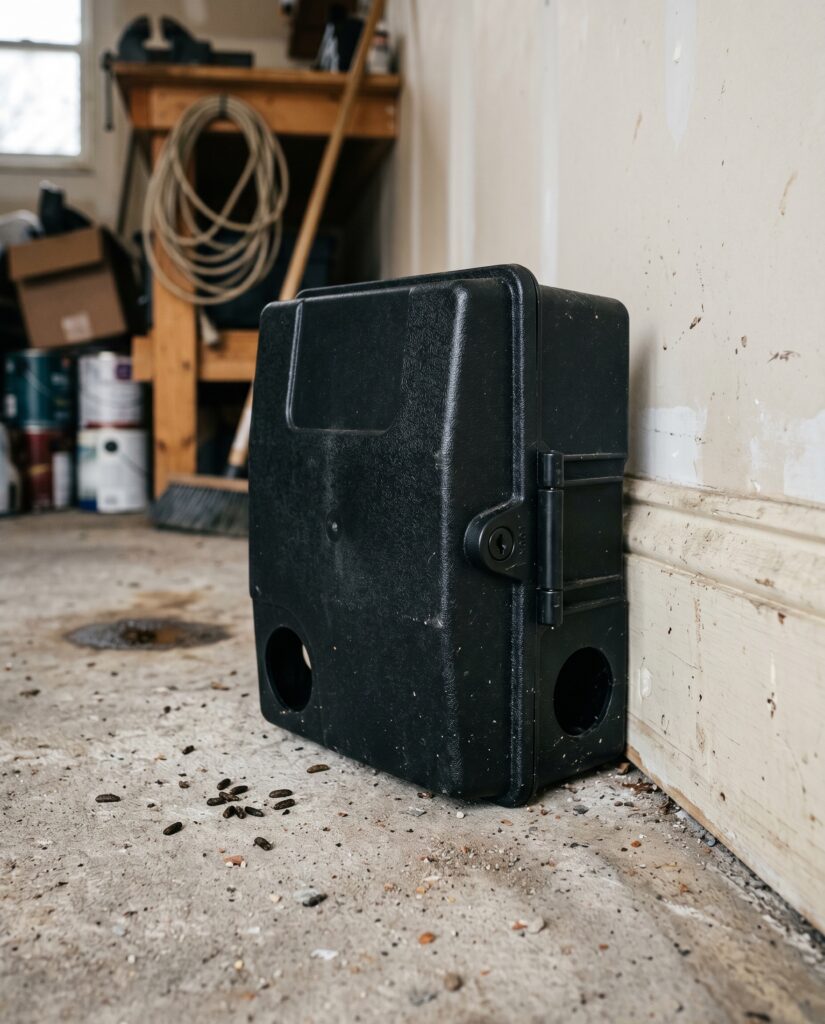
First, traps give you a body you can remove. Poisoned mice die wherever the toxicant catches up with them, often inside a wall void, where the carcass means days of odor you cannot reach. Second, traps tell the truth about progress: a week of empty traps after a run of catches means the population is gone, while a bait block just gets quietly nibbled with no scoreboard. Third, traps carry no poisoning risk beyond a snapped finger. Rodenticides do. The EPA’s rodenticide program requires tamper-resistant bait stations for household use precisely because loose bait is a hazard to children and pets, and a poisoned mouse that staggers outside can poison the owl, hawk, fox, or house cat that eats it. That secondary poisoning risk is a real cost of the convenience.
Trap technique is most of the result. Mice travel along walls, so set traps with the trigger end touching the baseboard, spaced every ten feet or so along the runs where you see droppings. A smear of peanut butter is the classic bait, worth swapping only if anyone in the house has a peanut allergy. Expect the first two nights to do most of the work, and reposition anything untouched for three days. The wider campaign, from trap styles to knowing when you are done, is in our complete guide to getting rid of mice.
| Tool | Best use | The catch |
|---|---|---|
| Snap traps | First choice indoors; fast, cheap, verifiable | Placement matters; set along walls, not in open floor |
| Rodenticide bait | Outdoor or professional use in tamper-resistant stations | Slow, dead-mouse-in-wall odor, secondary poisoning risk |
| Sealing gaps | Every house, ideally before cold weather | Labor up front; must use gnaw-proof materials |
If you do choose bait for an outdoor or garage problem, treat the label as law. The EPA’s consumer guidance starts with the question of whether a pesticide is needed at all before reaching for one, and with rodents the answer indoors is usually no, because exclusion plus trapping solves the problem the poison is being asked to solve, without the risks.
Cleaning up droppings without making yourself sick
Do not sweep or vacuum dry mouse droppings. Dry sweeping kicks dust from droppings, urine, and nesting material into the air, and public health guidance says to keep that dust out of your lungs, since rodents can carry pathogens that spread through it. The safe routine is a wet one: ventilate the room, put on disposable gloves, soak the droppings and surface with a disinfectant or bleach solution and let it sit several minutes, then wipe up with paper towels, bag the waste, and wash your hands. Wet it, wipe it, bag it is the whole method. For a heavy accumulation in a crawl space, or if you feel ill after cleanup, bring in a professional and talk to a clinician.
Common questions
Why do I suddenly have mice every fall?
Because the season, not your housekeeping, is driving them. Cooling nights and the end of outdoor food push mice toward heated buildings each autumn, through the same unsealed gaps every year. Seal the entry points once, properly, and the annual invasion stops repeating.
How do mice get in if I never see holes?
The holes are smaller than you are scanning for. A quarter-inch gap, the diameter of a pencil, admits a mouse, so worn garage door corners, pipe penetrations, and gaps under doors all qualify without ever looking like a hole. Check at floor level with a light source behind the gap.
Is one mouse in the house really a problem?
Treat it as several until traps prove otherwise. Mice breed year-round indoors and the young mature in about five to six weeks, so a pair in October is a population by midwinter. Set traps the day you see the first mouse or droppings.
Can I just put poison in the kitchen instead of traps?
You can, but it is the worse tool there. Bait is slow, it risks a dead mouse inside a wall, any household use belongs in a tamper-resistant station, and a poisoned mouse can pass the dose to whatever eats it. Snap traps along the walls do the same job faster and cleaner.
Do mice leave on their own in spring?
Not reliably. A house offers food, warmth, and nesting cover year-round, so many mice that enter in fall simply stay. The same is true of other cold-season invaders, which is why our guide to winter pest control for invading bugs treats fall sealing as the fix rather than waiting them out.
Final verdict
Mice come inside in fall because your house is the warmest, best-stocked territory on the block the moment the nights turn cold and the outdoor food season ends. Stopping them is mostly carpentry, not chemistry. Walk the exterior with a pencil and seal everything it fits into, starting with the garage door corners, utility penetrations, and foundation vents, using steel wool, metal mesh, and mortar that teeth cannot beat. Handle whatever is already inside with snap traps set tight along the walls, and leave rodenticides for the rare outdoor job in a tamper-resistant station. Clean droppings wet, never dry, and hand anything bigger than a mouse to a licensed wildlife professional. Do the sealing this month, while the weather is still on your side, and the scratch in the wall never starts.