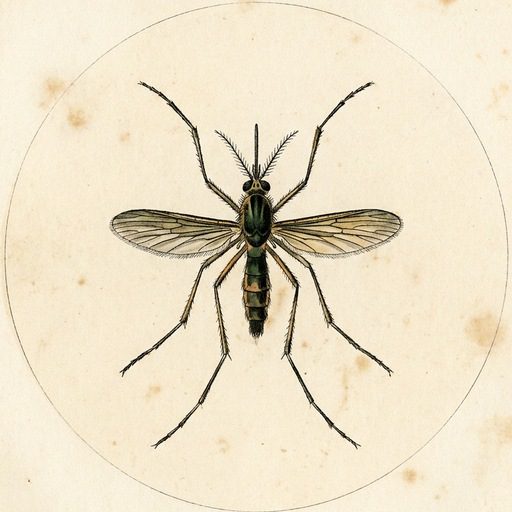
Bat guano and mouse droppings look similar in size and colour, and one test separates them reliably: crush a dry pellet between two sheets of paper. Guano crumbles to a powder that glitters, because it is made almost entirely of insect exoskeleton. Mouse droppings compress into a dull paste. Guano also accumulates in a pile directly beneath one point, where rodent droppings scatter along runways. Bats are legally protected in most of Europe and North America, so identification changes what you are allowed to do next.
- Crush it: glitter means bat. The sparkle is undigested wing case.
- A pile under one spot means a roost. Scattered means rodent.
- Do not seal an entry in summer. Flightless young may be inside.
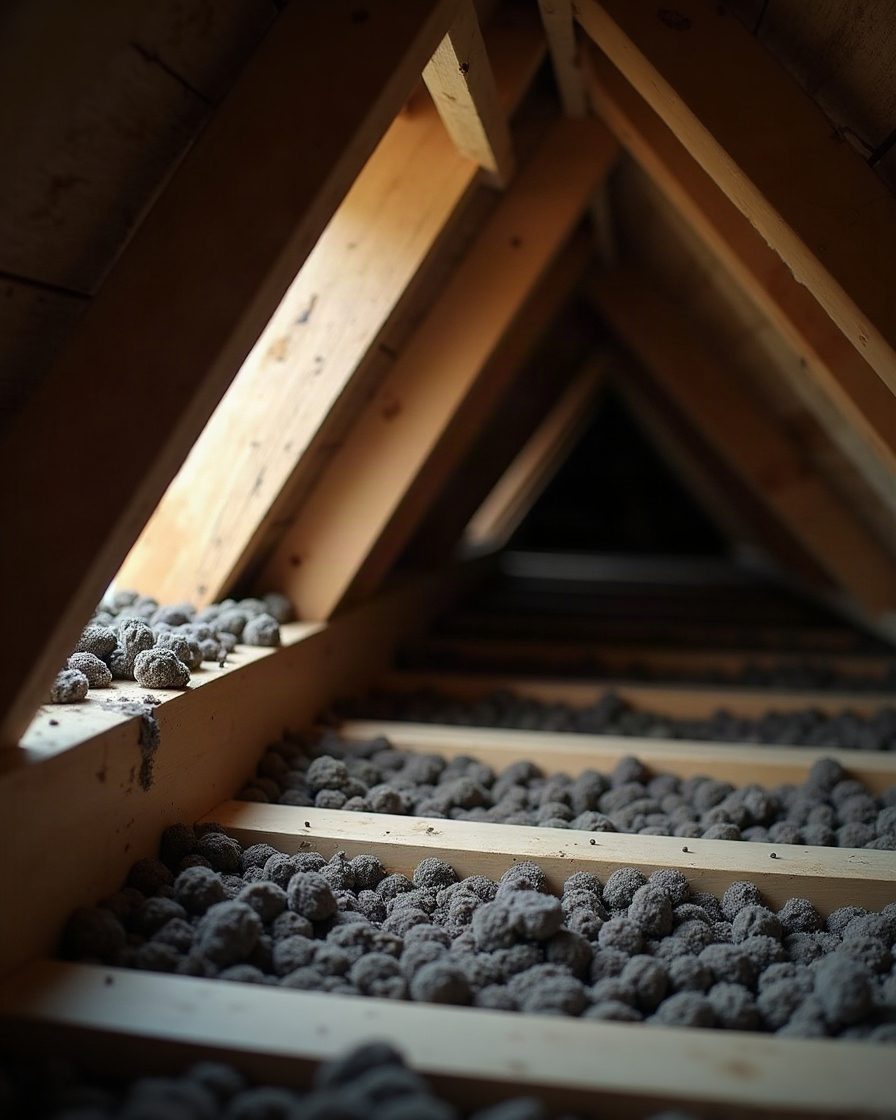
Finding dark pellets in a loft usually starts a rodent search. Often that is right. Sometimes it is not, and the distinction matters more than most identification questions on this site, because bats are protected by law across most of Europe and North America and the correct response is close to the opposite of the rodent one.
The crush test
This is the whole identification, and it takes ten seconds.
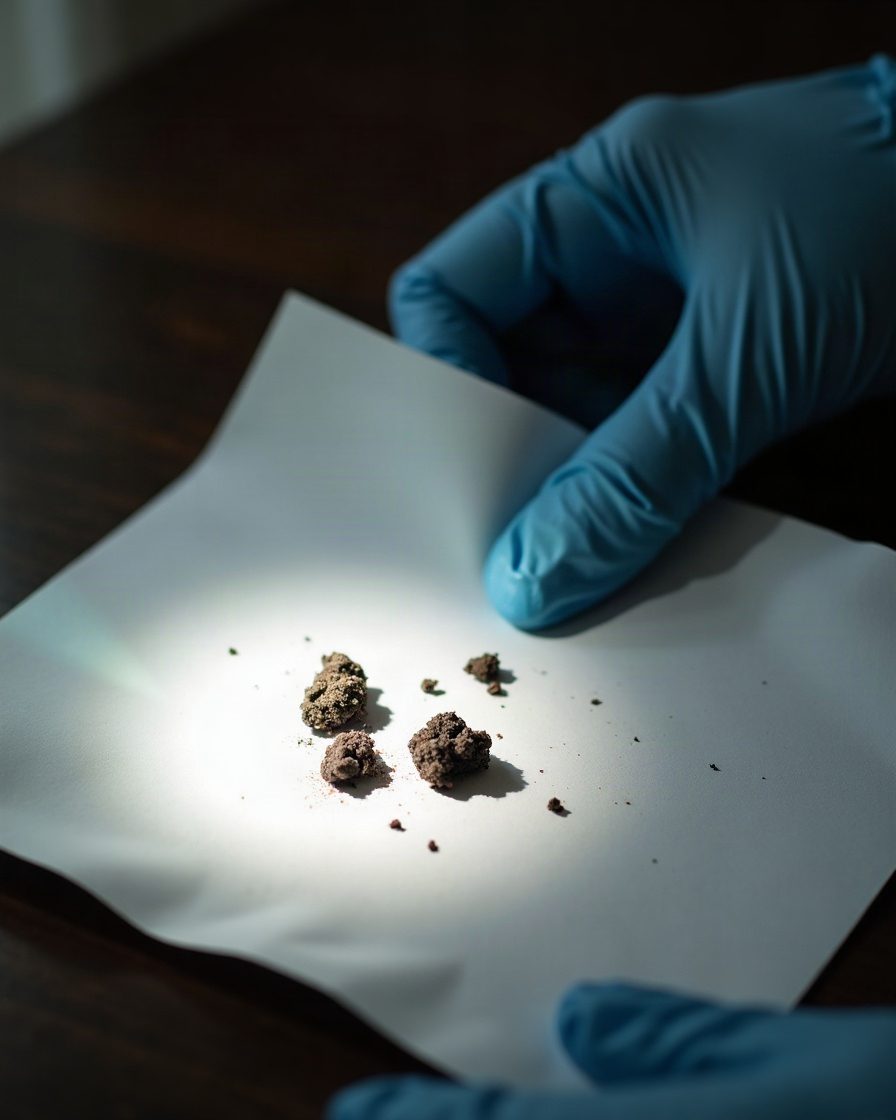
Take a dry pellet, place it between two sheets of white paper, and press.
Bat guano crumbles into a dry, granular powder that glitters under a torch. Bats eat insects and almost nothing else, and the shiny fragments are undigested exoskeleton, mostly beetle and moth wing case. Nothing else in a loft produces that sparkle.
Mouse droppings compress rather than crumble. They flatten into a dull, fibrous paste, because a mouse diet is seeds and plant matter.
Do this with gloves on and, if there is a real accumulation, do not do it in the enclosed space itself.
The other differences
Placement. Bats roost in one spot and drop from it, so guano forms a discrete pile directly below a specific point on a beam, a ridge board or an eaves junction. Rodents move along runways with a flank against a surface, so droppings string out in lines along walls and joists.
Shape and size. Both are roughly 6 to 12 mm and dark. Guano is often slightly larger, more irregular, and segmented in appearance. Mouse droppings taper at the ends more crisply.
Staining. A long-used bat roost often leaves dark staining on the timber above the pile, and sometimes an oily patch at the entry point outside.
Smell. A significant roost has a distinctive strong ammoniacal smell. A few mouse droppings do not.
For everything else that turns up in a loft, the droppings identification chart covers the full size ladder, and squirrel droppings in the attic covers the third common candidate. The health reasoning here is the same one that applies to bird droppings on buildings, for the same fungal reason.
Sound and timing
Bats are quiet compared with rodents, and the sound is different in character: a soft chittering and rustling rather than scratching or gnawing. The timing is the better clue. Activity concentrates at dusk and again before dawn, when animals leave and return, and a summer roost is far noisier than a winter one because it holds young.
Rodents scratch and gnaw through the night. Squirrels are active in daylight. Attic pests identified by sound works through the time-of-day test, which is often faster than finding droppings at all.
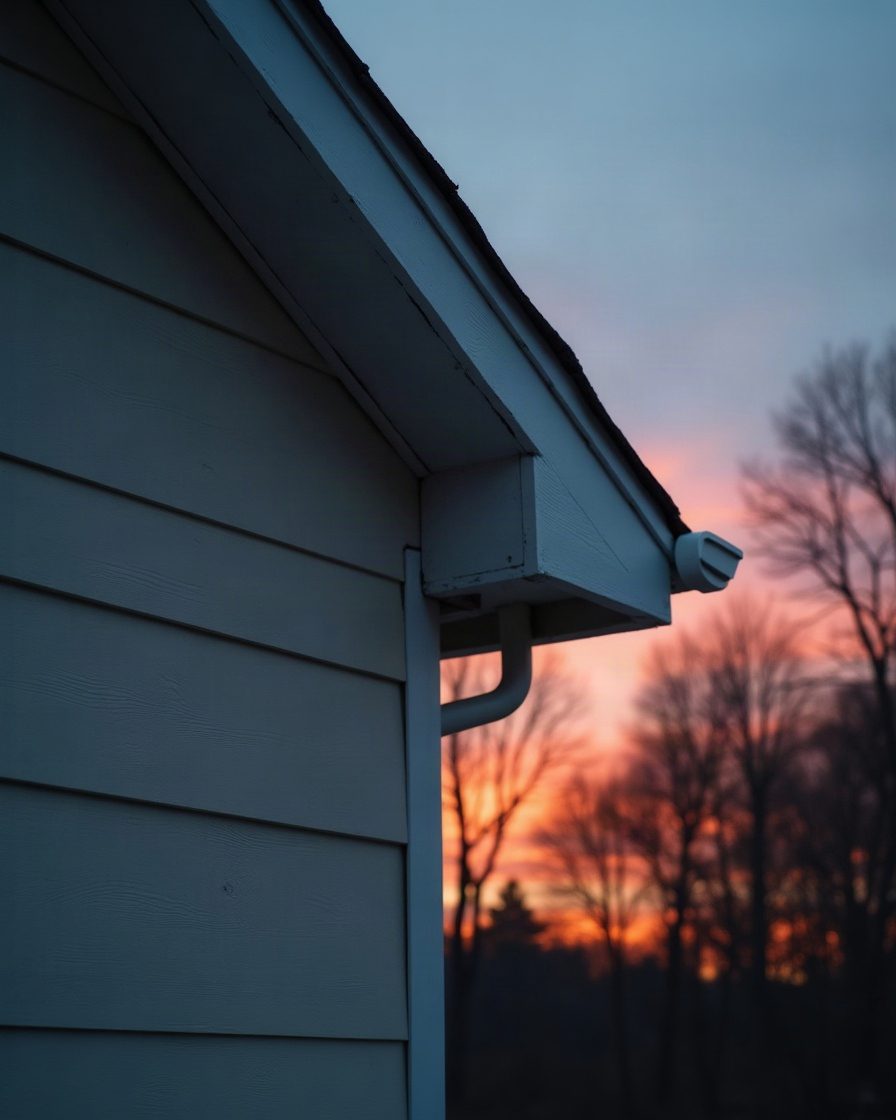
The most reliable confirmation costs nothing: stand outside at dusk on a warm evening and watch the roofline. Bats leaving a roost are unmistakable, and you will see the exact gap they use.
The health question, kept in proportion
The concern with accumulated guano is histoplasmosis, a fungal infection acquired by inhaling spores of an organism that grows in soil enriched by bird or bat droppings. It is associated with large, long-standing accumulations in enclosed spaces, and it is not a risk from a few pellets in a ventilated loft. The CDC’s page on histoplasmosis sets out where the actual risk sits.
Rabies is the other concern people raise. It is not transmitted by guano. It is transmitted by a bite or a scratch from an infected animal, which is a reason not to handle a bat with bare hands and not a reason to fear the loft.
The practical rules are the same as for rodent droppings and for the same reason: ventilate, wear gloves, dampen the material thoroughly before touching it, wipe rather than sweep, bag it. For a substantial accumulation, this is a job for someone with respiratory equipment, not a weekend task.
What you may and may not do
This is where bat identification stops being academic.
In the United Kingdom and across the European Union, all bat species and their roosts are protected. A roost is protected whether or not bats are present at the time. Blocking an access point, disturbing a roost or carrying out work that affects one without the appropriate advice or licence is an offence. The correct first step is to contact the national bat helpline or statutory conservation body for your country and get advice before doing anything.
In the United States, protections vary by state and several species are federally listed. The National Park Service’s material on bats and white-nose syndrome gives useful background on why populations are under pressure.
The one rule that applies everywhere: do not seal an entry point during the maternity season, roughly early summer through late summer depending on latitude. Flightless young are left in the roost while adults forage. Sealing then traps them inside, which is both an offence and a far worse problem than the one you were solving, since they will die in the structure.
Common questions
Can I just clean it up and leave it? Cleaning is fine. Sealing is the regulated act, and the timing matters.
How do I know if the roost is still in use? Clear a small area of guano completely, note the date, and check in a week. Fresh pellets mean current use. This is also the test that tells you whether an old accumulation is historic.
Does guano damage the building? Accumulated guano is corrosive to some materials over long periods and adds weight to a ceiling in extreme cases, but a typical domestic roost is a housekeeping issue rather than a structural one.
They are in the wall cavity, not the loft. Same rules. The entry point is usually visible from outside at dusk, and the advice to get before acting is the same.
The bottom line
Crush a pellet between paper and look for glitter. That answers it. If it glitters, you have an insect-eating animal that is protected, that is doing no harm to the fabric of the house, and whose entry point must not be closed at the wrong time of year. Clean the guano properly, and get advice before touching the gap.