
Insects grow by shedding their outer skeleton, and the discarded cuticle keeps the shape of the animal exactly, including legs and antennae. So a shed skin is a complete, hollow, translucent insect with nothing inside it, where a dead insect is solid and usually damaged. That distinction matters because a moult is proof that something completed a growth stage in that spot, which makes it far stronger evidence of a resident population than a sighting or a dropping.
- Hollow and perfect means moult. Solid and broken means corpse.
- Skins prove growth, and growth means residence.
- They persist for years, so an old skin does not prove a current problem.
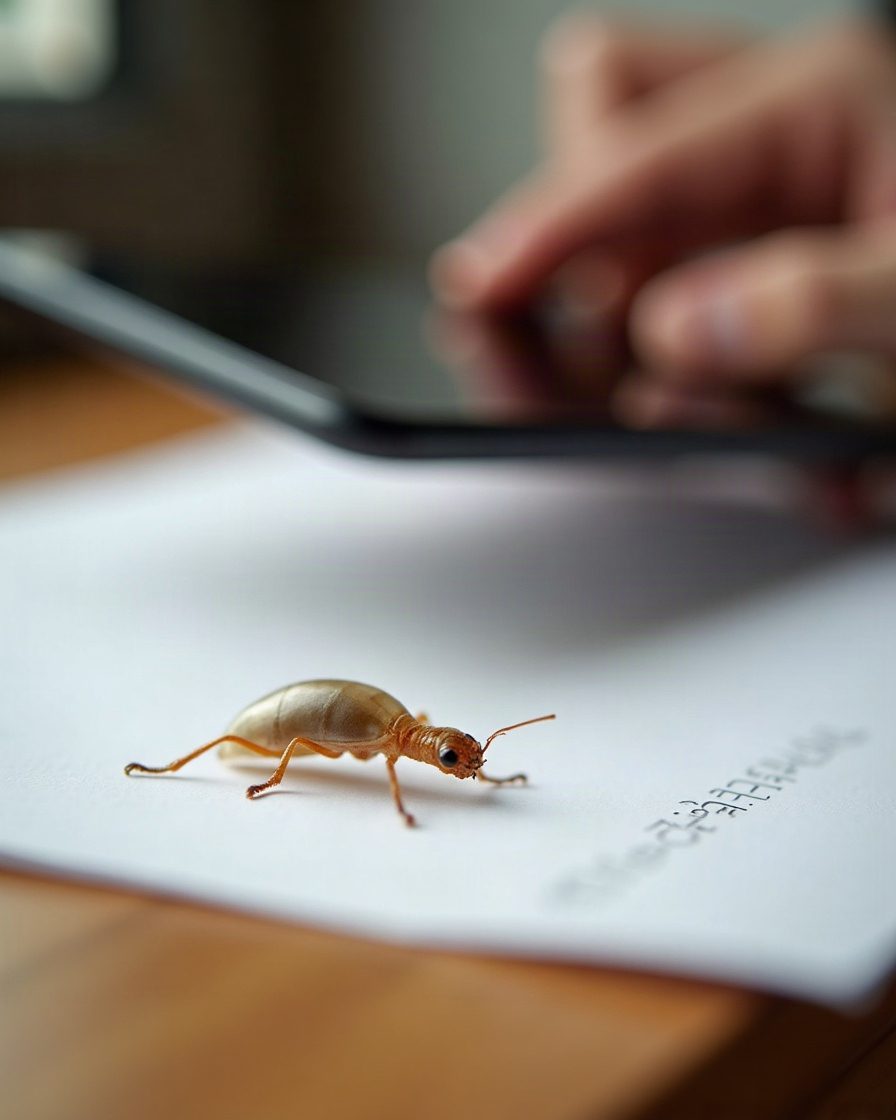
An insect’s exoskeleton does not stretch. To get bigger, the animal has to build a new and larger one underneath, split the old one along a line of weakness, and climb out. What is left behind is called an exuvia, and it is one of the most useful and most misread findings in a house.
Telling a moult from a corpse
Hold it up to the light or photograph it against white paper.
A moult is hollow. There is nothing inside. On a pale surface it reads as translucent, and thin structures such as legs and antennae are present but empty.
A moult is complete and undamaged. It comes off in one piece, so the shape is perfect. Very often there is a clean split along the back of the thorax, which is where the insect emerged.
A corpse is solid, opaque and usually incomplete. Dead insects lose legs, get crushed, and dry into a shrivelled rather than an inflated shape.
A moult is light. It will move on a breath, which a body will not.
What leaves them, and where
Bed bugs. Five nymphal stages, so five sizes of amber, translucent skin from roughly 1.5 mm to 4.5 mm. They collect exactly where the insects harbour: along mattress piping, in bed frame joints and screw holes, behind a headboard, and in the stapled dust cover of a divan base. Finding a range of sizes in one place is significant, because it demonstrates a population growing through stages rather than a single introduced insect. UC IPM’s guide to bed bugs covers the inspection, and bed bug shed skins covers this case in detail.
Carpet beetle larvae. These moult repeatedly and the cast skins are bristly, brown and hollow, looking so much like the larva that people assume they are seeing many more larvae than are present. They collect along skirting boards, under carpet edges, in wardrobes, in air vents and in undisturbed dust. Very often the skins are found and the larvae are not. See UC IPM on carpet beetles and the University of Kentucky’s carpet beetles guide, plus our page on carpet beetle larvae.
Cockroach nymphs. Pale skins, often near harbourage in kitchens and bathrooms, and frequently eaten by the population before they are found.
Cicadas. Outdoors, clinging to tree trunks, fences and walls, split down the back, brown and tough. Entirely harmless and covered on cicada shells on trees.
Spiders. A shed spider skin looks alarmingly like a dead spider hanging in a web. Same test: hollow and complete.
Dragonflies and mayflies, on vegetation and structures near water.

Why they are good evidence
Three reasons, and they are worth being explicit about.
They prove growth happened here. A dropping can be left by an insect passing through. A moult means the animal stayed long enough to complete a stage, which for most household species is weeks.
They persist. Chitin is durable, so skins survive long after the insect has gone. This is useful for detection and misleading for dating.
They are easier to find than the animal. Most of these species avoid light and disturbance. The skins do not move.
That last point is the practical one. A carpet beetle inspection that finds only skins is a successful inspection, not a failed one.
The limitation
Because they persist, a shed skin does not prove a current infestation. A skin found in a wardrobe could be from this month or from four years ago.
The test is the same one used everywhere else on this subject: clear the area completely, note the date, and look again in a week and again in a month. New skins mean active growth. Nothing new over a season means historic.
For bed bugs specifically, live insects or fresh faecal marking are the findings that indicate a current problem; skins alone do not.
A health note worth knowing
Cast skins and body fragments are a component of house dust and a recognised allergen, particularly for cockroaches and dust mites. Heavy accumulation in a bedroom or a badly ventilated room is worth removing on that basis alone.
The method is the same as for droppings: vacuum with a sealed filter rather than sweeping, and empty the contents outside. Our page on tiny bugs on skin you cannot see covers the wider set of causes for the sensation that often brings people to this subject.
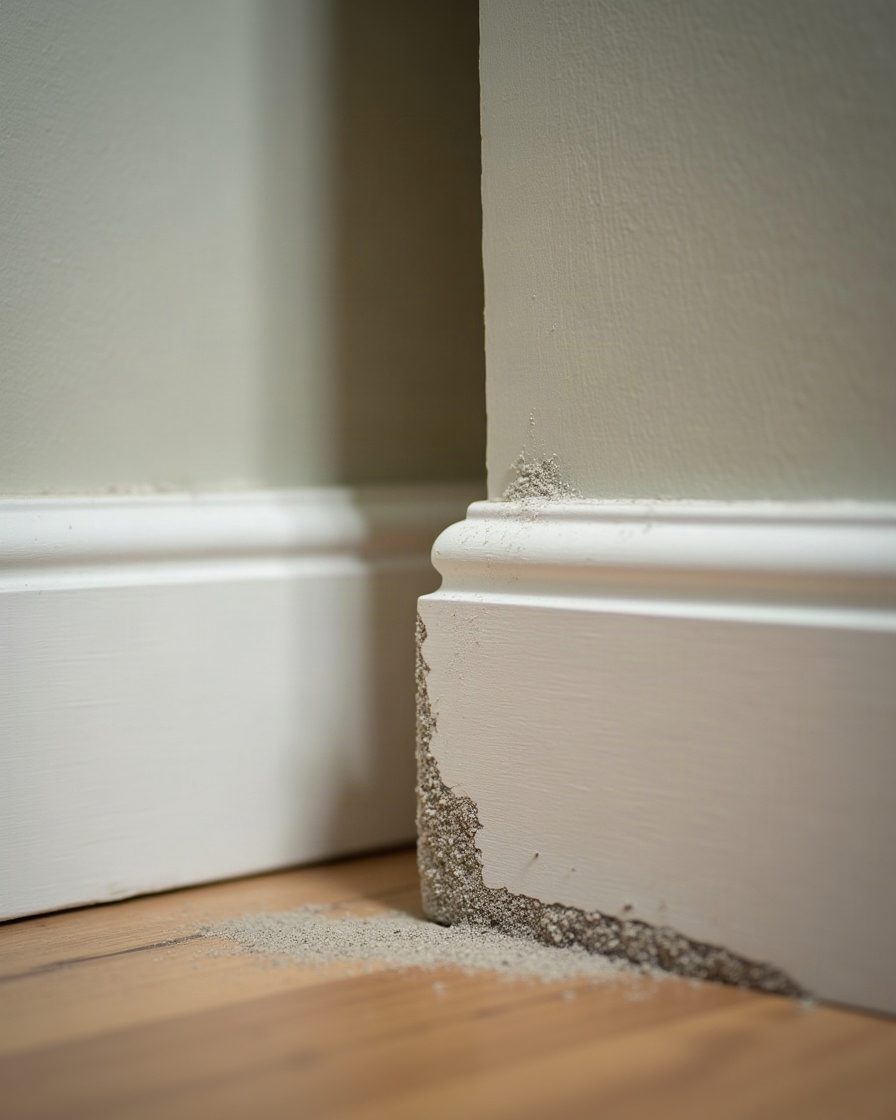
Where to look, by room
Bedroom. Mattress seams, frame joints, headboard, behind the bedside table, along the skirting closest to the bed.
Living room. Under and behind upholstered furniture, along carpet edges, under a rug that is never moved.
Wardrobe. The floor rather than the rail, in the lint and fibre that gathers there.
Kitchen. Behind and beneath appliances, in cupboard corners and hinge recesses.
Loft and eaves. In and around old bird nests, which are a reliable source of carpet beetles. See bird droppings and nest signs.
Common questions
Is it dangerous? No, beyond the allergen point above. A shed skin is inert.
How many insects does this represent? Fewer than it appears. One larva moults several times and leaves a skin each time.
They are all the same size. Suggests a single stage rather than a growing population, or a species with fewer moults.
Can I identify the species from a skin? Often yes, because the shape is preserved. Photograph it against white paper alongside a ruler. The general identification guide covers the method.
The bottom line
Hollow and perfect means a moult, and a moult means something grew where you found it. That is stronger evidence of residence than a sighting. Then remember it persists: clear the skins, note the date, and let a week decide whether anything is still living there.
Pingback: Cicada Shells on Trees and Fences