A foam is for the termites you have already found. It expands into the galleries, voids, and channels inside damaged wood and kills the exposed termites on contact, which makes it a precise spot treatment for an accessible infestation, not a structural barrier. The short answer: confirm what you are dealing with first, then use a foam to treat the wood you can actually reach, and understand that if the colony lives in the soil under your slab, foam alone will not get to it. For our own garage we keep one expanding foam on hand for the odd spot in an exposed beam, and nothing more. Most lists crown a single best termite killer spray; the comparison below sorts foams by the job each one fits, and tells you the case where no can will do.
Foam is a spot treatment for termites you can reach in the wood: it expands into galleries and voids and kills exposed termites on contact, but it is not a structural barrier, and a soil colony under your slab needs a professional, not a can.
- Do first (free): Confirm it is termites and find the active wood before you buy anything; tap, probe, and look for mud tubes.
- Best for the common case: An expanding foam injected into the galleries and voids of accessible, damaged wood.
- Skip the can if: The infestation is structural or in the soil; that is a licensed-pro job, not a foam fix.
What to do first
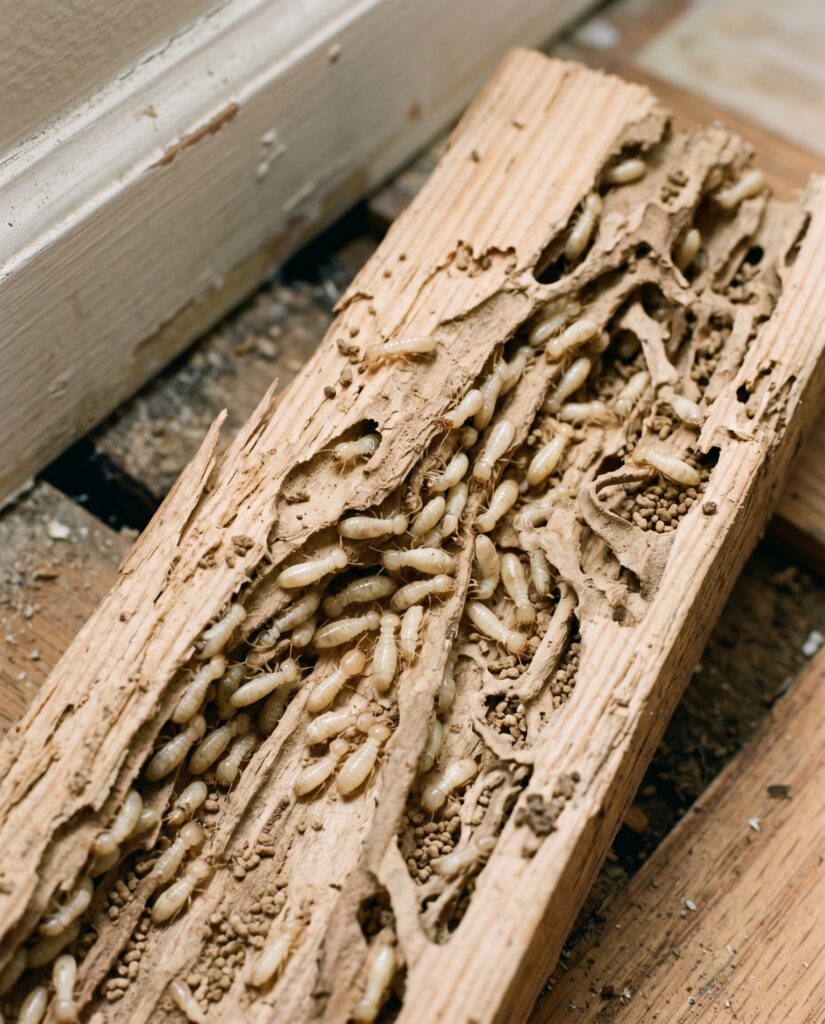
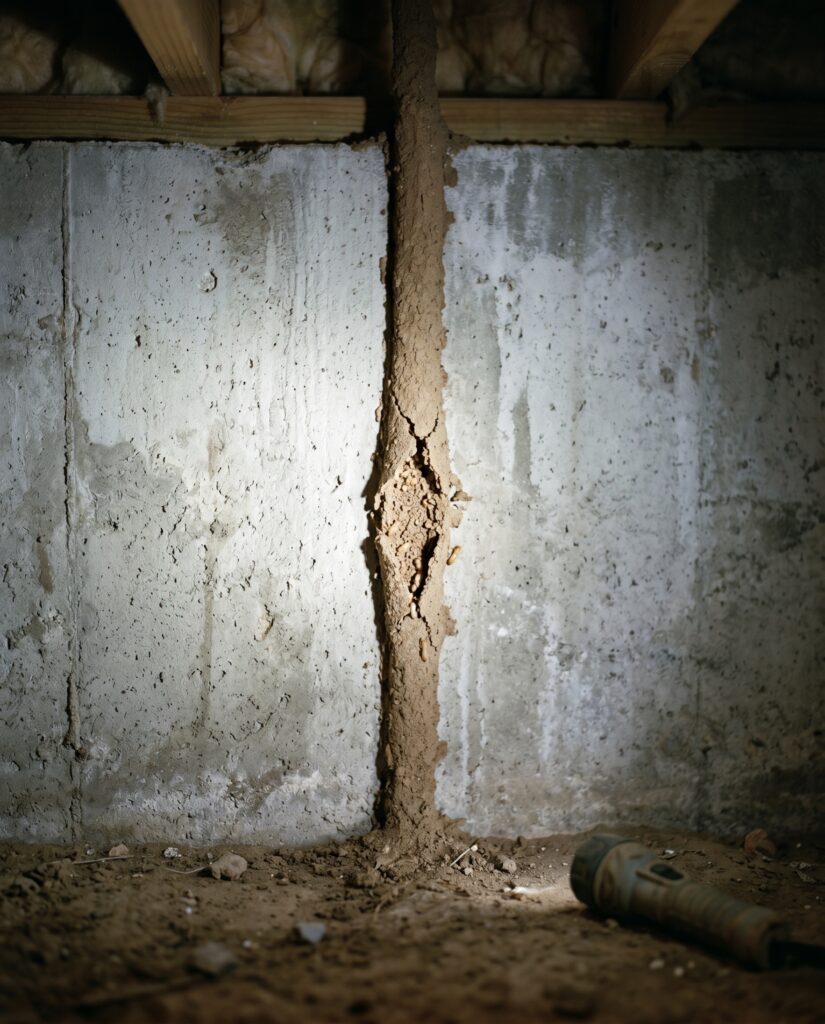
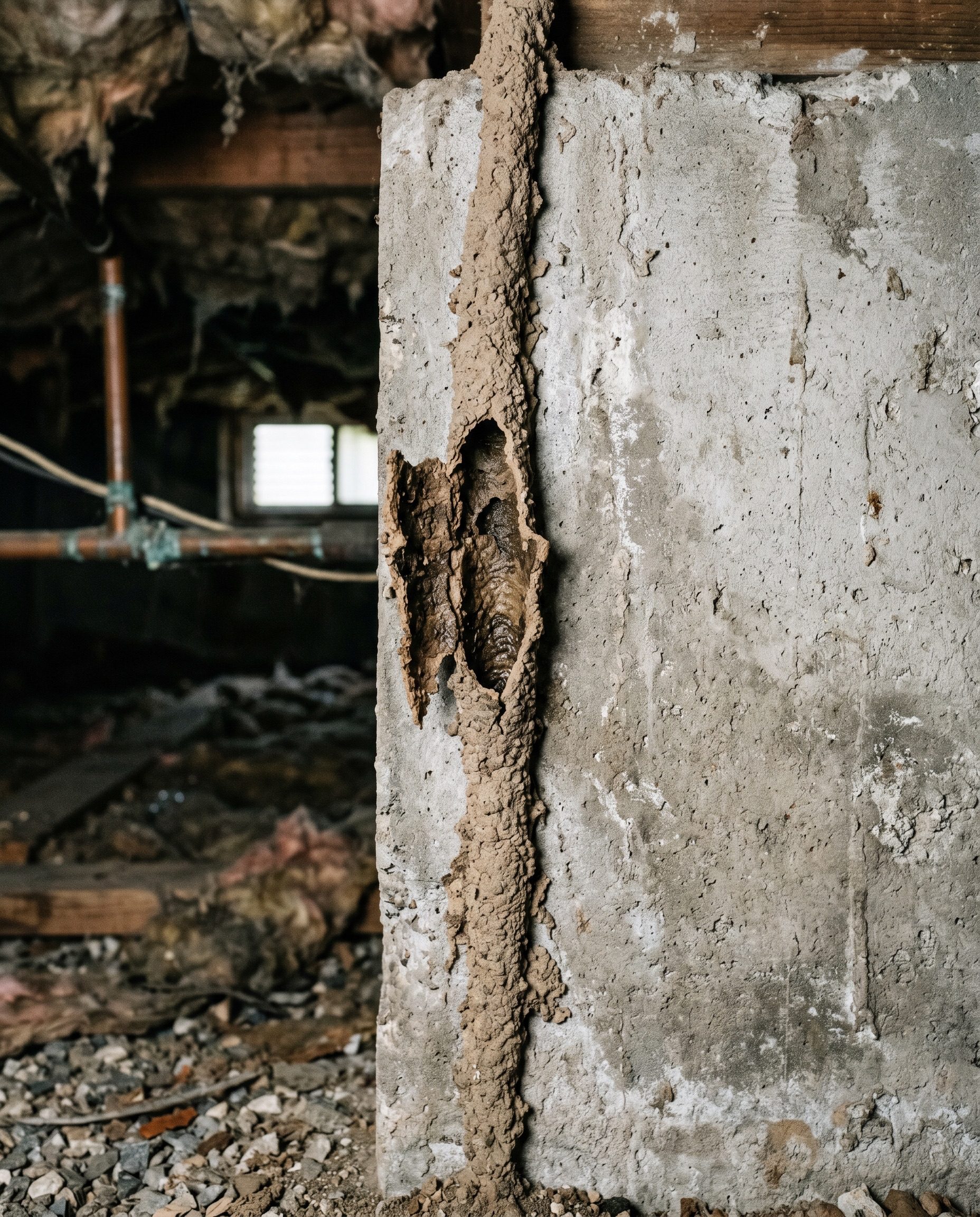
Before any can comes off the shelf, confirm what you are fighting and where it is active, because foam aimed at the wrong spot is wasted foam. Tap suspect wood with a screwdriver handle and probe it: termite-eaten wood sounds hollow and gives way to a blade, often with a thin paper-like surface left intact. Look for the pencil-width mud tubes subterranean termites build to travel from the soil, and for discarded wings near windowsills after a spring swarm. Our guide to the common signs of termites in a house walks through what each clue means.
Knowing the species matters too, because it changes the answer. Subterranean termites nest in the soil and come up into the wood; drywood termites live entirely inside the wood itself. A foam can treat a drywood pocket in an accessible beam or a localized subterranean gallery you have exposed, but the UC IPM Pest Notes on subterranean termites are clear that a soil-dwelling colony is reached through soil treatments and bait systems, not a spot spray. Find the active wood first, identify what is in it, then decide whether a foam is even the right tool.
Why foam beats a liquid spray here
Here is what most “best termite killer spray” lists gloss over. A liquid surface spray coats what you can see, but termites work inside the wood, behind the surface, in galleries you cannot paint over. A foam expands to fill the hollow channels a liquid runs straight past. You inject it through a small hole or a crack, it grows to many times its liquid volume, and it pushes into the voids where the termites actually are. That is the whole reason a foam exists as a category, and it is why a foam is the better contact tool for a pocket you have located.
But the same physics that makes foam good at spot work makes it useless as a barrier. It treats the wood it fills, full stop. It does not ring your foundation, it does not sit in the soil, and it does not reach a colony that is feeding from underground. The University of Kentucky’s termite control ENTfact lays out that real structural protection comes from a continuous soil termiticide barrier or a whole-structure bait system, both of which are professional jobs. If you have confirmed structural damage or an active subterranean colony, that is the point to call a licensed pro, not to keep buying cans. A foam buys you a treated pocket; it does not buy you a protected house.
Foam vs the structural job
Once you know whether the problem is an accessible pocket or a whole-structure issue, the choice is short. The question is not which foam is strongest. It is whether a foam is the right category at all for what you found.
| Approach | Best for | Watch-out |
|---|---|---|
| Expanding termite foam | Killing exposed termites in accessible, damaged wood | Spot treatment only; not a barrier, will not reach a soil colony |
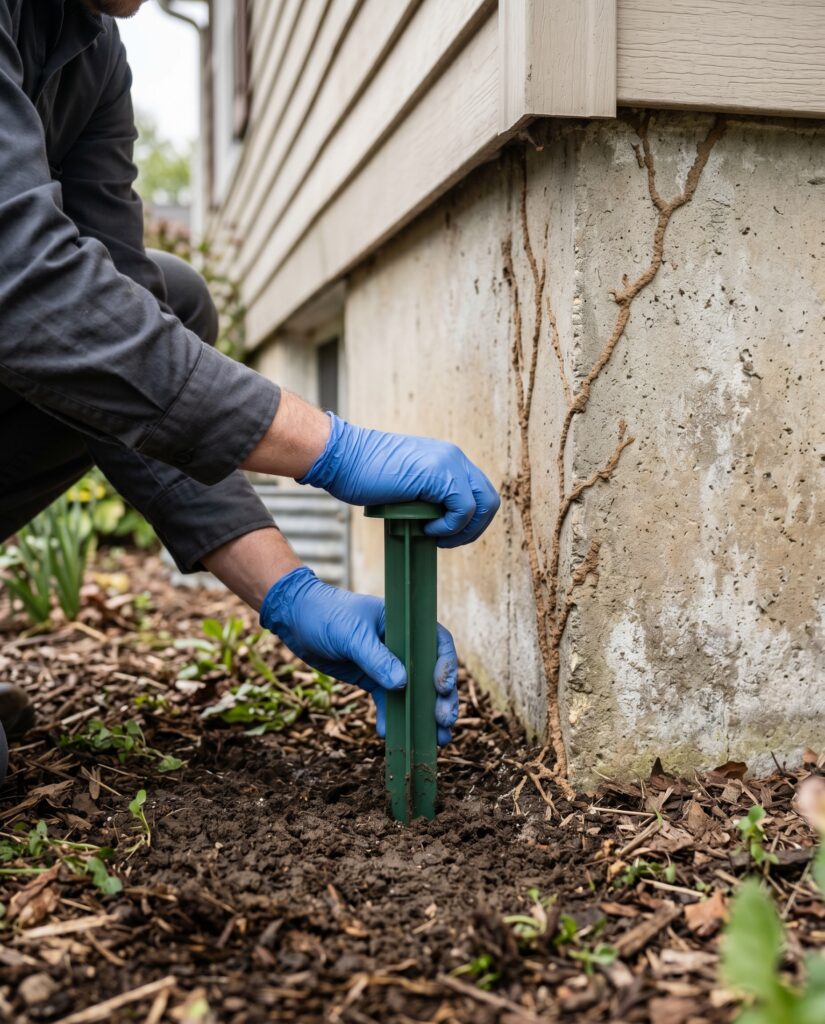
| Soil termiticide barrier (pro) | Subterranean colonies feeding from the ground | Continuous trench/treatment; a licensed-applicator job |
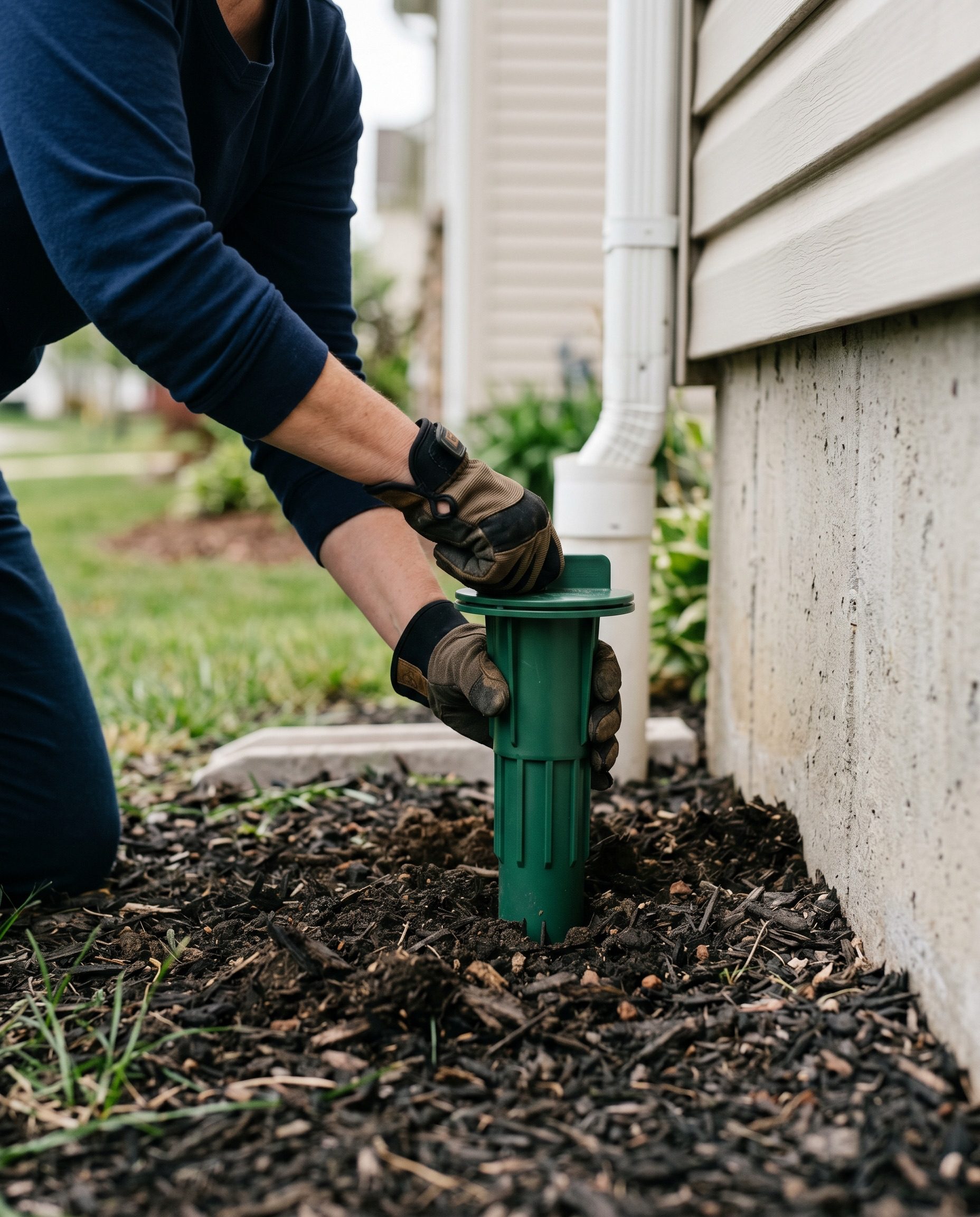
| In-ground bait system (pro) | Colony elimination over time, whole-structure | Slower; monitored and maintained by a professional |
Why not just empty more foam at a structural problem and hope? Because the foam never touches the part of the colony that matters. With subterranean termites the workers you see in the wood are a fraction of a nest that can run into the hundreds of thousands underground, and the University of Kentucky’s guide to termite baits explains that colony elimination depends on the workers carrying a slow-acting toxicant back to the nest, which a contact foam is not designed to do. A foam is the right answer for a fence post, an exposed sill, or a drywood pocket you can drill into. Our broader roundup of termite killers and treatments and the full walkthrough on how to get rid of termites cover the soil and bait options for everything a can cannot fix.
How to apply termite foam
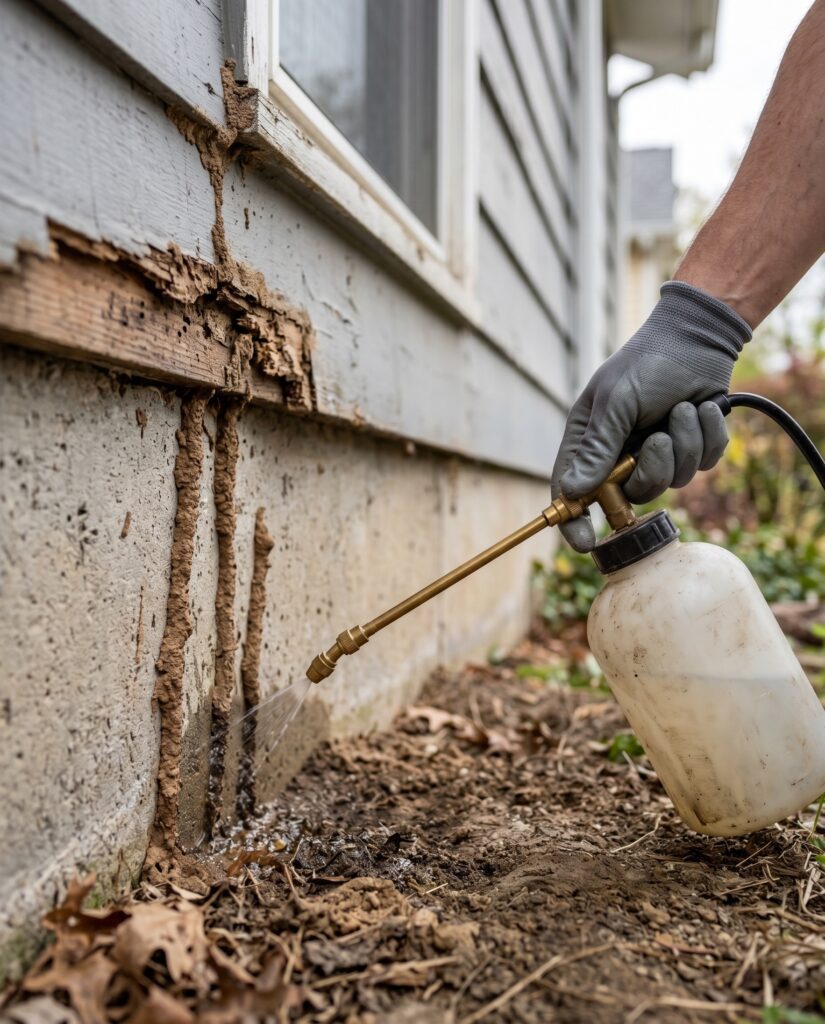
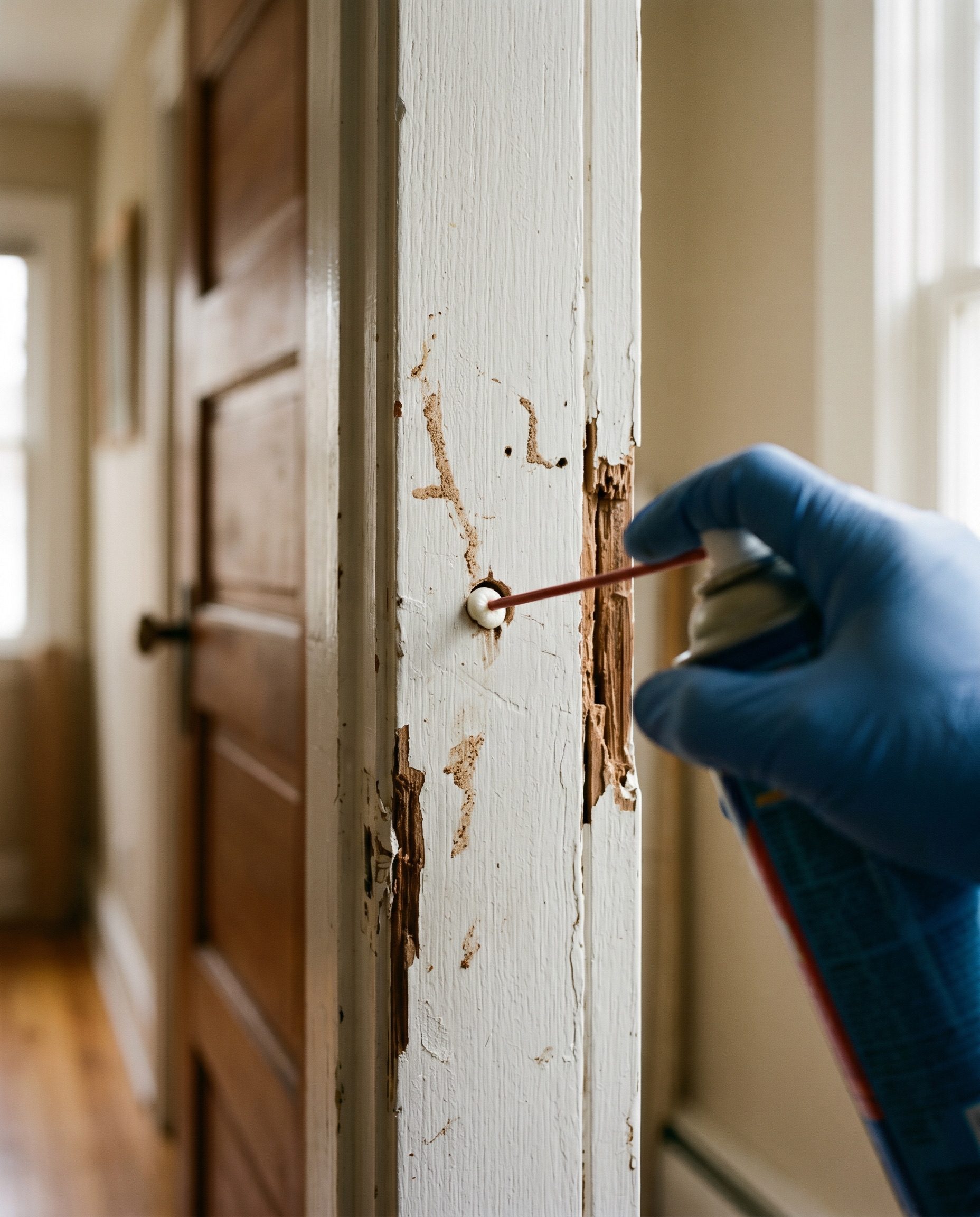
Inject the foam, do not just spray a surface. Drill a small hole into the gallery or use an existing crack, fit the applicator straw, and dispense until the foam backs out, which tells you the void is filled. Treat the active wood you located, then check nearby joints and the wood around it, because galleries connect. Filling the void beats coating the face every time, and a slow, deliberate fill reaches more termites than a fast blast.
Treat these cans as the pesticides they are, and read the label first, because under federal law the label is the law and it tells you which sites and surfaces are allowed. The EPA’s safe pest control guidance is the place to start on using any registered product responsibly, and you should never apply an outdoor-labeled product indoors or the reverse. Keep children and pets off treated areas until everything is fully dry, do not let foam contact food-prep surfaces, and store the can out of reach. If anyone is exposed, contact a doctor or your local poison control center; the NPIC termite pesticide-safety page is a solid reference for application and exposure questions.
One honest caveat on timing and region: a spot foam treats today’s visible pocket, but it does not stop a subterranean colony from finding new wood next season. In warm, humid regions where subterranean termites are most active, a confirmed structural infestation needs a professional inspection and a soil barrier or bait system to actually protect the structure. Foam is the patch, not the plan.
The picks
These come after the analysis on purpose, because the inspection decides whether a can is even the right buy. All three are foams for spot work on accessible wood, not structural barriers, and all are common, widely available products.
InsectoGuide is reader-supported. As an Amazon Associate we earn from qualifying purchases at no extra cost to you.
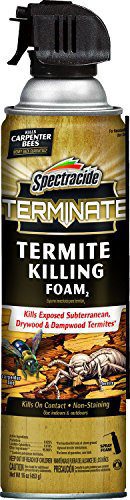
An easy over-the-counter foam for a single accessible termite pocket.
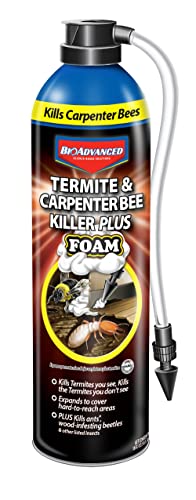
A foam for hidden galleries that also handles carpenter bees and wood beetles.
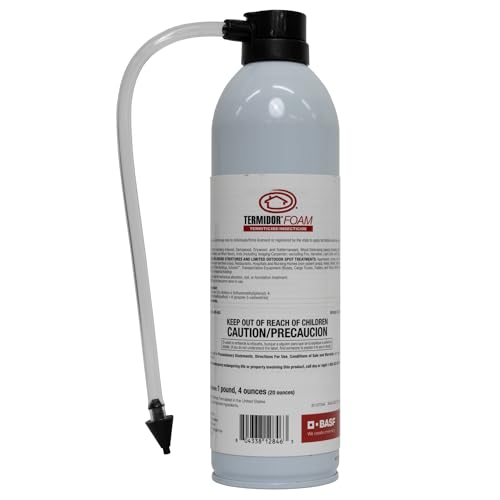
A pro-grade fipronil foam for the deepest, hardest-to-reach galleries.
Common questions
Will a termite foam get rid of my whole termite problem?
Only if the problem is a single accessible pocket of wood. A foam kills the termites it reaches inside the galleries you treat, but it cannot touch a subterranean colony living in the soil. The UC IPM guidance is clear that structural protection comes from soil barriers or bait systems, not a spot can.
What is the difference between a foam and a liquid termite spray?
A liquid coats surfaces; a foam expands to fill the hollow channels inside damaged wood. For a gallery you have located and drilled into, the foam reaches termites a surface spray runs right past. Neither one is a substitute for a soil treatment on a subterranean colony.
Is termite foam safe to use indoors around pets and kids?
Use only a product whose label allows indoor use, and only as the label directs. Keep children and pets off treated areas until everything is fully dry, and avoid food-prep surfaces. Read and follow the label, because it sets the legal terms of use, and check the NPIC page for any exposure question.
When should I stop and call a professional?
If you find structural damage, active mud tubes against the foundation, or signs of a subterranean colony, that is a professional job. A licensed pro can inspect the structure and install a soil barrier or a monitored bait system that a homeowner cannot replicate with a can.
Do bait systems work better than foam?
They do different jobs. A foam kills exposed termites on contact in a spot; a bait system aims at colony elimination over time as workers carry a slow-acting toxicant home. The University of Kentucky’s bait guidance explains why baits target the whole colony, which a contact foam is not built to do.
Final verdict
There is no single best termite killer spray, because a foam answers only one question: how do I kill the termites I can actually reach in the wood. Start by confirming it is termites and finding the active wood, then inject a foam into the galleries and voids of the accessible, damaged pieces, filling each void until it backs out. An expanding foam is the right tool for a drywood pocket, an exposed sill, or a localized gallery. Skip the can entirely for a structural or subterranean problem; a colony in the soil under your slab needs a licensed professional and a soil barrier or bait system, not another aerosol. Foam is the patch for what you found, never the plan for the whole house.