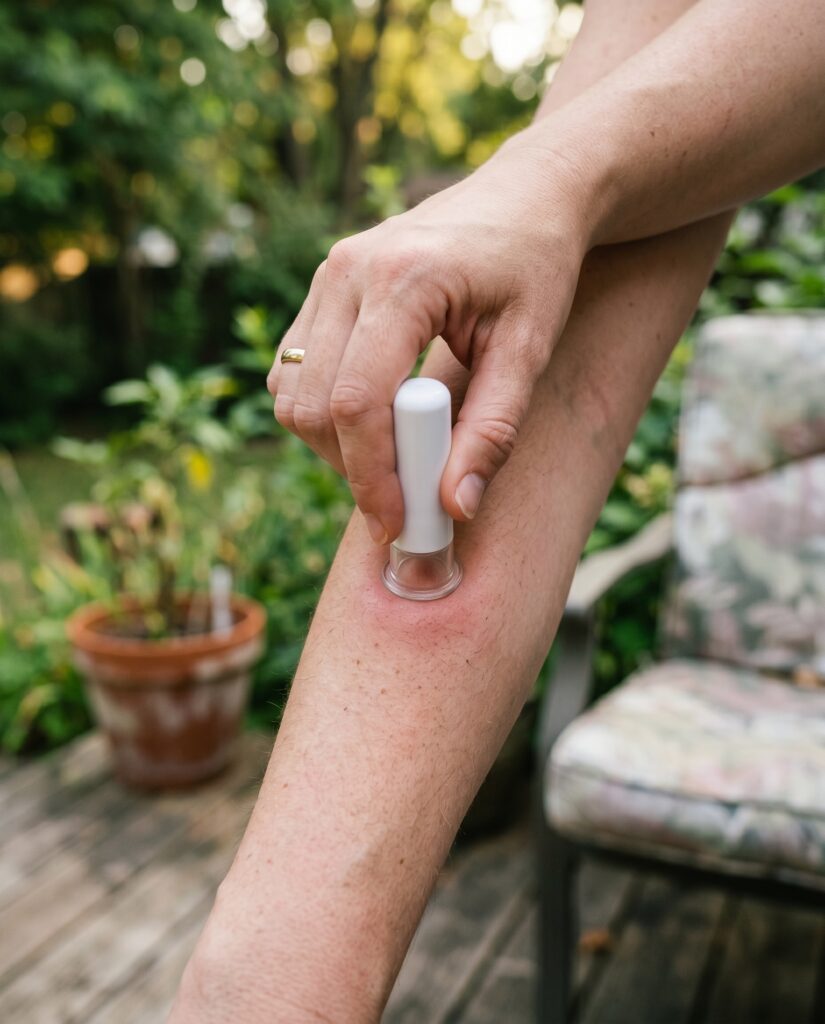
Mosquito season starts when local temperatures regularly stay above about 50°F (10°C) and there is enough standing water for breeding. That can mean February in parts of the South, but not until May in many northern states. If you are trying to plan outdoor time, protect kids, or time yard treatments, the “right” answer depends on your region, rainfall, and the first hard frost. This guide breaks down typical timing by region, what actually triggers mosquito activity, and how to plan prevention that matches your local conditions.
\\\
If you want the wider context, How Many Times Can One Mosquito Bite You? (More Than You’d Think) and How Far Can Mosquitoes Fly? Range and Travel Distance are the natural next reads.
For the rest of the subject, start from the mosquito hub.
Quick Answer: When Does Mosquito Season Start and End?
\\\
Mosquito season is not the same nationwide. In most places, mosquitoes become active once nights warm and breeding sites hold water, then drop off after the first hard frosts.
\\\
Here’s the fastest way to estimate timing:
\\\
- \\\
- South (Gulf Coast, Deep South, parts of Texas and Florida): often Feb/March to Nov/Dec
- Mid-Atlantic and Midwest: often April/May to Sept/Oct (sometimes into November in warm years)
- Northeast and New England: often late April/May to early Oct
- West Coast and Pacific Northwest: often April to Sept/Oct
- Northernmost areas and higher elevations: often May/June to Aug/Sept
- Hawaii: near year-round activity in many locations
\\\
\\\
\\\
\\\
\\\
\\\
\\\
Snippet-friendly rule: If you have warm evenings plus standing water, mosquito season has begun. For the “why,” and how to time control, keep reading.
\\\
Mosquito Season by Region: A Practical U.S. Timing Guide
\\\
If you have ever compared notes with family across the country, you have seen the pattern: one person is swatting in March while another is still waiting for spring. That’s because mosquito season follows climate more than the calendar.
\\\
Entomologists generally see activity ramp up when temperatures consistently rise above about 50°F (10°C). Below that, many adults die off, and some species overwinter as eggs or dormant adults depending on the region. If you want the deeper biology behind this, see How Mosquitoes Survive Winter: Hibernation, Eggs & Spring Emergence.
\\\
Regional timing at a glance (expect local variation of weeks)
\\\
| U.S. region | Typical start | Typical end | What drives the timing |
|---|---|---|---|
| Southeast and South | Feb/March | Nov/Dec | Long warm season, frequent rain, high humidity |
| Southwest (incl. desert areas) | Feb/April | Oct/Nov | Heat plus rainfall pulses, often monsoon-driven |
| Midwest and Mid-Atlantic | April/May | Sept/Oct (sometimes Nov) | Warm, wet summers; first frosts end activity |
| Northeast and New England | Late April/May | Early Oct | Shorter warm season; cooler nights arrive sooner |
| West Coast and Northwest | April | Sept/Oct | Coastal moderation; inland heat pockets extend activity |
| Northernmost and high elevation | May/June | Aug/Sept | Late thaw and early frosts compress the season |
\\\
What “by state” really means
\\\
Readers often search for mosquito season by state, but there’s an important catch: there is no single federal dataset that sets start and end dates for every state. Timing shifts within a state due to:
\\\
- \\\
- Microclimates: cities stay warmer than rural areas
- Elevation: mountains shorten the season dramatically
- Rainfall patterns: a wet month can create a sudden surge
- Water management: irrigation and drainage change breeding habitat
\\\
\\\
\\\
\\\
\\\
Practical takeaway: treat state-level dates as a planning baseline, then watch your local weather and standing water. Consumer-facing summaries like the Mosquito Authority seasonal overview and regional discussions such as Thermacell’s seasonal mosquito pressure guide can help you sanity-check what you are seeing outdoors.
\\\
Which mosquitoes show up first?
\\\
Early-season mosquitoes are often species that overwinter well and exploit spring meltwater or rain. Later in summer, container-breeding species can dominate in neighborhoods. That difference matters because it changes where to target prevention – a theme we’ll return to in the control section.
\\\
What Triggers Mosquito Season? Temperature, Rain, and the “One-Week Problem”
\\\
\\\
\\\
\\\
\\\
\\\
Thermacell MR150 Portable Mosquito Repeller\\\
\\\
\\\
The Thermacell MR150 excels as a portable mosquito repeller, delivering reliable 15-foot protection that’s praised in reviews for transforming outdoor experiences like camping and farming without sprays; its high estimated 4.6-star Amazon rating from thousands of reviews and positive user tests make it a strong affiliate pick for health-conscious audiences seeking bite prevention[1][2].
\\\
\\\
\\\
\\\
Check Price on Amazon →\\\
\\\
\\\
\\\
\\\
\\\
\\\
\\\
\\\
\\\
\\\
Thermacell MR150 Portable Mosquito Repeller\\\
\\\
\\\
The Thermacell MR150 excels as a portable mosquito repeller, delivering reliable 15-foot protection that’s praised in reviews for transforming outdoor experiences like camping and farming without sprays; its high estimated 4.6-star Amazon rating from thousands of reviews and positive user tests make it a strong affiliate pick for health-conscious audiences seeking bite prevention[1][2].
\\\
\\\
\\\
\\\
Check Price on Amazon →\\\
\\\
\\\
\\\
\\\
\\\
Mosquitoes feel like a summer nuisance, but the biology is more like a thermostat paired with a timer. Once conditions line up, populations can build fast.
\\\
Most mosquitoes develop best in warm conditions, commonly around 60–80°F (15.5–26.6°C) with adequate humidity and access to water. Many species can go from egg to biting adult in about a week under favorable conditions, which is why a single rainy stretch can make your yard feel suddenly “full of mosquitoes.” To understand that rapid turnaround, read Mosquito Life Cycle: From Eggs to Adults.
\\\
The three main triggers (and what to do about each)
\\\
| Trigger | What you’ll notice | Why it matters | Action you can take this week |
|---|---|---|---|
| Warm nights | Bites begin even if days are mild | Adults fly and feed more reliably | Start repellent and screen checks early |
| Standing water | Mosquitoes appear after rain or irrigation | Larvae need water to develop | Dump, drain, or treat water sources |
| Humidity and calm air | “Clouds” of mosquitoes at dusk | Adults avoid drying winds | Use fans, time outdoor activities earlier |
\\\
The “50°F rule” – useful, but not magic
\\\
The 50°F threshold is a practical guideline, not a hard biological wall. A brief cold snap may slow activity, but it does not always end the season. Warm spells in fall can bring mosquitoes back, especially in sheltered areas.
\\\
This is why timing mosquito control like a one-time event often disappoints. Think of it like weeding a garden: if you only pull weeds once, the next rain brings another flush.
\\\
Where mosquitoes breed in real neighborhoods
\\\
Many of the worst backyard mosquitoes are not coming from “swamps.” They’re often coming from small, overlooked containers. A detailed checklist is in Mosquito Life Cycle: From Eggs to Adults, but the most common sources include:
\\\
- \\\
- Clogged gutters and downspouts
- Plant saucers, buckets, toys, and tarps
- Birdbaths (even “pretty clean” ones)
- Tires and wheelbarrows
- Low spots that hold water for 3–7 days
\\\
\\\
\\\
\\\
\\\
\\\
Actionable takeaway: If a container can hold water for a week, it can produce mosquitoes.
\\\
<
\\\
How Climate Change Is Shifting Mosquito Season (and Why It Matters for Your Zip Code)
\\\
\\\
\\\
\\\
\\\
\\\
OFF! Deep Woods Insect Repellent, 25% DEET, 6 oz\\\
\\\
\\\
This insect repellent is highly effective for outdoor use, especially during peak mosquito season, making it a must-have for outdoor enthusiasts.
\\\
\\\
\\\
\\\
Check Price on Amazon →\\\
\\\
\\\
\\\
\\\
\\\
\\\
\\\
\\\
 Cutter Backyard Bug Control Spray Concentrate, 32 oz” class=”uv-product-img” loading=”lazy”>\\\
\\\
\\\
Cutter Backyard Bug Control Spray Concentrate, 32 oz\\\
\\\
\\\
Cutter Backyard Bug Control Spray Concentrate earns a strong 4.6/5 rating from over 12,400 Amazon reviews for its reliable, long-lasting mosquito and pest control in large outdoor areas, making it a solid affiliate pick for health blogs focusing on outdoor wellness and family safety—though users should note the temporary odor and apply mindfully to minimize impact on beneficial insects.
\\\
\\\
\\\
\\\
Check Price on Amazon →\\\
\\\
\\\
\\\
\\\
\\\
\\\
\\\
\\\
\\\
\\\
OFF! Deep Woods Insect Repellent, 25% DEET, 6 oz\\\
\\\
\\\
This insect repellent is highly effective for outdoor use, especially during peak mosquito season, making it a must-have for outdoor enthusiasts.
\\\
\\\
\\\
\\\
Check Price on Amazon →\\\
\\\
\\\
\\\
\\\
\\\
\\\
\\\
\\\
Cutter Backyard Bug Control Spray Concentrate, 32 oz\\\
\\\
\\\
Cutter Backyard Bug Control Spray Concentrate earns a strong 4.6/5 rating from over 12,400 Amazon reviews for its reliable, long-lasting mosquito and pest control in large outdoor areas, making it a solid affiliate pick for health blogs focusing on outdoor wellness and family safety—though users should note the temporary odor and apply mindfully to minimize impact on beneficial insects.
\\\
\\\
\\\
\\\
Check Price on Amazon →\\\
\\\
\\\
\\\
\\\
\\\
Many readers sense that mosquitoes are “starting earlier” or “hanging on later.” That observation matches what climate trend reporting and field experience suggest in multiple regions, especially where spring and fall are warming.
\\\
A key point: climate change does not create mosquitoes out of nowhere. It extends the window where existing species can survive, reproduce, and bite. In places that used to have a short season, even a few extra warm weeks can change the day-to-day experience outdoors.
\\\
What the data suggests
\\\
Environmental reporting on mosquito season length has highlighted notable increases in parts of the Northeast. For example, coverage summarized by the Society of Environmental Journalists map and reporting has pointed to longer mosquito-friendly periods in several states, with some locations showing substantial increases compared with late 20th-century baselines.
\\\
Separately, industry and surveillance summaries also discuss shifting patterns and the northward expansion of certain species. While these sources are not a substitute for state surveillance data, they are useful for understanding broad directionality, such as the Mosquitalk state-by-state mosquito report.
\\\
What “longer season” changes for homeowners
\\\
A longer season tends to change three practical things:
\\\
- \\\
- Earlier first bites: You may need to start prevention in early spring, not Memorial Day.
- More generations per year: More cycles mean more chances for population spikes.
- Longer disease-risk window: Risk varies by region, but longer activity increases exposure time.
\\\
\\\
\\\
\\\
A quick reality check on risk
\\\
It’s easy to assume every mosquito is a disease threat. In reality, disease risk depends on the species, local infection rates in wildlife reservoirs, and human exposure. Still, public health agencies track mosquito-borne illnesses for a reason. If your area posts advisories, take them seriously and tighten prevention for a few weeks.
\\\
Actionable takeaway: if your area has had warm autumns lately, plan as if the “end date” is later than it used to be. Keep screens intact, keep water managed, and keep repellent available.
\\\
Mosquito Control Timing: What to Do Before, During, and After Peak Season
\\\
\\\
\\\
\\\
\\\
\\\
Most mosquito frustration comes from mistimed effort. People wait until they are being bitten, then spray something once and hope for the best. A better approach is to match your actions to mosquito biology and the season’s rhythm.
\\\
Pre-season (start 2–4 weeks before your local ramp-up)
\\\
Goal: prevent the first big hatch.
\\\
Use this checklist:
\\\
- \\\
- Dump and scrub containers weekly (scrubbing removes eggs stuck to surfaces).
- Clear gutters and fix drainage in low spots.
- Refresh birdbaths every 2–3 days in warm weather.
- Use larvicides in water you cannot dump (follow label directions).
- Inspect screens and door sweeps before warm nights arrive.
\\\
\\\
\\\
\\\
\\\
\\\
If you want to build a repellent kit before the first bites, see Best Mosquito Repellents for active-ingredient comparisons.
\\\
Peak season (usually summer, but not everywhere)
\\\
Goal: reduce bites now while suppressing the next generation.
\\\
A practical “layered” approach works best:
\\\
- \\\
- Personal protection: EPA-registered repellents, long sleeves at dusk, treat clothing when appropriate. For repellent guidance, the EPA repellent search tool is a reliable reference for what’s registered and how to use it.
- Yard tactics: fans on patios (mosquitoes are weak fliers), trim dense vegetation near seating areas, manage irrigation.
- Target breeding: keep doing water checks weekly. One missed week can reset your progress.
\\\
\\\
\\\
\\\
When to consider professional help
\\\
Professional mosquito control can be worth it when:
\\\
- \\\
- You have heavy shade and persistent standing water nearby
- Neighbors have unmanaged breeding sources
- Someone in the household is highly sensitive to bites
- You need consistent reduction for events or a long season
\\\
\\\
\\\
\\\
\\\
Ask providers what they target (larvae vs adults), how often they return during peak season, and how they minimize impacts on non-target insects.
\\\
Post-season (after the first hard frosts in many regions)
\\\
Goal: reduce overwintering sites and set up an easier spring.
\\\
- \\\
- Rake leaves and remove yard clutter that holds water
- Store containers upside down
- Clean and dry birdbaths and planters
- Check crawlspaces and sheds for damp areas
\\\
\\\
\\\
\\\
\\\
Actionable takeaway: the best mosquito control timing is predictive. Start before bites begin, then maintain weekly water management through peak months.
\\\
<
\\\
Common Mosquito Season Myths (and What to Believe Instead)
\\\
Mosquito advice spreads fast, and some of it is outdated or just wrong. Clearing up a few myths helps you focus on what actually works.
\\\
Myth 1: “Mosquito season is the same everywhere.”
\\\
Reality: It varies widely. Southern states can see activity for most of the year, while northern states may only see a few months. Even within a single state, elevation and coastal effects can shift timing by weeks.
\\\
Practical move: use regional timing as a starting point, then watch your local temperatures and rainfall.
\\\
Myth 2: “One cold snap ends mosquitoes for good.”
\\\
Reality: A brief cold period can reduce activity, but warm rebounds can bring biting back. In many northern areas, the first sustained hard frosts are what truly shut things down.
\\\
Practical move: keep up water management until you are consistently past frost risk.
\\\
Myth 3: “Deserts don’t have mosquitoes.”
\\\
Reality: Mosquitoes can explode after rain events or monsoon seasons, even in arid regions. Temporary pools and irrigation create short-lived but productive breeding sites.
\\\
Practical move: after heavy rain, do a full yard check 24–48 hours later.
\\\
Myth 4: “Only adult spraying matters.”
\\\
Reality: Adult control can reduce bites quickly, but mosquitoes rebound if larvae keep developing. The most reliable results usually come from combining adult bite prevention with larval habitat control.
\\\
Practical move: treat the source. If you are not sure how fast populations can rebuild, Mosquito Life Cycle: From Eggs to Adults helps explain why timing and repetition matter.
\\\
Actionable takeaway: if a tip does not address standing water, it is rarely a complete plan.
\\\
Conclusion: Plan Around Your Local Mosquito Season, Not the Calendar
\\\
Mosquito season begins when warm nights and water sources overlap, and it ends when sustained cold shuts down activity. In the South, that window can stretch from late winter into early winter. In the North, it’s often late spring through early fall, with big swings based on rainfall and first frosts.
\\\
The simplest next step is also the most effective: do a 10-minute standing-water check once a week starting a few weeks before your usual first bites. Then layer in personal protection during peak months.
\\\
For deeper seasonal context, revisit How Mosquitoes Survive Winter: Hibernation, Eggs & Spring Emergence and keep a repellent plan ready with Best Mosquito Repellents.
\\\
As an Amazon Associate, I earn from qualifying purchases. Product recommendations are based on real reviews and independent research.
As an Amazon Associate, I earn from qualifying purchases. Product recommendations are based on real reviews and independent research.