Each hexagonal cell holds one white, legless, grub-like larva sitting head-out, fed by workers on chewed-up insects. Capped cells with a papery lid hold pupae. A nest with empty cells and no traffic in autumn is finished: the colony dies at the first frosts, the nest is never reused, and it needs nothing done to it.
- White legless grubs, one per cell, head outward: that is the larval stage.
- They are fed on insects, which is why a nest away from doorways is doing useful work.
- An autumn nest is already over. Removing it prevents nothing next year.
People usually see the inside of a nest for one of two reasons: it has been knocked down, or it was found empty over winter. Both are worth understanding, because they lead to opposite conclusions about what to do.
What is inside the cells
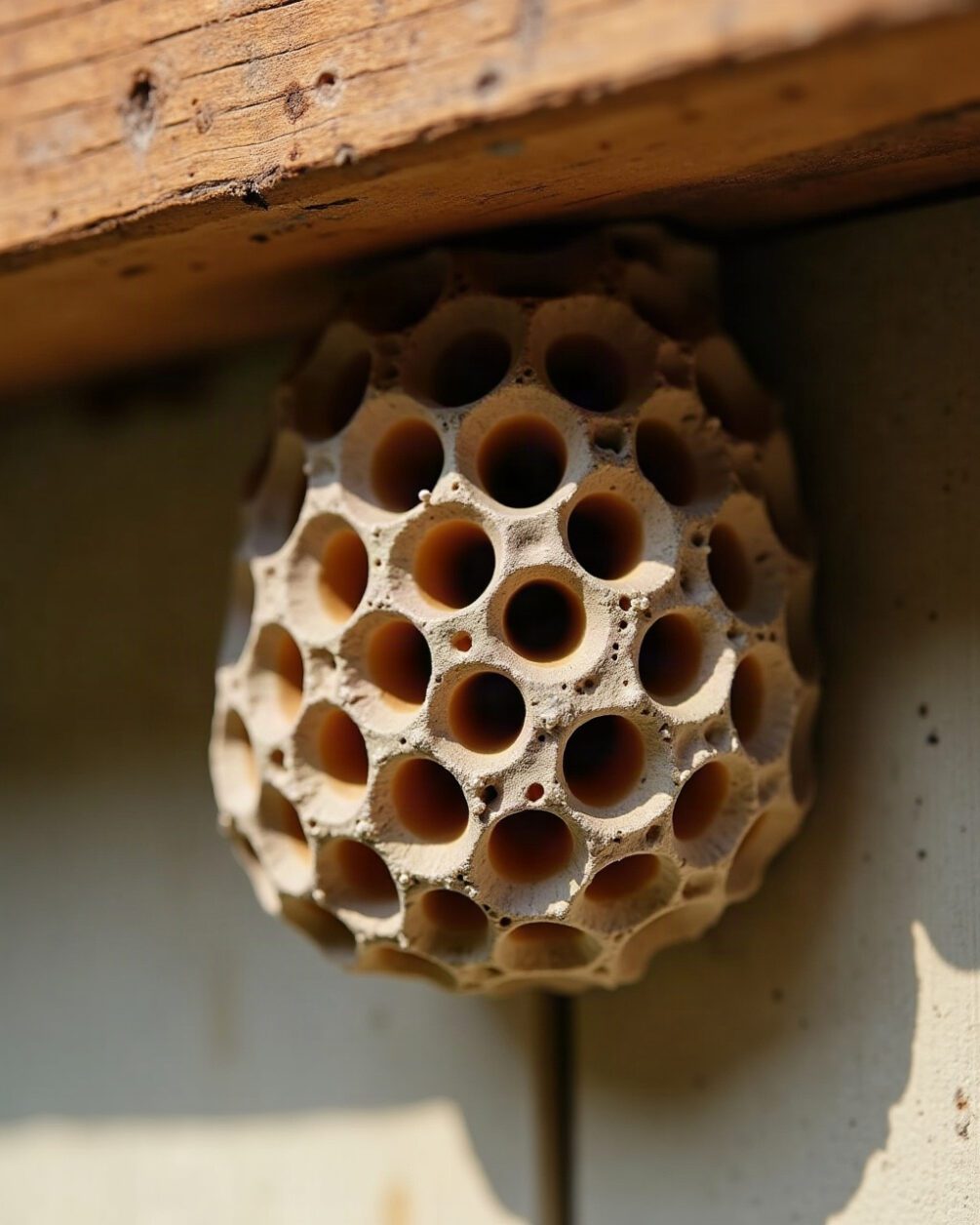
An open paper wasp nest is a single comb of hexagonal cells on a stalk. Each occupied cell holds one larva: white to cream, legless, soft, and sitting with its head toward the opening, held in place by the cell walls.
They cannot move between cells and cannot leave. Everything they need is brought to them.
Cells with a papery cap over the opening hold pupae. The larva has spun a silk lid, stopped feeding, and is transforming inside. Those cells are the ones nearest to producing adults.
Empty open cells are either not yet laid in or already emerged, and in an autumn nest they are all of the latter.
What they eat, which is the surprising part
Adult wasps live on sugars: nectar, fruit, and in late summer whatever is on a picnic table. The larvae eat protein, and the workers supply it by hunting other insects, chewing them into a paste and feeding it to them cell by cell.
A medium colony removes a substantial quantity of caterpillars, flies and aphids from a garden over a season. Our caterpillar guide covers the garden pests that are on the menu, and the aphid guide covers another.
There is an exchange running in the other direction too: the larvae secrete a sugary droplet that the adults consume. When brood-rearing stops in late summer, that supply ends, and it is a large part of why workers suddenly become interested in sweet things and start bothering people. The behaviour change everyone notices in August has a cause inside the nest.
The nest tells you the species
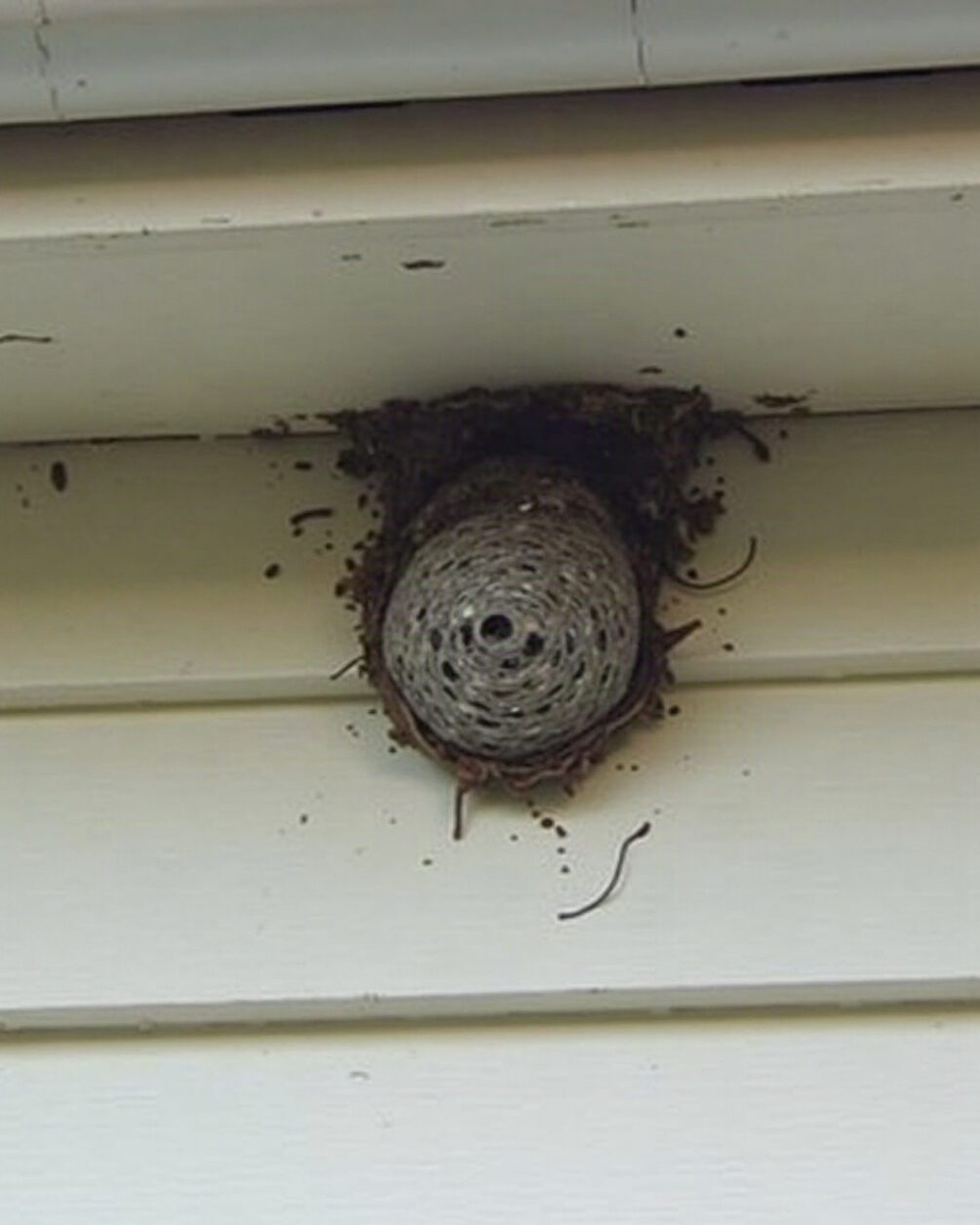
The shape of what you are looking at names the wasp faster than the wasp does.
An open umbrella of cells with no covering is a paper wasp. Small colony, defensive only within about a metre.
An enclosed grey papery ball is a bald-faced hornet or aerial yellowjacket. Layered, with a single entrance, and a colony reaching into the thousands.
A hole in the ground with steady traffic is a yellowjacket, and the one most likely to cause an incident when a mower goes over it.
Mud tubes are a mud dauber, which is solitary. Each cell holds one larva and a paralysed spider rather than chewed insect paste, and there is no colony to defend. Kentucky’s overview of common spiders around homes covers what is being stocked, and our mud dauber guide covers why they are placid.
Our guide to wasp types by nest covers the full comparison, and the paper wasp versus yellowjacket guide covers the pair most often confused.
The seasonal fact that changes what you do
A wasp nest is annual. The colony dies with the first hard frosts, and only newly mated queens survive, overwintering elsewhere in sheltered crevices. The nest is never reused.
Two consequences follow, and they matter more than anything else on this page.
A nest found in late autumn or winter is already finished. The cells are empty, there is no traffic, and it needs nothing done to it. It can be left or removed at leisure.
Removing an old nest does not prevent next year. A new queen builds a new nest somewhere else. If prevention is the goal, the window is spring, when a founding queen is starting a nest the size of a golf ball and can be discouraged before a colony exists. Our prevention guide covers that window.
If the nest is active
The honest line is about location rather than existence. A nest at the far end of a garden is doing pest control and can be left. A nest above a doorway, near a play area, or in a wall cavity by a bedroom is a different question.
Open paper wasp nest, small, reachable, at dusk, with a clear escape route is often reasonable to handle yourself.
An enclosed nest, a ground nest, anything above head height, or anyone in the household with a sting allergy makes it a job for someone equipped. Our safe removal guide covers the line, and the yellowjacket guide covers the species that most often needs help.
Carpenter bees get caught by this search because of the neat round holes they bore in bare timber. That is a different insect and a different problem; Kentucky’s guidance on carpenter bees covers the damage, and our carpenter bee guide covers the identification.
Common questions
Can I eat wasp larvae?
They are eaten in some cuisines, particularly in Japan. It is not a domestic project, given the nest they are in.
The cells have white caps.
Those are pupae. It means adults will emerge within days to a couple of weeks, which is worth knowing if the nest is somewhere awkward.
A nest under my eaves in November.
Finished. Leave it or take it down when convenient; it is not going to reactivate.
Final verdict
Each cell holds one white legless larva, head outward, fed on chewed insects by workers that are themselves living on sugar. Capped cells hold pupae. What matters more than any of that is the calendar: the colony dies at the first frosts and the nest is never used again, so an autumn find needs nothing, and prevention belongs to spring when a queen is starting something the size of a golf ball.