
Two things curl when touched and the shape of the curl separates them. A pill bug rolls into a tight sphere like a ball bearing. A millipede coils flat into a spiral like a watch spring. Neither bites, neither damages a building, and neither can survive indoors for long, because both need constant damp. Finding them inside is a moisture reading about the perimeter of the house.
- Rolls into a complete ball: pill bug, also called a woodlouse or roly-poly. A crustacean, not an insect.
- Coils flat into a spiral: millipede. Many legs, slow, harmless.
- Neither survives inside: both die within days indoors, so the answer is sealing and drying, not spraying.
This is one of the few identification questions with a genuinely clean answer, because the behaviour separates two groups that are otherwise easy to confuse. Both turn up in the same places, both alarm people to about the same degree, and neither deserves it.
The two shapes of a curl
A pill bug rolls into a sphere. Segmented armour plates fold together so completely that the animal becomes a grey ball, and it will stay that way for a minute or more after being disturbed. This is called conglobation, and it is a defence against drying out as much as against predators.
A millipede coils flat. It curls in one plane into a spiral, like a spring lying on a table, with the legs tucked inside. It does not form a ball.
Kentucky groups these together for a reason, noting that sowbugs and pillbugs are crustaceans rather than insects, and require moist conditions to survive. That is the single most useful fact about them.
Pill bugs and sowbugs, which are not insects
Pill bugs are crustaceans, more closely related to crabs and shrimp than to anything else you will find in a house. They breathe through gill-like structures that need moisture, which is why they die quickly on a dry carpet.
There is a common companion, the sowbug, which looks almost identical and cannot roll into a ball. Sowbugs are slightly flatter, have two small tail projections, and curl only partially. Both feed on decaying plant material and both live under damp leaf litter, stones, paving slabs, mulch and rotting wood.
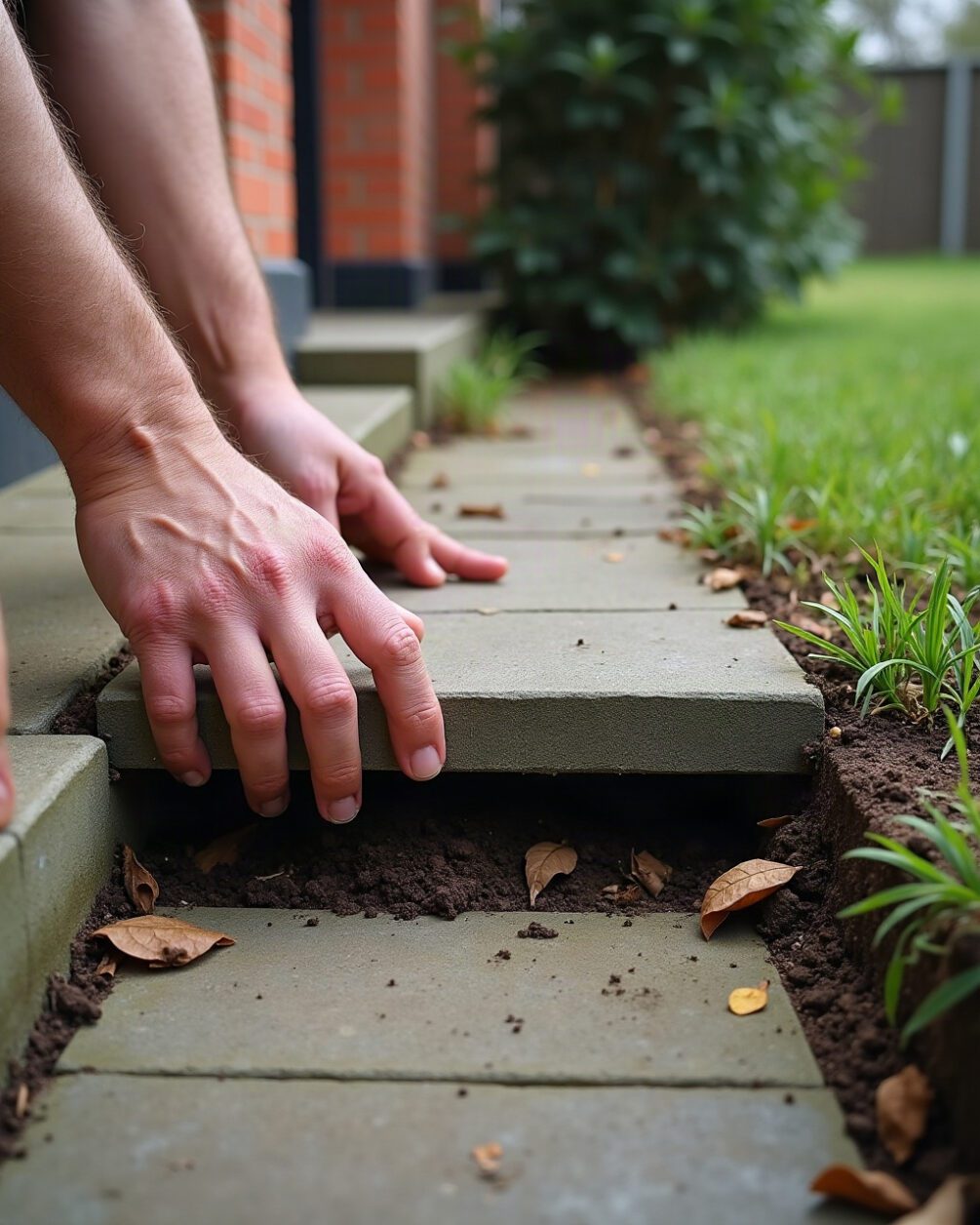
Indoors they are always accidental. They enter through gaps at ground level, under doors, through basement window wells, and around service pipe penetrations. A pill bug on a kitchen floor is dying, not colonising, and the meaningful response is to look at what is up against the outside wall.
Millipedes, and the seasonal invasion
Millipedes have two pairs of legs per body segment, which is what distinguishes them from centipedes, and they move with a slow rippling motion rather than darting. They eat decaying plant matter and are entirely harmless to people, though some species release a defensive fluid that can stain skin and smells unpleasant.
The pattern that brings people to this topic is seasonal. In autumn, and after heavy rain, millipedes migrate in numbers and can end up along the base of an external wall, in a garage, or in a basement. It looks alarming and resolves on its own, because they cannot feed or survive indoors.
The distinction from centipedes matters, because centipedes are predators, move fast, and a few species can deliver a defensive bite. Our centipedes versus millipedes guide covers the difference in detail, and the house centipede guide covers the long-legged fast one that people find in bathrooms. If you want them out rather than tolerated, the centipede removal guide applies to millipedes too, because the perimeter work is identical.
The other things that curl, partially
A few insects roll or tuck when disturbed without forming a ball, and they get caught by this search.
Carpet beetle larvae curl when touched, but they are bristly, only three to five millimetres, and found in fabric rather than damp corners. Our carpet beetle identification guide covers them, and unlike everything else here they do actual damage, to wool and natural fibres.
Earwigs curl their abdomen but do not roll. They are unmistakable because of the pincers at the rear, which look far more dangerous than they are. Our earwig identification guide covers them and the earwig ear myth deals with the story everyone has heard.
Some caterpillars and beetle larvae curl as a defensive reflex. If it is in a garden rather than a house, our garden pest identification guide is the better page.
Why they are getting in, and what actually stops it
Because none of these can live indoors, the whole problem is entry, and entry is about moisture at the perimeter. The productive work is outside the house.
Move the damp away from the wall. Mulch piled against a foundation, leaf litter in a light well, firewood stacked against the house, and dense planting right up to the brickwork all create a permanently damp strip full of these animals a few centimetres from your threshold.
Fix the drainage. Blocked gutters and downpipes discharging next to a wall keep that strip saturated.
Seal at ground level. Door sweeps, gaps under thresholds, unsealed service penetrations and basement window wells are the routes.
Skip the insecticide. Spraying a perimeter kills a fraction of an outdoor population that is being continuously replaced, while doing nothing about the conditions. Drying the strip works and lasts.
Common questions
Do pill bugs bite?
No. They have no capacity to bite and no interest in people. They eat decaying vegetation.
Are they a sign of a bigger problem?
Sometimes, in a useful way. Persistent numbers indoors, particularly in a basement, can point at a damp problem worth investigating for the building’s sake rather than the animal’s.
Do millipedes damage plants?
Mostly they eat decaying material rather than living tissue, though they will take advantage of soft or damaged seedlings and fruit lying on wet soil. They are not a primary garden pest.
Something curled into a ball and it had lots of legs. Which was it?
Count the shape of the curl rather than the legs. Sphere means pill bug. Flat spiral means millipede. Both have plenty of legs and neither matters.
Final verdict
The curl tells you which one it is: a sphere means a pill bug, a flat spiral means a millipede. Both are damp-dependent, both are harmless, and both are indoors by accident and dying. That makes the useful work entirely external. Pull mulch and firewood back from the wall, clear the gutters, seal at ground level, and the sightings stop without a single treatment applied to anything.
Pingback: Grubs in Soil and Lawn: Which Beetle Larva Is It