A sofa holds the same three suspects as a mattress, plus booklice on damp fabric. Carpet beetle larvae eat the fibres and the crumbs, fleas arrive with an animal, bed bugs are possible because people sleep on sofas, and booklice mean the room is damp. The single most useful thing you can do is tip the sofa onto its back and look at the underside, which is where all four actually live.
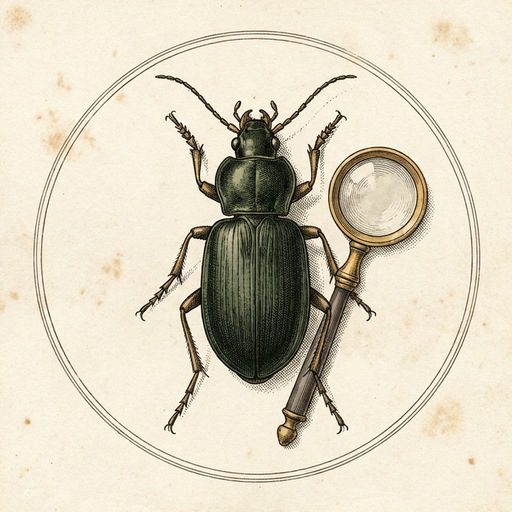
- Bristly and slow in the seams: carpet beetle larva, feeding on wool, lint and dropped food.
- Jumps, and there is a pet: flea. Treat the animal first or nothing else works.
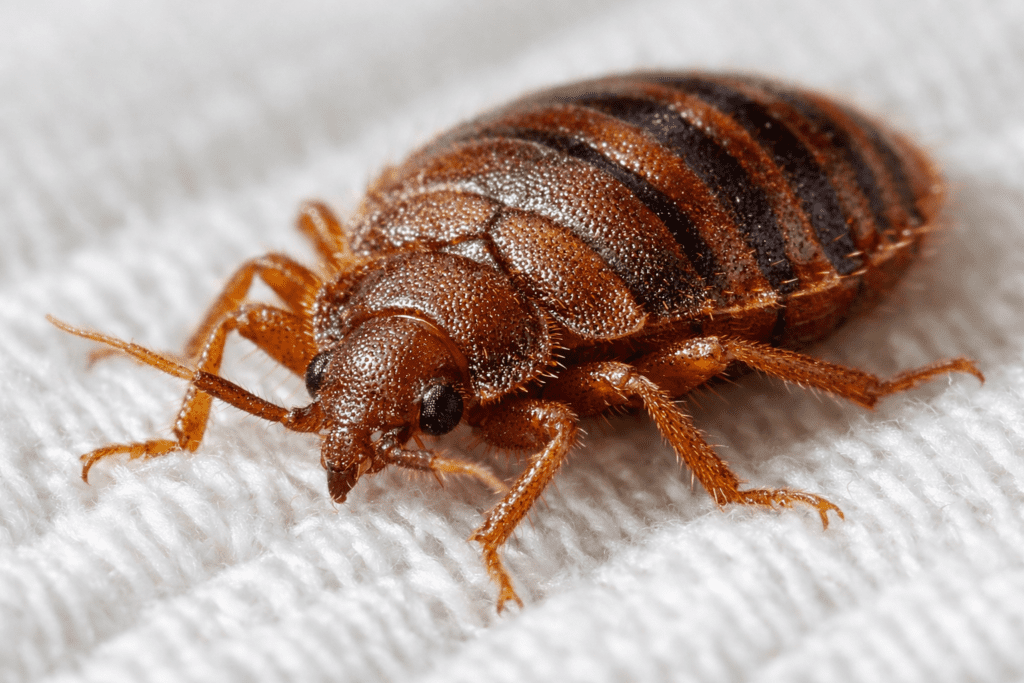
- Flat, broad, plus dark spotting on the frame: possible bed bugs, and a sofa people nap on is a genuine site.
Sofas get searched about far less than mattresses and deserve more attention than they get. They combine everything an indoor insect wants: fabric, warmth, food debris in the creases, an underside nobody ever looks at, and in many households a person lying still on them for hours.
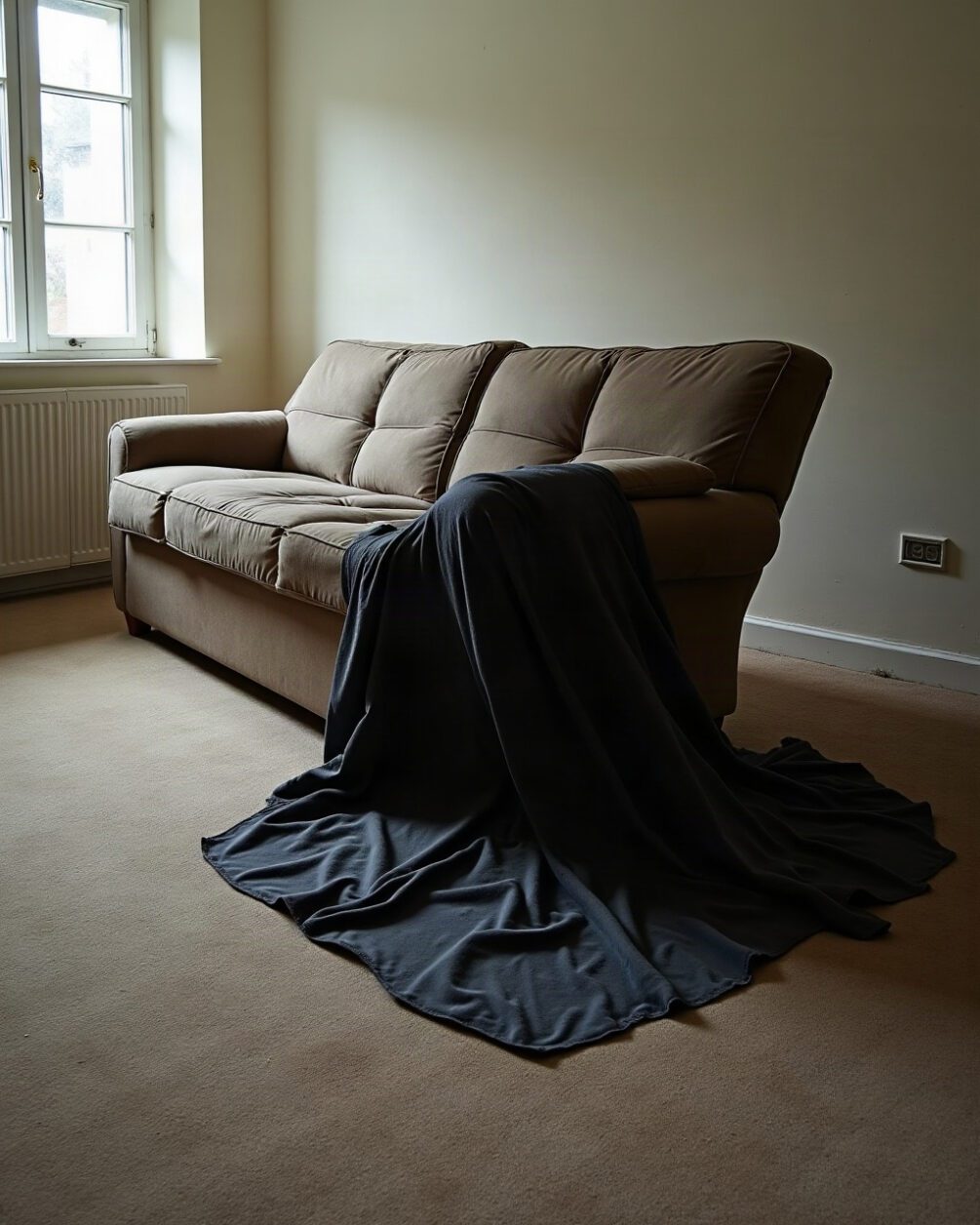
Look at the underside first
This is the step that changes the outcome, and almost nobody does it. Tip the sofa onto its back or its side. Underneath you will find a stapled dust cover, an unfinished timber frame, webbing, and years of accumulated lint. That is the habitat. The cushions people inspect are the least likely place to find anything living.
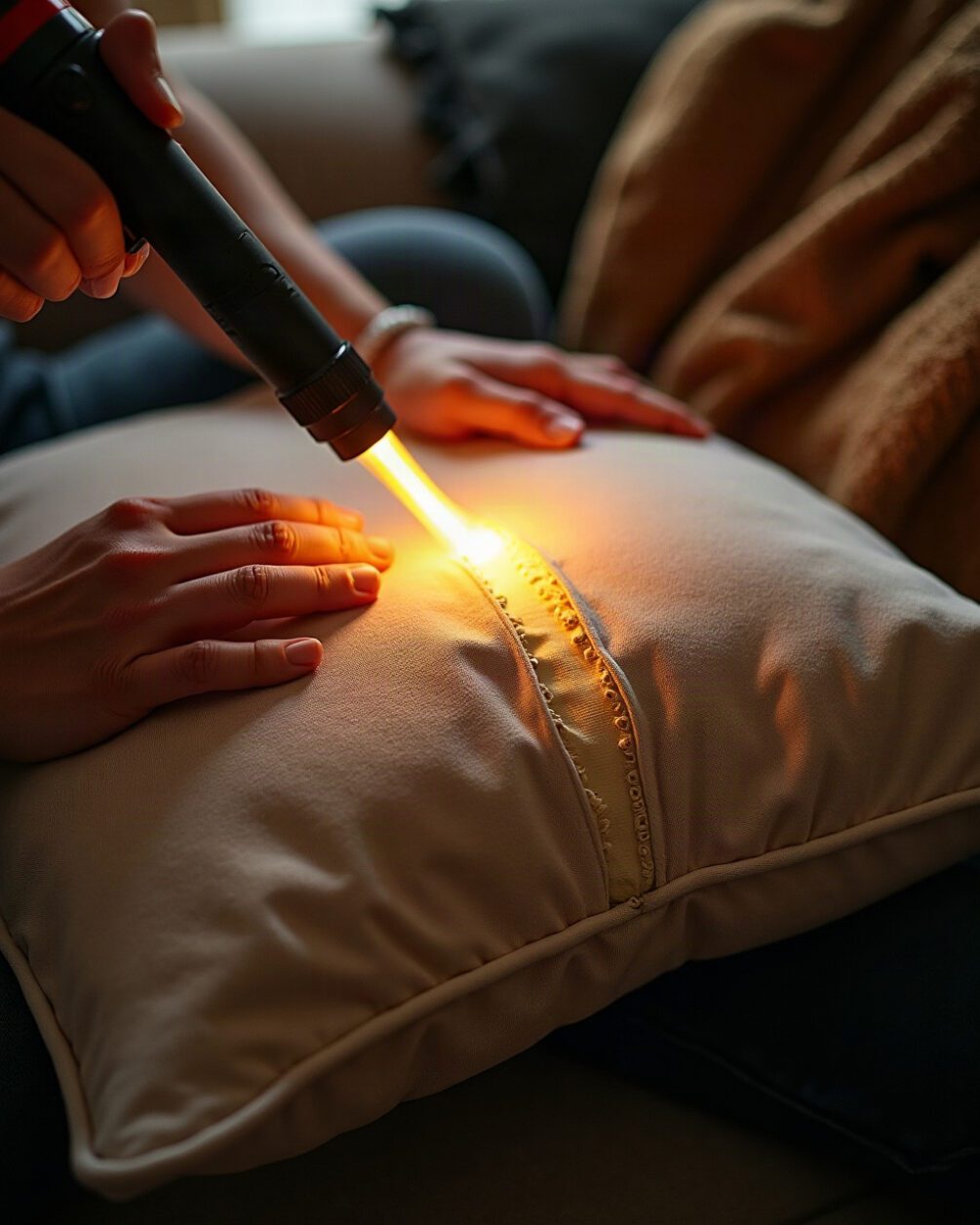
Peel back a loose corner of the dust cover if there is one, and put a torch along the frame joins and staple lines. Then check the seams and piping of the cushions, the crease where the back meets the seat, and the gap under the arms.
Carpet beetle larvae, the most likely answer
If something small, dark and bristly is in a sofa seam, this is usually it. The larvae are three to five millimetres, tapered, covered in short stiff hairs, and slow-moving. Kentucky notes that carpet beetle larvae feed on wool, felt, fur, feathers and other animal products, and a sofa supplies all of that: wool upholstery, feather cushion fillings, pet hair worked into the fabric, and dried food debris in the creases.
The signs to look for besides the larvae are shed skins, which look like empty bristly husks and often outnumber the live larvae, and thinning or bare patches on wool fabric, usually under a cushion rather than in an exposed area. Our carpet beetle identification guide covers the species and the removal guide covers what actually works, which is thorough vacuuming plus finding the fibre source.
Carpet beetles do not bite. Their bristles can irritate skin, which produces itchy bumps that get reported as bites, and we cover that specifically in carpet beetle rashes explained.
Fleas, if there is or was an animal
A sofa where a dog or cat sleeps is a flea hotspot, because flea eggs fall off the animal where it rests and develop in the debris beneath. The adults jump, are dark and shiny, and are flattened side to side.
Kentucky is clear that flea control depends on treating the pet. Cleaning the sofa while the animal is untreated simply resets the clock. Our complete flea guide covers the order of operations, and the flea life cycle guide explains the two-week resurgence that convinces people the treatment failed when it did not.
Worth knowing: fleas persist in a property after a pet has gone, sometimes for months, because pupae wait for vibration and warmth before emerging. A newly moved-in household with unexplained ankle bites is a recognised pattern.
Bed bugs, which do use sofas
People assume bed bugs mean beds. In practice they establish anywhere a person is still for long periods, and a sofa that gets slept on, or used for hours every evening, qualifies.
Kentucky describes bed bugs as brownish, oval and flattened, hiding in seams, folds and crevices near where people rest. In a sofa that means the piping of the cushions, the join between the back and the seat, the underside of the frame, and any tears in the dust cover.
The evidence matters more than the sighting. Dark spotting that bleeds slightly into fabric, and shed tan skins, are what confirm it. Second-hand upholstery is the classic route into a house, which is worth remembering before accepting a free sofa. Work through our bed bug inspection guide, and if you found something dark and are not sure, the carpet beetle versus bed bug comparison settles the most common false alarm.
Booklice, and the damp sofa
If the things are very small, pale, slow and numerous, and the sofa sits against an external wall or in a room that does not ventilate, these are likely booklice feeding on surface mould. They are harmless, cannot live on people despite the name, and disappear when the humidity comes down.
The useful signal is not the insect but the location. A sofa pushed hard against a cold external wall traps moisture behind it. Moving it a few centimetres out often solves the problem entirely.
What the bites tell you
Reading skin backwards to a culprit is unreliable, and it is worth saying so plainly. Reactions vary hugely between people and can be delayed by days.
That said, position carries some information. Ankle-height clusters point at fleas. Bites appearing overnight on exposed upper body skin point at bed bugs. An itchy rash on the arms or back of someone who lies on the sofa regularly, with no discrete bite marks, is often contact irritation from carpet beetle larvae rather than any bite at all. Our bite identification chart covers the patterns, and our flea bites guide and bed bug bites guide go deeper on the two that genuinely feed on people.
Common questions
Can I steam clean it away?
Steam kills on contact and is genuinely useful for bed bugs in seams, but it does not penetrate far into stuffing or reach inside a frame. It is a good tool within a plan rather than a solution by itself.
Should I throw the sofa out?
Rarely necessary for carpet beetles or fleas. For a confirmed bed bug problem in heavily infested upholstery it is sometimes the pragmatic choice, but do it as a decision rather than a panic, and wrap the item so it does not seed the building on the way out.
Nothing is visible but I keep getting bitten.
Check the underside and the frame rather than the cushions, and check the mattress too. Also consider that many itchy skin reactions are not bites: folliculitis, contact dermatitis and dry skin all get attributed to insects.
Final verdict
Turn the sofa over. Everything that lives in upholstery lives on the underside, in the frame joins and in the cushion piping, not on the surfaces you sit on. Bristly and slow means carpet beetle larvae and a fibre source to find. Jumping means fleas and an animal to treat. Flat and broad with dark spotting means a proper bed bug inspection. Pale, slow and numerous against a cold wall means damp and a sofa to pull forward.