
The larva is three to five millimetres, tapered, and covered in short stiff bristles that make it look banded or fuzzy. It creeps slowly and curls when touched. It eats wool, fur and feathers, so it lives at carpet edges and in wardrobes rather than in open floor, and the shed skins it leaves behind usually outnumber the live ones several times over.
- Bristly rather than smooth is the single check that separates it from everything people fear.
- Look for the shed skins first: empty bristly husks, easier to find and more numerous.
- It does not bite. The bristles irritate skin on contact, which is not the same thing.
This is the most commonly found insect larva in houses and the one most often misidentified, because it looks nothing like the small round beetle it becomes and because the rash it can cause looks convincingly like bites.
What it actually looks like
Three to five millimetres at full size, though early stages are much smaller. Tapered from a broader front to a narrower rear, and covered in short stiff bristles that give it a banded appearance under a phone camera. Some species carry a tuft of longer hairs at the tail end.
It moves slowly and deliberately, and it curls when disturbed rather than running.
The colour varies from pale tan to dark brown, which is why colour is a poor guide and texture is a good one. Smooth and shiny is not a carpet beetle larva.
Where it lives, which is the useful part
Kentucky notes that carpet beetle larvae feed on wool, felt, fur, feathers and other animal products. They avoid light and disturbance, so they concentrate exactly where nobody cleans:
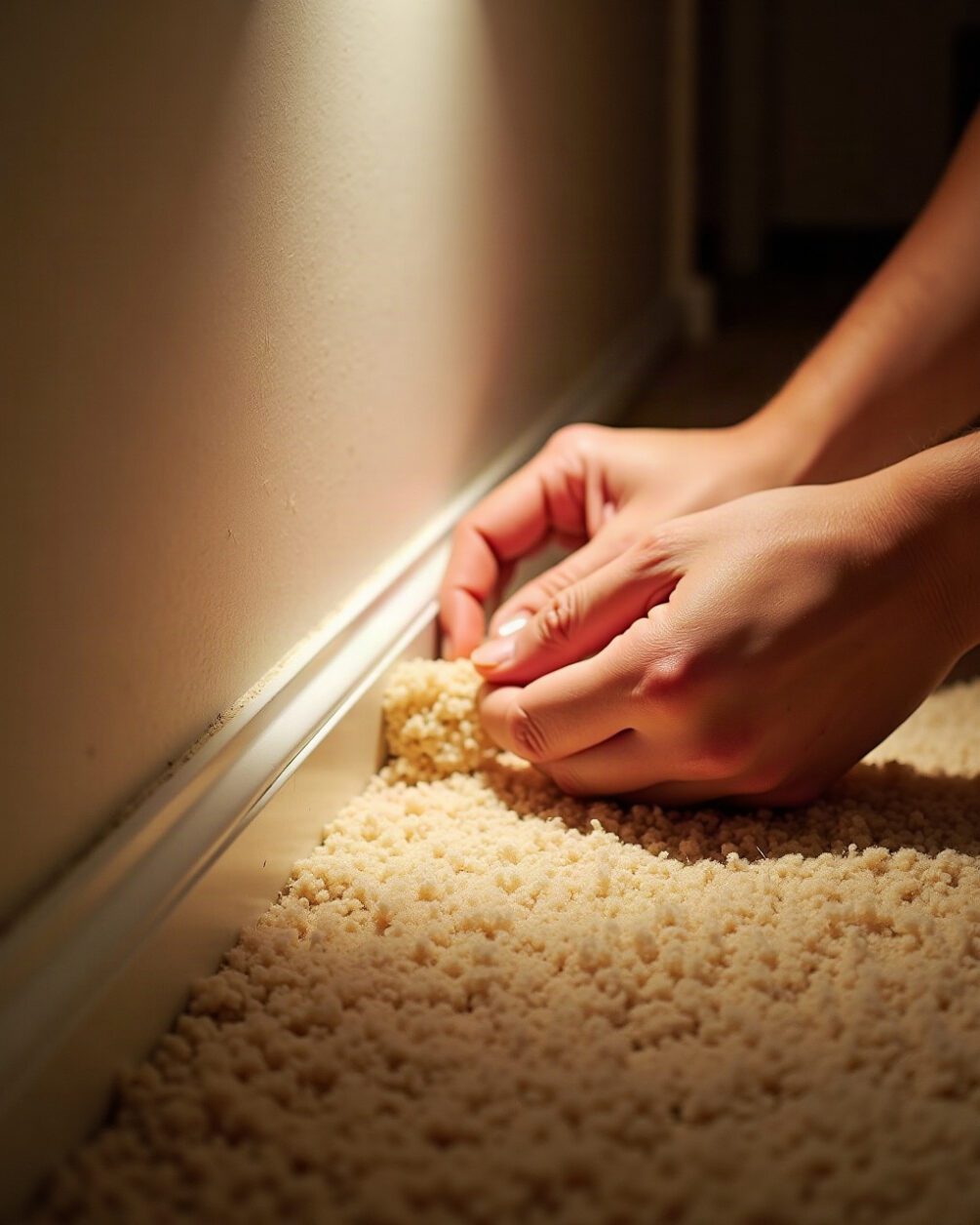
Carpet edges at the skirting board, not the middle of a room, which gets vacuumed.
Under heavy furniture that has not moved in years.
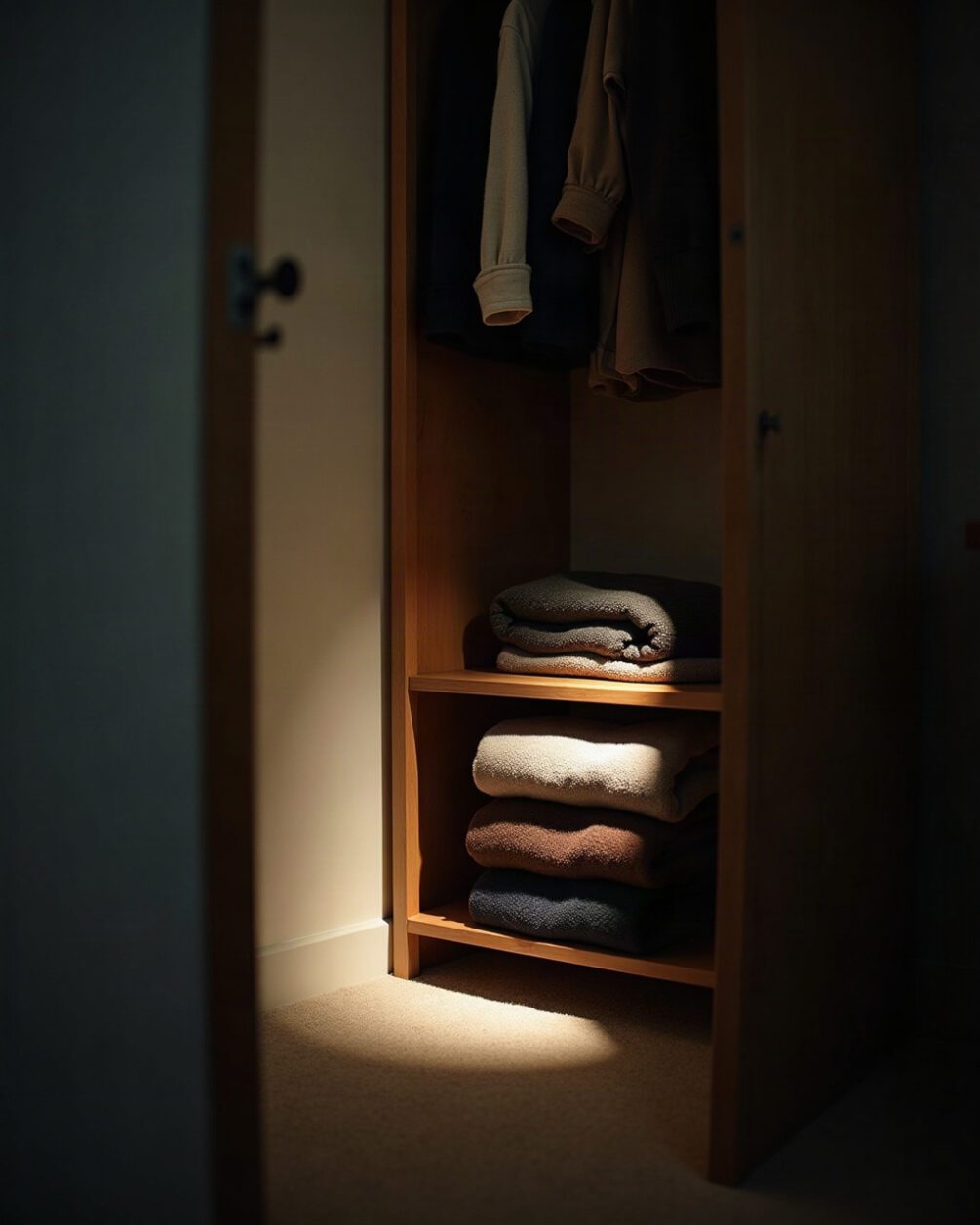
Wardrobe floors and stored textiles, particularly wool and anything put away unwashed.
Inside a mattress topper, a feather duvet or an upholstered base.
Air vents and lint traps where fibre accumulates.
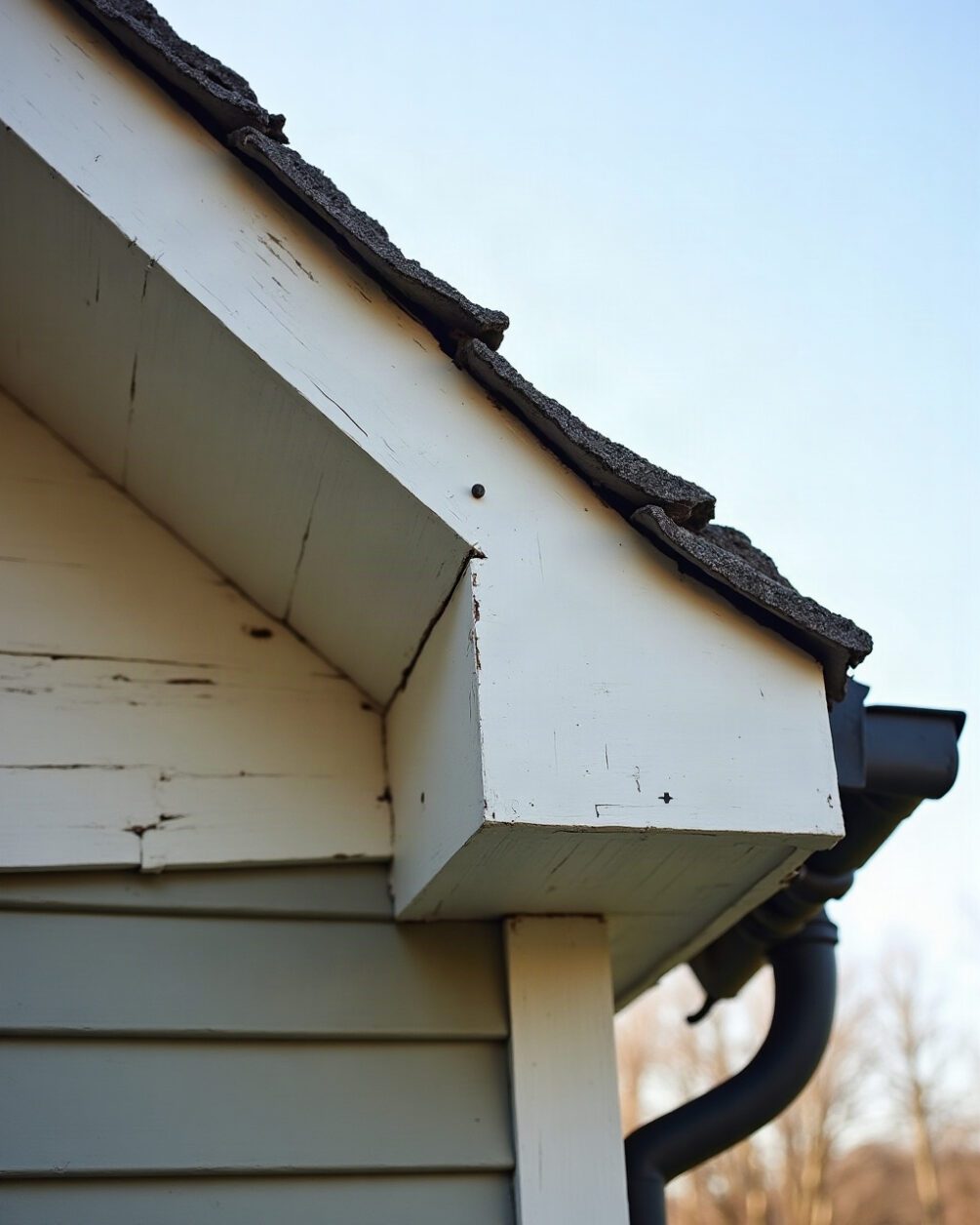
Bird and wasp nests in eaves and soffits, which is the source people never find, because a nest full of feathers and dead insects feeds a population that then disperses downward into the rooms below.
The shed skins matter more than the larvae
Larvae moult repeatedly as they grow, and each moult leaves an empty bristly husk that holds the shape of the animal. Those husks persist, they do not move, and there are more of them than there are larvae.
Finding shed skins is better evidence than finding a larva, because it tells you a population has been there long enough to grow rather than that one thing wandered in. Look along skirting boards, in the fluff at the back of a wardrobe, in the seams of stored bags, and under furniture.
Our guide to reading specks covers shed skins alongside droppings and frass, and the guide to dust that turns out to be alive covers the larvae that collect lint around themselves and read as moving fluff.
The rash, and why it is not a bite
This is the part worth being precise about, because it costs people months.
Carpet beetle larvae have no capacity to bite and no interest in doing so. What they can do is cause a contact reaction: the bristles irritate skin, producing itchy red bumps that appear where a person lies or sits against infested fabric.
The pattern that suggests it rather than an insect bite: bumps without a clear central puncture, appearing on the areas that touch bedding or upholstery, and no dark spotting on mattress seams. Kentucky describes bed bugs leaving spotting and shed skins in seams, and the absence of that is meaningful.
Our rash guide covers it properly, and the bedroom guide covers ruling bed bugs in or out first, which is the ten minutes worth spending before anything else.
What to do
Find the source rather than treating the room. A larva in a bedroom usually leads back to a wool item, a wardrobe, or a nest above the ceiling. Vacuuming without removing the source treats the symptom.
Vacuum edges, not the middle. Skirting junctions, under and behind furniture, wardrobe floors, the edges of rugs. Move the furniture.
Wash or freeze what can be. Hot washing kills all stages. A sealed bag in a household freezer for several days works for a single item that cannot be washed.
Check the eaves from outside. Binoculars in daylight. An old bird nest is the source people search for indoors for a year and never find.
Store clean and sealed. Larvae are drawn to sweat, skin oils and food traces far more than to clean fibre, which is why the jumper put away unwashed is the one that gets eaten. Our wardrobe guide covers reading the damage, and the removal guide covers the full method.
Common questions
Are the adults the same problem?
No. Adults feed on pollen outdoors and are drawn to light, which is why they turn up dead on windowsills. An adult on a sill is a prompt to search the wardrobe rather than a problem in itself. Our identification guide covers the species.
How long do they live as larvae?
Months, and in poor conditions considerably longer. That slow development is why an infestation builds quietly and why people find damage before they find anything alive.
I vacuum constantly and they keep appearing.
Then the source is somewhere the vacuum does not reach: inside upholstery, under a fitted carpet, in a loft, or in a nest outside the building envelope.
Final verdict
Bristly rather than smooth, slow rather than fast, and curling when touched: that is the check, and it rules out the bed bug people are usually afraid of. Then look for the shed skins rather than the larvae, because there are more of them and they stay put. And treat the finding as a pointer to a fibre source, whether that is a wool jumper at the back of a wardrobe or a bird nest in the soffit above the room.
Pingback: Clothes Moth Larvae: Webbing, Cases and Holes
Pingback: Maggots: Which Fly, and What They Are Telling You
Pingback: Insect Larvae in the House: What the Grub Is