
A paper wasp nest is a single open comb of hexagonal cells hanging from a short stalk, with the cells visible from below and no covering. Colonies are small, usually tens of wasps, and they are the least defensive of the group. A hornet or yellowjacket nest is enclosed in a layered grey envelope with one small entrance, hides the comb completely, and can hold thousands by late summer. Judge it from several metres away, which is entirely possible.
- Can you see the cells? Paper wasp. Envelope hiding them? Hornet or yellowjacket.
- Size scales through the season, so August is the dangerous month.
- Every nest dies in autumn and none is reused the following year.
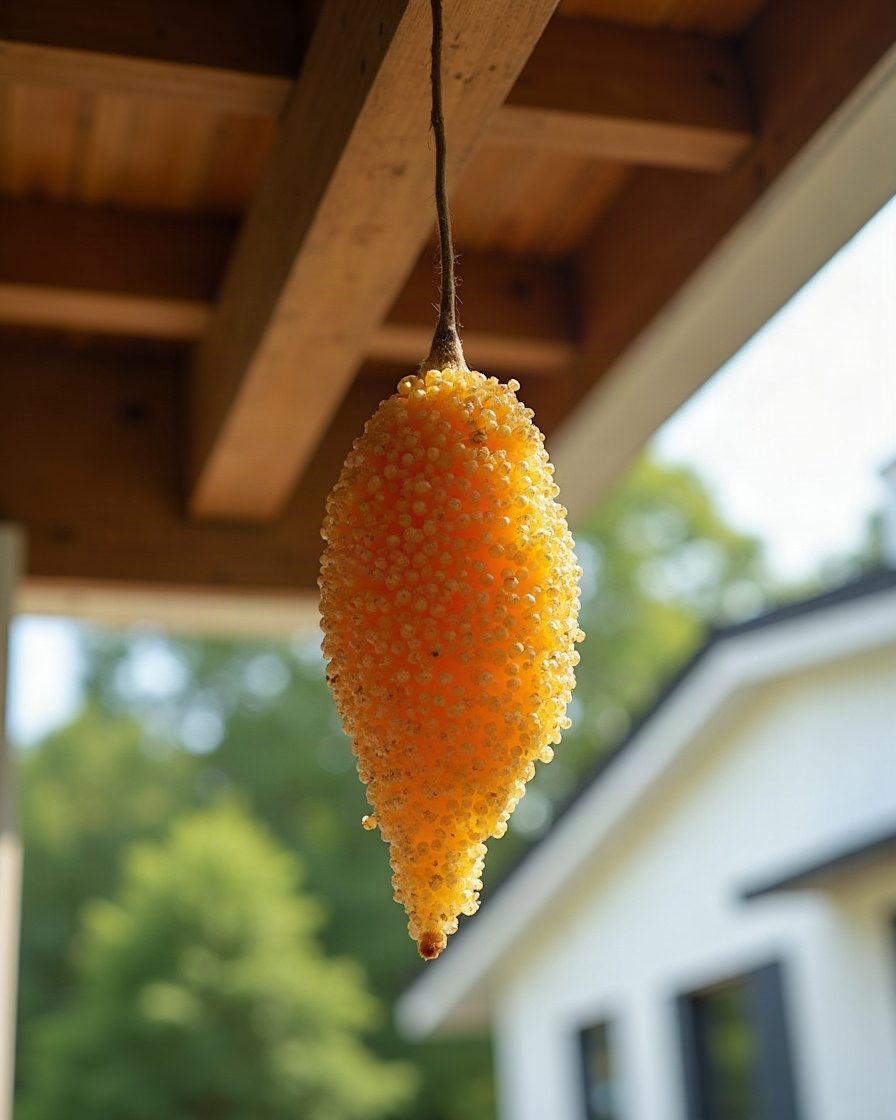
The identification here can and should be made at a distance. Approaching a nest to work out what it is inverts the correct order, and it is how people get stung.
Paper wasp
Structure. A single horizontal comb of open hexagonal cells, suspended from a short stalk, with the cell openings facing downward. Nothing covers it, so the cells and often the developing larvae are visible from below.
Size. Typically from a walnut to a hand’s breadth. A large one might hold a couple of hundred cells.
Colony. Small, usually tens of adults.
Temperament. The least defensive of the social wasps. They will generally tolerate people at a couple of metres and sting mainly when the nest is touched or knocked.
Where. Under eaves and porch roofs, in sheds and open outbuildings, under garden furniture and railings, inside letterboxes and disused pipework, and very often inside the roller housing of a shutter or awning.
Hornet and yellowjacket
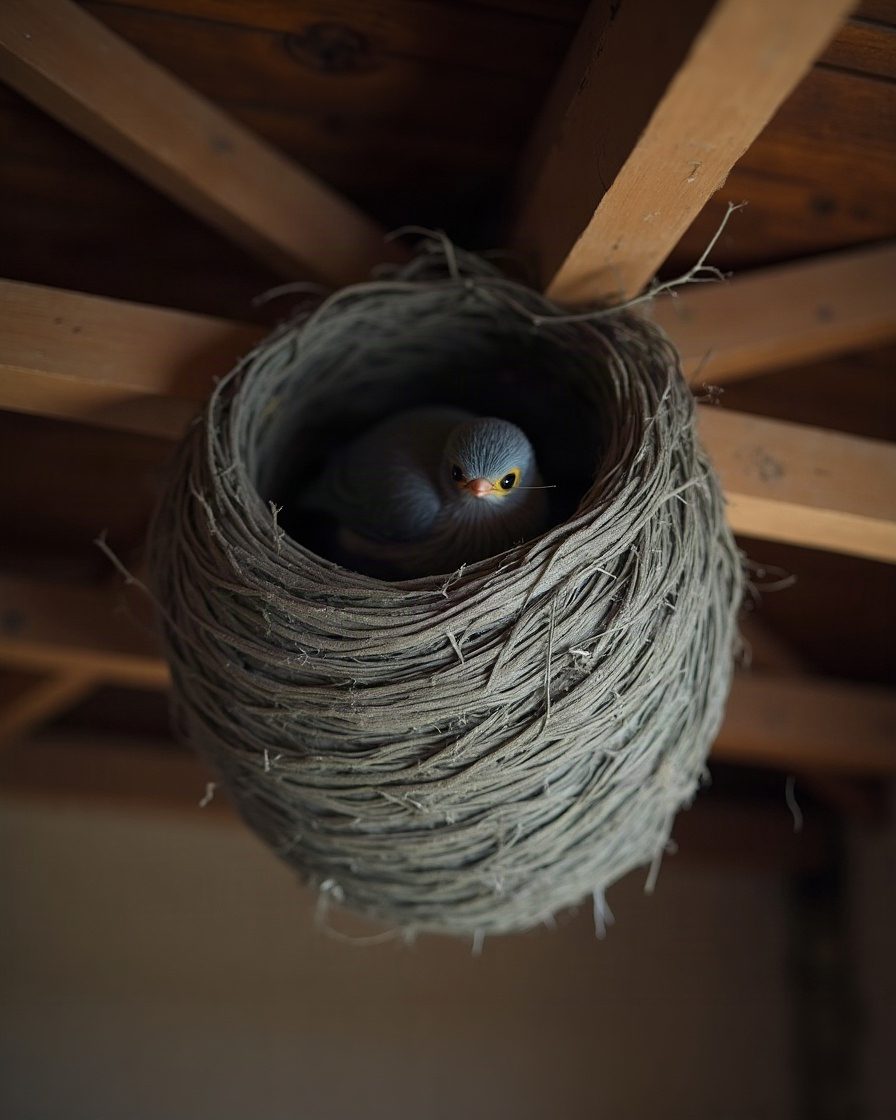
Structure. An enclosed nest. The combs are stacked inside and wrapped in a layered paper envelope with a swirled, marbled appearance and a single small entrance, usually near the bottom.
Size. Starts golf-ball sized in spring and can reach the size of a football or larger by late summer.
Colony. Hundreds to several thousand by the peak.
Temperament. Defensive, and the defence is collective. Disturbance close to the entrance produces a response from many individuals at once.
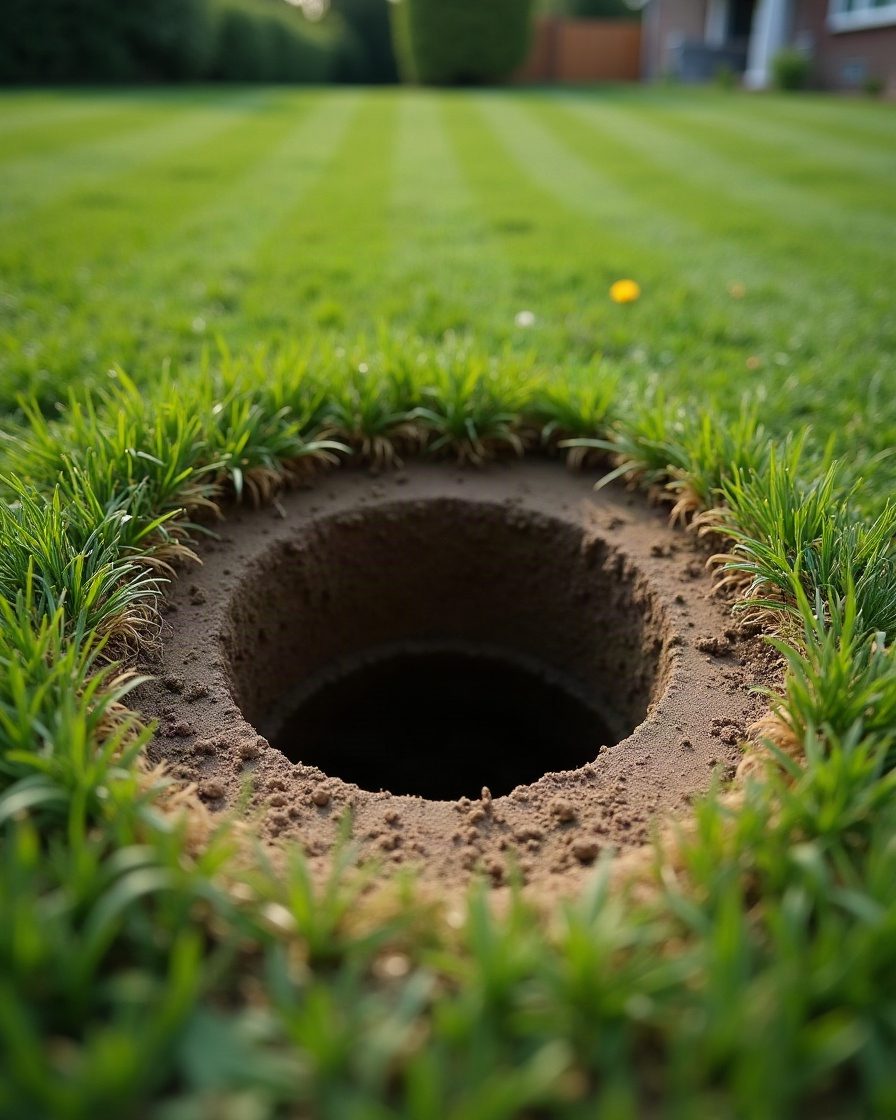
Where. Aerial nests hang in lofts, under eaves, in trees and dense shrubs, and inside sheds. Yellowjackets also nest in cavities: wall voids, air bricks, compost bins, bird boxes, and very commonly in the ground, in an old rodent burrow or a bank.
Ground nests deserve particular mention because they are the ones people find with a lawnmower or a strimmer, and they account for a large share of multiple-sting incidents. A worn patch of bare soil around a small hole, with a steady traffic of wasps, is the sign.
The University of Kentucky’s guide to controlling wasps, hornets and yellowjackets covers the species and the risks.
The comparison
| Paper wasp | Hornet or yellowjacket | |
|---|---|---|
| Cells visible | Yes, from below | No, enclosed |
| Outer envelope | None | Layered, swirled grey |
| Entrance | Open comb | One small hole |
| Peak colony | Tens | Hundreds to thousands |
| Defensiveness | Low | High |
| Ground nesting | No | Yellowjackets, commonly |
Wasp nest identification by shape covers the wider set including mud daubers, and bee, wasp and hornet compared covers the insects rather than the structures.
The season, which changes everything
All of these are annual. One overwintered queen starts a nest in spring; the colony builds through summer, peaks in late summer, produces next year’s queens, and dies off completely in autumn. The nest is never reused.
Spring, a nest is small and holds a single queen. It is at its least dangerous and easiest to deal with if it truly cannot stay.
Midsummer to early autumn, the colony is at maximum size and at its most defensive. It is also within weeks of ending on its own.
Late autumn onward, the nest is dead and can be removed freely.
There is a behavioural change worth knowing: in late summer, once the colony stops rearing brood, workers switch from hunting insects to seeking sugar. That is when wasps appear around bins, fallen fruit and drinks, and it is when most stings happen away from any nest at all.
When to act, and when not to
Leave it if it is high under an eave away from doors, at the far end of a garden, in a shed corner you can avoid, or discovered in autumn. Wasps are effective predators of caterpillars and flies all summer, and a nest away from human traffic causes no harm.
Deal with it if it is beside a door or an opening window, over a path or a play area, in a bin store, inside a wall cavity with an internal opening, in the ground where the lawn is mown, or if anyone in the household has a known sting allergy. UC IPM’s page on bee and wasp stings covers reactions, and sting allergy and an emergency plan covers preparation.
How not to approach it
Do not knock it down, and do not throw anything at it.
Do not block a cavity entrance. Wasps chew their way out, frequently inward into the room.
Do not spray an aerosol at a large enclosed nest. The spray reaches the envelope and the colony reaches you.
Do not stand on a ladder to do any of it. Falls, not stings, are what turn this into an injury.
Do not use petrol or fire. People are seriously hurt doing this every year.
For an enclosed nest, a ground nest, or anything near household traffic, this is a job for someone with a suit and the right equipment. Removing a wasp nest safely covers the practical side.
Common questions
How do I tell without getting close? Binoculars, or a phone photograph zoomed in from several metres. Both are sufficient to see whether cells are exposed.
A nest inside a wall with wasps at an air brick. Yellowjacket, and the size is not knowable from the entrance. Treat it as the enclosed case.
They were here last year in the same place. The nest is not reused, but a sheltered site attracts a new queen. Proof it over winter.
A big nest in the loft in December. Dead. Remove it whenever convenient.
The bottom line
If you can see the hexagonal cells from below, it is a paper wasp and a small colony that can very often be left alone. If a swirled grey envelope hides them, it is a hornet or a yellowjacket and the colony is far larger than the nest looks. Make that call from several metres, and let position and season decide whether anything needs doing at all.
Pingback: Mud Dauber Nests on Walls: Should You Remove Them