\
\
\
\
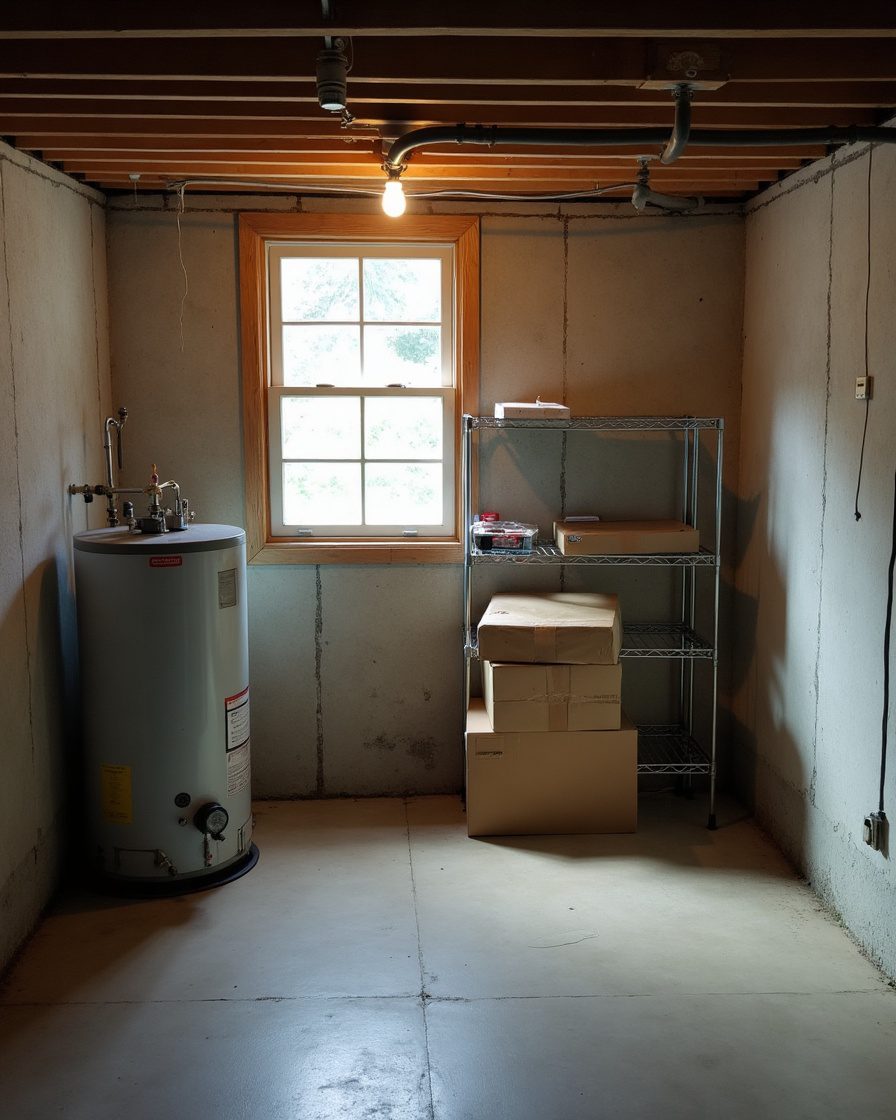
Almost every bug that shows up in a basement is there for the same reason: humidity. Camel crickets, silverfish, sowbugs, pillbugs, and fungus gnats feed on the mold, fungi, and damp debris that moisture creates, and house centipedes and spiders move in to hunt them. Dry the basement out and the whole food chain collapses.
\
- \
- The pattern: Pale jumping crickets, silvery wigglers in boxes, armored roly-polies, and tiny flies near the floor drain all point to chronic damp.
- The good news: None of the moisture crew bites, stings, or spreads disease, and the centipede eating them is on your side.
- The fix: A dehumidifier and sealed entry points beat any spray, because spraying kills individuals while the humidity keeps recruiting replacements.
\
\
\
\
\
\
 \
\
\
Every late summer the same pattern plays out. Nights cool off, outdoor soil dries, and the animals that spent July in mulch and leaf litter discover that the space under your house is the best habitat left in the neighborhood. It helps to think of a damp basement as a cave ecosystem: stable temperature, high humidity, near darkness, fungal food. The bugs down there are not random invaders. They are a predictable community, and once you can read it, the fix becomes obvious.
\
\
Why a damp basement grows its own food chain
\
\
Concrete wicks moisture, floor drains and sump pits hold standing water, and cool foundation walls condense the humid air of late summer. That moisture grows a thin, mostly invisible film of mold and mildew on cardboard, wood framing, and insulation paper, and that film is the base of the food chain. The scavengers arrive first: camel crickets, silverfish, sowbugs, and fungus gnats all feed on fungi and decaying matter. The predators follow, which is why house centipedes and spiders show up a few weeks later.
\
\
This is why the identity of the bug matters less than what its presence tells you. Each species below is a reading on a humidity gauge you did not know you owned. It is also why the spray-first instinct fails in basements: killing today’s crickets does nothing about the damp cardboard that will feed next month’s. Control the conditions and the entry points, not the individual bug.
\
\
Camel crickets: the pale jumpers by the sump pump
\
\
If something the color of weak tea launched itself at you from a dark corner, you have met the camel cricket. They have a humpbacked body, very long antennae, and drumstick hind legs, and unlike field crickets they are completely silent. The startling part is the jumping: a camel cricket sees poorly in the dark and its escape reflex is a blind leap, which sometimes aims it straight at the person who startled it. That leap is the whole threat. They do not bite, and they spend their lives grazing on fungi, damp paper, and organic debris.
\
\
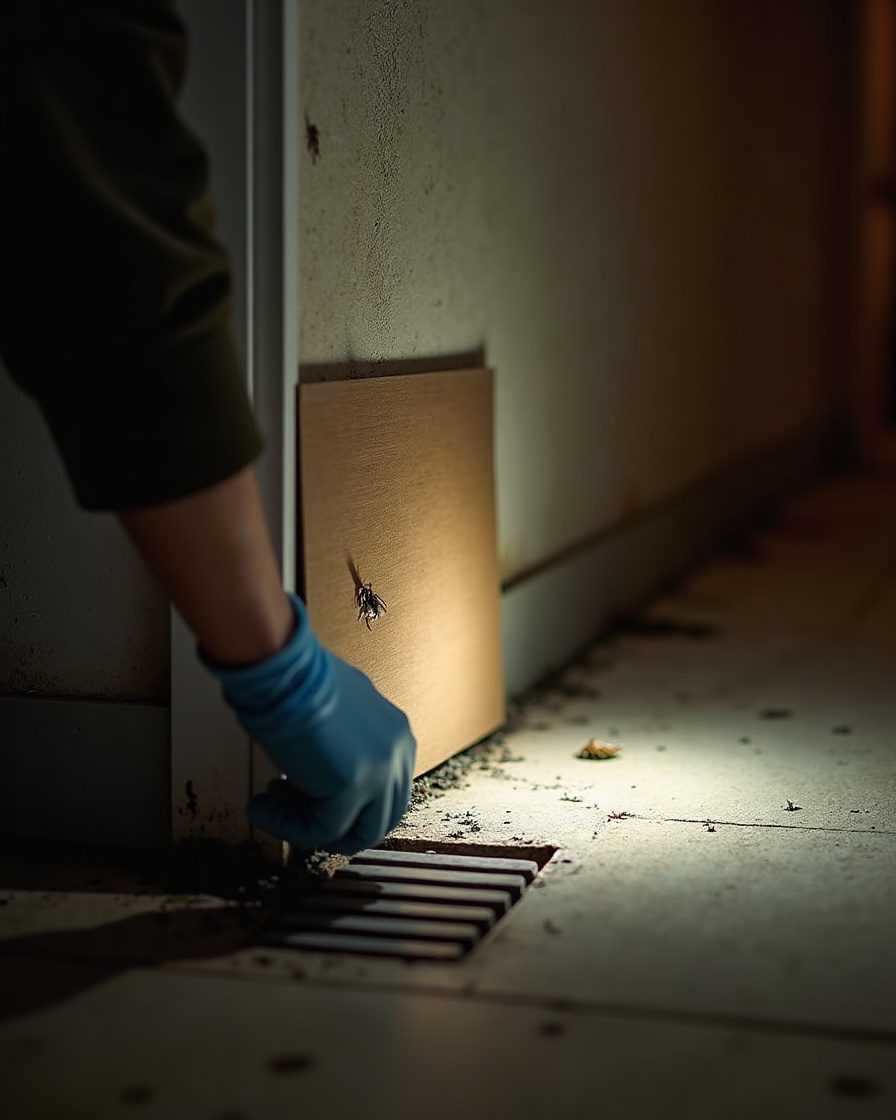
Large numbers of camel crickets are one of the most reliable signs of chronic basement moisture, because their soft bodies dehydrate quickly in dry air. Glue boards placed flat against the wall base near the sump pit or water heater will show you how many you have and where they travel. Our guide to camel cricket identification and control goes deeper on this species.
\
\
House centipedes: the predator you keep squishing
\
\
The house centipede is the one that makes people scream: up to fifteen pairs of impossibly long legs, fast as a dropped shadow, sprinting across a wall when the lights come on. Here is the honest entomology. That animal is a predator, and in your basement it hunts silverfish, small cockroaches, fly larvae, and the eggs and young of the very pests you want gone. It works at night, wants nothing to do with you, and a defensive nip is rare and minor, though anyone with a strong reaction to any arthropod bite should check in with a clinician.
\
\
I will not tell you that you must share your home with them, only that a house centipede is a symptom, not a problem. It is there because prey is there, and prey is there because moisture is there. Dry the basement and the centipedes leave on their own. Our profile on house centipede identification and whether they are dangerous covers the species in detail.
\
\
Silverfish: the quiet damage in your storage boxes
\
\
Silverfish are the one member of the moisture crew that actually costs you money. These teardrop-shaped, silvery insects wriggle like fish when exposed, and they eat starches: book bindings, photo albums, wallpaper paste, cardboard, and the sizing in stored fabric. A basement full of cardboard is a silverfish buffet, the damage is slow and permanent, and they reproduce steadily anywhere that stays persistently humid.
\
\
The response matches the rest of the crew, with one addition: get the vulnerable items out of reach. Move photos, documents, and heirloom textiles into sealed plastic totes, and store nothing directly on the concrete floor. Start with our explainer on what silverfish are, then work through our complete guide to getting rid of silverfish for the trap-and-dry sequence.
\
\
 \
\
\
Sowbugs, pillbugs, and fungus gnats: living humidity meters
\
\
Sowbugs and pillbugs are not insects at all. They are terrestrial crustaceans, tiny relatives of shrimp, breathing through gill-like structures that must stay moist to work. That biology is your diagnostic gift: they cannot survive in dry air. Live ones deep inside a basement mean the humidity is genuinely high; scattered dead ones near the door mean they wandered in and desiccated, a much better sign. They eat decaying plant matter, harm nothing, and need no chemical response at all.
\
\
Fungus gnats are the little slow flies drifting near floor drains, sump pits, and overwatered plants. Their larvae live in wet organic film, usually the biofilm inside a floor drain or the chronically damp soil of a houseplant moved downstairs. Flush and scrub the drain, let plant soil dry between waterings, and the gnats fade within a couple of weeks because there is nowhere left to breed.
\
\
| Pest | What it looks like | What it is eating | What it tells you |
|---|---|---|---|
| Camel cricket | Tan, humpbacked, long antennae, jumps | Fungi, damp paper, debris | Chronic damp plus clutter |
| House centipede | Many long legs, very fast | Other basement pests | There is prey to hunt |
| Silverfish | Silvery, teardrop, wriggles | Starch: paper, cardboard, glue | High humidity plus stored paper |
| Sowbug and pillbug | Armored, segmented, slow | Decaying plant matter | Moisture at floor level |
| Fungus gnat | Tiny weak-flying dark fly | Larvae eat wet organic film | A wet drain or wet plant soil |
\
\
The spiders that follow the whole crew
\
\
Where there is a scavenger community, there are spiders, and the basement regulars are mostly two kinds. Cellar spiders build loose, tangled webs in dark corners and are the trembling spiders most people call daddy longlegs. Fishing and wolf spiders are the larger, more alarming wanderers near sump pits and damp walls. The University of Kentucky’s survey of common spiders found around homes and buildings is direct that spiders are beneficial, that most feed on small insects, and that many species cannot even pierce human skin, with the black widow and brown recluse as the exceptions worth learning to recognize.
\
\
One reframe matters in autumn. The story that spiders flood indoors to escape the cold is mostly wrong. The species you see in the basement year after year, such as cellar and cobweb spiders, are house-adapted residents that live their entire lives in buildings, while outdoor hunters like wolf spiders that wander in during fall are accidents that do not persist indoors, a distinction the same UKY guide draws clearly. The autumn spike in sightings owes more to mature males roaming for mates and to us spending more evenings inside. For control, skip the fog: UKY’s guide to eliminating spiders around homes puts vacuuming webs and egg sacs first and recommends glue traps placed in corners and flush along walls, and the UC IPM Pest Note on spiders adds that insecticides will not provide long-term control anyway. If you suspect a widow or recluse bite, see a clinician; for repeat sightings, consider a licensed professional.
\
\
Mice: the basement visitor that ignores your dehumidifier
\
\
Mice deserve their own rules because they are the one common basement resident that is not there for the humidity. They come for warmth, shelter, and any food at all, and late summer into fall is exactly when they start probing foundations. The UC IPM Pest Note on the house mouse reports they can squeeze under gaps a quarter inch tall, which is why the sealing work below matters more than any trap. Confirm mice by droppings, fresh gnaw marks, and a musky odor, and favor snap traps indoors: they work in a night, with no poisoned mouse dying in a wall void.
\
\
If you do use rodenticide, the federal rules exist for good reasons. EPA’s guidance on controlling rodents and rodenticides requires consumer bait products to be used in tamper-resistant bait stations to protect children, pets, and wildlife, and it flags secondary poisoning, where an owl, fox, or house cat is harmed by eating a poisoned mouse. On cleanup, public health guidance is consistent: never dry-sweep or vacuum droppings, because that puts dust into the air. Ventilate, wear gloves, soak the droppings with a disinfectant solution, wipe up with paper towels, and bag everything. And know the boundary of DIY: if the sounds turn out to be squirrels, bats, or a raccoon, that is a job for a licensed wildlife control operator, not traps and poison. For the sealing sequence, our guide to mouse-proofing your home walks it opening by opening.
\
\
 \
\
\
The dehumidifier-first plan
\
\
Here is the order of operations I give homeowners. Step one is drying: run a dehumidifier sized for the space and hold relative humidity below about 50 percent, low enough that camel crickets, silverfish, and sowbugs cannot sustain a population. Step two is fixing the water sources feeding the damp: clean the gutters, extend downspouts, regrade soil that slopes toward the foundation, and repair sweating or leaking pipes. Step three is starving the survivors by swapping cardboard for plastic totes and getting stored items up off the slab.
\
\
Step four is exclusion, and the details are specific. UKY’s guide to pest-proofing your home calls for door sweeps on exterior doors because a gap of one sixteenth of an inch admits insects and a quarter inch admits mice, sealant packed with steel wool or copper mesh where pipes and wires pass through the foundation, quality caulk around window and door frames, repaired screens, and quarter-inch hardware cloth over crawl space and attic vents. The same guide’s timing advice fits this article’s season exactly: seal before the onset of cooler temperatures in autumn, because that is when the outdoor population starts testing your walls. Our room-by-room walkthrough of pest-proofing your home against fall invaders turns that list into a weekend checklist. Step five is monitoring: a few glue boards flat along the wall base will tell you within two weeks whether the population is falling.
\
\
Common questions
\
\
Are any of these basement bugs dangerous?
\
No. Camel crickets, silverfish, sowbugs, pillbugs, and fungus gnats do not bite, sting, or transmit disease, and a house centipede’s rare defensive nip is minor. The exceptions are the black widow and brown recluse where they occur, and mouse droppings, which call for the wet cleanup method rather than sweeping.
\
\
Why do the bugs come back every time I spray?
\
Because the spray removes individuals while the humidity keeps producing food and the gaps keep admitting replacements. Extension guidance is consistent that exclusion and habitat change outperform chemicals for these pests, and EPA’s consumer pest control guidance starts with the same question: whether a pesticide is needed at all. If you do treat, follow the label exactly.
\
\
Will a dehumidifier alone solve the problem?
\
It is the single highest-impact move, but pair it with the water fixes and the sealing. A dehumidifier fighting a leaking downspout runs forever and wins slowly. Dry air plus closed entry points is what ends the cycle.
\
\
When should I call a professional?
\
Three cases. If humidity will not drop no matter what you run, that is a structural water problem for a waterproofing contractor. If you repeatedly find brown recluses or black widows, a licensed pest professional should handle it. And for squirrels, bats, or raccoons, contact a licensed wildlife control operator rather than attempting removal yourself.
\
\
Final verdict
\
\
The bugs in your basement are a community with one shared root cause, and that is genuinely good news. Camel crickets, silverfish, sowbugs, pillbugs, and fungus gnats feed on what moisture grows, the centipedes and spiders feed on them, and none of it persists in a dry, sealed basement. So skip the fog and work the sequence: dry the air below 50 percent humidity, fix the water feeding the damp, trade cardboard for sealed totes, then close the gaps with door sweeps, caulk, and mesh before the cool nights arrive. Handle mice with snap traps, bait stations only per the label, and wet cleanup for droppings. Give it a month and the basement stops being a habitat, which is the only permanent form of pest control there is.
\
\
This article is for information only; for bites with concerning symptoms, see a clinician.
\