House mice do not hibernate. They stay active and keep breeding all year, and winter is often their busiest season inside a home because food, warmth, and shelter all concentrate indoors. More sightings in cold weather mean the population is growing, not winding down.
- What is normal: Hearing scratching at night or finding fresh droppings more often as temperatures drop, since outdoor mice move indoors in autumn.
- The exception: Deer mice can slip into short bouts of torpor during hard cold, and their droppings call for a wet cleanup, never dry sweeping or vacuuming.
- Best response: Set snap traps in numbers right away and seal every gap wider than a quarter inch before the first hard freeze.
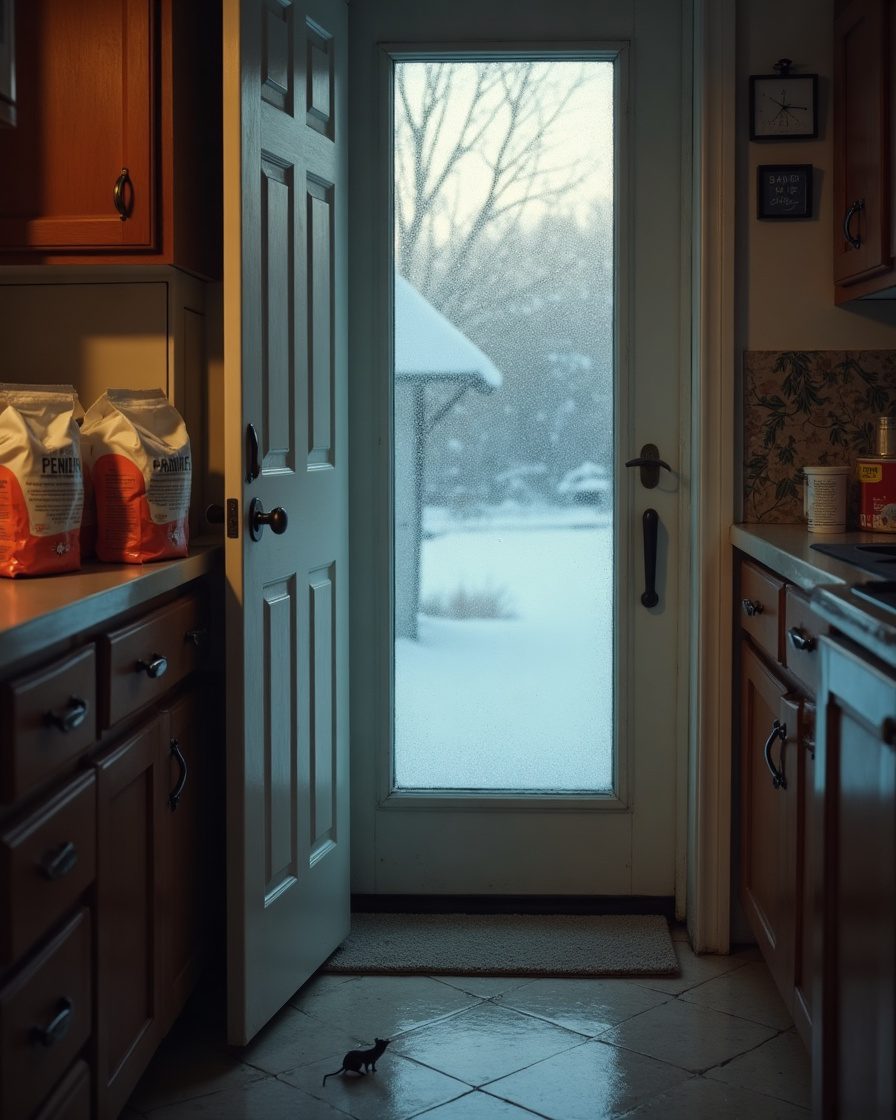
Every November someone tells me they are going to wait the mice out. The logic sounds reasonable: bears sleep through winter, groundhogs sleep through winter, so surely the scratching in the wall will quiet down once real cold arrives. It will not. The mouse in your wall is settling in for the most productive stretch of its year, and the sounds you are hearing in late summer and fall are the opening act. Understanding why that is true, and which single species is a partial exception, tells you exactly how to respond and how fast.
House mice do not hibernate, and that changes your winter plan
The house mouse is the species behind the vast majority of indoor mouse problems, and its biology leaves no room for a winter shutdown. According to the UC IPM Pest Note on the house mouse, these rodents remain active year-round wherever conditions permit, and they frequently enter homes in autumn when nighttime temperatures turn cold. There is no dormant season, no slowed metabolism, no long sleep. A house mouse eats roughly a fifth of its body weight every day across as many as 200 tiny feeding visits a night, and that appetite does not pause for the calendar.
The breeding math is the part that should get your attention. A female house mouse can produce five to ten litters per year with five or six pups each, and the young are ready to breed themselves at five to six weeks old. Inside a heated house with a pantry, that cycle runs straight through January. A winter mouse problem compounds weekly, which is why the correct response to a December sighting is urgency, not patience. Our full walkthrough on how to get rid of mice covers the complete removal sequence once you have confirmed activity.
Why you see more mice in winter, not fewer
If mice are active all year, why does the phone start ringing in October? Because winter concentrates everything a mouse needs into one place: your house. Outdoors, seeds and insects get scarce, standing water freezes, and cover disappears with the leaves. Indoors, the thermostat holds steady, the pantry never empties, and wall voids stuffed with insulation make better nesting material than anything in the yard. The mice were always nearby. Cold weather simply moves the whole population indoors, and the ones already inside become easier to notice because they are more active in the spaces you occupy.
There is a second effect layered on top. Mice range surprisingly little, seldom traveling more than about 30 feet from nest and food. In summer, a mouse living under your deck can meet all its needs without ever crossing your threshold. Once frost hits, that same 30-foot radius has to include a heated structure, and a gap the width of a pencil is all the invitation it needs. This is the same seasonal squeeze that drives stink bugs, lady beetles, and spiders indoors, which is why we treat rodent-proofing as one piece of the broader fall push described in our guide to pest-proofing your home against fall invaders. The insects are a nuisance. The mice are the ones that gnaw wiring and contaminate food, so they should sit at the top of the list.
The deer mouse exception: torpor is not hibernation
One caveat keeps this article honest. Deer mice, the white-bellied, big-eyed native species common in rural and semi-rural areas, can enter torpor: short, temporary drops in body temperature and activity during severe cold snaps, usually lasting hours rather than months. Torpor is not hibernation. A deer mouse in a cold shed will rouse, feed from its seed caches, and move around between bouts. It is a fuel-saving trick, not a season-long sleep, so even the exception does not buy you a quiet winter.
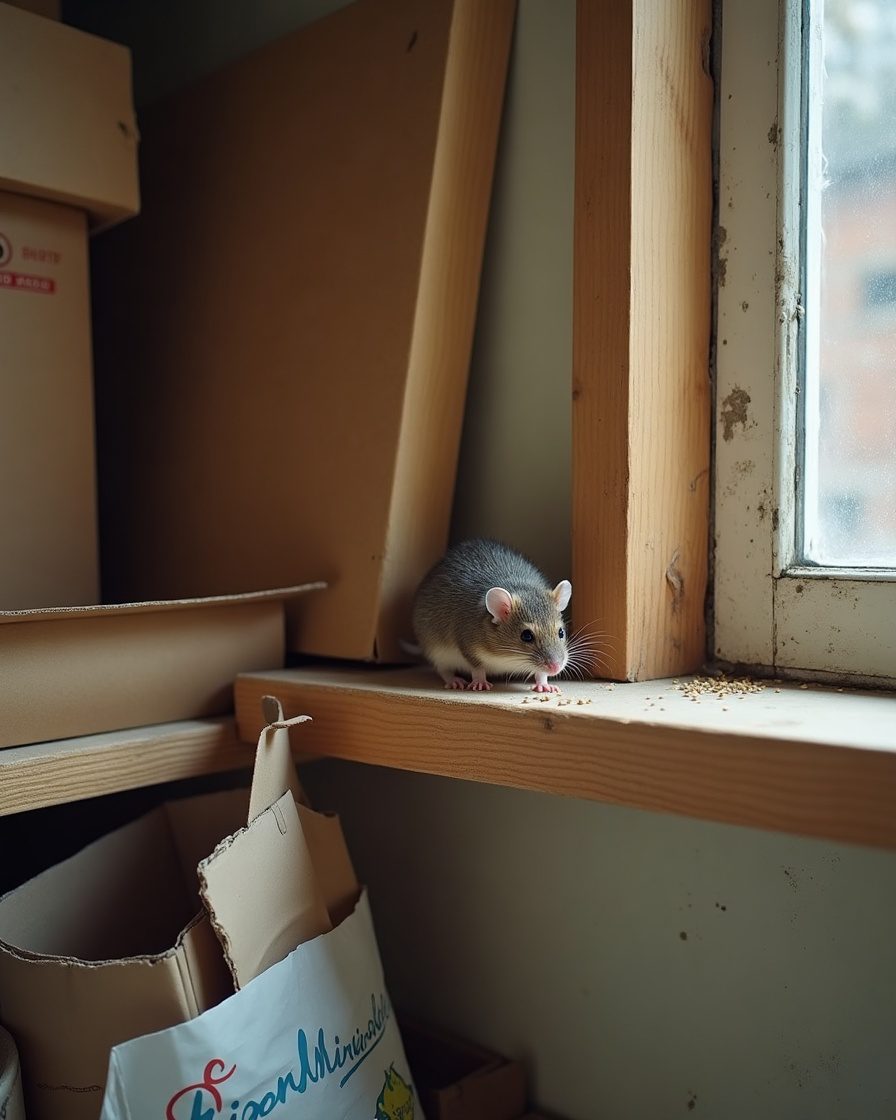
You can tell the two species apart at a glance. House mice are a fairly uniform gray-brown all over. Deer mice show larger eyes, better-furred tails, and a crisp white underside with a distinct line where the dark back meets the pale belly. The distinction matters for more than trivia, because deer mice in parts of North America can carry hantavirus, a rare but serious illness associated with breathing in dust disturbed from rodent droppings, urine, and nesting material. That is why the cleanup rule differs. Never dry-sweep or vacuum rodent droppings, especially in sheds, cabins, crawl spaces, or anywhere deer mice are plausible. Public-health guidance is consistent on the method: ventilate the space first, wear gloves, soak the droppings and nesting material thoroughly with a disinfectant or a bleach solution, let it sit, then wipe everything up with paper towels and bag the waste. If you find a heavy, long-neglected accumulation, or anyone in the household develops flu-like illness after a cleanup, treat it seriously and talk to a clinician rather than pushing through.
For the true hibernators people are actually thinking of, here is how the winter behavior really breaks down.
| Animal | Winter behavior | What it means for your house |
|---|---|---|
| House mouse | Fully active, breeds year-round indoors | Peak indoor season; trap and seal immediately |
| Deer mouse | Active, with short torpor bouts in hard cold | Still invades structures; droppings need wet cleanup |
| Chipmunk | Deep torpor in burrows, waking to feed on caches | Rarely a winter house pest |
| Groundhog | True hibernation for months | Not an indoor winter problem |
One routing note while we are on wildlife. If the noise in your attic turns out to be squirrels, bats, or a raccoon rather than mice, stop there and bring in a licensed wildlife control operator. Those animals are handled under different rules than mice, some are protected, and exclusion done wrong can trap animals inside the structure.
What a winter sighting means for your trapping cadence
Since the population grows all winter, trapping is a numbers-and-speed game, not a set-one-trap-and-wait game. The UC IPM guidance on trapping house mice is specific: because mice travel such short distances, space traps no more than about ten feet apart along the walls where you have seen droppings or gnawing, and set them in pairs an inch or two apart so a mouse jumping the first trap lands on the second. A dozen traps on night one beats two traps for six weeks, every time.
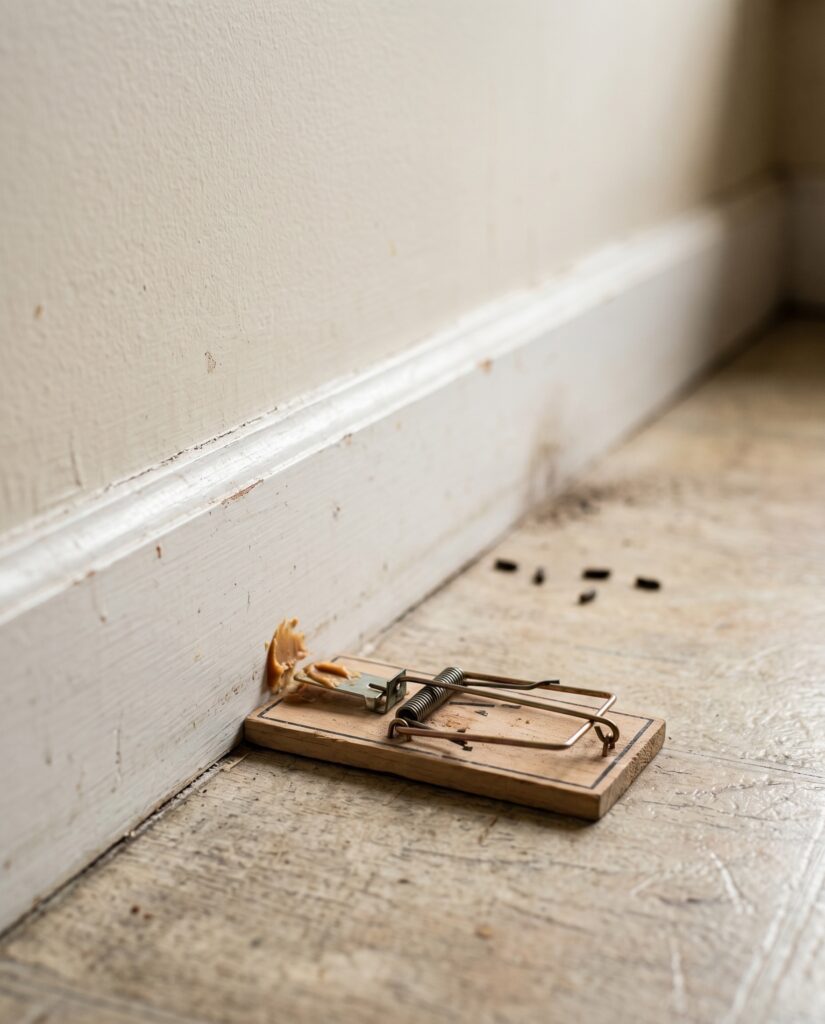
Placement beats bait, but bait still matters. Set snap traps perpendicular to the wall with the trigger end touching the baseboard, since mice hug vertical surfaces as they travel. Use a small smear of peanut butter, or whatever food the mice have already been raiding, and in winter add a pinch of cotton or dental floss to some triggers, because nesting material is a powerful draw for females building winter nests. Check traps daily, wearing gloves to handle catches, and keep a simple count. A healthy trapping campaign catches heavily in the first three or four nights and then tapers. If your nightly count holds steady into week two, you are not winning a war of attrition, you are harvesting a population that is still being fed and sheltered, and it is time to go hunting for the food source and the entry points instead of buying more traps.
Expect a second small pulse of catches during each cold snap. Every hard freeze pushes another wave of outdoor mice toward the same gaps the first wave used, which is why trapping without sealing turns into a permanent winter hobby.
Sealing mice out before the first hard freeze
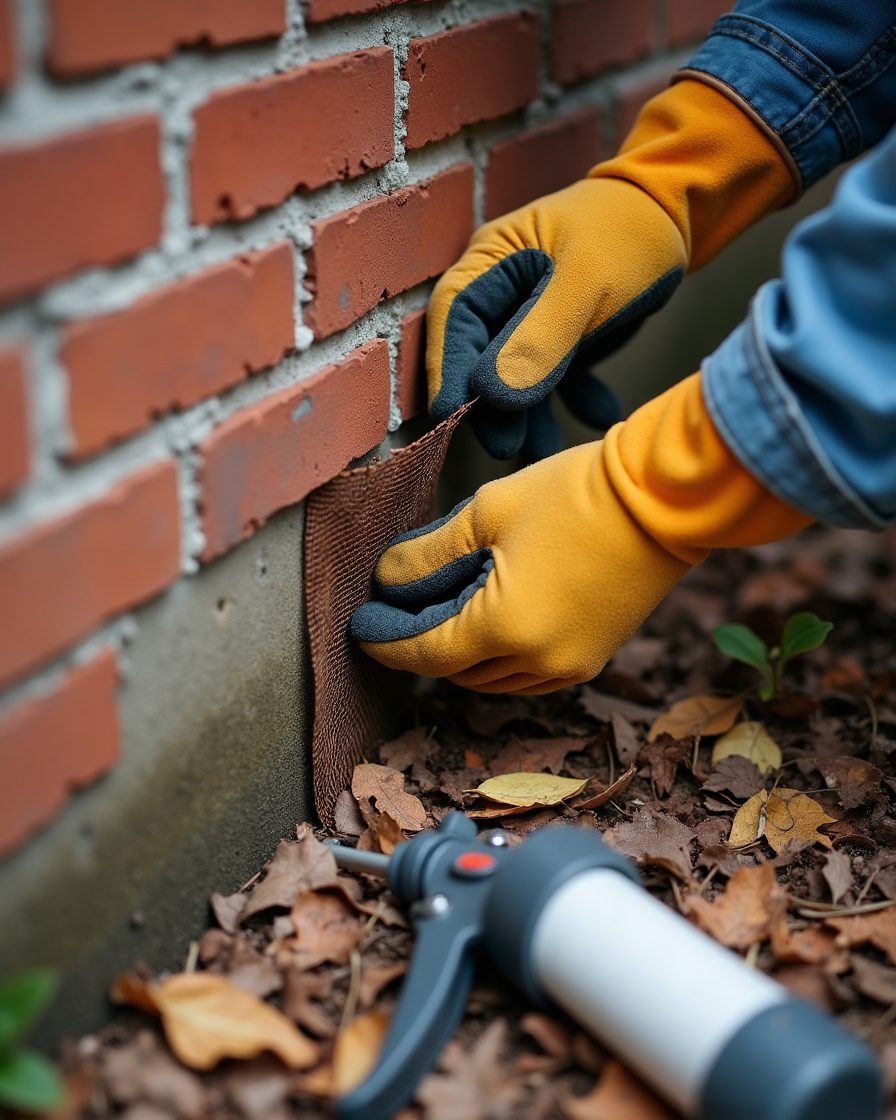
Exclusion is the step that actually ends the cycle, and late summer through fall is the window to do it, before the migration indoors rather than after. The University of Kentucky’s pest-proofing guidance puts hard numbers on the problem: a quarter-inch gap, the diameter of a pencil, is large enough for a mouse, and a half-inch gap admits a rat. Walk the foundation with those numbers in mind and most homes give up a shocking list of openings: gaps around pipes and cable penetrations, daylight under the garage door, torn crawl space vents, and worn door sweeps.
Materials matter because mice gnaw. Foam alone is a snack, not a barrier. Stuff steel wool or copper mesh into gaps first, then seal over it with caulk or cement so the metal stays put. Fit door sweeps so no daylight shows at the threshold, put rubber seals rather than vinyl on garage doors, and cover attic and crawl space vents with quarter-inch hardware cloth. Our dedicated guide to mouse-proofing your home works through the sealing job opening by opening, and the broader step-by-step fall pest-proofing walkthrough folds the rodent work into a single weekend circuit of the house.
Pair the sealing with sanitation, because a sealed house with an open buffet still feeds the mice already inside. Get bird seed, pet food, and grass seed into metal or heavy plastic bins with tight lids, clear the crumb layer behind kitchen kickboards, and move firewood and dense vegetation back from the foundation so mice lose their covered highway to your walls. The EPA’s consumer guidance on safer pest control makes the same point for every pest: remove food, water, and shelter first, and reach for chemical controls last, if at all.
Where rodenticides fit, and where they do not
For a typical house with winter mice, traps plus exclusion will solve it, and they solve it without introducing poison into a home with kids, pets, or owls in the neighborhood. If bait is ever used, the rules are strict for good reason. The EPA’s rodenticide program requires consumer bait products to be used in tamper-resistant bait stations that children, pets, and wildlife cannot reach into, and secondary poisoning is a real pathway: some rodenticides can pass up the food chain when a hawk, owl, fox, or house cat eats a poisoned mouse. There is also a practical problem nobody warns you about, which is that poisoned mice die in your wall voids, and a decomposing mouse behind drywall in January announces itself for weeks.
My honest cadence for a winter infestation: snap traps in numbers immediately, sealing within the week, sanitation the same day, and rodenticide reserved for heavy infestations where trapping has genuinely failed, ideally placed by a licensed professional who will use proper stations and retrieve carcasses where possible.
Common questions
Do mice hibernate in the winter?
House mice do not hibernate at all. They remain active and continue breeding through the entire winter, especially indoors where food and warmth are constant. Deer mice can enter short bouts of torpor during severe cold, but that is a temporary energy-saving state lasting hours, not a months-long sleep.
Why am I suddenly seeing mice now that it is cold?
Autumn cold pushes outdoor mice into structures, so sightings climb in fall and winter rather than dropping. The mice were living near your home all along. Falling temperatures shrink their options until a heated building with stored food becomes the only good habitat within their small home range.
Will mice leave on their own in spring?
Some individuals may spend more time outdoors when the weather warms, but an established indoor population with food, water, and nesting sites has no reason to leave. By spring, a pair of winter mice can have produced several litters. Trap and seal now rather than waiting for a self-fix that does not come.
How do I clean up mouse droppings safely?
Never sweep or vacuum them dry, because that can put contaminated dust into the air. Ventilate the space, wear gloves, soak the droppings and nesting material with disinfectant or a bleach solution, let it sit several minutes, then wipe up with paper towels and bag everything. This matters most where deer mice are possible, such as sheds, cabins, and crawl spaces.
Are the noises in my attic definitely mice?
Not necessarily. Mice make light scratching and skittering, mostly at night. Heavy thumping, daytime activity, or chirping points toward squirrels, birds, bats, or a raccoon, and those are jobs for a licensed wildlife control operator rather than snap traps, since different rules and removal methods apply to wildlife.
Final verdict
Mice do not hibernate, and the common house mouse treats your heated home as prime breeding habitat straight through the coldest months. Winter sightings are a signal that activity is rising, so respond the way the biology demands: set plenty of snap traps along the walls immediately, tighten up food storage the same day, and seal every pencil-width gap before the next hard freeze locks another wave of mice out of the cold and into your kitchen. Keep the deer mouse caveat in mind, treat all rodent droppings to a wet cleanup rather than a dry sweep, and leave poison as a last resort behind traps and exclusion. Handled this way, the scratching that starts in late summer ends in a few decisive weeks instead of running until spring. For the rest of the cold-weather lineup, our overview of winter pest control for invading bugs covers what else moves in when the temperature drops.