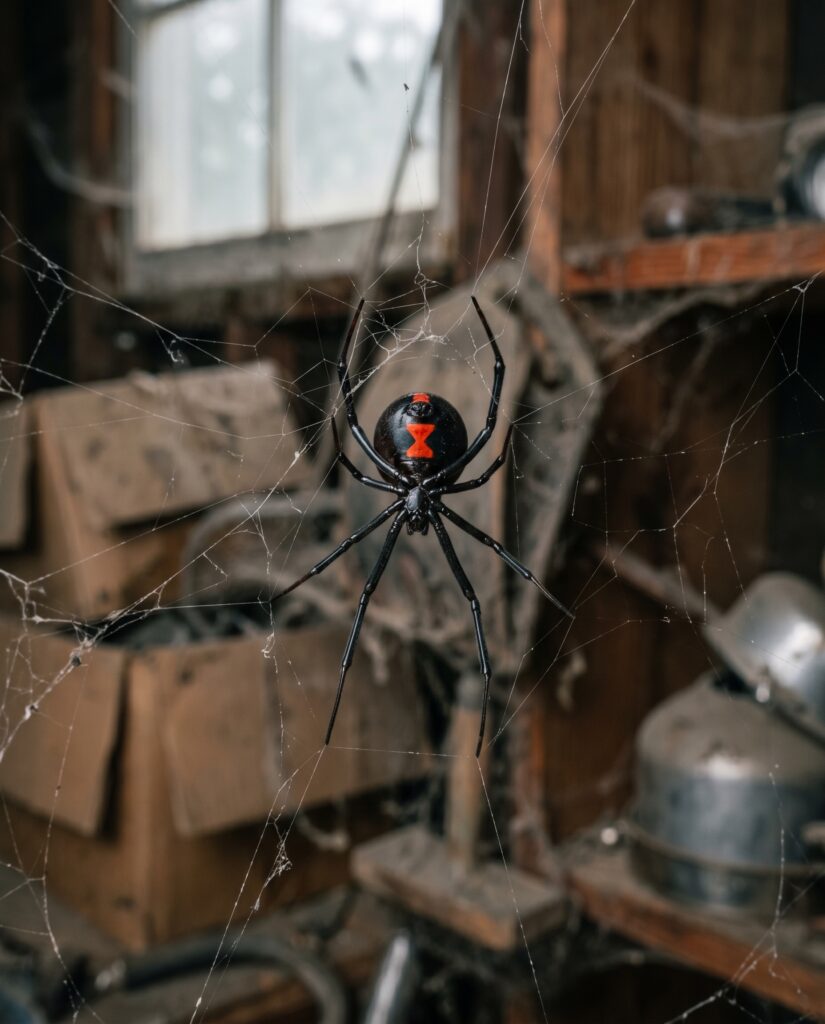
No. Spiders do not hibernate the way a groundhog does. Outdoor spiders cold-harden: they slow their metabolism, tuck into leaf litter, bark, and rock crevices, and wait, while many species pass winter as eggs inside a silk sac. The spiders in your house are mostly house-adapted species that live indoors year round, so they stay mildly active all winter.
- Not a myth: Outdoor spiders really do go quiet in winter, slowed and hidden rather than asleep in a den.
- Mostly a myth: “Spiders pour in from the cold each fall.” Most indoor spiders never lived outside, and fall wanderers are often mature males looking for mates.
- The useful part: Sealing gaps in late summer and early fall blocks the accidental wanderers and the prey insects that feed them.
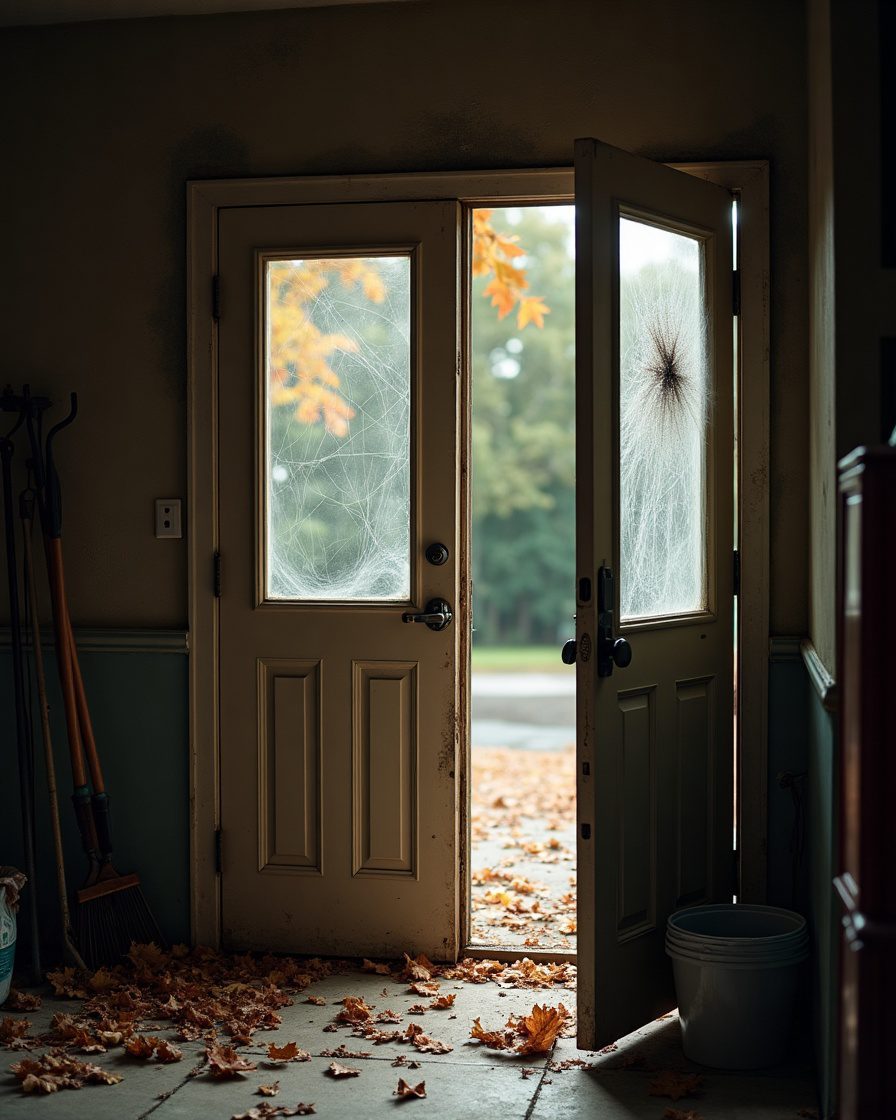
What hibernation actually means, and why spiders do not qualify
Hibernation is a specific trick. A true hibernator like a groundhog feeds hard in fall, drops its body temperature and heart rate on a hormonal schedule, and sleeps through winter in a den, burning stored fat. Spiders cannot do any of that. They are small, they cannot store meaningful fat reserves, and as ectotherms their body temperature is simply whatever the air temperature is.
So spiders use a different playbook, and it deserves its own name: overwintering through cold-hardening and dormancy. As days shorten and temperatures fall, a spider’s metabolism slows dramatically. Many species gradually build up antifreeze-like compounds in their body fluids, which lowers the temperature at which ice crystals can form in their tissues. The spider is not asleep. It is running in a kind of low-power mode, and on a mild winter afternoon it can wake up enough to move, and even feed, then go quiet again when the cold returns.
That distinction is the honest answer to the question. A hibernating mammal is committed for the season. A cold-hardened spider is throttled by temperature, minute to minute, and that single fact explains everything else about where spiders go in winter.
How outdoor spiders survive winter: shelter, slowdown, and antifreeze
Outdoor spiders do not dig dens or migrate. They pick insulation. The winter refuges are the unglamorous margins of your yard: the gap under loose bark, the base of a grass clump, a rock pile, and above all the blanket of leaf litter, which traps air and holds ground-level temperatures well above the wind-chilled surface. Snow over that litter, counterintuitively, insulates the layer where they wait.
Ground hunters are the classic example. Wolf spiders live in exactly this terrain all year, and the Missouri Department of Conservation’s wolf spider profile describes them living in “stream edges, gravel or sand bars, low vegetation, and woodland leaf litter,” with some individuals surviving nearly two years. A spider with a two-year lifespan in Missouri has, by definition, made it through winter as a mobile animal, hunkered in litter and burrows rather than asleep in any den. On warmish winter days, wolf spiders can be found moving slowly across snow, which startles people every year. The same profile is also reassuring on the fear question: the bites of North American wolf spiders are harmless, and the animals are beneficial predators of pest insects.
The overall population strategy is a spread bet. Within one species, some individuals overwinter as adults, some as half-grown juveniles that pause development until spring, and some only as eggs. Whatever winter kills, something else survives it.
The egg sac strategy: some spiders overwinter as their own offspring
Plenty of familiar spiders skip winter entirely, at least as adults. The big orb weavers whose webs decorate porches every September are a good example of the pattern: females fatten through late summer, lay hundreds of eggs into a dense, weatherproof silk sac tucked under bark, siding, or eaves, and then die with the hard frosts. The species passes winter as eggs, not as spiders.
The sac is the whole trick. Layered silk sheds water, buffers temperature swings, and hides the eggs from birds and parasitic wasps. In some species the eggs hatch in fall and the spiderlings sit out winter together inside the sac, emerging in a crowd when spring warms up. That is why a garden that seems spiderless in February can be crawling with pinhead spiders in May. Nothing arrived. It hatched in place. The practical note: a knocked-down web is gone, but a sac stuck to the siding is next year’s population.
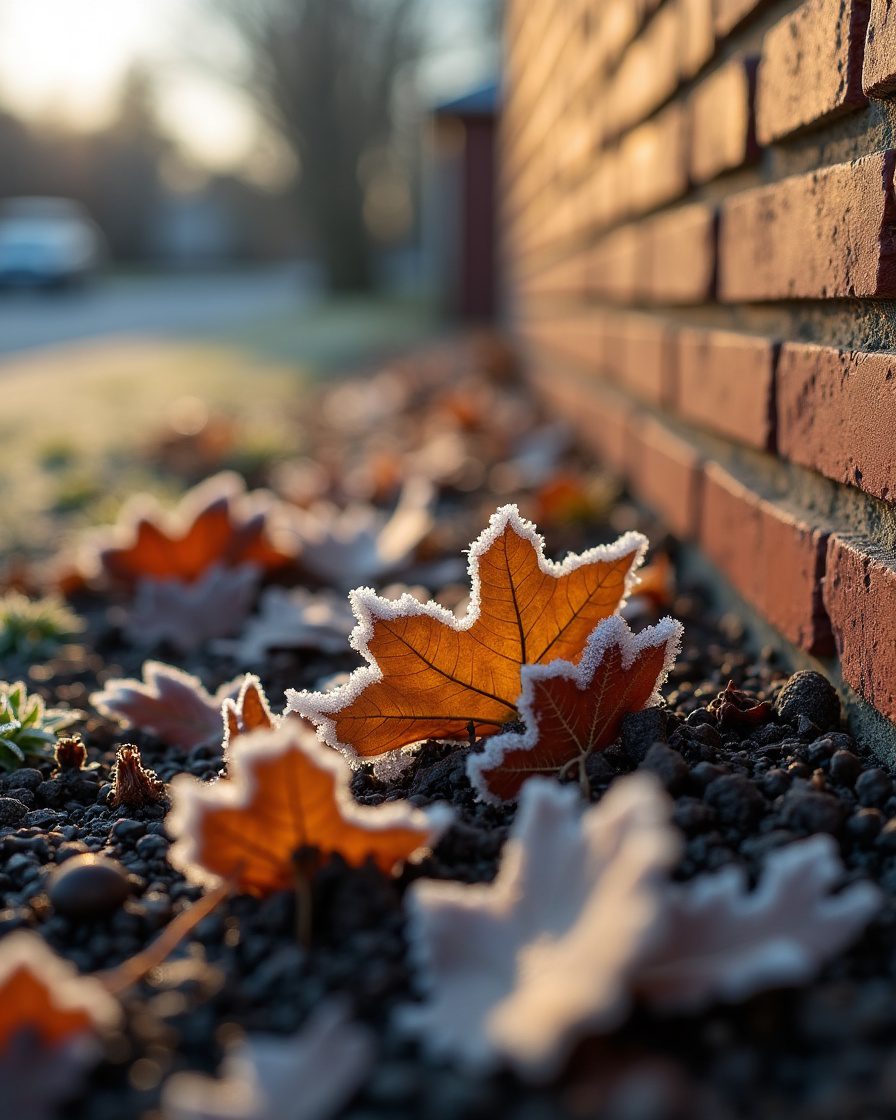
Your house spiders never left, and they did not come in from the cold
Here is the part most winter spider articles get wrong. The common story says that when nights get cold, outdoor spiders stream indoors for warmth, and that the spiders you meet in December are refugees. Extension entomology does not back that up. The University of Kentucky’s guide to common spiders found around homes and buildings notes that the aptly named house spider “frequently lives in buildings,” webbing up room corners and window angles, and treats most other indoor finds as accidental invaders that wandered in through doors and gaps, not as a seasonal migration. A few, like jumping spiders, occasionally wander indoors and may overwinter there, but that is stragglers, not a wave.
The spiders sharing your winter, in other words, are mostly house-adapted species whose ancestors have been living in structures for a very long time. Your heated living room never signals winter to them, so they never needed a winter plan. They keep building webs, keep catching the occasional fly or fungus gnat, and keep a low profile in closets, basements, and garages all year.
What about the big spiders people suddenly notice trundling across the floor in September and October? Those are real, but the driver is usually romance, not thermostat. Late summer is mating season for many species, and the wanderers people find in bathtubs and hallways are typically mature males on patrol for females. They were often already inside, or slipped in under a door mid-search. The autumn spike in sightings is a spike in movement, not in population. The UC IPM Pest Note on spiders adds one more honest wrinkle: some ground-dwelling spiders wander indoors when rain floods their burrows, so a wet autumn can push a few extras your way. The same Pest Note is blunt that spiders are “mostly beneficial because they feed on pest insects,” and that dangerous encounters are rare.
Rare is not never, so identification still matters. If you find a spider you cannot place, or a bite you are worried about, our guide to spider bite identification and when to worry covers the look-alikes, and any bite with spreading redness, worsening pain, or fever is a job for a clinician, not a forum thread.
Why you see fewer spiders in January
If house spiders stay active all winter, why does your house feel spider-free by January? Three boring reasons, and none of them is “they died” or “they left.”
First, cold slows everything. Even indoors, the garages, basements, attics, and wall voids where spiders actually live run colder than your living space, and a cool spider moves less, eats less, and rebuilds webs less often. Fewer movements means fewer sightings, since your eye catches motion, not spiders.
Second, the food dries up. The flies, moths, and gnats that sustained a busy August web are gone by midwinter, and a spider with an empty web has no reason to patrol. Slowed metabolism pairs perfectly with an empty pantry, because spiders are extraordinarily good at waiting; weeks without a meal is not an emergency for them.
Third, the mating traffic is over. The wandering males of September are done for the year, which switches off the biggest source of dramatic floor-crossing sightings. The house spider in the basement window angle is still there in January, sitting in a web she barely maintains, a few degrees from dormant. Come the first warm week of spring, prey reappears, metabolisms lift, and the same spiders seem to “return” without one of them having crossed your threshold.
Fall is when sealing pays off
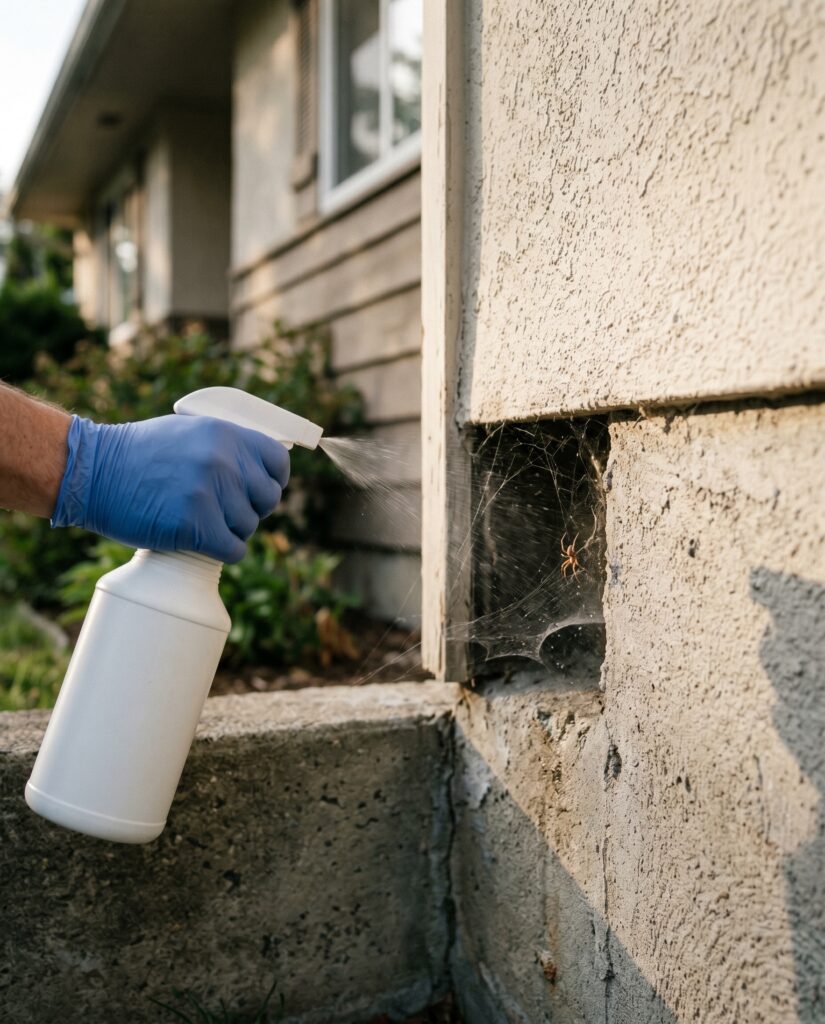
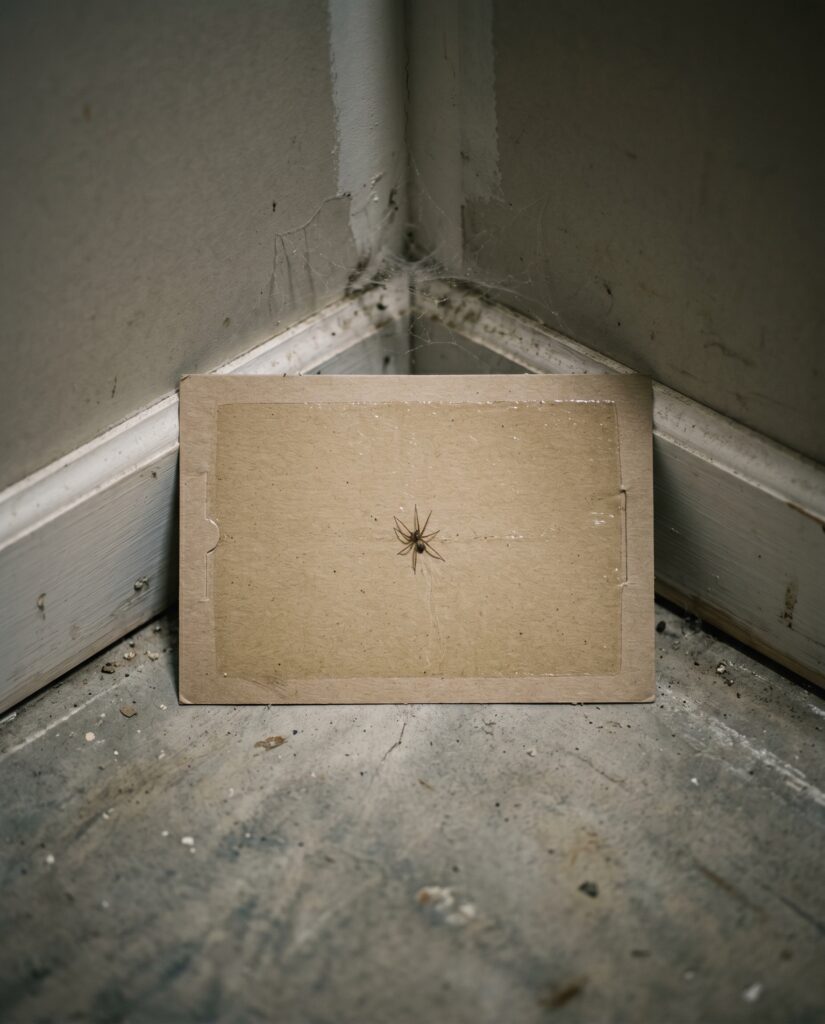
The practical takeaway from all this biology is timing. You cannot spray your way to a spider-free winter, and the good news is you do not need to. The University of Kentucky’s guide to eliminating spiders around homes and buildings puts routine, thorough cleaning at the top: a vacuum takes spiders, webs, and crucially egg sacs, each of which can hold hundreds of young. It also recommends tight window screens and door sweeps, decluttering the quiet zones spiders prefer, moving firewood and debris away from the foundation, and swapping white porch bulbs for yellow ones so you stop running an insect buffet at your own door. Glue boards along baseboards and garage walls are the honest monitoring tool, cheap and pesticide-free, revealing where wanderers actually travel.
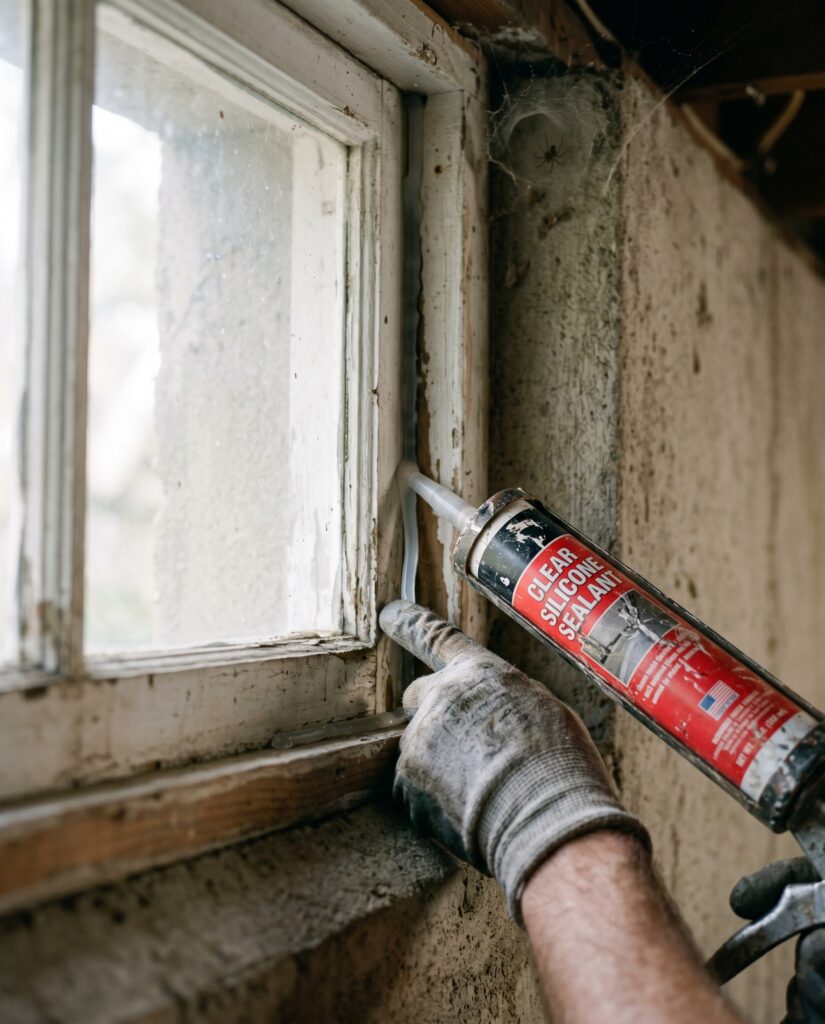
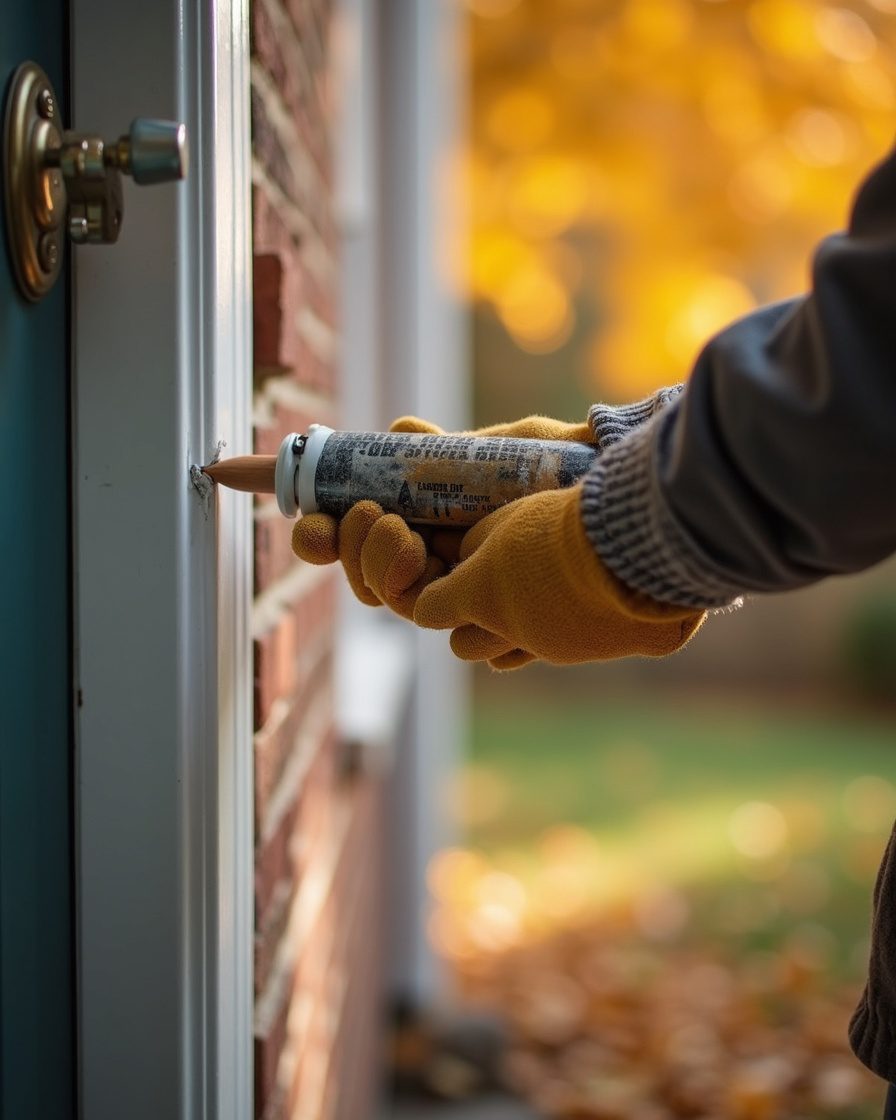
Exclusion is the piece that compounds, and late summer is exactly when to do it. UKY’s pest-proofing guide spells out the thresholds: gaps of 1/16 inch admit insects and spiders, and a 1/4 inch gap, the diameter of a pencil, is enough for a mouse. Door sweeps, caulk around window and door frames, sealed utility penetrations, and 1/4 inch hardware cloth over vents block the fall wanderers before they end up inside. Our step-by-step walkthrough on pest-proofing your home against fall invaders turns that list into a weekend plan, and our overview of winter pest control for invading bugs covers what to do about the ones already inside.
Sealing now also heads off the pests that, unlike spiders, genuinely do storm buildings each fall. Multicolored Asian lady beetles fly to sunny walls by the thousands from September into November, and UKY’s Asian lady beetle factsheet notes they slip behind siding and into attics and wall voids to spend winter, reappearing indoors on warm days. That is the true mass overwintering invasion people wrongly attribute to spiders, and our guide to identifying ladybug types and look-alikes shows how to tell the invader from the garden native.
If the glue boards catch mice instead
One quiet bonus of a fall glue-board line in the garage: it doubles as an early-warning system for rodents, which stay fully active all winter and treat that pencil-width gap as an open door. If you find droppings, do not dry-sweep or vacuum them, since that stirs dust you do not want to breathe; dampen the area with disinfectant, wipe with paper towels, and wash your hands afterward. Snap traps plus sealing solve most mouse problems, and our guides on how to get rid of mice and mouse-proofing your home walk through both halves. If you use baits instead, follow the label: the EPA’s rodenticide pages cover tamper-resistant bait stations and safe use around children and pets, and because poisoned rodents can pass poison up the food chain, traps and exclusion come first. If the attic noises turn out to be squirrels, bats, or raccoons, stop there and bring in a licensed wildlife control operator.
Spiders versus the real winter invaders
| Animal | Winter strategy | What you will actually see |
|---|---|---|
| Outdoor spiders | Cold-harden and go dormant in leaf litter, bark, and rock crevices; many species overwinter as eggs in silk sacs | Almost nothing until spring; the odd wolf spider moving on a mild day |
| House spiders | No strategy needed; live indoors year round with slowed winter activity | Quiet webs in basements and garages; occasional sightings all winter |
| Asian lady beetles | Mass fall flights into wall voids and attics; dormant clusters indoors | Beetles on sunny fall walls, then indoor stragglers on warm winter days |
| House mice | Fully active all winter; move indoors for food and warmth | Droppings, gnawing, night noises; activity all season |
Common questions
Do spiders die in the winter?
Some do, by design. Many orb weavers die at frost after securing their eggs in an overwintering sac, while wolf spiders and other long-lived species survive winter as cold-hardened adults or juveniles. House-adapted species indoors simply carry on. For any given species, winter is a planned life-cycle event, not a die-off.
Do spiders come inside when it gets cold?
Far less than people think. Most spiders you see indoors belong to species that live in buildings year round, and the burst of fall sightings is mostly mature males wandering in search of mates, plus a few accidental invaders that slipped under a door. There is no mass migration of outdoor spiders toward your thermostat.
At what temperature do spiders become inactive?
There is no single number, because it varies by species and by how gradually the cold arrived. As a rule of thumb, activity drops sharply once temperatures sit near or below the 40s Fahrenheit, and cold-hardened spiders can survive well below freezing in sheltered spots. Activity returns within hours of warmth, which is why mild spells produce midwinter sightings.
Should I put spiders outside in winter?
For a house spider, that is usually a death sentence, since a spider adapted to indoor life has not built up winter cold-hardiness. If you cannot share the basement, moving it to a garage or shed is the kinder compromise. Remember that extension guidance consistently calls household spiders harmless and beneficial, so tolerance costs you nothing.
Do spider egg sacs survive winter in the house or garage?
Yes, that is what they are built for, and one sac can hold hundreds of eggs. If you are trying to lower next spring’s population, vacuuming webs and sacs from corners, window angles, and garage framing in fall does more than any spray. Toss the vacuum bag or empty the canister outside when you finish.
Final verdict
Spiders do not hibernate, and they do not need to. Outdoor species survive winter through cold-hardening, dormancy in insulated hideouts, and egg sacs that carry the next generation to spring, while the spiders in your house are year-round residents that merely slow down. The empty-looking January house is an illusion built from slower spiders, vanished prey, and a finished mating season. So skip the winter spray-down and spend an autumn afternoon where the biology says it counts: caulk and door sweeps, a vacuum pass through web corners and egg sacs, yellow bulbs at the porch, and glue boards to tell you what is actually moving. The spiders will spend winter the way they always have, quietly, and mostly on your side.
This article is for information only; for bite concerns or wildlife in the structure, consult a clinician or licensed professional.