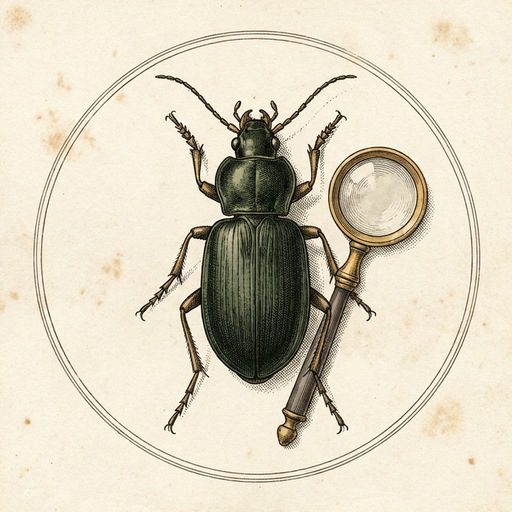
Playing dead is called thanatosis, and among household insects it is mostly a beetle trick. Carpet beetles, spider beetles, weevils, drugstore beetles and click beetles all freeze when disturbed, which means the motionless specks on your windowsill are often alive. That matters, because a live insect is telling you something is breeding nearby and a dead one may only be telling you what came in through the window.
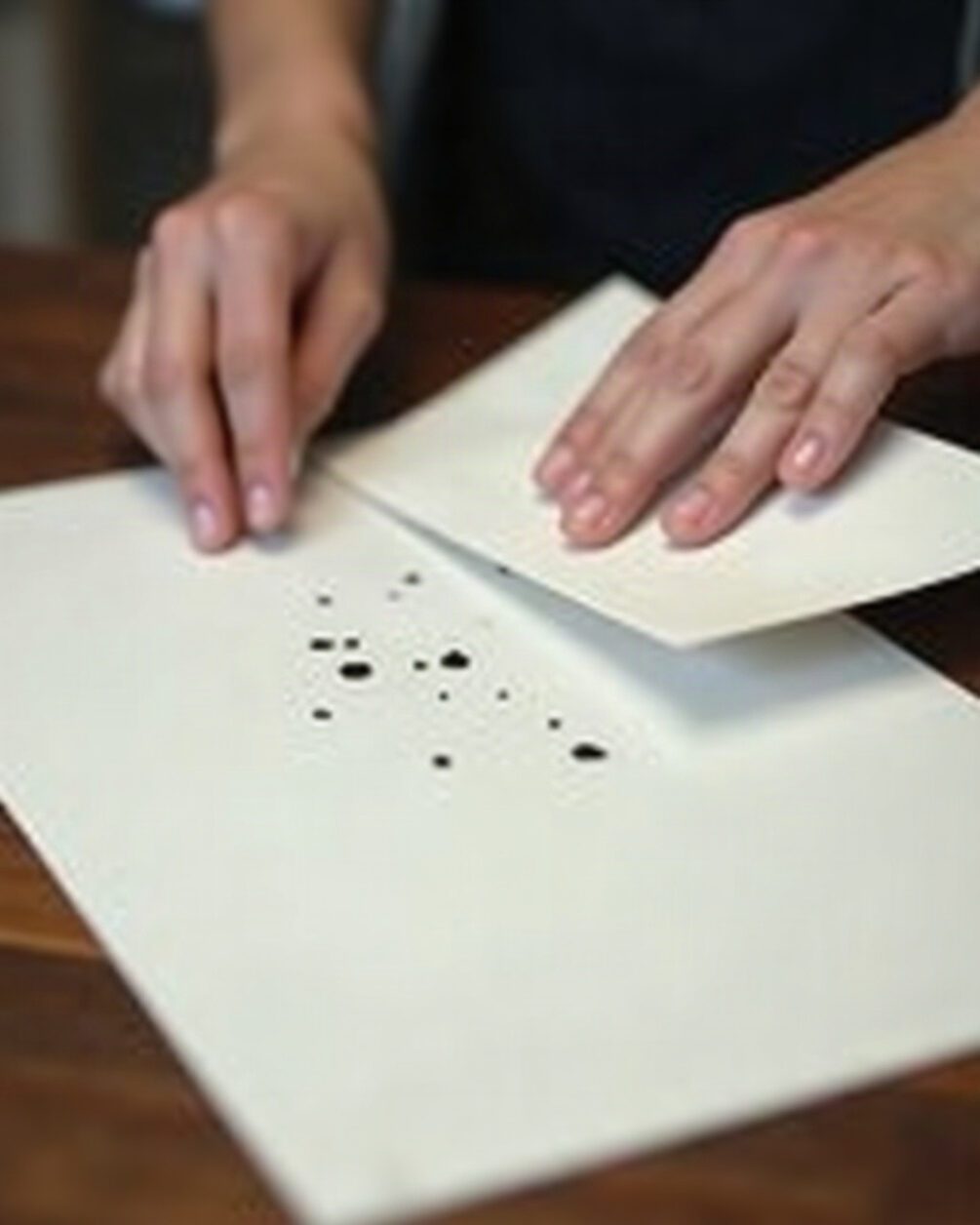
- Tip it onto white paper and wait a minute: a beetle playing dead will right itself and walk.
- Snaps and flips itself upright with an audible click: click beetle, an outdoor insect that came in by accident.
- Round, shiny, long-legged, in a dark corner: spider beetle, and there is usually an old food source somewhere.
There is a small test that resolves most of these searches and almost nobody performs it. Tip the specks onto a sheet of white paper, put it somewhere bright, and leave it for a minute or two. Live beetles will right themselves and start walking. Dead ones will not. The answer changes what you do next entirely.
Why insects do it
Thanatosis is a defence. Many predators respond to movement, and a great many refuse carrion, so an insect that becomes completely still and drops from a surface can survive an encounter that running would not. Beetles are particularly good at it because a hard shell makes lying still survivable in a way it is not for a soft-bodied insect.
The practical consequence for a householder is simple: do not use stillness as evidence of death, and do not use “I only ever find dead ones” as evidence that a problem is over.
Carpet beetle adults, the most common finding
Small, rounded, mottled beetles two to four millimetres long, found on windowsills, often apparently dead. This is the single most common thing behind this search.
Adult carpet beetles feed on pollen outdoors and are strongly drawn to light, which is why the sill is where they accumulate. Kentucky notes that carpet beetle larvae feed on wool, felt, fur, feathers and other animal products, and the larvae are the stage that matters. So an adult on a sill is a prompt to search, not a problem in itself.
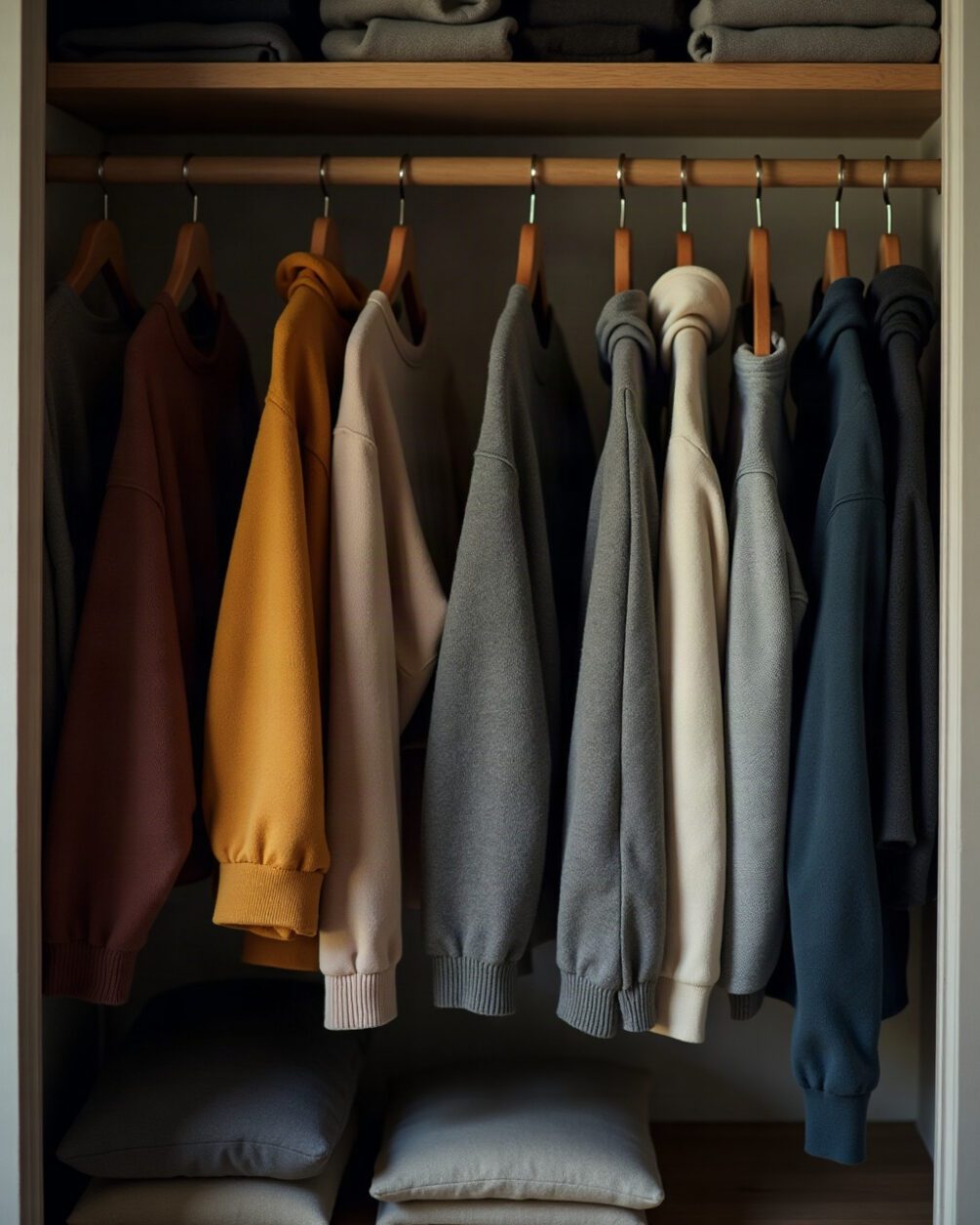
Where to search: wardrobe floors, under heavy furniture that never moves, the edges of fitted carpet, wool rugs, stored textiles in a loft, air vents where lint gathers, and bird or wasp nests in eaves and soffits, which are a very common unnoticed source feeding larvae into the rooms below. Our carpet beetle identification guide covers what the larvae look like, and the removal guide covers the work.
If the sill collection keeps replenishing after cleaning, something is breeding indoors. If it happens once in early summer and stops, they were probably coming in from outside.
Spider beetles, which look like small spiders
Round, shiny, dark reddish brown, with long legs and long antennae that give a spider-like impression at a glance. They freeze readily and are often found motionless in a corner, a cupboard, a loft or an old building.
They are scavengers on dried organic material: old grain, dried fruit, spilled pet food, dead insects, and even accumulated debris in a loft or under floorboards. They are harmless and do not bite.
Their value is as an indicator. A spider beetle usually means there is an undisturbed food source somewhere, frequently one nobody remembers: a burst bag of flour behind a cupboard, birdseed in a shed, an old rodent bait, or debris in a loft. Our pantry pest guide covers the search method, which applies even when the source is not in a kitchen.
Weevils and pantry beetles, which drop and freeze
Weevils are unmistakable once you know the feature: a long downward-curving snout that no other household beetle has. Drugstore beetles, cigarette beetles and sawtoothed grain beetles are all small, brown and rounded.
All of them play dead readily, dropping off a surface and lying still. Kentucky’s guidance is that stored product pest problems usually trace back to a single infested item. If any of these are turning up, the answer is in a packet somewhere, and the search is worth doing properly rather than throwing out the obvious suspects. Our meal moth guide covers the other resident of the same cupboard, and the kitchen cupboard identification guide covers the full lineup.
Click beetles, which flip themselves
These are worth naming because the behaviour is memorable and completely distinctive. A click beetle is elongated, usually dark brown or black, one to two centimetres, and if it ends up on its back it arches and snaps a hinge in its body, flipping itself into the air with an audible click.
They are outdoor insects, associated with soil and rotting wood, and their larvae are wireworms, which are a garden and crop concern rather than a household one. Indoors they are always accidental arrivals through an open door or window. Nothing to do beyond letting it out. Our garden pest identification guide covers the wireworm side if plants are being affected.
What the sill is actually telling you
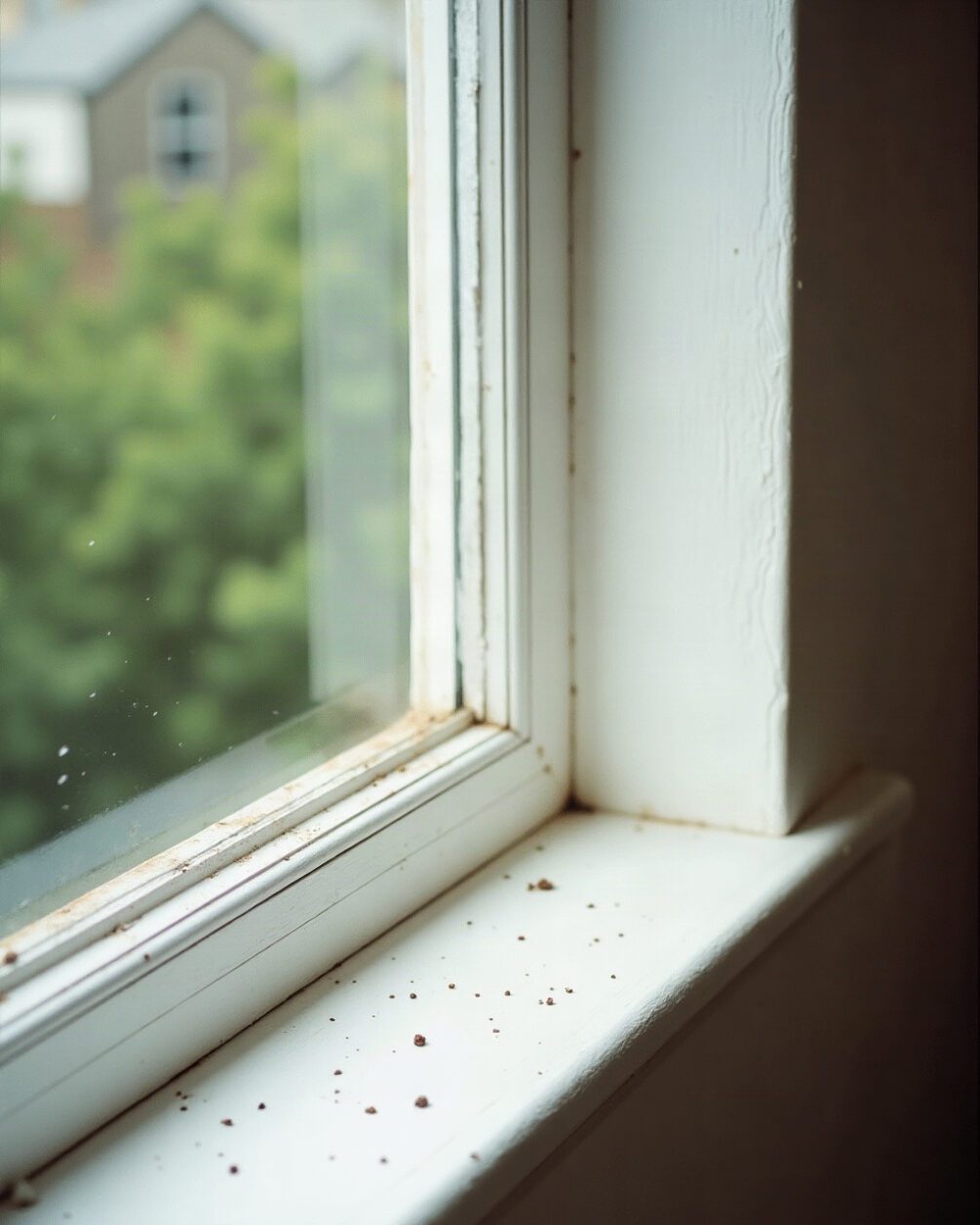
A windowsill is an accumulator. Insects that die indoors, or that are trying to leave toward light, end up there, so over weeks it builds a record of what has been in the room. That makes it the best free sample most households have.
Read it rather than just cleaning it. Clear the sill completely, then look again in a week. What comes back, and how much, tells you whether something is breeding indoors or whether you are collecting arrivals from outside. A sill that refills with the same species repeatedly is worth acting on. A mixed collection that does not replenish is normal.
Common questions
How long will a beetle stay still?
Often a minute or two, sometimes longer if it is repeatedly disturbed. Give it more time than feels reasonable before concluding it is dead. Warmth and light both speed up the recovery.
They are definitely dead. Does that mean the problem is over?
Not necessarily. Adults die naturally after laying eggs, so a pile of dead carpet beetles can coincide with an active larval population elsewhere in the house. Find the fibre source before relaxing.
Do any of them bite while playing dead?
None of the insects on this page bites people at all. Carpet beetle larvae can irritate skin on contact, covered in our guide to carpet beetle rashes, but that is contact irritation rather than a bite.
Final verdict
Tip them onto white paper and wait. That single minute separates a live population from a collection of arrivals, and it changes what you do. Live carpet beetle adults mean searching wardrobes, carpet edges and soffits for the larvae. Live spider beetles mean an old food source somewhere undisturbed. Live weevils mean opening every packet in the cupboard. A click beetle means opening a window. Stillness is a defence, not a diagnosis.